

When I first visited Belfast about a dozen years ago, it struck me as a sad city, both physically and psychologically scarred by the violence and deaths during The Troubles.
Sarajevo strikes me the same way. They don’t have all the murals that Belfast has, but there are not one, not two, but FOUR museums related to the Bosnian Civil War of the 1990s. And City Hall has its own exhibits on the war and siege. City tours frequently feature areas such as Snipers’ Alley, buildings still pockmarked by mortar shells more than 30 years later, memorials to innocent children killed by the war, the tunnel under the airport that helped prevent starvation during the siege, and more. Reminders of the period are all around you, overwhelming any positive events that have occurred in the three decades since the war ended. We’re told “everyone here has a story”.
Well, what happened? Readers of a certain age will remember when the map of Europe looked like the one below, where Yugoslavia (in orange) occupied most of the land to the east of the Adriatic Sea.
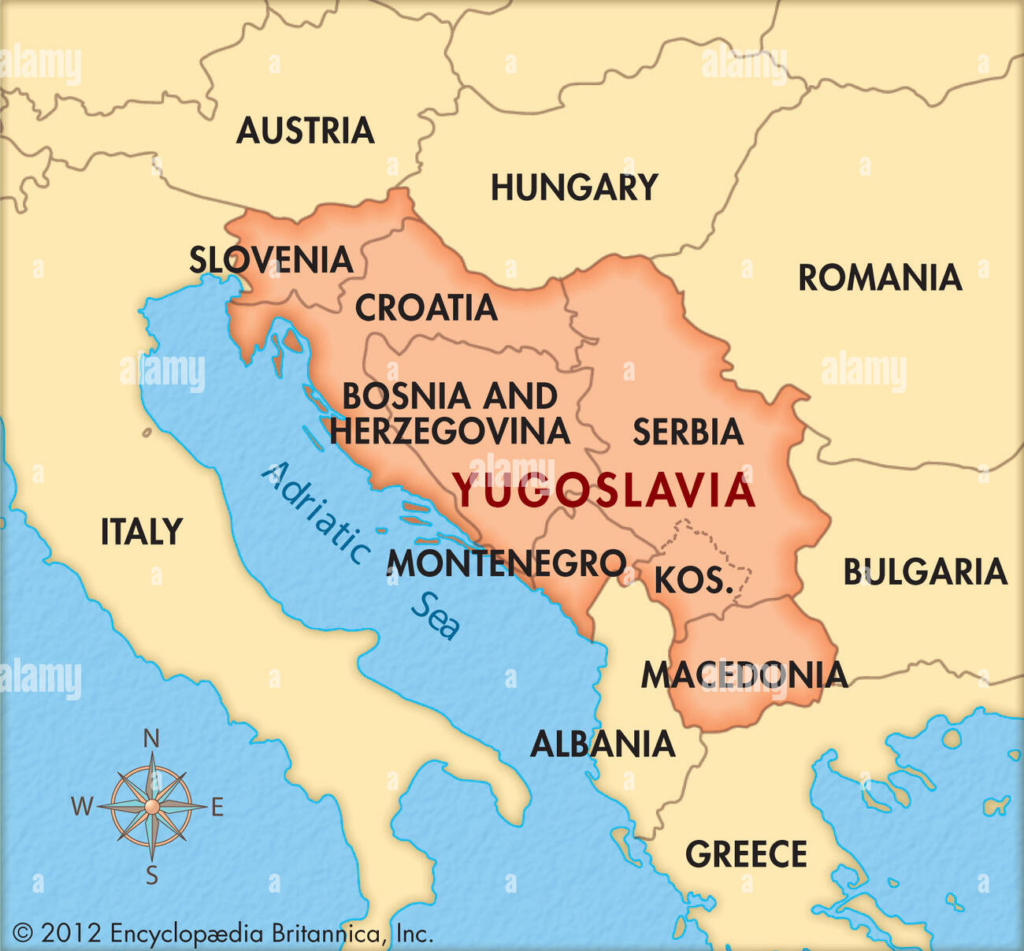
The notion of a Yugoslavia which united all of the south Slavic nations in one kingdom (“jug” and “slaven” meaning simply South Slavic) originated as early as the 1830s, although it wasn’t officially formed until after WWI and the collapse of the Austro-Hungarian Empire. Following 1963, Yugoslavia consisted of the socialist republics of Bosnia & Herzegovina, Serbia, Croatia, Macedonia, Montenegro, and Slovenia. Kosovo, consisting primarily of ethnic Albanians, was considered part of Serbia. Josip Broz Tito was named “President for Life”.
But Belgrade was the capitol of Yugoslavia and Serbians were the largest component of the country, both in terms of territory and population. They flexed their political muscles. Thus, the other republics, especially Slovenia and Croatia, viewed the country as being ruled by a Serbian hegemony.
President Tito was able to put down a number of nascent ethnic uprisings, but ethnic and economic tensions grew following his death in May 1980. The USSR also began losing its grip in the 1980s (most famously being the fall of the Berlin Wall in 1989). Conditions became ripe for separation.
Ethnic groups don’t exist within neatly defined country borders and this was certainly true in Yugoslavia (and even today). In June 1991, Slovenia and Croatia declared independence. Although the Yugoslavian army eventually loosened its grip on Slovenia, it wasn’t quite so easy for Croatia, which houses a number of ethnic Serbians. Croatian Serbs opposed the separation of Croatia, and fighting broke out.
Three months later, in September 1991, Macedonia also declared independence from Yugoslavia. They were the only ones who were able to obtain sovereignty without pushback from Yugoslav forces.
And now we get to Bosnia. In November 1991, Bosniaks and ethnic Croats within Bosnia & Herzegovina voted for independence, but ethnic Serbians within BiH voted to remain with Yugoslavia. Chaos followed. In January 1992, Bosnian Serbs created the The Republic of the Serbian People Within Bosnia-Herzegovina. In March 1992, in a referendum boycotted by Bosnian Serbs, the vote was 99.7% for separation from Yugoslavia. Independence was officially declared in April 1992.
Reaction was immediate. Bosnian Serbs, with assistance from the Yugoslav Army, soon seized approximately 70% of the country’s territory. War, shelling, mass rape, and genocide all followed (I’ll provide more detail on the Bosnian war in a separate post; the point of this one was to show the forces that led up to the conflict). Ceasefire was formally declared in November 1995, but lasting damage to the country had been done.
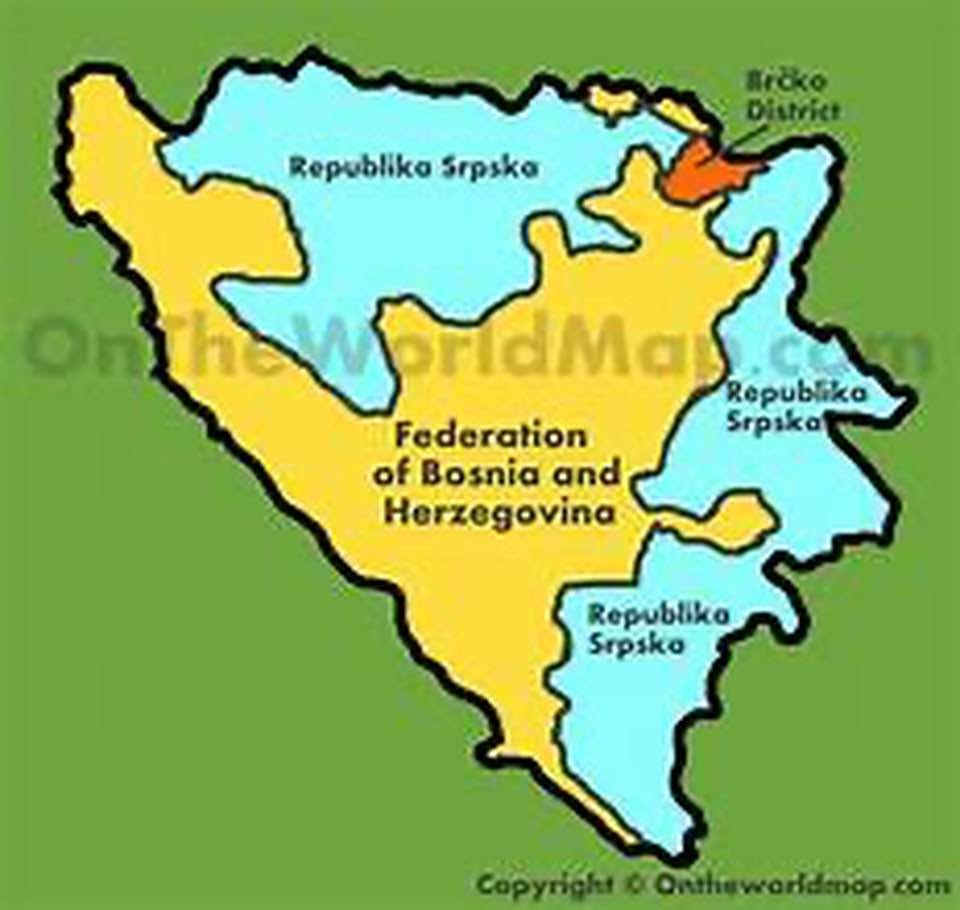
The photo above shows the territory of the former Yugoslavia against the map of the countries as they exist today, and below are the Bosnian-Serbian divisions within BiH that still exist today
September 21, 2025