

Antwerp’s Golden Age spanned roughly 65 years from 1500 to 1566. Because of its port, it flourished as a center of trade, importing and exporting all kinds of luxury goods. Industries boomed, including beer brewing, diamonds, silk, meat, and textile processing. The city grew wealthy. Christophe Plantin’s publishing house was the largest in the world. The Antwerp art world shook off its religious ties and started producing popular works that were exported all over Europe. Painting and tapestry workshops flourished. Intellectuals, writers, philosophers, and scientists flocked to the city. Antwerp, with a population of roughly 100,000 residents, was second only to Paris in size. It became known as one of the most cosmopolitan, liberal and wealthy cities in the world.
The Mercator-Orteliushuis tells you the story of Antwerp’s Golden Age through immersive audio-visual presentations and the viewpoint of a 16th century cat. It’s history, but it’s not dry! The timeline below combines photos I took while at the Mercator-Oreteliushuis with more detail from my own research.
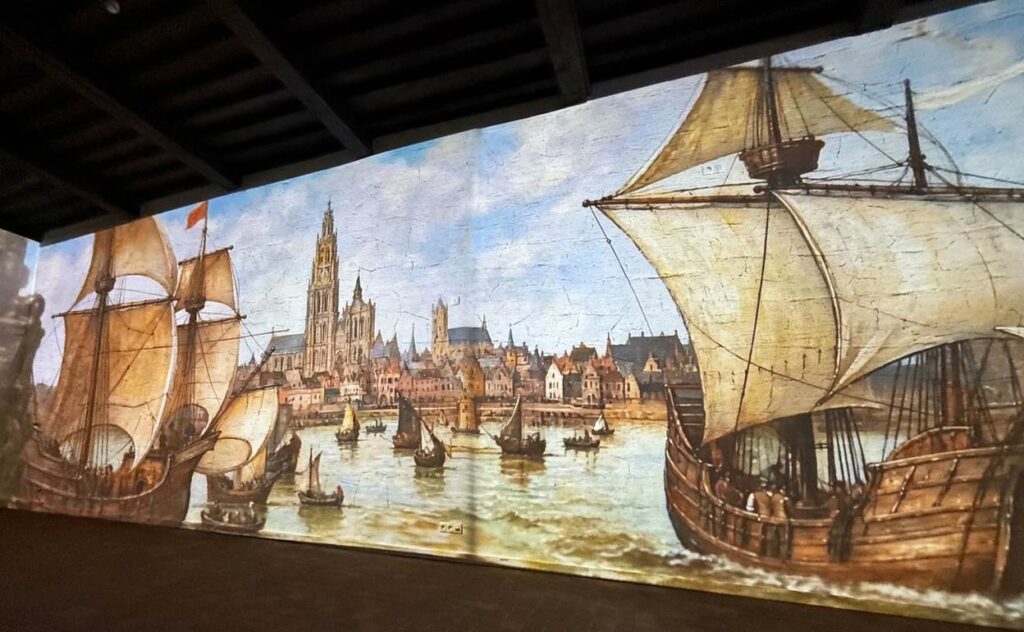
With this international influx of people from around the world came new ideas. One of those ideas – to the eventual detriment of Antwerp – was Protestantism. Martin Luther sparked the Protestant Reformation in 1517 when he nailed his Ninety-Five Theses to a church door in Augsburg, Germany. The Reformed Christianity movement heralded by John Calvin became widely influential in the late 1530s. Both branches of Protestantism, Lutheranism and Calvinism, became increasingly dominant in Antwerp. Because trade meant money, the city didn’t bother to ask merchants or residents about their religious affiliations, or bother them in any way. Antwerp became known as a city of religious freedom.
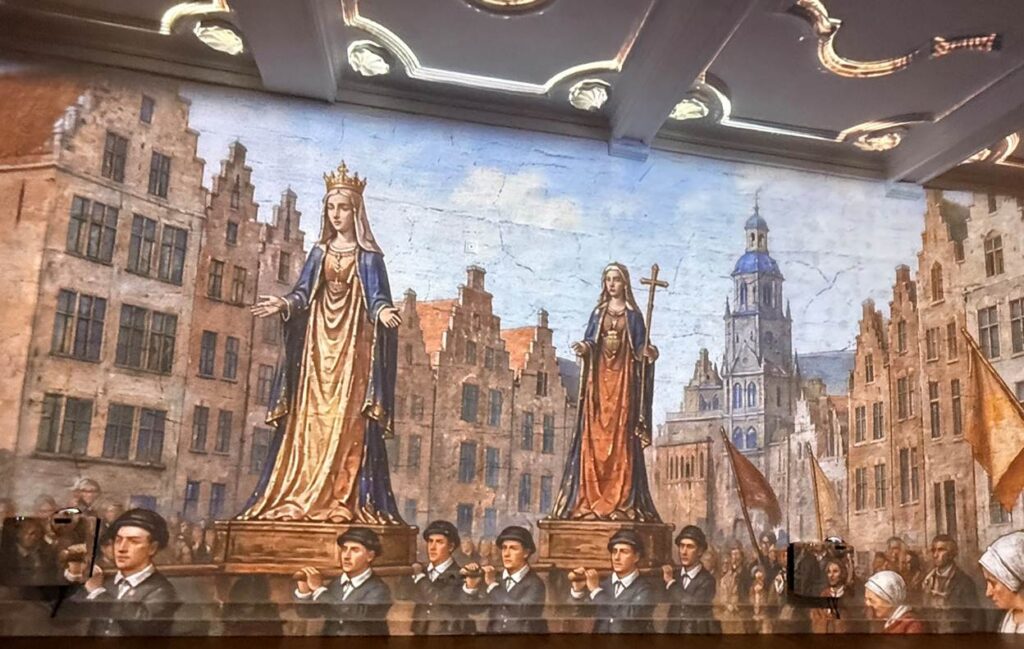
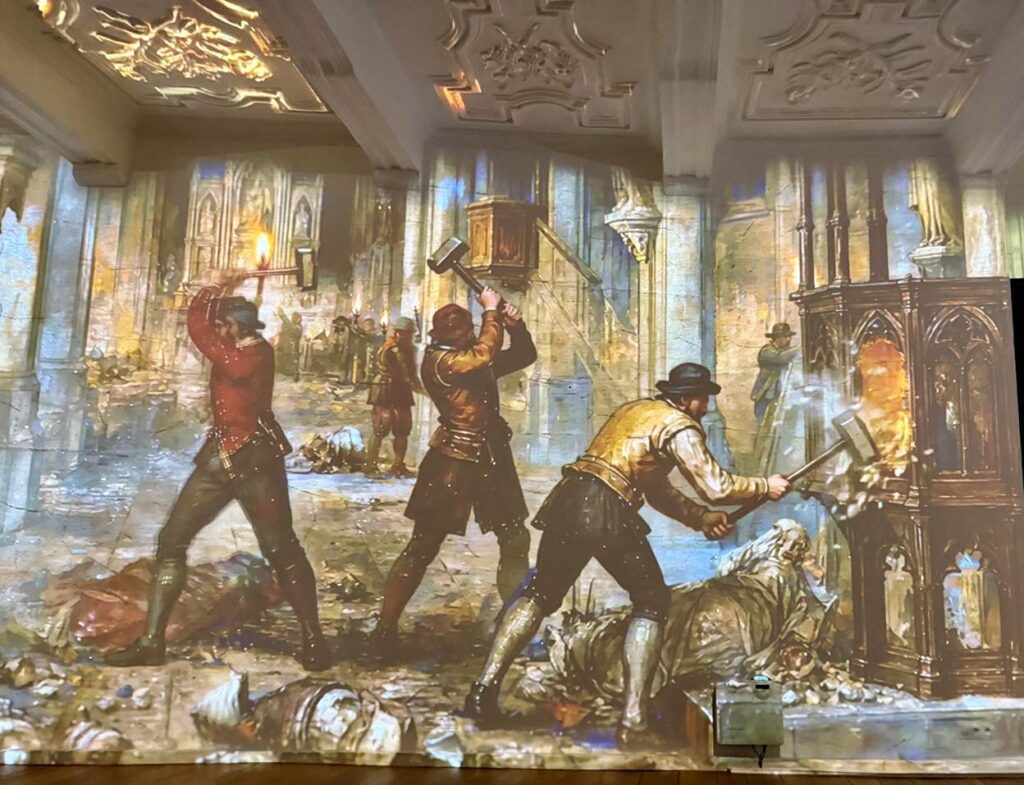
But religious tensions erupted in 1566 when Protestants destroyed Catholic churches, including its proud Cathedral of Our Lady. Plague erupted in the 1570s, weakening the population. The city went from Catholic to Calvinist and back to Catholic again over the span of 8 years. After the Spaniards re-took the city in 1585, their strict regime led to the city’s decline.
Timeline:
- 1500 – Antwerp rises as a leading trade city in the Habsburg Netherlands, retaining its own governance and gaining major political influence through commerce.
- 1531 – Antwerp opens a new Stock Exchange (the Handelsbeurs), a symbol of an economy that runs day and night. It would become the model for London’s and Amsterdam’s stock exchanges. Merchants arrive from England, Germany, Spain, Portugal, and Italy. Wool and cloth, Portuguese sugar and spices, Rhine wine, silk, and other luxury goods change hands here daily. The harbor becomes a crossroads where ships, news, and money flows converge. These are Antwerp’s Golden years.
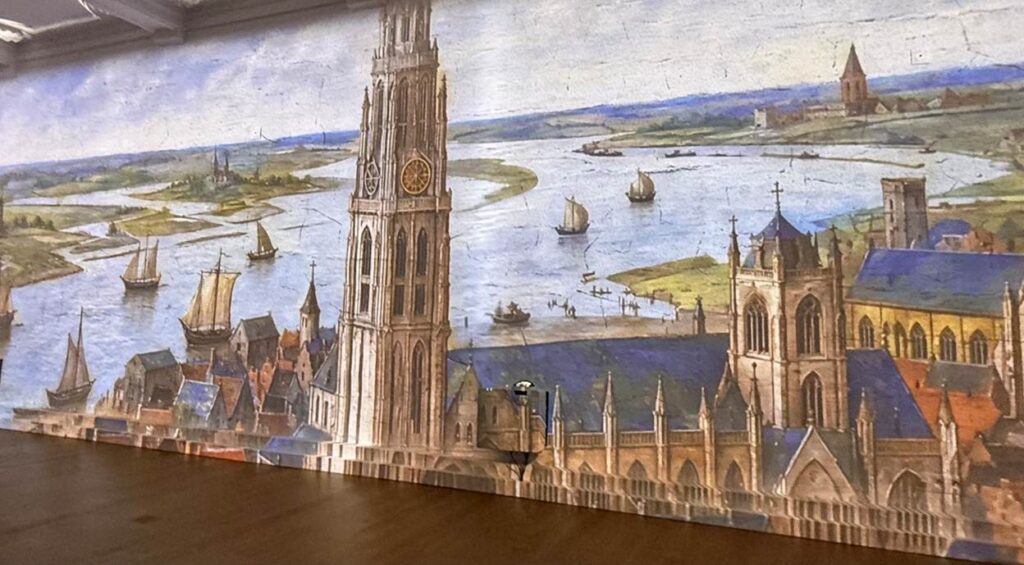
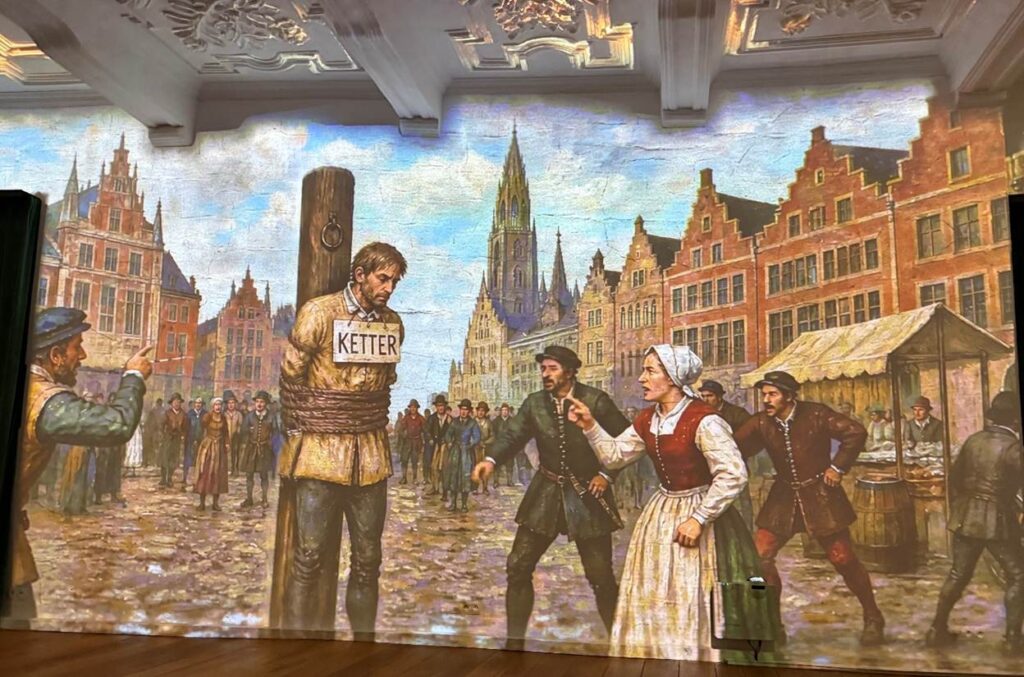
- 1535 — The first English language Bible is printed in Antwerp. King Charles of Spain threatened the death penalty for printing them but everyone looked the other way. Money from trade was more important.
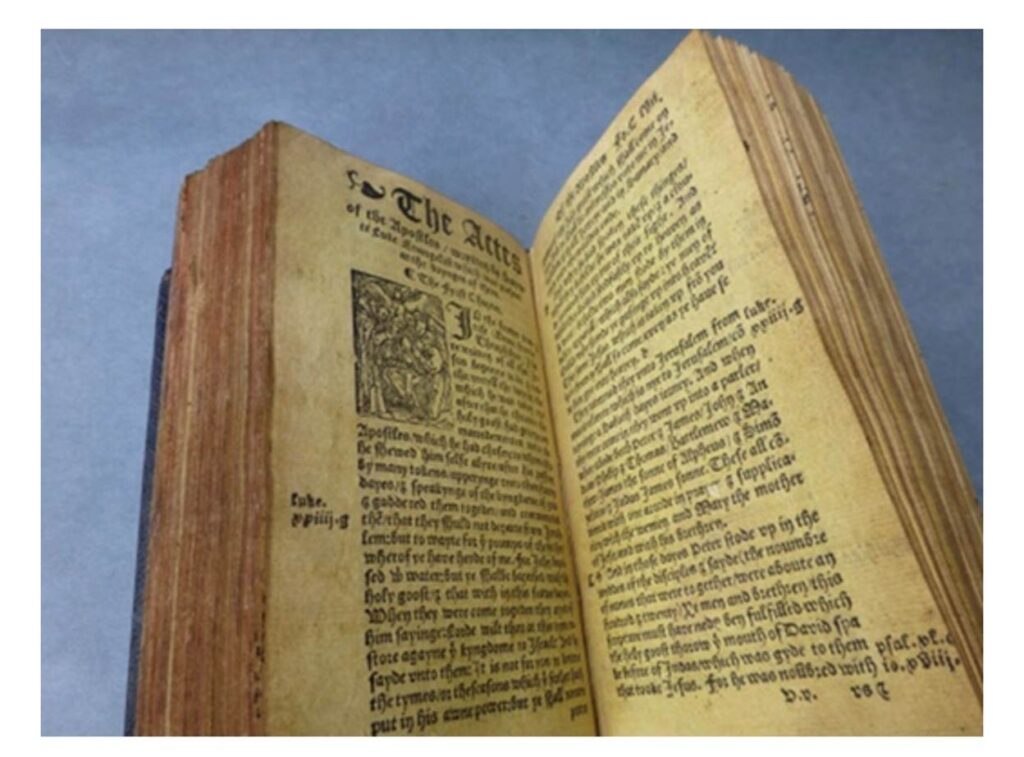
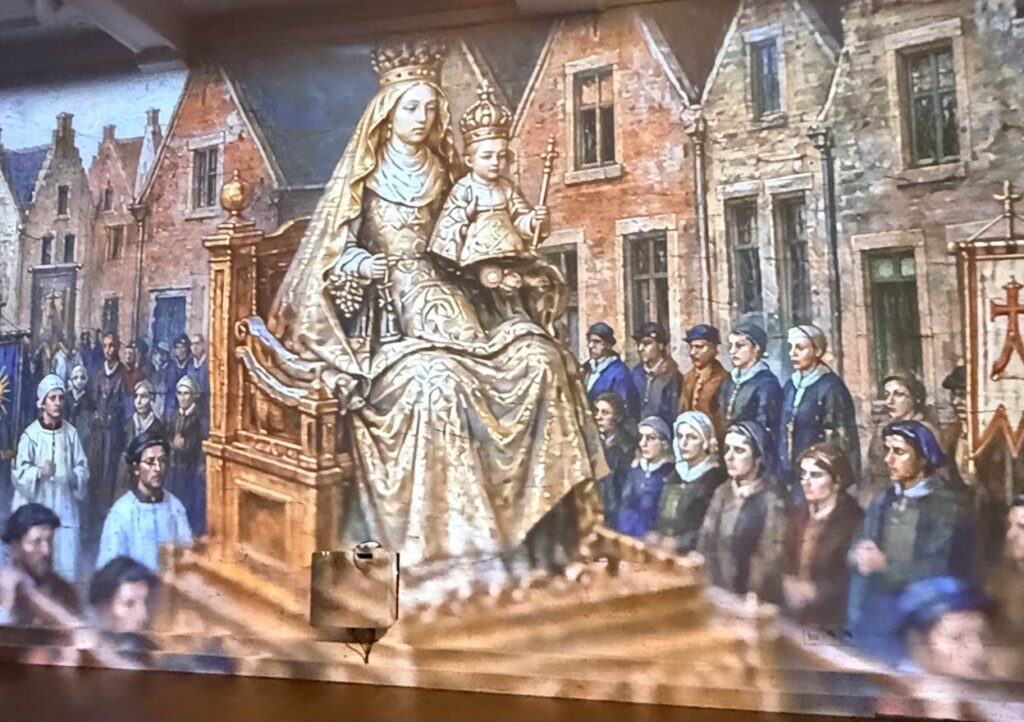
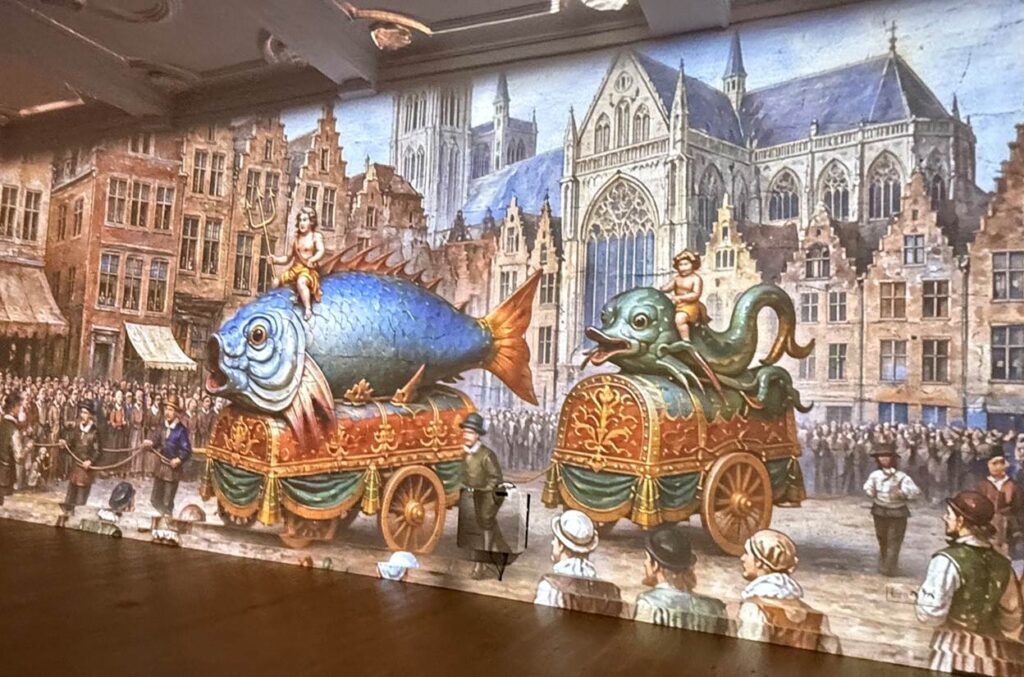
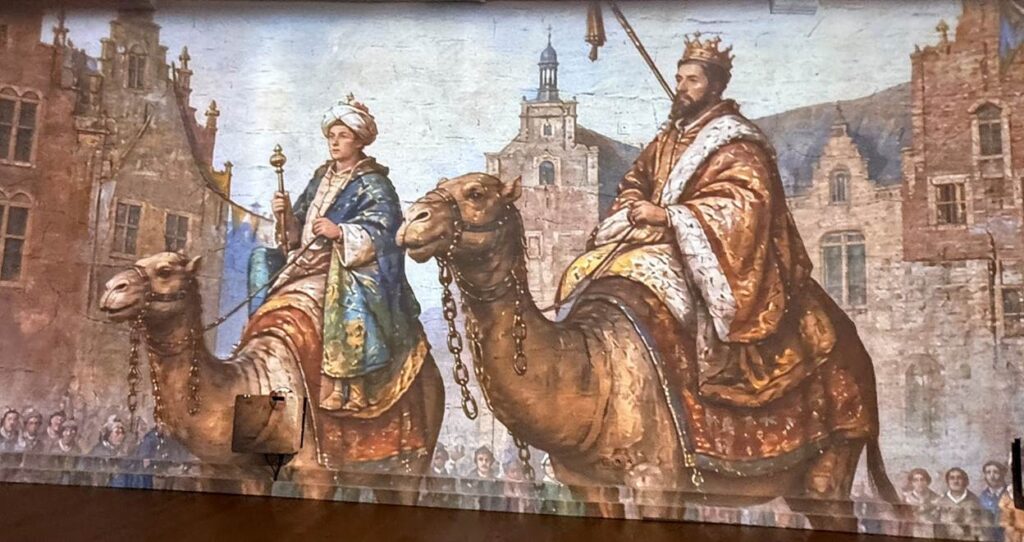
- 1549 – Antwerp’s Ommegang processions date back to the 14th century. By the 16th century, the Ommegang has evolved into a grand urban spectacle. Guilds, trades and confraternities display their place within the city’s social order. Music and pageantry abound.
- 1555 – Antwerp shapes the world. Christophe Plantin founds the Officina Plantiniana. His publishing house becomes the largest in the world. Books – including tomes on science and medicine, maps, engravings, and Bibles spread knowledge across Europe faster than ever before. In a city where merchants had to speak at least seven languages, Plantin’s masterwork was a polyglot five-language Bible. Antwerp emerges as the intellectual heart of the Low Countries.
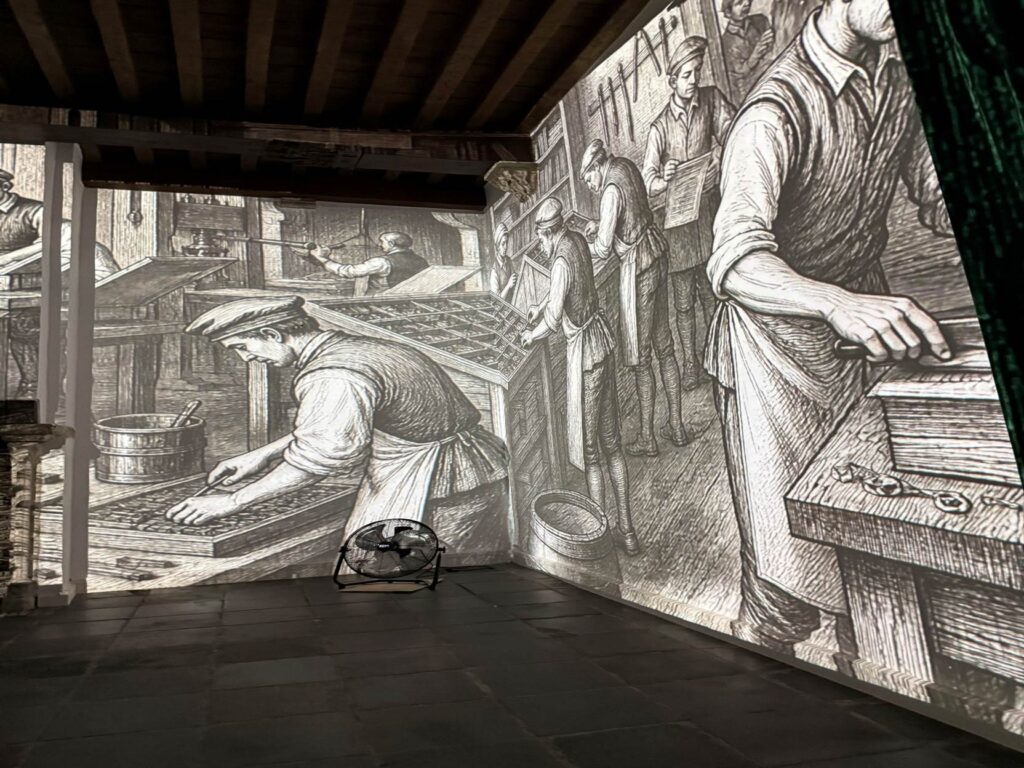
- 1550s and 1560s – Print becomes politically charged as religious and political tensions harden.
- 1563 – Portuguese traders want to make their mark on this year’s Ommegang. They create a replica of Noah’s Ark to be pulled by a live elephant. It is the first elephant that the people of Antwerp have ever seen, and they are in awe.
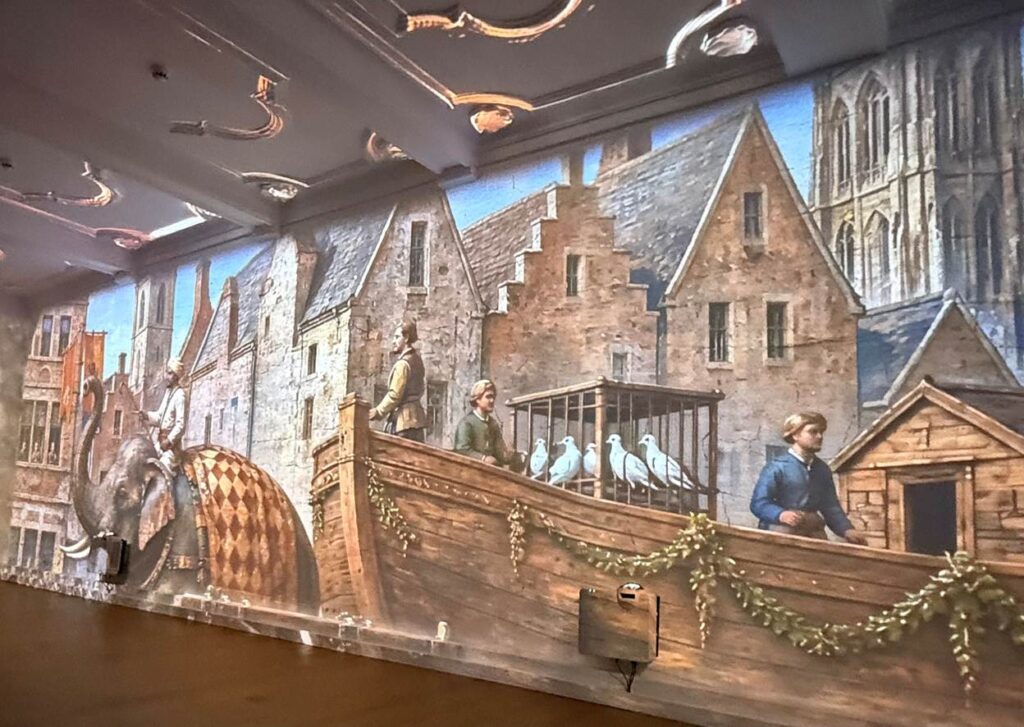
during the 1563 Ommegang parade.
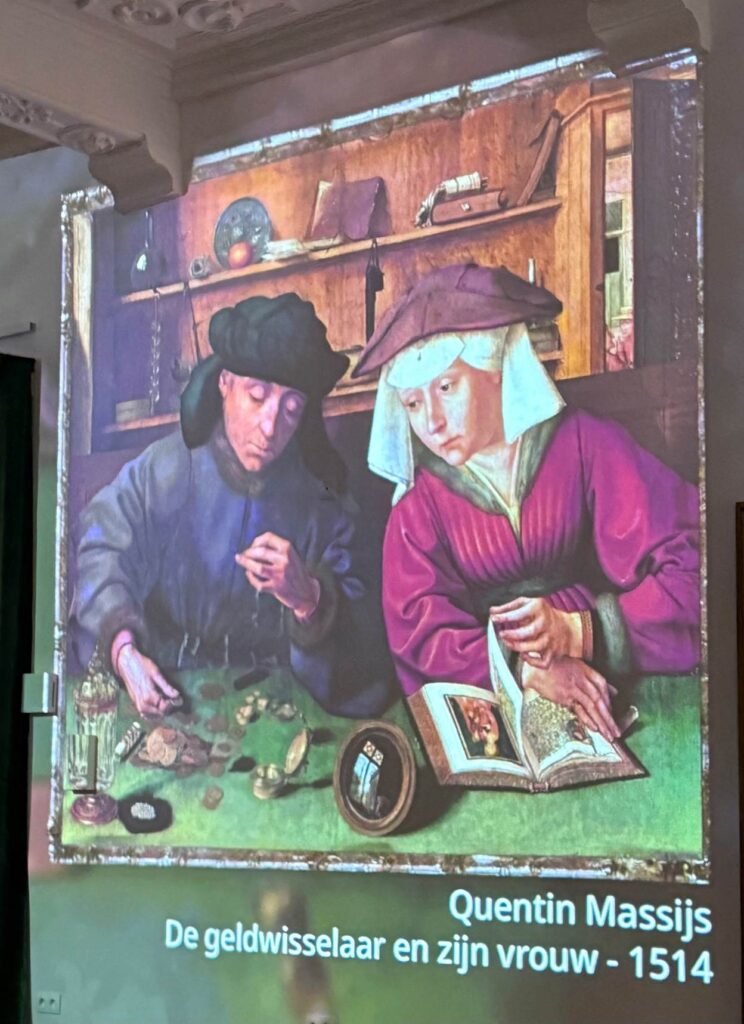
- 1565 – Antwerp depicts the world. In the mid-16th century, the free art market flourishes. Painters like Quinten Massjis and Pieter Bruegal create for the open market, not just for church or court, or by commission. Paintings become export goods. Antwerp becomes the center of the European art trade.
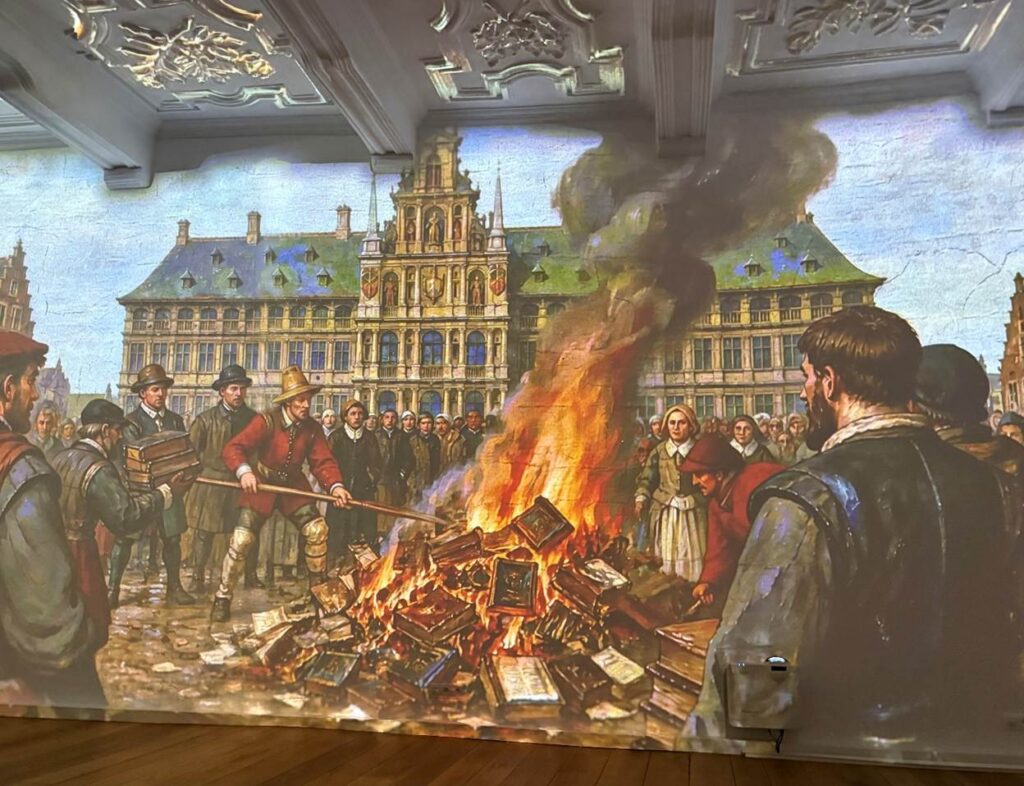
- 1566 – The iconoclastic fury erupts between August and October. Religious tensions erupt. Catholic church interiors, statues, and paintings are destroyed across the region. Antwerp was hit hard on August 20th, including the Cathedral of Our Lady. Sacred books are burned. The city is torn apart, what once was sacred and precious for centuries suddenly becomes a target. The violence is the visible outcome of years of religious conflict and social unrest.
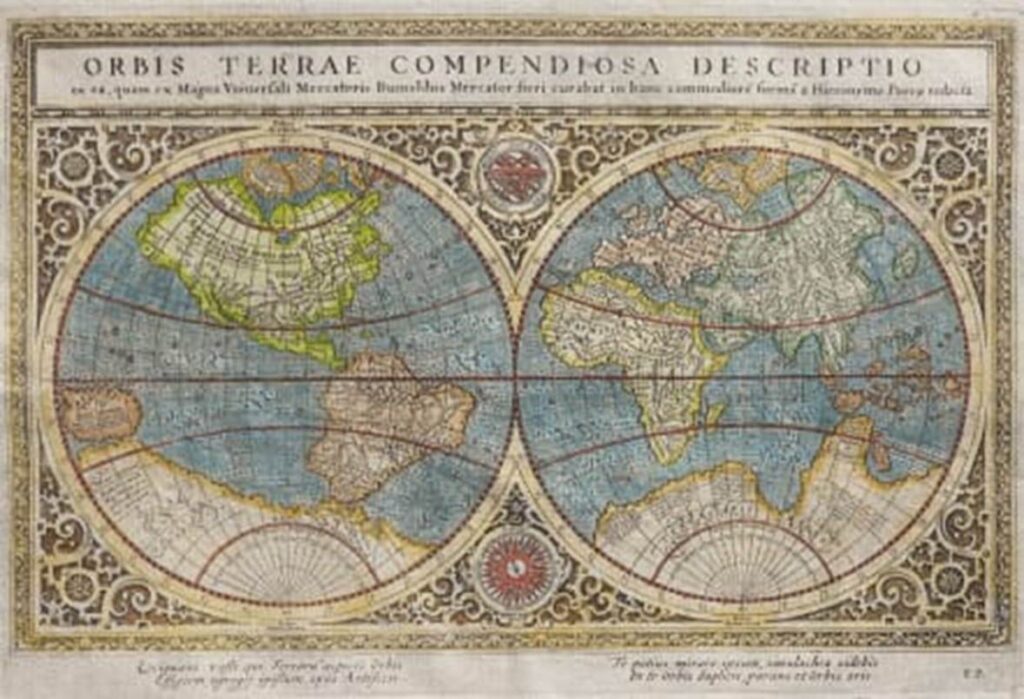
- 1569 – Gerardus Mercator publishes his revolutionary world map. It converted the curved surface of the earth into a flat map while preserving straight-line compass directions. Straight lines become reliable sea routes, simplifying oceanic navigation. Mercator projections are still used in most world maps today.
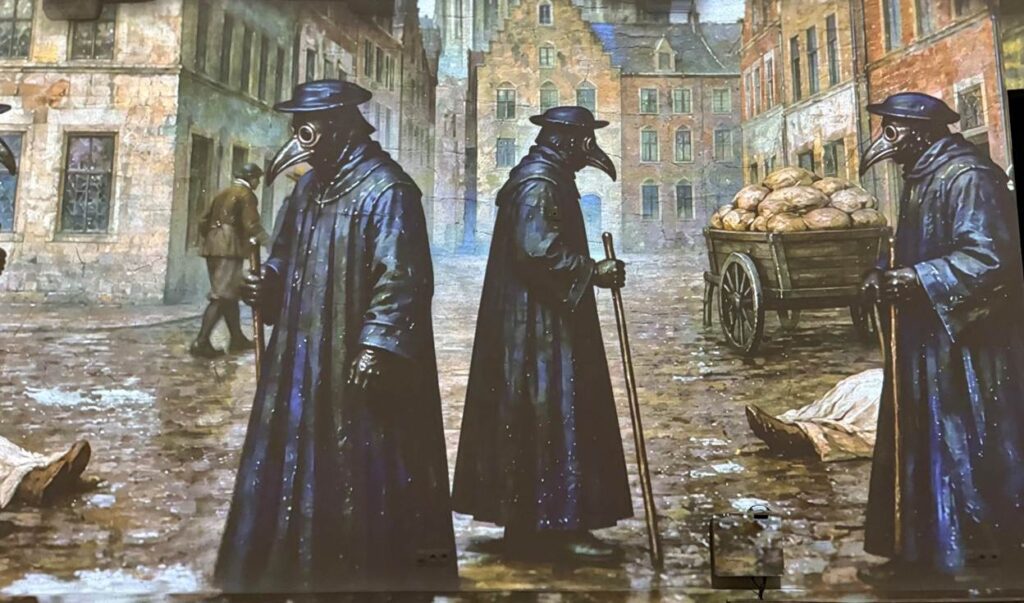
- 1570s – Beginning around 1571, Antwerp is besieged by the plague. The plague will resurface in 1574 and 1578. The city is also caught in the midst of a religious and civil war, and a revolt against the Spanish Habsburg rule of the Low Countries.
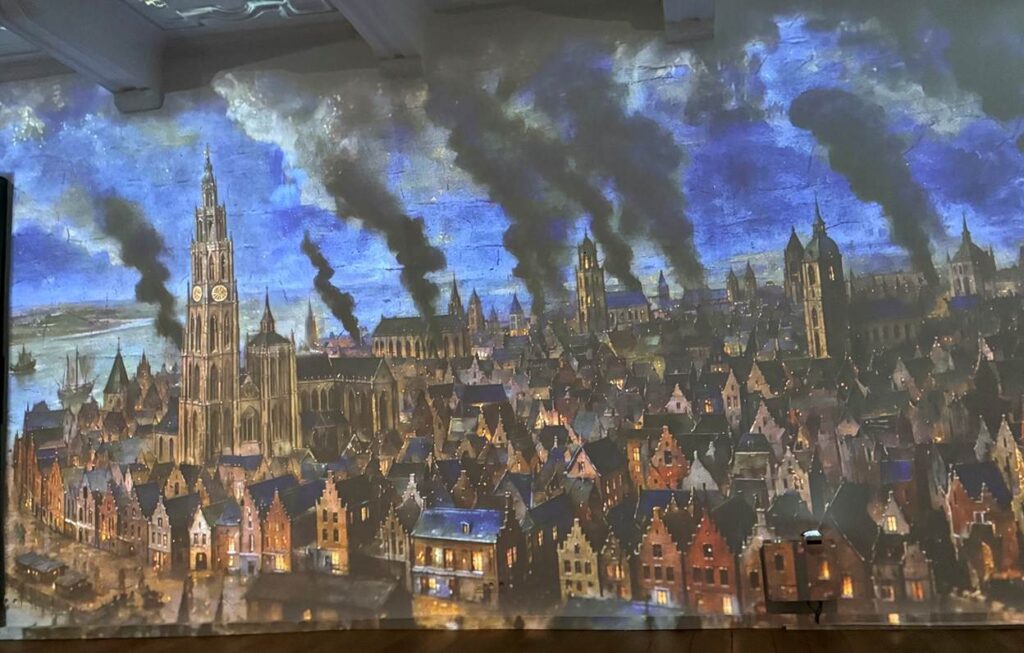
- 1576 – The Spanish Fury ensues. Disgruntled unpaid Spanish soldiers massacre 7,000 citizens, looted what they could, and burned at least 800 houses.
- 1577 – With the help of King William of Orange of the Netherlands, the Spanish are driven out. Antwerp transitions from a Catholic to a Calvinist government and Catholic rites are banned.
- 1578 – Antwerp attempts to install freedom of religion.
- 1581 – Antwerp outlaws the public practice of Catholicism. This is the height of popularity for Calvinism and Lutheranism in Antwerp.
- 1585 – After a long siege, Spain retakes the town and Antwerp transitions its government back to Catholicism. At this time, half the population is Catholic and the other half Protestant (two-thirds Calvinists and one-third Lutheran).
- 1585 – The fall of Antwerp. Political turmoil and war reshape the city. Spain’s strict Catholic regime is resented by the city’s Protestants. They closed access to the city via the Scheldt River and the city’s mercantile bustle evaporated. Many printers and scholars leave. Antwerp’s Golden Age is irrevocably over.
The Mercator-Orteliushuis is located at Kloosterstraat 15 in Antwerp. It is open from Tuesday through Sunday (closed on Mondays) from 10:00am to 5:00pm. Presentations are made in Dutch with English subtitles. Adult admission is 17.99€.
July 22, 2026