

Ghent’s Industriemuseum traces the history of major industries over the last five centuries. Wool was king, then flax and cotton. As the textiles industry faded, printing and pharmaceuticals grew. Throughout it all, industry needed labor — in other words, people. This article focuses on the experience of workers in Belgian history, timed to coincide with the American Labor Day.
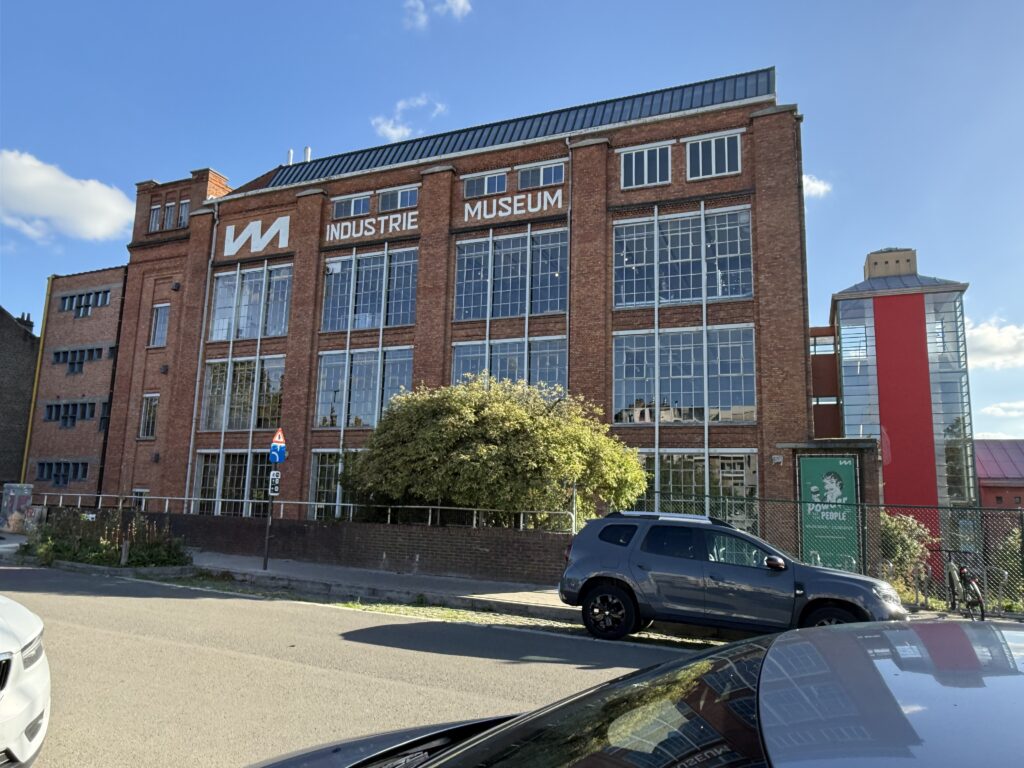
The IndustrieMuseum in Ghent.
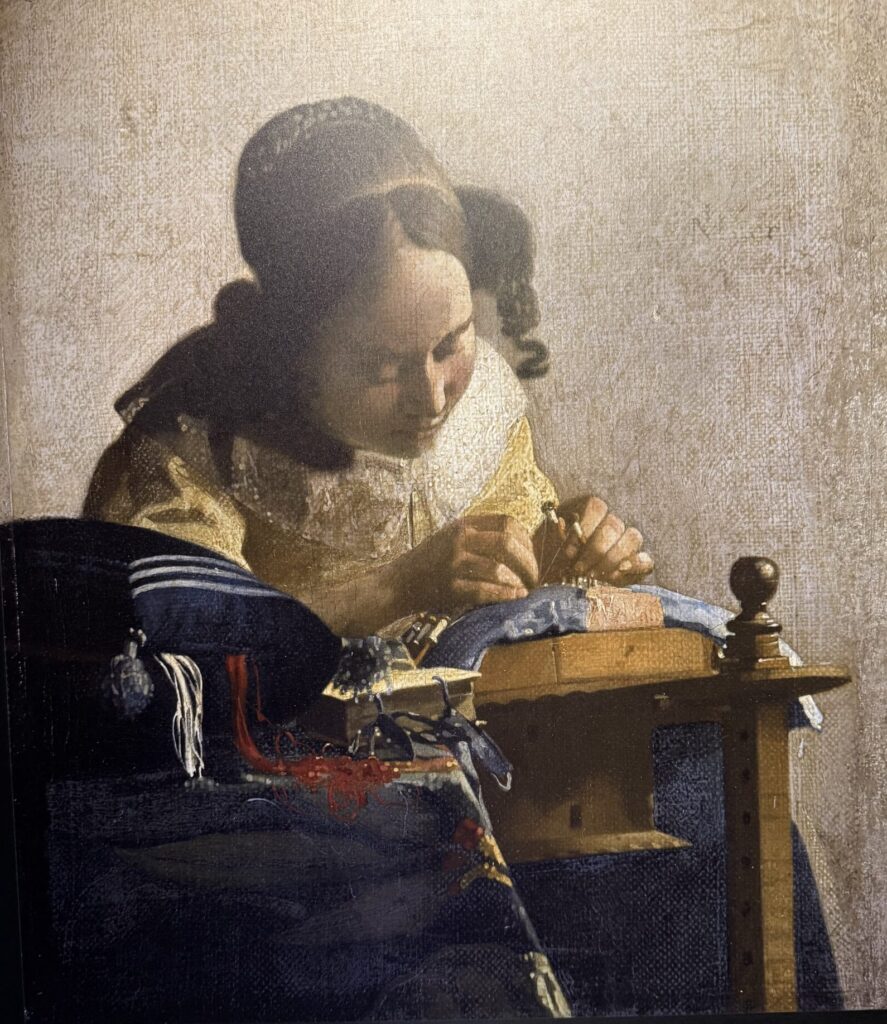
The demand for lacemaking soared in the 16th century; fashionable ladies (and gentleman) were willing to pay huge sums for lace. However, lace-making is accomplished through hours of painstaking labor done by hand. Lace-making was an industry of women and children. After all, there was no paid overtime in the 16th century, nor were there child labor laws. Lace-makers would sit bent over their tasks for 10-14 hours a day. For the child workers, this left little time for schooling.
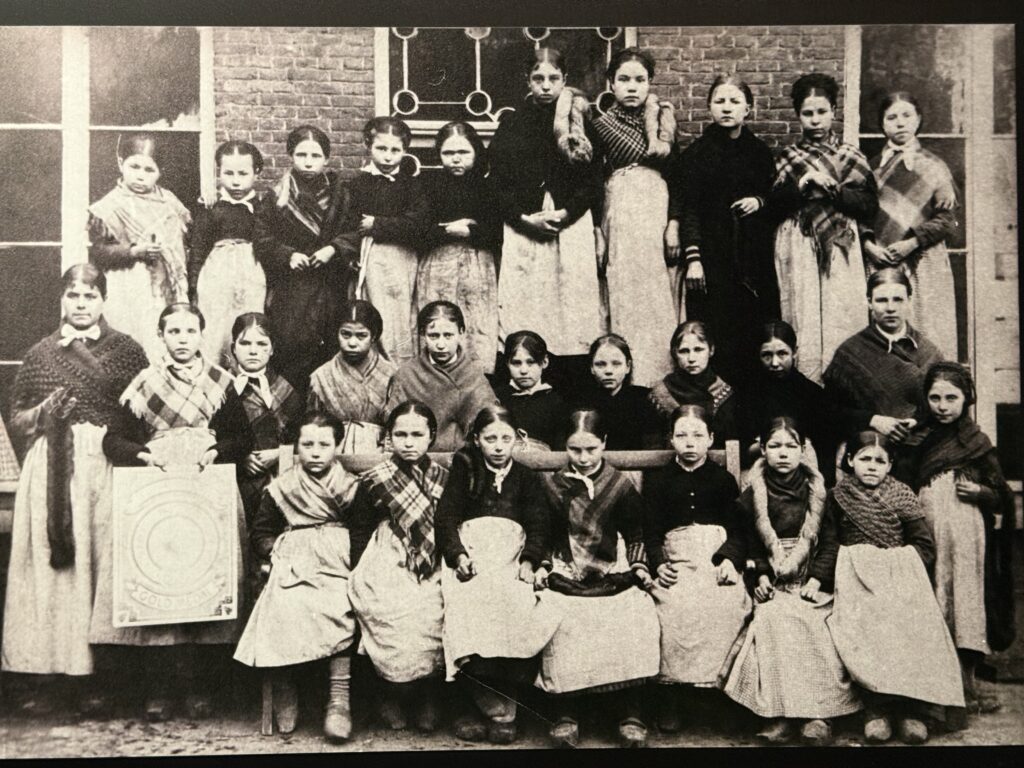
As hinted at above, large numbers of women and children were employed in industry. Factories commonly employed a 6-day workweek of 60 hours (which not uncommonly increased to 70 hours or even more). In the mid-19th century, 20% of workers were children. This figure doesn’t include the children employed as farm workers, household servants, or spinners, so the real percentage was actually significantly higher. Children were considered ideal workers because they were small, agile, and didn’t have to be paid very much.
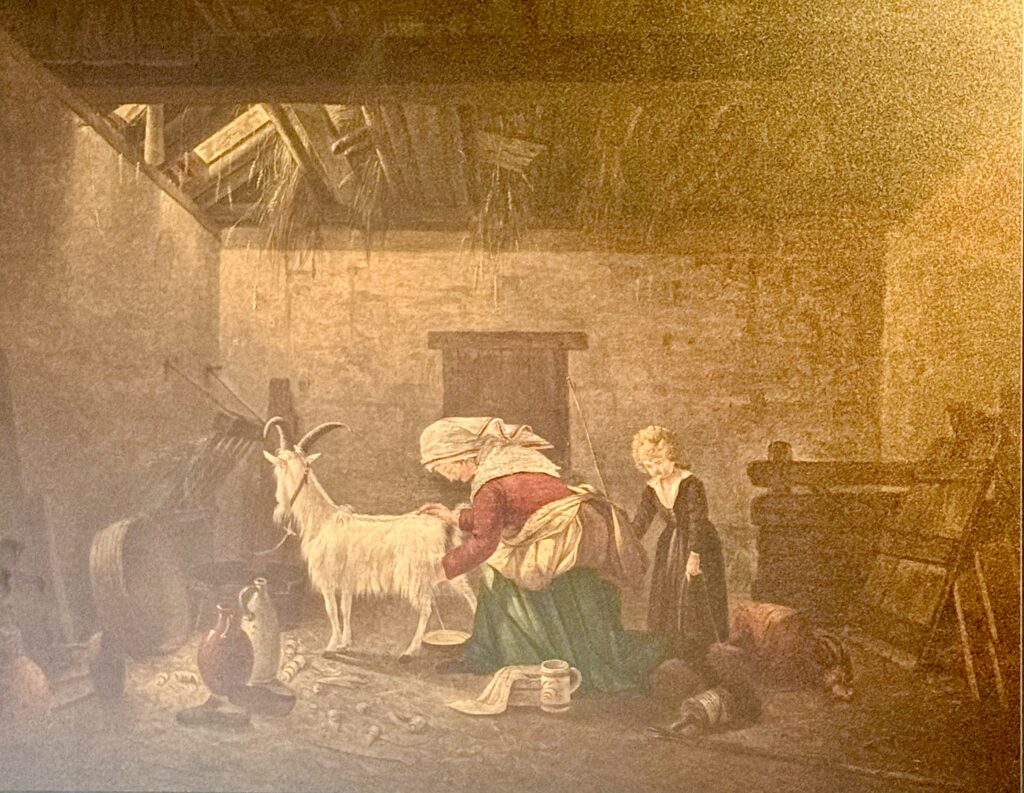
Of course, Belgium had its poor. Every country does. The church parishes had the responsibility of caring for the poor. Those who had no support from family or friends — typically, the elderly, the disabled, and children — were placed on a platform and auctioned off. No, not as slaves. Better off families would bid for how much they would need to provide food and lodging to the indigent individual. The lowest bid would win, and the parish would pay that amount to the winning bidder. This was a common method of caring for the poor in Flanders.
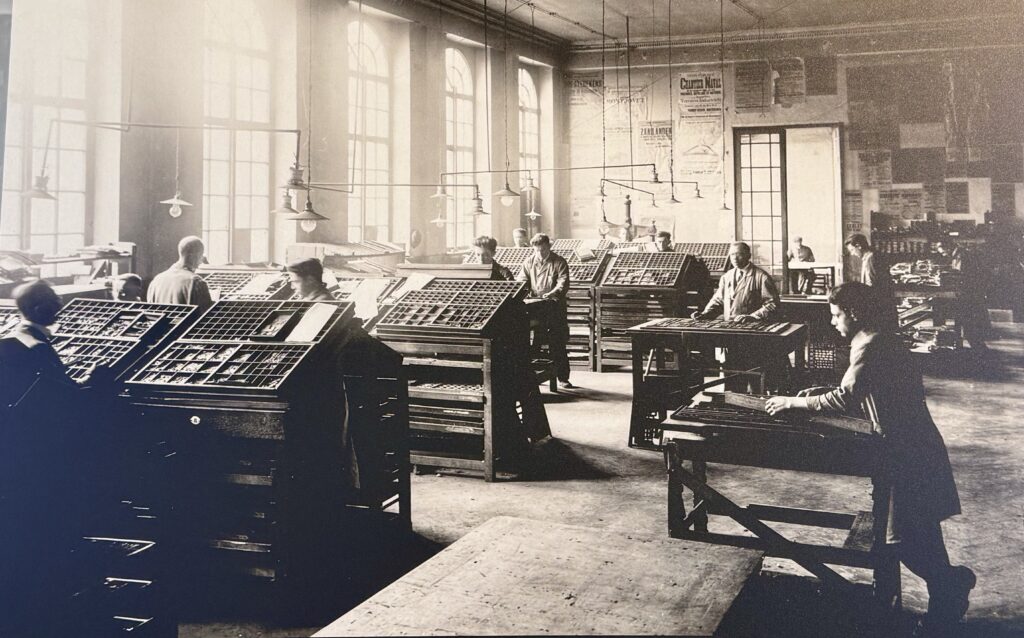
The invention of the printing press, of course, didn’t eliminate the need for labor. Printshops needed letter-setters who would compile the complete text letter by letter, line by laborious line. After the print run was done, they’d have to remove all the type blocks to their proper cases. This was boring work, but quite a number of typesetters were needed for each printing press, at least up until the early 20th century.
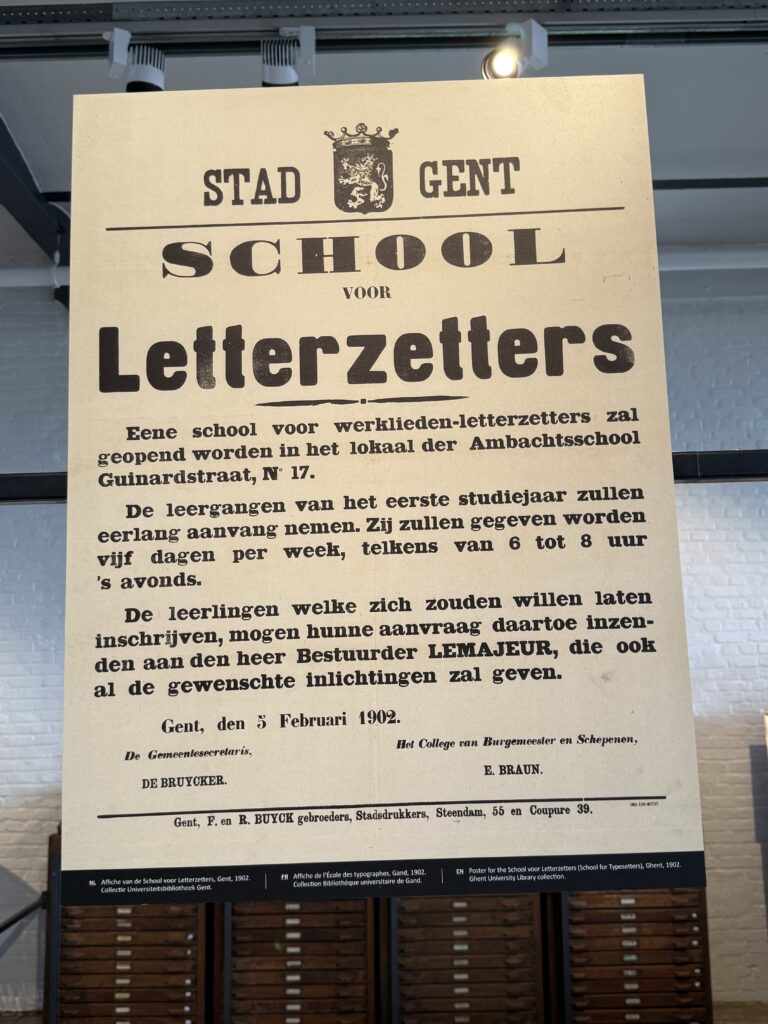
This poster advertises an early 20th century school for letter-setters. Classes were held from 6:00pm to 8:00pm five days a week for an entire year.
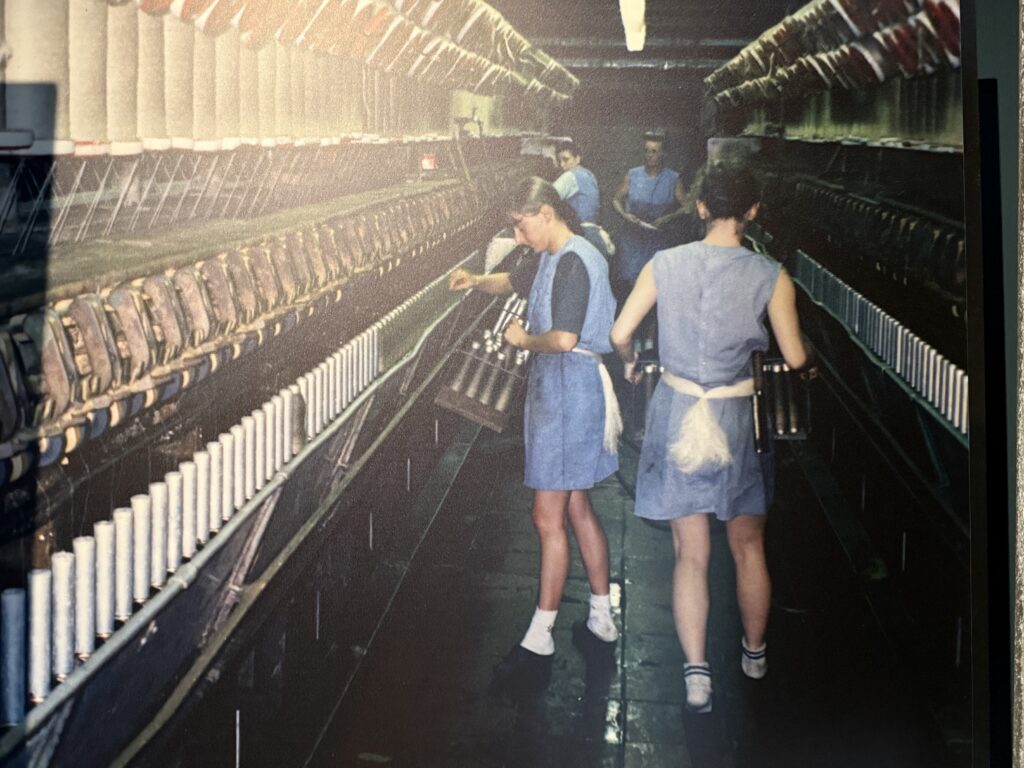
Flax and cotton were big industry in Flanders for centuries. Over the years, labor evolved from hand-work to machines, and then even more efficient machines. Mechanization made the work easier (and less expensive for the employers), but that didn’t mean working conditions were great. Workers especially disliked the flax industry because the “wet spinning frame” required the flax to be spun wet, with hot moist water constantly flowing through the machines and creating a humid environment. The factory floor was also a slippery hazard, as it would be covered in a mud created by a combination of water and flax.
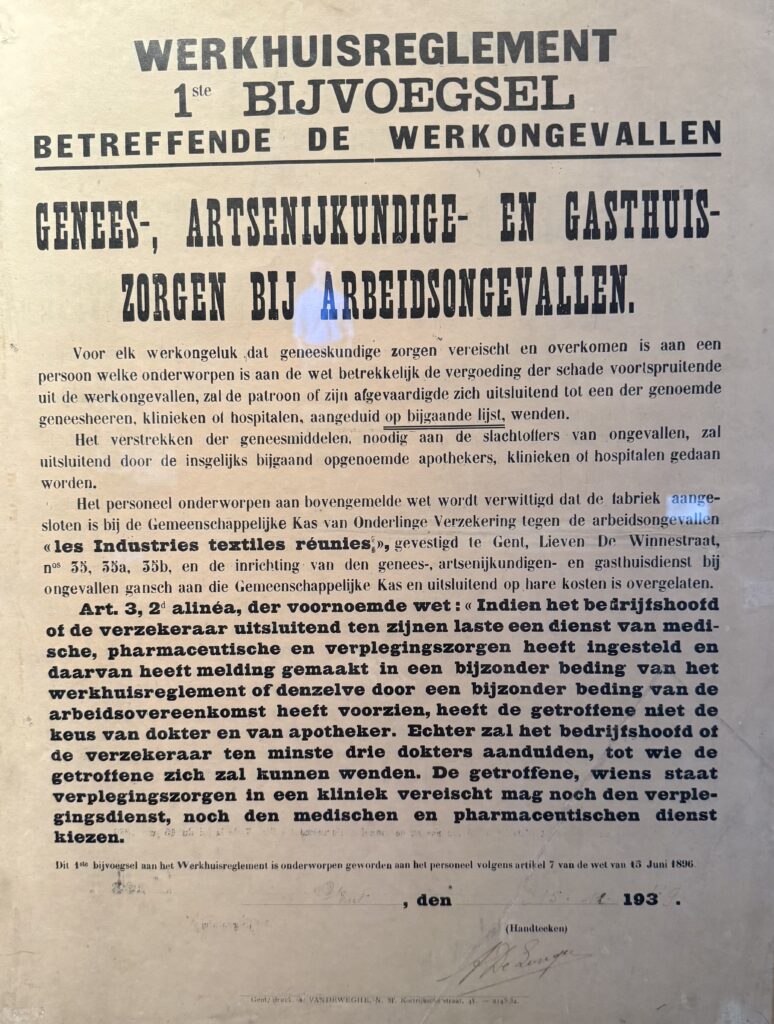
By the early 20th century, Belgium had a workers’ compensation fund of sorts. This poster tells employees that anyone who has suffered a work accident must be seen by one of the employer’s doctors, clinics, and/or hospitals. Textile companies had formed the United Textile Industry Insurance Fund to pay for care for injured workers.
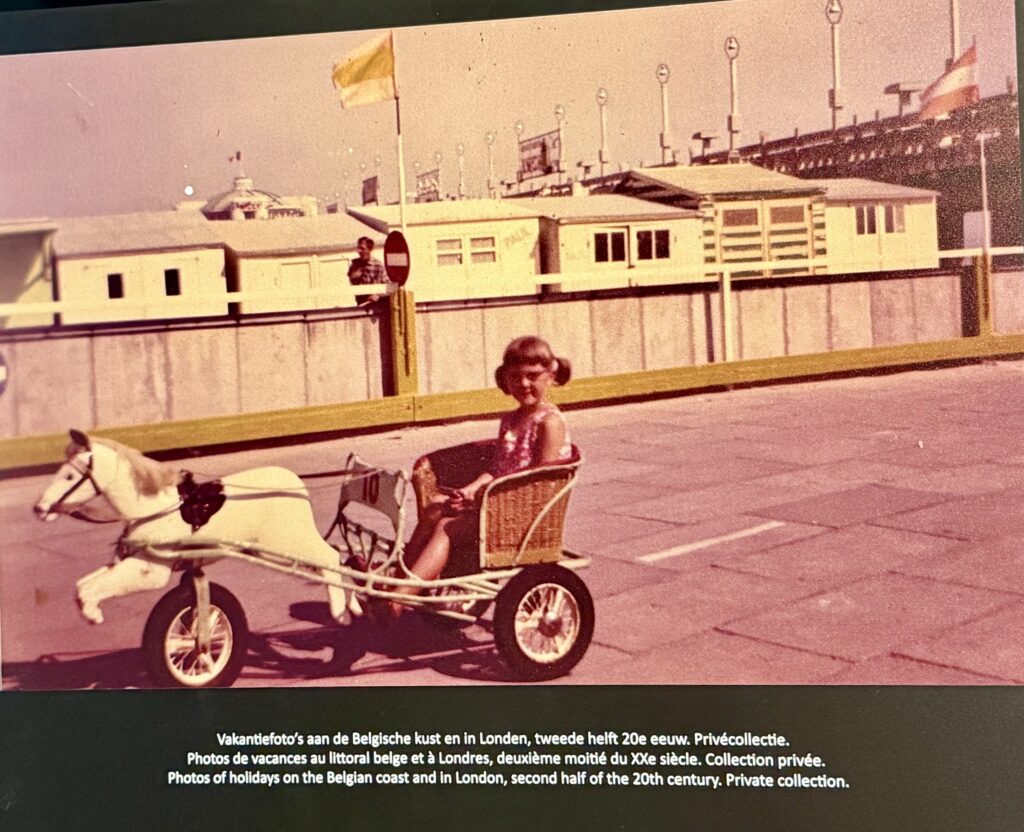
After paid vacations became a reality in 1936, workers were able to afford holidays, and especially so after World War II. Tourism became more affordable and the Belgian coast became a popular destination. By the 1950s, workers were also better paid, being able to purchase items like cars and televisions which only the well-to-do were able to afford previously.
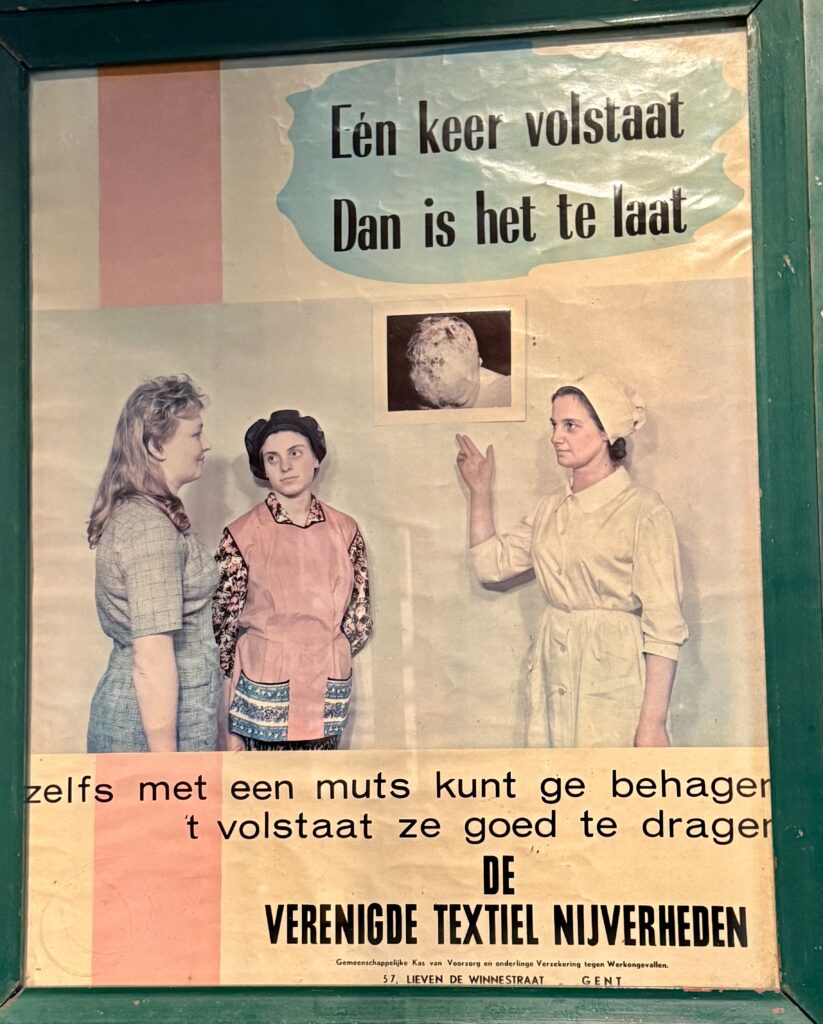
Working conditions in the factories were often harsh and dangerous. Protective items such as helmets, safety shoes, or earplugs were a rarity. Workers’ grievances swelled through the first half of the 20th century, culminating in the passage of health and safety legislation in 1952. Workers who were injured on the job would now have to be paid between 80% and 100% of their normal wages; thus, industry began paying more attention to prevention and safety training. This workplace safety poster in a textile factory urges workers to not only wear a protective hat, but to wear it properly to prevent head injuries.
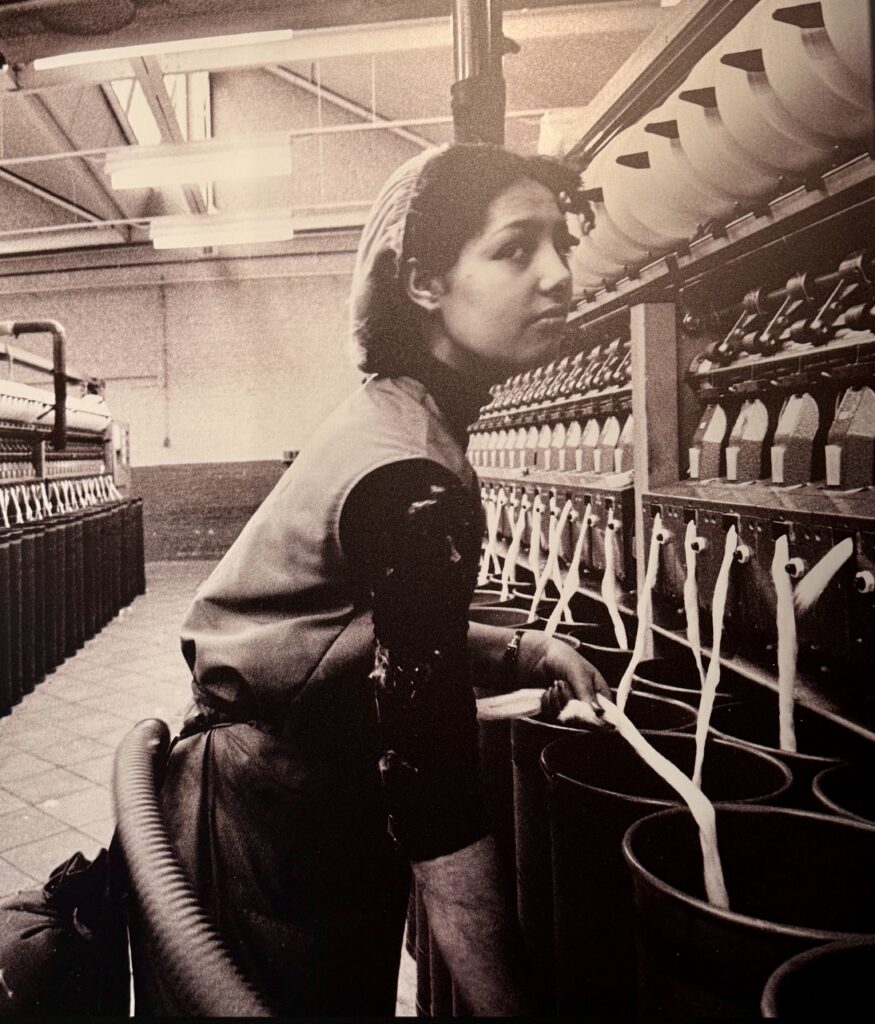
By the 1950s, industry was changing. The textile industry in particular had a shortage of workers. They turned to Belgium’s former North African colonies in Tunisia, Algeria, Morocco and Turkey, where unemployment was high and the employees were more willing to tolerate harsh working conditions. The immigrants were eager to earn some quick money and then return to their home countries.
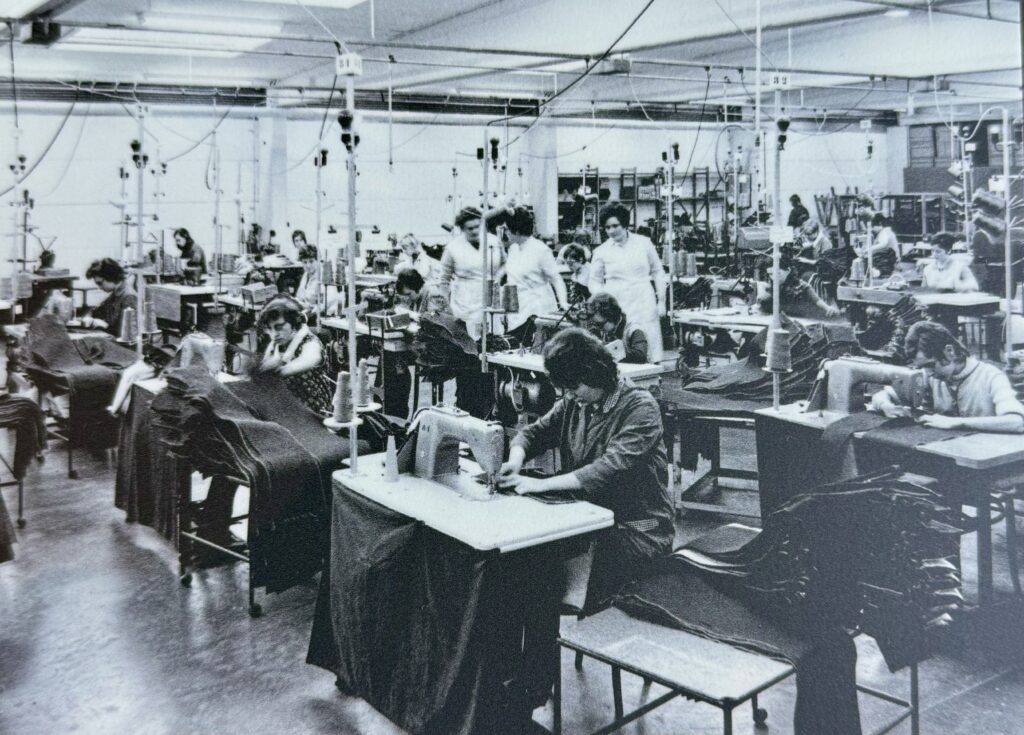
Until the creation of the electric sewing machine in the 20th century, clothing was handmade by tailors and seamstresses for individual customers. People wore their clothes until they were threadbare and still-useful garments were passed on to the next generation (perhaps with a few alterations to keep them fashionable) or were sold to second-hand shops. But mass production became king in the 20th century and clothing began to be made on production lines in standardized sizes. Soon, instead of having clothing custom-made, people began buying ready-made clothing in shops.
Today, Belgian designers create the designs, patterns, and prototypes, but actual production occurs in other countries with lower wage costs. Problems with working conditions — AKA sweatshops — are still an ongoing controversy.
The IndustrieMuseum, or the Museum of Industry, Work, and Textiles, is located at Minnemeers 10 in Ghent. It is open from 9:00am to 5:00pm on Mondays, Tuesday, Thursday, and Fridays, and from 10:00am to 6:00pm on Saturdays and Sundays. Admission is 13 euros.