

The British Library began in 1753 as an adjunct to the British Museum. In its early days, it was called the British Museum Library and held the collections of Sir Hans Sloane (whose donations led to the founding of the British Museum), Sir Robert Cotton, and Robert and Edward Harley. After King George III died and the Library inherited his collection, the size of their manuscript collection had doubled and caused an expansion of the current British Museum site.
During WWII, the British Museum/Library’s most precious treasures were moved to a secure Welsh cave in Aberystwyth and were provided with round-the-clock guards. Although collections in London saw damage from German bombings, the items in the Welsh cave were saved.
Eventually, a site near St. Pancras Station was chosen as the new home of the British Library, which would consolidate a number of collections scattered around London and the country. Queen Elizabeth II inaugurated the new British Library in 1987, which was the largest public construction project in 100 years.
I spent a pleasant couple of hours browsing their “Treasures of the British Library” exhibit, which houses a well-curated collection of sacred texts from every major world religion (from Bahai to Zoroastrianism), the Magna Carta, historical texts, a Shakespeare first folio, original music by Handel and the Beatles, and even posters from the animal rights movement.
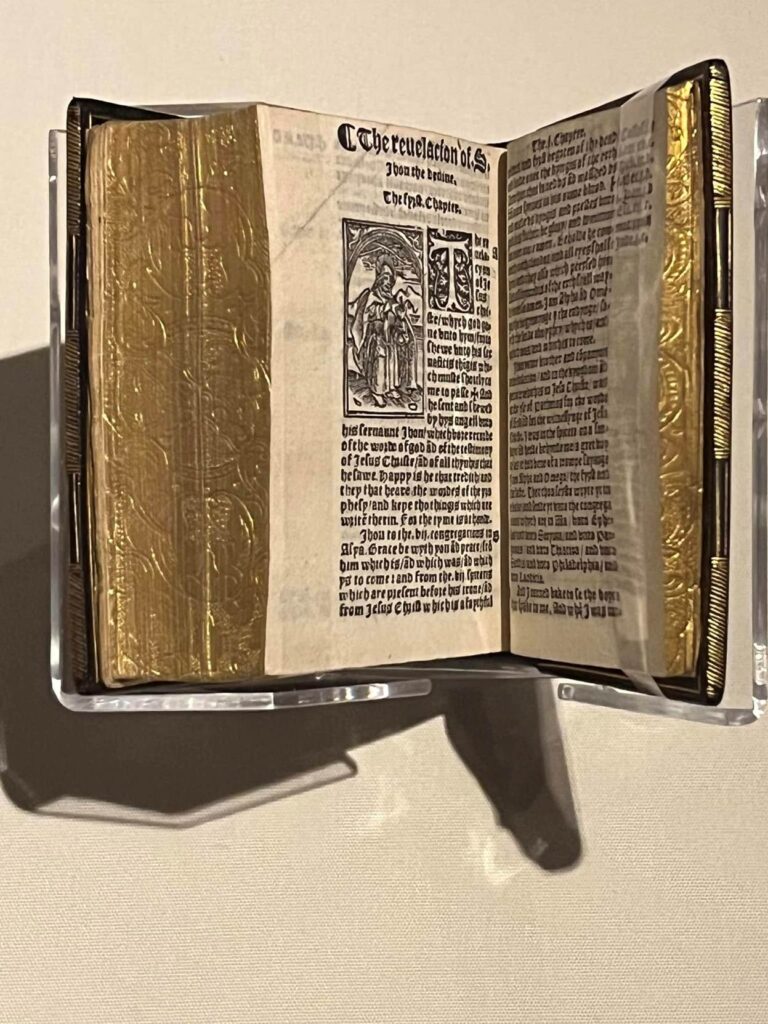
This isn’t the most beautiful of the sacred texts that I’ve highlighted in these photos, but it’s one of the most significant to the English-speaking world. Prior to the 16th century, it was illegal to translate the Bible into English. Priests wanted to be the authorities on the text of the Bible. William Tyndale, however, wanted to make the Bible available to the common people in England. He ended up going to Germany, finished his translation of the New Testament, and then found a printer in Cologne to print his work. That printer was raided, but Tyndale fled with one copy of the printed pages to Worms, where he had 6,000 copies printed and then smuggled into England. The bishops did everything they could to destroy these bibles but were unsuccessful. Meanwhile, Tyndale hid in Antwerp to work on his translation of the Old Testament. In 1534, Tyndale was betrayed by a false friend. After a year and a half in prison, he was executed in 1536 for heresy. His efforts were not in vain. Three years later, King Henry VIII required every parish church in England to make a copy of the English bible available to parishioners.
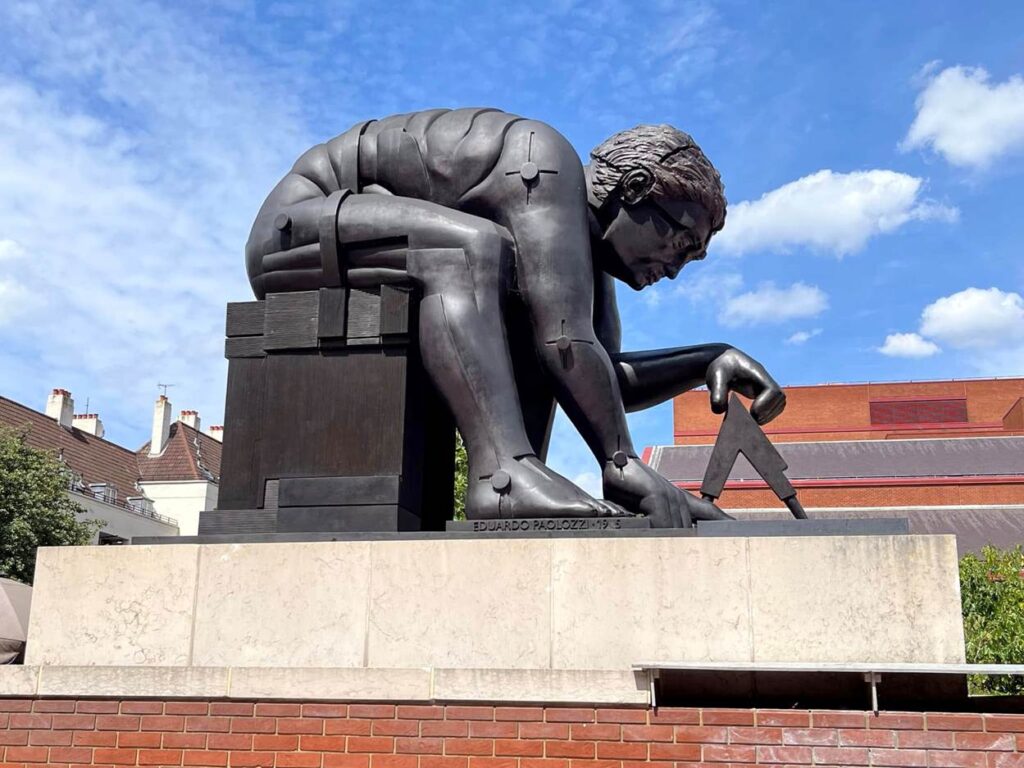
Sculpture of Sir Isaac Newton in the courtyard of the British Library. By Eduardo Paolozzi in 1995.
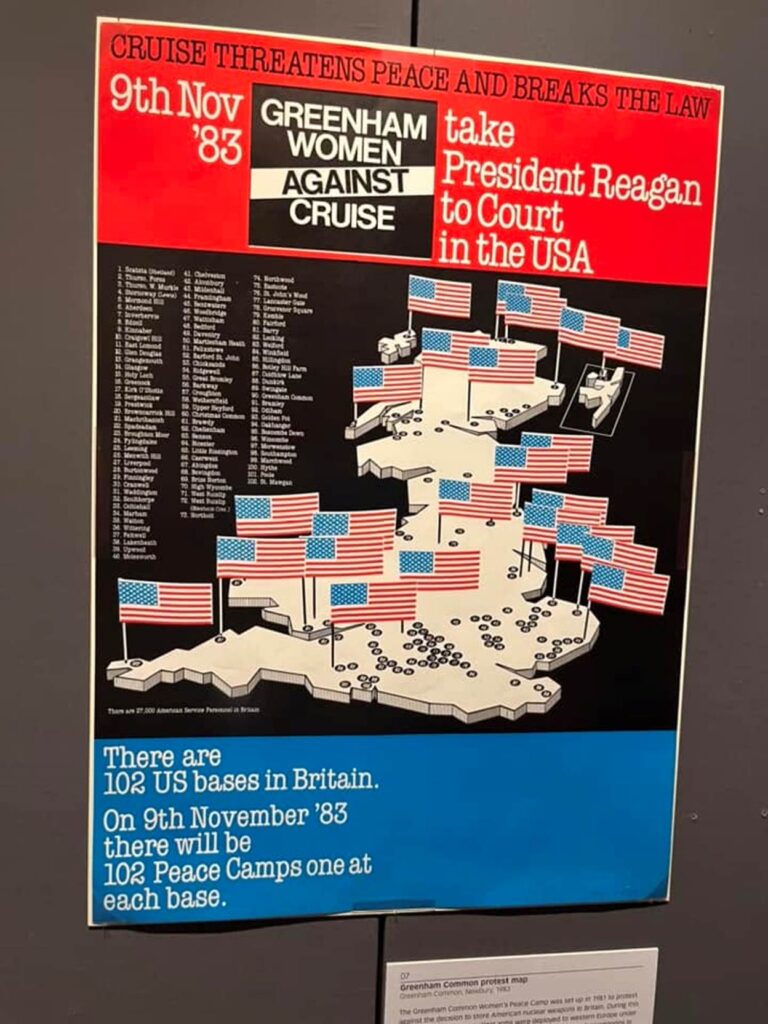
I was totally unaware of this protest. During the Cold War, nuclear arms were deployed in Europe under NATO while the Soviet Union stockpiled more in the East. A decision was made to store American nuclear weapons in Britain. This poster appeared a few days before the Cruise missiles arrived and called for action to prevent their deployment. Protests were planned at all American military bases located in Britain at the time. Although the Greenham Common women’s Peace Camp’s legal challenge was ultimately unsuccessful in court, it did bring signficant attention to their cause. 1983.
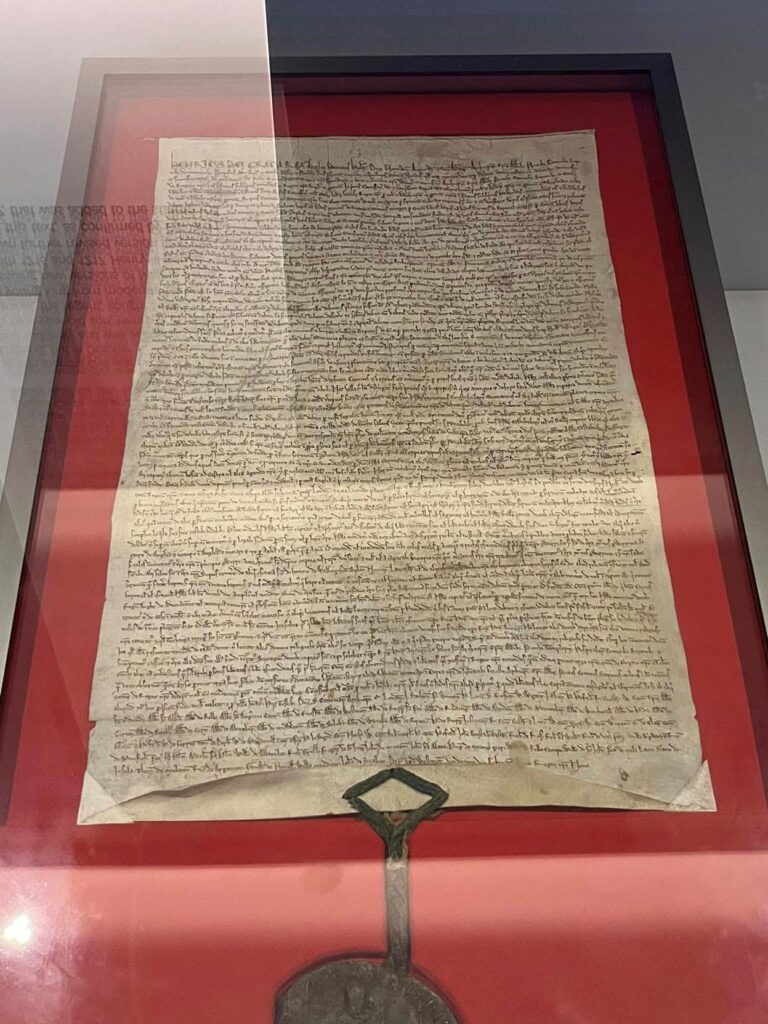
The Magna Carta is hugely significant not only to Britain, but to the United States as well. Its most lasting concept is that it established the principle that everyone — including the King — is subject to the rule of law. It was granted by King John in 1215. The Magna Carta piloted the idea of asserting one’s rights as an individual. It was the cornerstone of the U.S. Constitution and the Bill of Rights. In fact, the Fifth Amendment, guaranteeing due process to all Americans, directly originated from its text. This copy is from 1225, when King Henry III issued the final and definitive version of the Magna Carta. It was sent to Wiltshire and preserved at Lacock Abbey until the 1940s. During WWII, it was buried under a floor at Lacock, wrapped in a box and enclosed in a metal container.
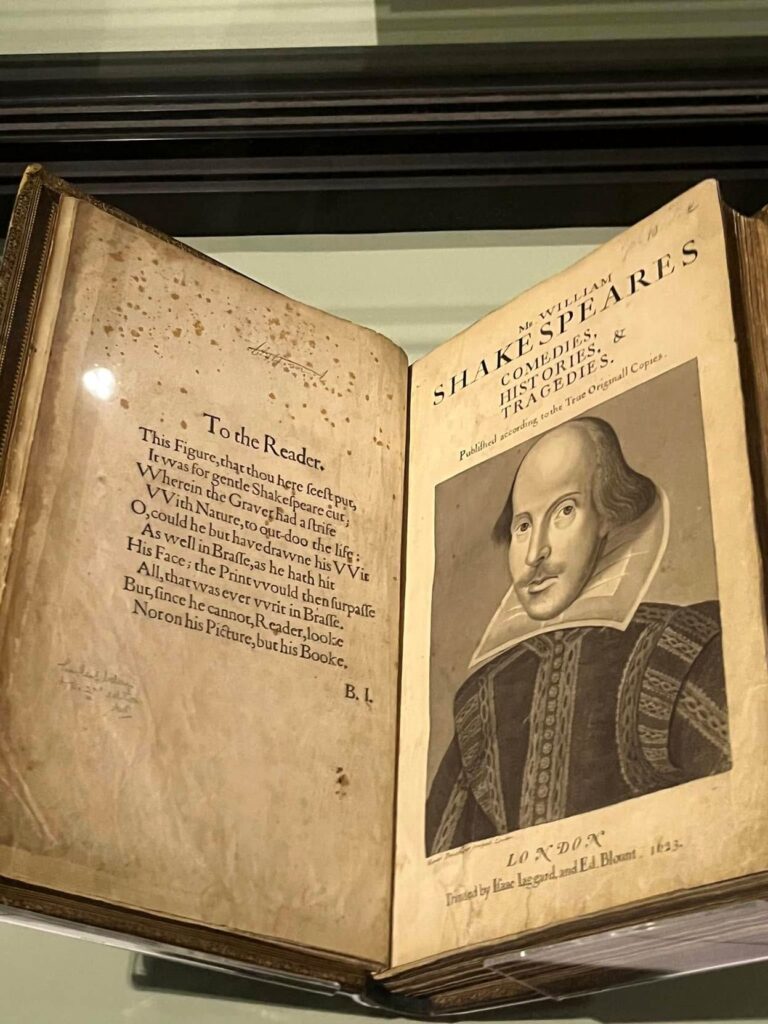
Shakespeare’s First Folio is one of the most famous books in the world. It was put together in 1616 by two of his friends, actors John Heminges and Henry Condell. If not for this publication, 18 of Shakespeare’s plays may have been lost and others would exist only in a rougher form. The size of this book, called a folio, was costly, so this type of book was normally reserved for theological or historical works. Shakespeare was the first writer to have this size book wholly devoted to his dramatic works. Printed in London, 1623.
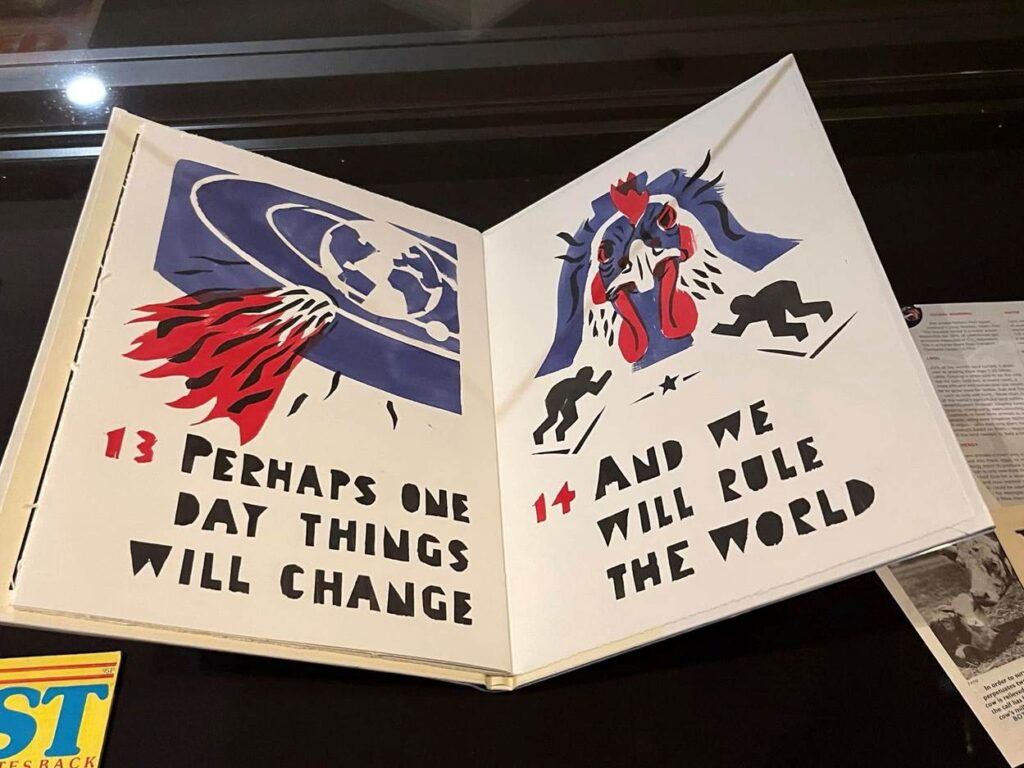
The British Library had a display of several items from the British animal rights movement.
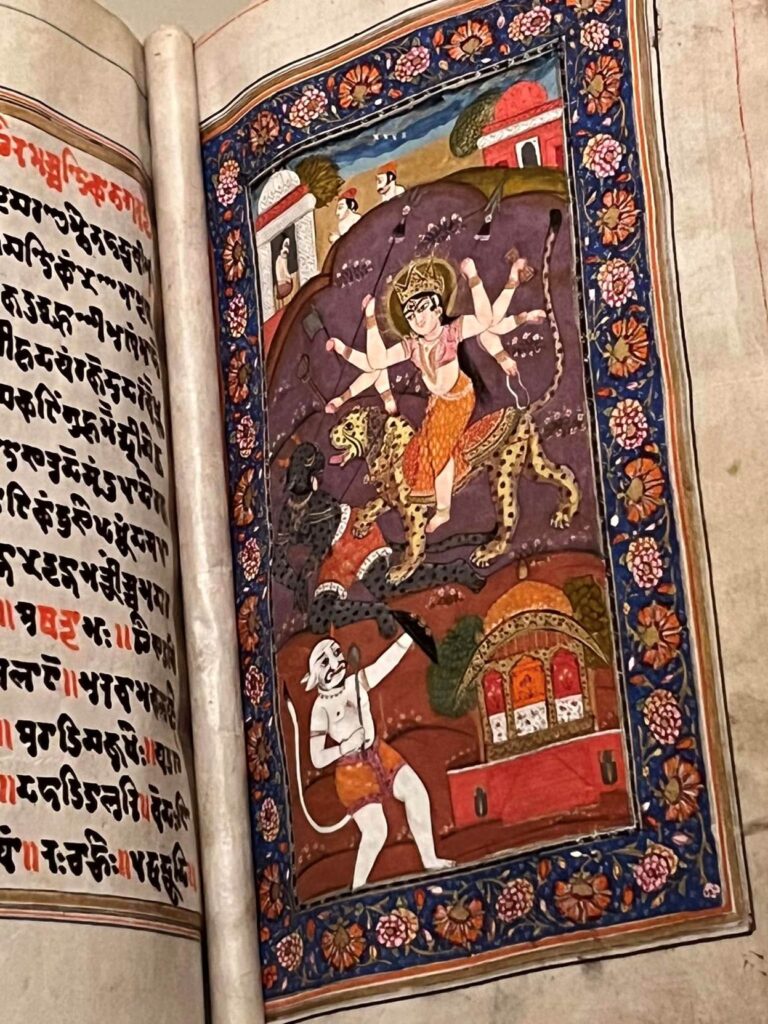
What we see here is an illustration of Devi, or Shakti, the Goddess engaged in battle astride her tiger. She holds a number of weapons presented to her by each of the gods as they implore her to vanquish the demons. Apparently, the demons’ threat to the Cosmic Order has been unstoppable thus far. This illustration marks the beginning of the “Devi Mahatmya” (Glorification of the Goddess), which is the most important text of the Shakta tradition. The text was composed in Sanskrit during the 6th century. Note that the Supreme Being of the universe is a woman.
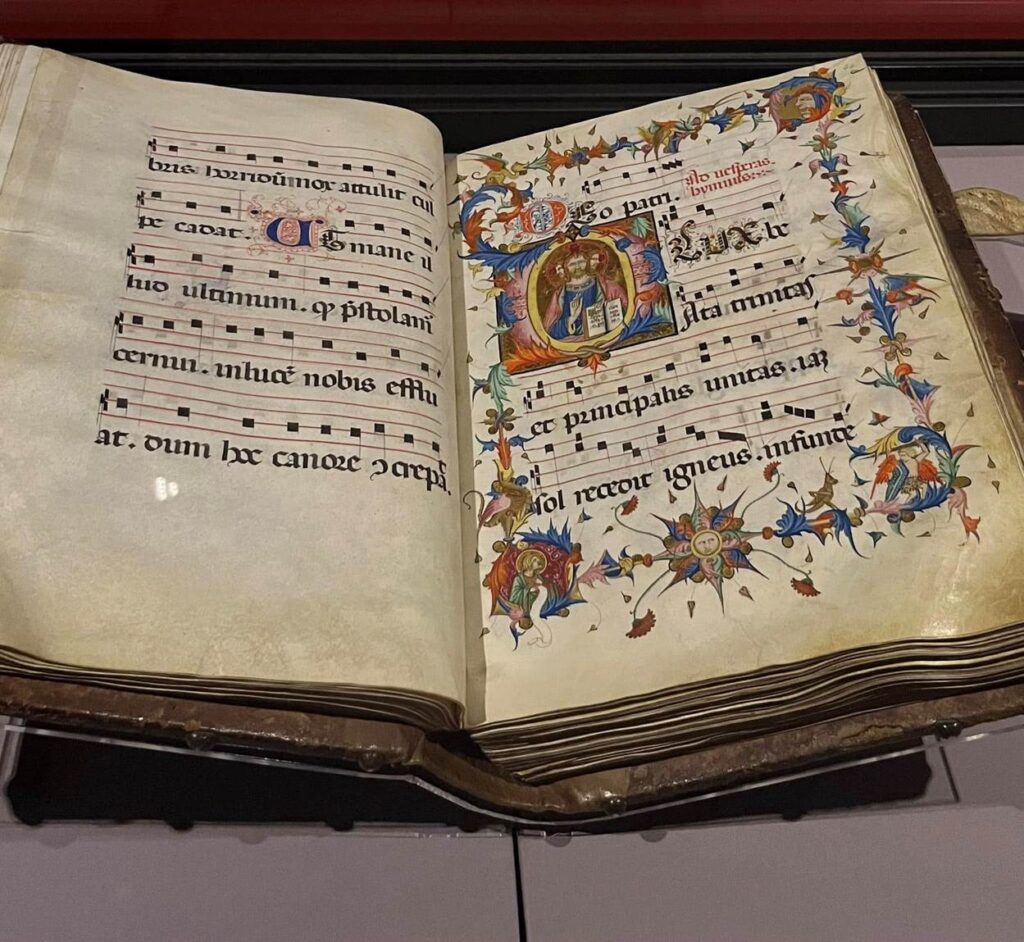
This hymn book was made for the Augustinian friars of the monastery of the Holy Savior at Lecceto (near Siena, Italy) in 1415. It shows the beginning of a hymn to be sung at Saturday Vespers (evening prayer). The decorated letter at the top of the page contains a depiction of God with three faces, representing the Holy Trinity
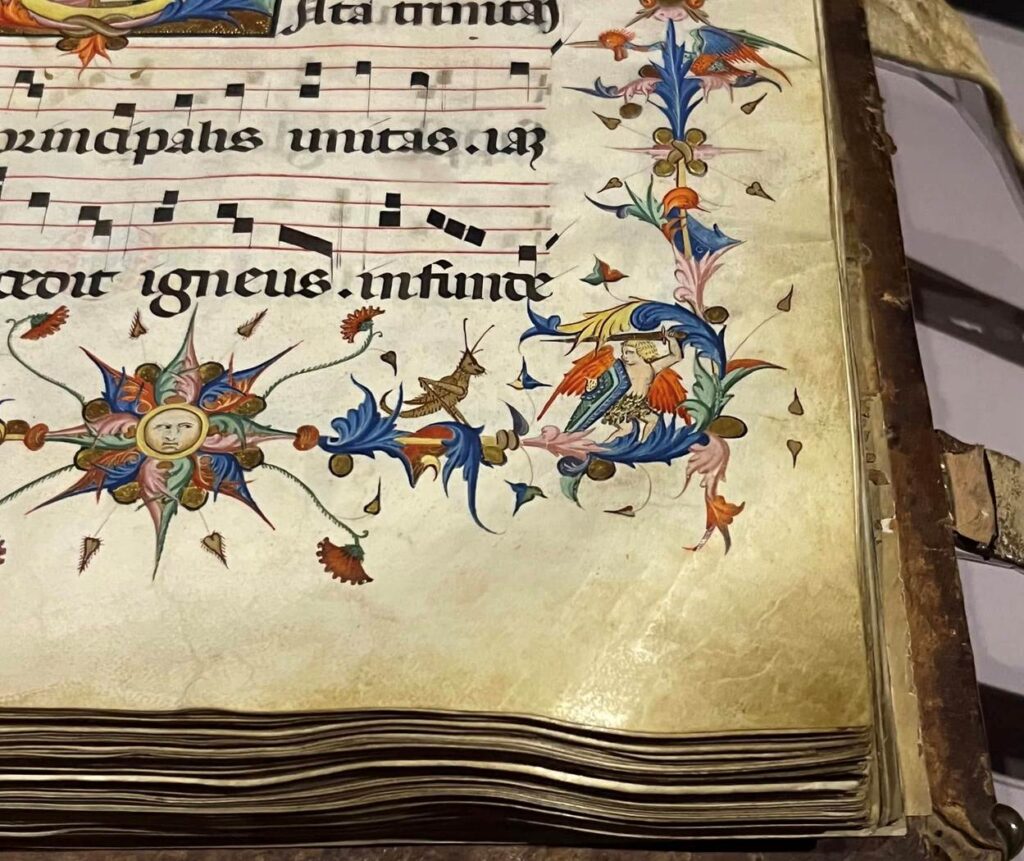
Close-up of the artwork in the Augustinian hymn book. Note the winged boy on the right, who looks like he’s about to do battle with the grasshopper on the left.
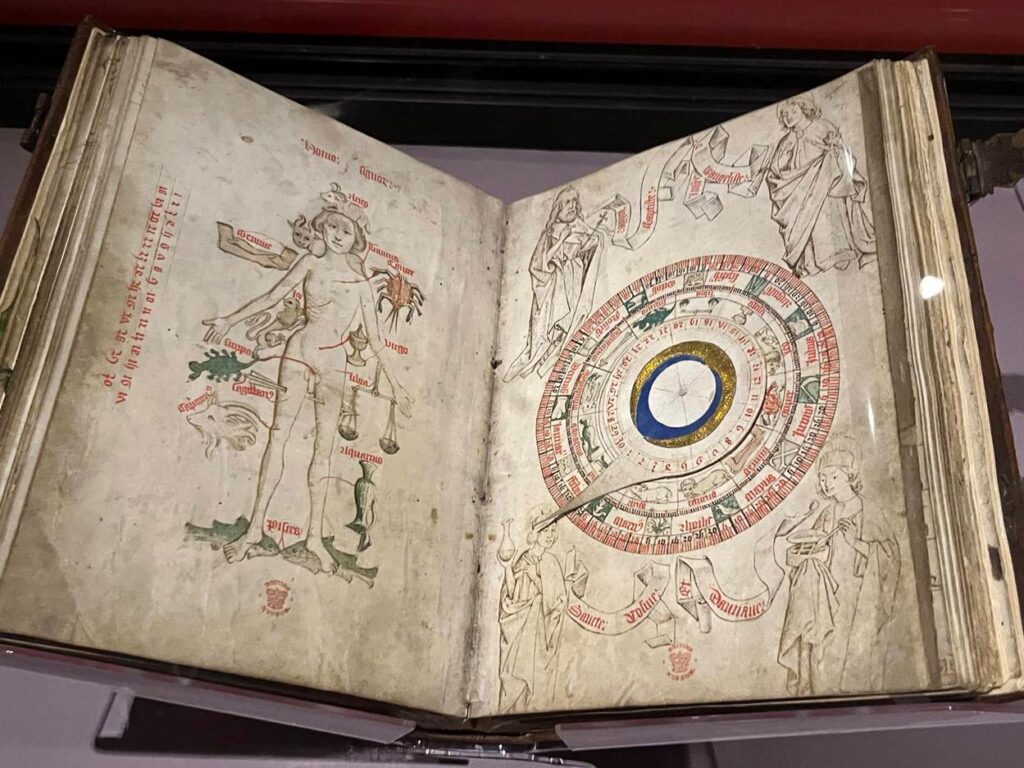
During the Middle Ages, people believed that the movement of the planets influenced the human body. Thus, astrology became an important part of medicine. The Zodiac Man on the left illustrates which Zodiac signs affect the different parts of the body. The diagram on the right is for calculating the position of the moon within the Zodiac on a given day. Surgeons would use these together to determine a safe date to perform an operation. This is the Guild Book of the Barber Surgeons of York and dates to 1486.
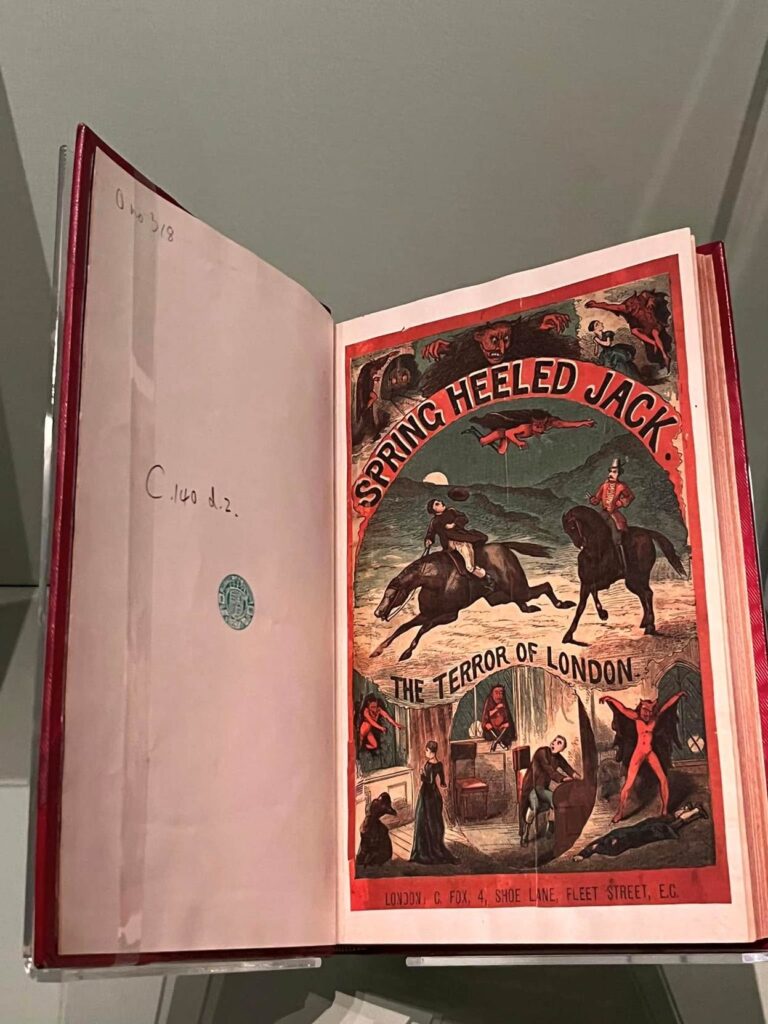
You’ve probably heard of penny dreadfuls, but have you ever seen one? Penny dreadfuls were popular throughout the 19th century. They were published in weekly issues and typically contained long sensational stories accompanied by vivid illustrations. And yes, they were sold for a penny. Spring-Heeled Jack was a mysterious character who was regularly featured in penny dreadfuls. He was an urban legend with devilish connotations. He was reputed to be able to make extraordinary leaps (hence his name), had clawed hands, his eyes resembled red balls of fire, and in some editions he could breathe out blue and white flames. This one dates to 1890.
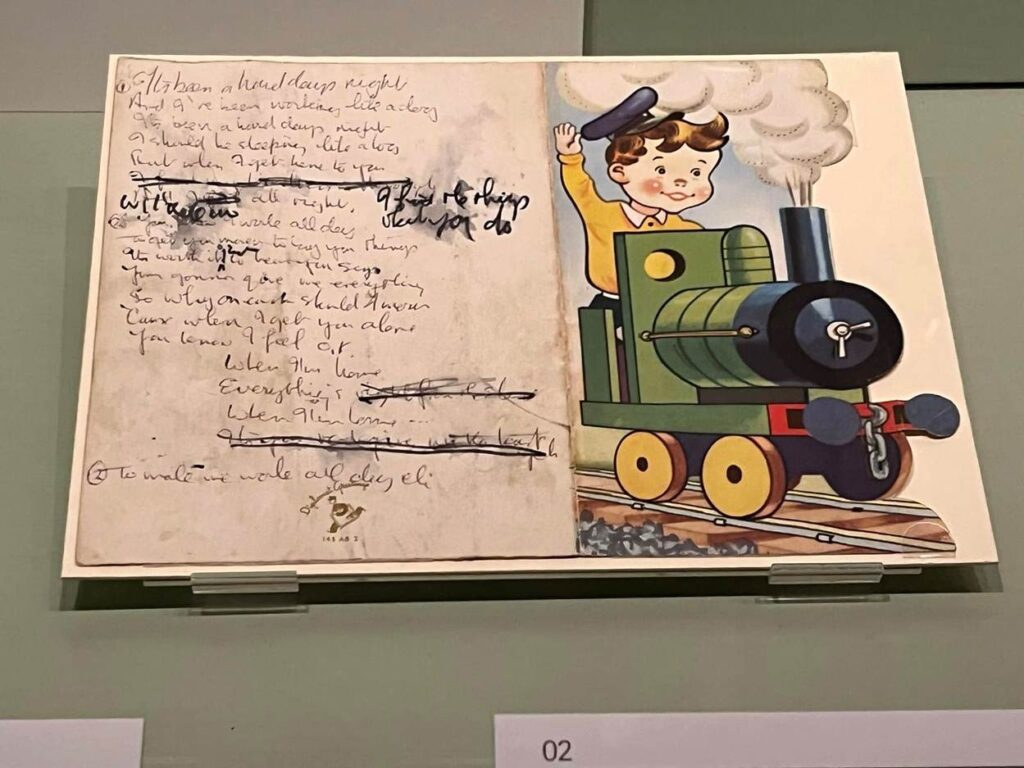
John Lennon composed the lyrics to “A Hard Day’s Night” on the back of a birthday card to his son Julian, who had recently celebrated his first birthday. 1964.
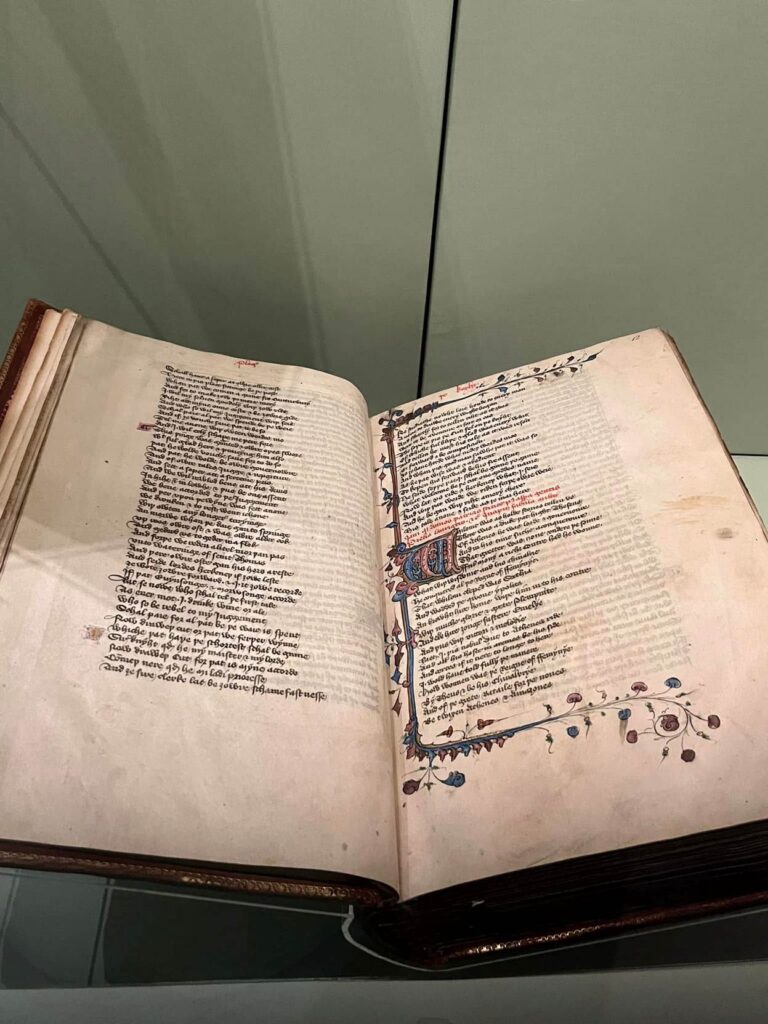
This copy of “The Canterbury Tales” by Geoffrey Chaucer dates to approximately 1410. This page shows the beginning of “The Knight’s Tale”.
The British Library is located at 96 Euston Road, just steps from London’s St. Pancras train station. It is open Monday – Thursday from 9:30am to 8:00pm, on Friday from 9:30am to 6:00pm, on Saturday from 9:30am to 5:00pm, and on Sunday from 11:00am to 5:00pm. The British library includes a cafe, a gift shop, and a book shop. The Library’s Sound Gallery, Philatelic Gallery and Treasures of the British Library exhibitions are free, although special exhibitions from time to time require a fee.