

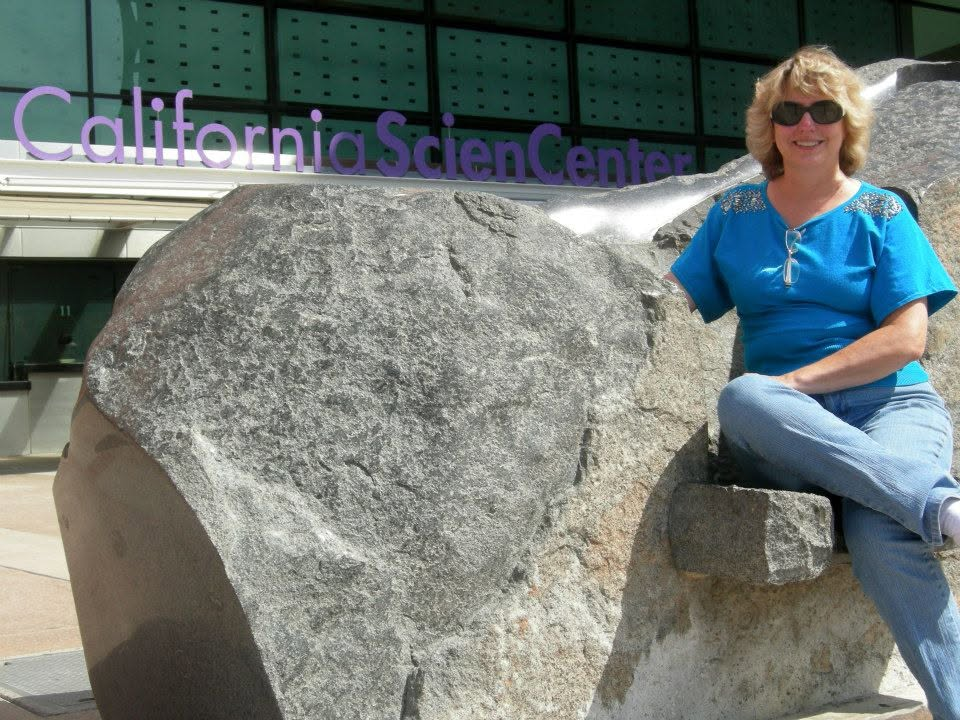
The California Science Center sure has come a long way since I was a kid. Then called the Museum of Science and Industry, it has been supplanted by a gleaming modern ode to science and technology, featuring exhibits on space, ecosystems, and more. About the only exhibit still existing from my childhood days is the Mobius strip — that 8-shaped curve with only one side.
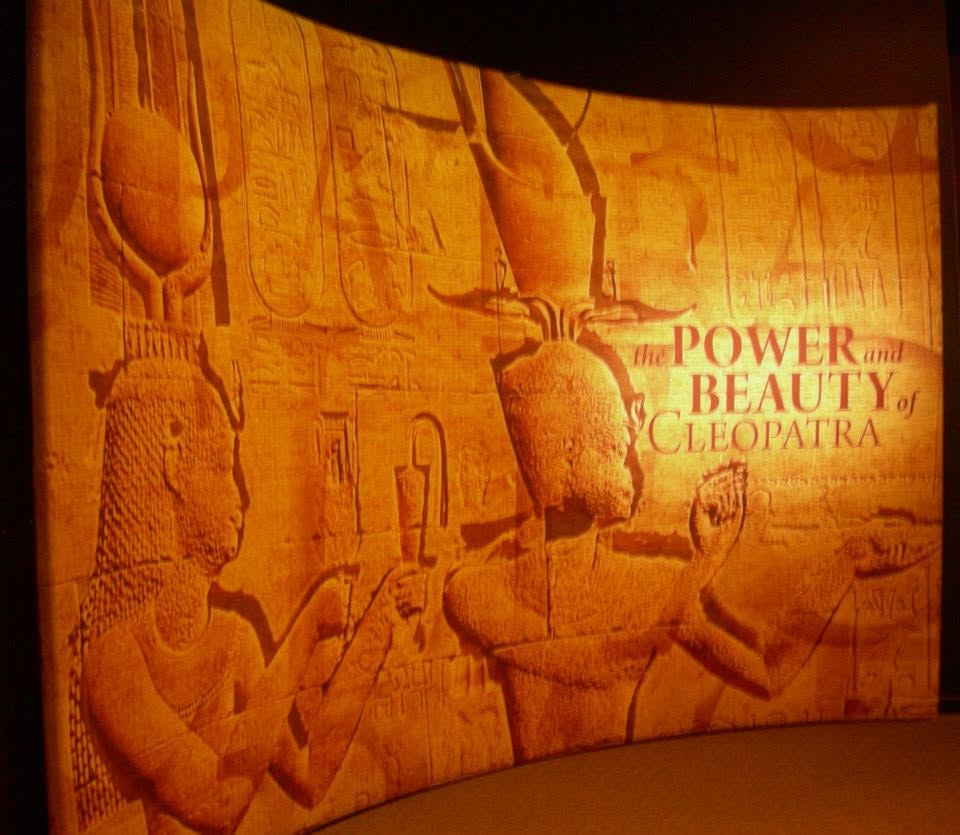
Nowadays, the site in Exposition Park in Los Angeles has room enough for special exhibits — including this one on Cleopatra’s Egypt.
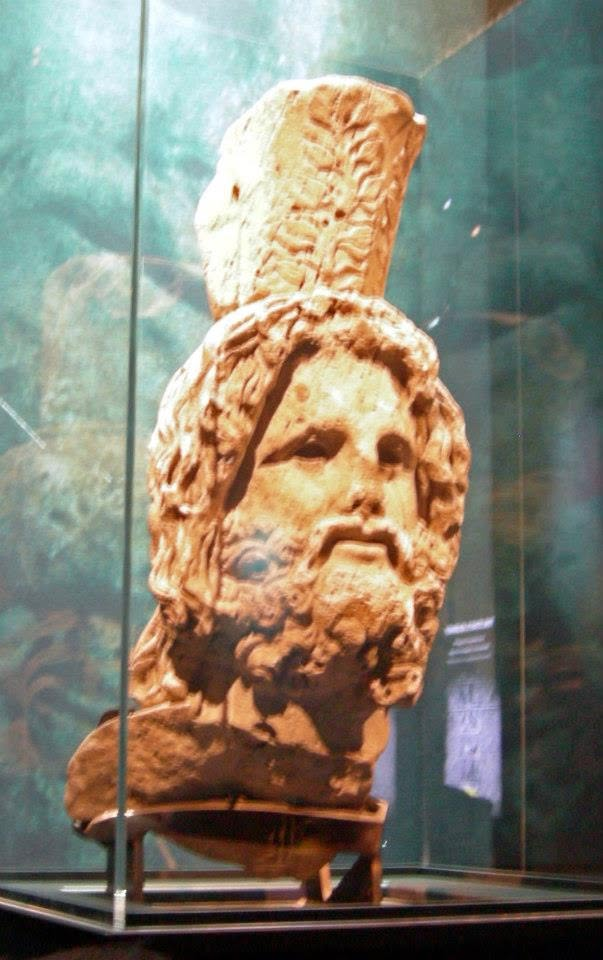
The Ptolemeys were Greek, so they blended Greek and Egyptian gods. Sarapis, shown here and recently recovered from the Mediterranean Sea near Alexandria, was a Ptolemaic blend of Osiris (the king of the Egyptian gods) and Apis (an Egyptian bull-deity) with the beard and long flowing locks of a Greek.
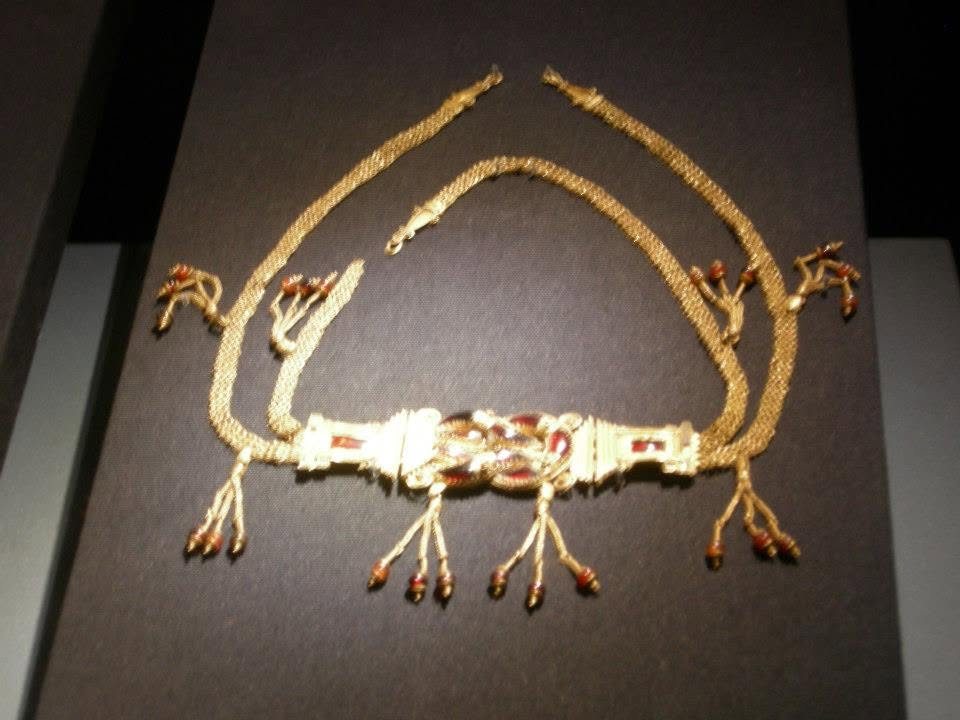
Jewels fit for a queen. The immense wealth of the pharoahs was the envy of the ancient world. Cleopatra wore much gold. This necklace with double chain pendants and carnelians is from Cleopatra’s time period, but was not necessarily Cleopatra’s.
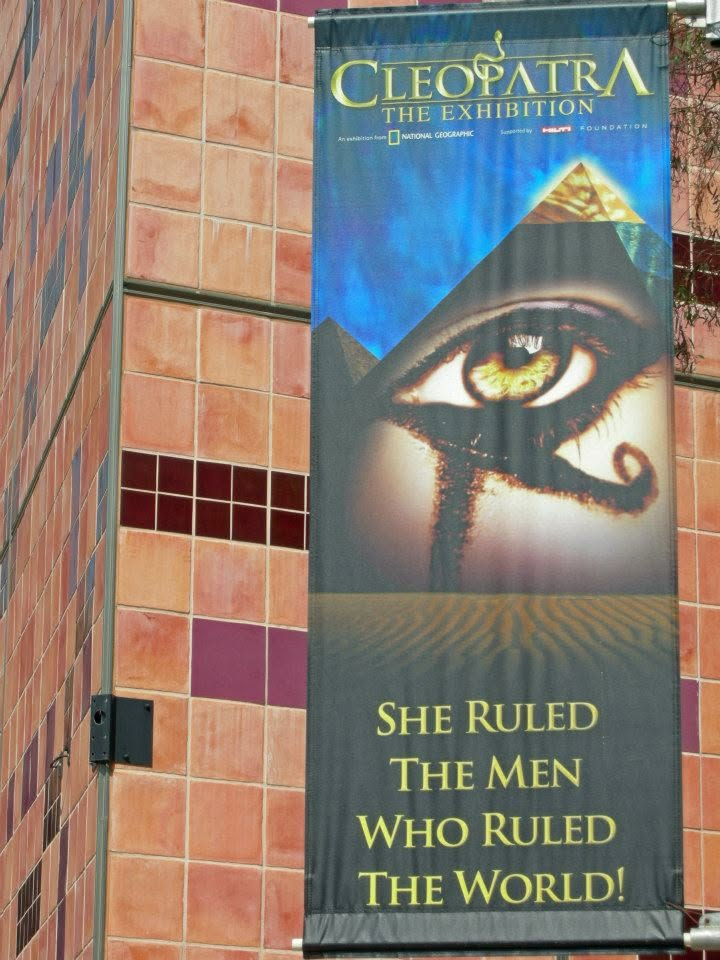
This poster capitalizes on Cleopatra’s fame as a seductress.
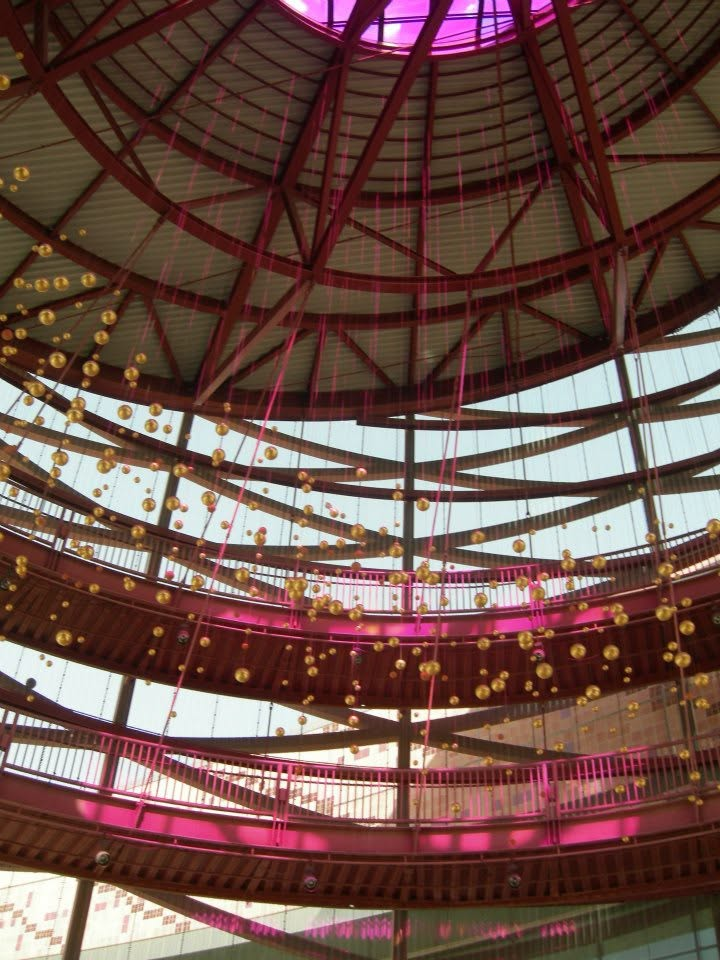
The entrance to the California Science Center provides rose-hued light.
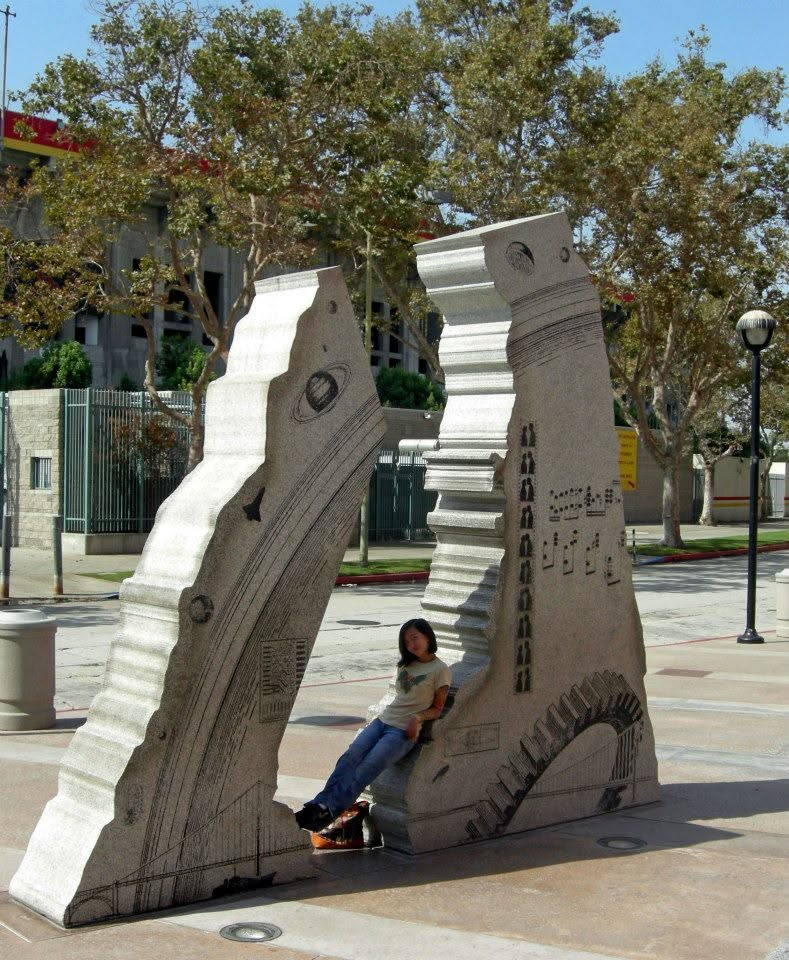
If you look carefully, the outline of the State of California will fit in the middle area where Ra Martinez is sitting (if you view it from the opposite side).
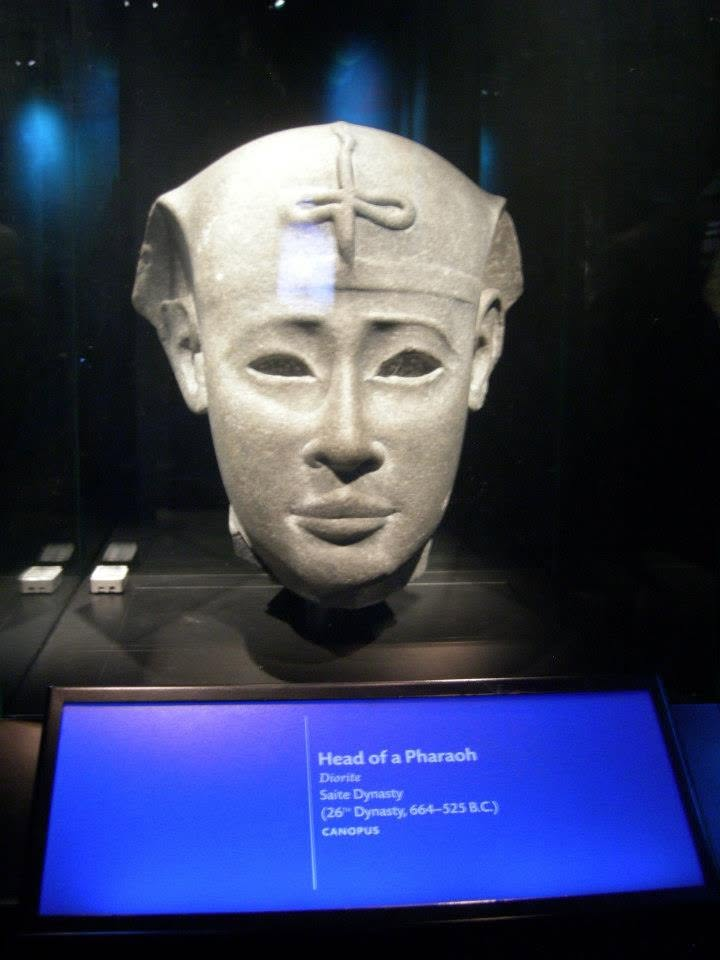
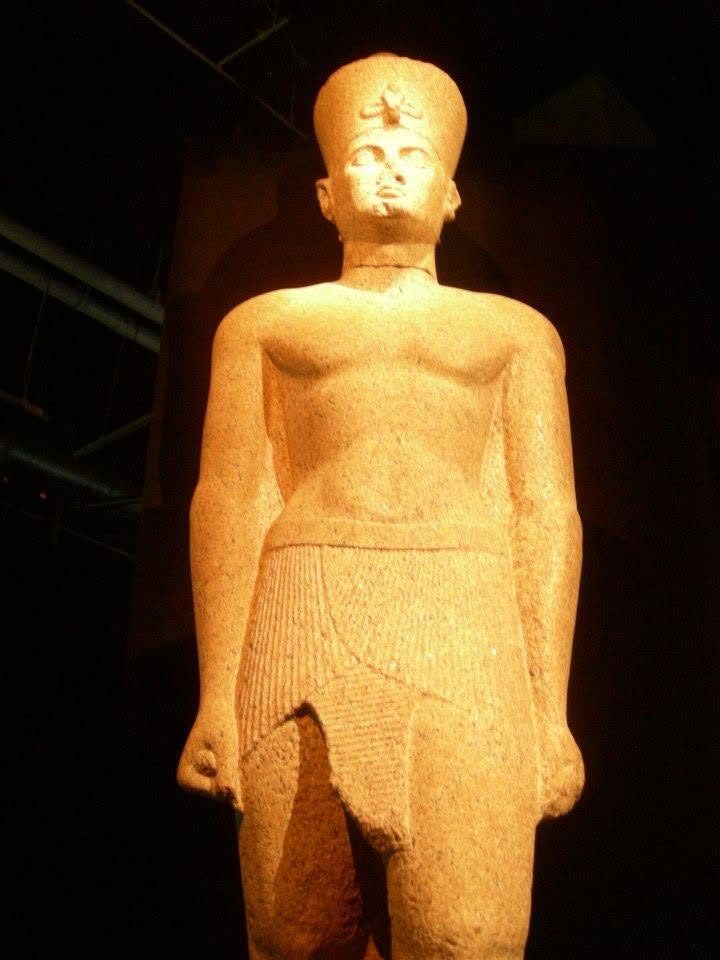
The exhibit showed a pair of colossi (one male, one female); I estimate that they were 14′-15′ feet high. They portrayed kings and queens guarding the temples. Only the priests and the pharoah were allowed in the temple, so average citizens worshipped
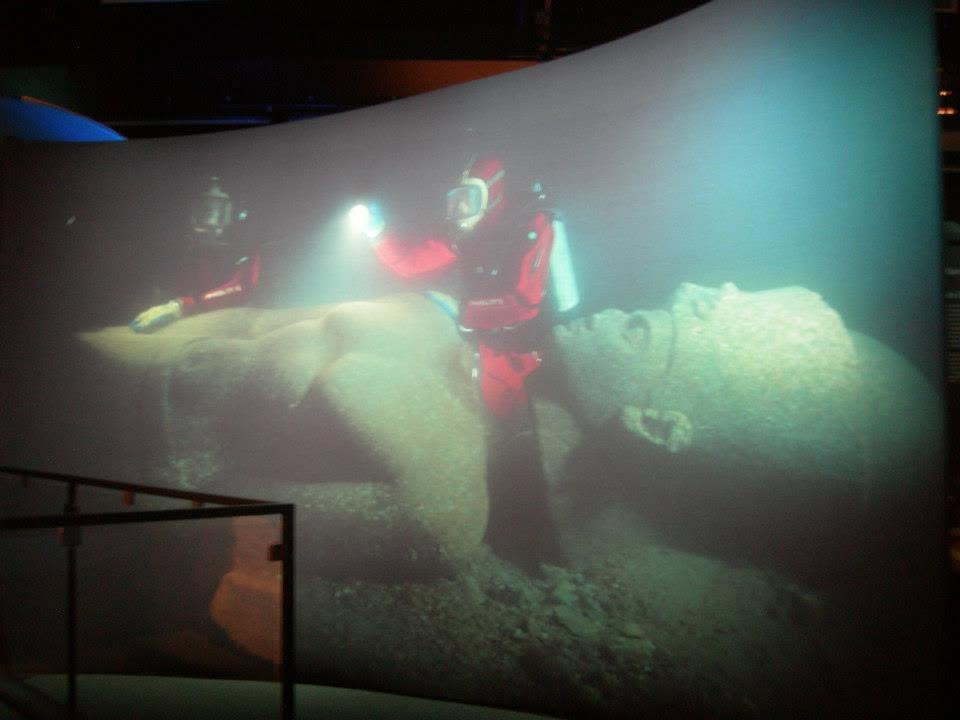
This male colossus was recently recovered by archeological divers from the Mediterranean Ocean.
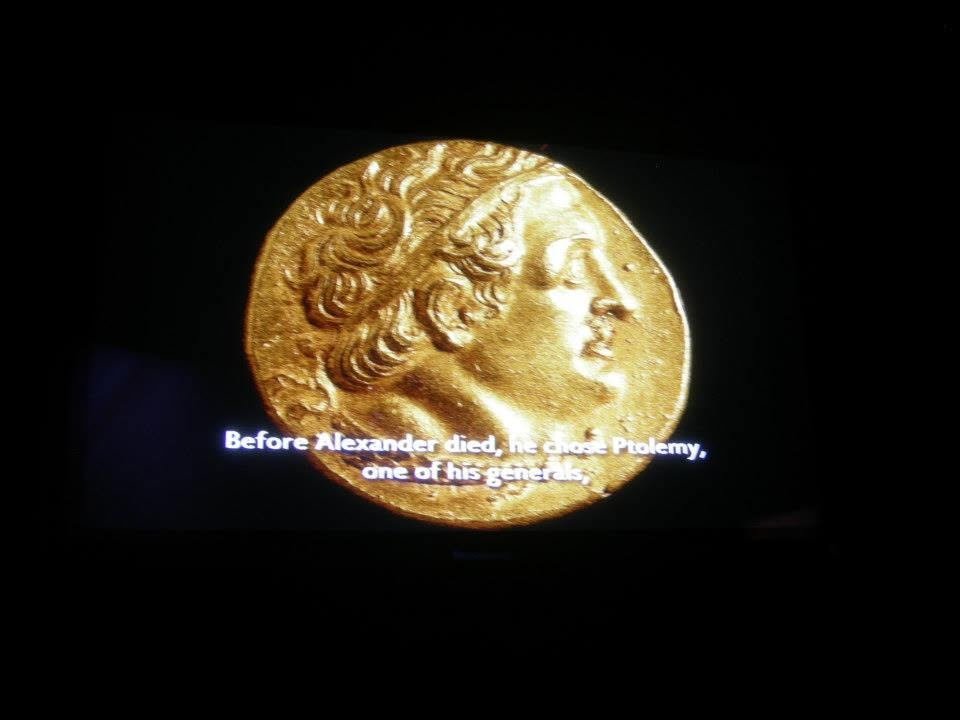
Cleopatra was a descendant of the Ptolemeys. Alexander the Great, a Greek, conquered Egypt. Upon his death, he named his general Ptolemey as his successor.
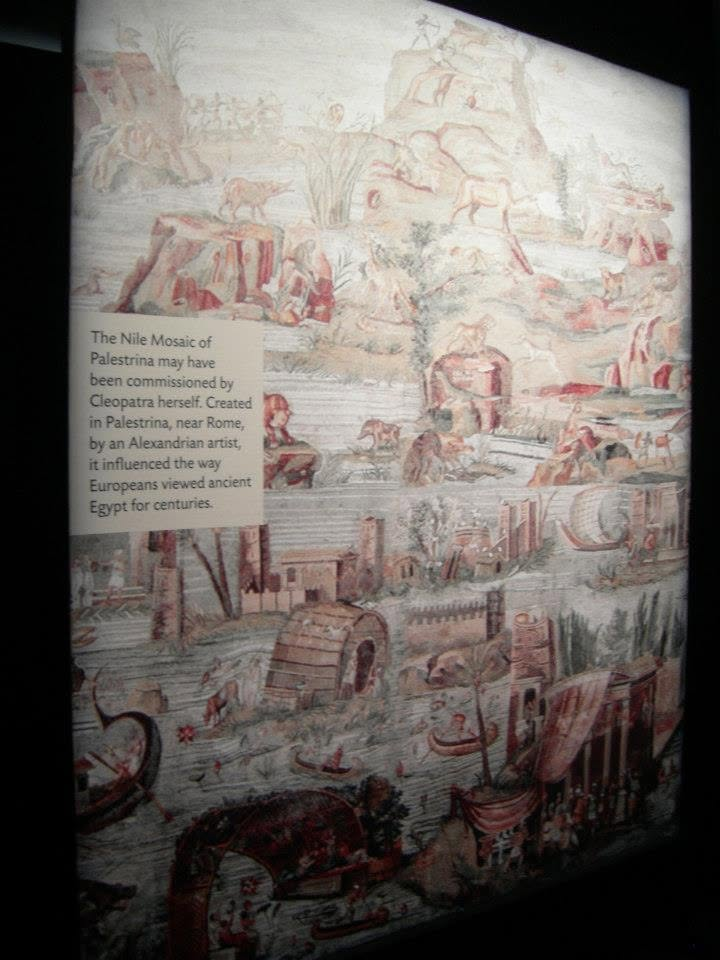
The Nile Mosaic of Palestrina influenced the European view of Egypt for centuries.
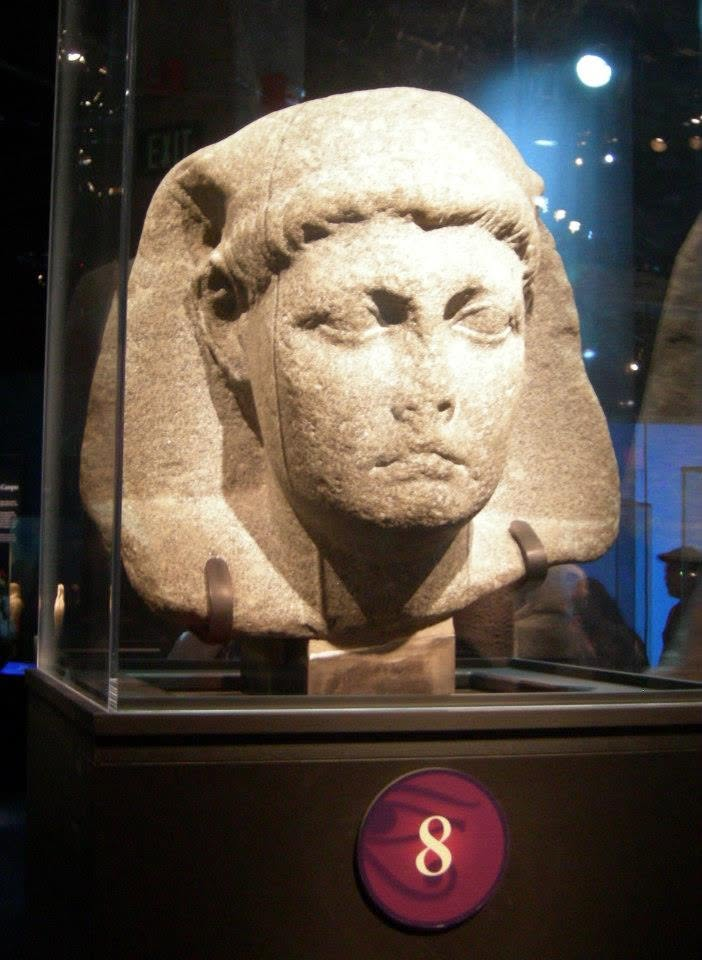
Caesarion, Cleopatra’s son by Julius Caesar. Cleopatra hoped that Caesarion would rule both Rome and Egypt, but Octavian (later Augustus Caesar) had Caesarion killed.
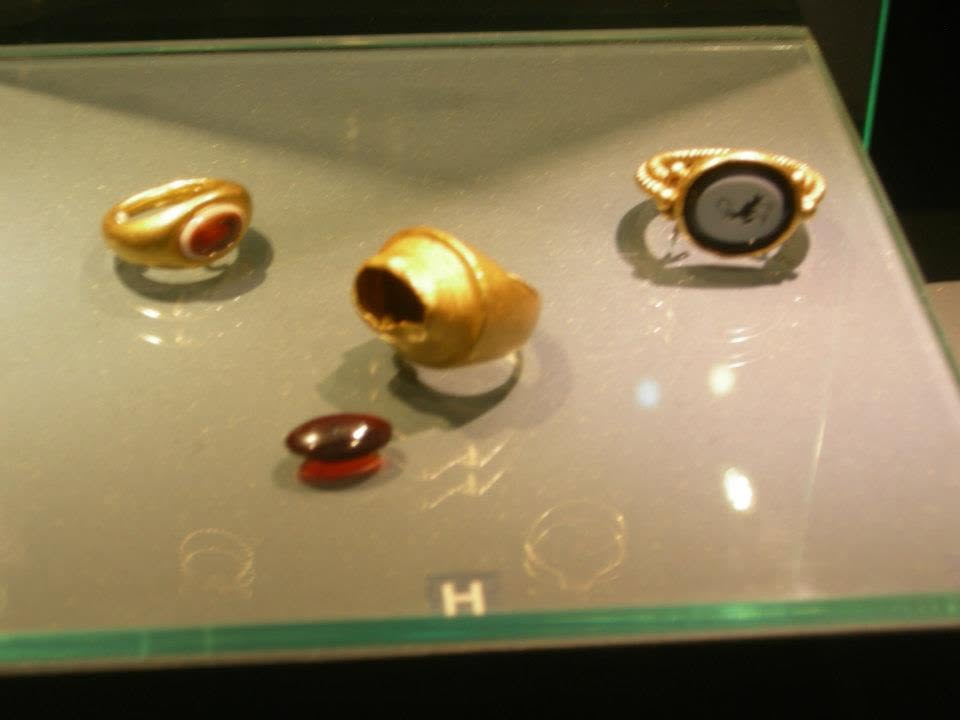
Jewelry from Alexandria and Heraklion, from Cleopatra’s time period.
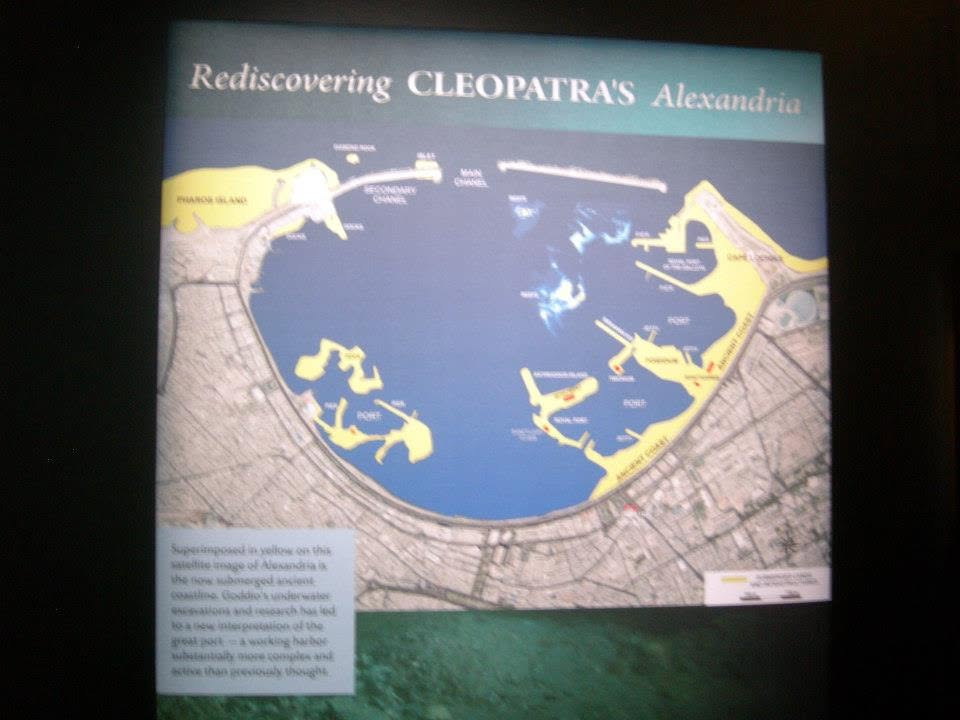
Alexandria, Cleopatra’s Egyptian capitol, was a powerhouse of the ancient world. Much of Cleopatra’s Alexandria was lost underneath the Mediterranean due to an earthquake and a tidal wave.
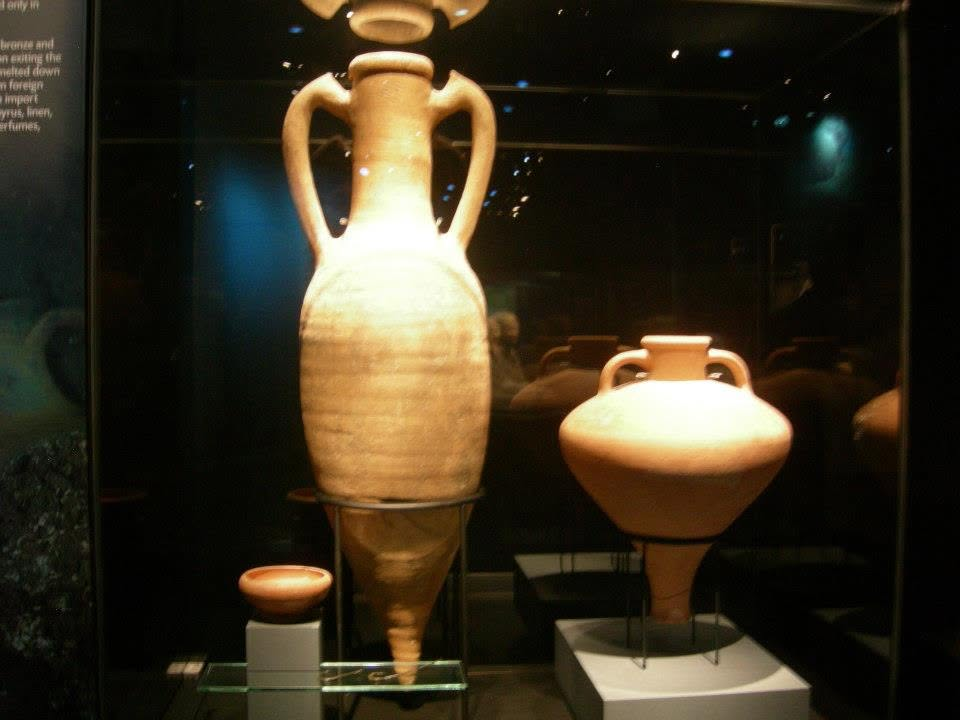
Egypt was considered the granary of the ancient world. Rome, especially, needed Egypt’s grain to survive.
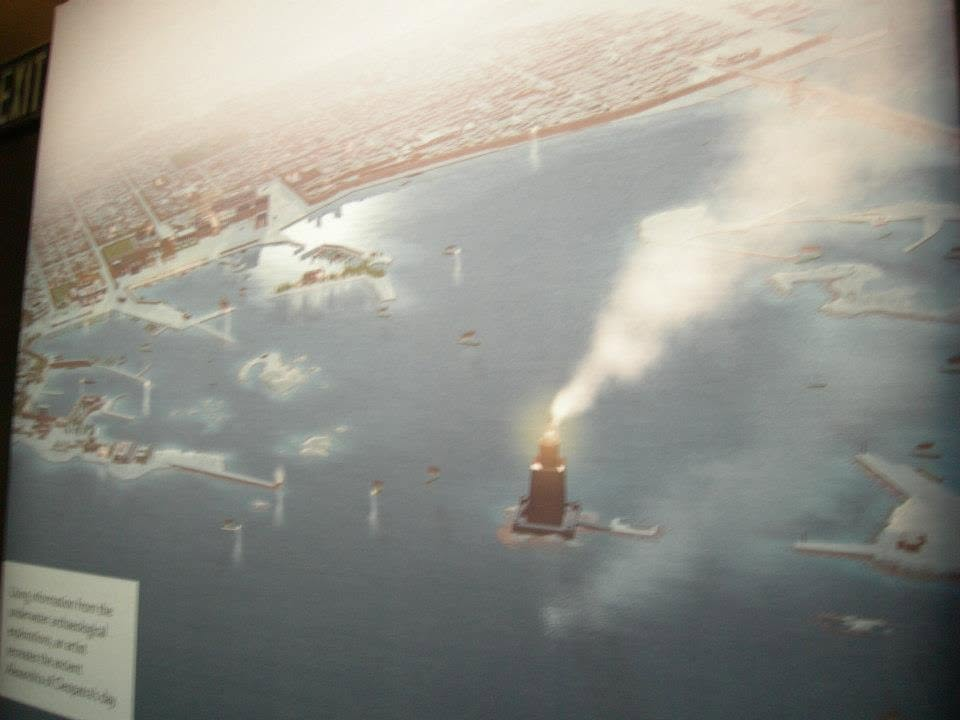
The lighthouse at Pharos, as it would have appeared in Cleopatra’s time.
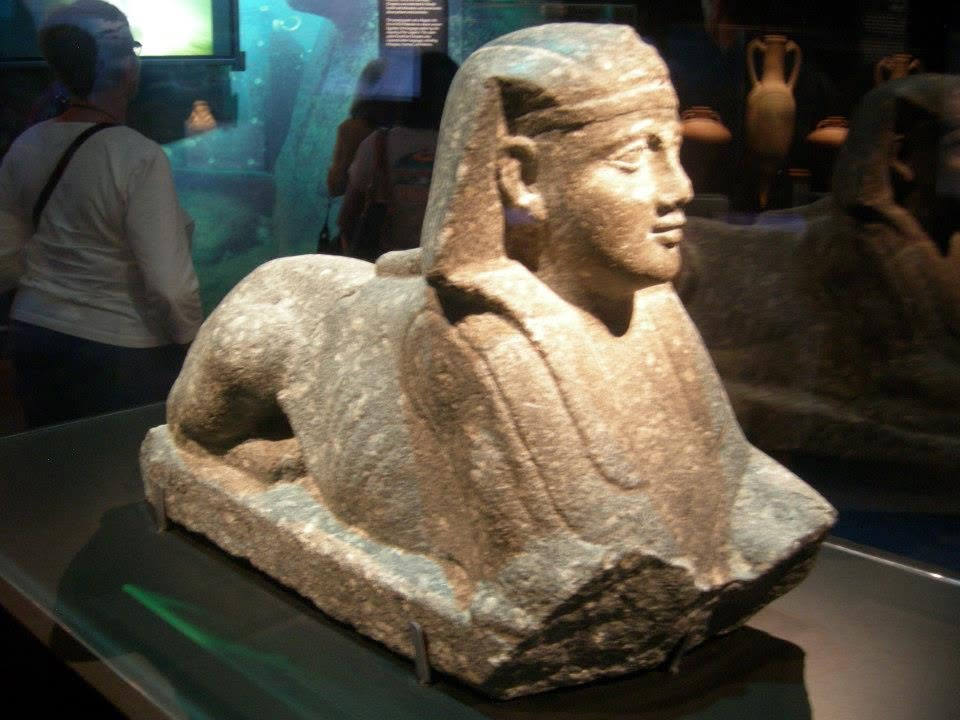
Two sphinxes stood guard outside Cleopatra’s palace in Alexandria. This one is supposed to resemble King Ptolemey XII, Cleopatra’s father (known as a weak king, drunk, and flute player).
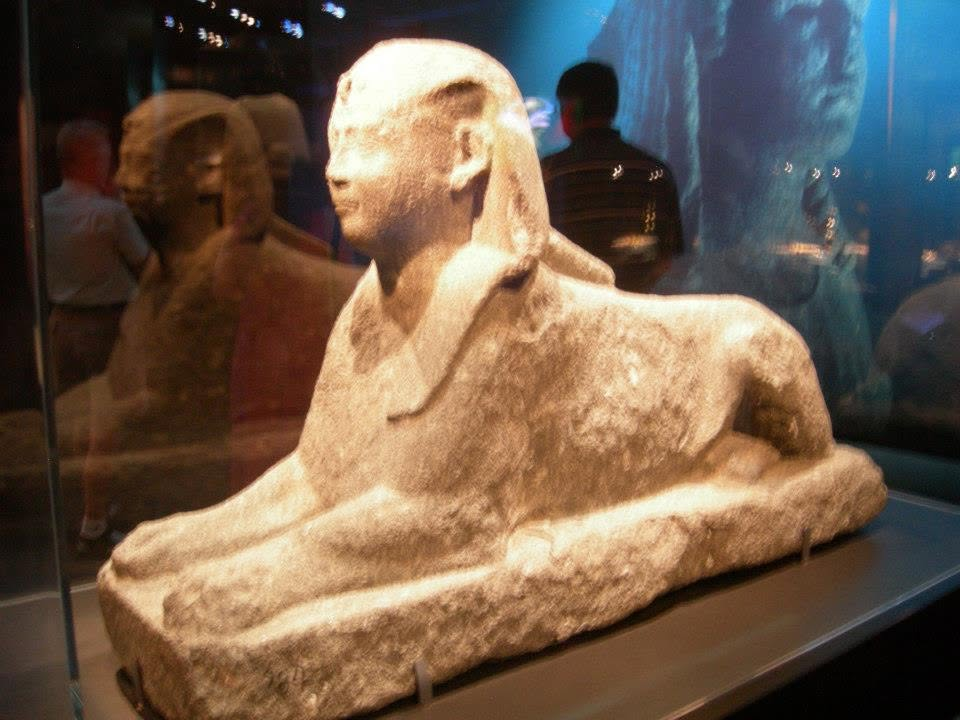
The sphinx’s human head signified intelligence, while its lion body signified the physical power of the pharoahs.
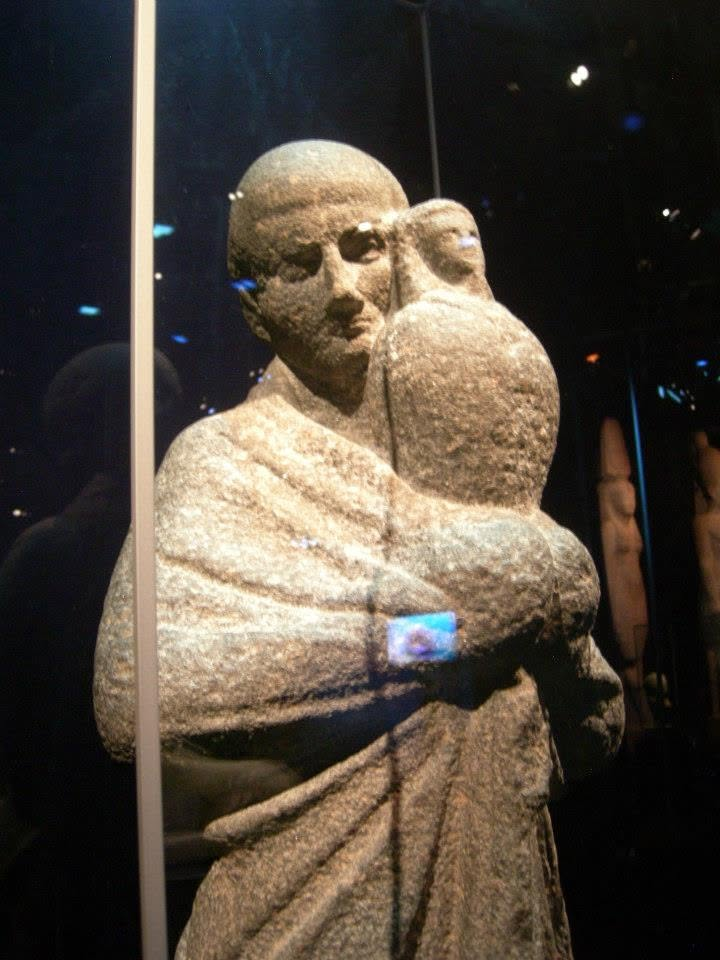
A temple priest holding a jar representing the god Osiris.
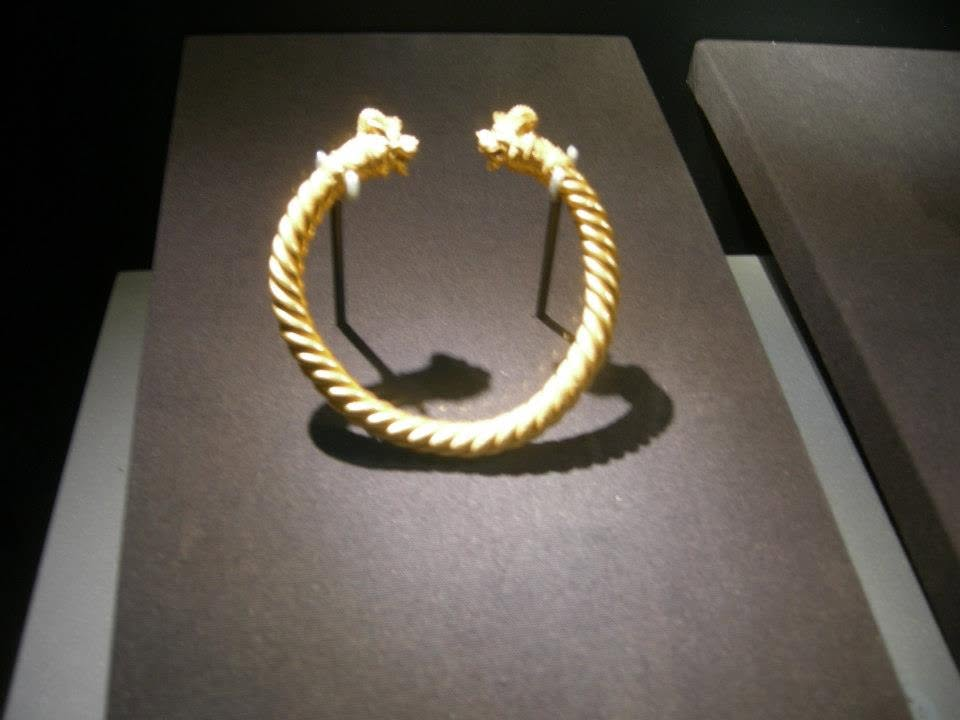
Gold bracelet with two lion heads
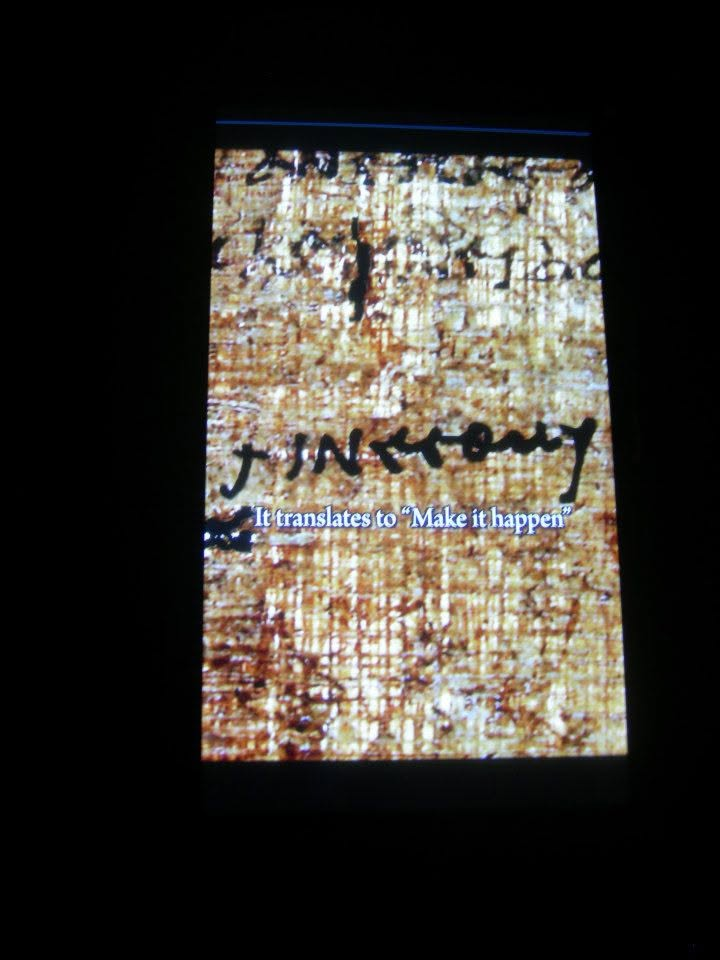
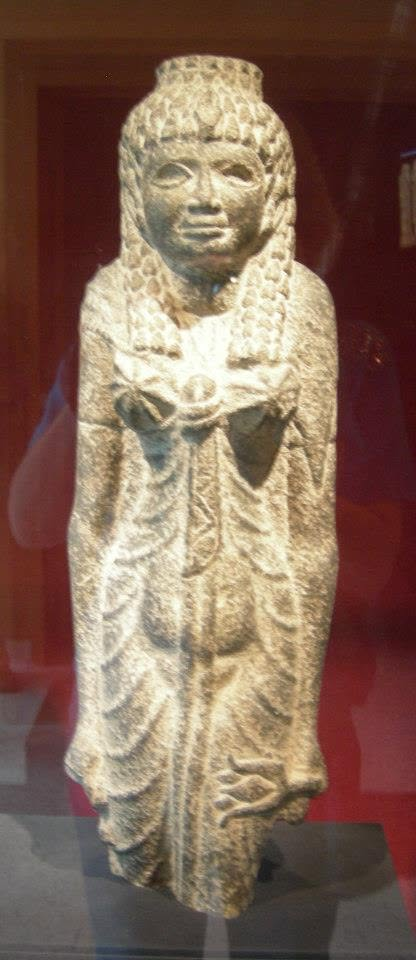
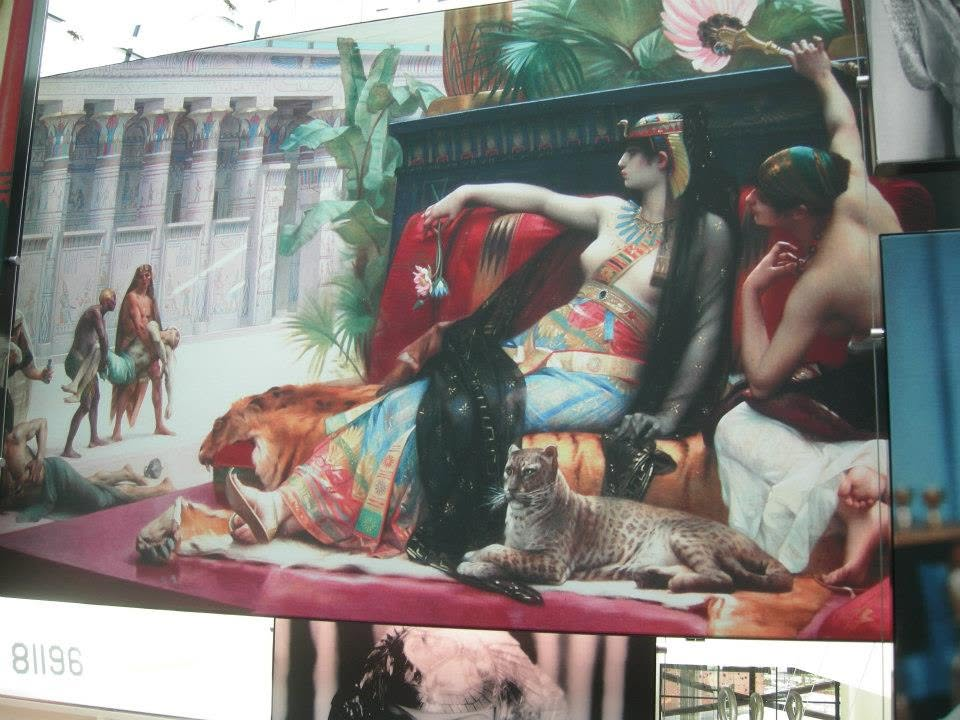
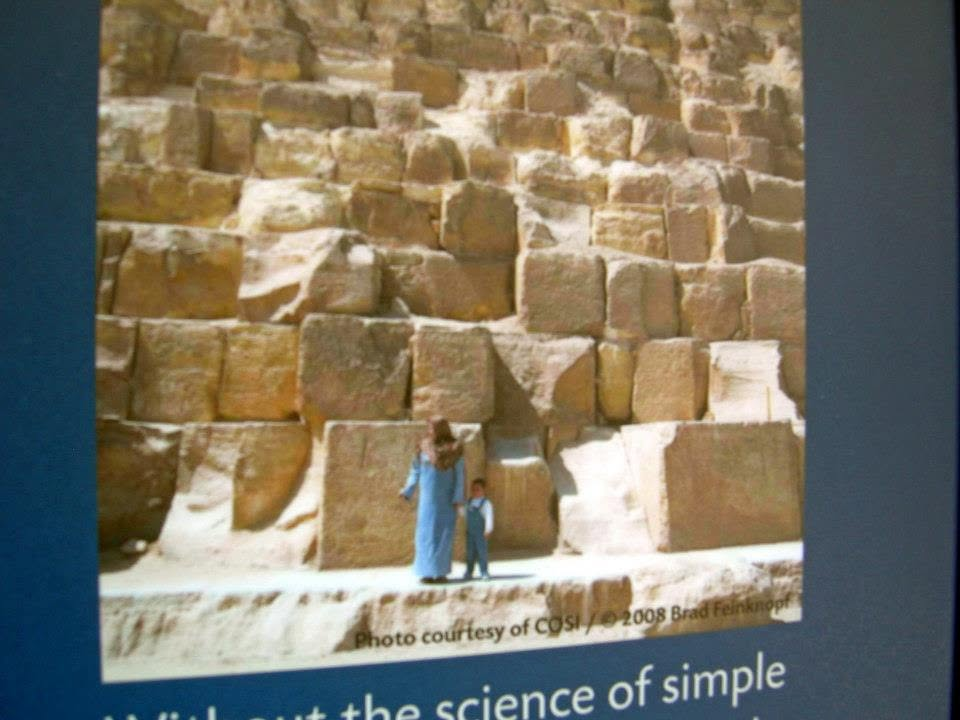
Look how high the blocks of the pyramids are!
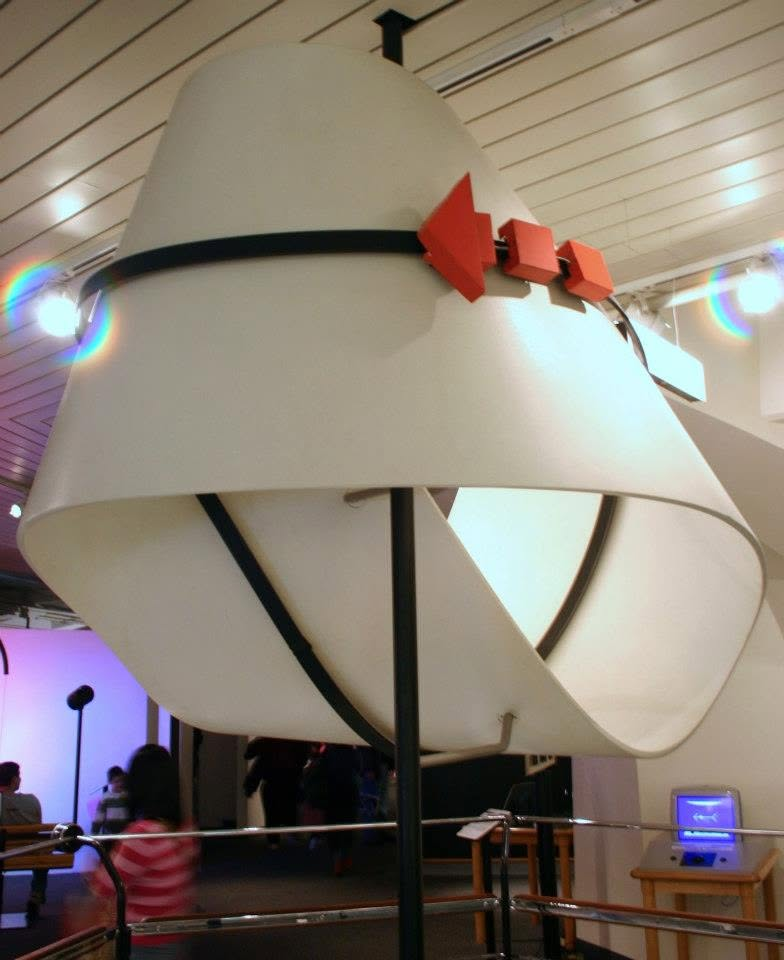
And just for the fun of it, here’s the Mobius strip from the old Los Angeles Museum of Science and Industry. Create a loop from a strip of paper, put one twist in it before you glue the edges of the loop together, and you have an endless band where the arrow goes on both sides.
The California Science Center is located at 900 Exposition Park Drive in Los Angeles. It is open from 10:00am to 5:00pm daily. Admission is free, although special exhibits such as this Cleopatra one and the IMAX theatre shows are likely to have an entrance fee. The Memorial Coliseum and the Natural History Museum of Los Angeles are nearby.