

Colonial Williamsburg has combined both restored and reconstructed buildings of the 18th century with working trade shops, restaurants, and more to let visitors feel like they’ve traveled back in time to Virginia’s colonial period. The sites and presentations have been meticulously researched so you can be assured of their authenticity.
You can walk around the streets of Colonial Williamsburg for free, as I did on my first visit. Buildings with flags out front can be entered (which buildings are open changes daily). The shops, restaurants, and museums can be entered for free, as well as the Public Hospital, the Bruton Parish Church, the American Indian Encampment, and the Williamsburg Bray School. And if you’re around at 4:45pm, you can catch the Fife and Drums March performing Revolutionary War era music as they parade down Duke of Gloucester Street.
But Colonial Williamsburg really shines when you buy an admission ticket, which gives you access to guided tours at premiere buildings such as the Governor’s Palace, the Capitol, and Raleigh Tavern. And there are a number of special presentations (such as the ones shown below given by Martha Washington and the Marquis de Lafayette), courtroom dramas, and much more. To be honest, I was bored on my first visit just walking up and down the streets. With an admission ticket and the special events, the place really comes alive and I highly recommend taking your place in this living history mini-city. Below are some examples of what you might see.
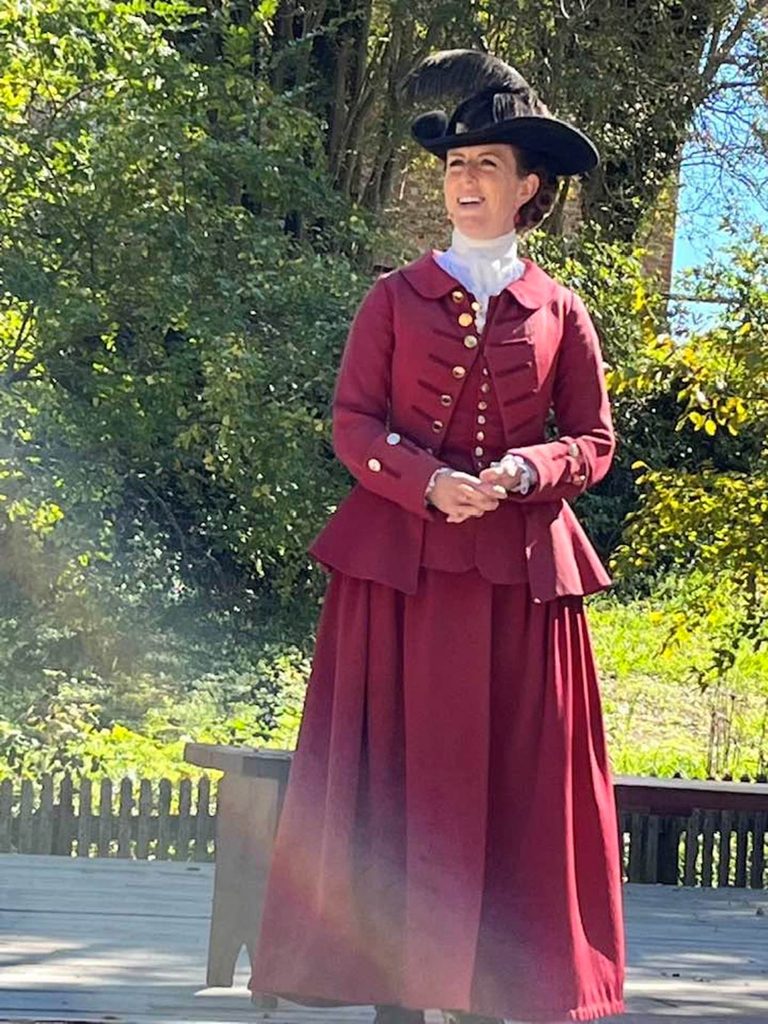
A young Martha Washington talks about how she convinced her future father-in-law to allow her to marry his son, Daniel Custis. He disapproved of a clerk’s daughter marrying into one of the wealthiest families in Virginia. Mrs. Washington also spoke about her dilemma about whether to give her inherited house to her son, and about her courtship by Colonel Washington.
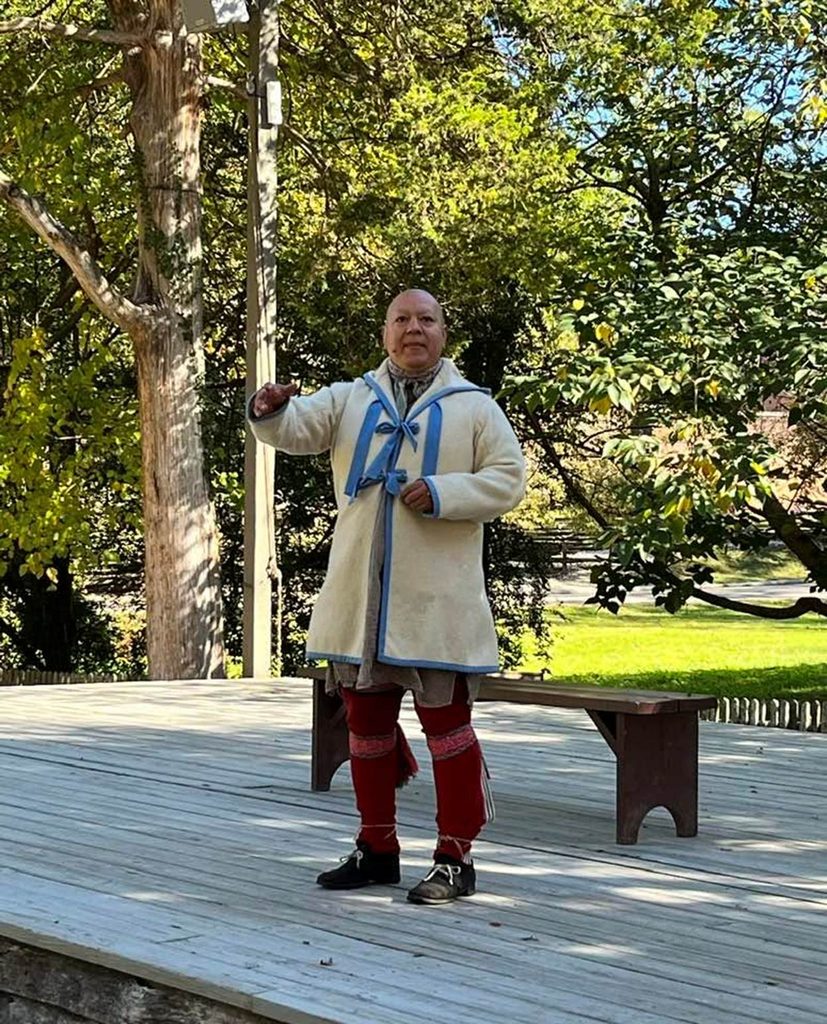
For the Native American series, this gentleman told us about the Indian cultural practice of captive-taking and hostage exchange — from the Indian point of view. The three primary reasons were to replace lost kin, to avenge a wrong perpetrated by a different Nation, or as a negotiating tool to regain desired captives.
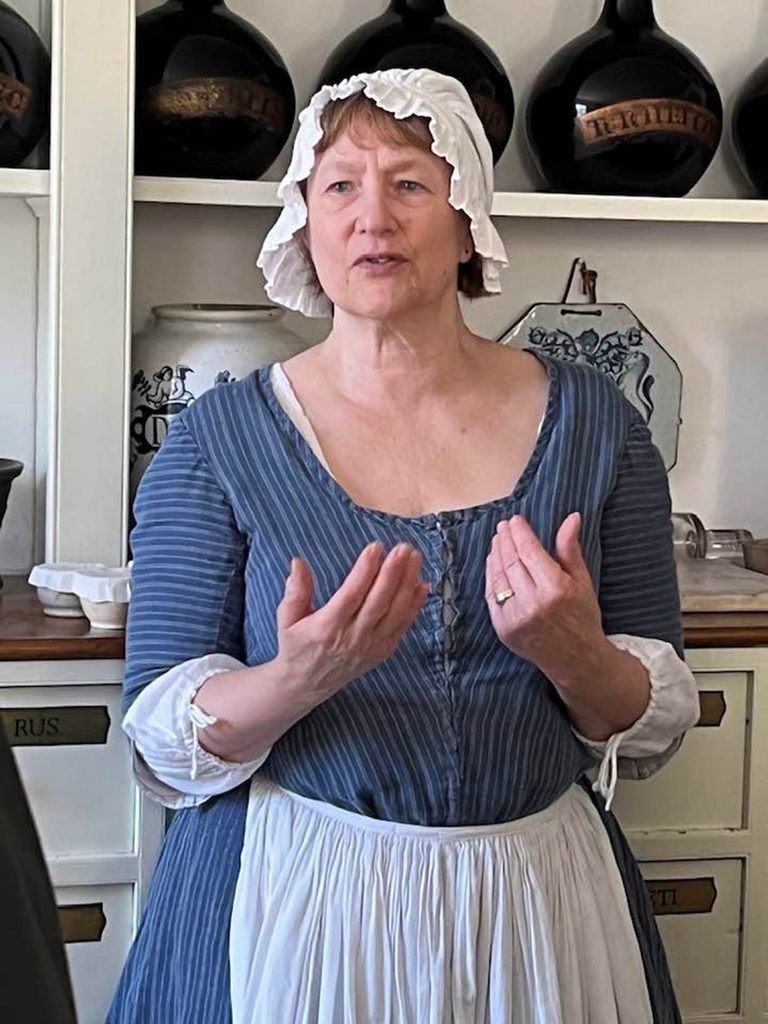
An apothecary describes the common medications used in Colonial America.
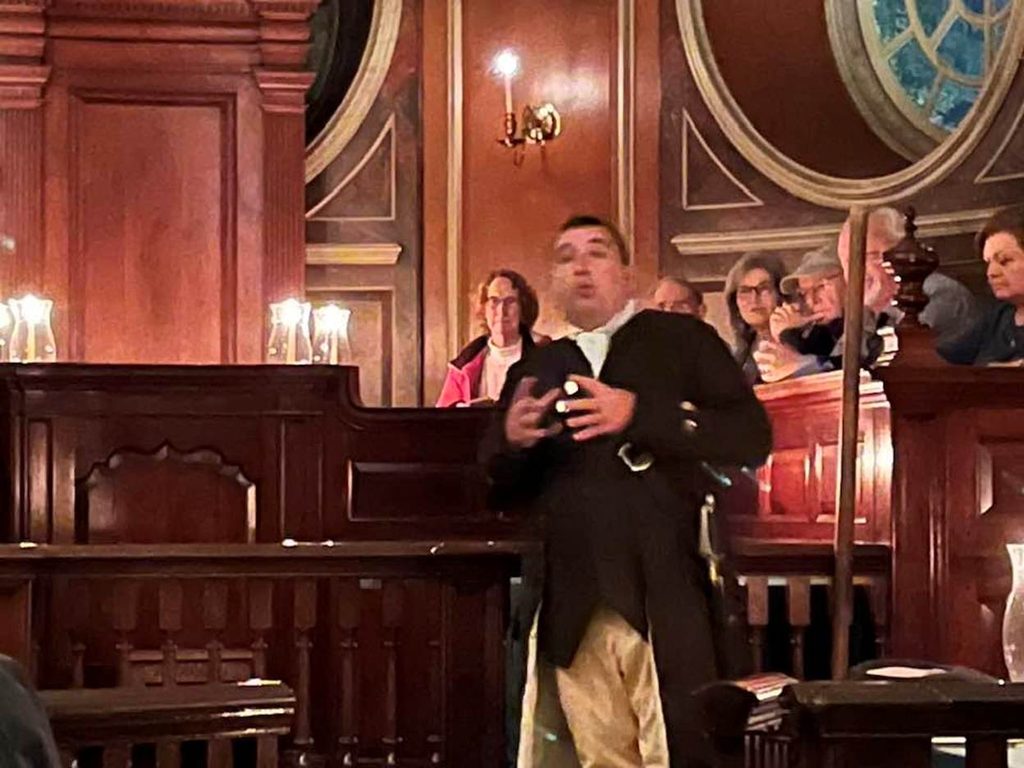
Last night, we were in the Williamsburg courthouse, re-creating the 1719 trial of Israel Hans, one of Edward Teach’s (Blackbeard’s) chief mates, for piracy. We heard the witness testimony, questioned the witnesses, and ultimately convicted Hans of piracy (as did the original court).
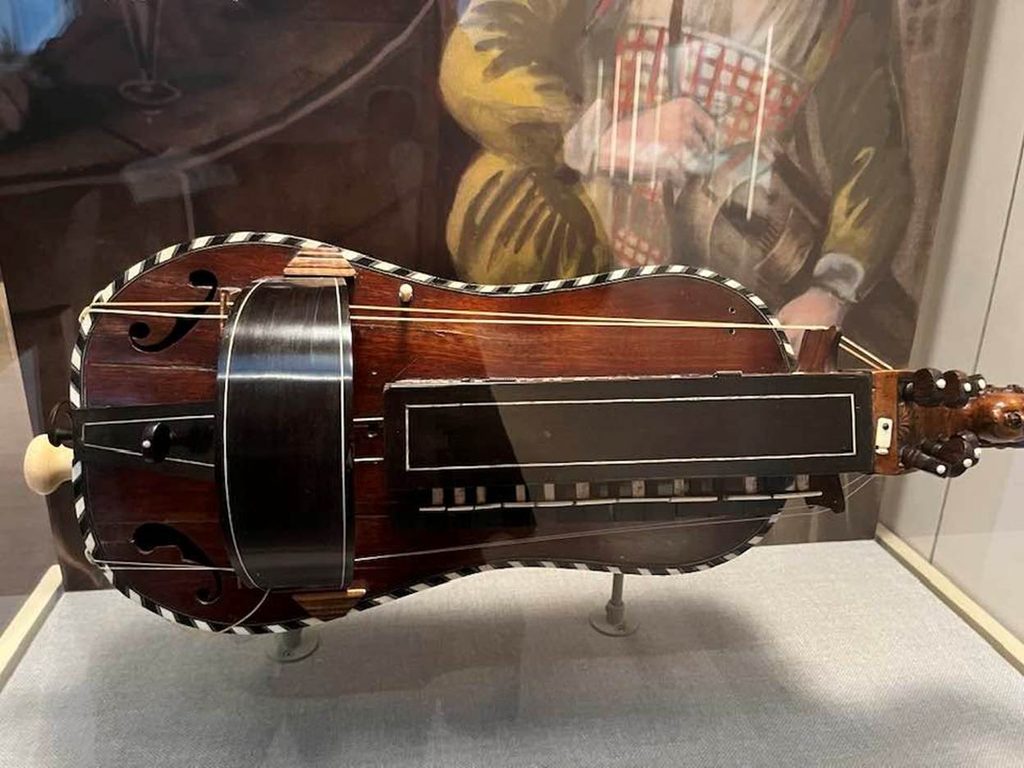
I’ve heard of hurdy-gurdies, but never saw one until yesterday. It’s shaped like a violin but has a hand cranked rosined wheel which rubs against the strings. Its sound is similar to that of bagpipes.
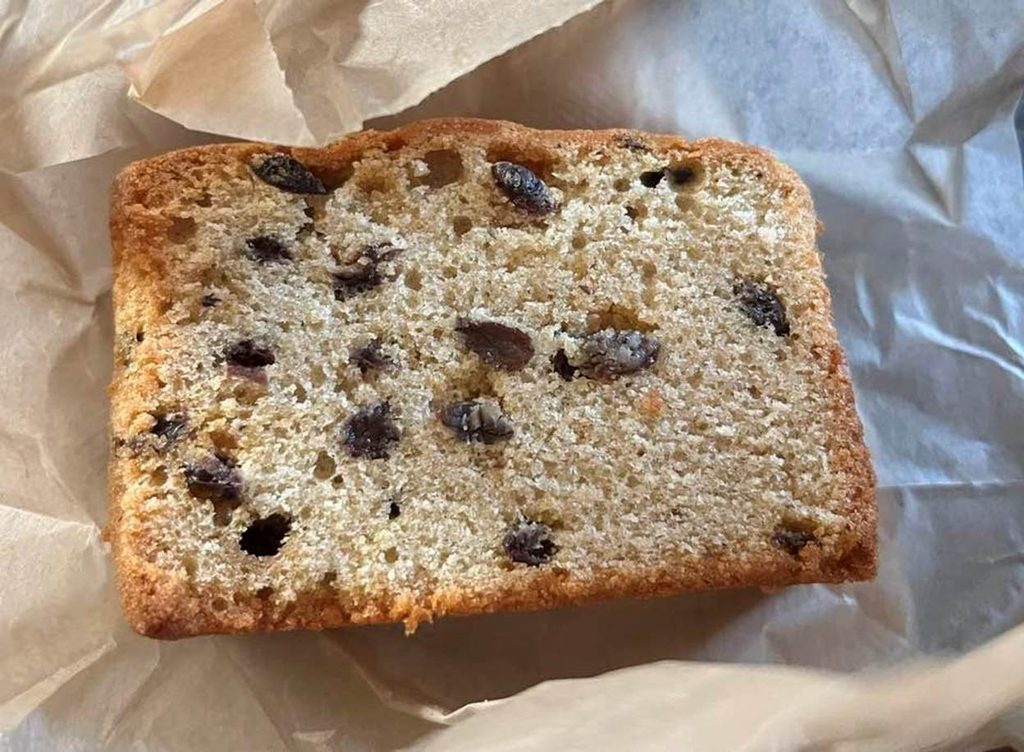
Queen Anne cake, an 18th century treat. It’s essentially a lemon pound cake with currants. Pretty tasty.
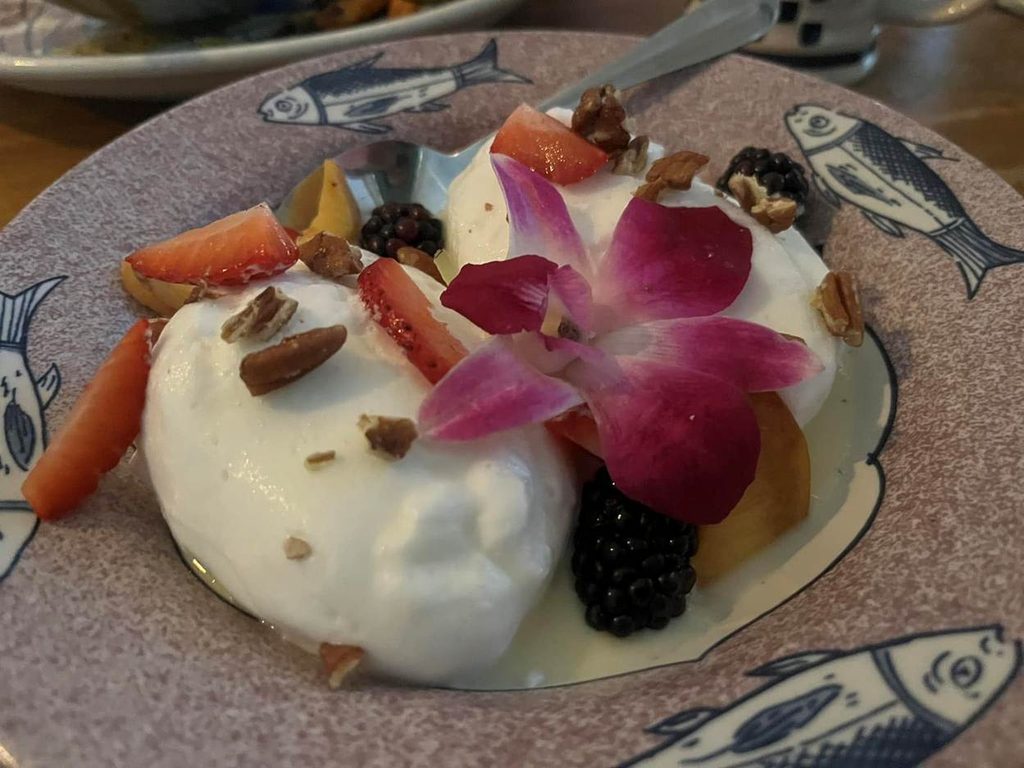
According to the waitstaff at the Josiah Chowning’s Tavern, Snow Eggs were one of Thomas Jefferson’s favorite desserts. Today’s version of the dish was based on what James Hemmings, the Chef d’Cuisine to Thomas Jefferson, wrote sometime between 1787 and 1794. Hemmings was trained as a French chef while Jefferson lived in Paris.
“Beat the whites as you do for a savory cake, ‘til you can turn the vessel bottom upwards without their leaving it. Put in two spoonfuls of powdered sugar and a little orange water. Dish up your whites with custard. A little wine stirred in is a great improvement.”
Rachelle thought Snow Eggs tasted like pillowy clouds lighter than chocolate mousse, but the custard balanced it out by giving the dish a soft heft. A light refreshing dish, it was covered in nuts, fruits, and edible flowers that enhanced the flavor even more. She said she could see why Jefferson might like this dish, especially after eating all those heavy Colonial dishes!
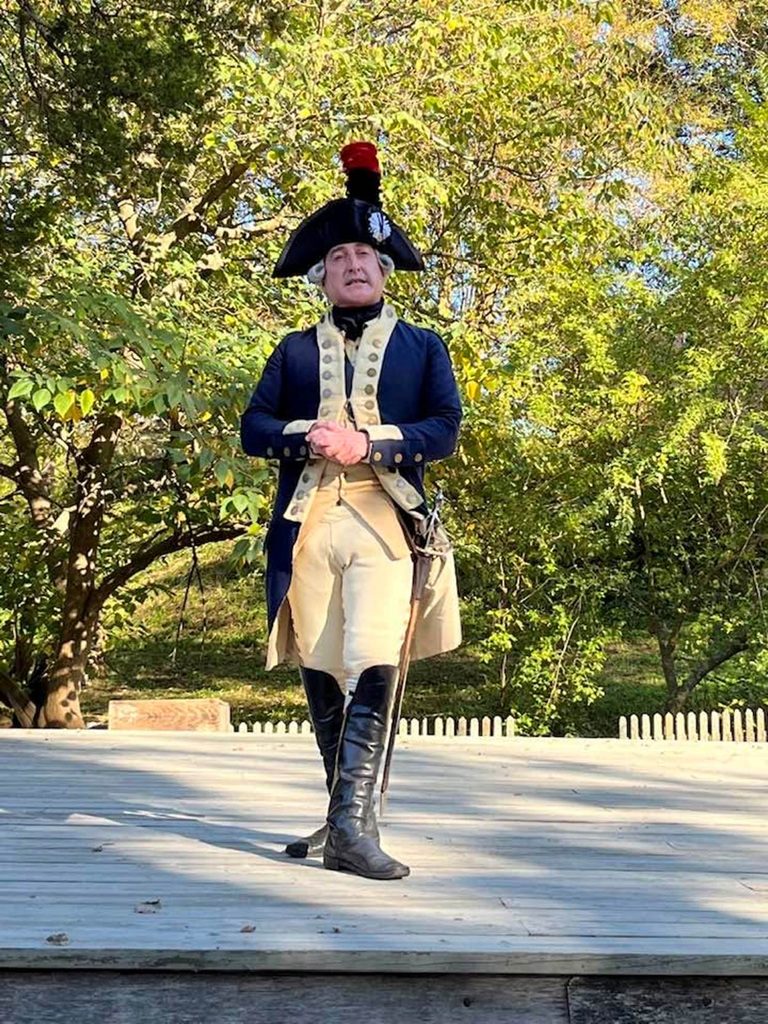
Yesterday, we met Marie-Joseph Paul Yves Roch Gilbert du Motier de La Fayette, or — as Americans know him, the Marquis de Lafayette. When he was 19, he attended a dinner with King George’s brother, who shared his opinion that it was right and just for the American colonies to pull away from Mother England. Inspired by these ideals of freedom, self-determination, and independence, Lafayette commissioned a ship and, with 13 friends, sailed for America to join our “Glorious Cause”.
In Philadelphia, the Continental Congress declared him a Major-General and sent him off to a befuddled George Washington, who didn’t know what he was supposed to do with a 19-year-old French aristocrat. Washington would soon depend on Lafayette as one of his most able commanders. They fought together in that decisive battle at Yorktown.
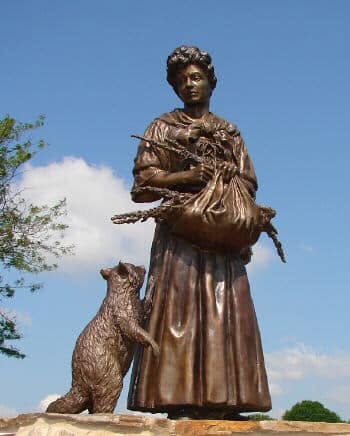
Last night, Shelly and I attended the 1709 trial of Grace Sherwood, accused of witchcraft. Since photography wasn’t allowed during the trial, I’m including a picture of her statue in Virginia Beach.
From research I did this morning, I learned that Ms. Sherwood was a midwife and healer, who had a good knowledge of herbs. She loved animals. And she was a bit of a nonconformist, sometimes wearing pants instead of dresses. These aspects could easily be turned against a woman in Colonial America.
But we heard none of this during the trial last night. Ms. Sherwood got into a dispute with one of her neighbors, James Hill. During the argument, she told him, essentially, “to shut up or you’ll be sorry.”. The next morning, his wife suffered a miscarriage. Since Mrs. Hill had three healthy children, this miscarriage must only have been brought about by witchcraft. There had apparently been previous legal disputes between Ms. Sherwood and Mrs. Hill, but she wasn’t allowed to bring those up during the trial.
The next witness was a woman who only reluctantly entered the courtroom because she was so afraid of Ms. Sherwood. She accused Ms. Sherwood of coming into her room during the night and taking her on travels around the county. The judge dismissed this as “spectral evidence”, noting that spectral evidence was allowed in ecclesiastical courts but he did not have to allow it in his judicial court.
But more damning was the woman’s testimony that 12 midwives had examined Ms. Sherwood’s body and found “devil’s marks” — two black marks that were “unlike anything seen on any other woman”.
Ms. Sherwood had also undergone a trial by ducking. This meant that she was bound and thrown into a blessed body of water. If she floated, she must be a witch because the Holy Spirit was casting her out. If she sank, she would be innocent of witchcraft, but she’d likely drown due to her bonds. A devil’s choice indeed for accused witches. Ms. Sherwood floated.
The court records were destroyed by a later courthouse fire, but we do know from other records that Ms. Sherwood somehow survived her trial and lived another 31 years, until 1740.
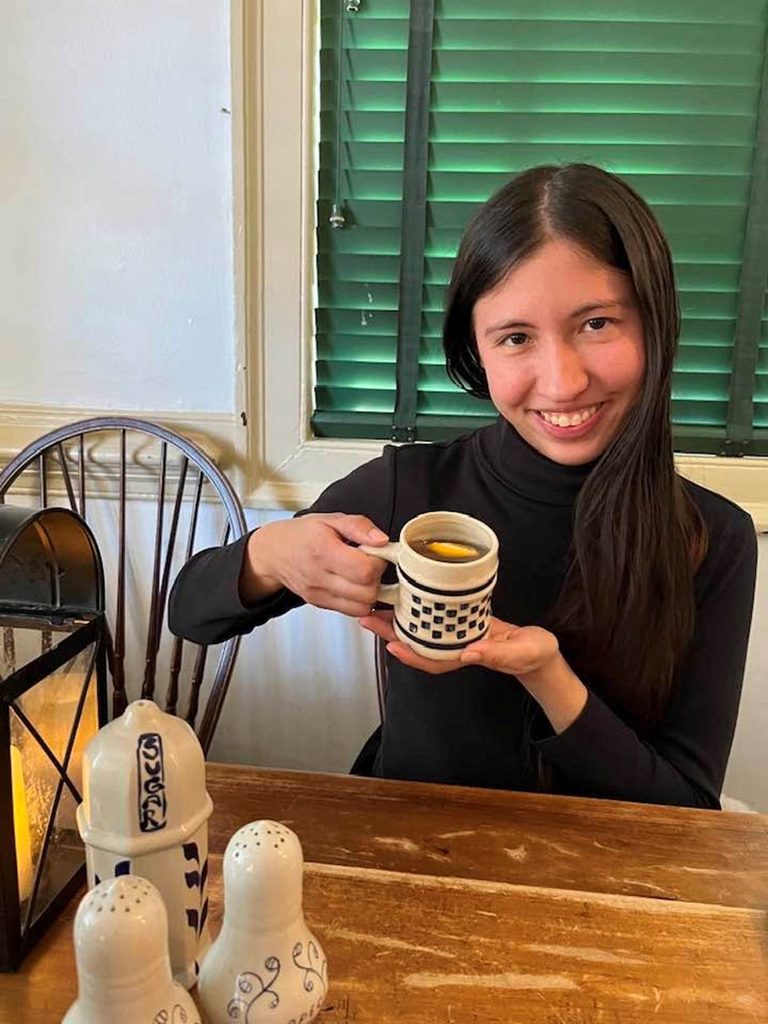
Shelly enjoys a hot buttered rum at Chowning’s Tavern, along with 18th century fare such as potato and onion pie and snow egg (Thomas Jefferson’s favorite dessert).
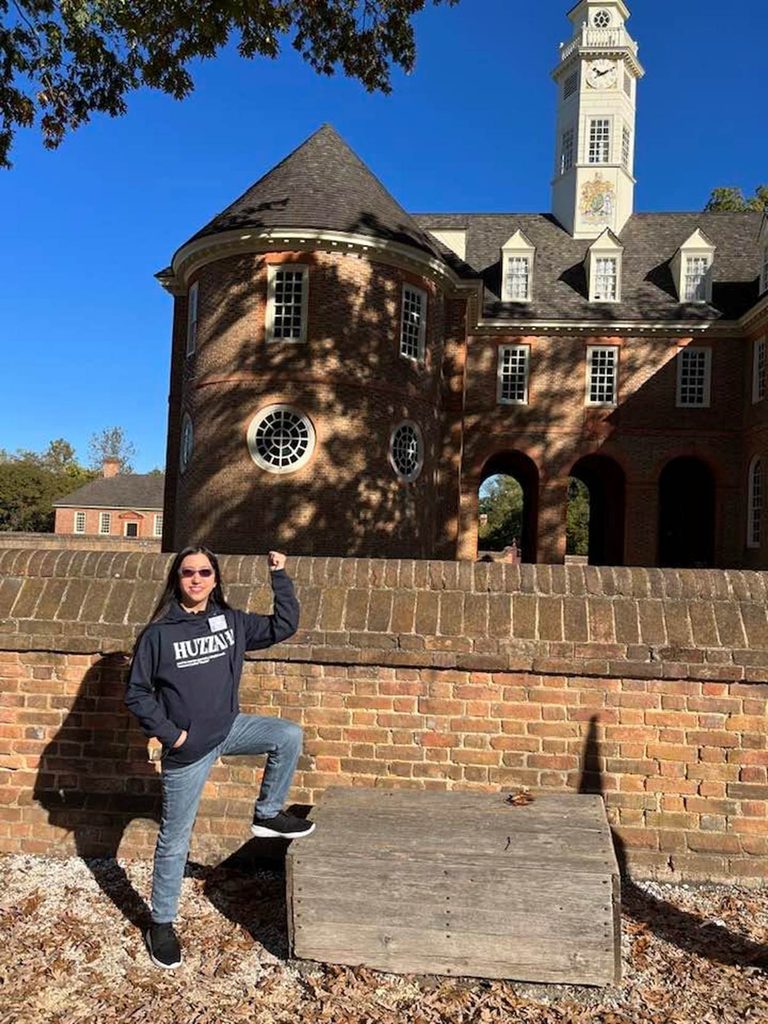
“Huzzah” is not just for the Middle Ages, it was loudly proclaimed in the Colonial era. It is used to express approval or delight. There were many “huzzahs” in the Capitol last night as Virginia recreated its Spring 1776 vote for independence from Great Britain.
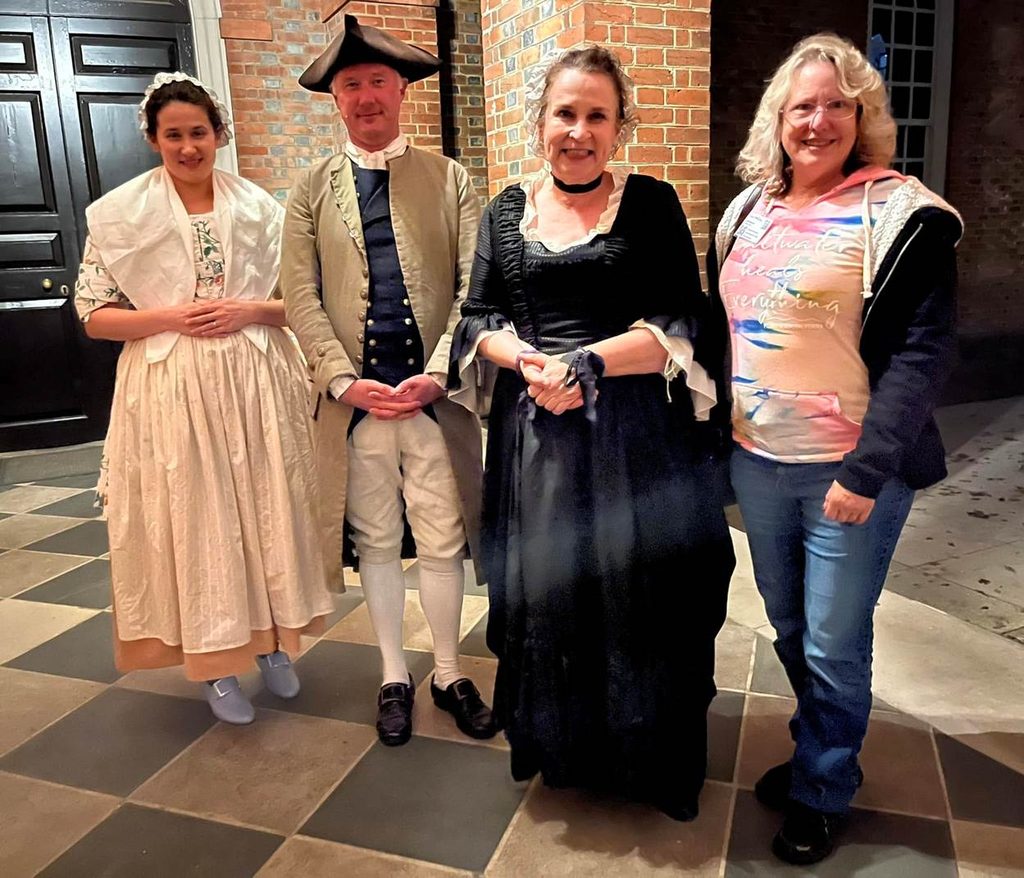
We attended a session at the House of Burgesses last night to vote on a resolution to declare independence from Britain. In hindsight, we know how the story came out, but the outcome was far less certain in the spring of 1776, when Virginians knew we’d be up against the most formidable army in the world.
And then, as now, ordinary citizens just wanted to be left alone to live their lives and wished the hotheads would shut up. The lady on the left was a milliner, a widow wuth children to support. Thanks to the Non-Importation Act, which has left her without cloth and thread, she has been unable to make any dresses for the last 8 months. Facing destitution, she will use her remaining savings to move herself and her children to England.
The actual vote of the Virginia burgesses that fateful year was 120 ayes and one abstention.
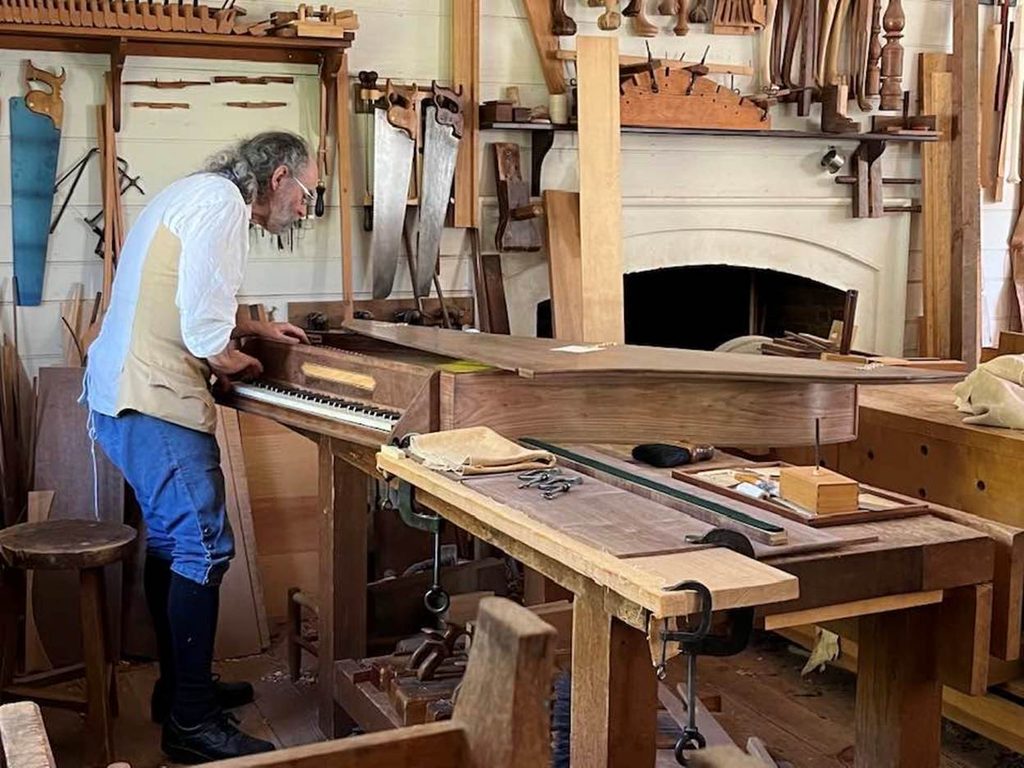
The cabinet maker’s shop at Colonial Williamsburg. The gentleman is restoring a spinet.
We closed out the evening of our last day in Colonial Williamsburg by listening to these musicians playing Colonial-era music.
A single-day pass to Colonial Williamsburg is $37.50, although I think the better deal is the three-day pass for $55.00. There’s so much to see and do in Colonial Williamsburg that three days is really better than just one. And if you live close enough to Colonial Williamsburg that you’d be able to make it back for another visit, an annual pass is $75.00. Check out their daily events calendar. Most events are free, but a few special ones (such as the musket training one that I attended, which you can read about in my separate article “How to Fire a Musket”) cost extra.
Another option is the Historic Triangle Ticket, which gives you admission to Colonial Williamsburg, Jamestown, and Yorktown for $126.00.
I have two additional articles about Colonial Williamsburg: the aforementioned “How to Fire a Musket” and the “Governor’s Palace”.