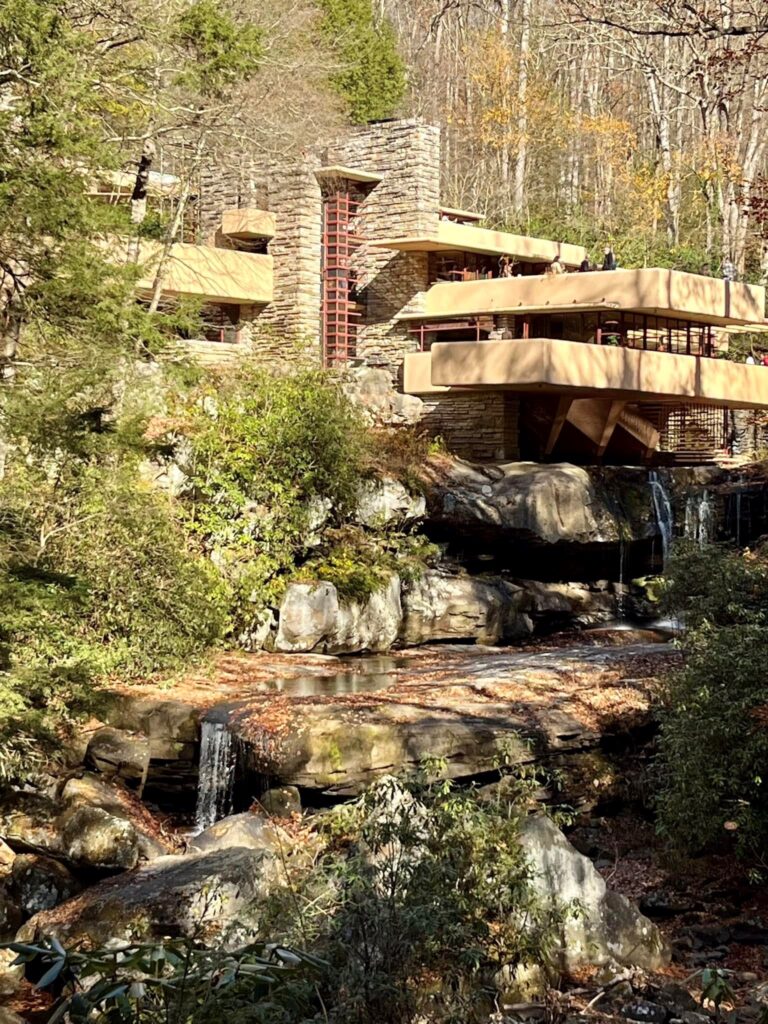
The classic Fallingwater vantage point. Because of drought in Pennsylvania, the waterfall isn’t flowing as majestically as you see it in postcard pictures.
Edgar Kaufman and his wife Liliane owned the most famous department store in Pittsburgh, Kaufman’s. They had a weekend retreat out in the countryside near Mill Run, PA, where they enjoyed hunting, fishing, and hiking. They often brought their employees out there for retreats.
There are two stories about how the Kaufmans met Frank Lloyd Wright. One is that Edgar Kaufman was active in New Deal public works programs in Pittsburgh during the 1930s. Wright had some proposals for programs in Pittsburgh, so Kaufman visited Taliesin in Spring Green, WI, which eventually led to correspondence and the commission to build Fallingwater.
Another story says that Edgar jr (he always used the lower case J for junior) read Frank Lloyd Wright’s autobiography, met Wright at his home in Wisconsin in September 1934, and began a fellowship at Taliesin shortly thereafter. Edgar Sr and Liliane visited their son there in November, which is when they met Wright for the first time.
No matter which story is true, the Kaufmans commissioned Wright to design a “country house” on their property on Bear Run. Construction began on Fallingwater in 1936 and was completed in 1937. Since Fallingwater was just big enough for the couple and Edgar jr, a guest house was built in 1939.
Although Frank Lloyd Wright’s career was waning in 1934 (he was 67), Fallingwater brought him national acclaim. It has become one of the most famous residences in America. Because of renewed interest in his architectural designs, Wright continued working for another 25 years until his death in 1959.
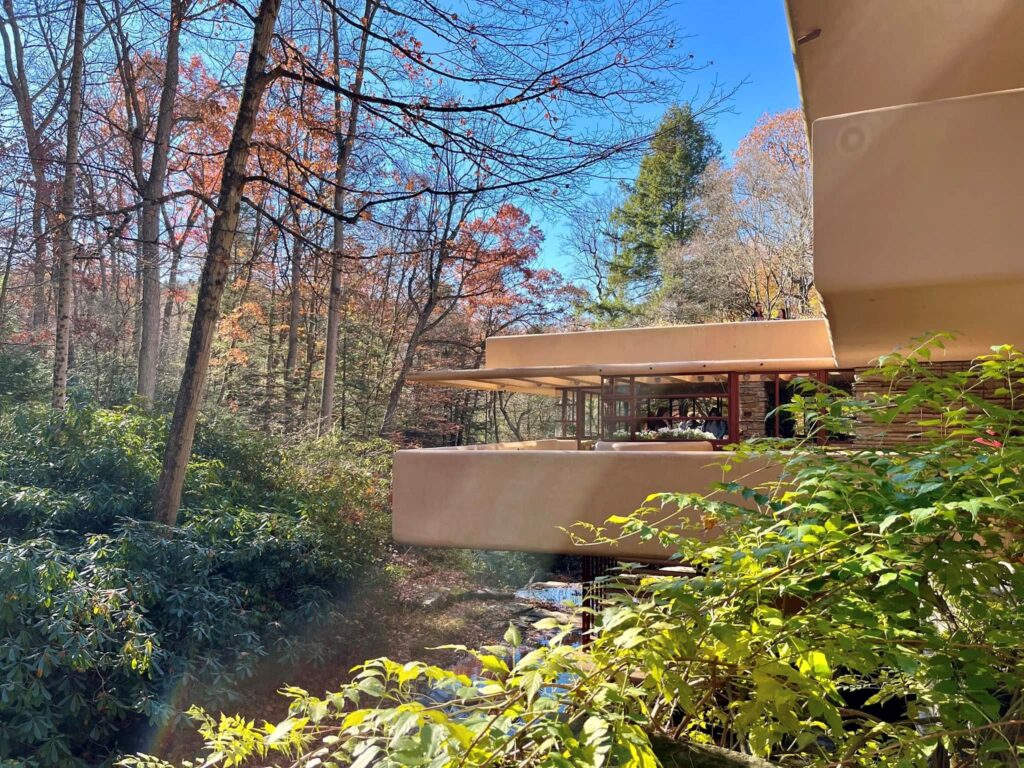
First view of Fallingwater as you approach the house. This is the first floor terrace off of the living room. Although we were visiting past peak autumn color, the countryside was still beautiful.
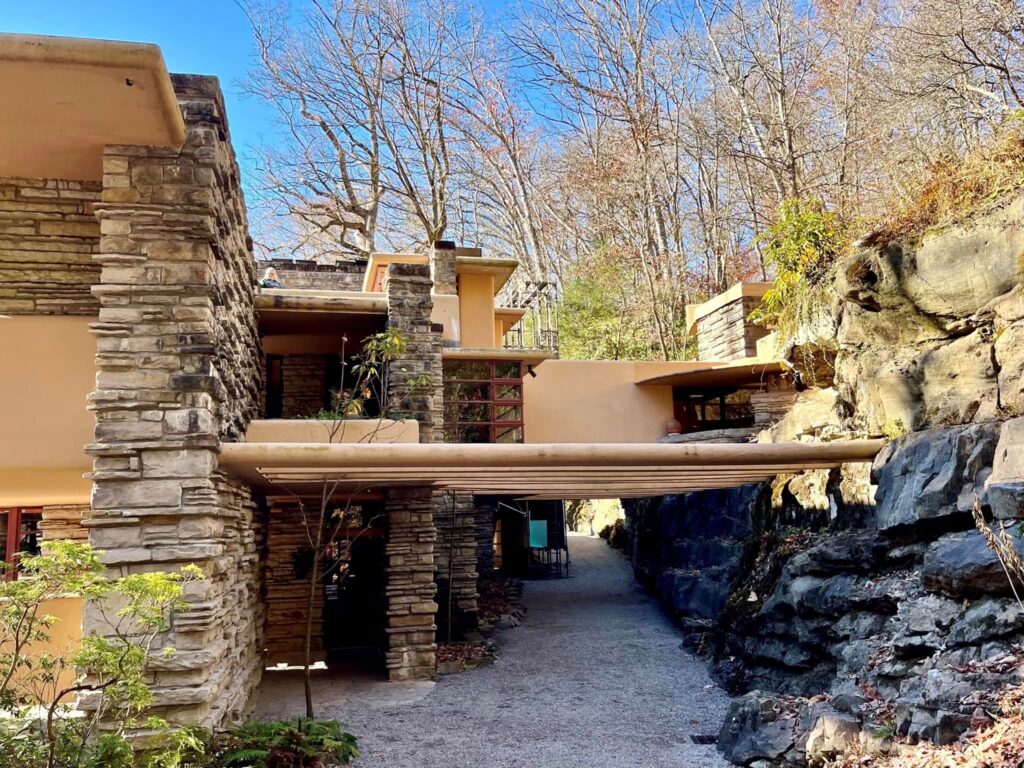
The front entrance to Fallingwater is on the left, just beyond that small tree. Frank Lloyd Wright liked hidden entrances. I think Fallingwater deserves a more elegant entry way, but this is the way Wright designed it.
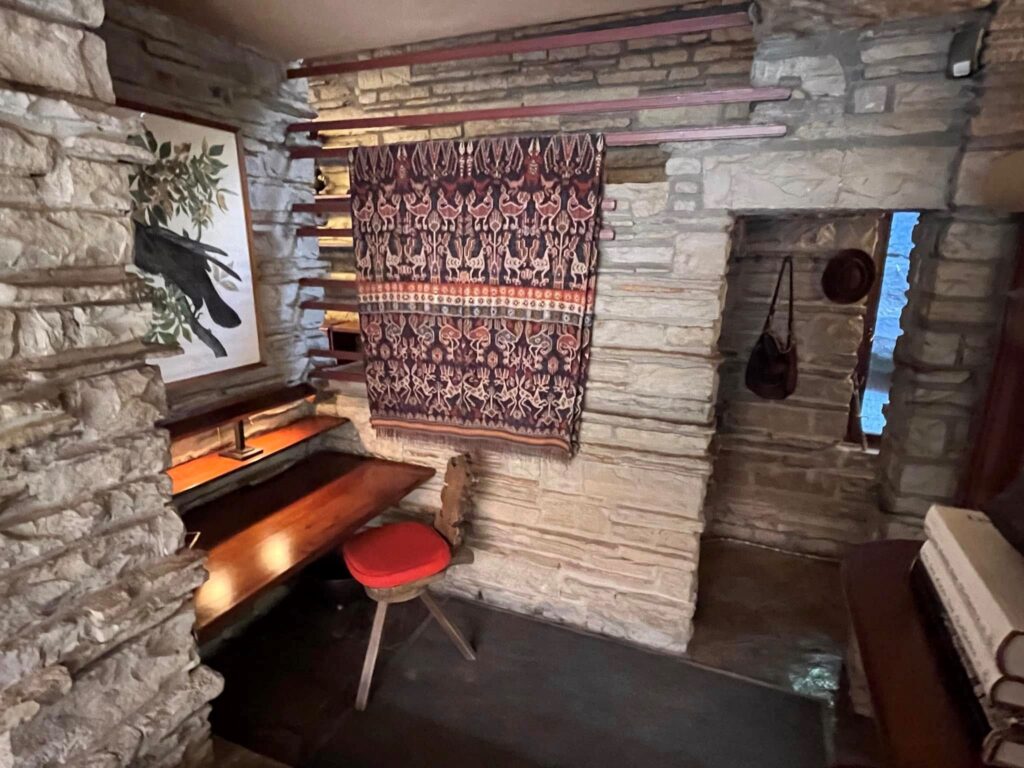
Looking down from the living room towards the entryway. That is Edgar jr’s hat and satchel, still hanging there after all these years. The entrance door is on the right, behind those books.
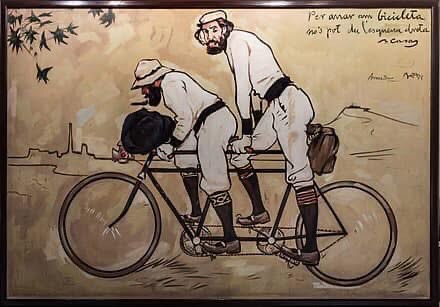
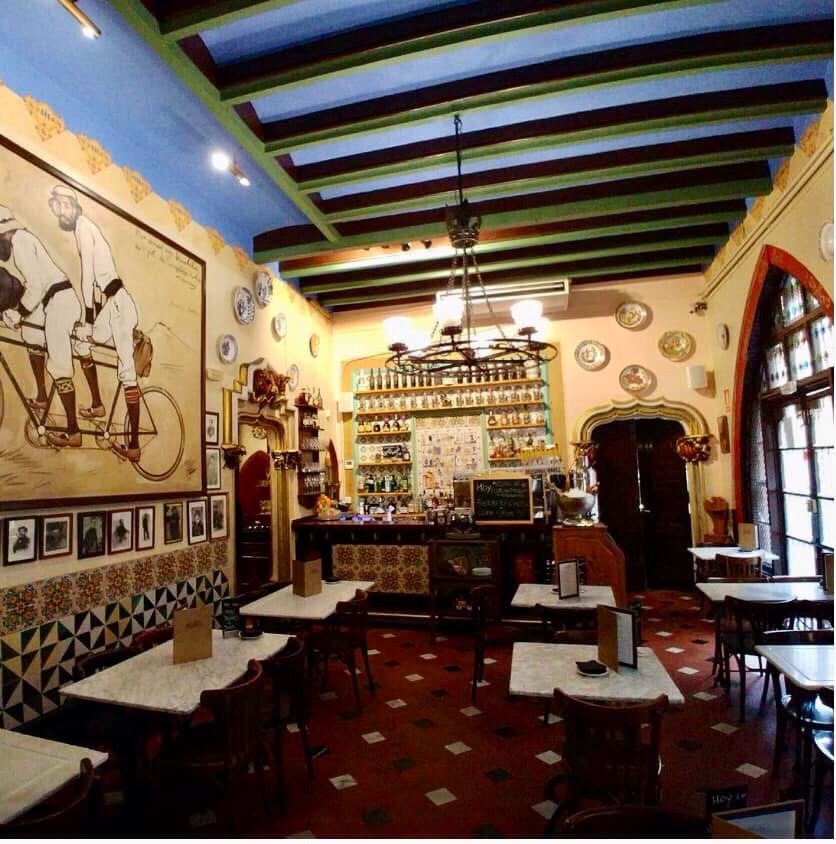
Ramon Casas painted a painting of himself and Romeu riding a tandem bicycle with a phrase in the upper right-hand corner: “to ride a bike, you can’t go with your back straight”.They saw it as a way of saying that cultural breakthroughs require moving beyond the norms.A copy of that painting is still on the walls of El Quatre Gats today (the original is in a museum).
Ramon Casas painted a painting of himself and Romeu riding a tandem bicycle with a phrase in the upper right-hand corner: “to ride a bike, you can’t go with your back straight”.They saw it as a way of saying that cultural breakthroughs require moving beyond the norms.A copy of that painting is still on the walls of El Quatre Gats today (the original is in a museum).
Romeu intended the cafe to serve more than mere food and drink.He wanted it to be a place for “food of the spirit”.He soon realized that dream as Els Quatre Gats became the favorite meeting place for the artsy/literary set of Modernisme-mad Barcelona.This included Antonin Gaudi, the architect responsible for Park Guell, the beginnings of the La Sagrada Familia basilica, and several other Modernisme-style residences in Barcelona.
A 17-year-old who was new to town also became attracted to the artsy ambience of Els Quatre Gats.His name was Pablo Picasso.He drank in the influence of the older artists around him.Perhaps he was inspired by the bicycle painting’s caption about breaking tradition.He held his very first art exhibition, about 100 paintings, in the main room of Els Quatre Gats.And, of course, he would later become VERY famous for breaking all known conventions in art.
Romeu intended the cafe to serve more than mere food and drink.He wanted it to be a place for “food of the spirit”.He soon realized that dream as Els Quatre Gats became the favorite meeting place for the artsy/literary set of Modernisme-mad Barcelona.This included Antonin Gaudi, the architect responsible for Park Guell, the beginnings of the La Sagrada Familia basilica, and several other Modernisme-style residences in Barcelona.
A 17-year-old who was new to town also became attracted to the artsy ambience of Els Quatre Gats.His name was Pablo Picasso.He drank in the influence of the older artists around him.Perhaps he was inspired by the bicycle painting’s caption about breaking tradition.He held his very first art exhibition, about 100 paintings, in the main room of Els Quatre Gats.And, of course, he would later become VERY famous for breaking all known conventions in art.
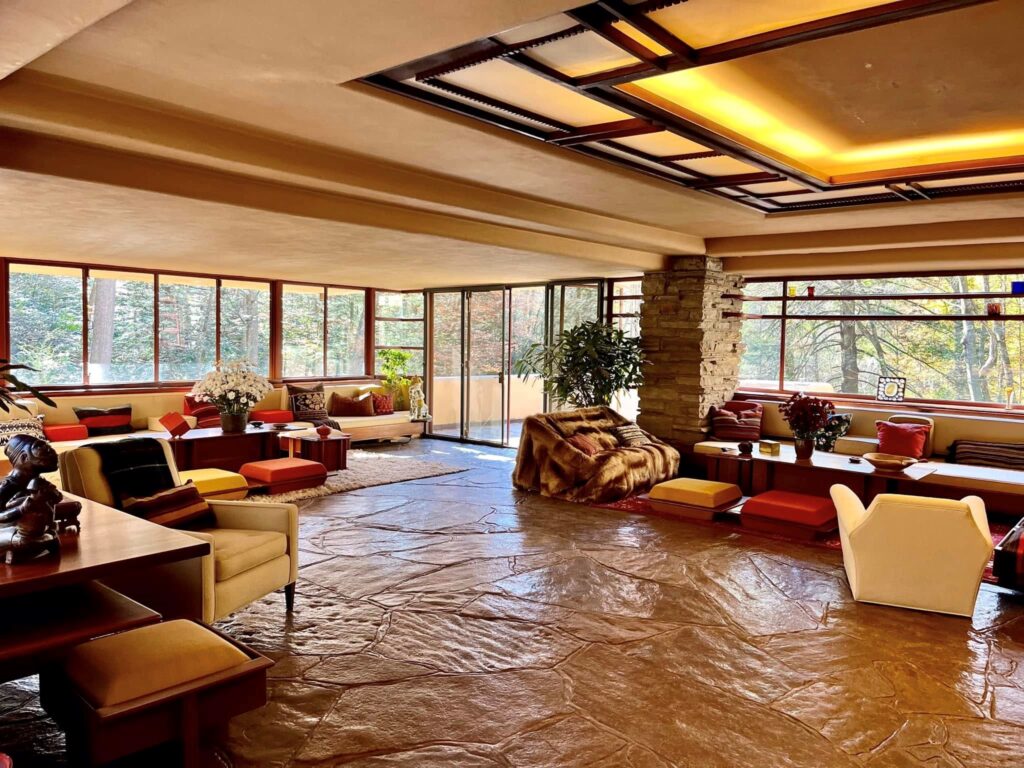
First view of the living room. Frank Lloyd Wright used a lot of horizontals at Fallingwater. I liked the Japanese feel of the living room.
This is a closer view of the seating area that was on the left in the previous photo. Very inviting!
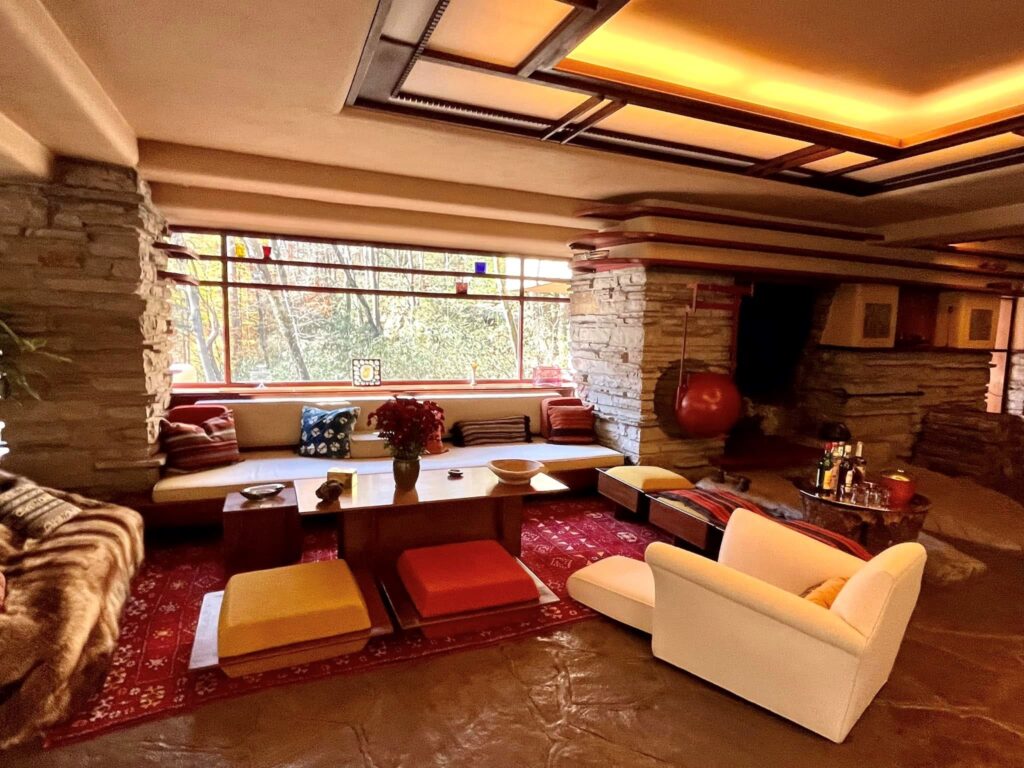
This is the seating area that was on the right in the first living room photo. Now you can see the fireplace.
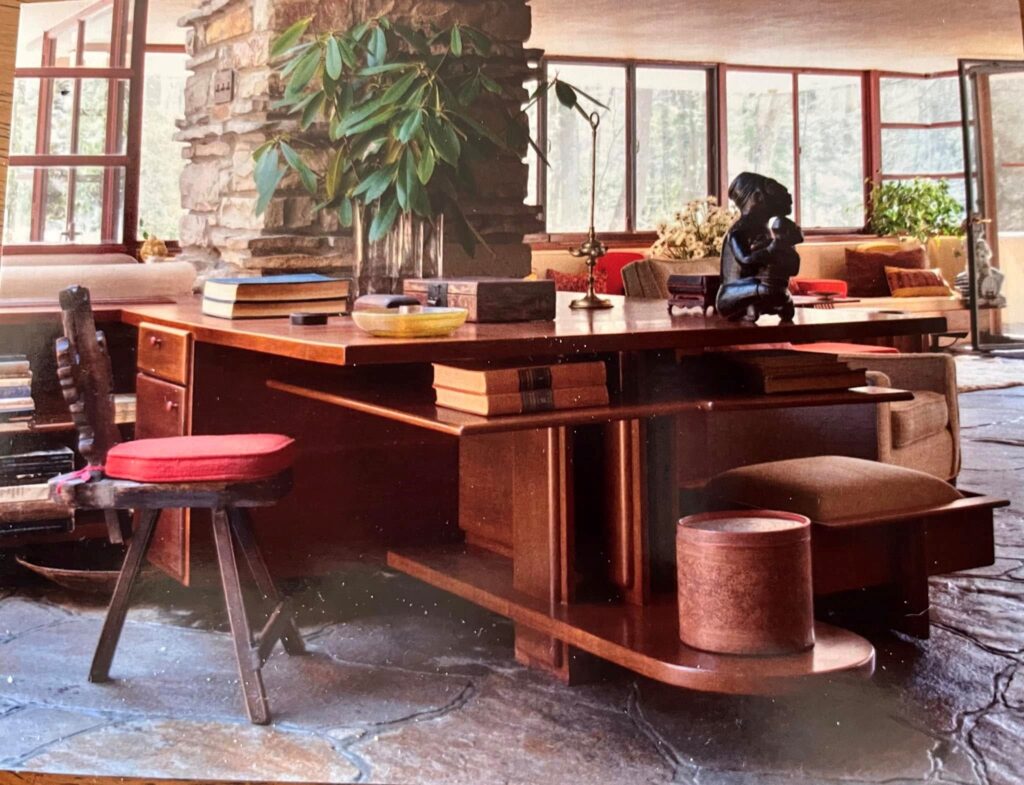
A partner desk is to the left of the leftmost seating area.
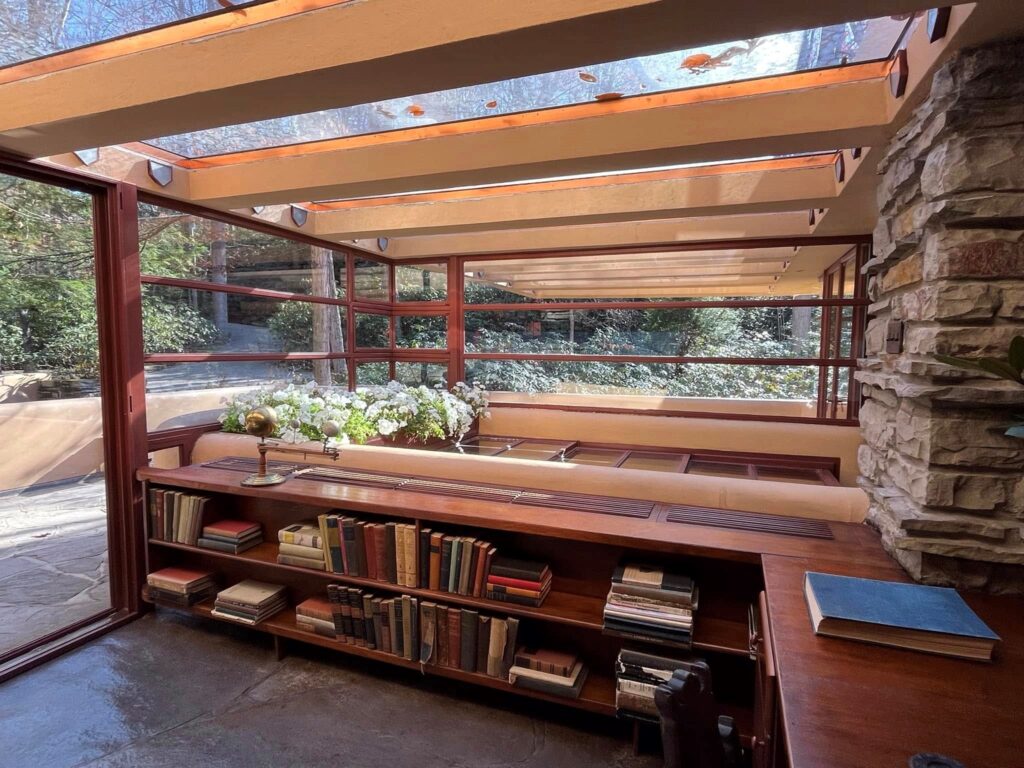
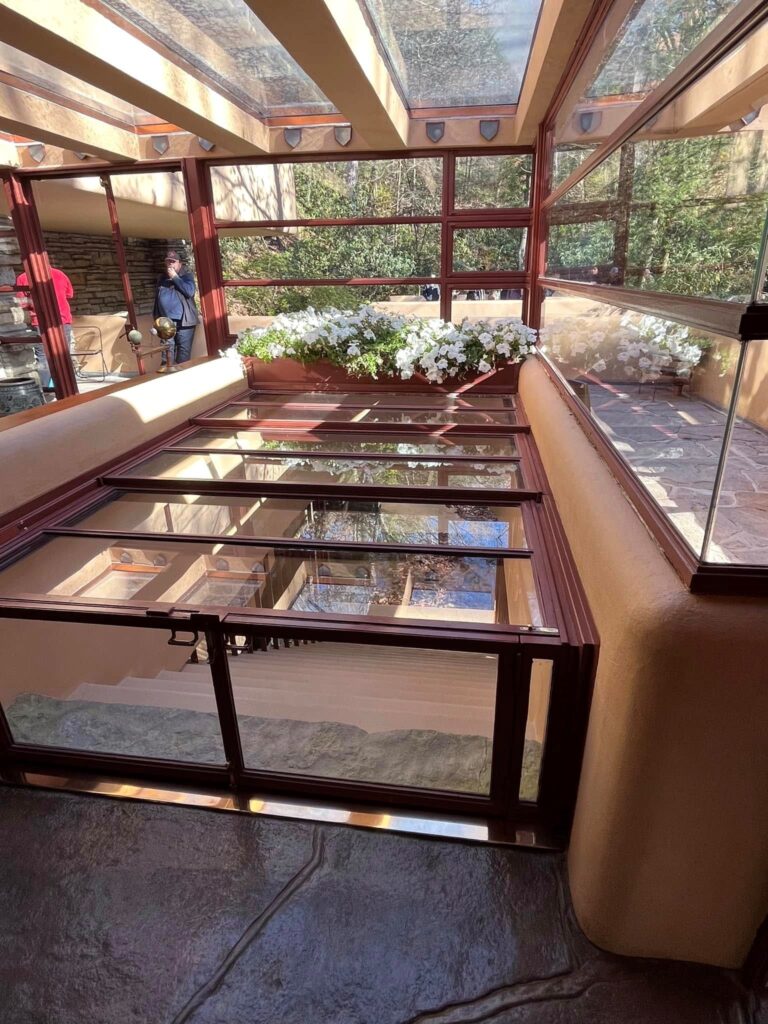
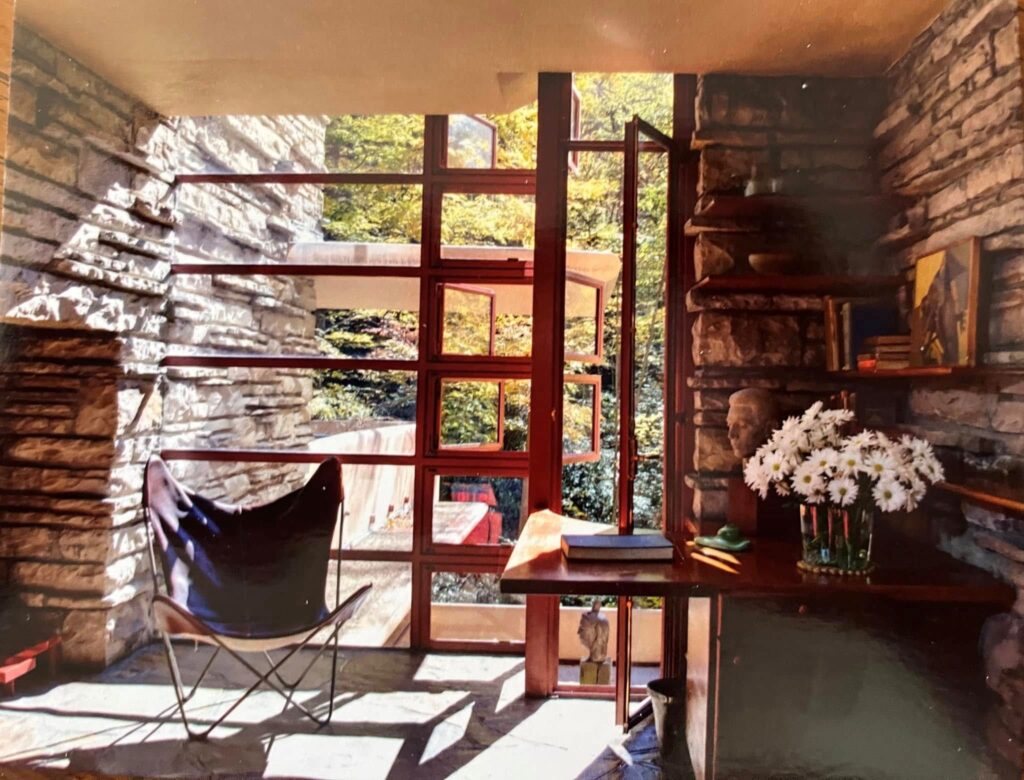
Bookcase area near the partner desk. To the right of those flowers (and underneath the glass) is a steep stairway that leads down to the waterfall level.
This glass section can be pushed back underneath the flowers to access the stairwell to the waterfall level.
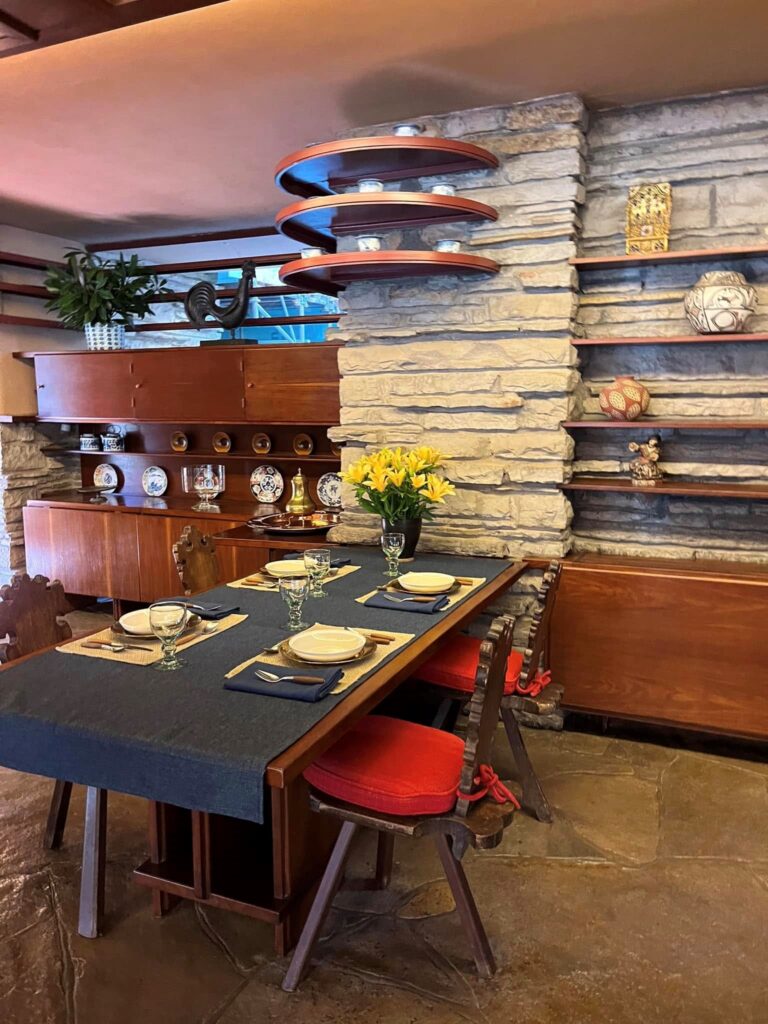
Dining room. We’re still on the main level with the living room.
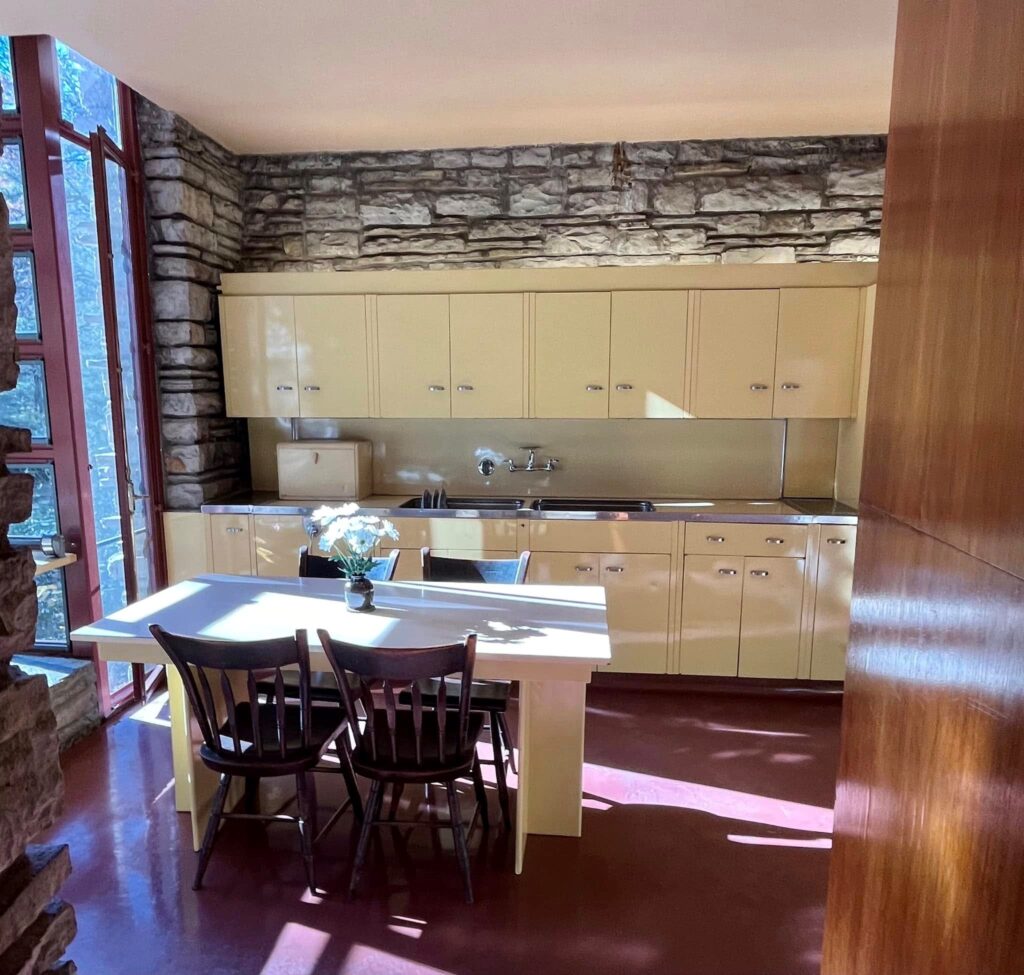
The kitchen is located a half-flight down from the living room, to the left of the dining room.
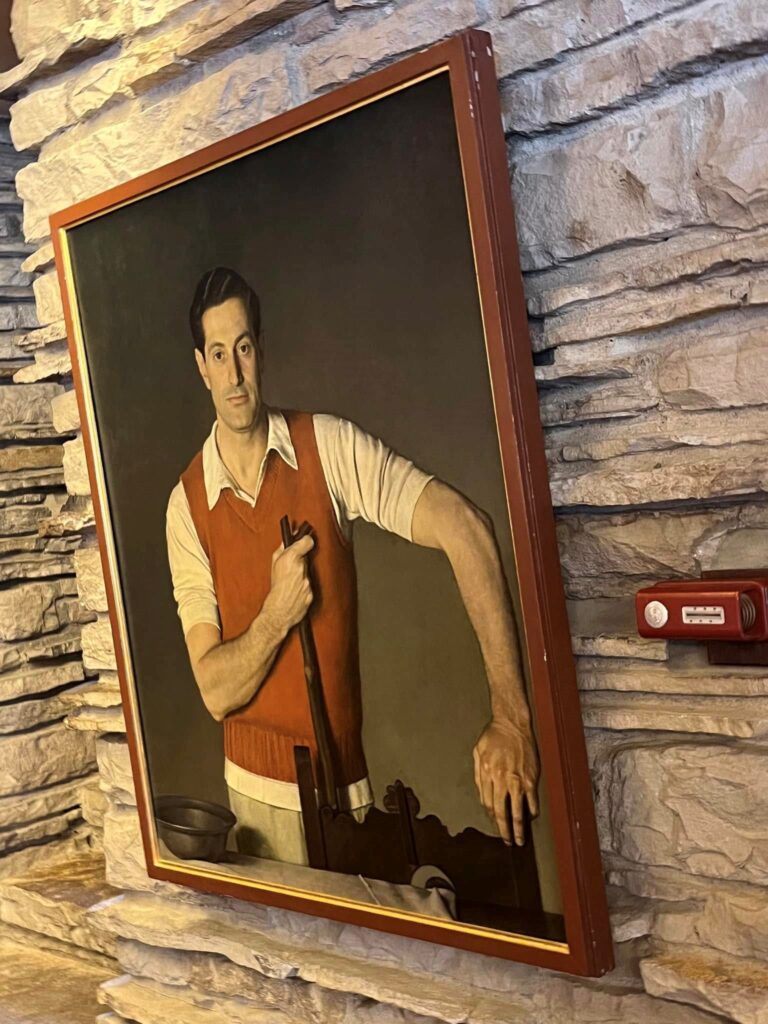
A portrait of Edgar Kaufman. Behind his portrait is the stairway leading up to the second level.
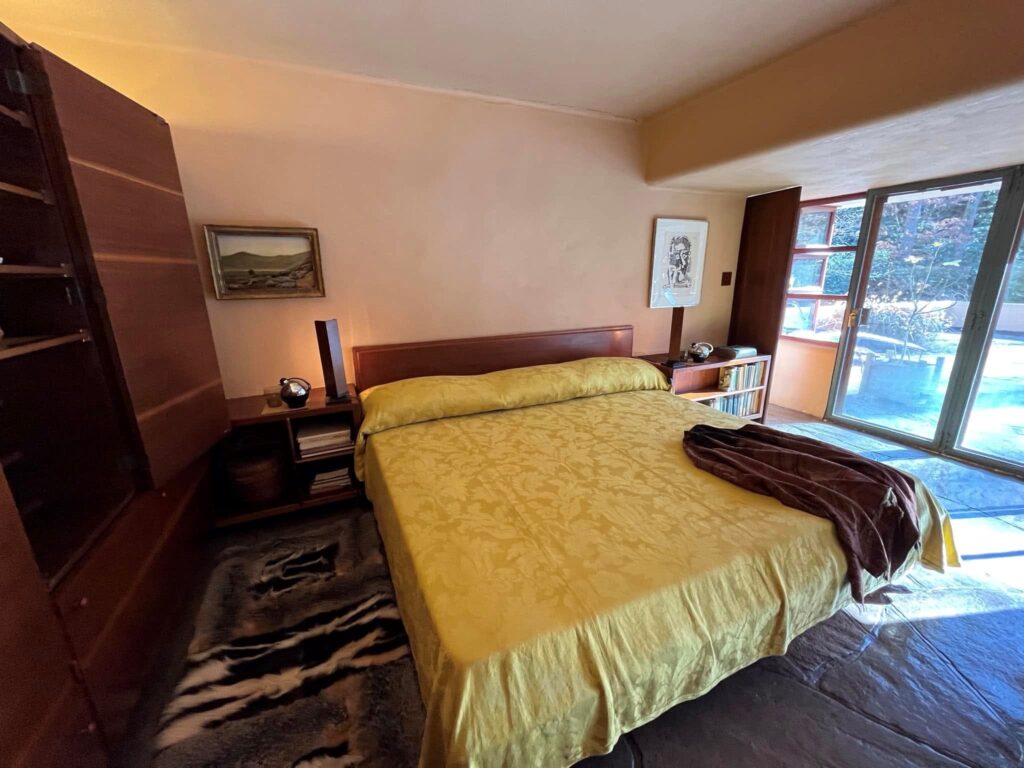
We weren’t supposed to take photos on the second and third floors of Fallingwater, but I snapped a few before I remembered that it was forbidden. This is Liliane’s bedroom on the second floor of Fallingwater. That’s a Picasso to the right side of the bed. Each bedroom here has its own private terrace and bathroom. I didn’t take any photos of the bathroom but was intrigued that they were designed with cork floors and walls for sound dampening purposes.
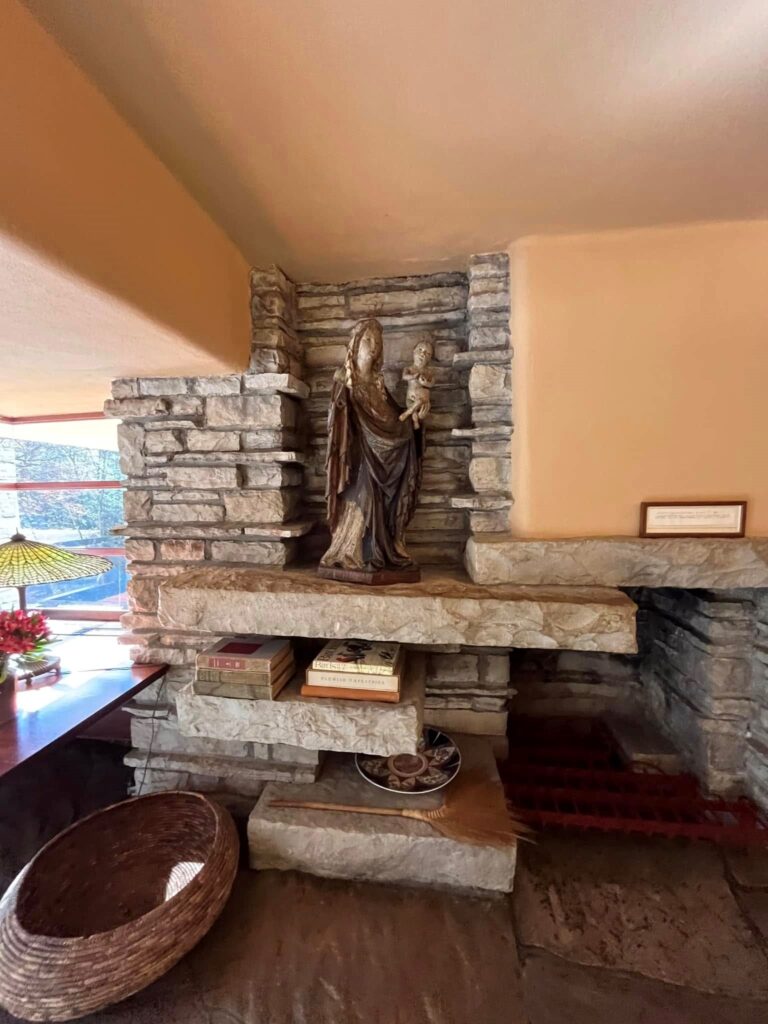
This is the fireplace in Liliane’s bedroom. That’s a Tiffany dragonfly lamp on her desk.
Before the Kaufmans built Fallingwater, they spent weekends at a rustic cabin on their property. Edgar Senior loved the screened-in porch that he slept in at the cabin so much that he asked Wright to design his bedroom to resemble that porch. There’s also another set of windows to the right of this photo.
Wright and Kaufman fought over the desk in this bedroom. Kaufman insisted that he needed a desk, Wright wanted to keep nature coming in. I thought our guide was going to say that they compromised by making it a drop down desk, but Wright had another solution. Just behind those books on the desk you’ll see a quarter-circle cutout which allows the tall window to open and nature to come in.
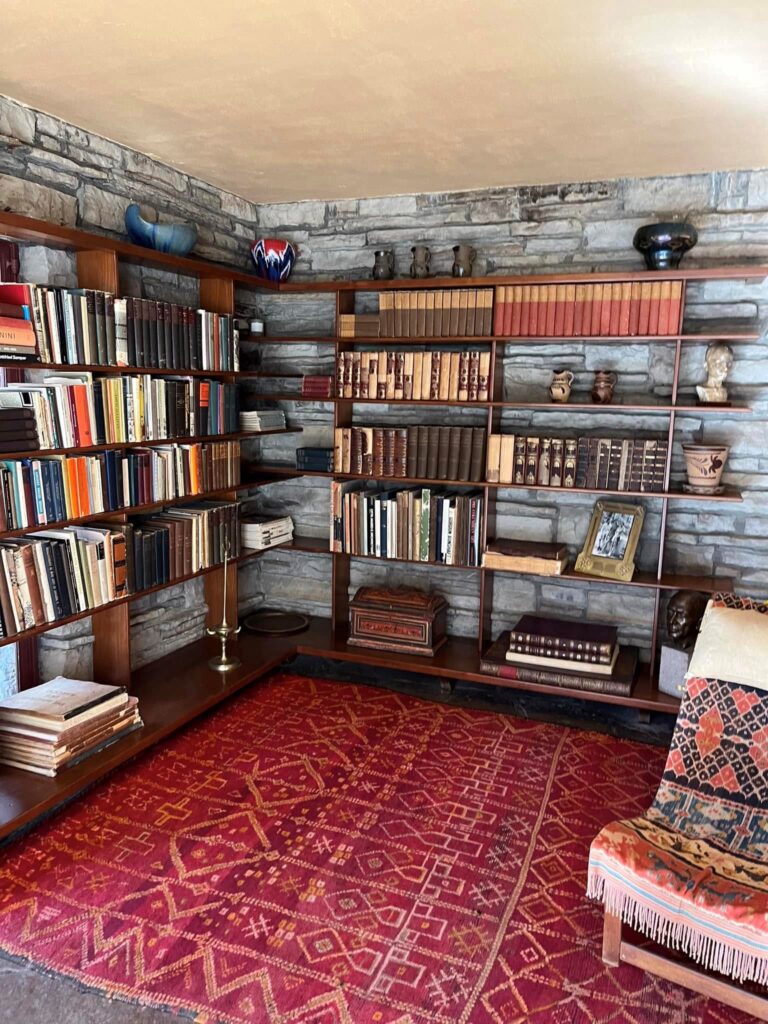
: We’re now on the third floor of Fallingwater. Because there’s a solid stone slope behind this wall, there couldn’t be any windows, so Edgar jr decided this was the perfect spot for a library. His tiny bedroom is on the other end of this floor.
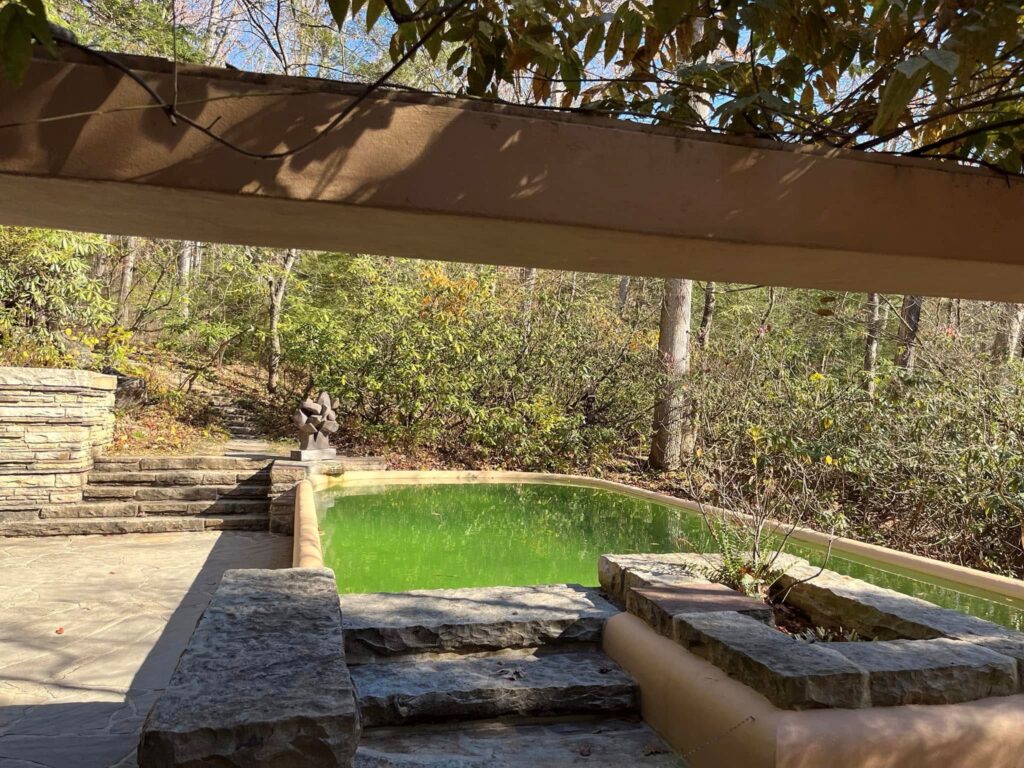
This swimming pool is gravity fed with fresh water. It is not heated nor is it given any chemicals because its drainage goes into the Bear Run River. It was a popular spot with the family and their guests during the summer months.
Els Quatre Gats hosted art exhibitions, literary and musi evenings, poetry readings, and puppet shows.It was hugely popular.Unfortunately, Simon was perhaps better at art than running a business.He provided meals to friends at a discount, or gave them away.After six short years, Els Quatre Gats was forced to close in June 1903.
Casas and Utrillo kept its influence going with a literary magazine, but Els Quatre Gats as a cafe slumbered for almost 90 years.Following the death of dictator General Francisco Franco in 1975,three businessmen ( Pere Moto, Ricard Alsina, and Ana Verdeguer) decided to re-create Els Quatre Gats in its original location in the Casa Martí building and also re-create its original decor and appearance.They argued in a proposal to the Spanish government that Els Quatre Gats was an important piece of Barcelona’s cultural history and should not be lost.The cafe reopened in 1978 and restoration to its original appearance was completed in 1991.
Today, Els Quatre Gats prides itself on providing traditional Catalan dishes.Piano music fills the air every evening.It still holds sketching contests.Both locals and tourists fill the dining rooms and enjoy the cafe’s ambience on a daily basis.