

Now we’re switching, in the blink of an eye, from “Space, the Final Frontier” to one of America’s first frontiers: Fort Ticonderoga.
In 1755, France controlled a huge swath of the North American continent, from the Hudson Bay south to New Orleans. They saw a need for a fort along the Hudson River between Lake George and Lake Champlain, and east of the Appalachian Mountains, so they built Fort Carillon there between 1755 and 1757. It was a simple wooden affair, but they had staked their claim.
But the British controlled nearby Ft. William Henry, and they were mad at the French for the massacre of British colonists there in 1757, so they went on the offensive in 1758. They lost. Humiliatingly. This battle would be the bloodiest ever suffered on American soil until the Civil War battle at Antietam over a century later.
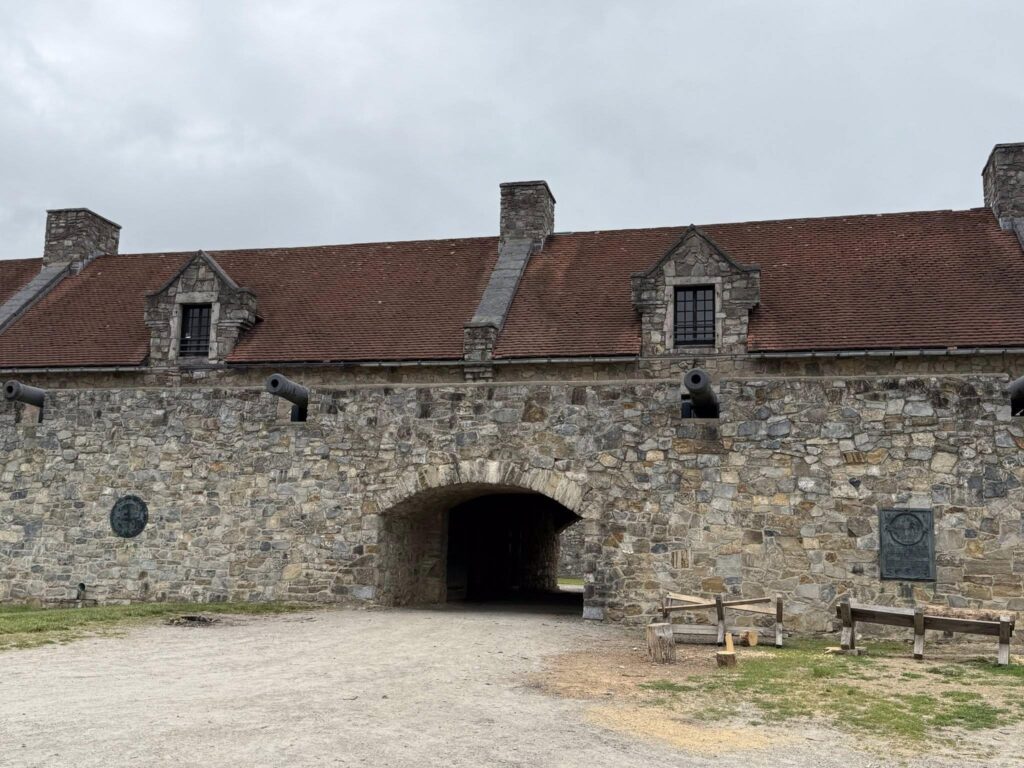
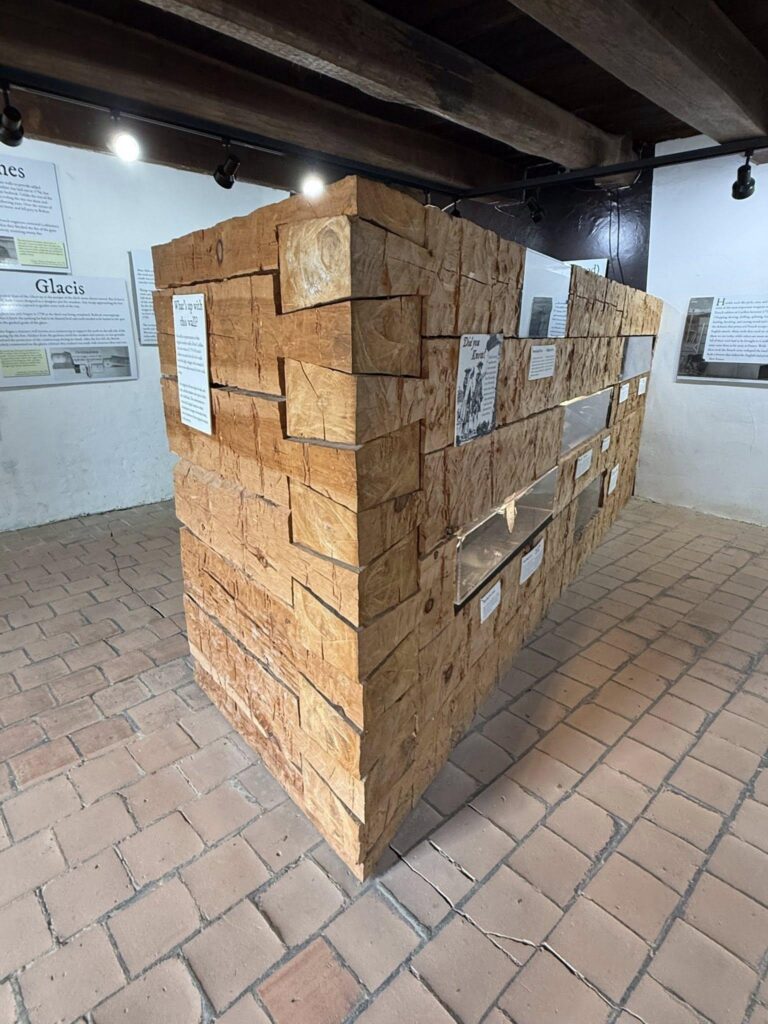
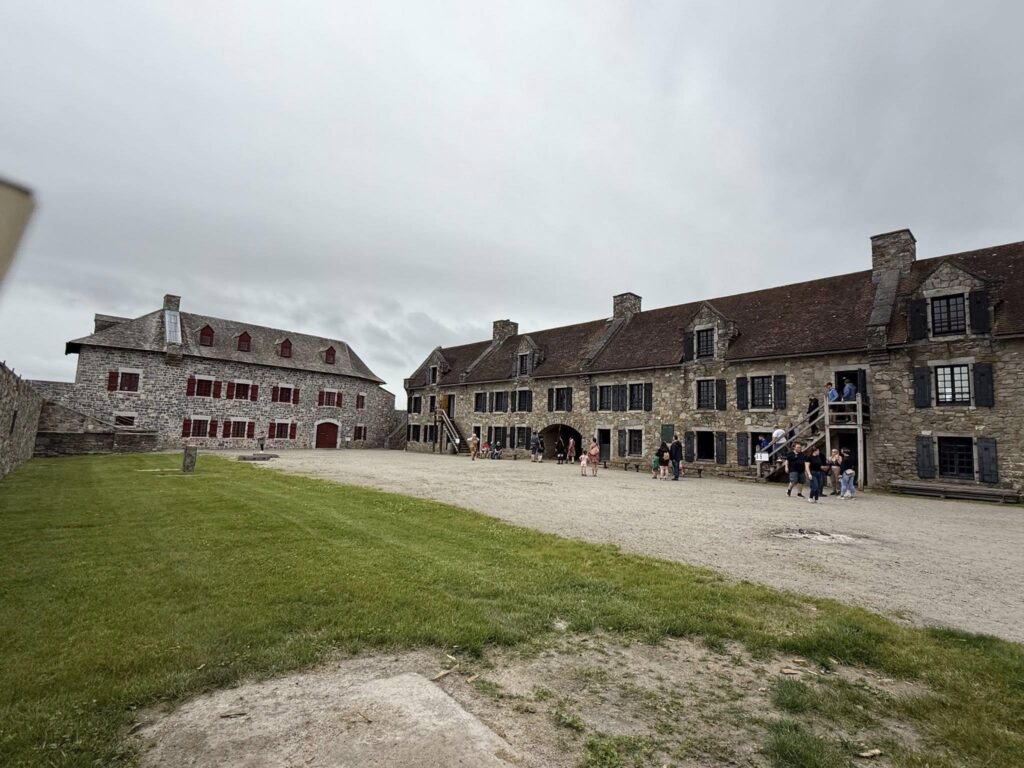
Nevertheless, the tides turn in 1759. The British try again under a different commander. The French are forced to retreat, but blow up Ft. Carillon before they leave. The British rename what’s left of the place Ft. Ticonderoga, derived from a Mohawk word meaning “the place between two waters”. Ft Ticonderoga would be rebuilt in stone.
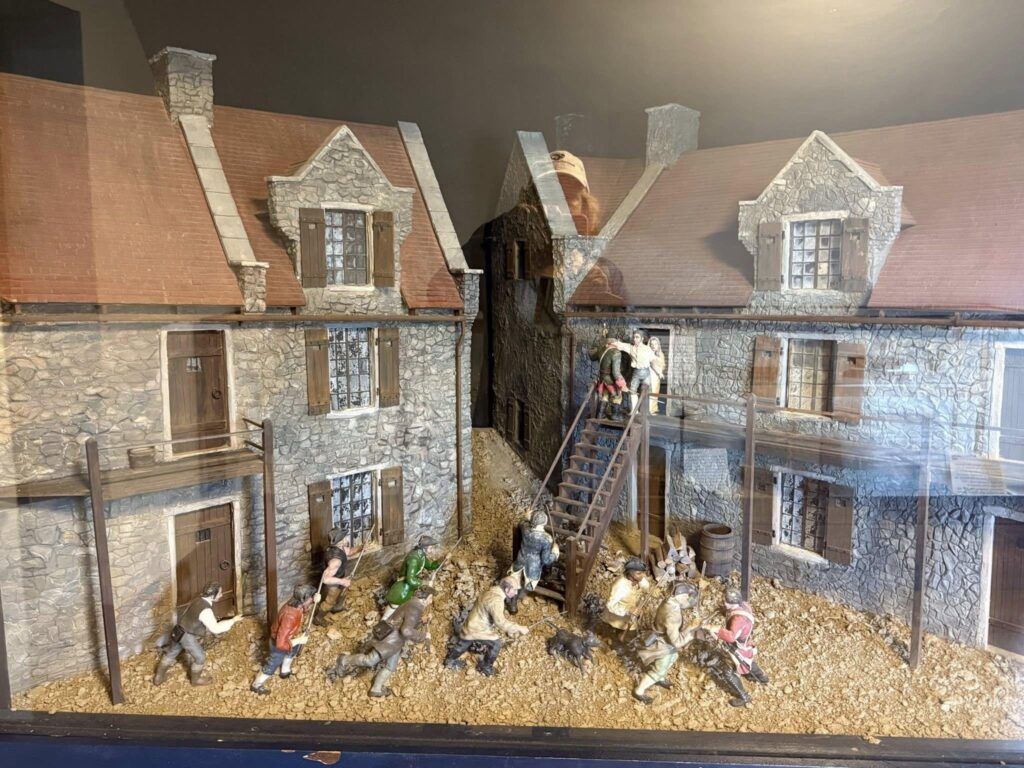
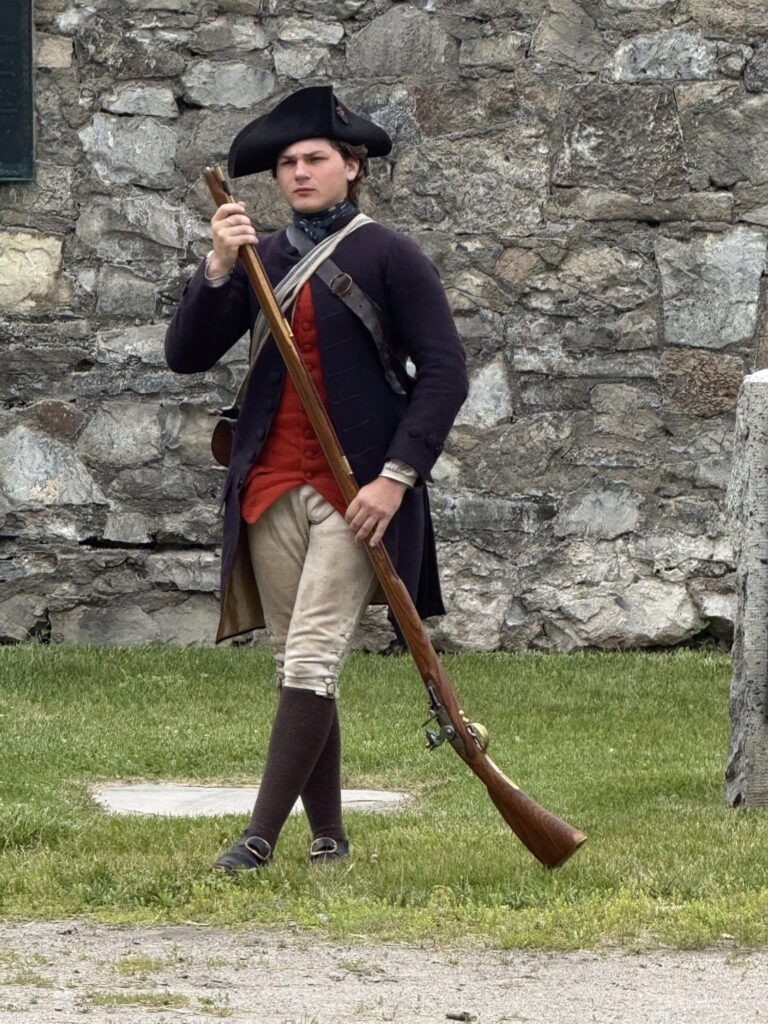
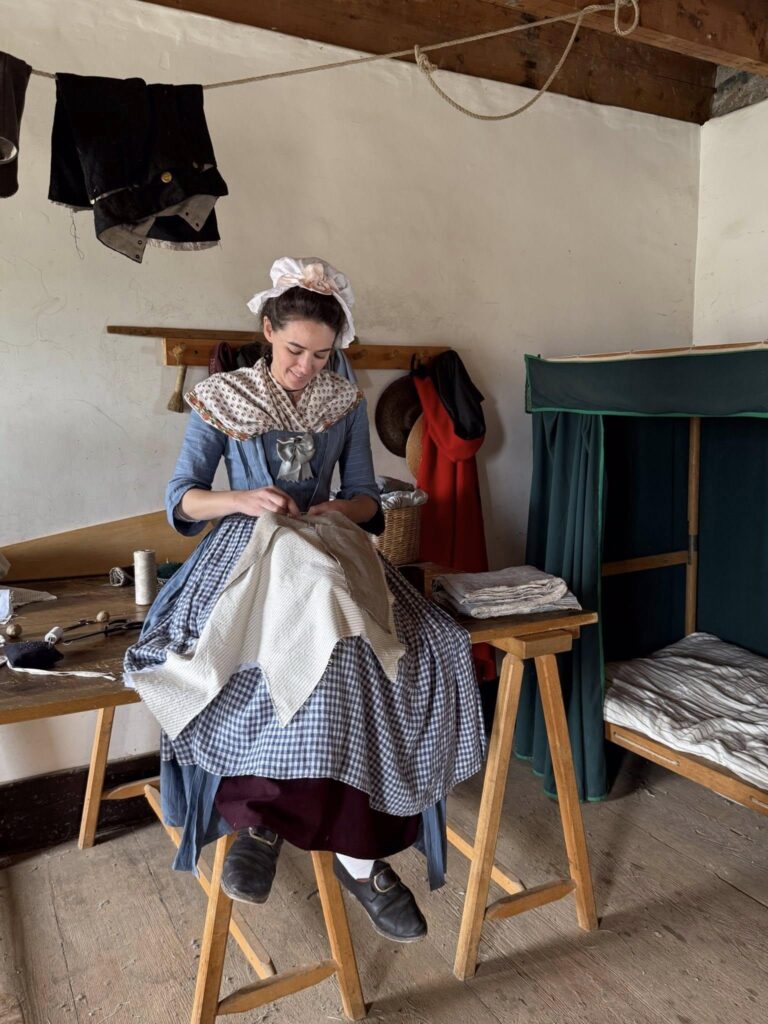
The British hold Ft. Ticonderoga until 1775. That year, on April 19, “the shot heard around the world” was fired in Lexington, Massachusetts. The Revolutionary War had begun. Unfortunately for the British at Ticonderoga, news traveled slowly in those days. Ft. Ticonderoga was only lightly defended by a mere 48 soldiers plus about two dozen women and children. On the night of May 10, Ethan Allen, Benedict Arnold, and approximately 150 Green Mountain Boys from Vermont easily captured Ft. Ticonderoga: America’s first battle win of the Revolutionary War.
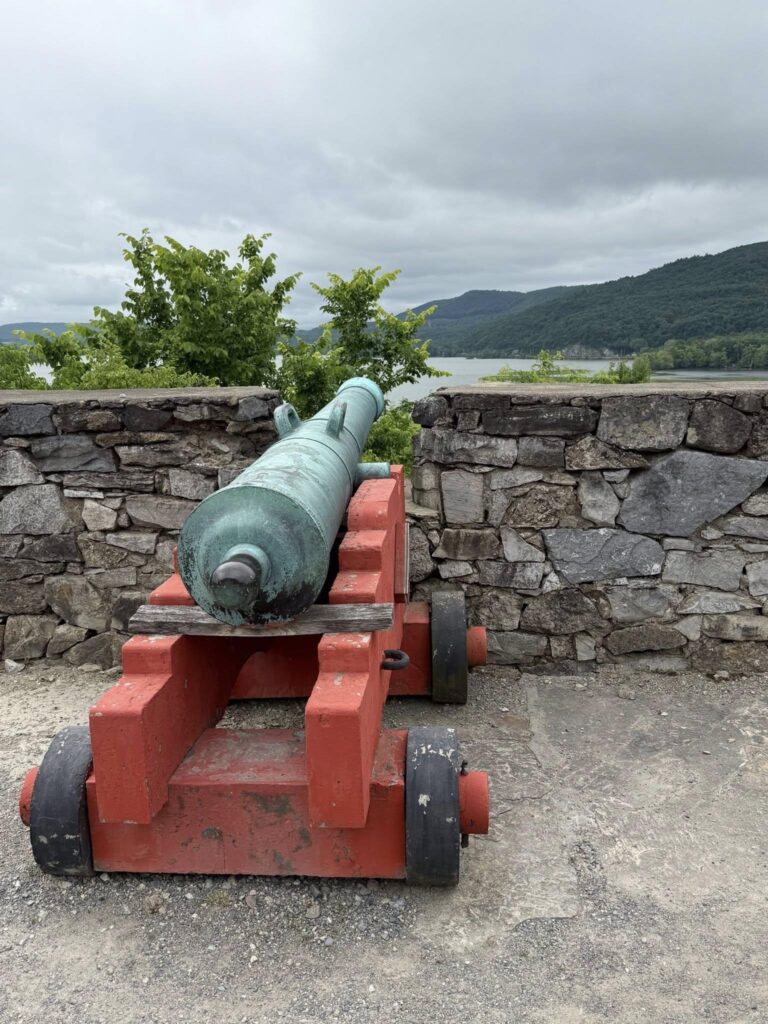
The reason why the Continental forces wanted Ft. Ticonderoga wasn’t the fort so much as its contents and its commanding position along Lake Champlain. George Washington desperately needed artillery to hold off the British in Boston. Benedict Arnold set off for Washington’s headquarters in Cambridge, Massachusetts, with an inventory of Ft. Ticonderoga’s artillery.
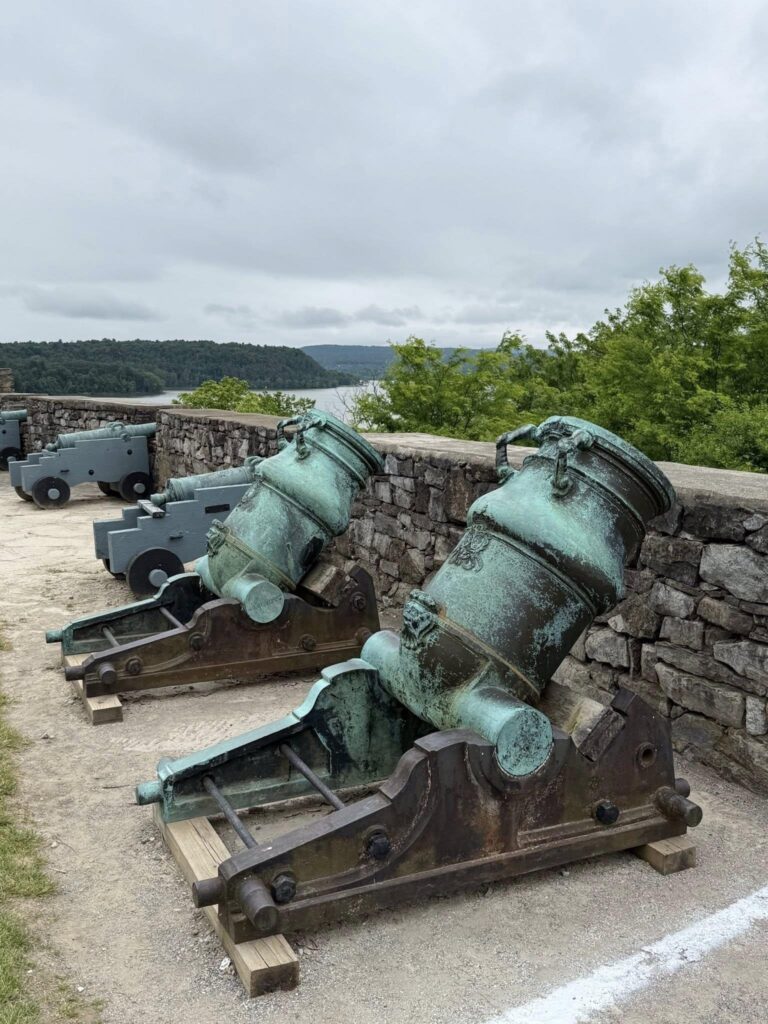
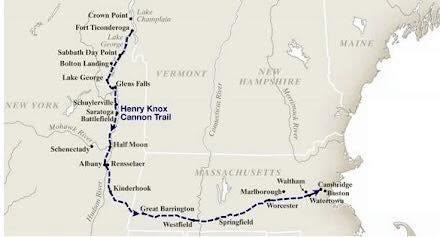
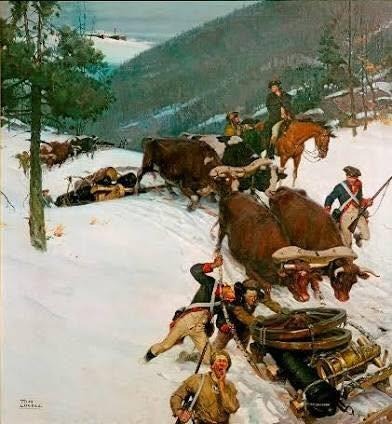
In November 1755 (yeah, things worked slowly in the 18th century), 25-year-old Henry Knox, who was Washington’s chief of artillery, embarked on a mission to haul 60 tons of cannons, howitzers, and mortars some 300 miles in the dead of winter from Ticonderoga to Boston. They used horse-drawn sledges and boats along barely-there roads and semi-frozen rivers and then over the icy Berkshire Mountains. The “noble train of artillery” took 60 days to reach Boston.
But Knox’s arduous effort was worth it. In March 1776, the Continental Army emplaced that artillery on Dorchester Heights, seemingly overnight. With the threat of bombardment imminent, the British determined that their position was untenable and withdrew on March 17th, endiing the 11-month Siege of Boston. It became Washington’s earliest victory for the Continental Army.
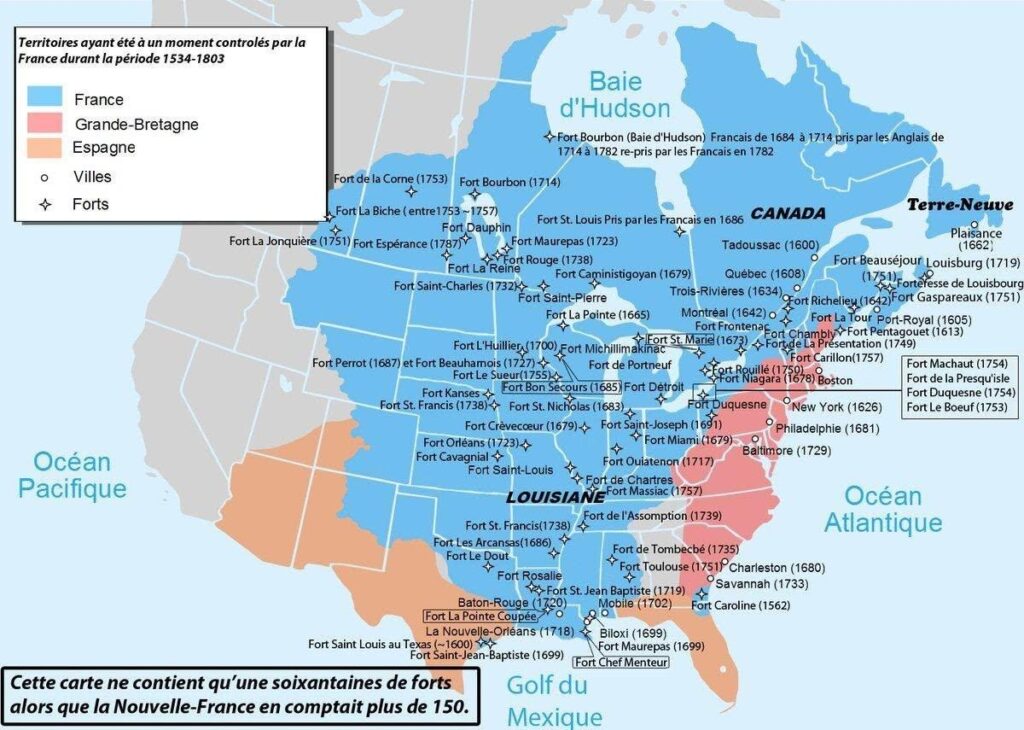
France controlled a huge portion of the North American continent. It’s a wonder we didn’t end up speaking French! The British controlled the eastern seaboard and the Spanish controlled the southwest. If you look carefully, you’ll see Ft. Carillon shown in northern New York.