

The Battle of Baltimore in September 1814 was a crucial victory that turned the tide of the War of 1812. After capturing Napoleon a few months earlier, the British were able to turn their full attention to their battles against the Americans. They captured Washington DC and launched both a land and sea battle to capture the “pirates’ nest” of Baltimore. It is no exaggeration to say that the War of 1812 was a second Revolutionary War. If the British had won, our history would have turned out quite differently. However, Ft. McHenry stood between the British coming up Chesapeake Bay and the defenders in Baltimore. The city and Ft. McHenry were too well defended; after a long night battle, the British chose to retreat. A young lawyer, Francis Scott Key, penned a poem called “The Star Spangled Banner” shortly afterwards.
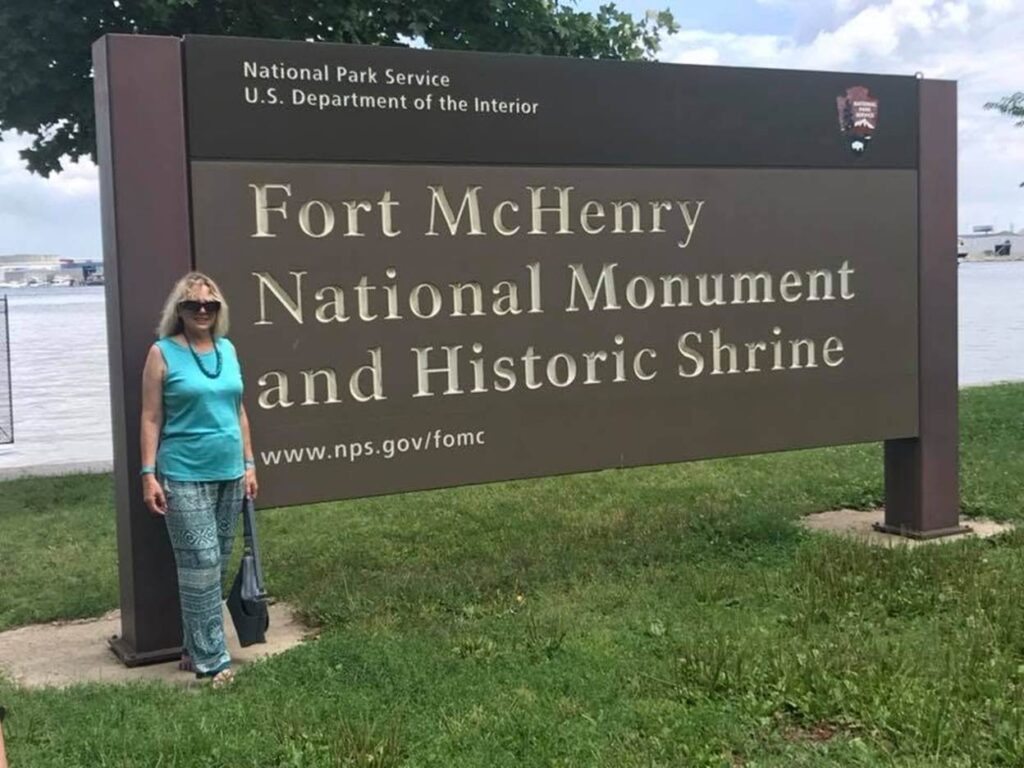
Fort McHenry is the only national monument which is also dually designated as an historic shrine.
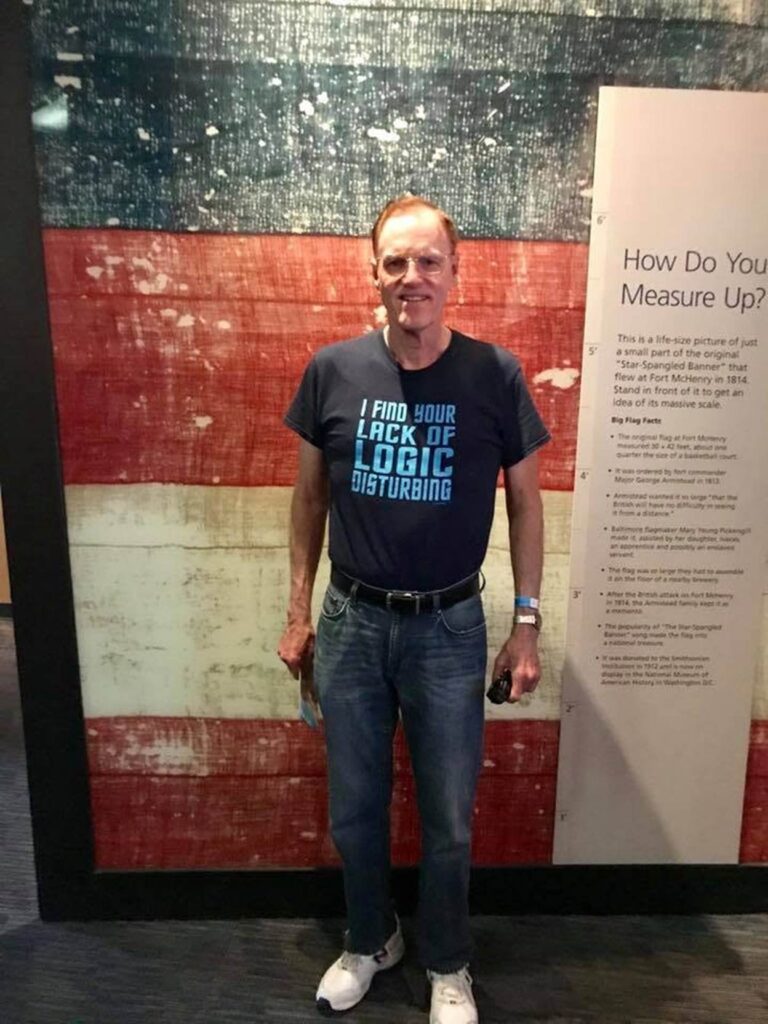
The stripes behind Lee are the actual size of those on the enormous 30′ x 42′ (9.8 x 12 meters) flag flown the morning after the Battle of Baltimore.
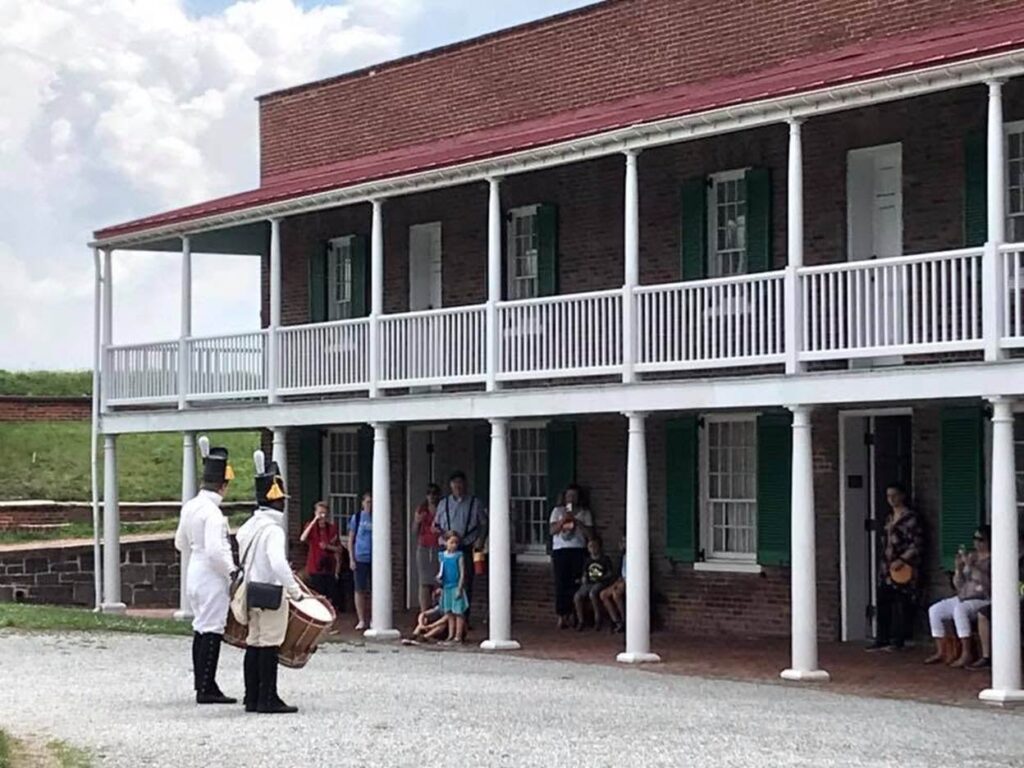
Drummers play battle riffs for the modern-day audience.
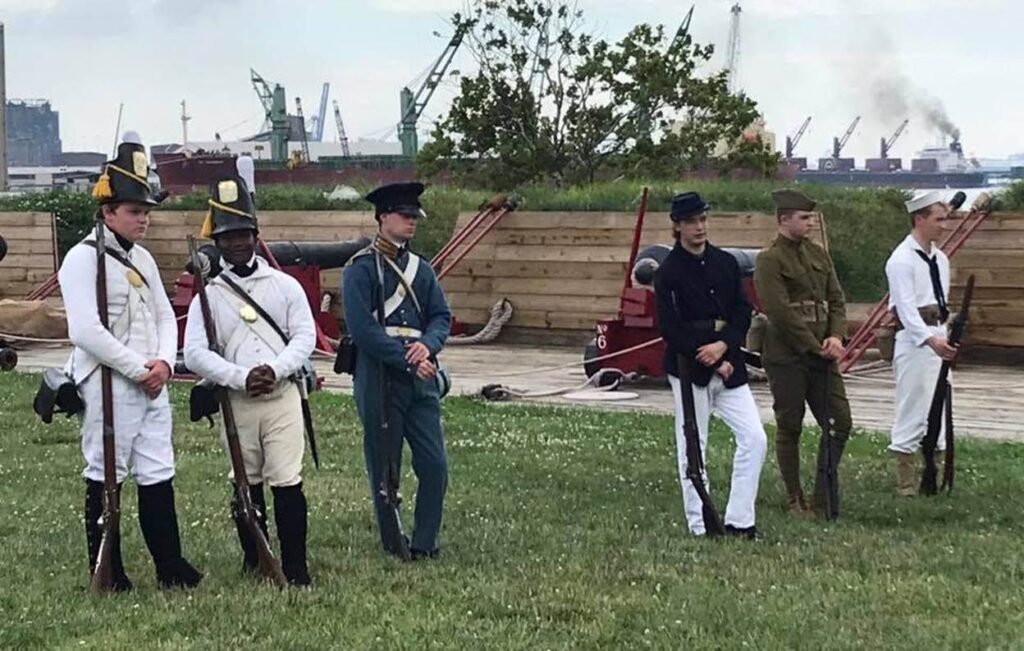
Ft. McHenry has seen action not only during the War of 1812, but also during the Civil War and World War I. These re-enactors demonstrate the uniforms and weapons that have played key roles on these grounds.
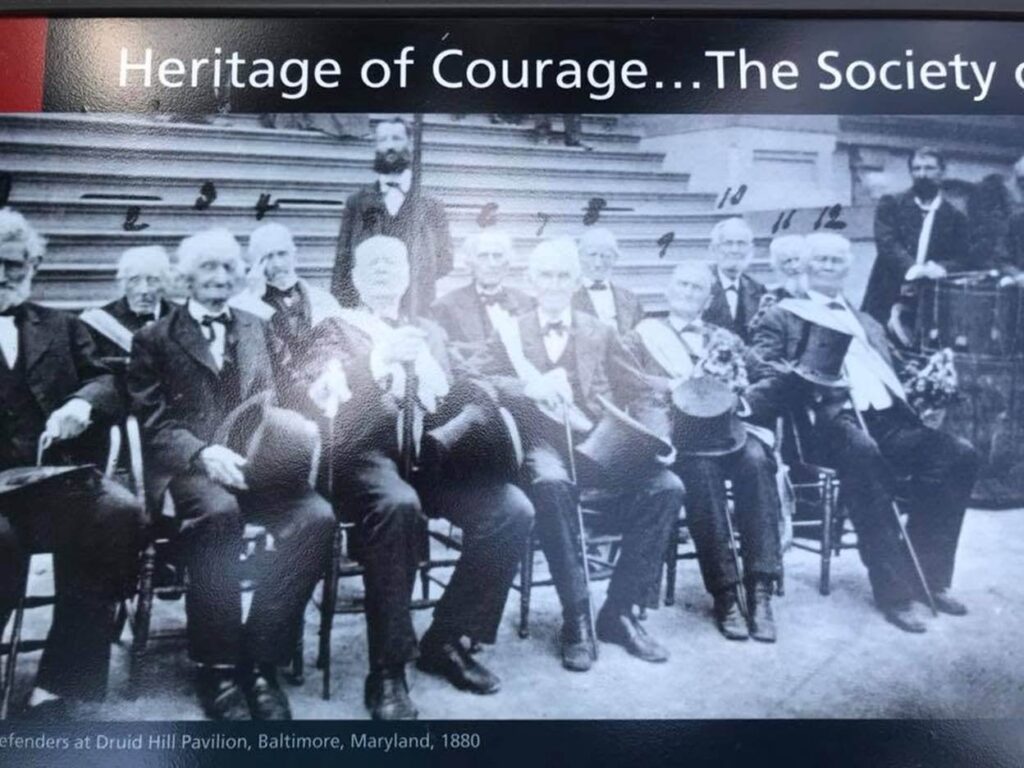
In 1880, a dozen still-living defenders of the 1814 battle held a reunion in Baltimore.
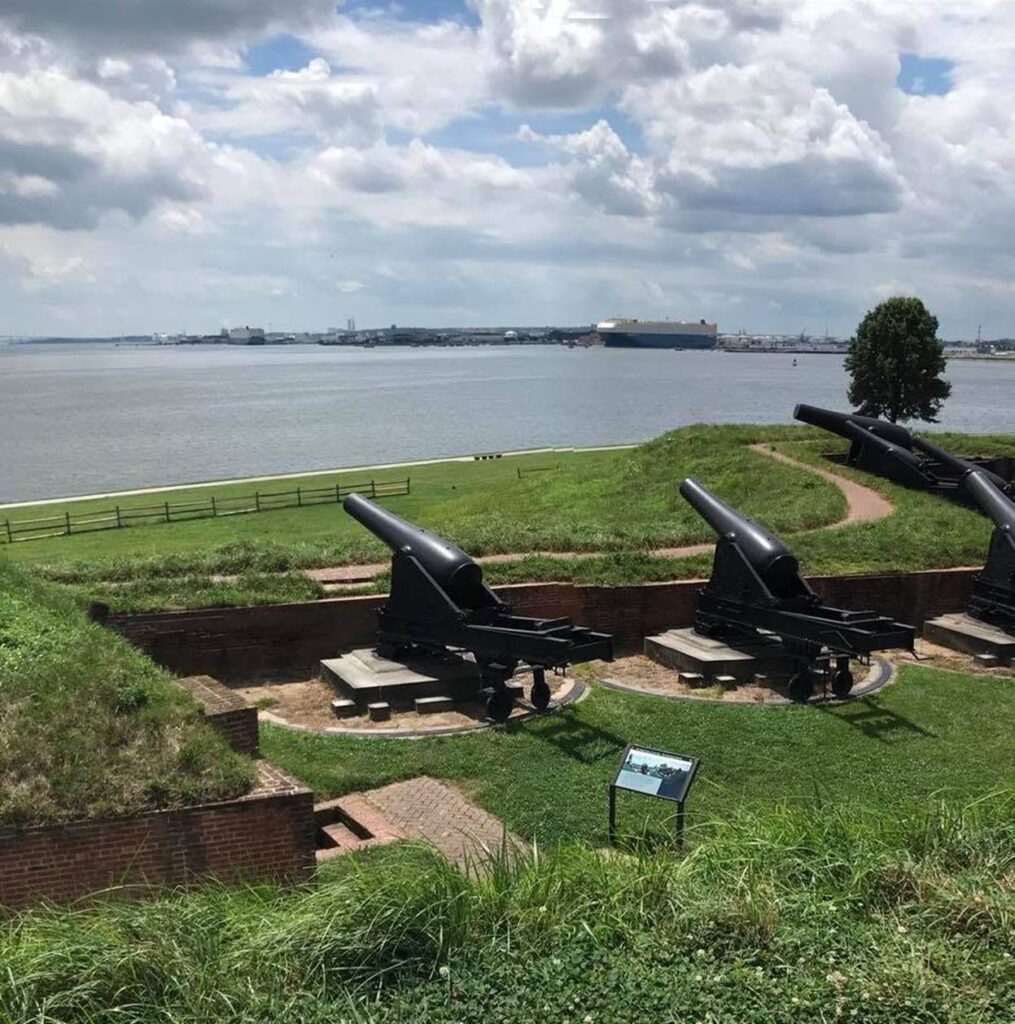
Cannon facing in the same direction as the former British brigade would have been in 1814.
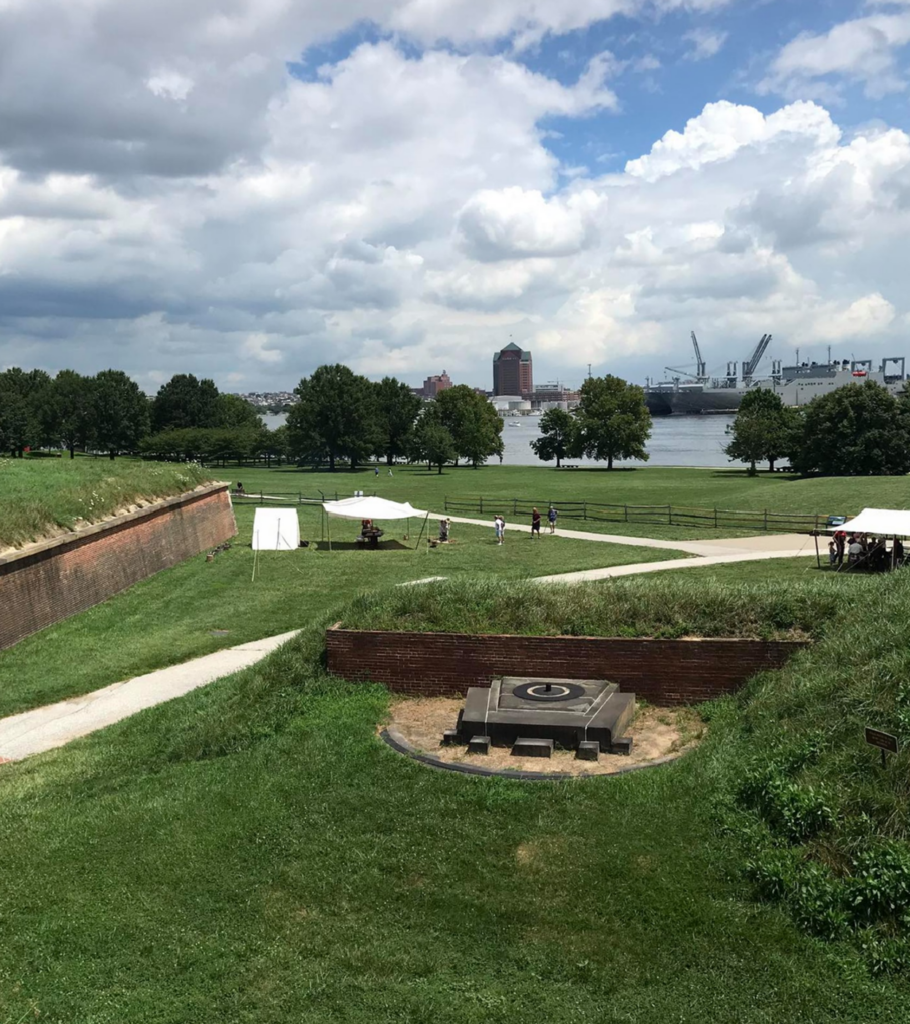
A panoramic view from the ramparts of Ft. McHenry. That bridge in the background is approximately at the distance where Francis Scott Key’s ship was positioned when he saw the post-battle garrison flag through his looking glass after the battle.
July 19, 2019