

Gion Corner is a playhouse in Kyoto which showcases seven traditional Japanese art forms in one performance to give Westerners a taste of Japanese culture. These included chado (tea ceremony), koto (Japanese harp), kado (flower arranging), gagaku (court music), kyogen (a comic play), kyomai (Kyoto-style dance), and bunraku (a puppet play). This was well worth attending.
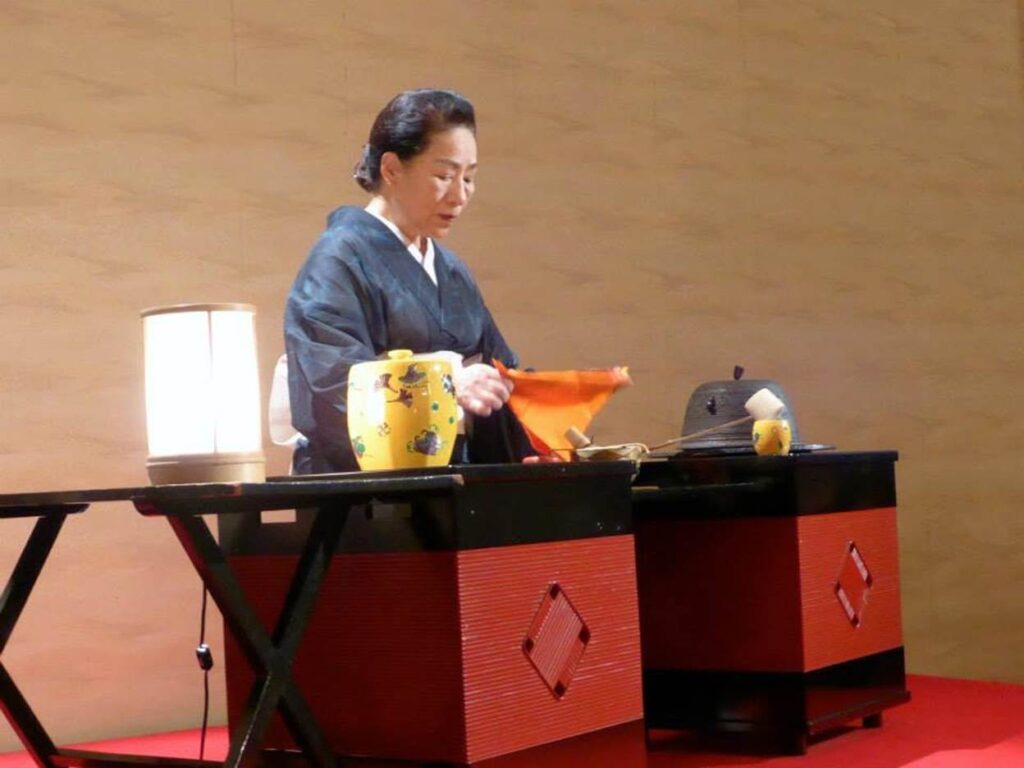
Chado, or tea ceremony. Tea drinking became popular in Japan in the early 14th century. In the 1500s, a merchant named Sen Rikyu originated the essentials of the tea ceremony, striving for the recognition of true beauty in plainness and simplicity.
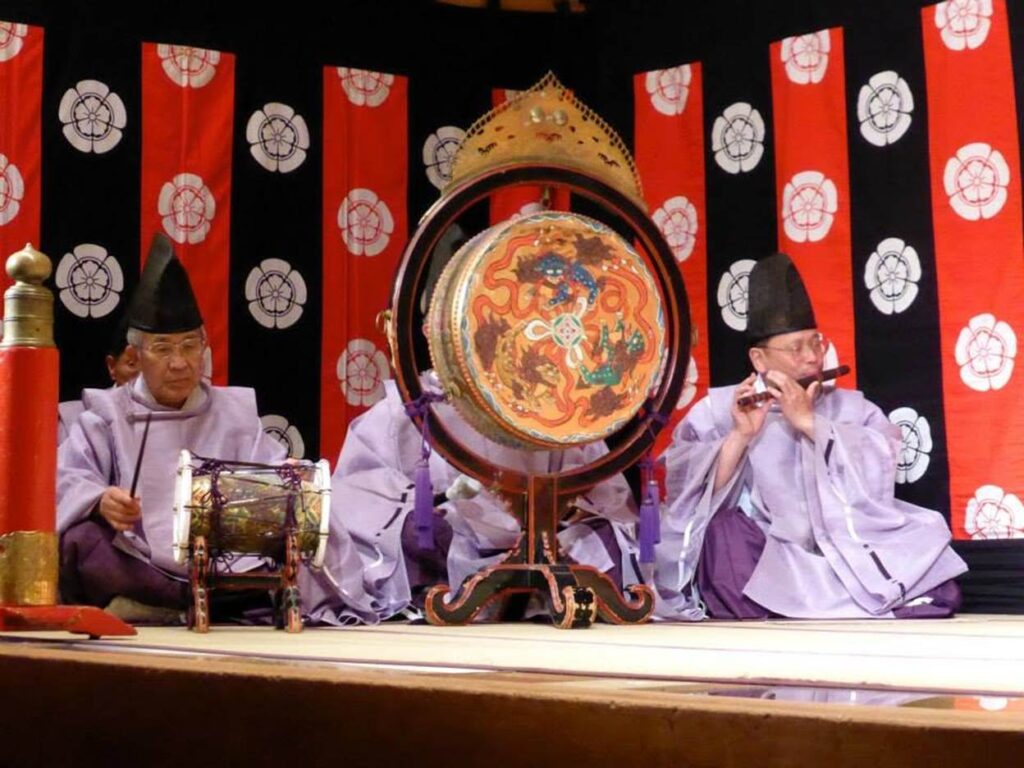
The word “gagaku” means “elegant music.” This style of court music was introduced to Japan from China in the 8th century. It was performed at court banquets and during sacred rites in shrines and temples. The musicians are in this photo.
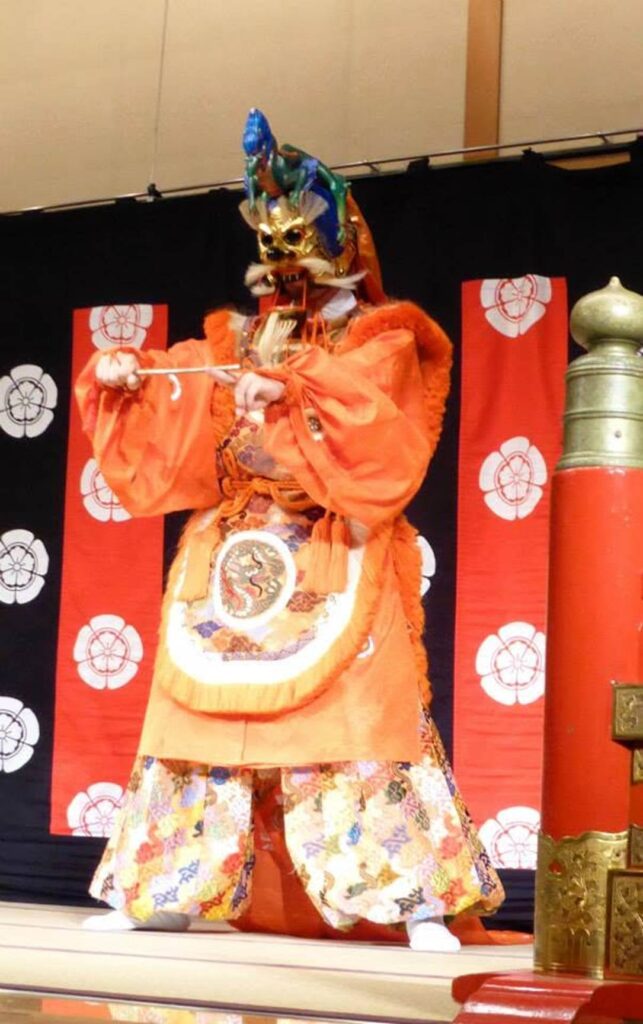
The gagaku musicians are accompanied by this masked dancer.
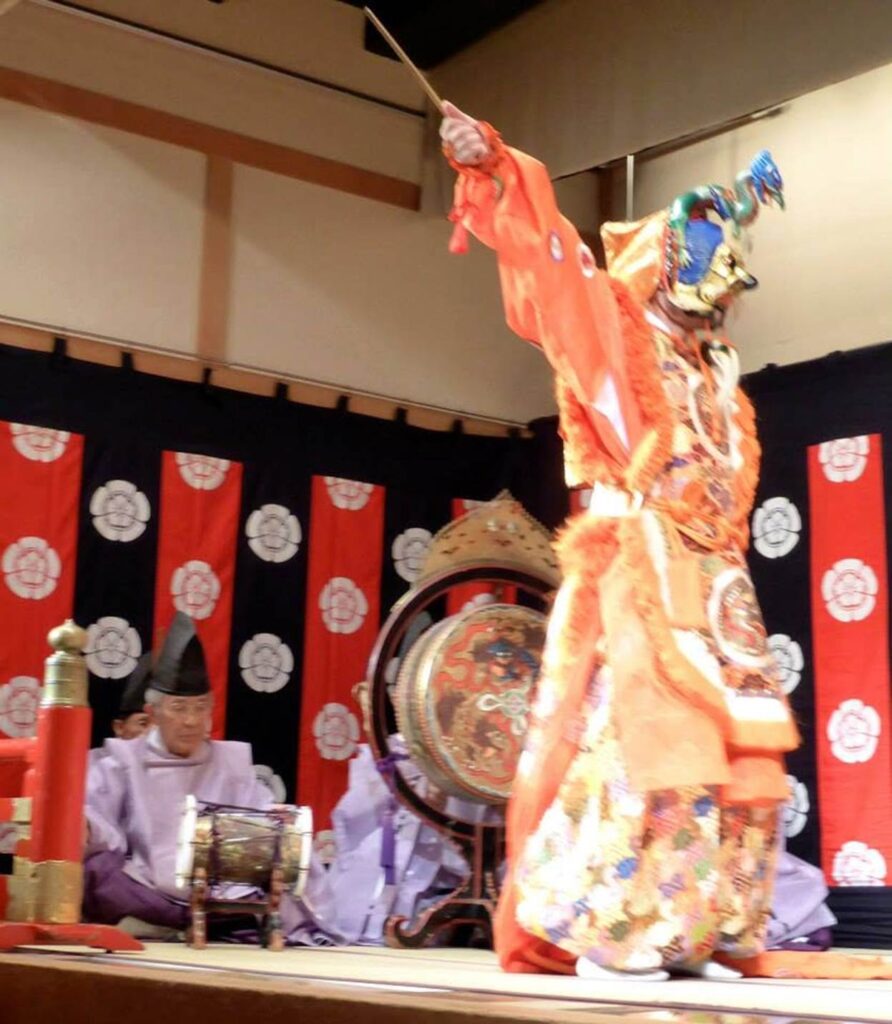
Musicians and dancer together.
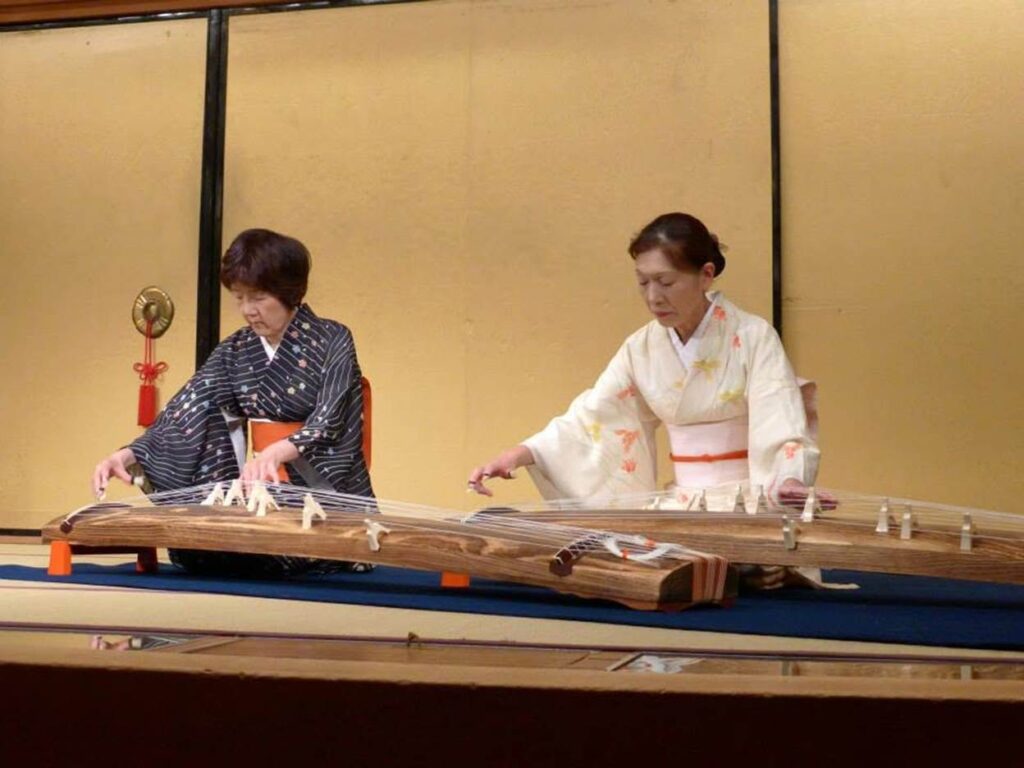
The koto, or Japanese harp, was imported from China in the 8th century. In recent years, the koto has been used in combination with Western instruments to create a new style of fusion music.
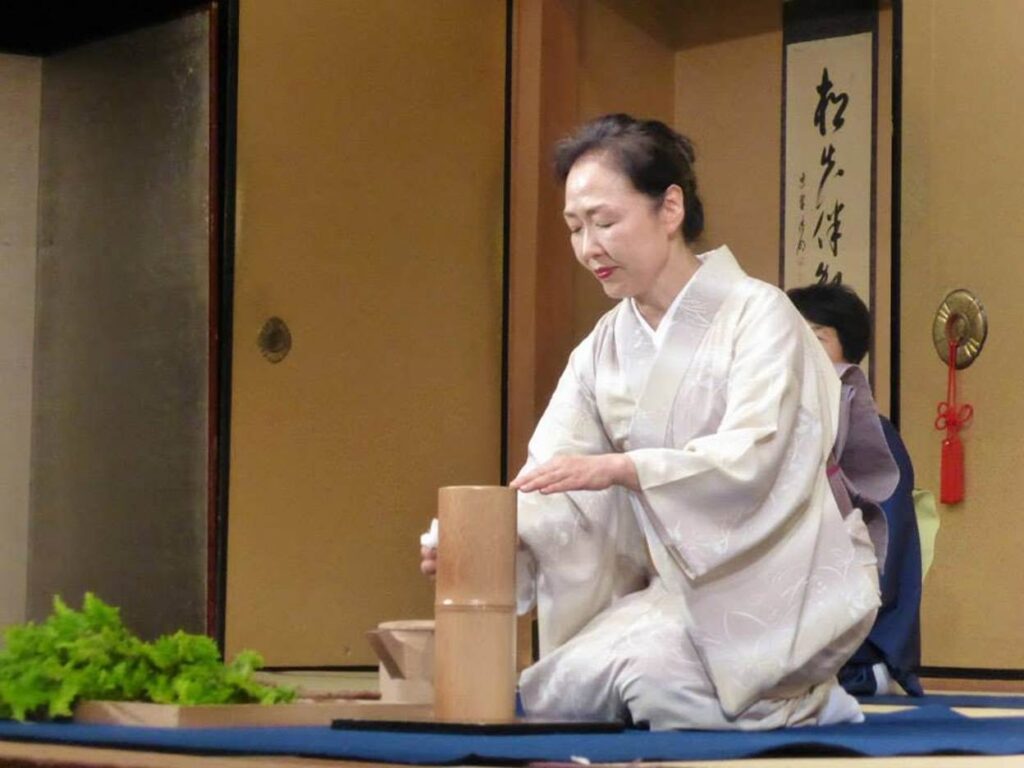
Japanese flower arranging began by putting altar flowers in front of Buddha statues in temples. During the 16th century, it became popular to include flower arrangements in tea houses, but the arrangements had to harmonize with the aestheticism of simplicity, gracefulness, and symbolism. The flower arrangement begins in this photo.
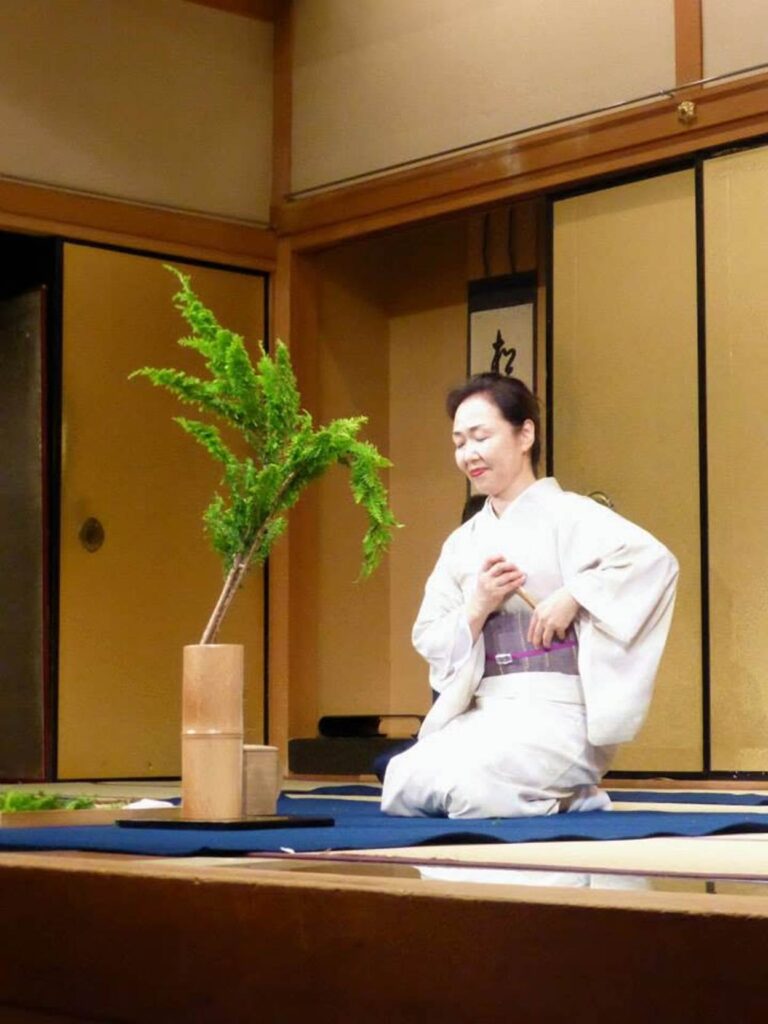
The finished arrangement. I was a bit disappointed that they didn’t use flowers for our demonstration, just juniper branches.
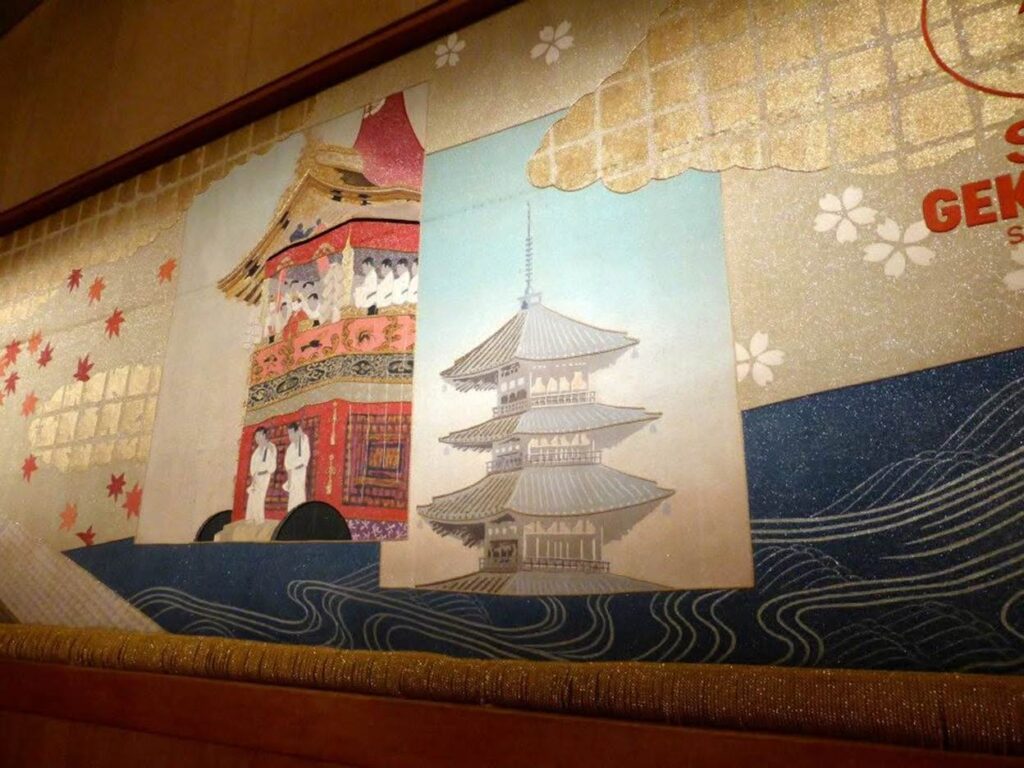
The playhouse curtain
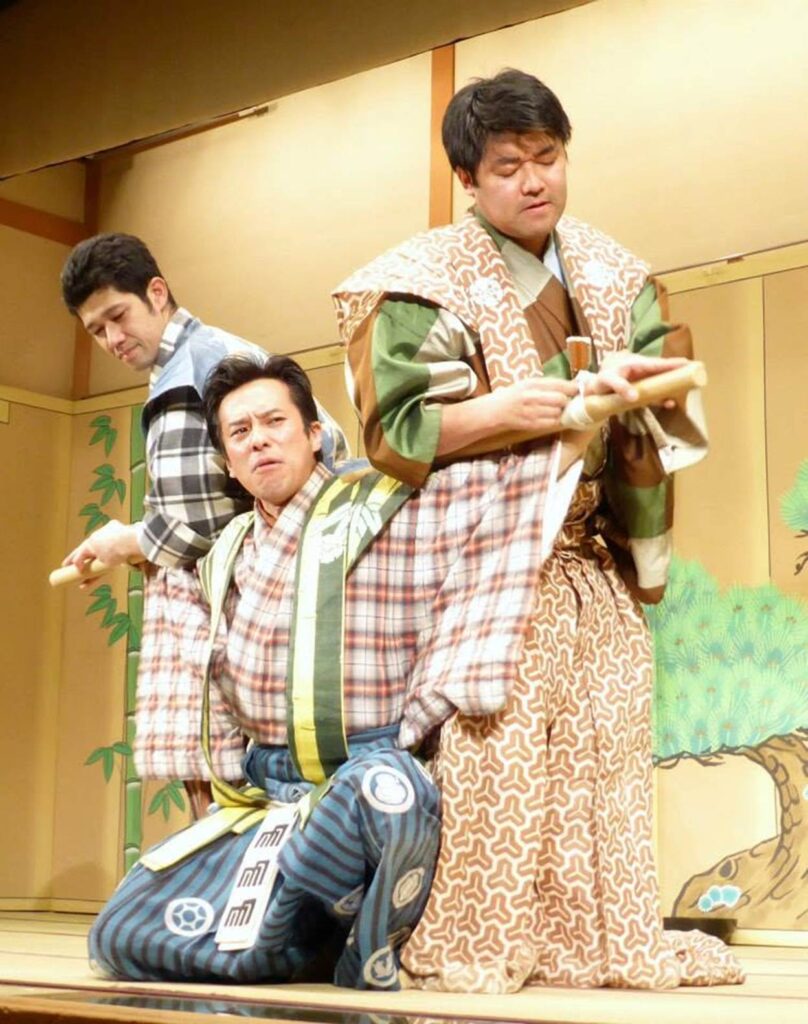
Kyogen is a comic play that was performed during the interludes of noh plays. Using everyday language and dress, and being quick-moving, it was a nice contrast to the slow pace and symbolism of the noh plays. In this play, the Lord (brown slacks, right) needs to visit a neighboring village for business but is afraid that his servants will steal his sake while he’s gone. He decides to tie them up so he can conduct his business without worrying.
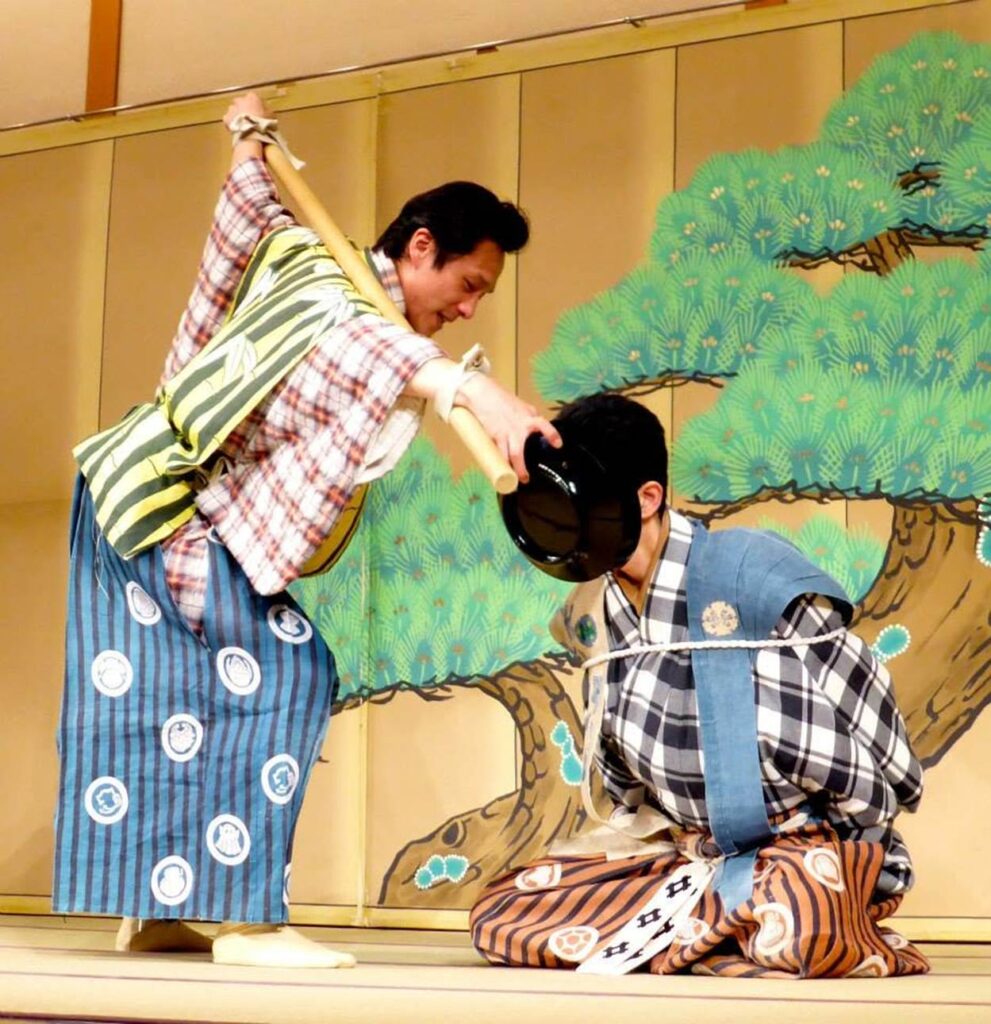
However, the servants discover that they can dip a large cup in a sake barrel and provide drinks to each other. They drink heartily, get drunk, and start singing and dancing.
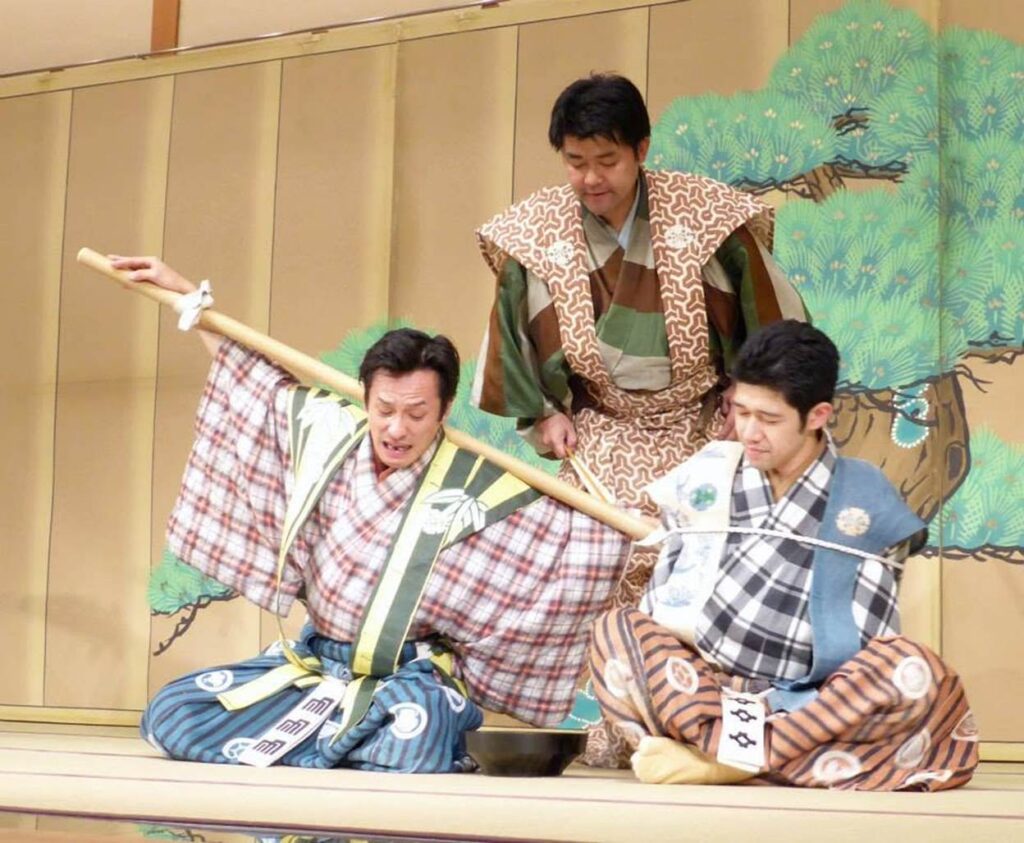
When the Lord returns, he is dismayed to see his servants have drunk so much sake. He sneaks up behind them, his face reflecting in the cup. They’re too drunk to realize he’s there. When they see his face in the cup, they think it’s painted on and say “what an ugly face our Lord has!” The Lord cuffs each of them on the head with a stick and the servants race offstage with the Lord chasing them.
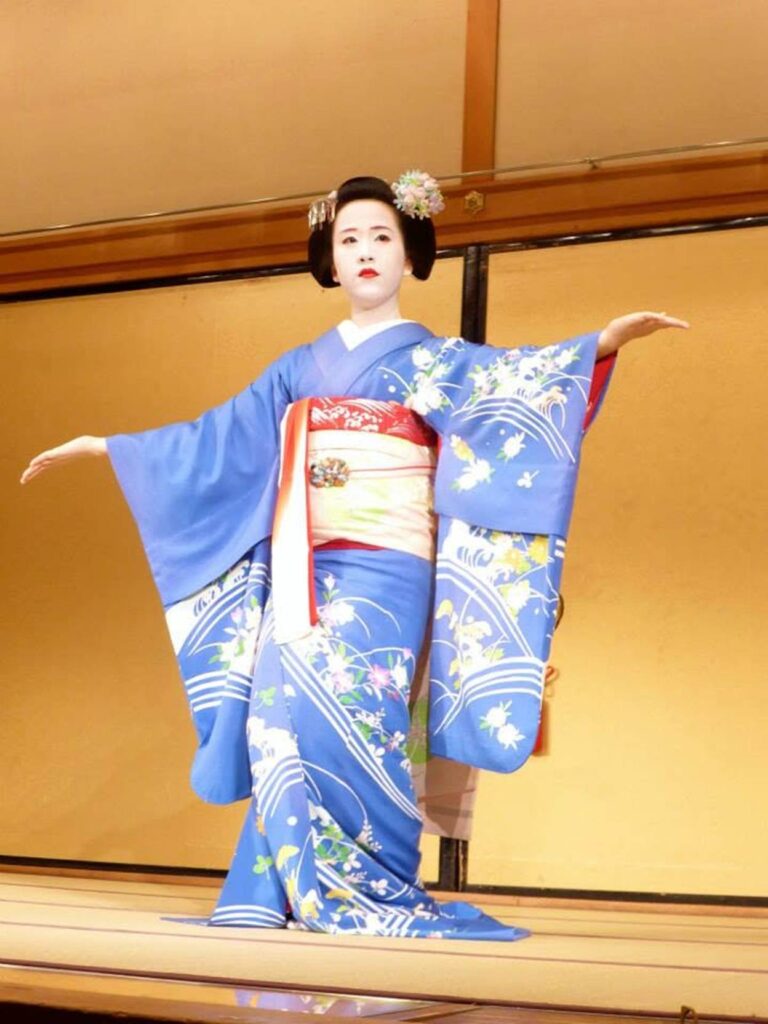
Kyomai, or Kyoto style dance, developed during the 17th century. It expresses elegance and sophistication.
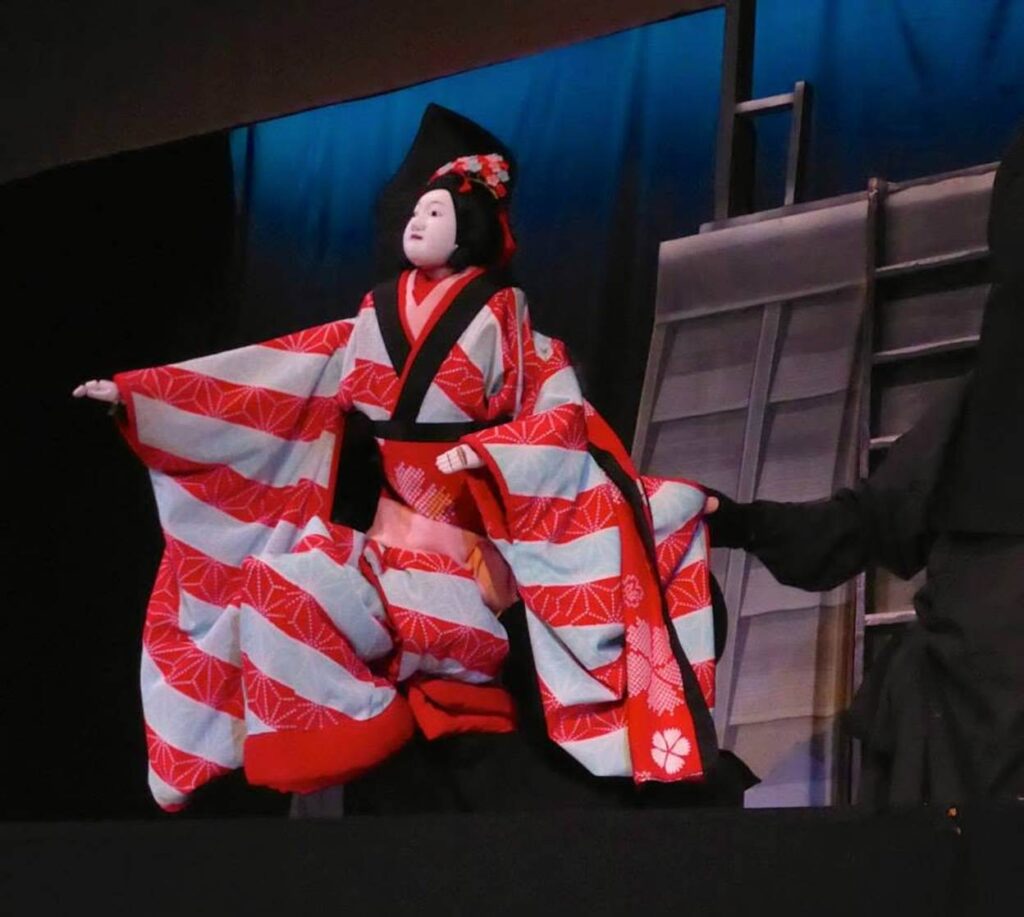
Bunraku puppet plays were a popular form of entertainment for the people. It became popular in Osaka, the biggest commercial city of the 16th century, and is based on the daily life of merchants. It is based on the common feelings of human nature, such as joy and sorrow, which are realistically portrayed.
Each bunraku puppet is manipulated by three puppeteers. They dress all in black to blend into the background. Even their head is covered. Since there weren’t any eyeholes and the fabric didn’t seem transparent, I wasn’t sure how they could see to work the puppet — or even how they breathed comfortably.
Gion Corner is located at 570-2 Gionmachi Minamigawa, Higashiyama Ward, Kyoto. Tickets start at 29.55 euros.
July 22, 2014