

Today is Guy Fawkes Day:
When King James I took the throne, English Catholics were expecting more tolerance than they had seen under King Henry VIII or Queen Elizabeth I. James’ wife, Anne of Denmark was Catholic, after all. And indeed, at the beginning of his reign, King James did appear sympathetic to Catholicism.
My college history professor once said that riots/rebellions occur not when prospects for a group are at their lowest point, but when they’ve had their hopes for improvement raised — and then dashed.
Thus was the case in England in 1604 when King James made a speech to Parliament and said that he detested the Catholic faith. (There’s no record of what Anne thought of this pronouncement). He then ordered all the priests to leave the kingdom.
A group of men (including the leader Robert Catesby, Guy Fawkes, and Thomas Percy), who were ardent Catholics, conceived of a plot to assassinate King James during the opening of Parliament on November 5, 1605. They hoped that in the confusion following the King’s murder, they’d be able to put a Catholic on the throne. Part of their plot included kidnapping the king’s nine-year-old daughter and installing her as a puppet queen.
The group rented a cellar underneath the House of Lords and secretly brought in dozens of barrels of gunpowder. They planned to blow up the House of Lords.
Their plot was foiled by an anonymous letter that was sent to the Catholic Peer Lord Monteagle. The letter warned him not to attend the opening of Parliament. But Monteagle was loyal to the King and passed the letter along.
On November 4th, the King’s men found a large pile of firewood in a cellar. Guy Fawkes was there, although he claimed his name was John Johnson. Fawkes explained that the firewood belonged to his master, Thomas Percy. That was a mistake. Thomas Percy was already known as a Catholic agitator.
The King ordered a second search. On the morning of November 5th, they found Guy Fawkes again, this time carrying matches and fuses. Further searching revealed the 36 barrels of gunpowder the group had hidden in the cellar.
Guy Fawkes was tortured and eventually revealed his real name and those of his conspirators. They were all convicted of treason and sentenced to be hanged, drawn, and quartered.
Shortly afterwards, Parliament passed an Act proclaiming that November 5th would henceforth be remembered as the anniversary of the Gunpowder Plot. Church attendance was made mandatory and people were obliged to give thanks for the failure of the plot.
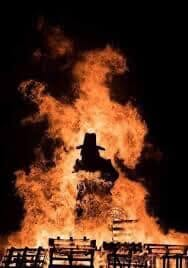
Over the centuries, the night has become marked by bonfires and fireworks. Some towns still toss a straw effigy of Guy Fawkes into the flames.
Even today, over 400 years later, there is a ceremonial search of Westminster’s cellars before the annual opening of Parliament to make sure no explosives have been stored there.