

On our first full day on the Big Island, my friend Joy Vass and I decided to explore Hulihe’e Palace.
It was built by John Adams Kuakini, who was the first Royal Governor of Hawaii Island during the period when Hawaii was still an independent kingdom. Constructed of native lava rock, coral lime mortar, and koa wood timbers, the palace was completed in 1838. Governor Kuakini enjoyed entertaining visiting Americans and Europeans, treating them to grand feasts.
The palace also became a vacation home for Hawaiian royalty, including Princess Ruth Ke’elikolani (who actually lived there, sort of — more on that in a moment), King Kamehameha III, and Queen Lili’uokalani. Princess Ruth actually preferred to sleep in a grass hut on the palace grounds rather than the palace itself — I haven’t been able to find out why.
After Governor Kuakini’s death, the palace went through a number of hands, both royal and non-royal. One of its notable owners was King Kalakaua, who decided the palace should look more European. In 1885, he plastered the exterior (covering that lava rock) and made other interior renovations with the idea that the palace should look more European and sophisticated. As I recall, that included covering the palace’s beautiful koa wood paneling with plaster. I consider that a travesty.
By 1922, the palace had passed through several more hands and was so neglected that you couldn’t even see the front of the building from the roadway (which is a very short distance). The Daughters of Hawaii fought to preserve the palace rather than tear it down. In 1927, the Daughters restored the palace and opened it as a museum — as it has been ever since.
Hulihe’e Palace contains artifacts from Governor Kuakini’s time, as well as from those of later Hawaiian monarchs. One example is the music to Aloha Oe, which was composed by none other than Queen Lililuokalani in 1878.
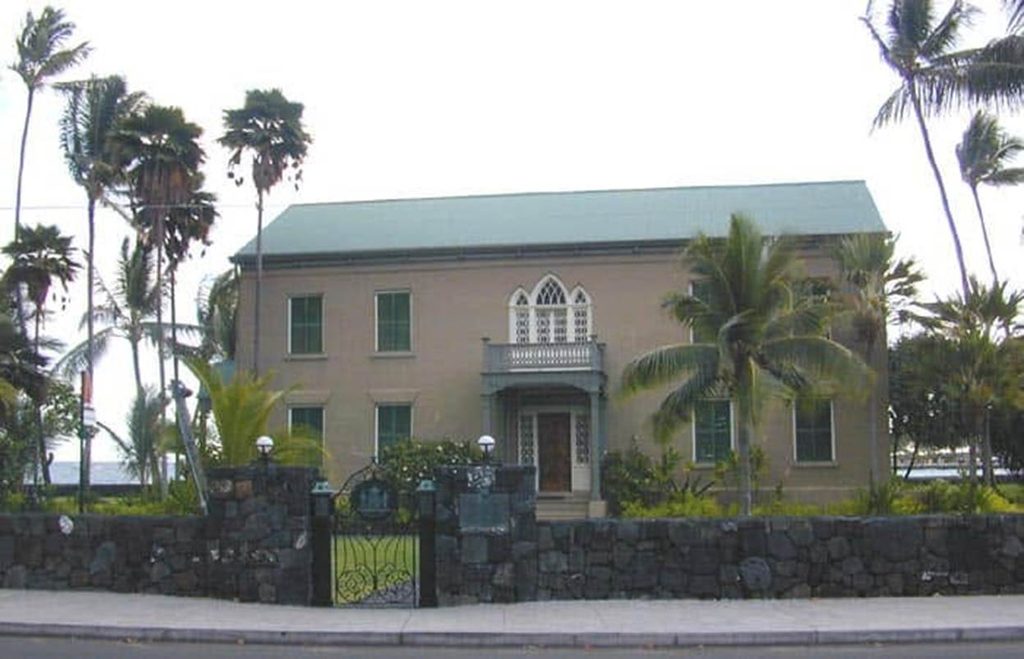
Exterior of the palace. As you can see, the palace is very close to the roadway – so if you couldn’t see it, the palace must have been very overgrown with vegetation.
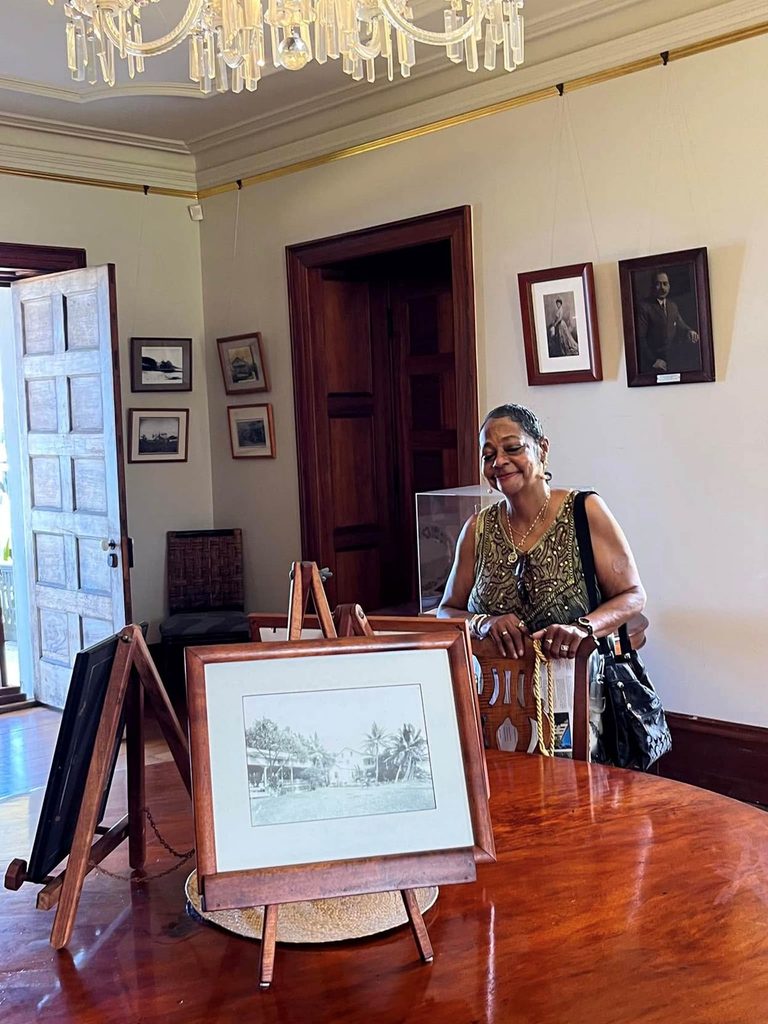
Joy stands in the vestibule of the palace.
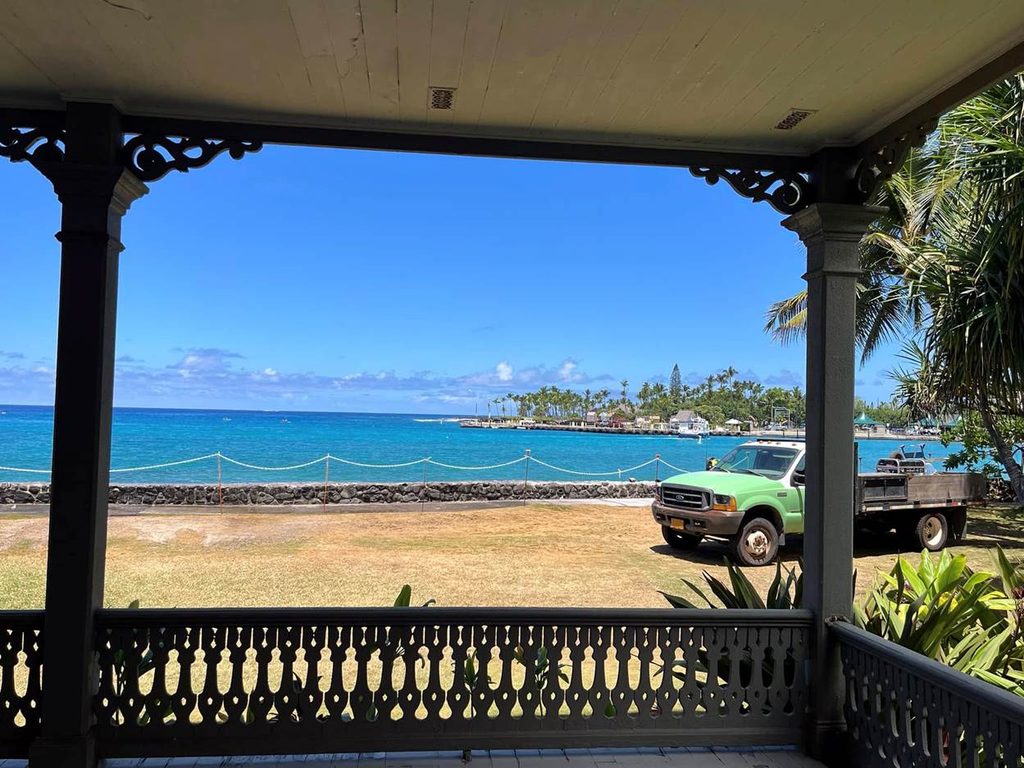
Can you imagine seeing this view from your living room every day?
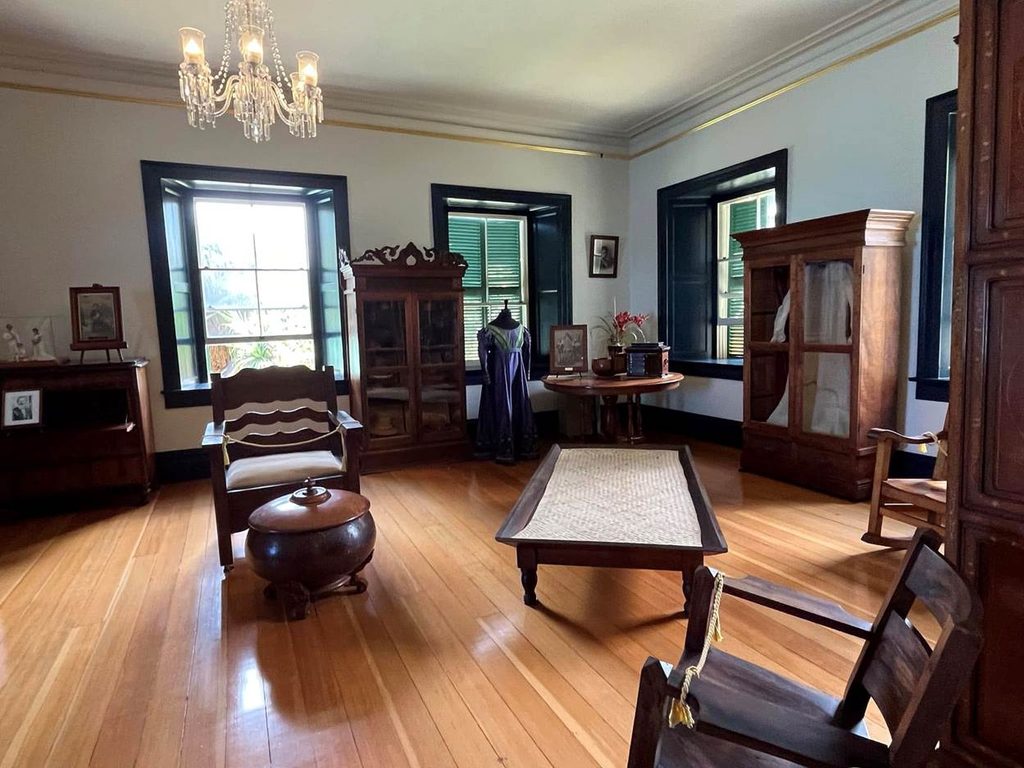
Examples of typical period furniture.
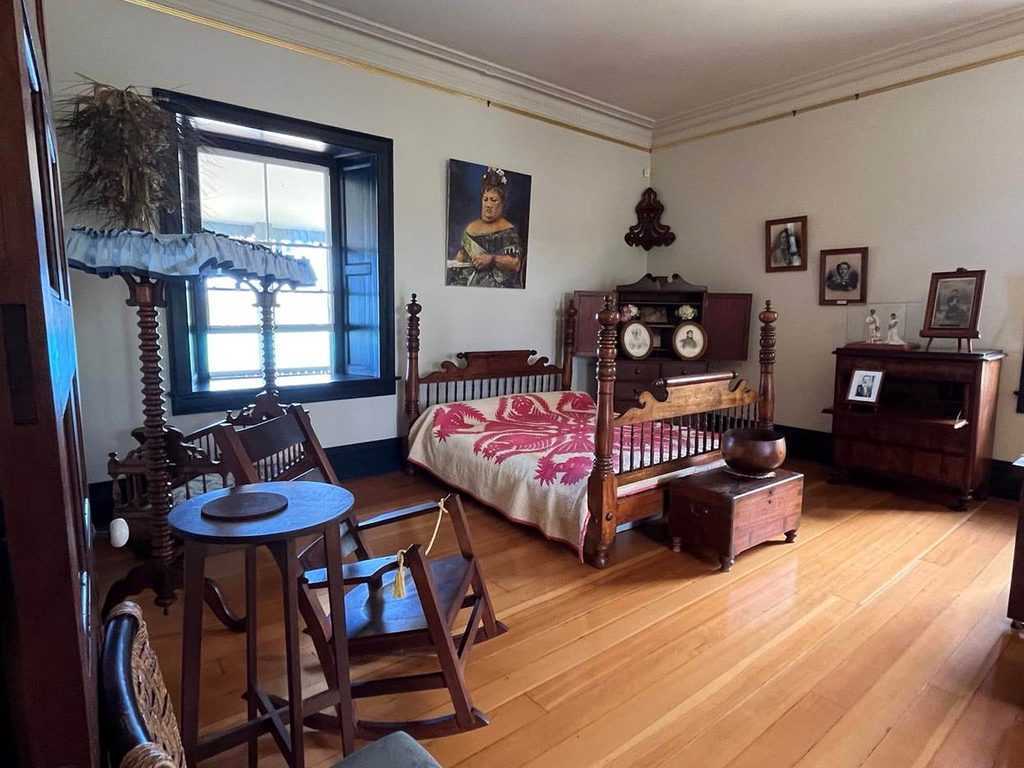
Another bedroom, with a traditional Hawaiian-patterned bedspread.
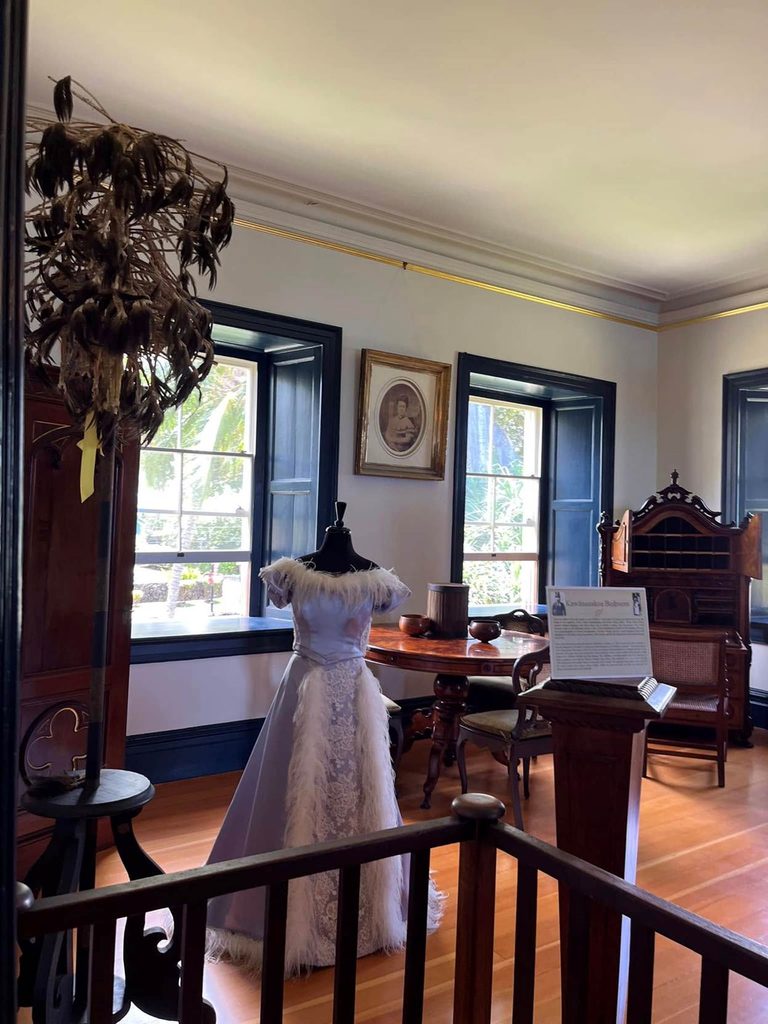
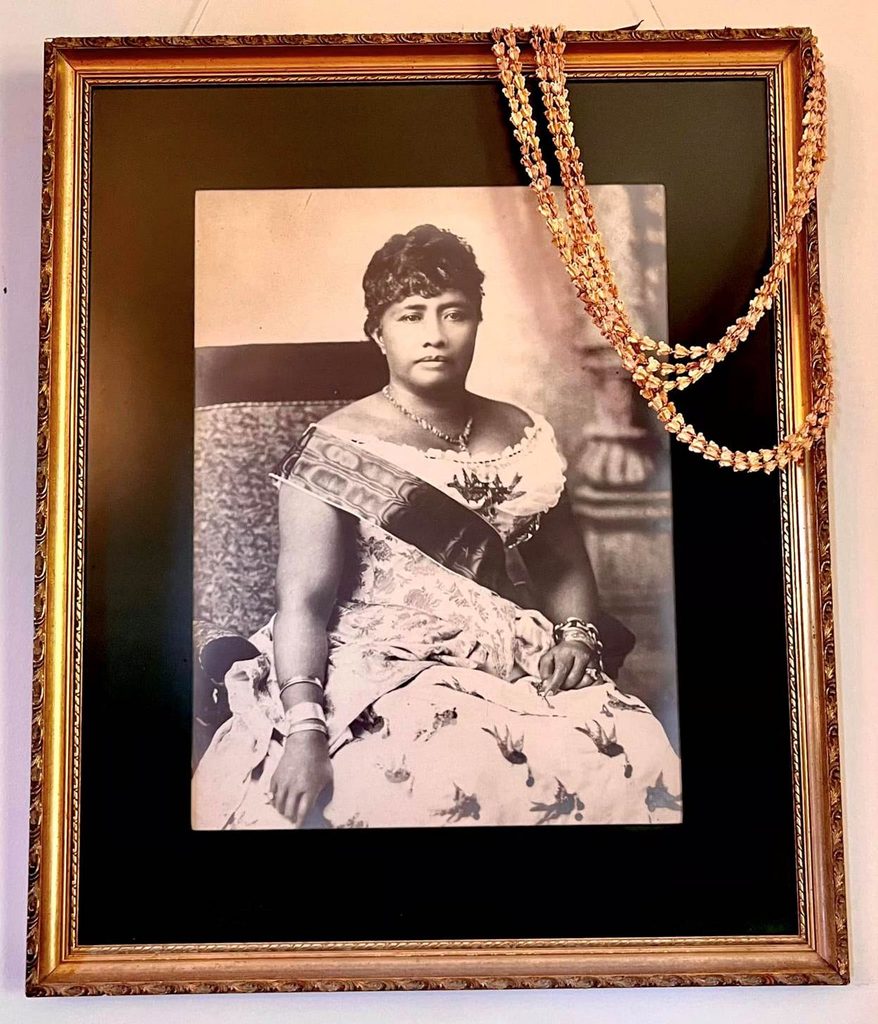
Queen Lililuokalani, the last queen of Hawaii.
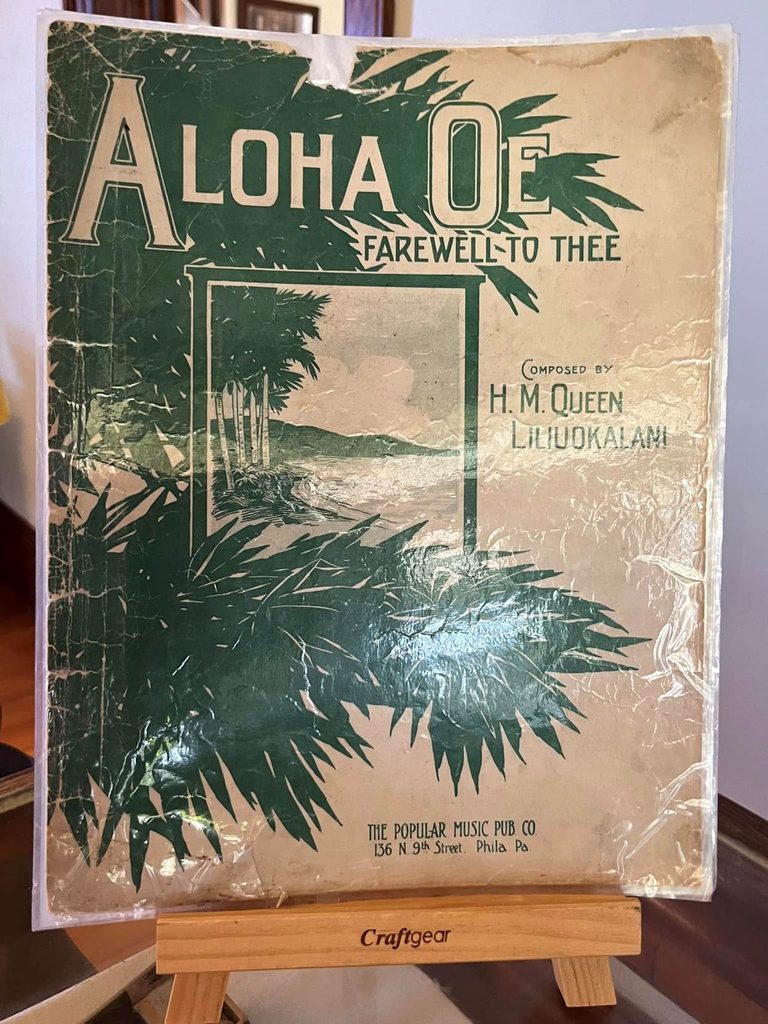
Queen Lililuokalani also composed Aloha Oe. Here’s a copy of the original sheet music.
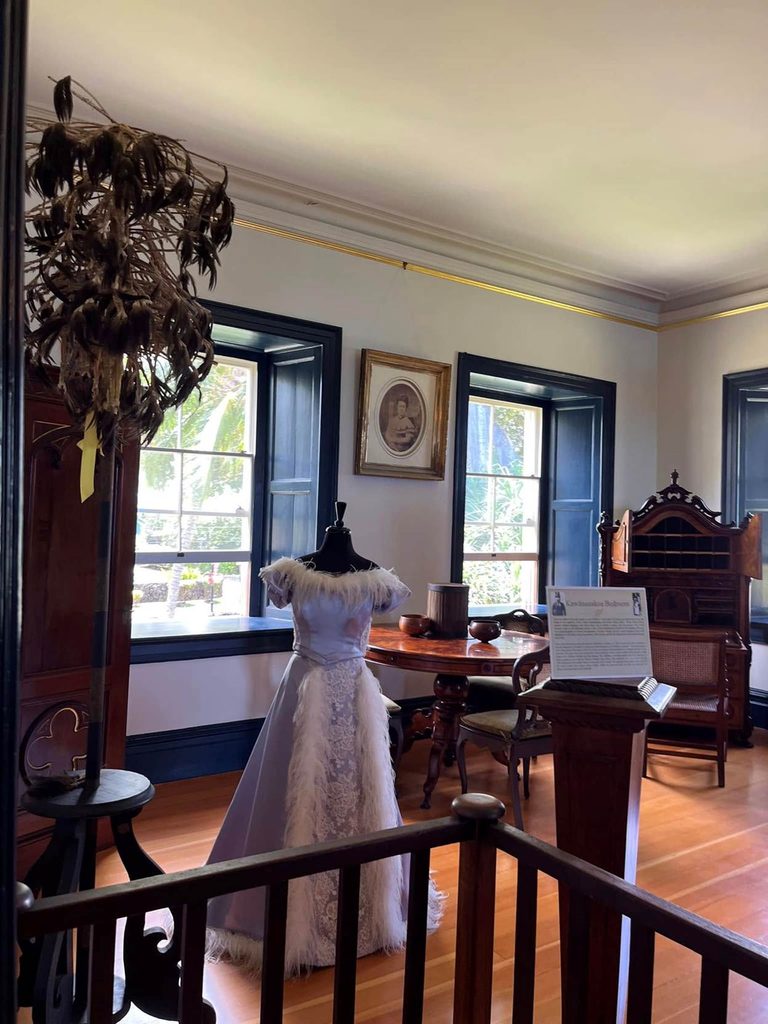
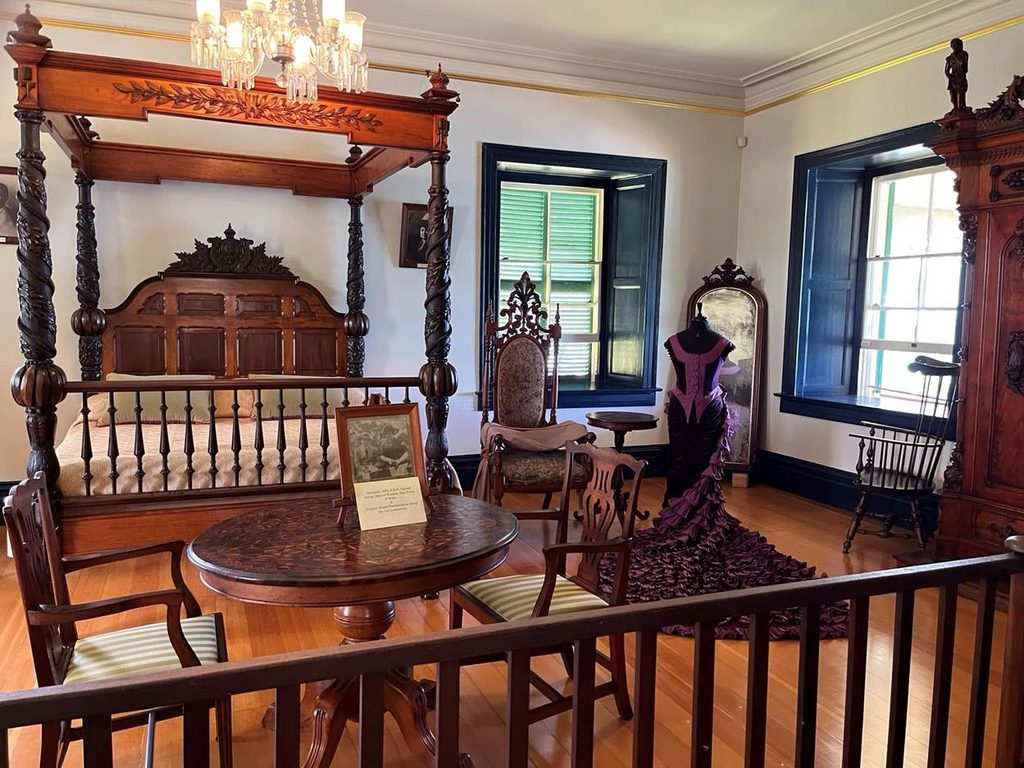
A bedroom in the palace. Look at that gorgeous koa wood floor.
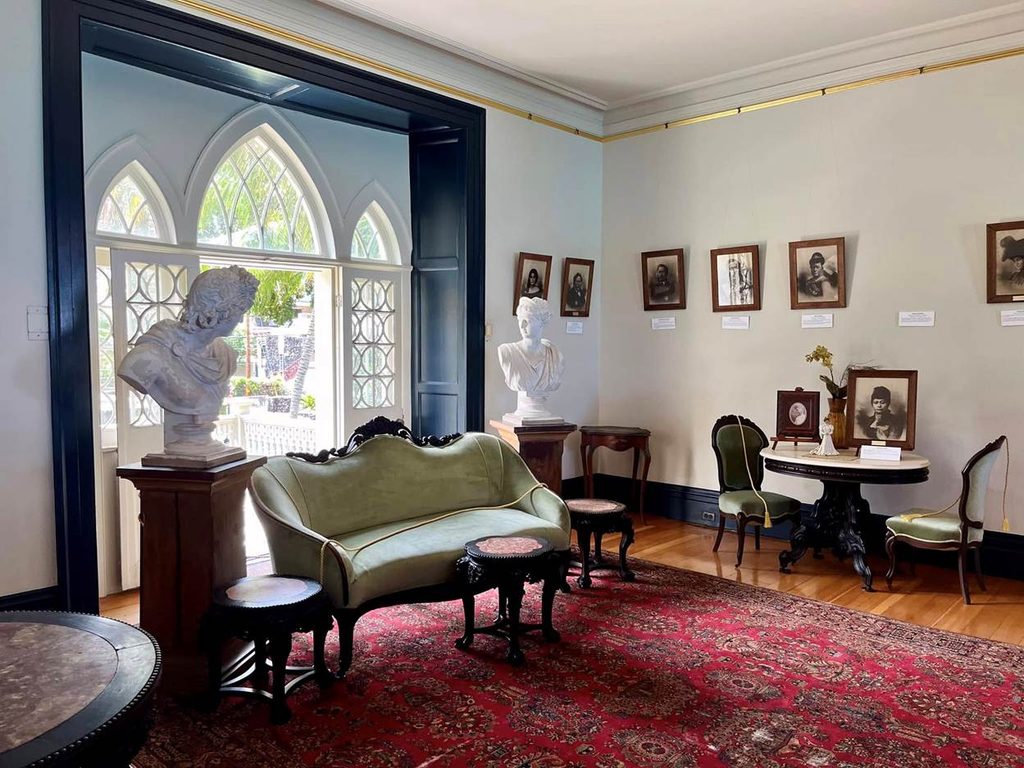
A sitting room.
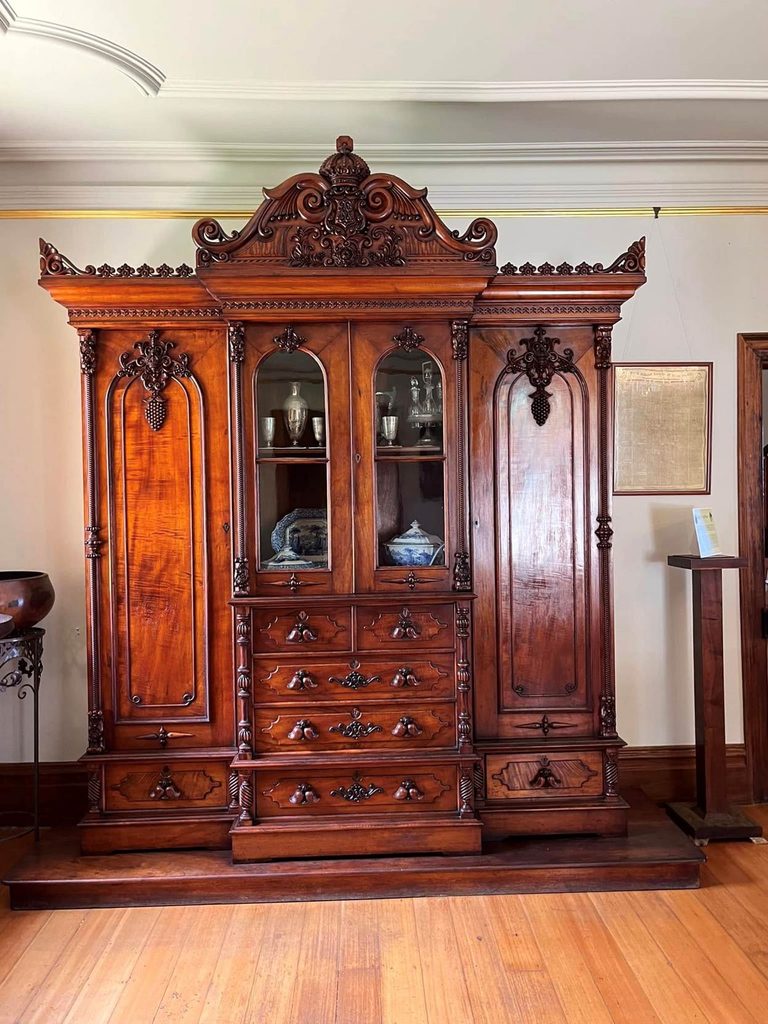
Masterfully carved furniture.
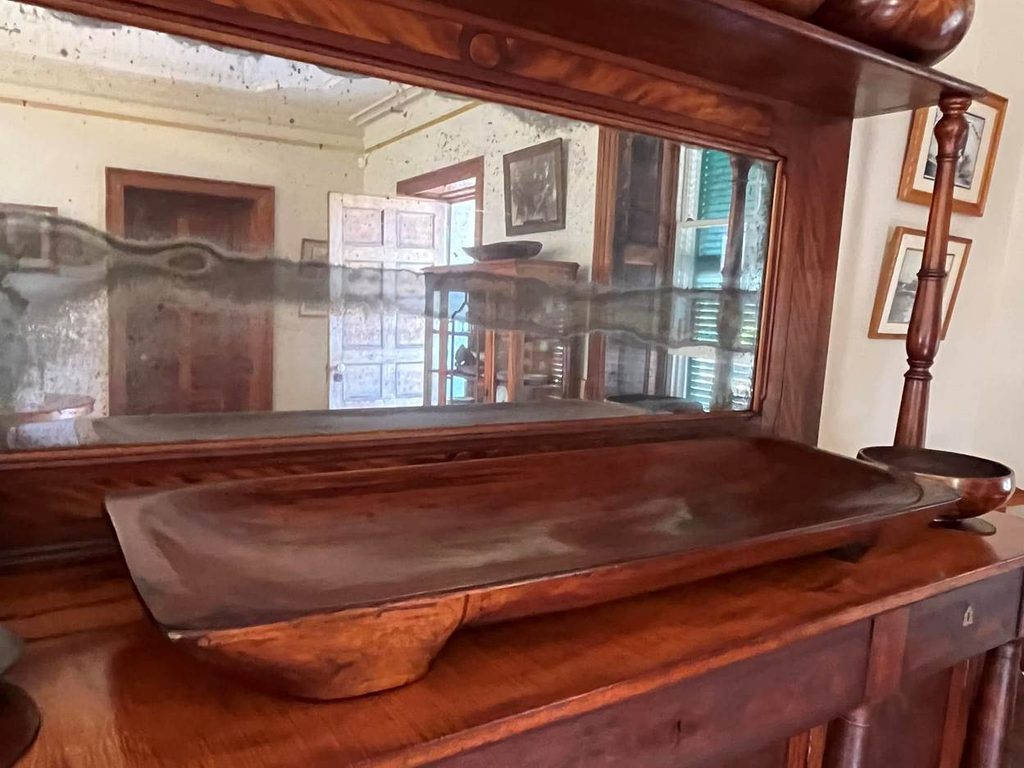
Poi board.
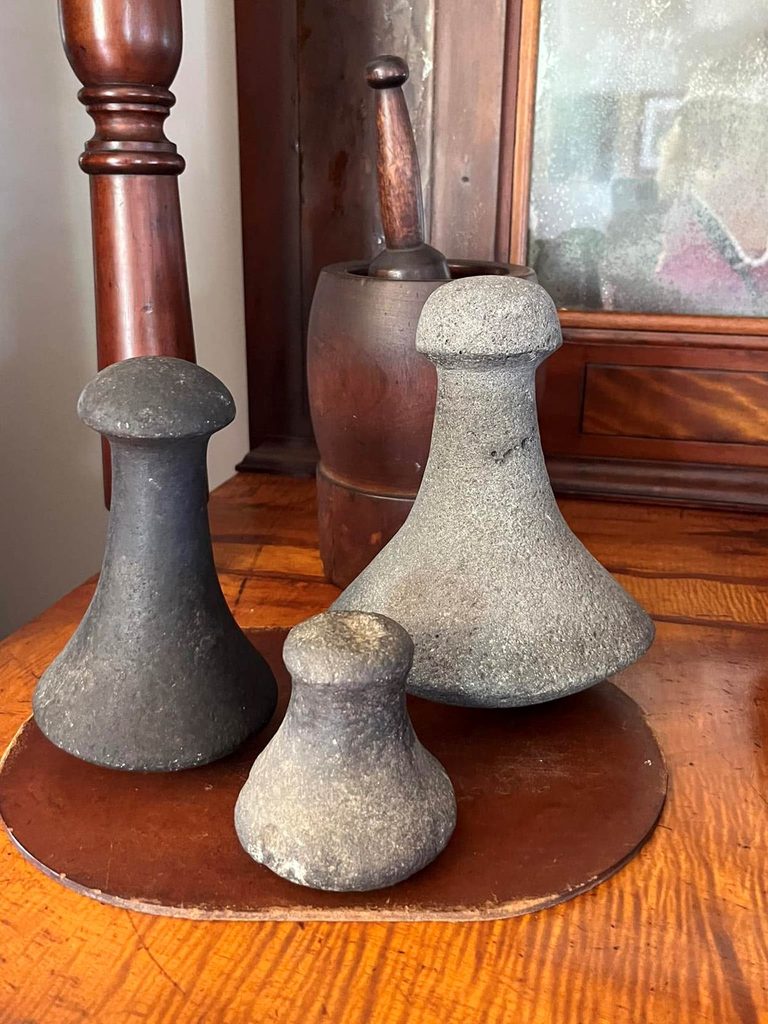
Poi pounders.
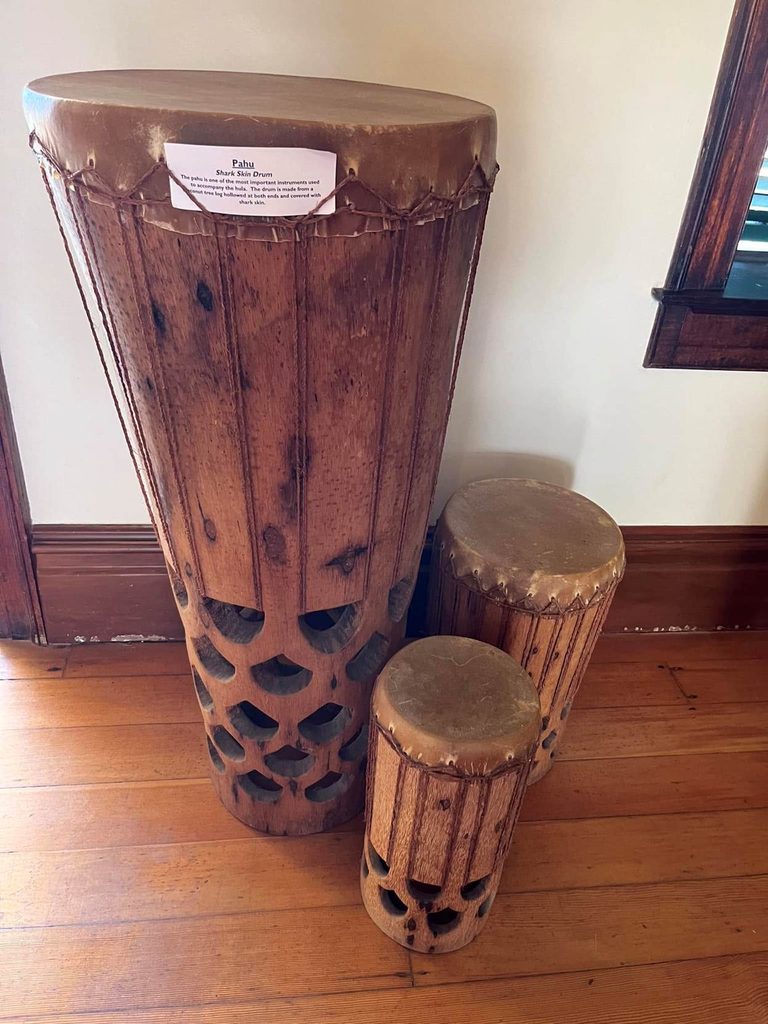
Sharkskin head drum. It’s called a pahu and is one of the most important instruments to accompany the hula dance. The drum is made from a coconut tree log that has been hollowed outl and then covered with shark skin for the drum head.
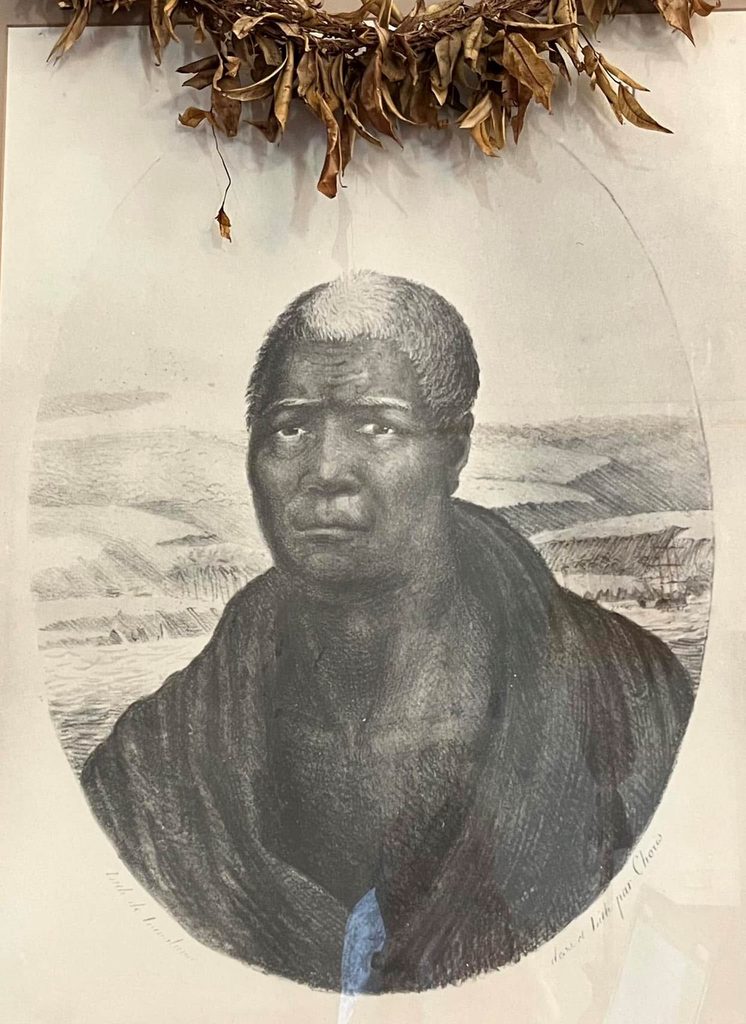
King Kamehameha the Great (AKA King Kamehameha I) was the king who united all of the Hawaiian islands in 1795. He ruled peacefully for 25 years.
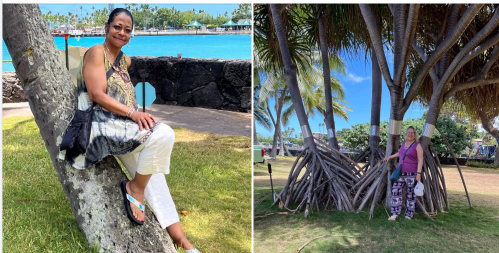
I’ve long been fascinated by these hala, or walking trees (right photo). It has stilt-like roots that extend from the trunk and help anchor the tree in sandy and/or rocky soils where other trees couldn’t survive. It produces an edible fruit that looks like a pineapple (but doesn’t taste like one). I thought I had read that if the tree wanted a more hospitable climate, it would let the roots die on one side and grow out on the other, allowing it to “walk” to a new location, but that doesn’t appear to be the case with this particular species. It just looks like it’s walking with all of those above-ground roots.
In the left photo, Joy lounges on a palm tree on the grounds of Hulihe’e Palace and admires the Pacific Ocean view.
Hulihe’e Palace is located at 75-5718 Ali‘i Drive in Kailua-Kona on the Big Island of Hawaii. It is open from 10:00am to 3:00pm Wednesday through Saturday. Admission for non-Hawaiians is $20.00. There is no parking on the palace grounds but there are parking garages in nearby areas of the city.