

As the 1840s dawned in Ireland, a large number of its population lived in poverty. Two-thirds of tenant farmers had to survive on properties of 15 acres or less. Only the potato could feed an entire family on such a small amount of land.
In 1845, the potato blight, a fungus, attacked the potato crop. Over the next seven years, the percentage of the crops which was lost increased and the number of Irish who died or emigrated grew.
If an Irish person wished to emigrate, there were three main ways to obtain passage: paying full fare (which was virtually impossible since few had any cash), assisted migration (if a landlord wanted to reduce the number of tenants, he might pay for passage for some, but this was extremely rare), or indentured servitude — agreeing to work essentially as slaves without any rights for 6-8 years to pay off the cost of passage.
Most ship owners packed as many emigrants as they could into their ships and kept passengers below decks for the entire voyage. Once they had their passage money, they didn’t really care if their passengers lived or died. And approximately 25% of the passengers did die, leading to the term “coffin ships”. It’s a testament to their desperation that so many Irish still chose risky emigration and servitude over nearly certain starvation.
But John Donovan bought a barque, the Jeanie Johnston, in 1847, and he vowed to do things differently. He hired his cousin James Attridge as Captain and Dr Richard Blennerhassett as the ship’s doctor. Although Louis Pasteur’s germ theory was still some 15 years in the future, they established several practices that made the difference between life and death for their passengers.
Most barques carried 300 closely-packed passengers. Donovan saw to it that the Jeanie Johnston carried only 200, reducing the chance of disease. These odds were reduced still further because Dr. Blennerhassett insisted on personally conducting a physical examination prior to boarding. Only those who appeared healthy were allowed aboard ship.
Other ship owners kept their passengers locked below decks for the entire voyage to prevent sick passengers from infecting the crew. In contrast, passengers on the Jeanie Johnston were required to go above on deck and get exercise for at least a half hour per day.
While aboard ship, the only way passengers could relieve themselves was by using wooden buckets, commonly called “slop buckets”. As the ship rolled, their contents would slop out onto the floor. The passengers, locked in, had to step in this mess and diseases passed rapidly from one person to another. On the Jeanie Johnston, however, when passengers came above deck for their exercise and fresh air, they were instructed to bring a slop bucket with them. Their first task was to empty the contents into the sea, then rinse them thoroughly with sea water.
These factors combined to create a healthier environment for the Jeanie Johnston’s passengers. Instead of a 25% death rate, hers was zero. Word spread, and the Irish felt that the ship was blessed by God. It was called the “miracle ship”.
The Jeanie Johnston made 16 passages across the Atlantic, never losing a single soul.
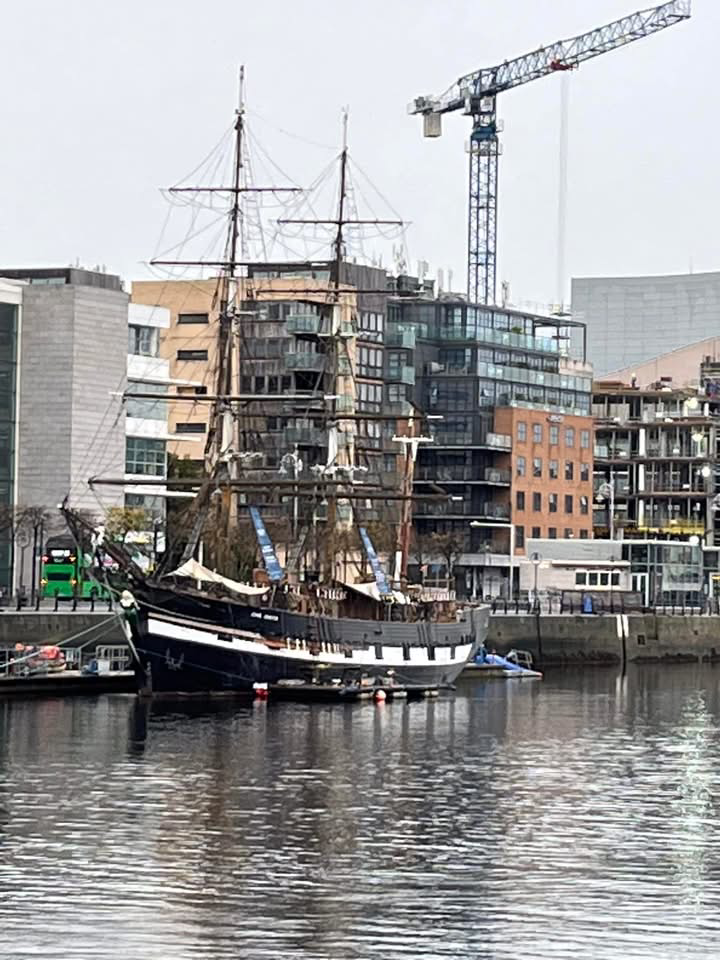
A replica of the Jeanie Johnston is moored along the River Liffey. It’s not far away from EPIC, the ultra-modern Irish Emigration Museum, so the two sites can easily be visited in the same day.
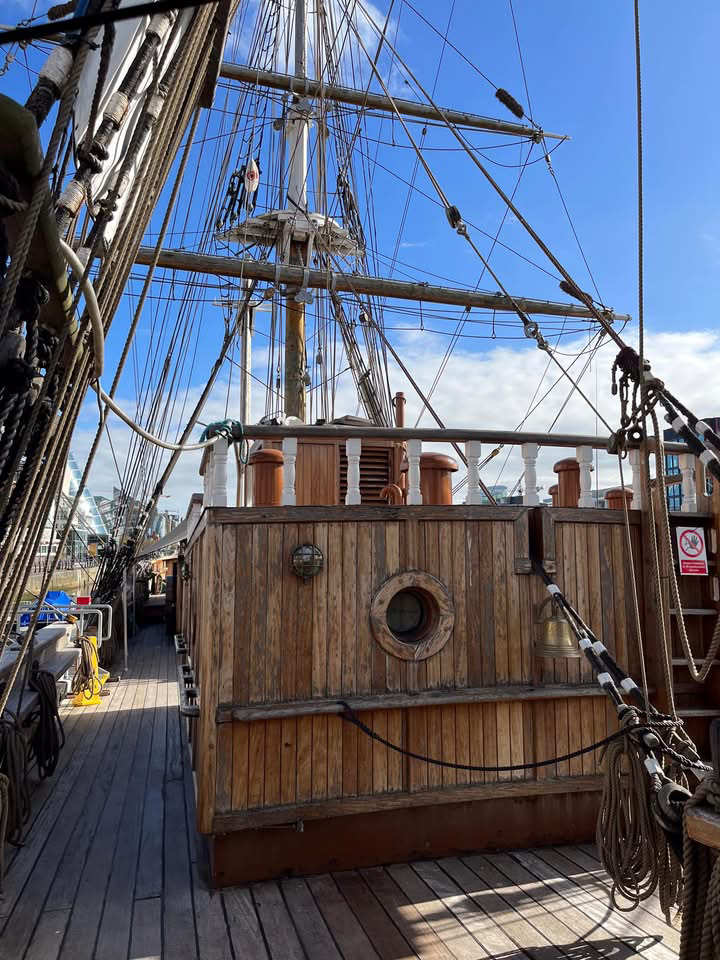
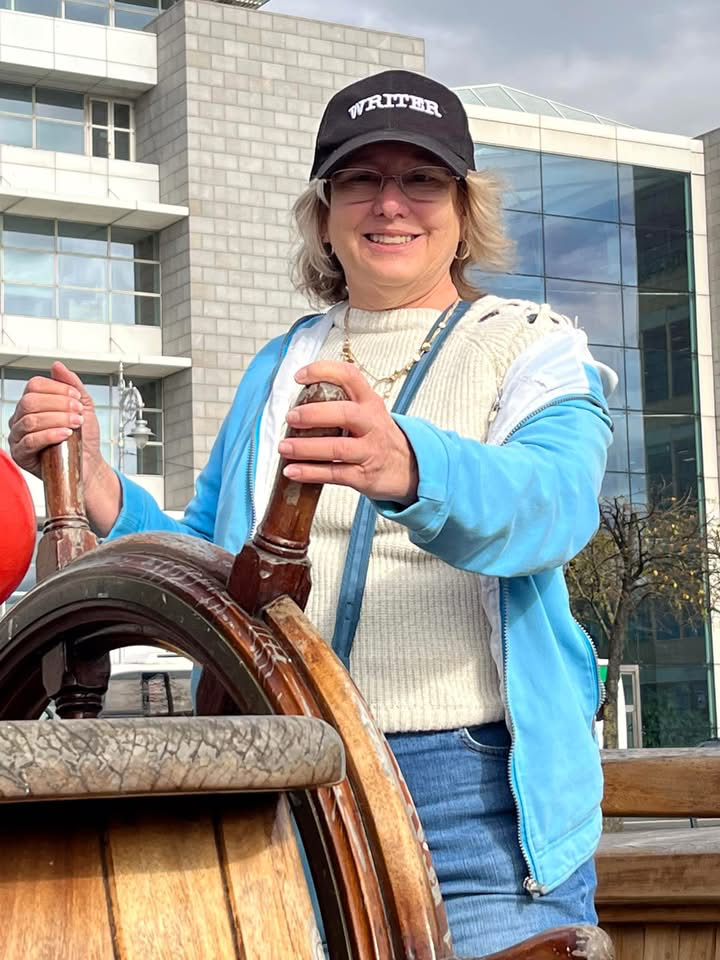
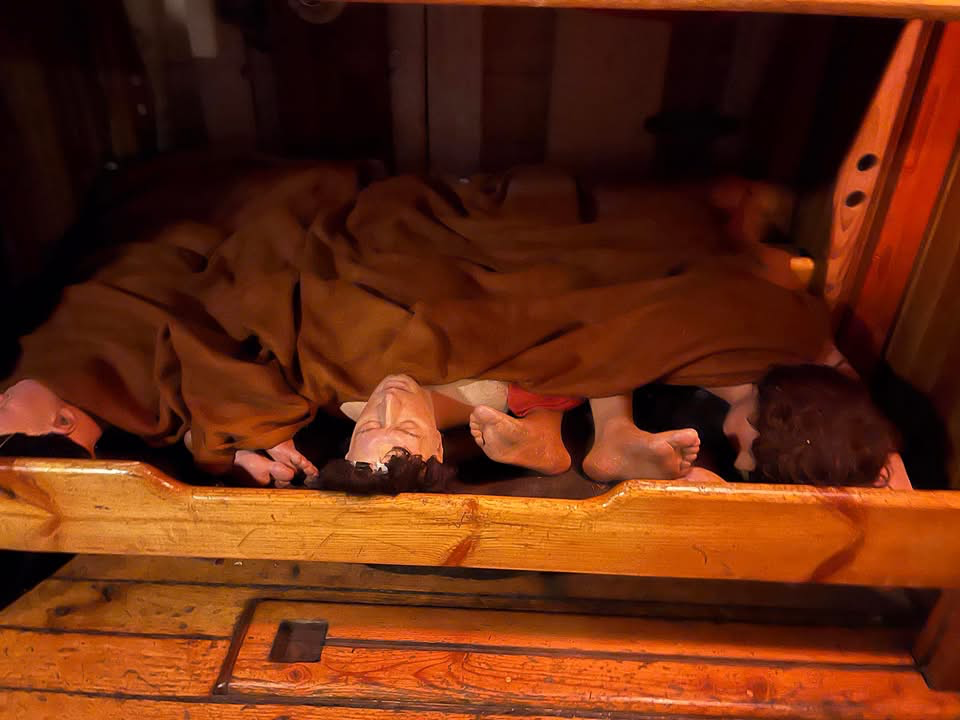
Although the Jeanie Johnston carried “only” 200 passengers instead of the 300 that would normally be carried in a ship her size, accommodations were by no means luxurious. There were 5 passengers in each 6′ x 6′ bunk bed.
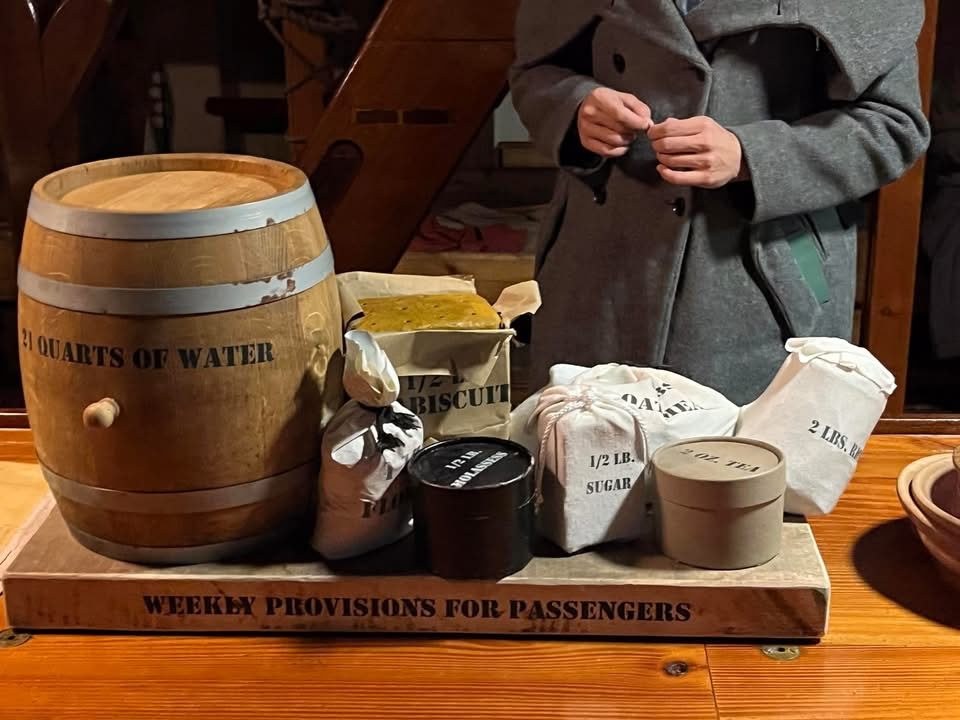
And food wasn’t luxurious, either. A week’s rations for each passenger consisted of 21 quarts of water, 2.5 pounds of bread or sea biscuits, 1 lb. flour, 5 lbs oatmeal, 2 lbs rice, 1/2 lb. sugar, 1/2 lb. molasses, and 2 ounces of tea. This starchy diet could keep people alive, though, and it was more than what they had available to them before embarking on the Jeanie Johnston.
The crew had better food, including meat and vegetables, to sustain them through their hard physical labor.
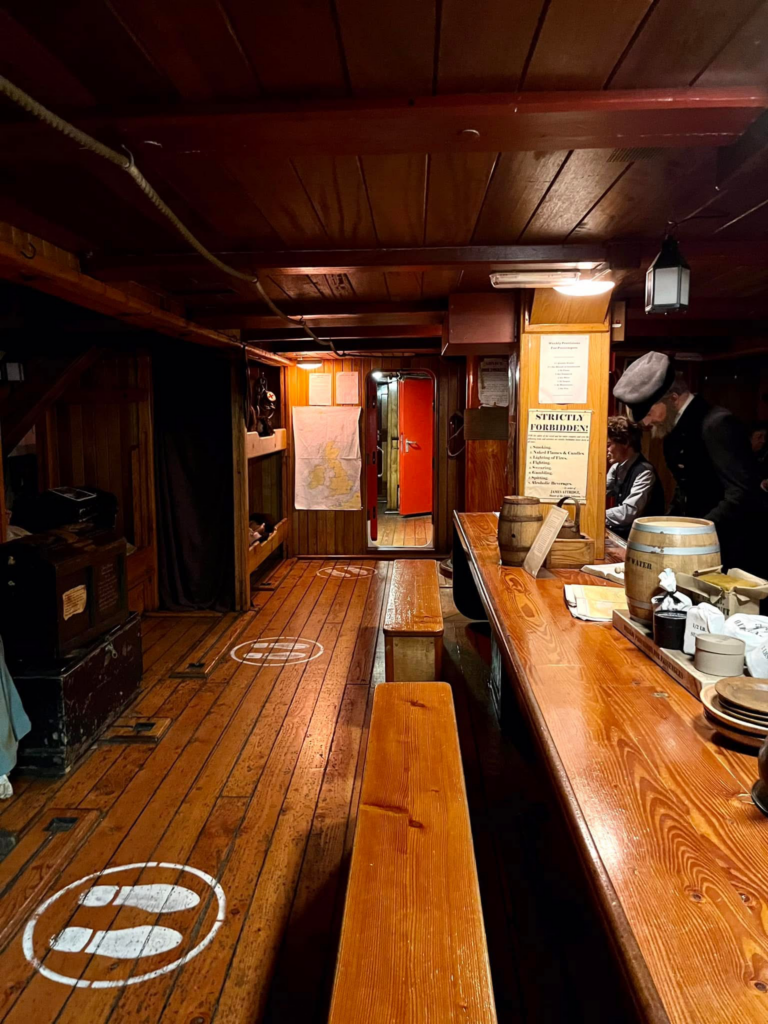
Originally designed to carry cargo, the Jeanie Johnston had to be retrofitted as a passenger ship. Instead of the one line of bunks you see here on the left, she would have also had another line of bunks on the right and more down the middle. But at least the Jeanie Johnston’s passengers HAD bunks. Some of the passenger ships of the day had their passengers sleeping on the floor (and remember what we said about overflowing slop buckets?).
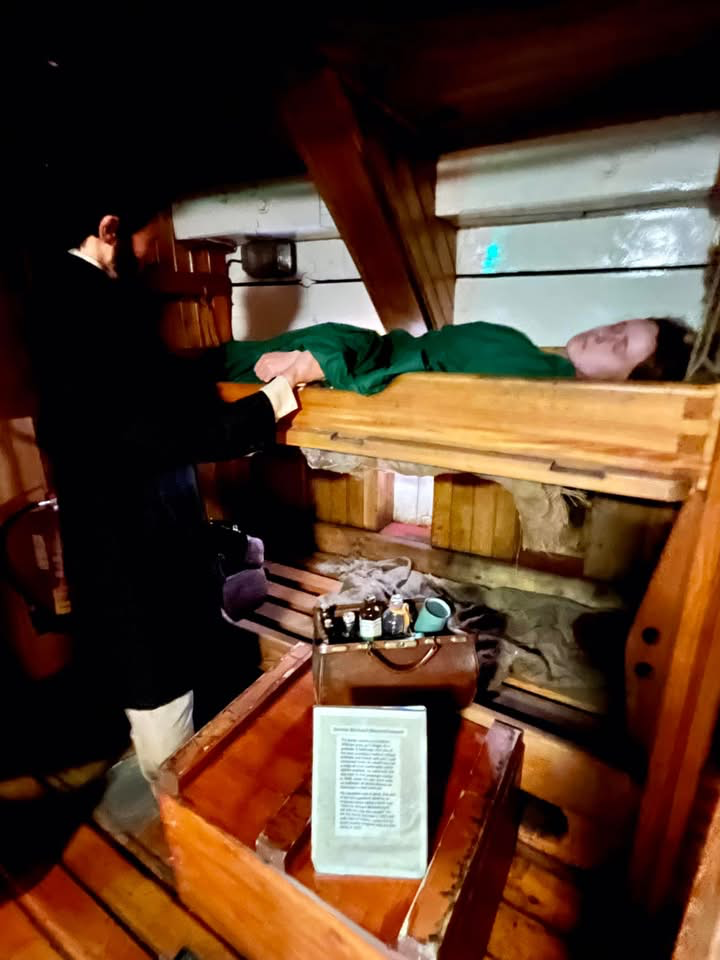
The doctor checks on a patient.
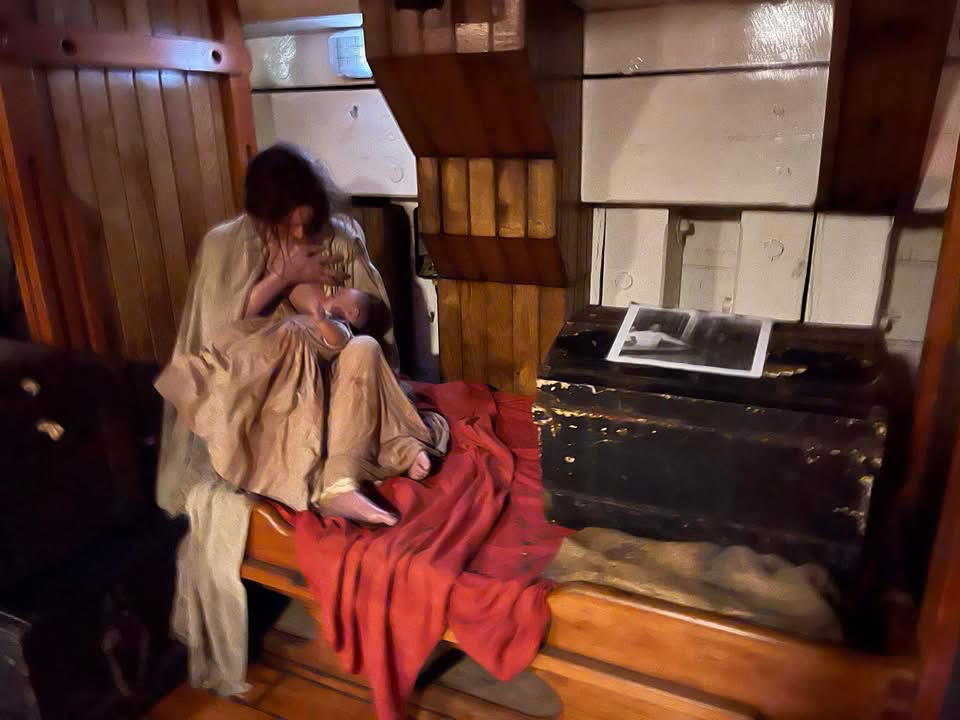
There’s a story about a passenger named Mary Sloane. The doctor’s pre-boarding examination showed that Mary was actually in labor. Normally, pregnant passengers were refused passage, but she was so desperate that the doctor allowed her to stay on board, where she promptly gave birth. Mary was given her own individual bunk and received crew rations to keep up her strength. Both Mary and her baby survived and subsequently thrived in the United States.
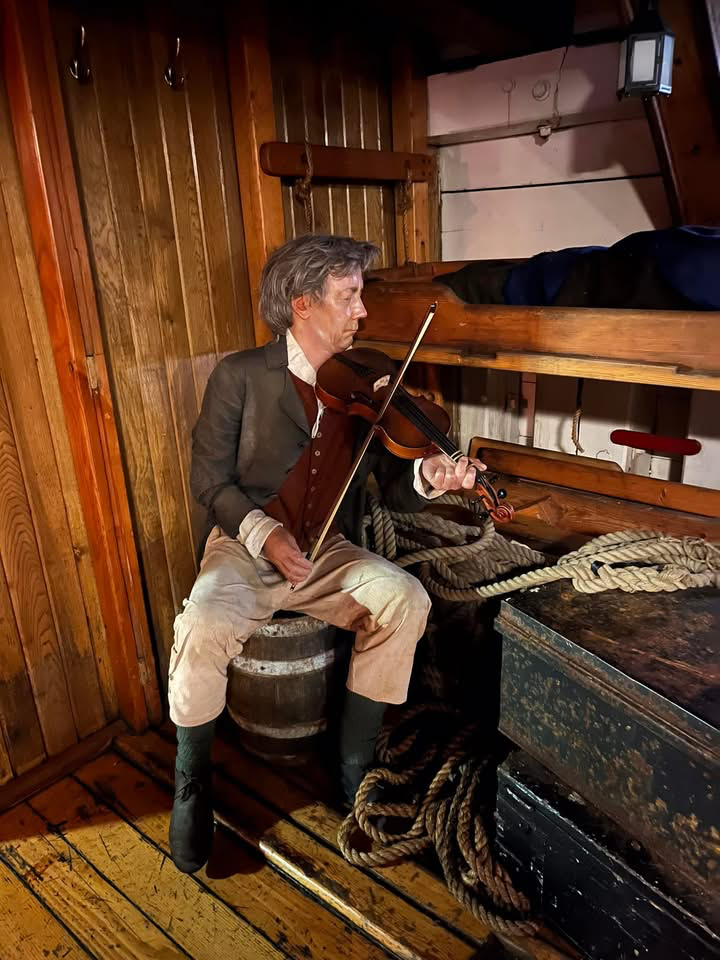
A fiddler provided the evening’s entertainment.
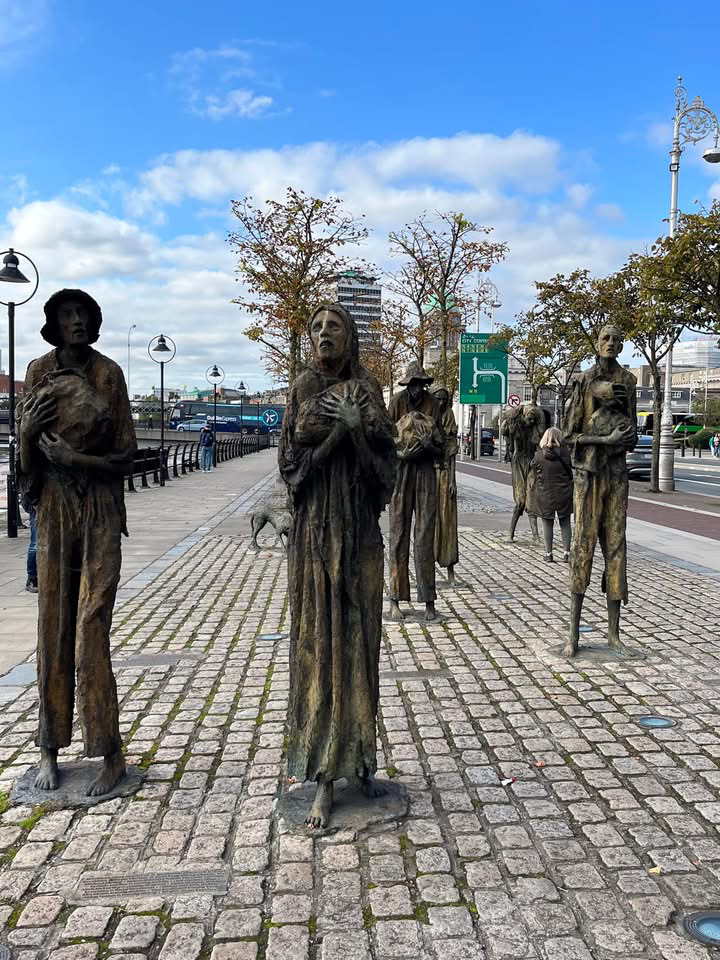
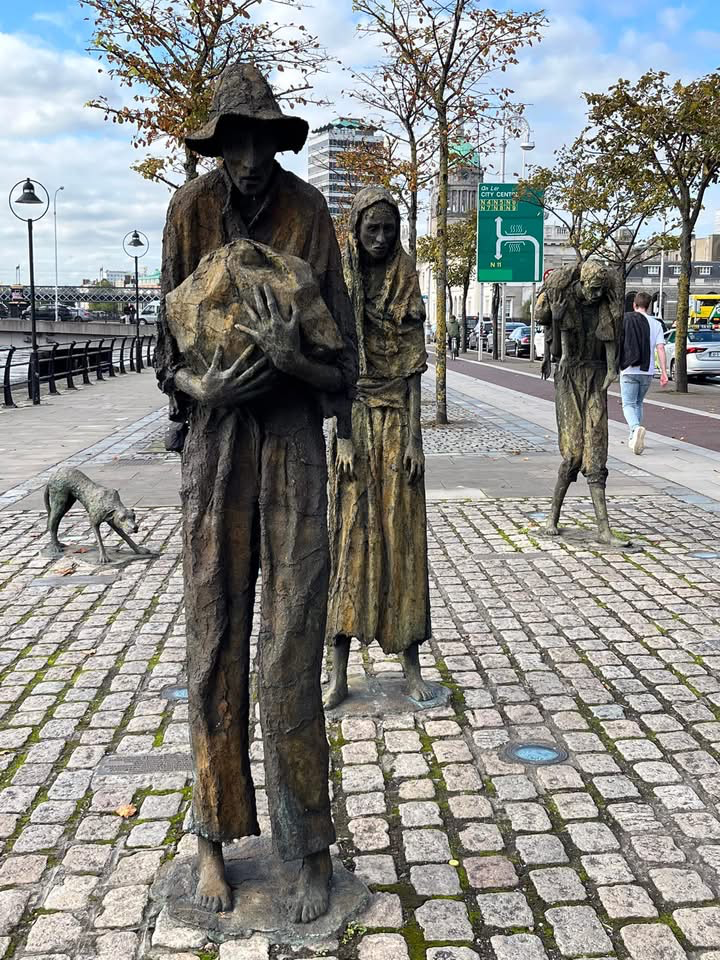
The Irish Famine Memorial is located on the banks of the River Liffey, about a 1,000 feet from the Jeanie Johnston.
The Jeanie Johnston is moored at Custom House Quay. Tours are available from 10:00am to 4:30pm daily. Adult admission is 16 euros.