

Opened in April 1953, Landstuhl Army Regional Medical Center (under various names) has been serving the medical needs of the US military in Europe for over 70 years. I served there as a Medical Laboratory Specialist back in 1979-1981. After completing my enlistment, I continued in Landstuhl for another six months, working as a bookkeeper for the Army Chapel. The hospital has been renovated so much over the last 40+ years that little resemblance to what I knew remains, but here are a few pics.
In my day, the main entrance and ER were in a different location. That whole portion of the hospital (a big square on the aerial photo) has been added on. The miles-long corridors with medical wards branching off of it remain. Sometime over the years, they’ve added a second story to at least some of the buildings (the laboratory where I used to work was on the ground floor; it’s now on the second floor of one of the wings).
Oddly, even the logo has changed. The monicker “2nd General Hospital” is long gone in favor of LARMC. Our motto was “not for self but others”, which is on my 2nd GH pin over a big 2 and a red cross. Now it’s “Selfless Service” over the image of a castle.
The chapel is the only part that looks the same, although in my day it only had Protestant, Catholic and Gospel services. Now Jewish and Islamic servicemembers have a place to worship, although I don’t see any mention of the Black Gospel community anymore.
There was a cafeteria where I’d eat breakfast and read “The Stars and Stripes” before starting my workday. The dining area looks pretty much the same although the cafeteria portion is greatly expanded and modernized. As far as I can tell, the Finance unit where my ex-husband worked and the bowling alley where I used to hoover up the prize money on No-Tap Nights on Fridays no longer exist. We’d bank our prize money in a separate vacation savings account and use that next time we took off for another European location.
LARMC was also the home of the 10th Medical Laboratory, which did specialized laboratory tests for virtually every military hospital in Europe. They raised sheep on a grassy hill outside the laboratory to create sheep’s blood agar for our microbiology plates. Sheep’s blood agar is the red gel-like substance coating the bottom of a petri plate. When we take a throat swab, we brush the swab across the agar and see what kinds of bacteria (friendlies or foes) grow out. If what grows is something we don’t want, such as E.coli or staphylococcus, your doctor will take action to beat back your infection. The sheep are gone nowadays; I guess they’ve found another source for their agar.
The Army and the Air Force are much more intertwined than they used to be, which is probably for better coordination of the two branches of service. LARMC is still the largest military medical facility outside of the US. Its $Billion replacement is under construction in neighboring Ramstein, expected to be completed by 2029. Then, alas, LARMC will be no more.
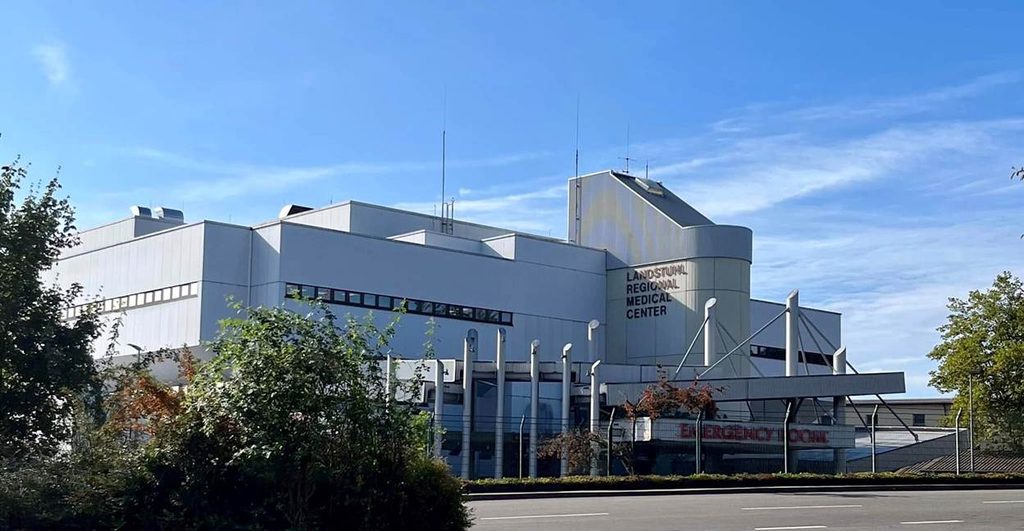
Current entryway
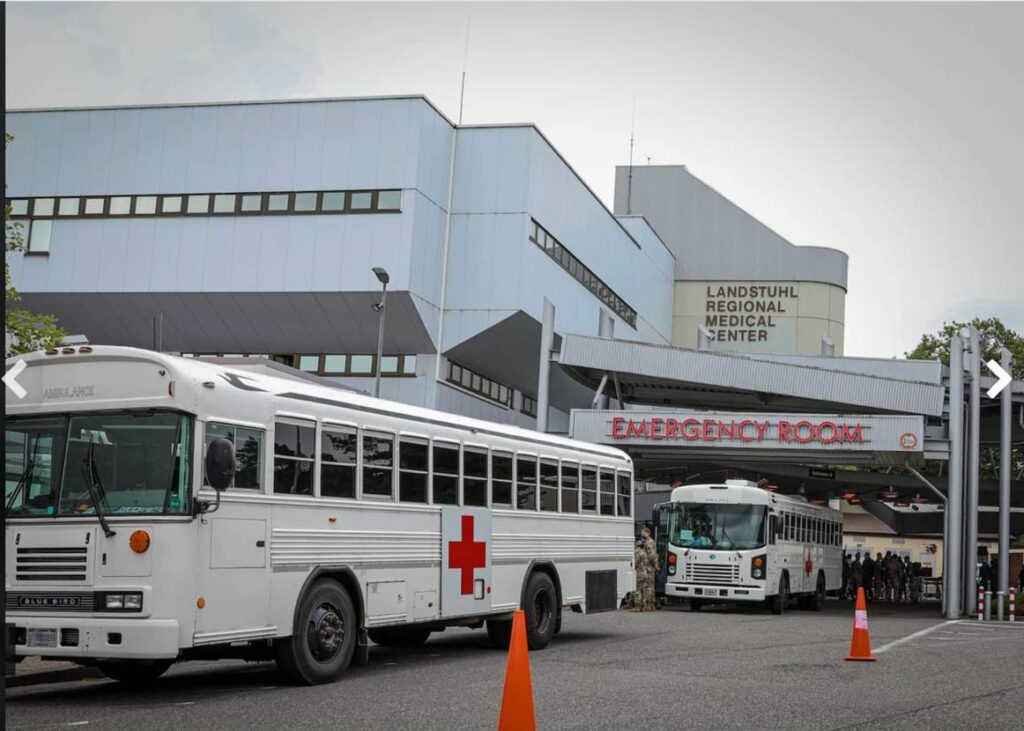
Hospitals still need emergency rooms. The new one is much enlarged from when I was stationed there. Photo credit: US Army.
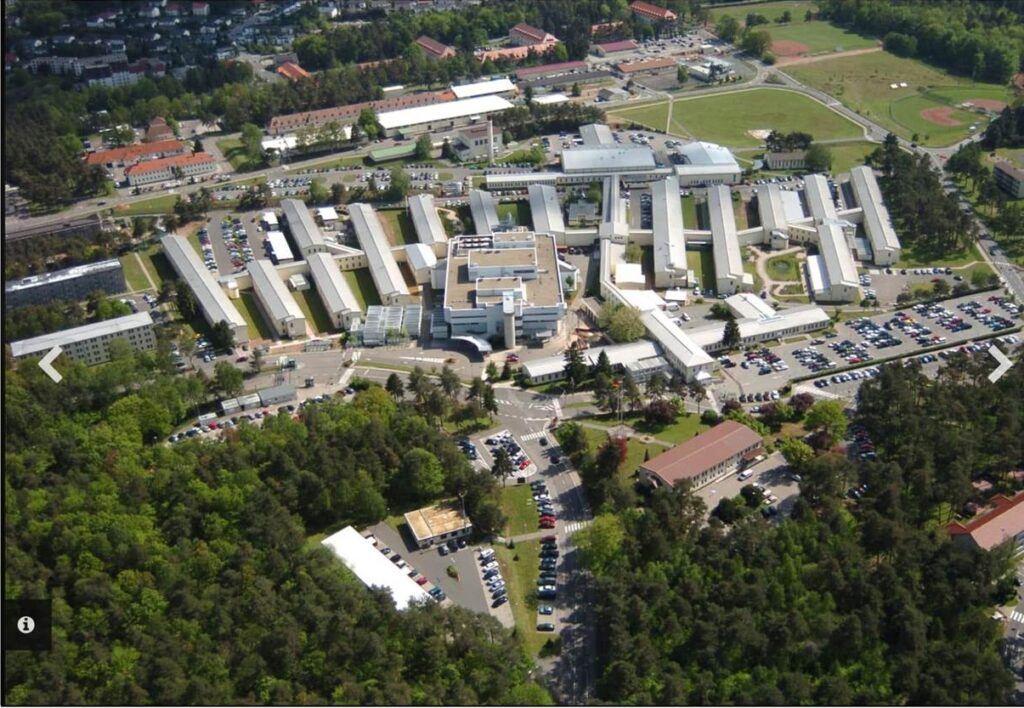
Working at LARMC means walking miles through its long corridors. Allegedly, the reason it was spread out like this was so that at least part of the hospital would survive if it was bombed. Photo credit: US Army.
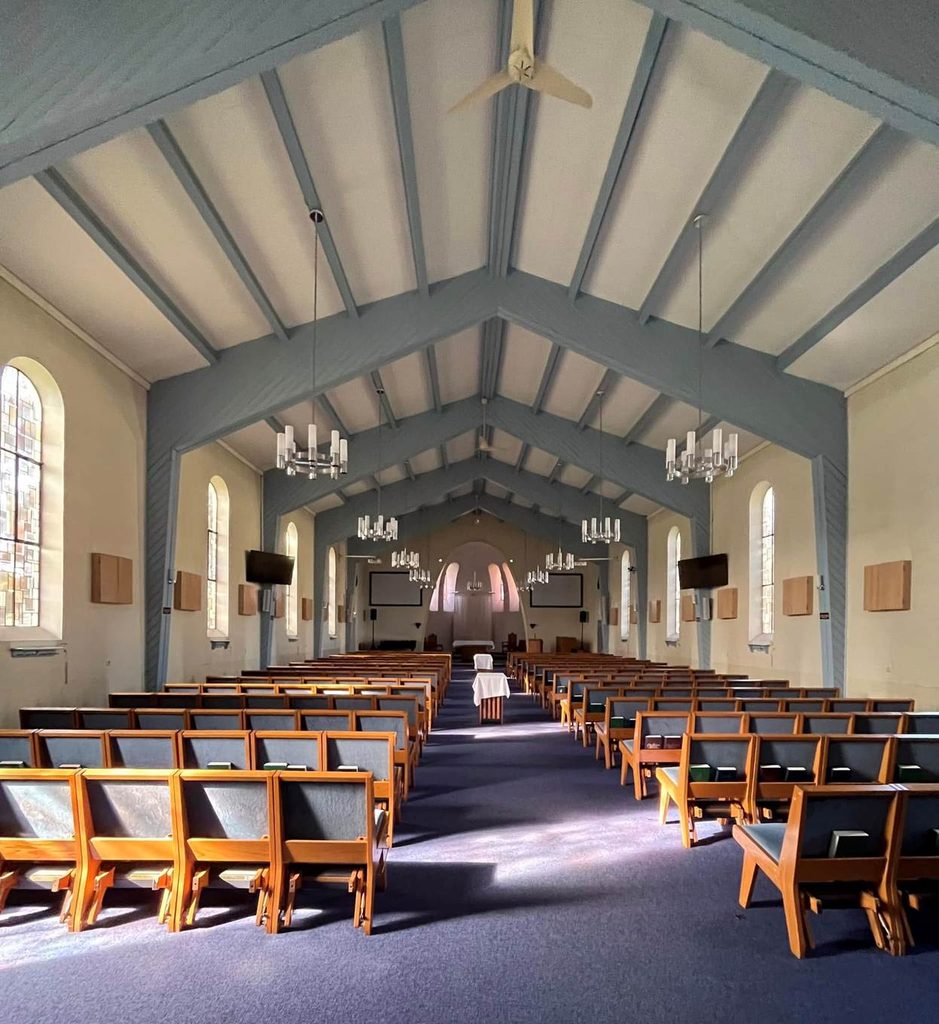
Other than some fresh paint and carpeting, the interior of the chapel is largely unchanged since my time there c. 1980.
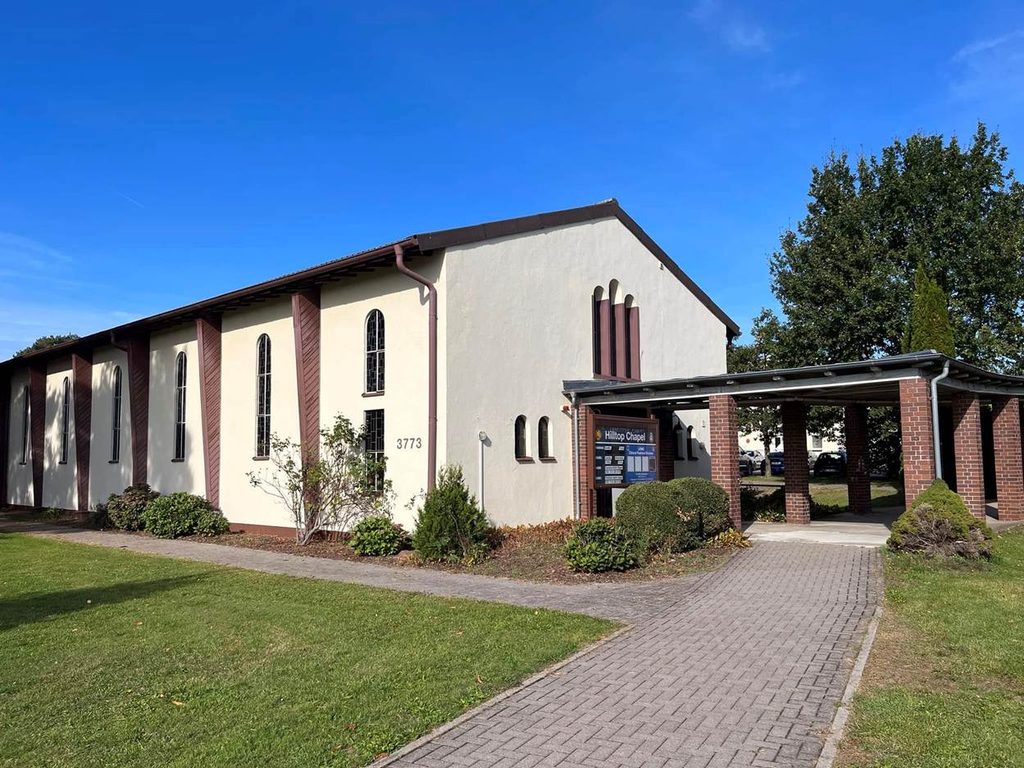
Entrance to the chapel.
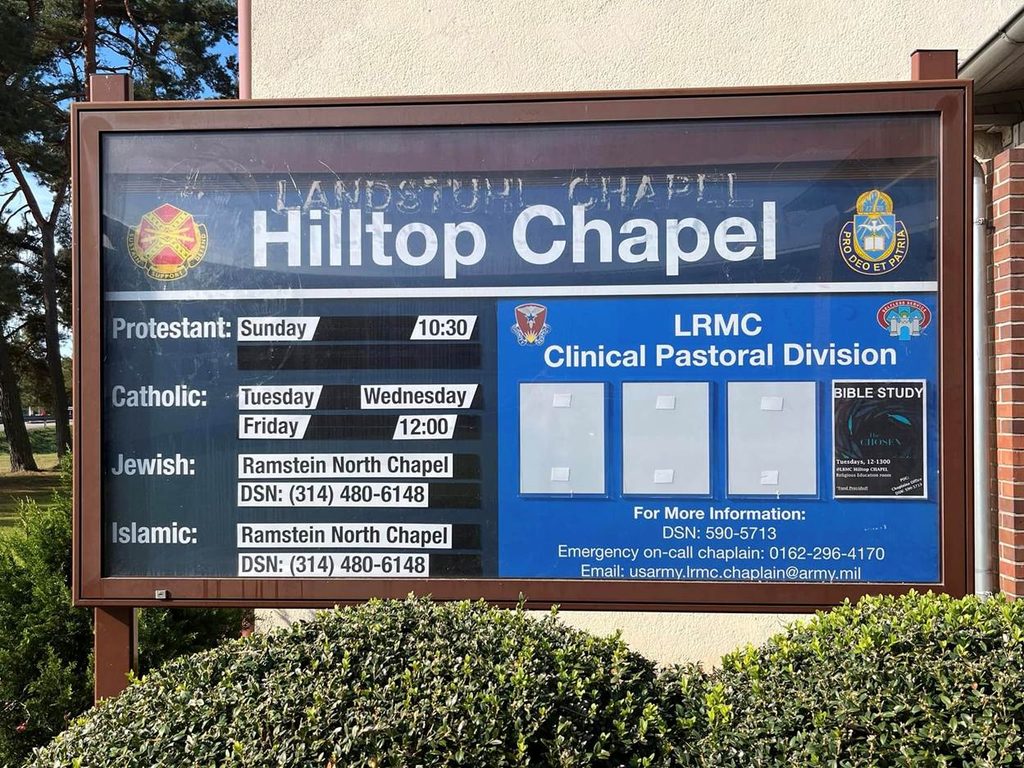
I misspoke when I said there were services now for Jews and Muslims. Members of those faiths will have to drive to Ramstein AFB to worship. Interestingly, I don’t see any Catholic masses listed on Sundays, either.
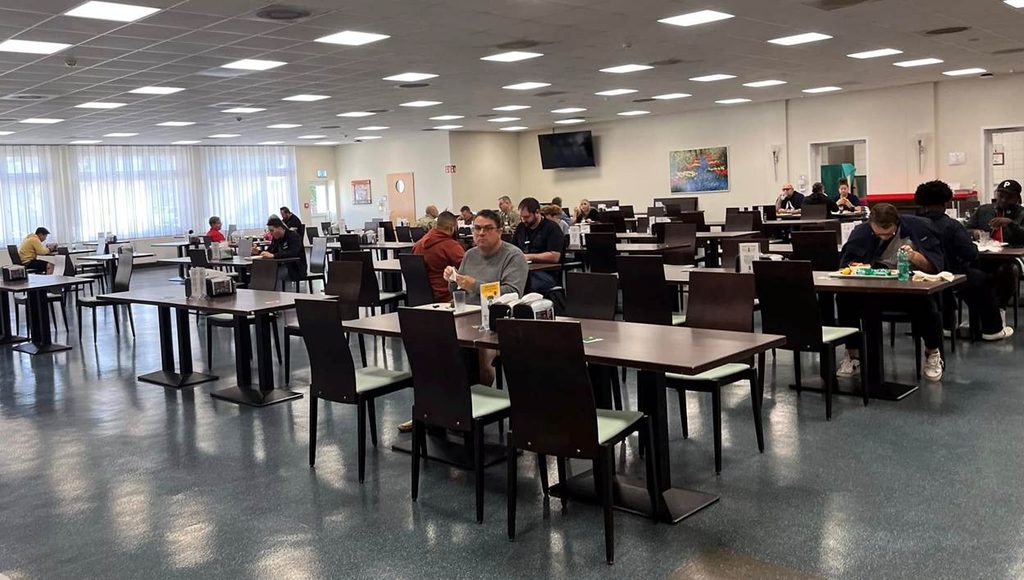
I used to come to this cafeteria nearly every morning to eat breakfast and read The Stars and Stripes, the Army’s newspaper.
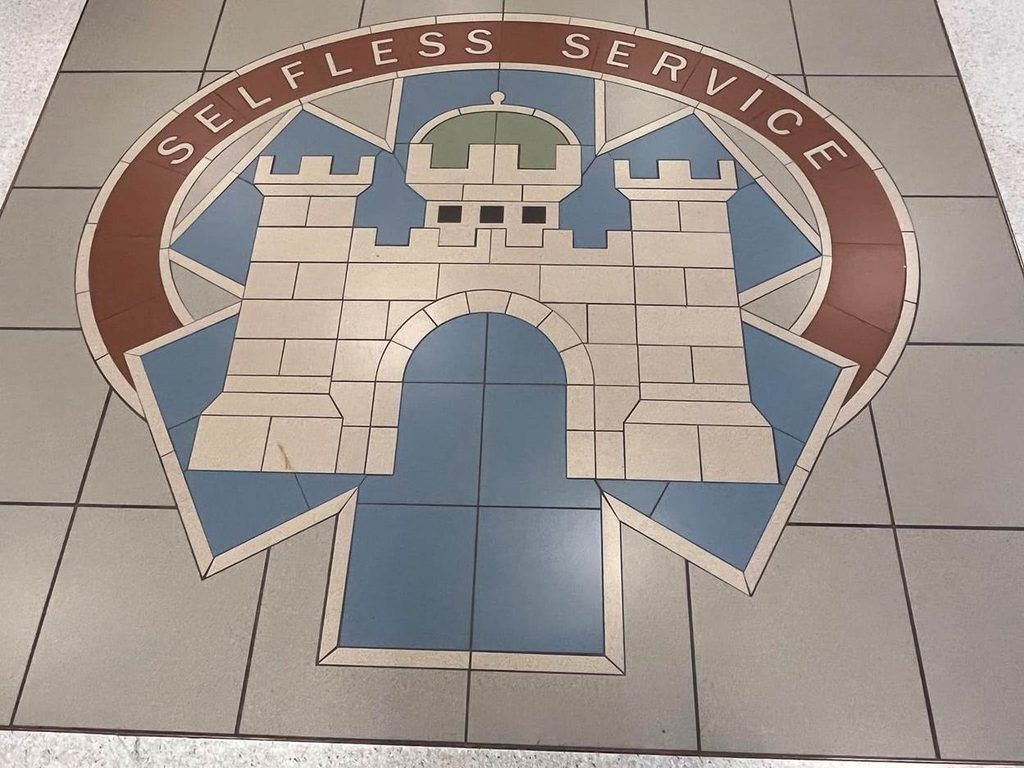
2nd General Hospital is now LARMC with a new motto of “selfless service”.
During my time, LARMC was an open base, meaning you just drove in without passing by any guard gates. That was still true even though I was serving during the year-plus of the Iranian hostage crisis. However, the 9/11 attacks of 2001 changed everything. LARMC, like most military installations these days, is a closed base. To visit, I had to contact the military and they assigned me a Public Affairs Officer. We met off-base. He then drove me to the base and took me through security. You’ll need two forms of ID, such as your passport and a driver’s license. After that, he just chilled outside while I wandered through the hospital alone, leaving me to wonder just what security was being served by my guardian. I was also saddened because my PAO was from Ramstein and didn’t know anything about LARMC, so he couldn’t tell me about any of the changes that have occurred on base since my days there.
October 6, 2023