

I’m currently in Landstuhl on a nostalgia tour of my old stomping grounds from when I was stationed here at 2nd General Hospital. I have a separate post for what is now called Landstuhl Army Regional Medical Center. The photos here focus on the town of Landstuhl: the train station (virtually unchanged over the last 40 years), my former home on Kaiserstrasse, a pretty little plaza in the middle of the city, Bismarck tower, Burg Nanstein, and a view from SchlossHotel. Follow me as I walk down memory lane.
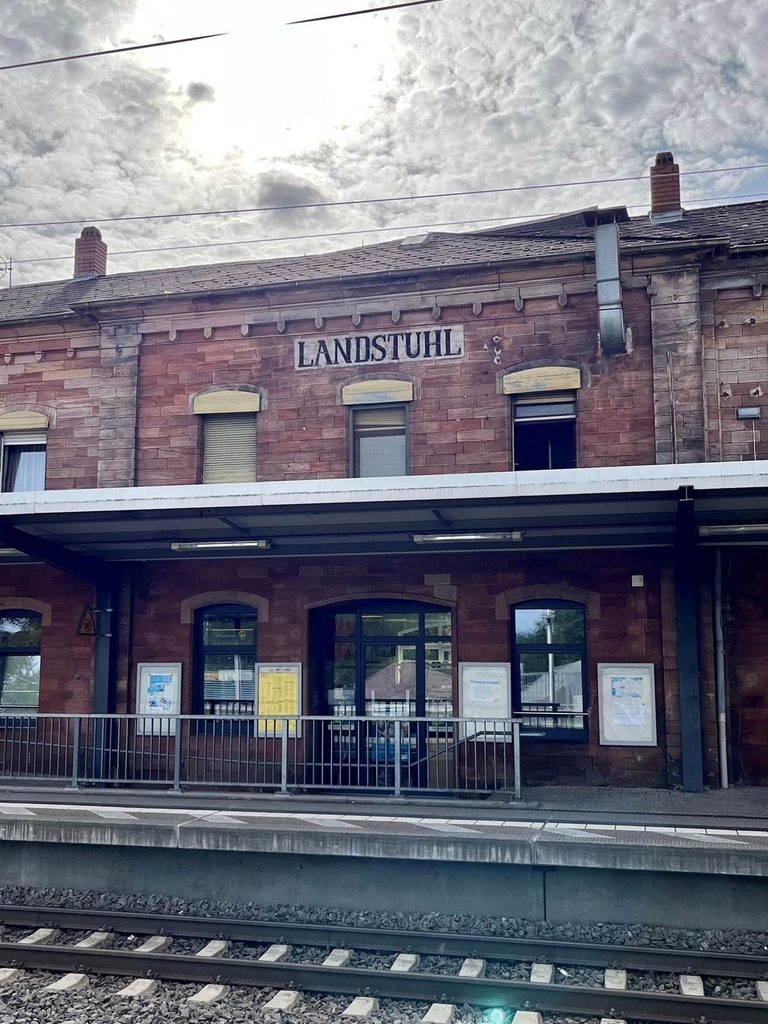
Landstuhl’s train station is virtually unchanged since my days there in the late 1970s. When I received orders to Germany, my then-boyfriend also had orders to Germany, but he was sent to Giessen and I was sent to Landstuhl. We married so we could be stationed together. For the time period before his transfer to Landstuhl was approved, I would eagerly await the arrival of his train at this train station each Friday night so we could spend the weekend together.
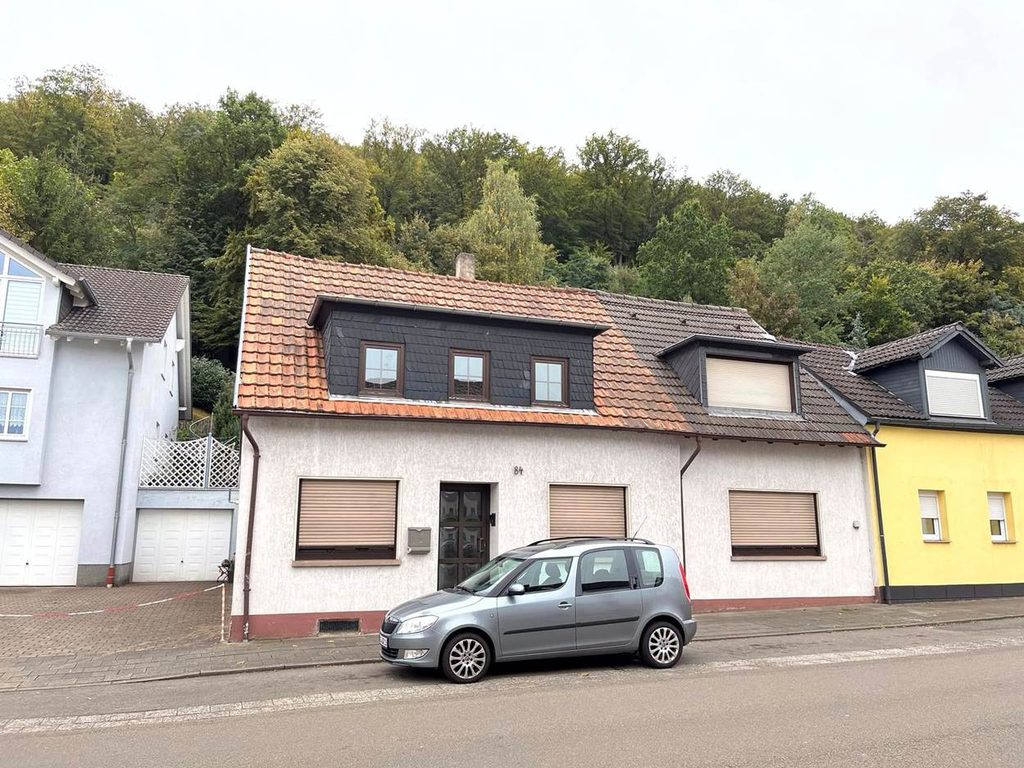
My husband and I rented the mother-in-law unit of this home in downtown Landstuhl. Our landlord and his wife lived on the ground floor and we occupied the second floor. Our landlords would invite us downstairs for dinner on special occasions such as Easter. The husband spoke English but his wife spoke only German. If someone told a joke, first one side of the table would laugh, then the joke would get translated and the other side of the table would laugh. They had a beautiful backyard which you can’t see in this photo. It was a cozy place to live.
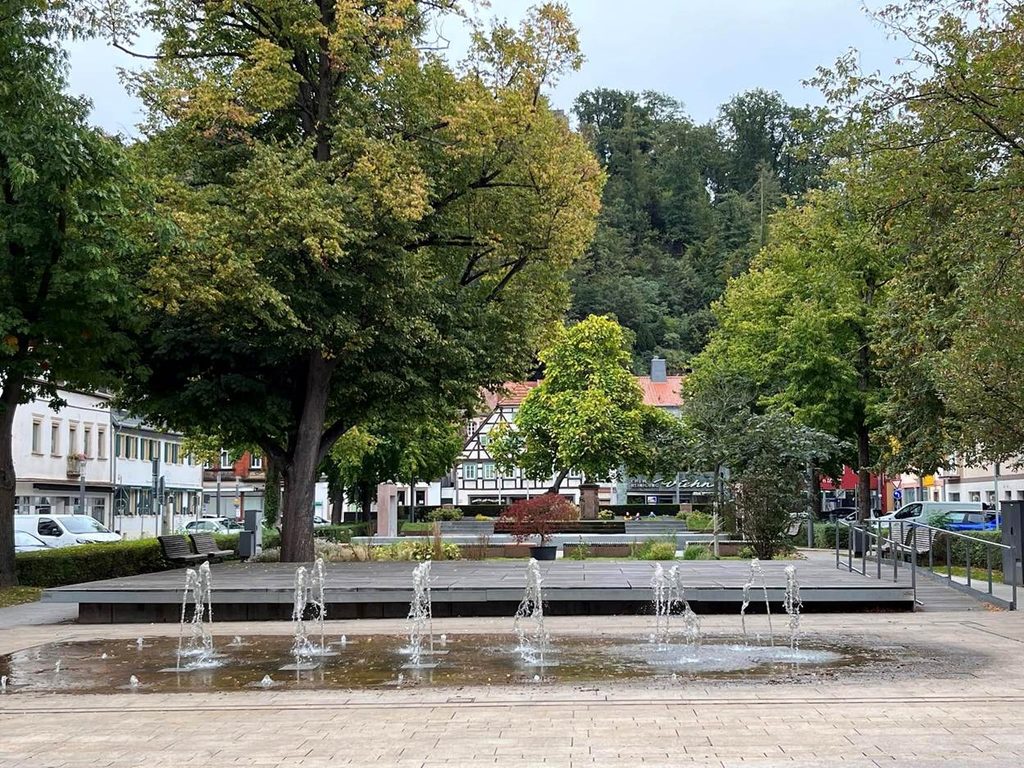
This pretty plaza in the center of Landstuhl has changed a bit, but the buildings surrounding it are the same. I have a black and white drawing of this plaza that I purchased when I lived there. I had always hoped to use watercolors to fill it in, but now I think that painting the drawing may be more of a challenge than I had anticipated.
For many years, what is now Germany was a confusing collection of duchies, states, and confederations of states. Various empires — the Holy Roman Empire, the Prussians, the Austrians, the French — laid claim to the lands at one time or another.
In the mid-1800s, King Wilhelm I of Prussia (the largest entity ruling present-day Germany) appointed Otto Von Bismarck as his Minister-President. Von Bismarck was the driving force behind German unification in 1871 and was the first chancellor of the unified Germany until 1890.
A bit of Bismarck-mania ensued (beginning even before unification) and a number of column-shaped monuments started popping up in German territories, including areas that are now parts of Poland, France, Denmark, Russia, Austria and the Czech Republic. Bismarck towers also went up in colonies such as New Guinea, Cameroon, Tanzania and even Chile.
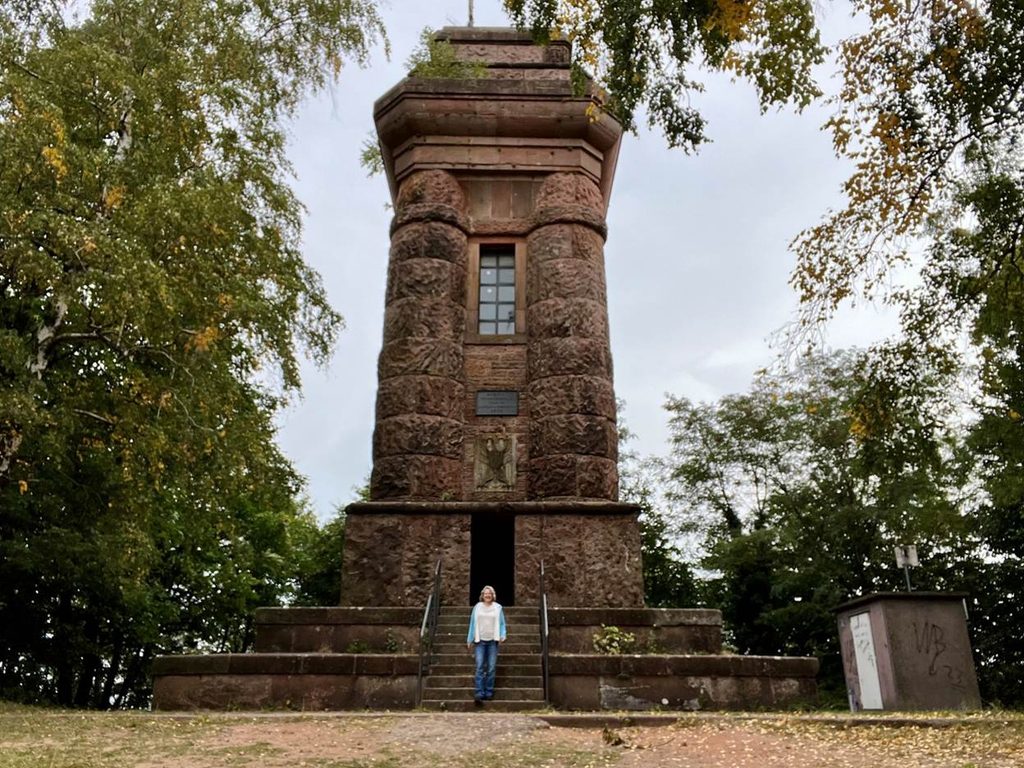
The towers were intended to be beacons, with braziers that would be lit on special days, such as Unification Day. Landstuhl’s Bismarck tower was built in 1900 and has a height of 19 meters (62 feet). I hiked up there today and took a selfie.
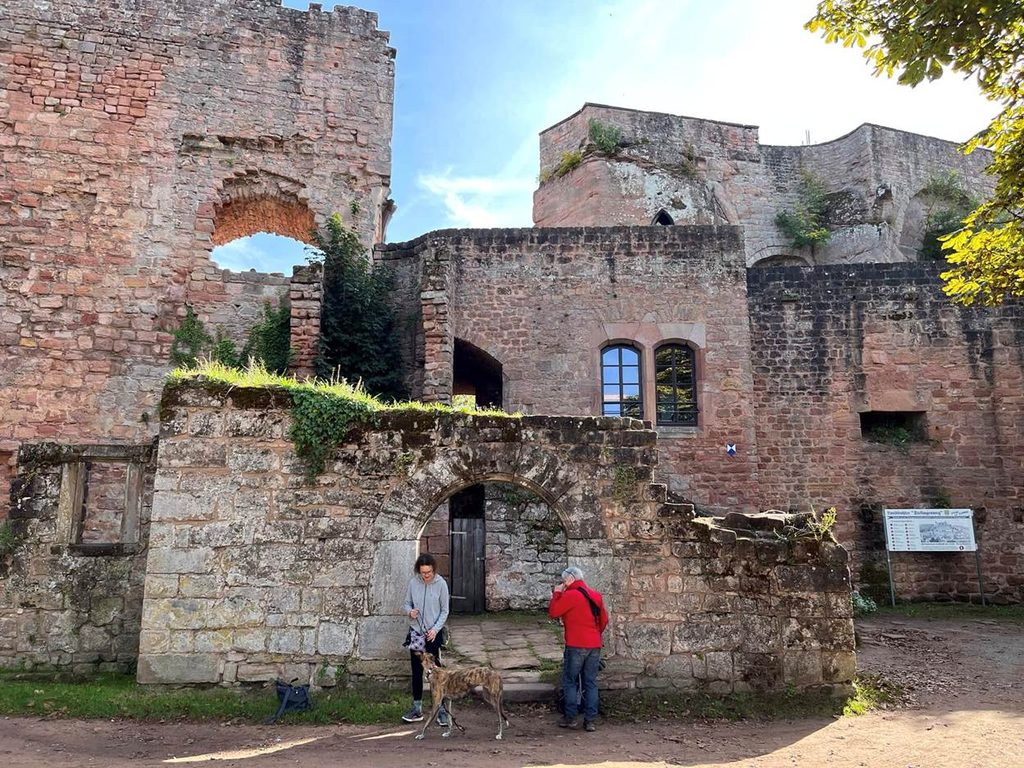
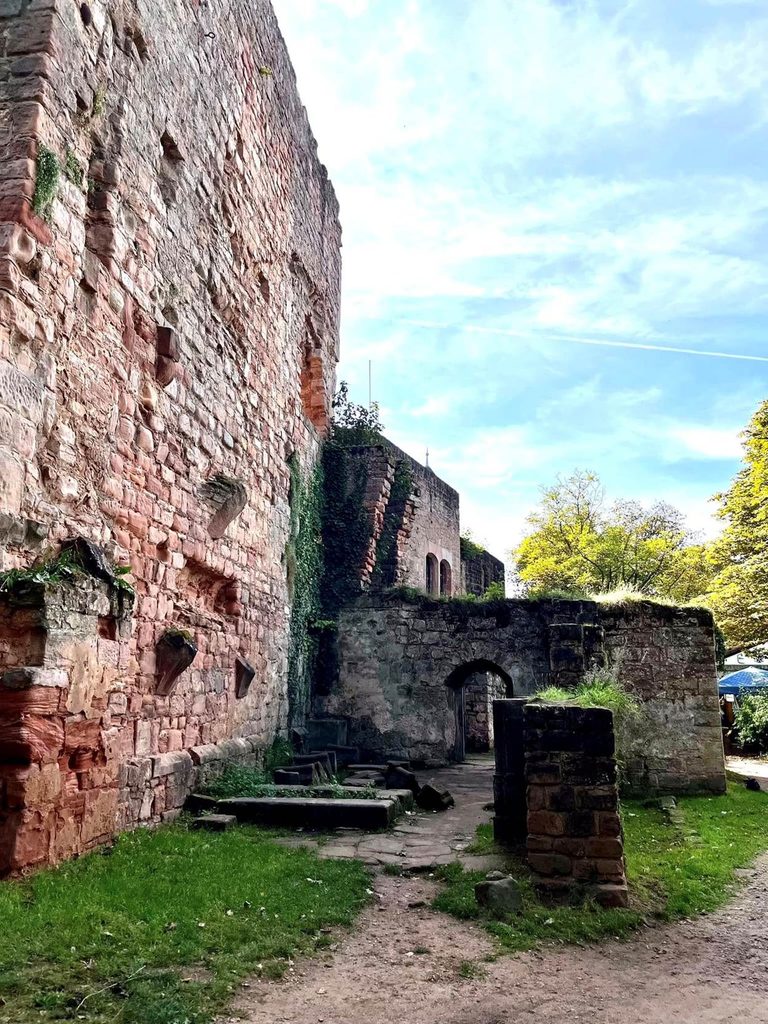
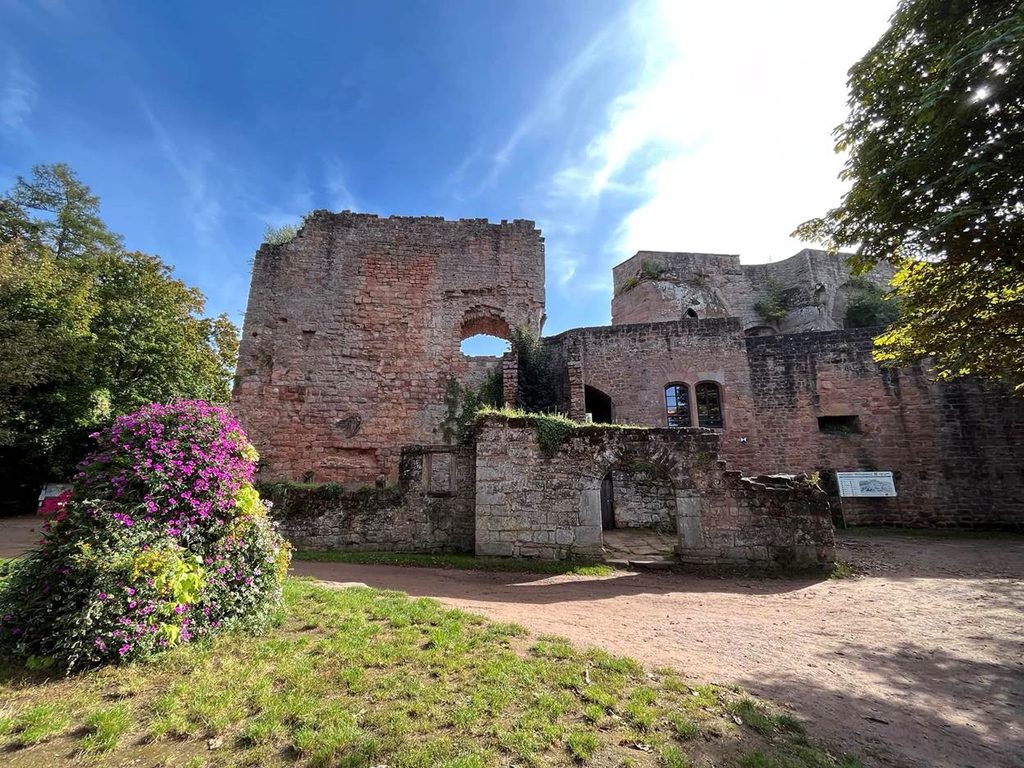
Burg Nanstein stands high above the town of Landstuhl. I remember rambling through the ruins when I was stationed here. Most histories of the castle date it to the early 12th century (when it seems like a lot of castle/fort-building was happening in this part of the world), but a brochure I picked up states that the first documented mention of the castle dates to 1253. It functioned as a typical medieval castle, with multiple changes of ownership, until 1518.
At that time, Franz Von Sickengen became the owner and he expanded the castle to fortify it and make it better both offensively and defensively for warfare with firearms.
Alas, Von Sickengen only enjoyed the castle for five years. In 1523 a triumvirate of royals from the Palatinate, Trier and Hesse mounted an artillery barrage. Von Sickengen was badly wounded and died in the aftermath.
Twenty years later, Sickengen’s descendants reconstructed it to a Renaissance castle (see line drawing below). However, the Thirty Years War took its toll on the castle, and in the following decades it was detonated by both Palatinate forces and then by French troops (1668 and 1689, respectively).
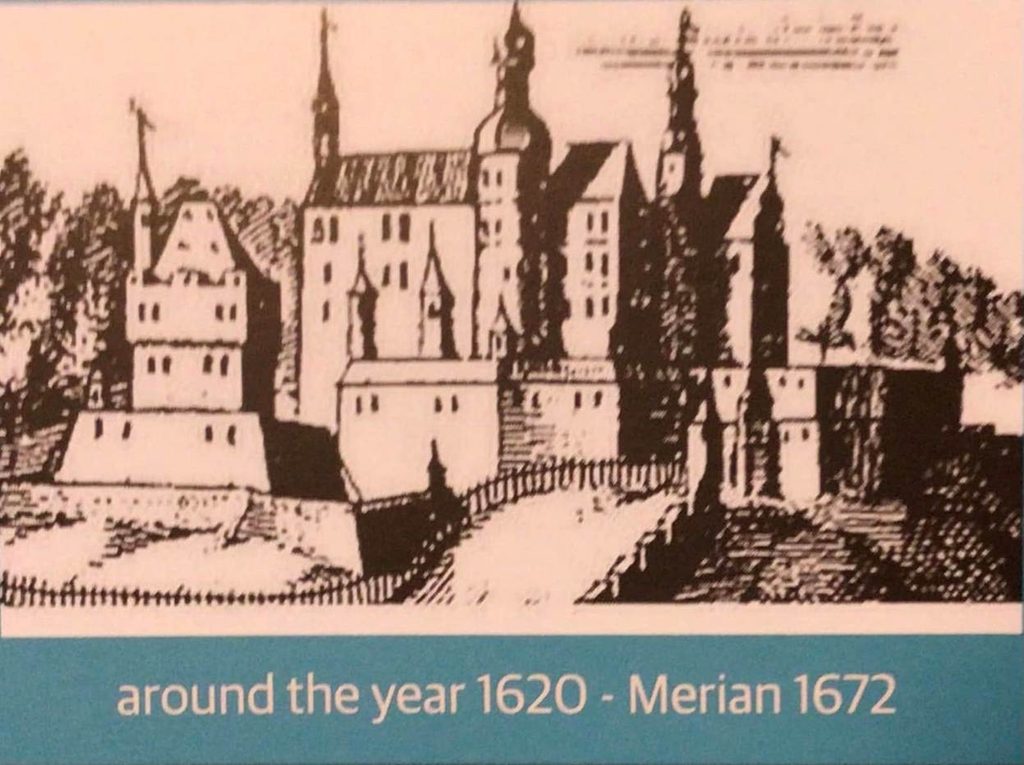
Since 1869, there have been attempts to reconstruct the castle, but it still lives on mostly in ruins. The Von Sickengen name still appears to be revered in the Landstuhl area.
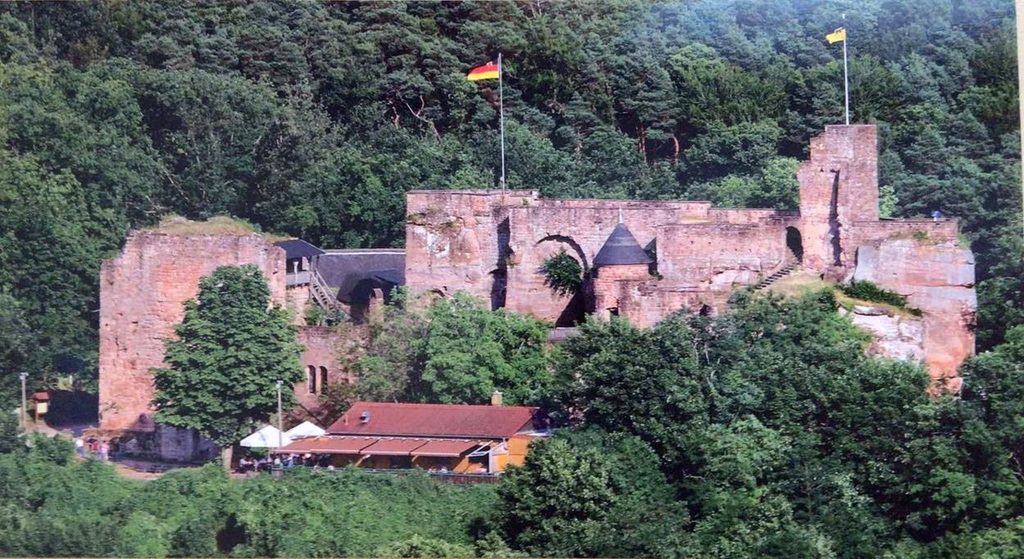
Another view of Burg Nanstein.
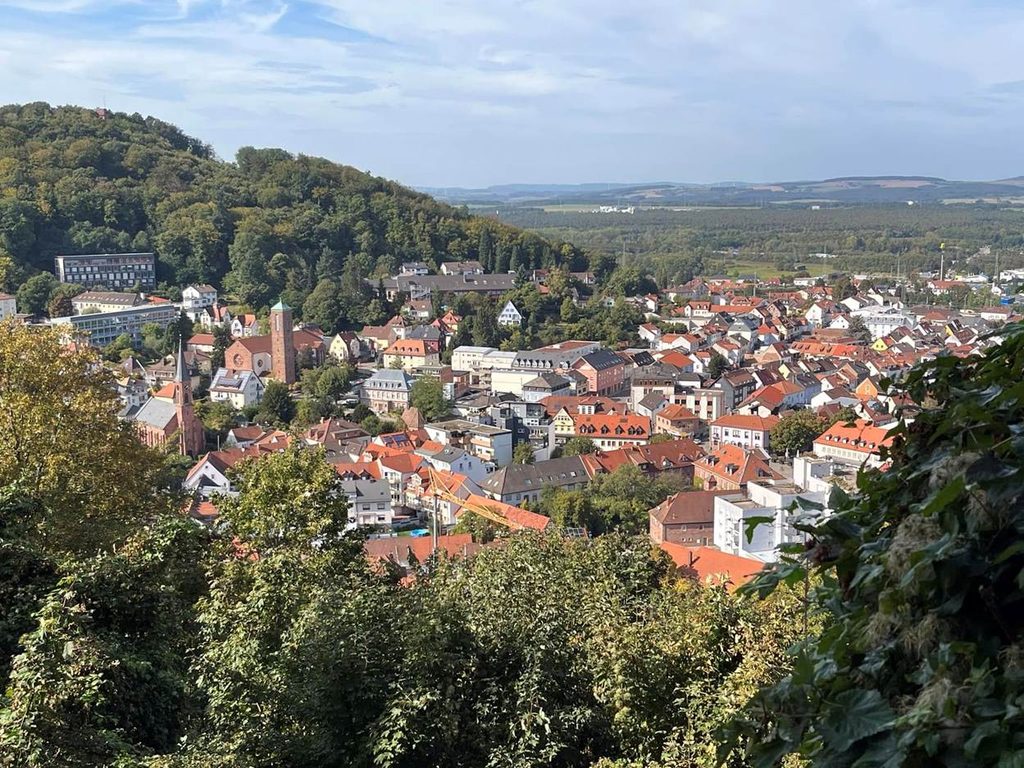
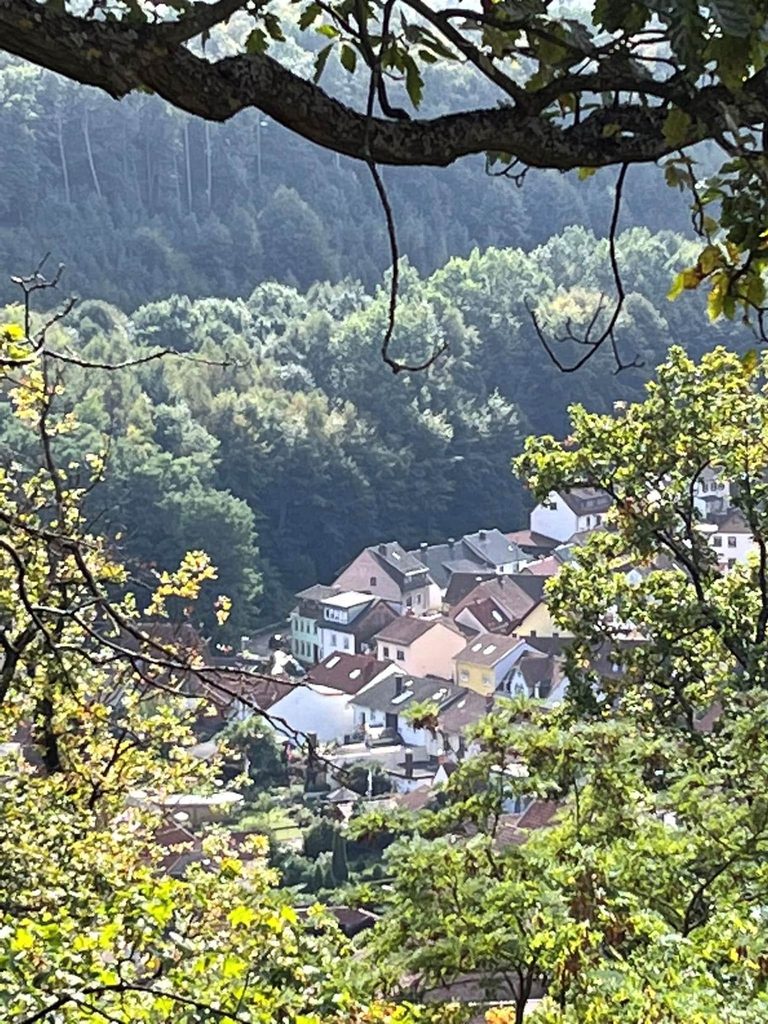
Pretty view of the town of Landstuhl from the castle grounds
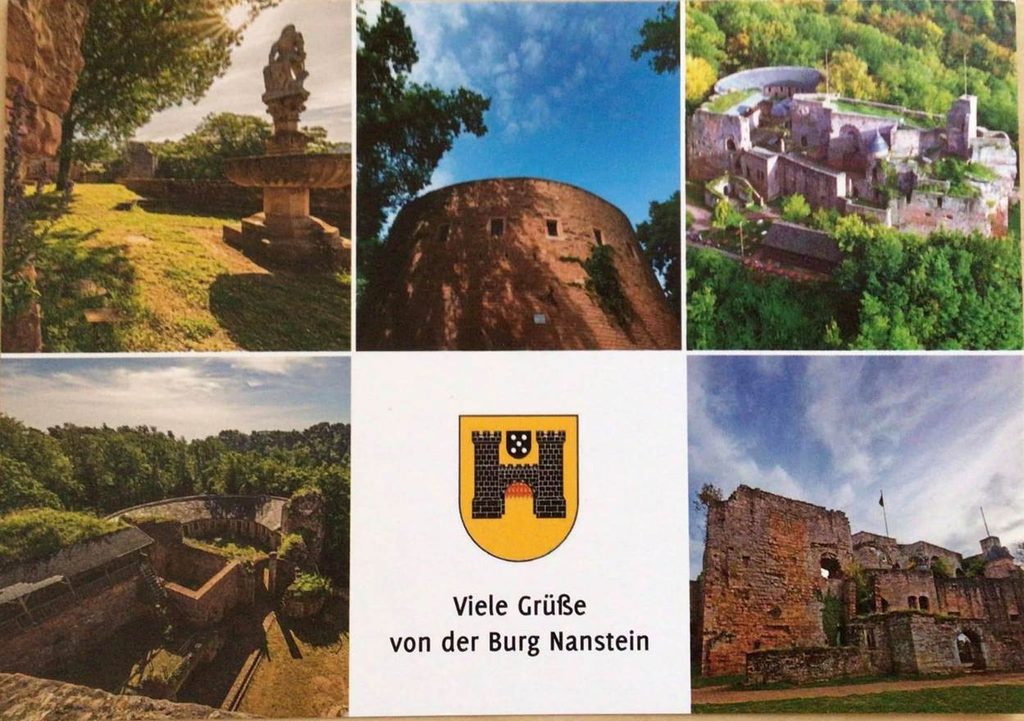
Additional views of the castle and its grounds are immediately above and below (including a postcard I bought years ago).
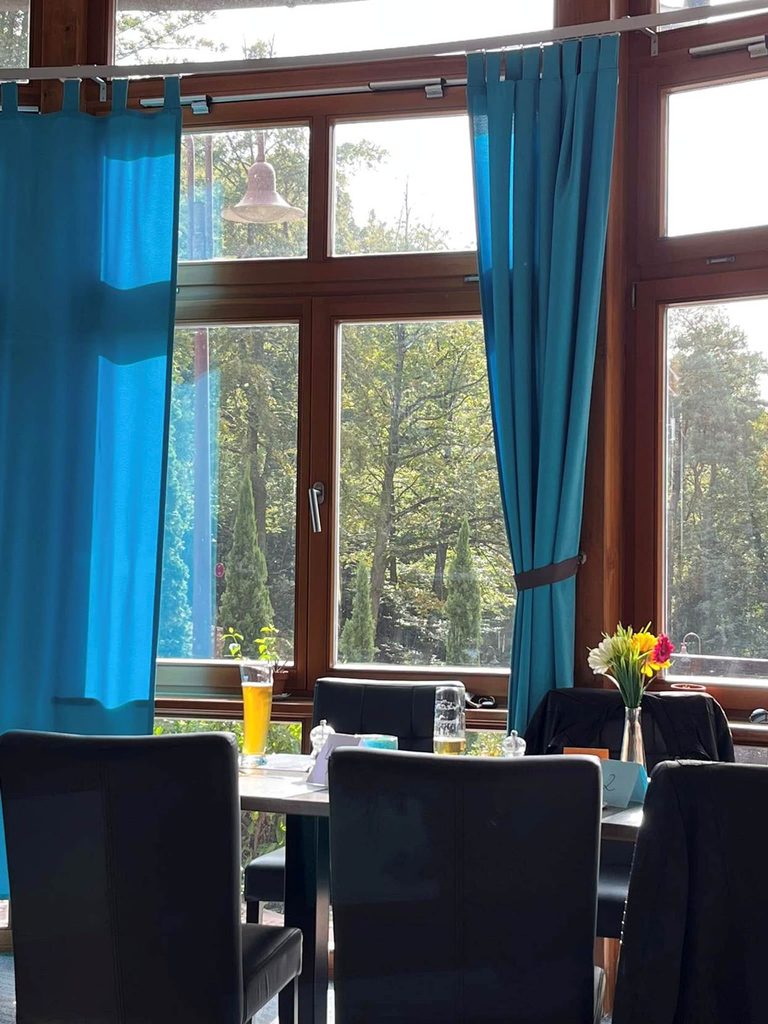
The Schlosshotel is located just down the hill from Burg Nanstein. I liked the blue curtain and the sun shining through the beer glass.
The town of Landstuhl is located approximately 50 miles west of Mannheim, or roughly 85 miles southwest of Frankfurt. Burg Nanstein is located at Burgweg 1 in Landstuhl; you can drive right up to the castle and there’s a car park right near the entrance. Admission is free.
Bismarck Tower is located on Kirchberg Hill and can be reached by foot on a moderately hilly climb through a forested area. It’s located on a quiet and peaceful site. I didn’t climb the tower when I was there but I’m told it has great views of both Landstuhl and Ramstein AFB.
October 7, 2023