

Washington DC’s monuments are beautifully lit at night, so “Monuments by Moonlight” tours are popular. I’d never done this before, so we hopped on a trolley Sunday night for the evening view.
Our guide was really good and I learned a lot of trivia about DC that I never knew before!
For example: the Lincoln Memorial is fronted by precisely 87 steps. Why 87? It’s a symbolic reference to Lincoln’s famous opening to the speech he gave at Gettysburg in 1863: “four score and seven years ago …. ” (for my non-American friends, a “score” is an archaic way of saying a grouping of 20 of something).
Ride along with us as we explored DC by night!
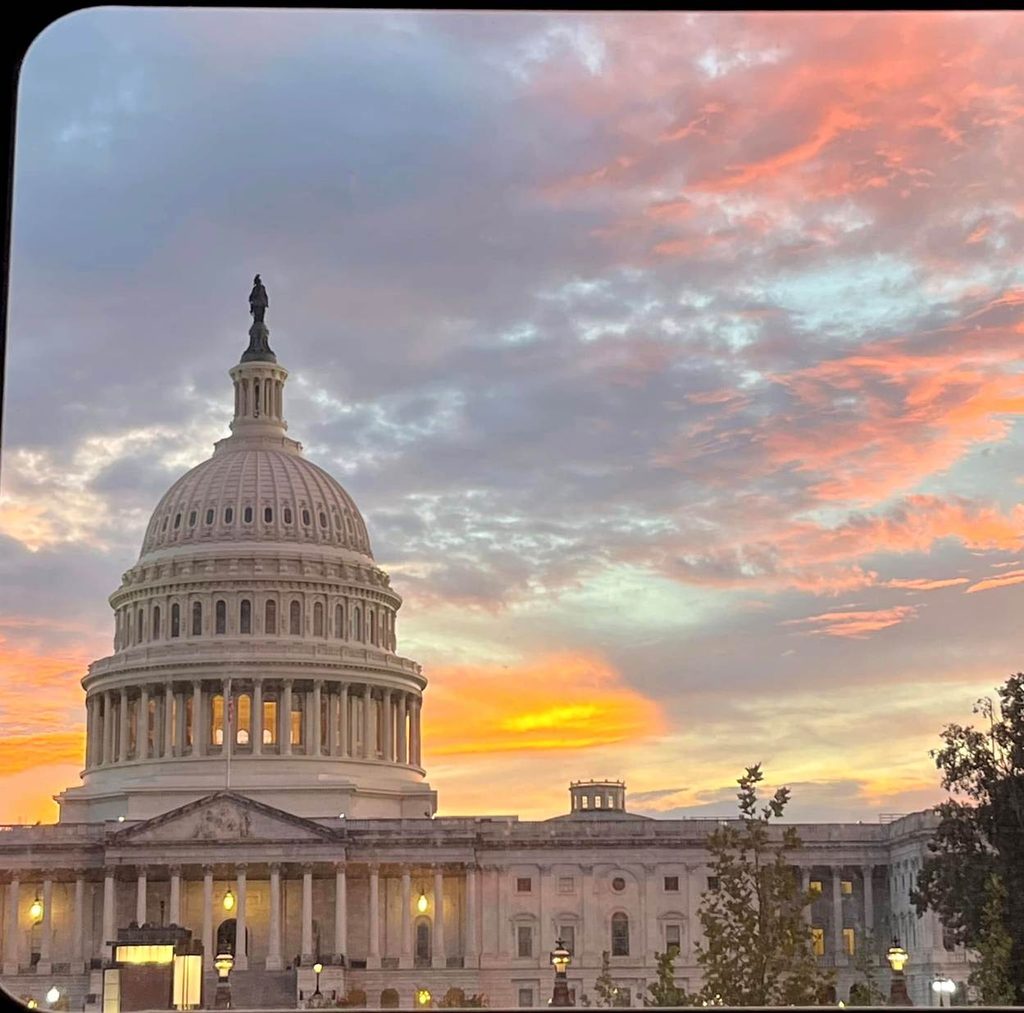
The U.S. Capitol looks lovely at sunset. The Statue of Freedom topping the dome is 19.5 feet in height. She wears classical dress, a helmet with an eagle’s head and feathers, and holds both a shield and a laurel wreath. According to our tour guide, no statues in Washington DC are allowed to be taller than Freedom’s 19.5′. (I was told the same thing while taking a U.S. Capitol tour 11 years earlier, so they’re consistent with that claim).
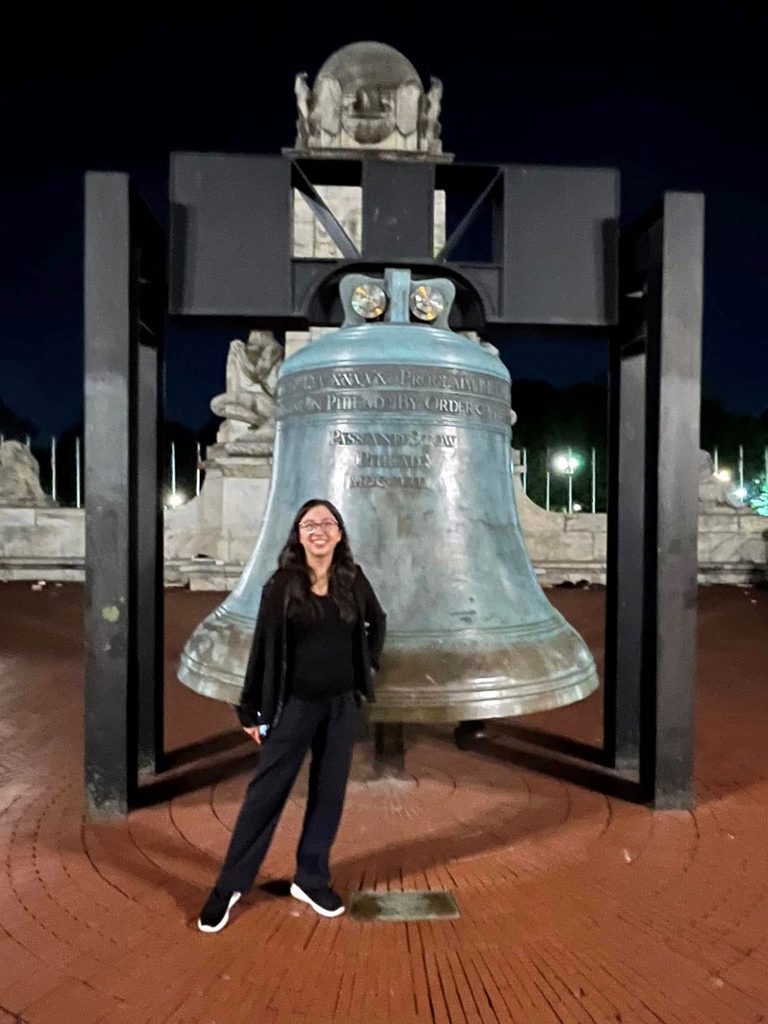
This is the Freedom Bell, cast by the same foundry that made the Liberty Bell some 200 years earlier (luckily, without the infamous crack of the earlier model). It was completed just in time to tour the U.S. on the bicentennial Freedom Train in 1976 before making its final stop in front of Union Station in Washington DC.
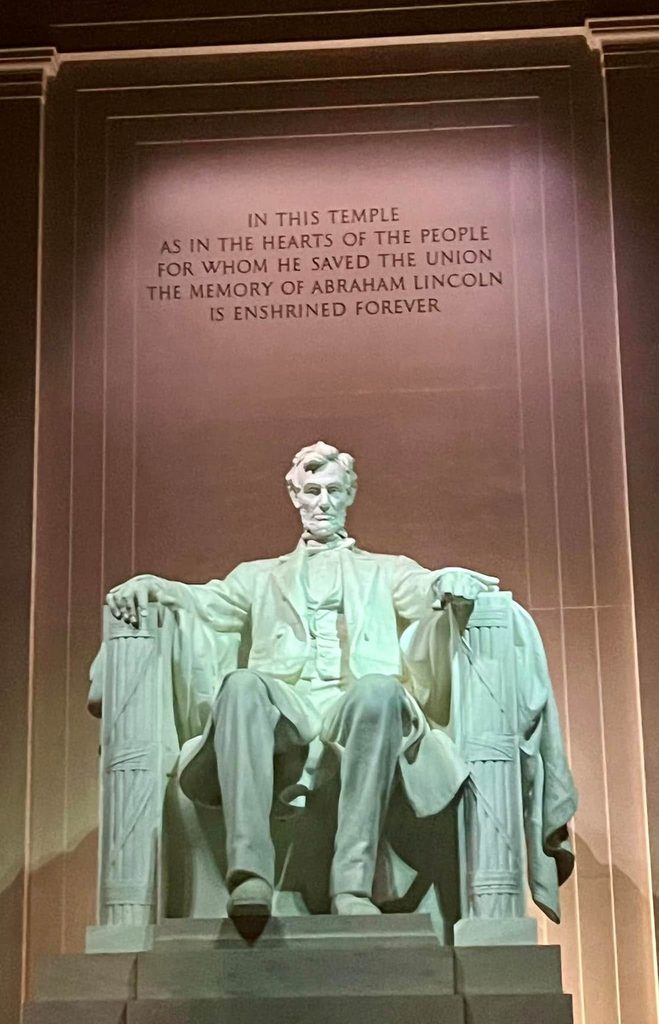
The Lincoln Memorial is surrounded by scaffolding right now, so I didn’t take a photo of the exterior. Lincoln looks a bit greenish by night. Up until now, there’s been a tiny museum and bookstore in the basement of the Memorial. The new construction project will add a 15,000 square foot museum in the undercroft to properly tell the story of Lincoln’s presidency. (Ford’s Theatre has a nice little Lincoln Museum in its basement, but there hasn’t been a formal Smithsonian one before).
Another piece of symbolism: the Memorial has 36 columns to represent the 36 states that existed at the time of Lincoln’s death (yes, they’re counting the Confederate states since Lincoln worked so hard to keep the Union intact).
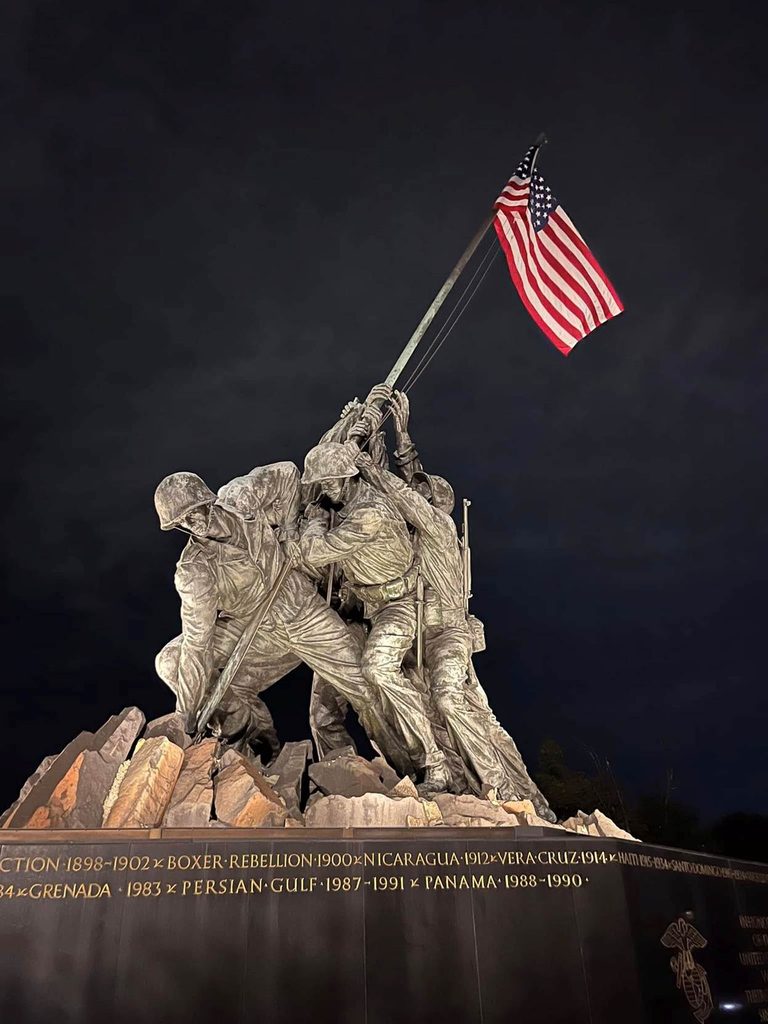
The Battle of Iwo Jima raged for five weeks in February and March of 1945. Although the Americans were ultimately successful, American casualties outweighed Japanese ones by a ratio of 3 to 2. There’s often confusion about the identities of the men who participated in the flag-raising. Part of that confusion is that there were actually two flag-raisings on February 23rd: one at 10:00am and another at 1:00pm. This memorial is based on the famous photo by Joe Rosenthal on Mount Suribachi; it reflects the afternoon flag-raising. The Iwo Jima Memorial is not in Washington DC proper, it’s located adjacent to Arlington National Cemetery in Virginia.
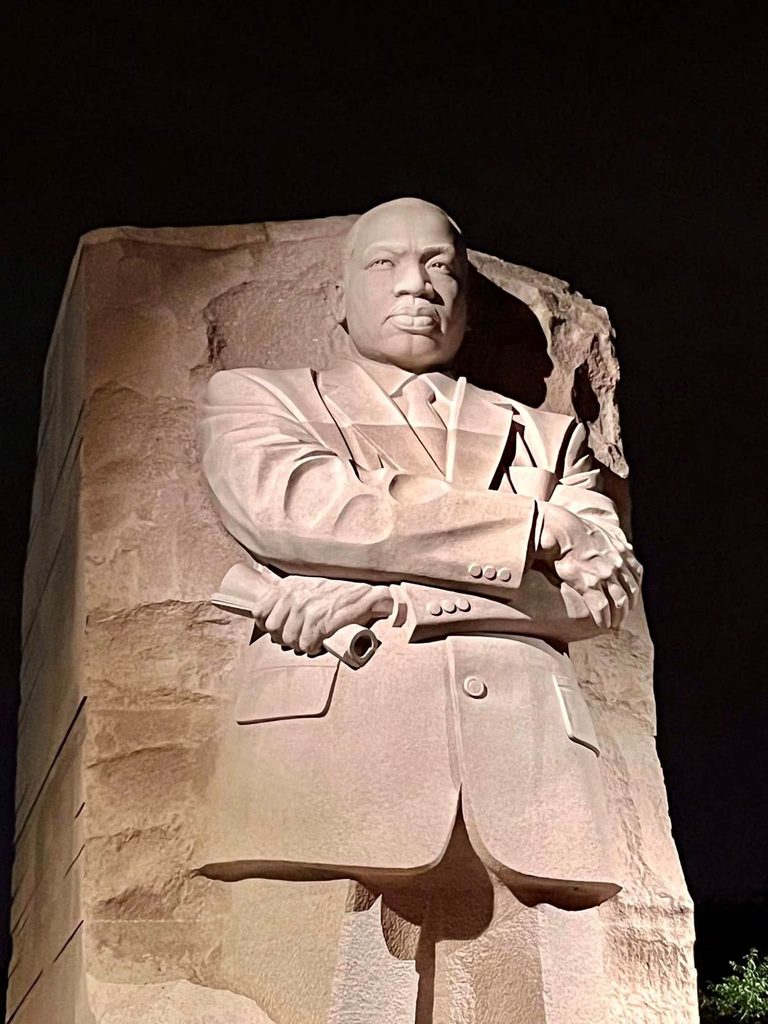
“Out of a mountain of despair, a stone of hope.”. It wasn’t easily visible at night, but Martin Luther King’s statue is a stone emerging from a “mountain” behind him. The monument stands some 30′ high and is located near the Tidal Basin (I guess a monument doesn’t count as a statue that’s required to be less than 19.5′ in height). The “out of a mountain of despair” quote comes from MLK’s famous “I Have a Dream” speech that he gave on August 28, 1963.
The Washington Monument isn’t particularly photogenic because it’s basically a stick. But here it is at sunset. If you look at the Monument carefully (in the daylight, anyway), you’ll see that the marble stones used in its construction aren’t all the same color. That’s because construction was halted for 20 years due to lack of funds and the interruptions of the Civil War. When construction resumed, the US Corps of Engineers used marble from a different quarry. The lower third of the monument has marble from Baltimore County, the upper part from Cockeysville marble.
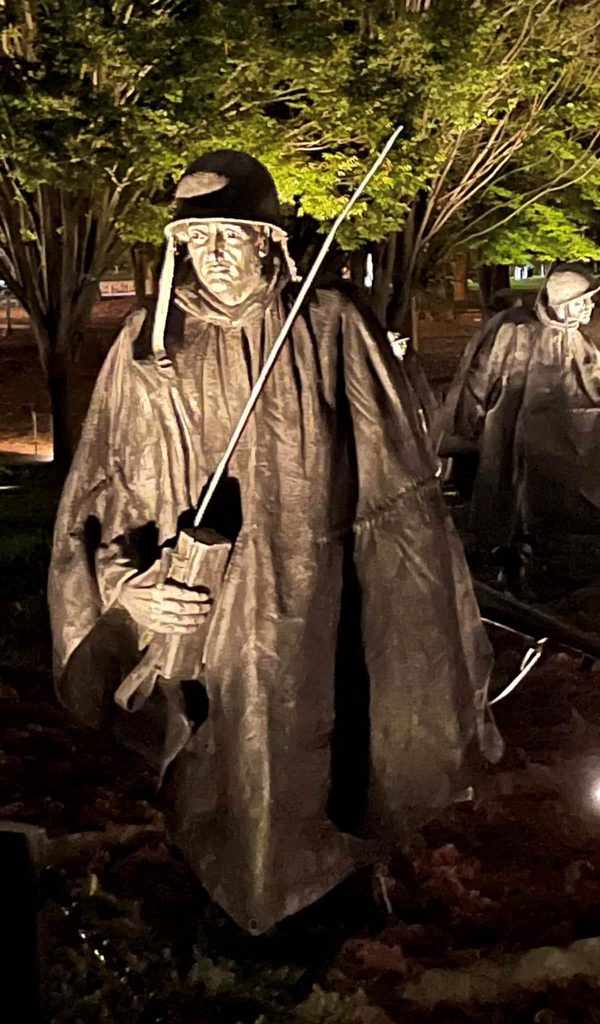
The Korean War Memorial has these foot soldiers moving through a murky field. It’s haunting, especially at night. The Korean War Memorial is a short distance from the Lincoln Memorial.
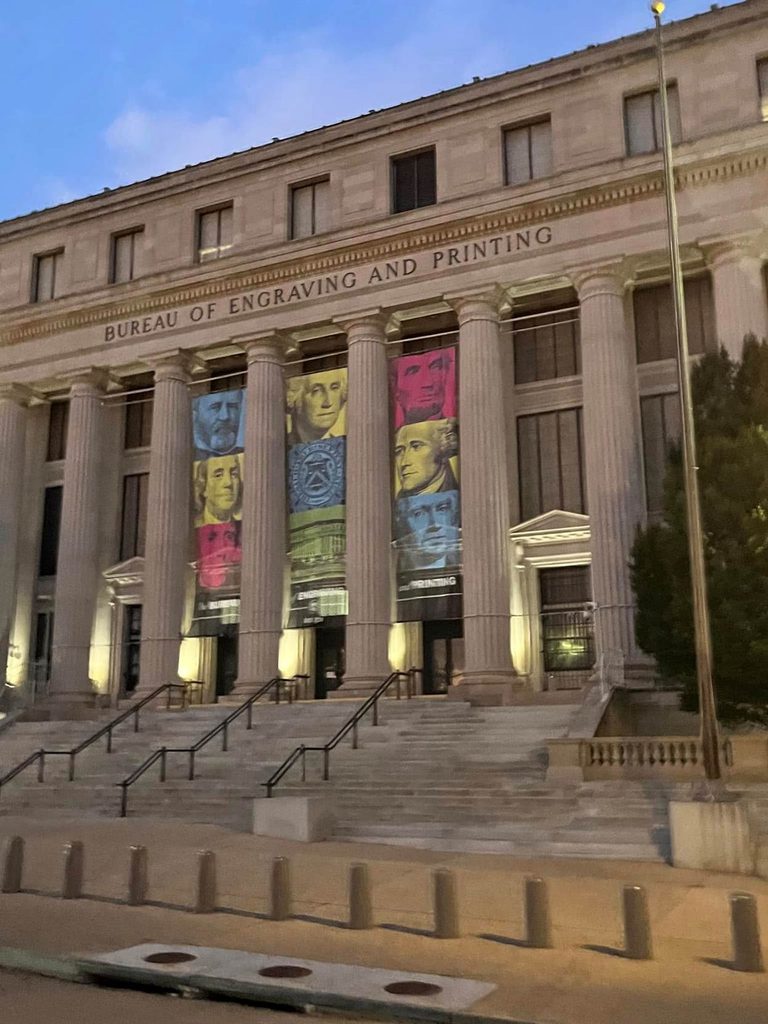
The Bureau of Engraving and Printing, where those greenbacks get made!

Shelly’s standing facing the MLK Memorial. Behind her on the right is the Jefferson Memorial. Our guide says that both MLK and Jefferson’s statues hold a scroll, the Declaration of Independence, symbolically tying the two men’s battles together.
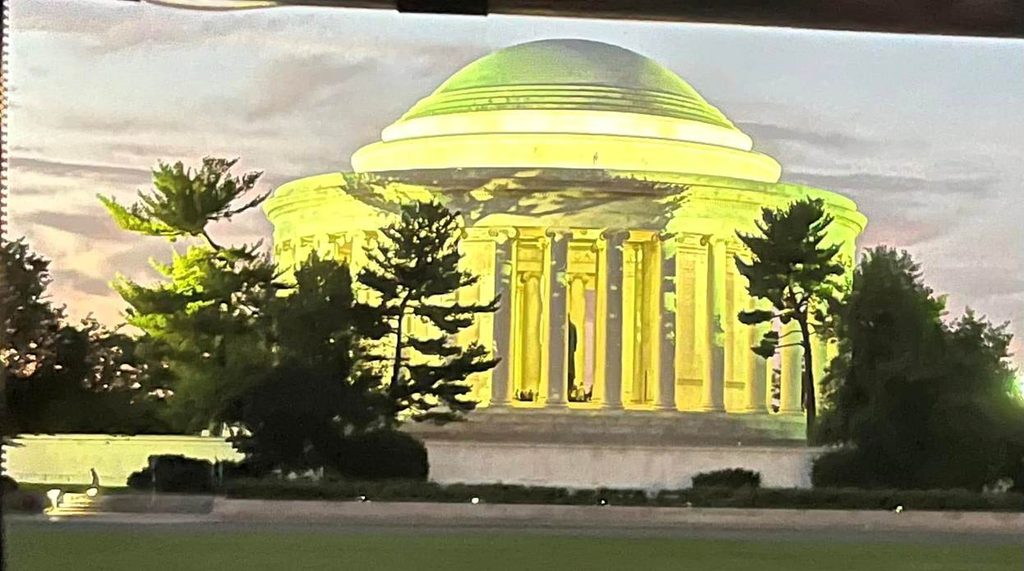
The Jefferson Memorial. Our trolley couldn’t stop there so I had to take this photo through the window while the trolley was in motion.
For security reasons, the Secret Service won’t allow tour buses to stop anywhere near the White House, so I had to take this photo while it was in motion. Originally called the Executive Mansion, President John Adams and his wife Abigail were its first occupants. The Executive Mansion was initially painted yellow. It received a lime-based whitewash in 1798, and was then painted with lead-based white paint in 1818. It unofficially came to be called the White House (and sometimes the President’s House or the Executive Mansion) during the late 19th century. The White House didn’t formally come to be called the White House until 1901 when President Theodore Roosevelt made it official.
September 4, 2024