

The Louvre began as a medieval fortress in the 12th century. King Phillip II wanted a fortress on the Right Bank of the Seine to protect the city from potential invasions. At that time, the Medieval Louvre was located on the outer edge of Paris.
It was converted into the Tuilleries Palace in the 16th century by King Francis I. By this time, Paris had grown around the Louvre and it was no longer needed as a defensive fort (indeed, the Louvre’s location in the 1st arrondisement indicates its now-central location within the city). King Francis also began collecting artworks to establish Paris as a center of art and culture. When King Louis XIV moved his court to Versailles in 1682, the Louvre became the spot to display the royal art collection.
Napoleon III (not to be confused with his more famous uncle, Napoleon Bonaparte) built the Richelieu wing in the 19th century to connect the former palace with the Tuilleries gardens, and that wing housed these sumptuous public and private rooms of the Minister of State. The state rooms are lavish with red velvet, gold, and sumptuous paintings. They saw masked balls, prestigious dinners, and state receptions of the Second Empire within their walls.
Although the rooms are known as the Napoleon III Apartments, Napoleon never lived there. His Minister of State occupied the private apartments from 1852-1870. After that, the Ministry of Finance occupied the rooms from 1870 until 1989 — when the Louvre palace became a museum.
These rooms are virtually intact from their mid-19th century debut. Take a look at how the influential and wealthy entertained during Napoleon’s reign. I’ll add captions to describe each room.
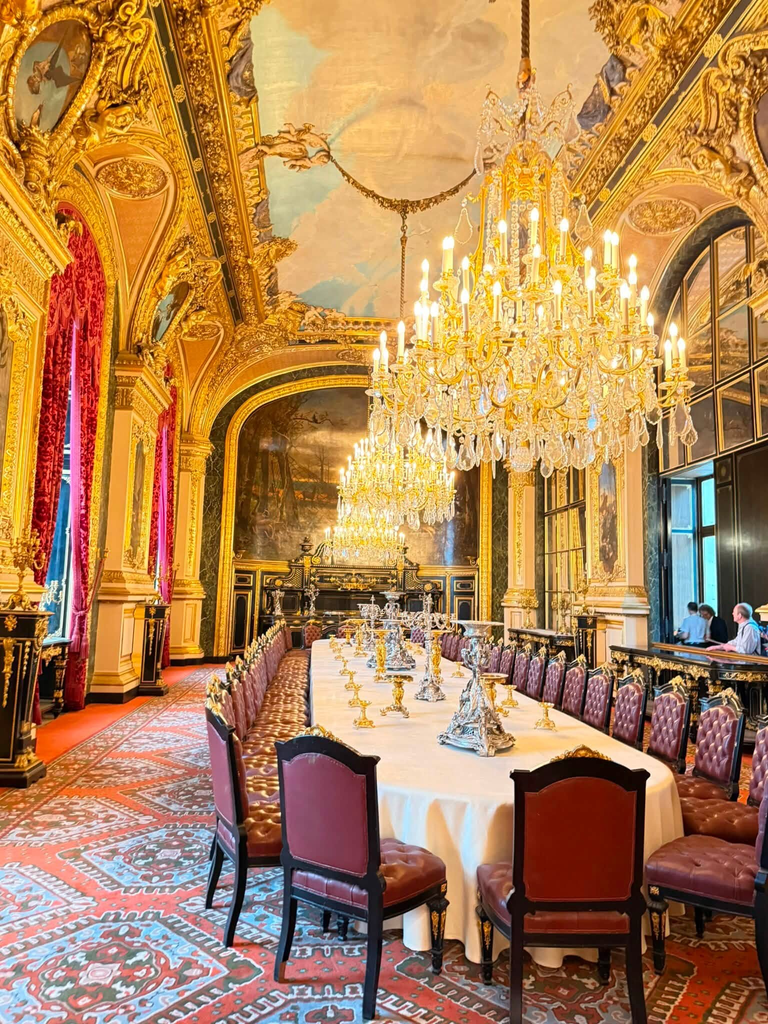
The imperial dining room could seat up to 42 guests. The paintings contain hunting scenes (falconry, hunting with hounds, deer caught in nets) — a popular motif at the time.
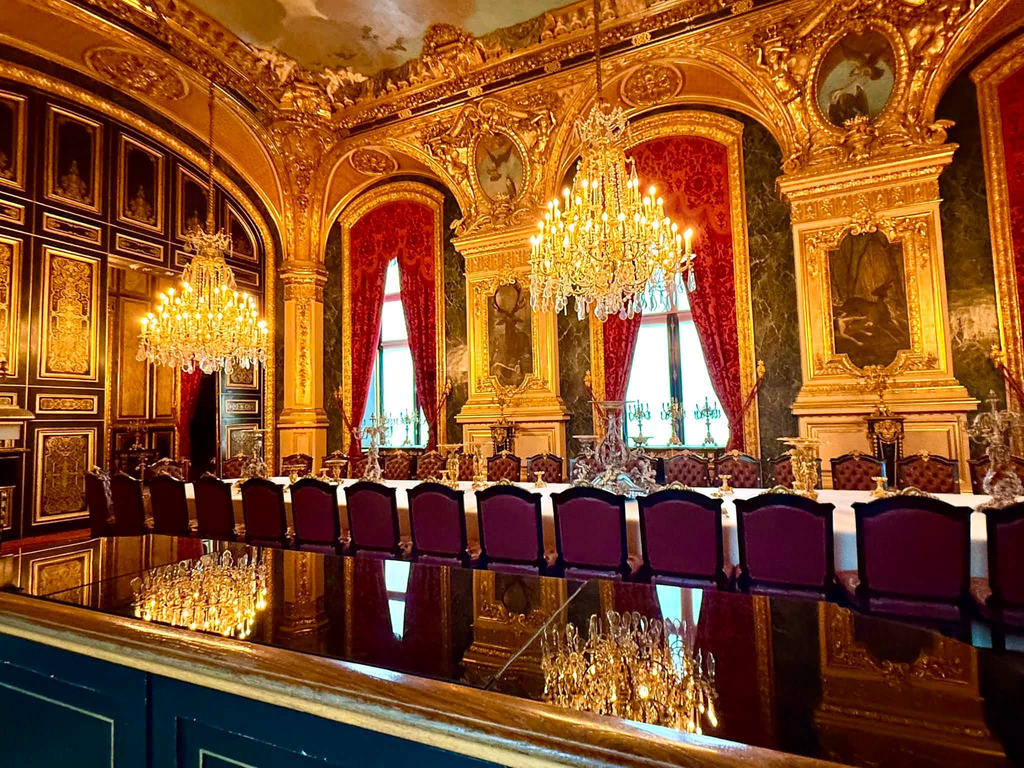
Another view of the large dining room.
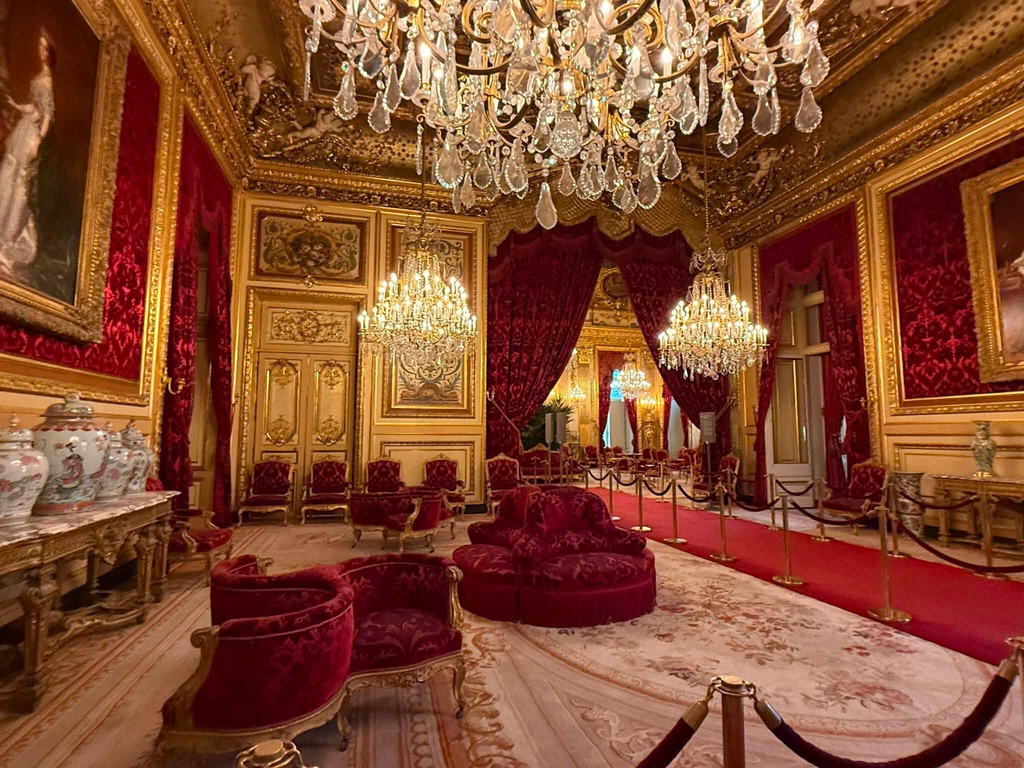
This is the public drawing room. As it opens onto the Grand Salon, it could also be used as a theatre (with the audience in the Grand Salon) or as overflow for a large gathering. Note the portrait of Empress Eugenie on the left. Emperor Napoleon’s portrait can barely be seen on the right.
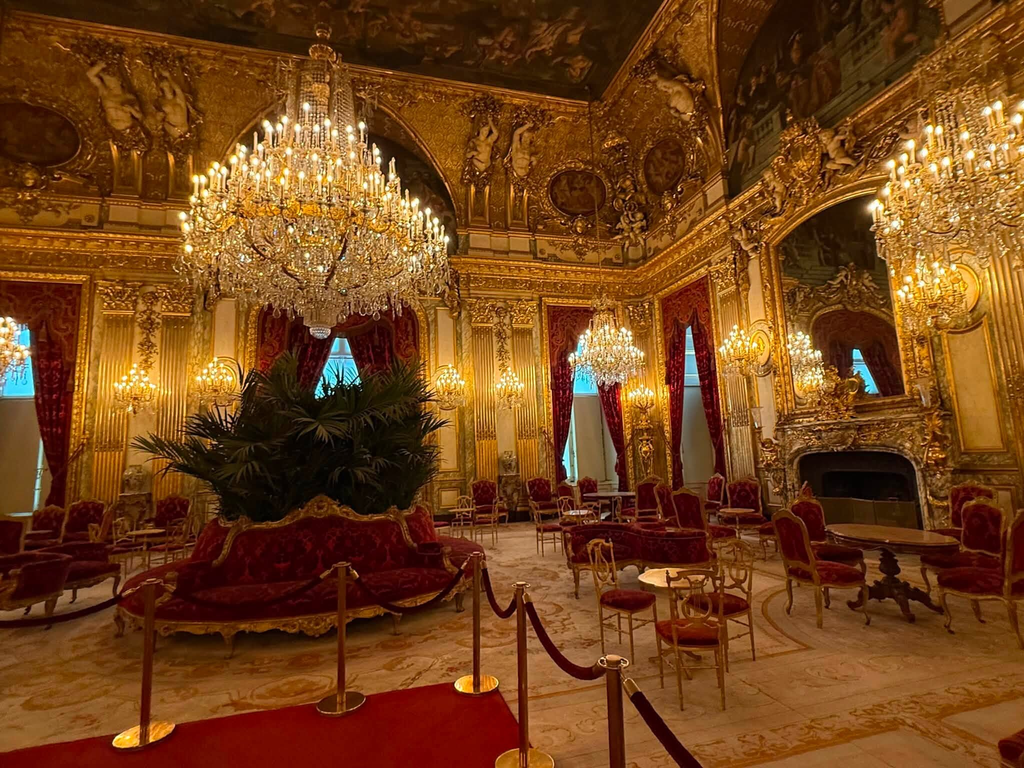
Another view of the drawing room.
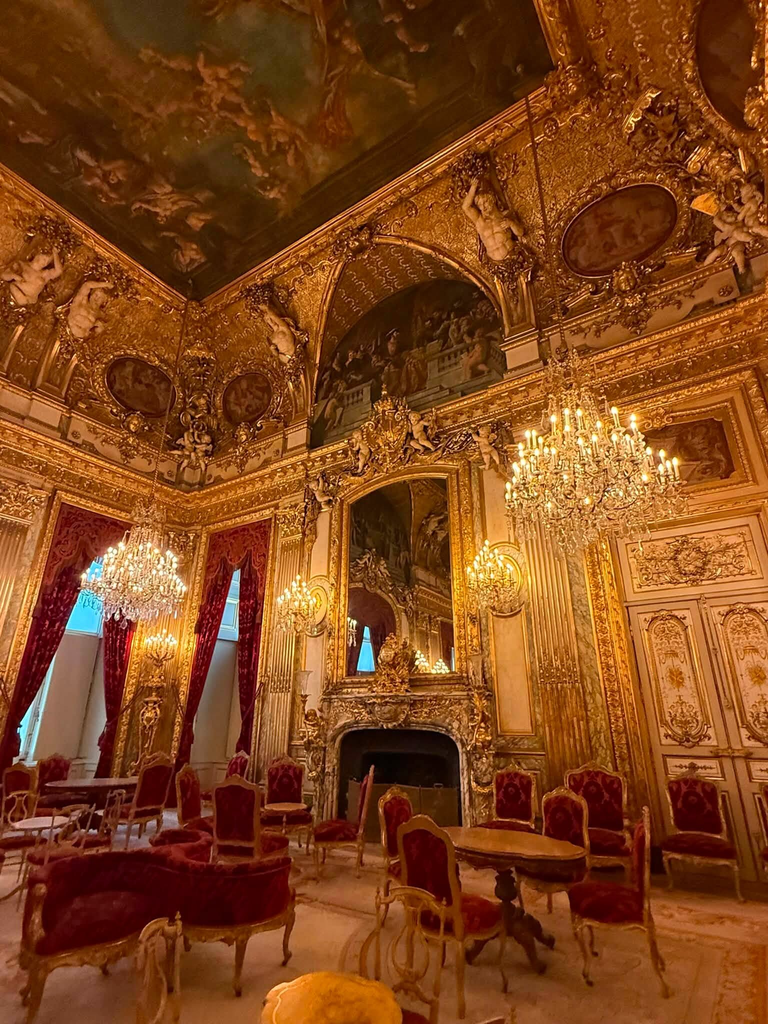
The Grand Salon. My camera didn’t do it justice.
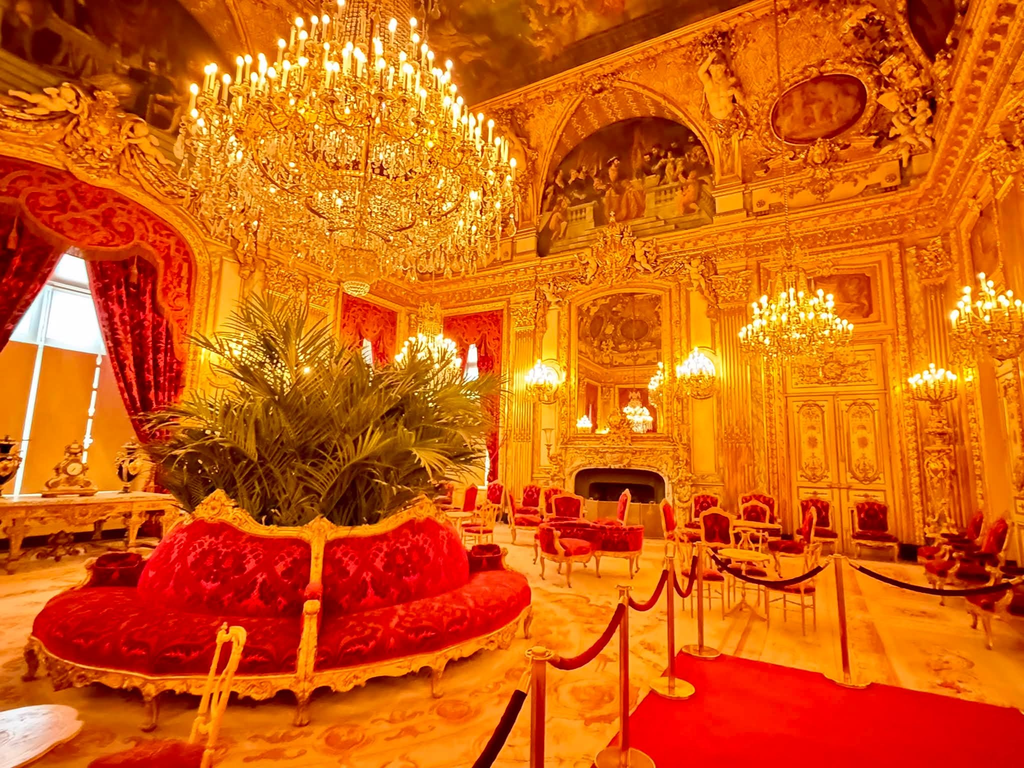
A better view of the Grand Salon, with its circular bench around the ferns.
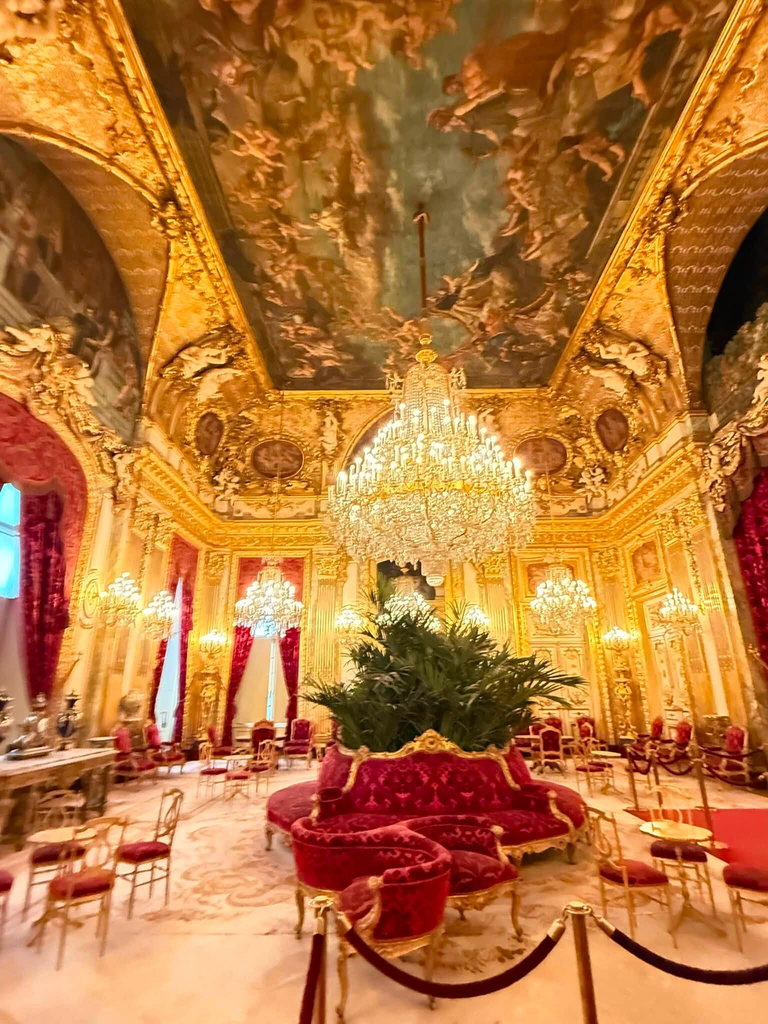
In this view of the Grand Salon, you can see the elaborate ceiling paintings. The three-sided conversation grouping was called “indiscret” — presumably, a good spot to exchange gossip.
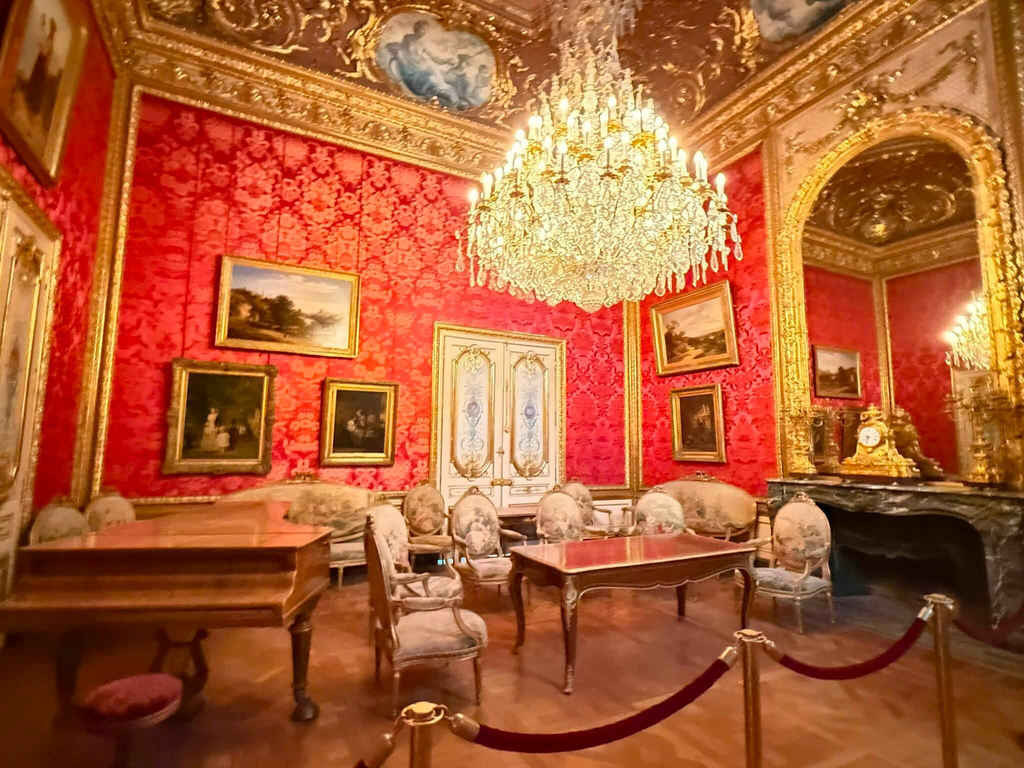
This was the family drawing room of the Minister of State. Note that it is almost as luxurious as the public rooms.
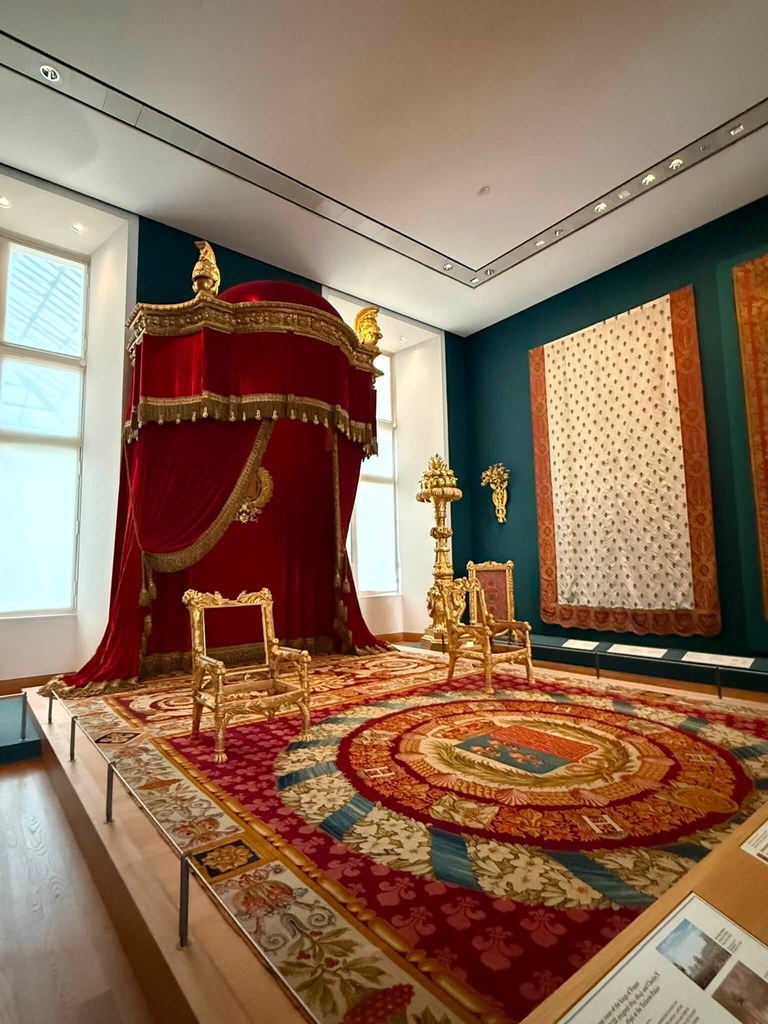
This was the throne room for two kings of France: Louis XVIII (who reigned from 1814-1824) and Charles X (1824-1830).
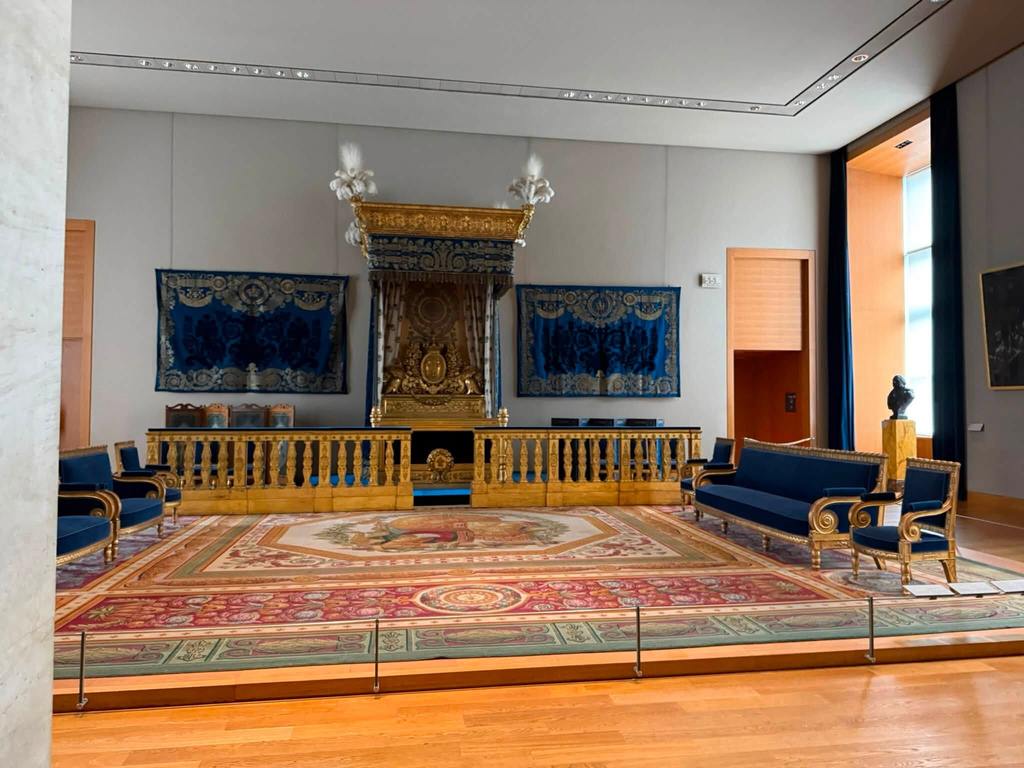
This was the bedroom used by Kings Louis XVIII and Charles X.
Of course, there’s much more to see at the Louvre than Napoleon’s apartments. This was just my first destination in that enormous museum. The Louvre is located at 93 Rue de Rivoli in Paris. Admission is 32 euros for non-EU citizens and 22 euros for citizens of the European Economic Area. Both because the museum gets crowded once the tour groups come in and because it is so huge, I recommend getting reserving a ticket for 9:00am as soon as they open. Operating hours are from 9:00am to 6:00pm Saturday through Monday plus Thursday and from 9:00am to 9:00pm on Wednesdays and Fridays.