

Shelly and I took a three-day trip to Frederick, Maryland. Frederick was the backdrop for many notable Civil War events (more on that later). One of our most unique stops was the National Museum of Civil War Medicine. The Museum focuses on the medical, surgical, and nursing practices of the American Civil War period, and highlights innovations in military medical care that still influence medicine today.
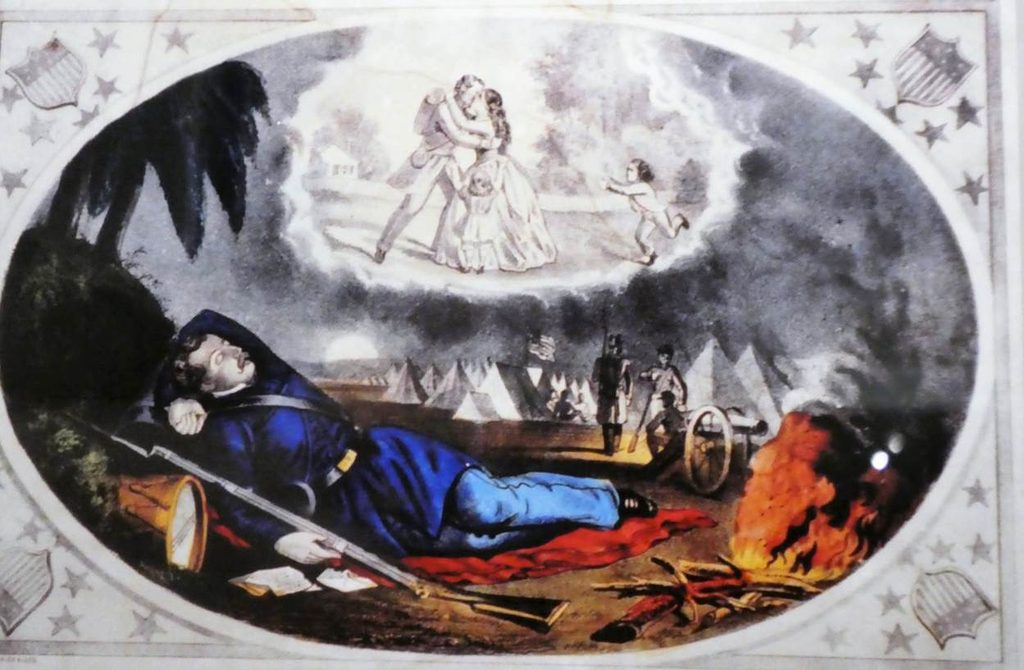
Painting by Currier & Ives: “A Soldier’s Dream of Home”
There was a significant mental health aspect to serving in the Civil War. Very few of the soldiers, especially the youngest ones, were fully prepared for the realities of military life. Inadequate food, unsanitary conditions, long marches, and being away from loved ones all took their toll and contributed to homesickness and failing health. The horrors of the battlefield only compounded the problem. At times, homesickness progressed to a more dangerous condition then called nostalgia, which was characterized by an intense longing for home and a steady progression to debility and sometimes death. Other responses to homesickness and melancholy expressed themselves in excessive alcohol consumption.
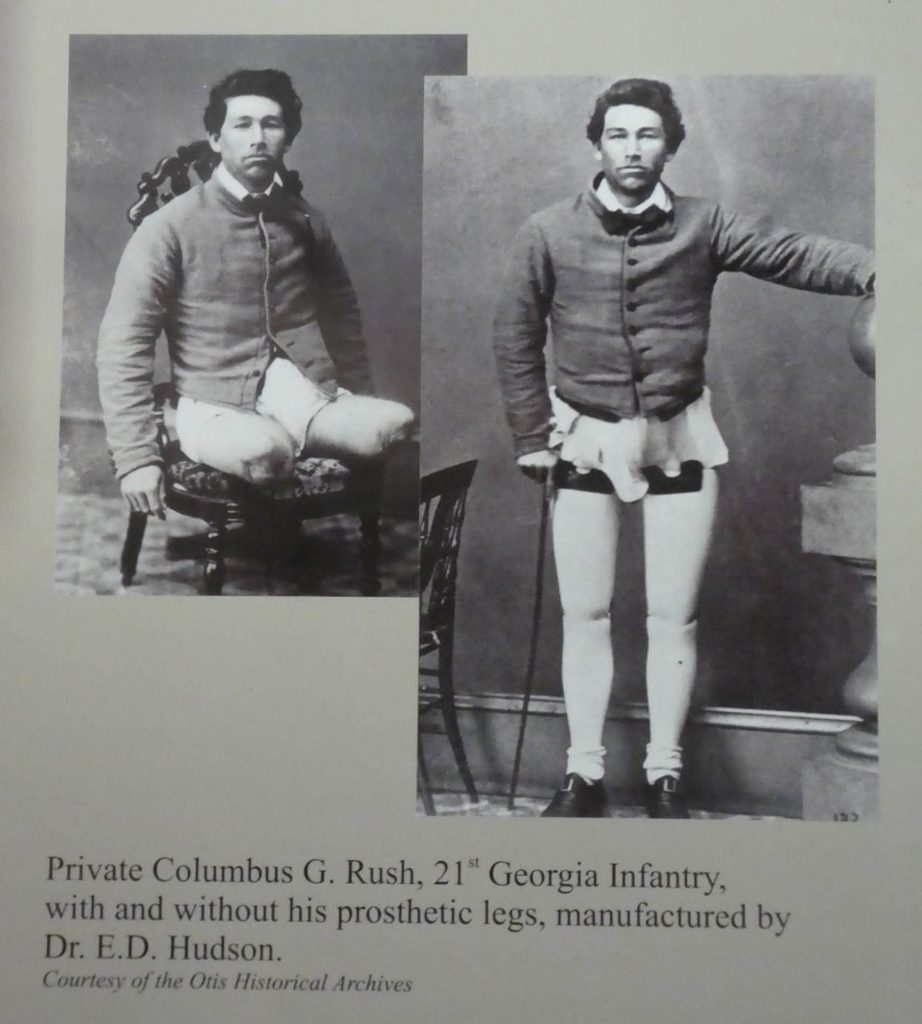
Prosthetic legs were considerably improved during the Civil War compared to earlier counterparts. Still, many wounded soldiers hid from the surgeons, not willing to undergo amputations.
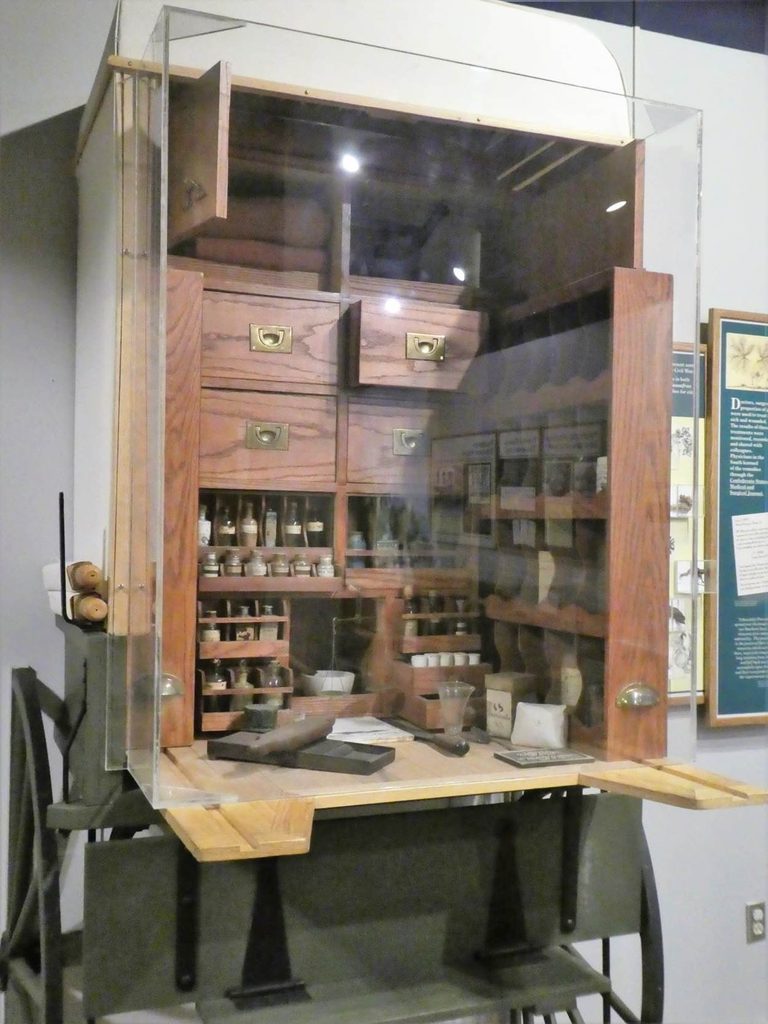
In the early days of the civil war, medical supplies were packed into large chests and were transported in with regular supply wagons, often making medical supplies inaccessible when they were needed most. This practice also proved wasteful because many of the bottles containing medicines were broken or damaged in the heavy army wagons.
The first dedicated medicine wagon was constructed in 1862 according to the plans and instructions of Union Medical Director Jonatha Letterman. A three months’ regimental supply could be carried in a single dispensary wagon. The Autenrieth wagon (shown above) contained sliding shelves and drawers to hold medicines and supplies as well as a sliding flat work surface that could be pulled out when the back of the wagon was opened.
When the Civil War ended, the Union Medical Department considered the improved medical wagon to be one of its greatest accomplishments.
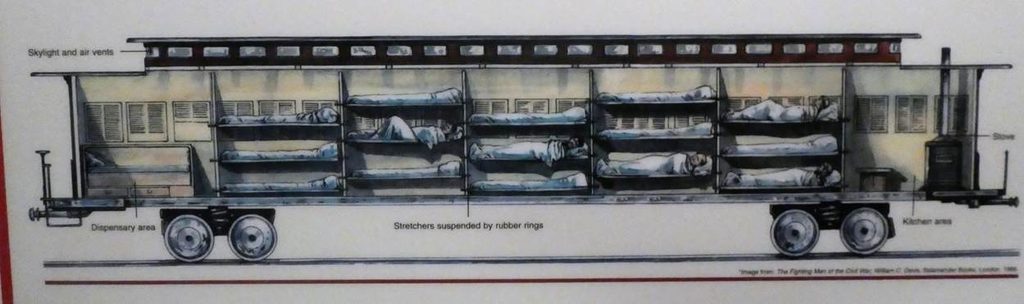
As early as August 1861, railroad cars were being modified to transport wounded soldiers from the front lines to hospital centers. The design shown here was developed in December 1862 by Dr. Elisha Harris. Patient stretchers were suspended by vulcanized rubber rings which provided comfort for the patients by absorbing shock and creating a smoother ride.
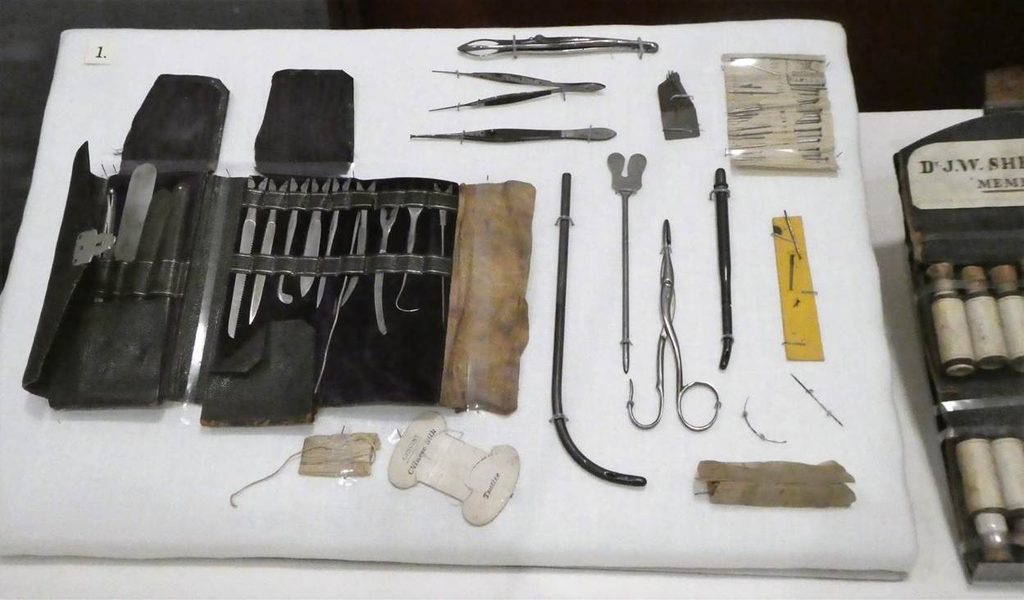
A surgeon’s instrument kit.
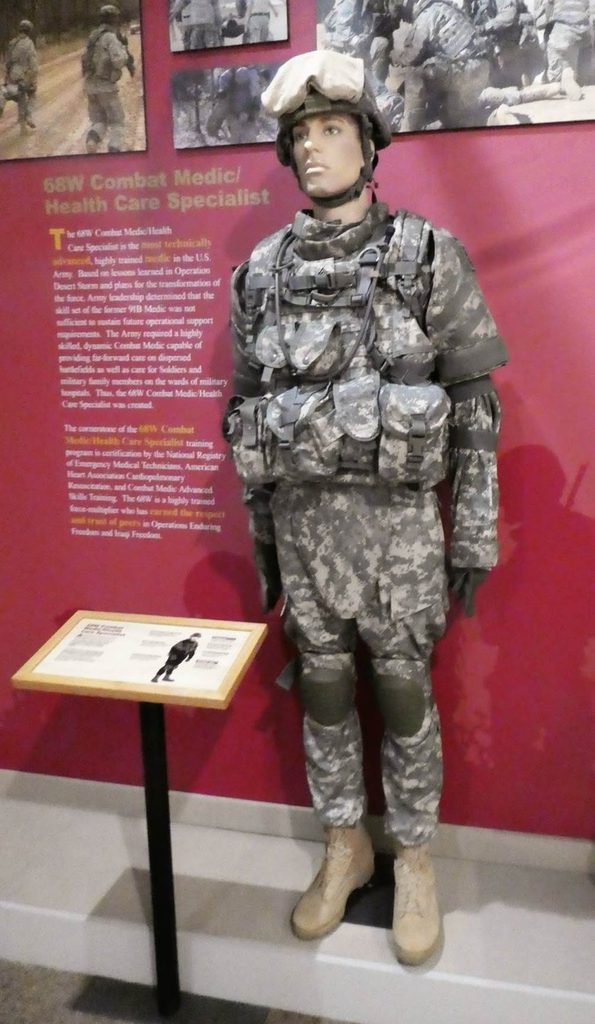
The Army Today: Field medics have continued to evolve to meet the needs of the modern Army. Based on lessons learned during Operation Desert Storm, Army leadership determined that the skill set of the longstanding 91B Army Medic job classification no longer met the needs of operational support requirements. They created the 68W Combat Medic capable of providing far-forward care on battlefields as well as care for soldiers and military family members on the wards of military hospitals. The Combat Medic’s training program is certified by the National Registry of Emergency Medical Technicians, the American Heart Association Cardiopulmonary Resuscitation, and Combat Medic Advanced Skills Training. The Combat Medic earned respect during Operations Enduring Freedom and Iraqi Freedom.
The National Museum of Civil War Medicine is located at 48 E. Patrick Street in Frederick. It is open Monday through Saturday from 10:00am to 5:00pm and on Sunday from 11:00am to 5:00pm. Guided tours are available Monday through Friday. Regular adult admission is $9.50, or $8.50 for seniors and