

Newgrange is a Neolithic (New Stone Age) structure built approximately 5,000 years ago. It is estimated to be approximately 500 years older than Stonehenge or the Great Pyramid of Giza. Although it’s called a “passage tomb”, and a few human remains were found there when it was rediscovered in 1699, historians are not really sure what its original purpose was. It’s circular in shape, with a passage leading from the southeast side to a central chamber. During the morning of the Winter Solstice (and the two days before and after), the rising sun comes in through a roofbox (an opening just above the entrance) and floods the inner chamber with light. There are a number of speculations about its purpose, but the one I like best says that it was a ritualistic way of “capturing” the sunlight on the shortest day of the year to ensure the return of the longer days of spring and summer.
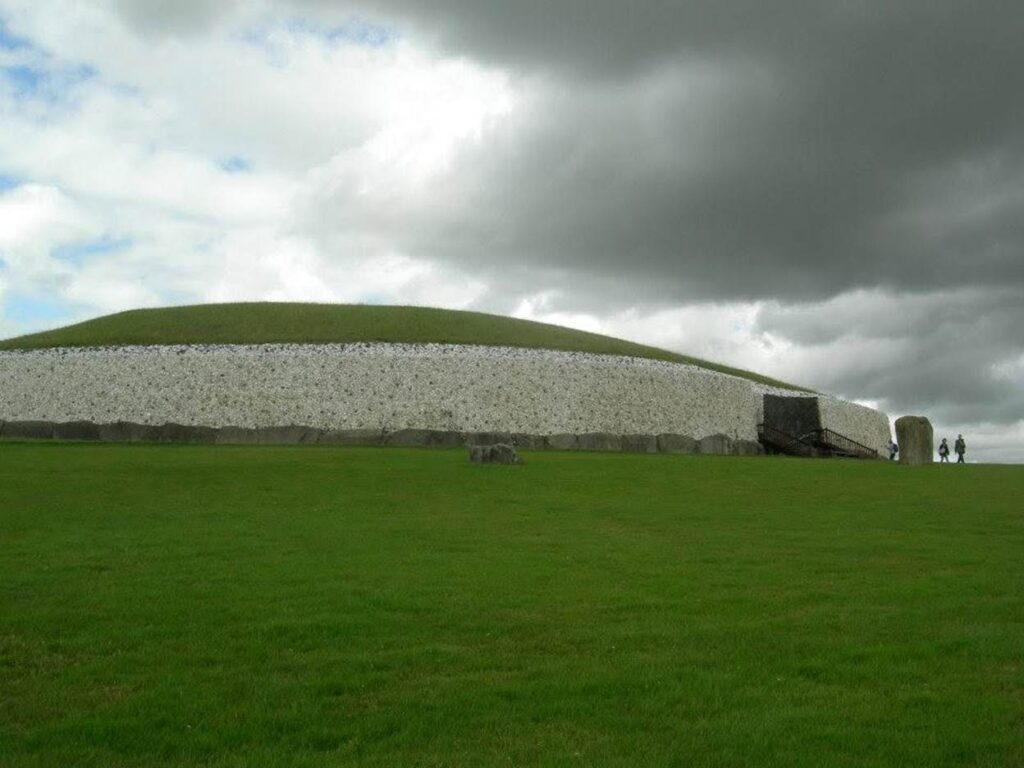
Overall view of the tomb, with the entrance on the right.
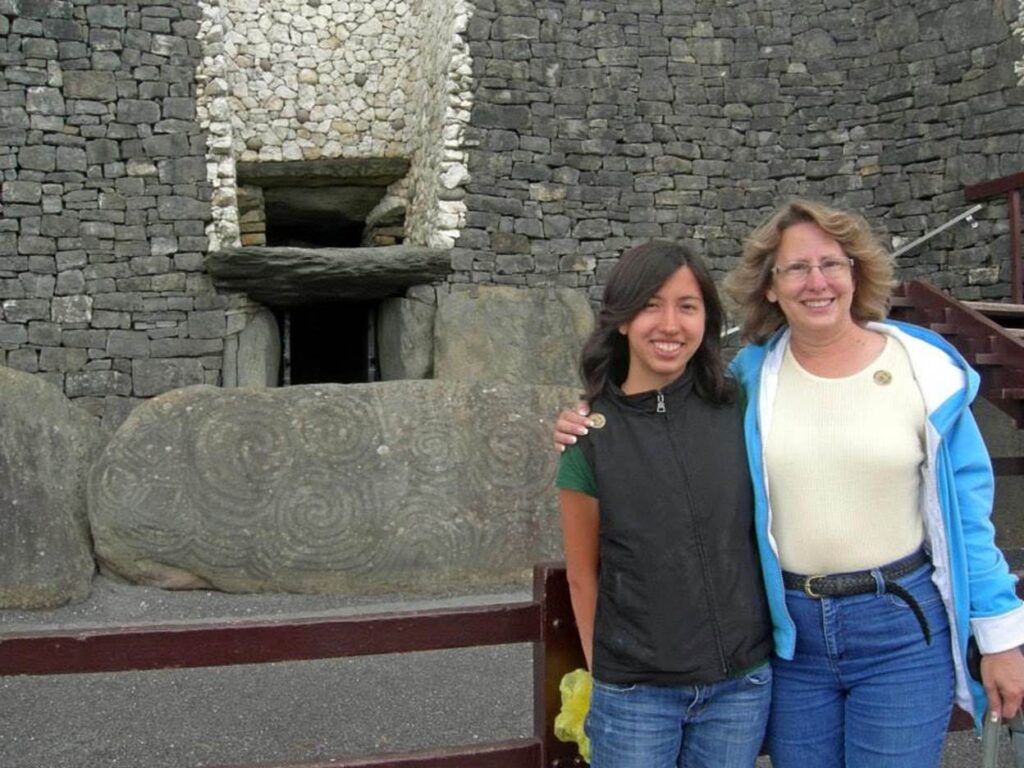
Me and Rachelle at the entrance to the tomb. You can clearly see the “roofbox” opening just above the entrance, which allows the sunlight to hit the inner chamber on the mornings surrounding the Winter Solstice.
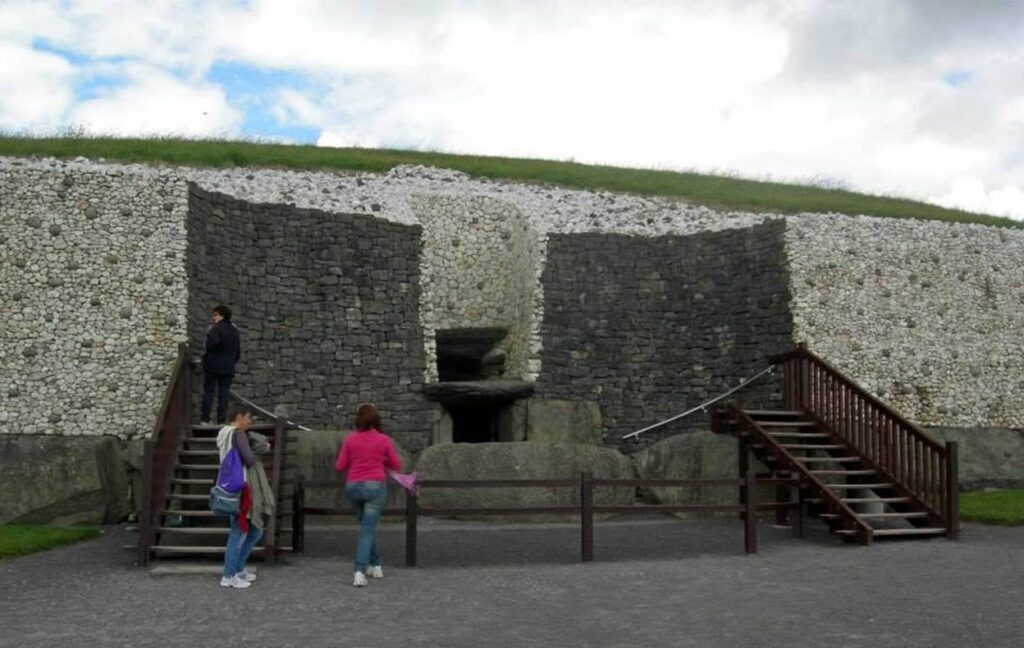
A wider view of the entryway area.
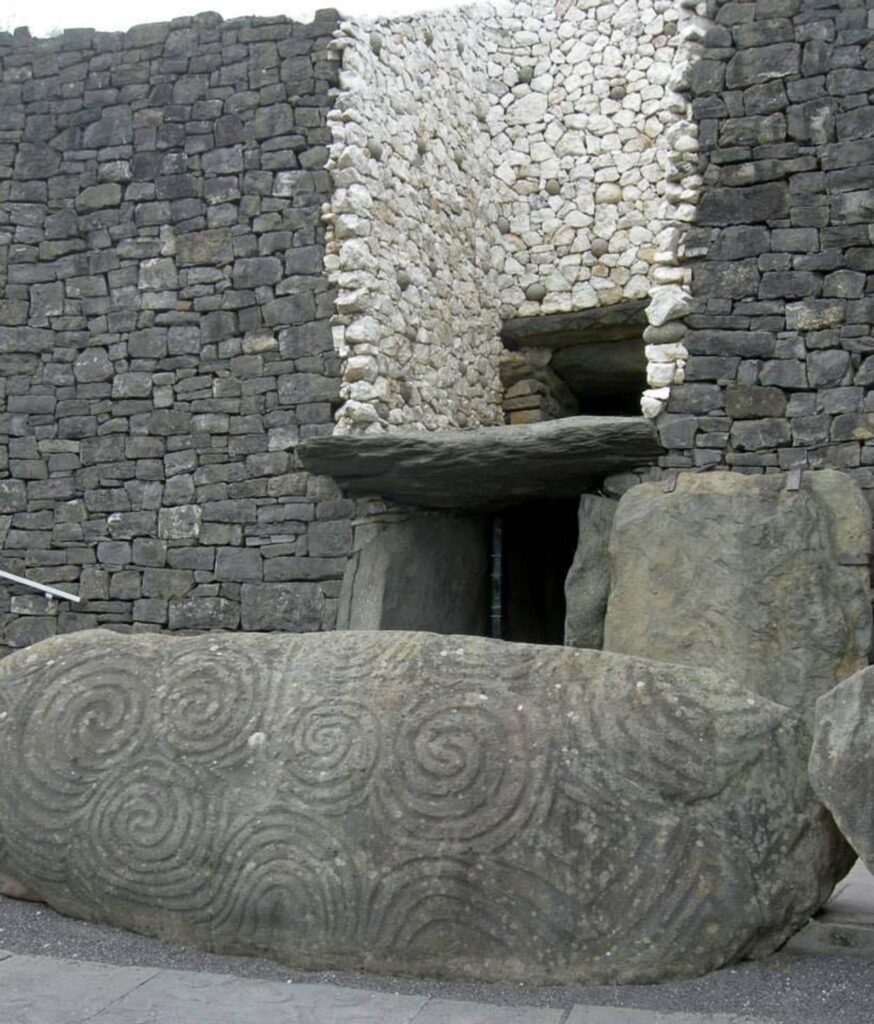
This entry stone is an important piece of megalithic art. It’s approximately four feet high and ten feet wide. Historians believe it was carved after being put into place at the entrance. The petroglyphs seem reminiscent of spirals of water, but no one knows for sure.
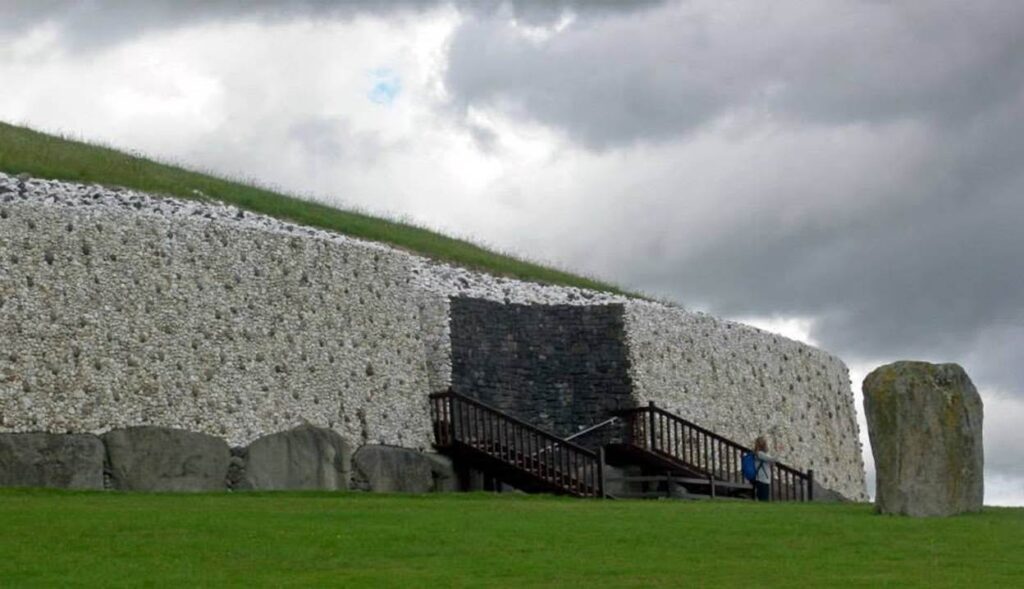
Another view of the entrance, with a standing stone to the right. There was a ring of stones around the tomb, some of which still remain. Historians believe the standing stones were added approximately 1,000 years after the tomb was built.
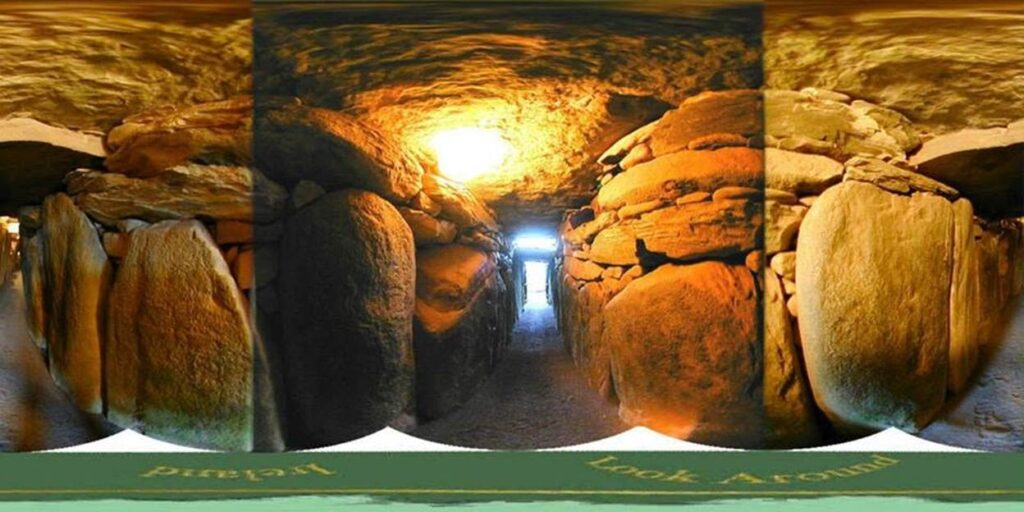
I couldn’t take photos of the interior of the chamber because it was too dark (I didn’t have a good camera at the time of this visit). There is a central inner chamber with three smaller chambers ringing it. The smaller chambers have what look like altar stones at their centers. The highlight of any tour is when the guide shuts off all the lights, then slowly adds light from the entryway area to create a simulated sunrise. The inner chamber is of limited size. Ireland holds a lottery each year, so that approximately 100 people can see the Winter Solstice sunrise
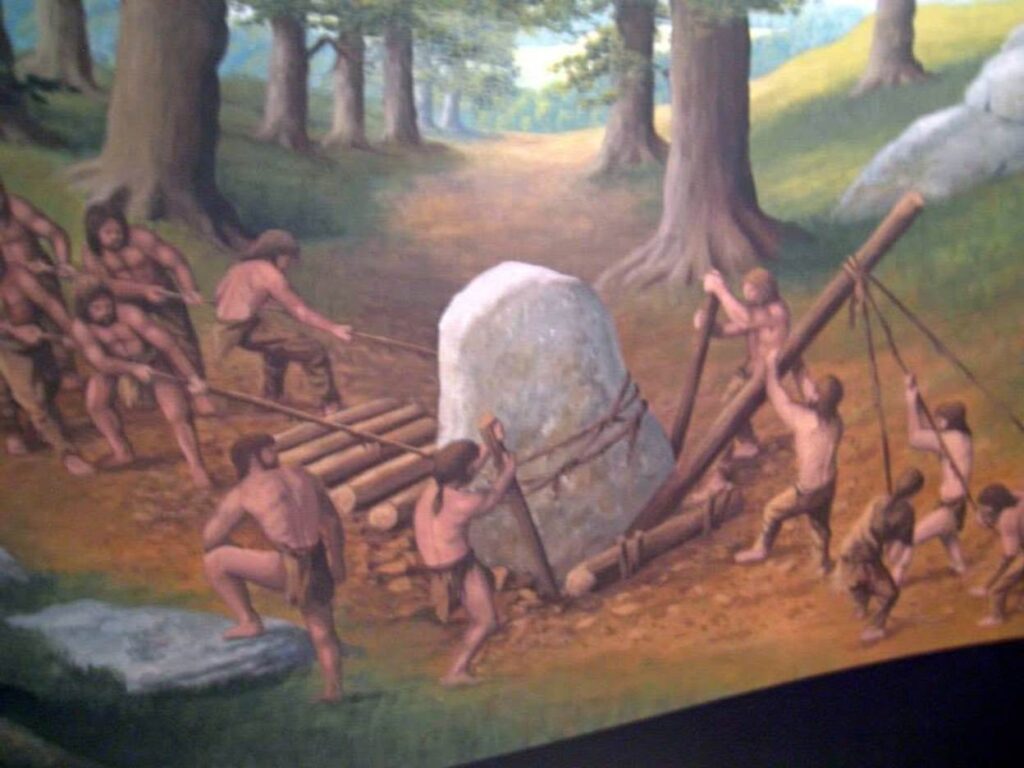
At the Visitors’ Center, an artist’s rendition of how the builders brought stones to the site.
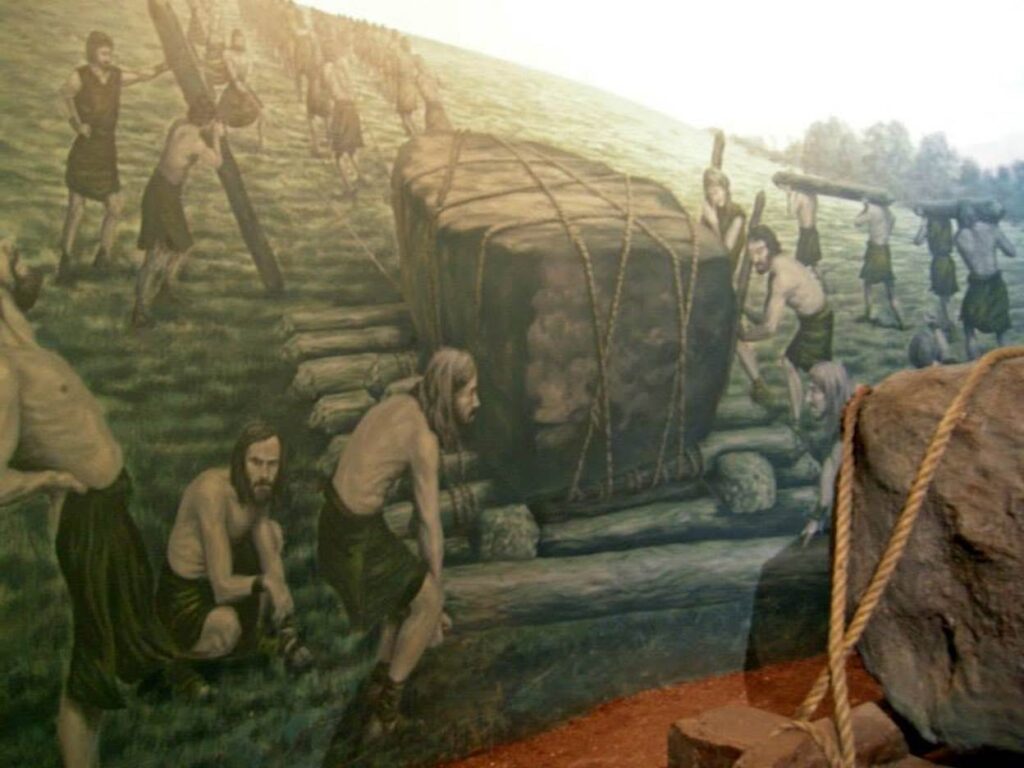
More rock-moving.
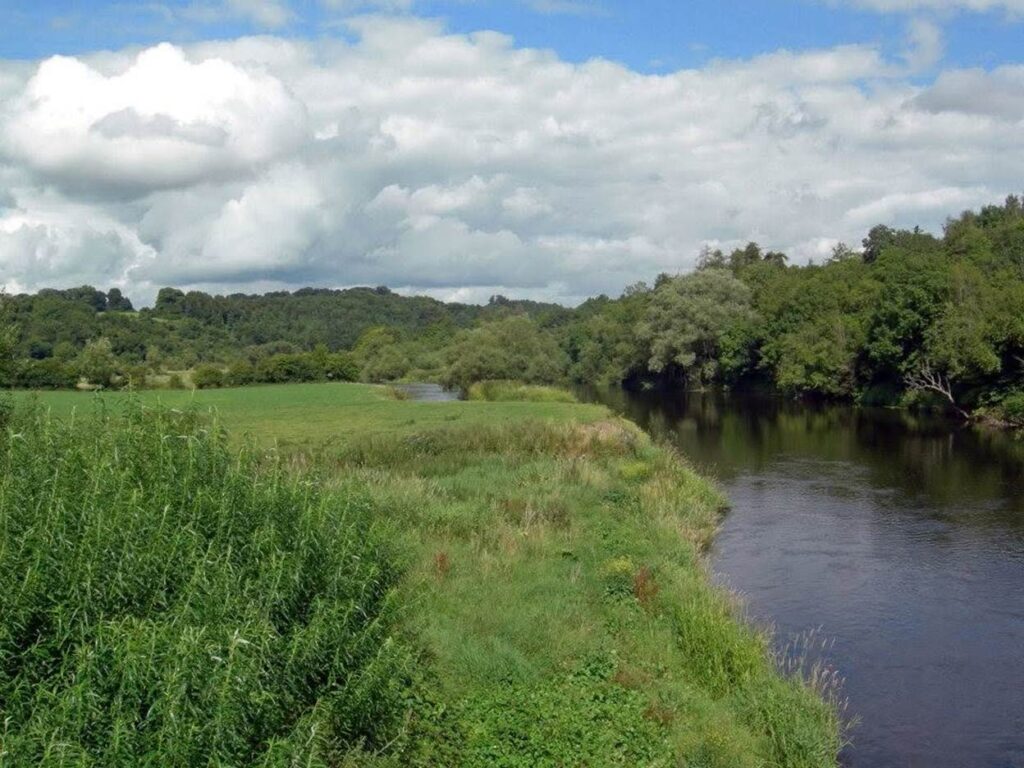
The River Boyne. Historians believe that most of the stones, which show signs of natural weathering rather than quarry marks, were transported via ship to the construction site.
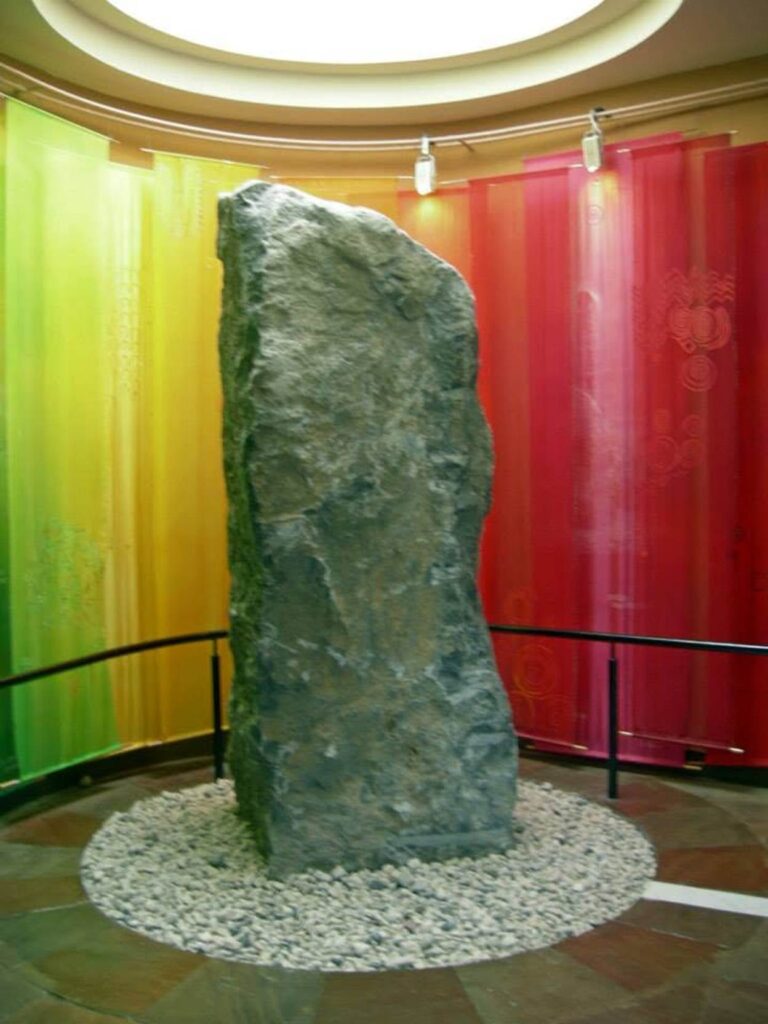
An example of one of the standing stones at the Visitors Center. It didn’t occur to me to see if it could transport me to the 18th century! Maybe there was an Irish equivalent to Jamie Fraser, lol.
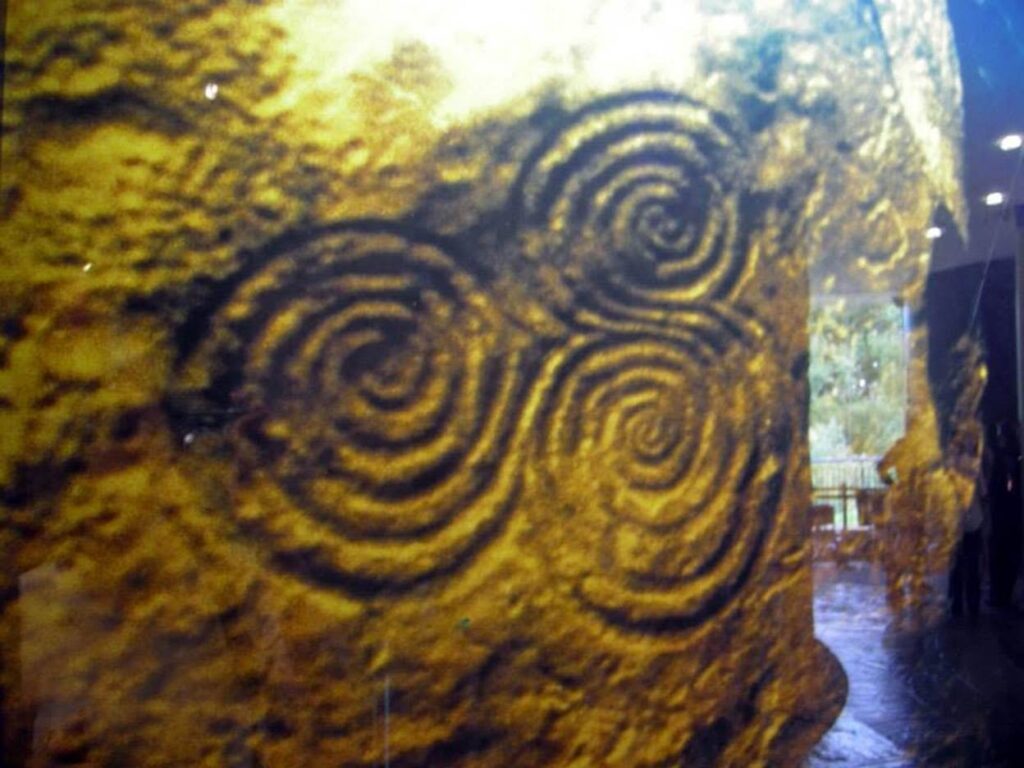
A close-up of the petroglyphs
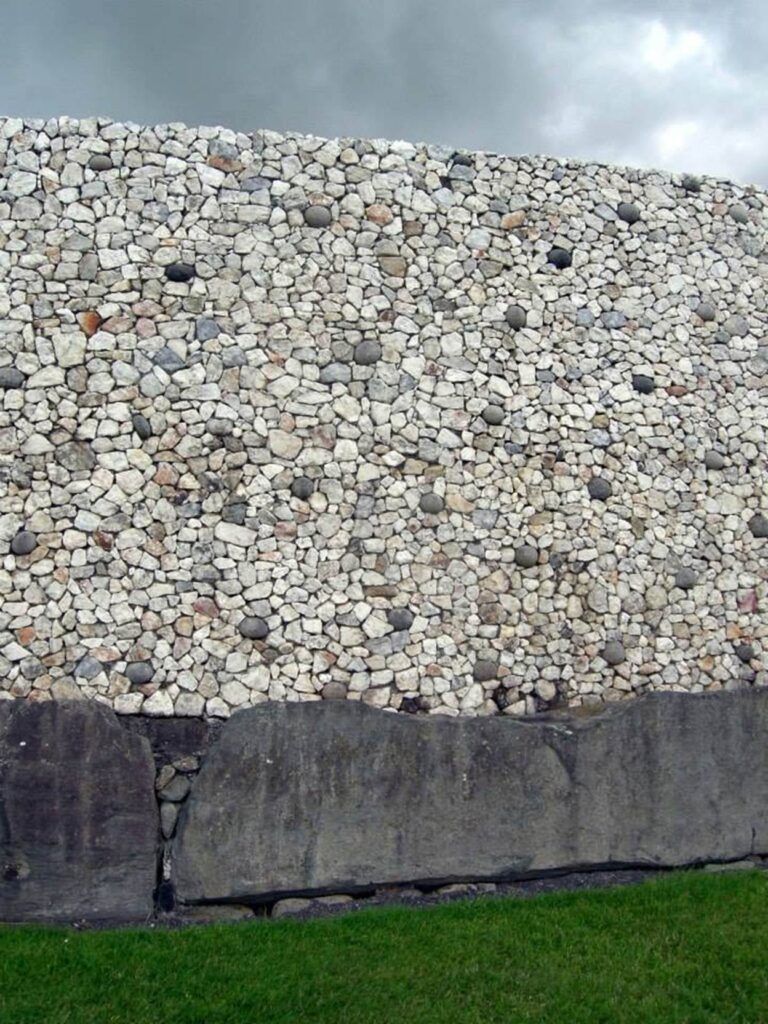
And a close-up of the exterior of the tomb. The white stone contrasts nicely with the dark foundation stones.
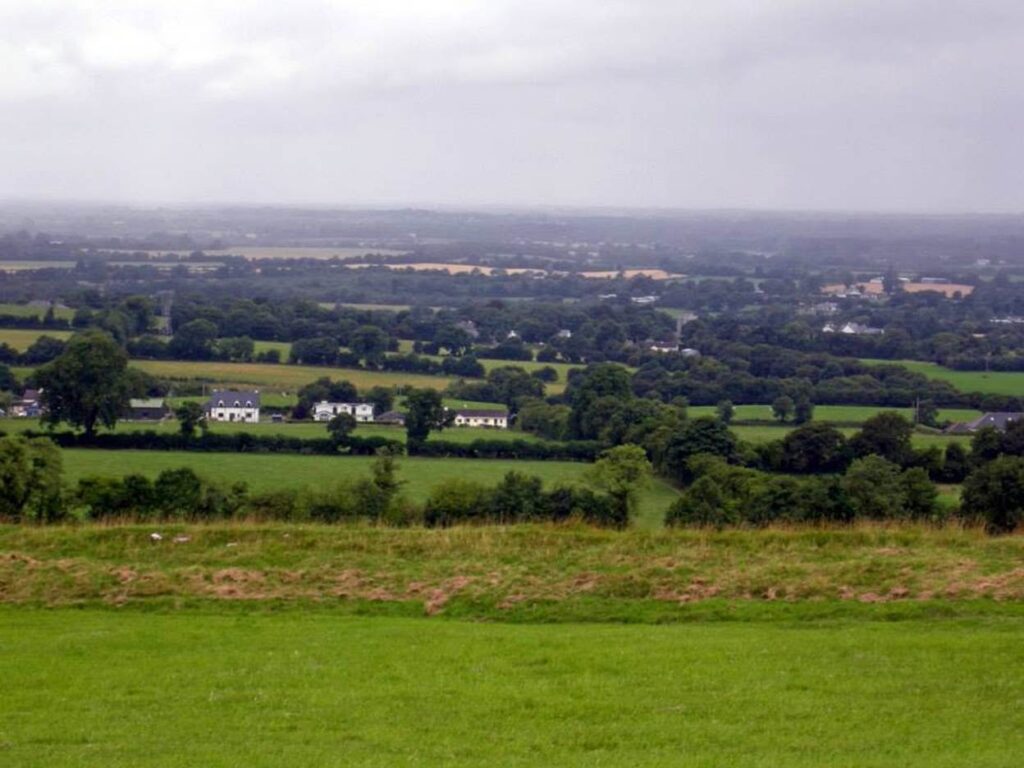
Surrounding countryside. Newgrange is at the top of a hill with a gorgeous view of the land for miles around.
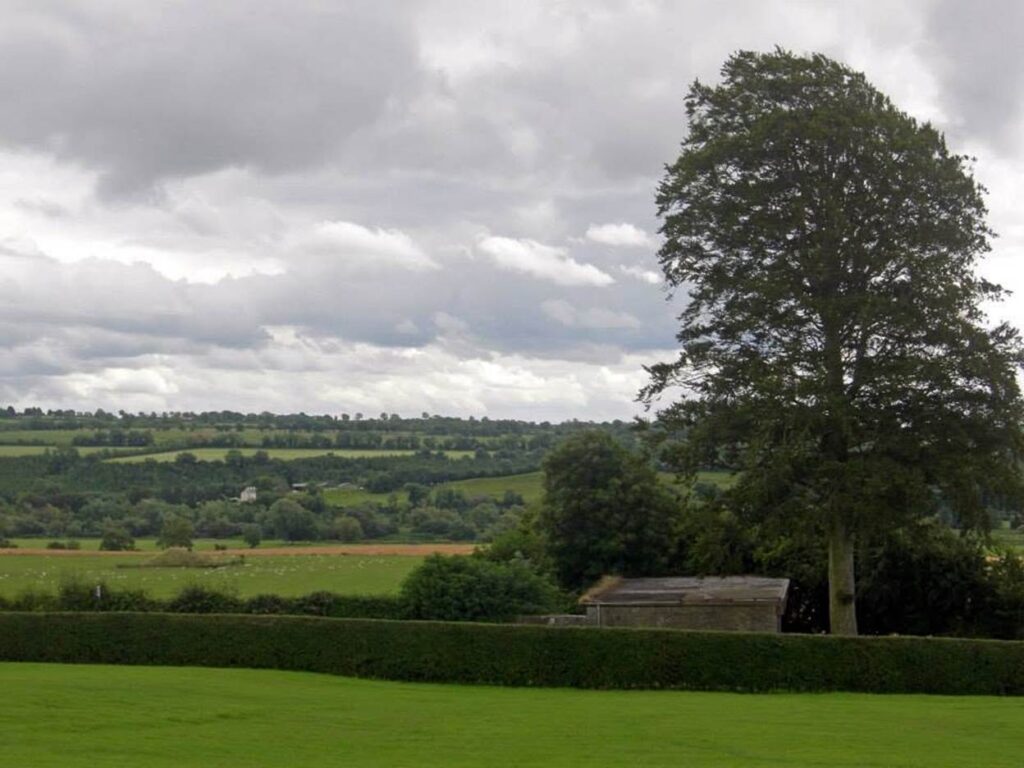
More of the local countryside.
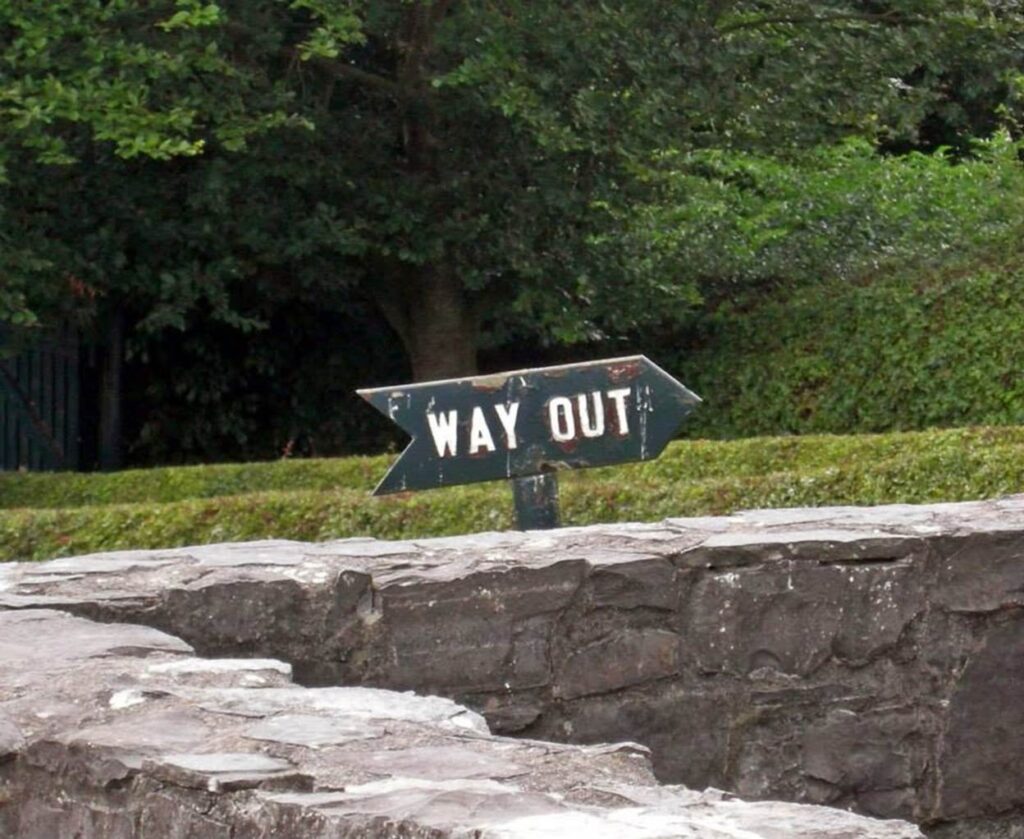
In Ireland, they don’t point you to the exit, they show you the way out. I can’t help thinking of the 1960s hippie phrase: “far out, man.”
Newgrange is located in County Meath, Ireland, approximately 54km north of Dublin. You can’t just visit the monument by yourself, you must access it via a guided tour through the Bru na Boinne Visitor Centre. The main tour option takes three hours and is available via timed tickets. You self-guide through the Visitor Centre, then take a shuttle bus to the passage tomb itself. Adult admission is 18 euros, or 16 euros for seniors.