

The day started auspiciously with a call shortly after midnight that there were strong Northern Lights over the bow.
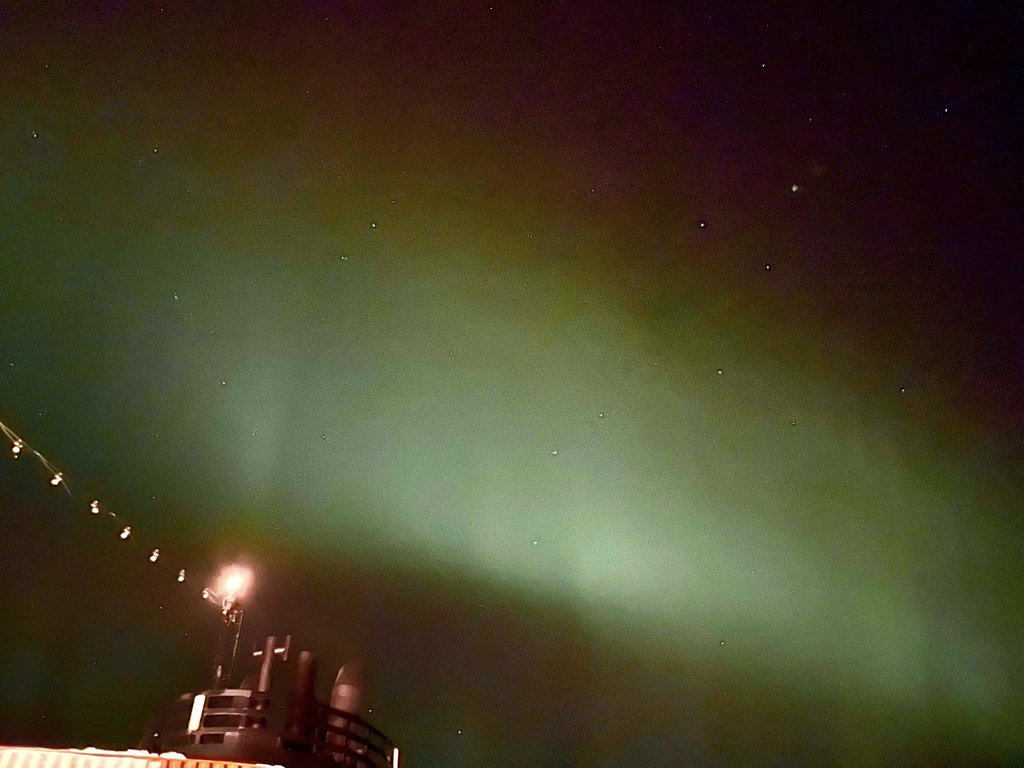
That was a good omen because this was the day that I had been mildly dreading: tendering ashore via Zodiacs. Yeah, call me a scaredy-cat, but everybody’s sitting on the sides with no visible means of holding on to anything.
Our destination for the day was the island of Rødøya. It’s basically a red rock with a little bit of plant life sticking up out of the Norwegian coastal waters.
So, I grab my red expedition jacket and my life vest (both of which I’ve never used before) and head down to the bowels of MS Maud to the tender pit where Zodiacs take off. The Hurtigruten crew is very helpful in making sure you get onto the Zodiac safely (I knew this in my head, but was apprehensive beforehand). There’a a rope running around the edge of the Zodiac that you can grab onto. The Zodiac takes the scenic route to the beach landing site. Several of my fellow passengers are taking pictures along the way, but without a lanyard to hold my phone, I don’t want to risk dropping it into the water. Besides, I’m on the side of the Zodiac facing away from the island, so I don’t have much to photograph, anyway.
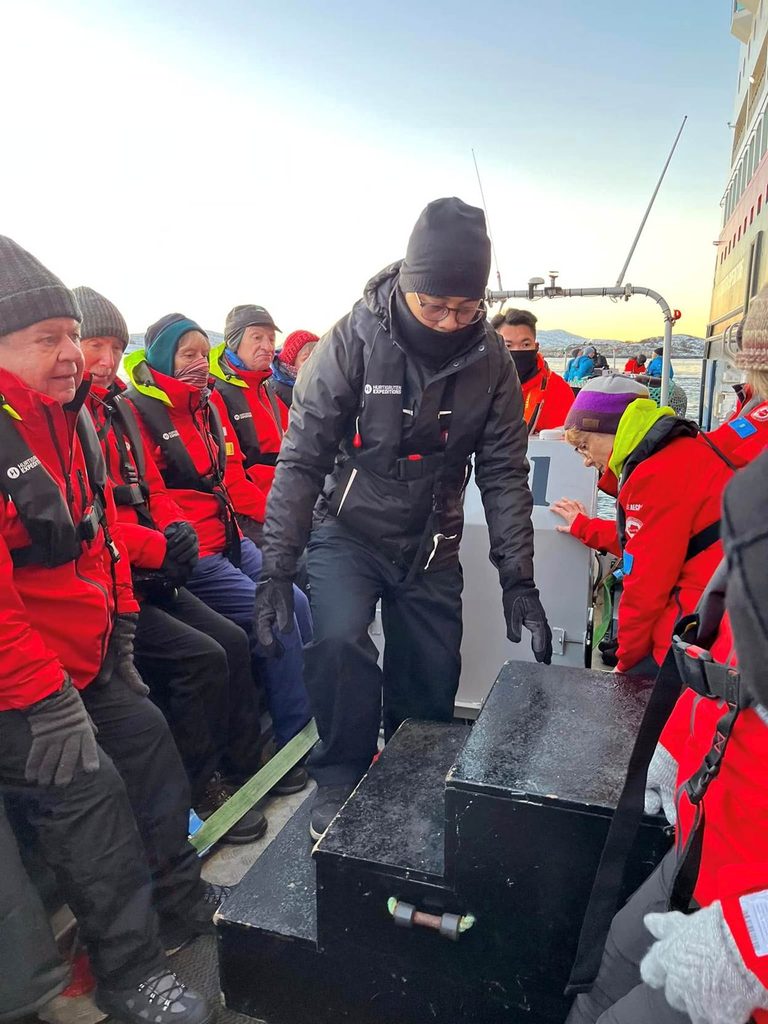
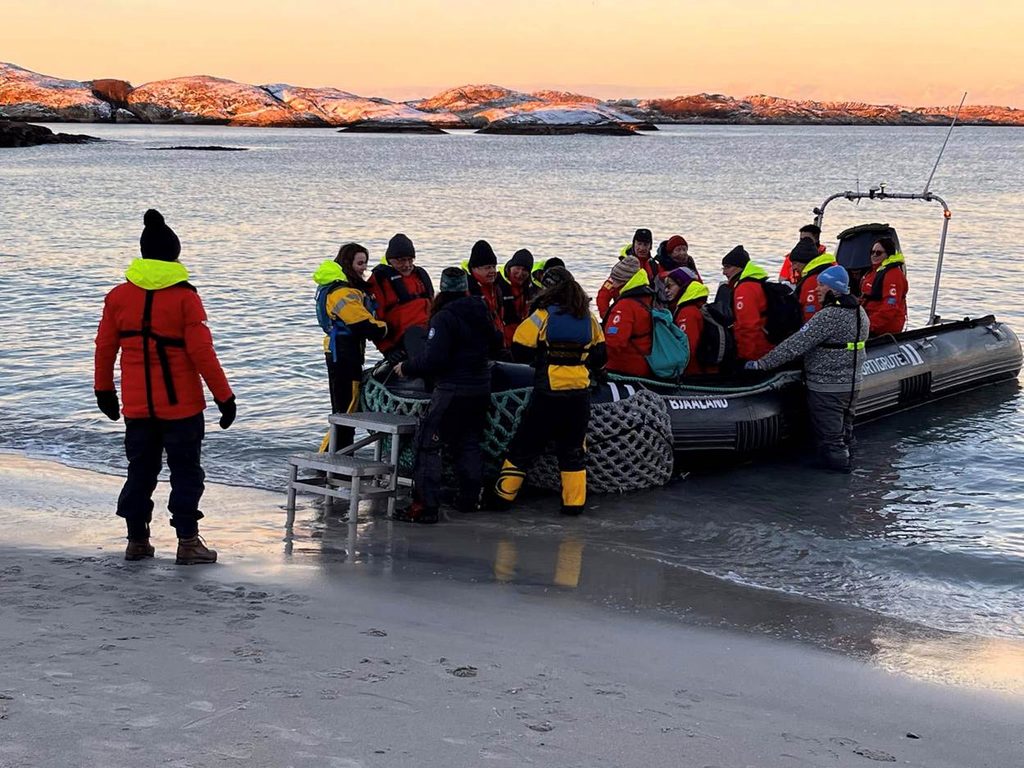
We landed at Rødøya and I had a minor challenge getting off the Zodiac. Our instructions were to scoot our bums down towards the bow of the boat, spin so both feet are facing out of the Zodiac, and then disembark. They had a little metal stepstool on the beach to make it all easier, with staff holding the Zodiac in place and helping people get off. I think I’m pretty agile but the wide gunnels of the Zodiac made that “spin” maneuver a bit difficult for me to get both legs over. Nevertheless, I made it and felt that the day was a success simply because I had conquered my fear of traveling via Zodiacs!
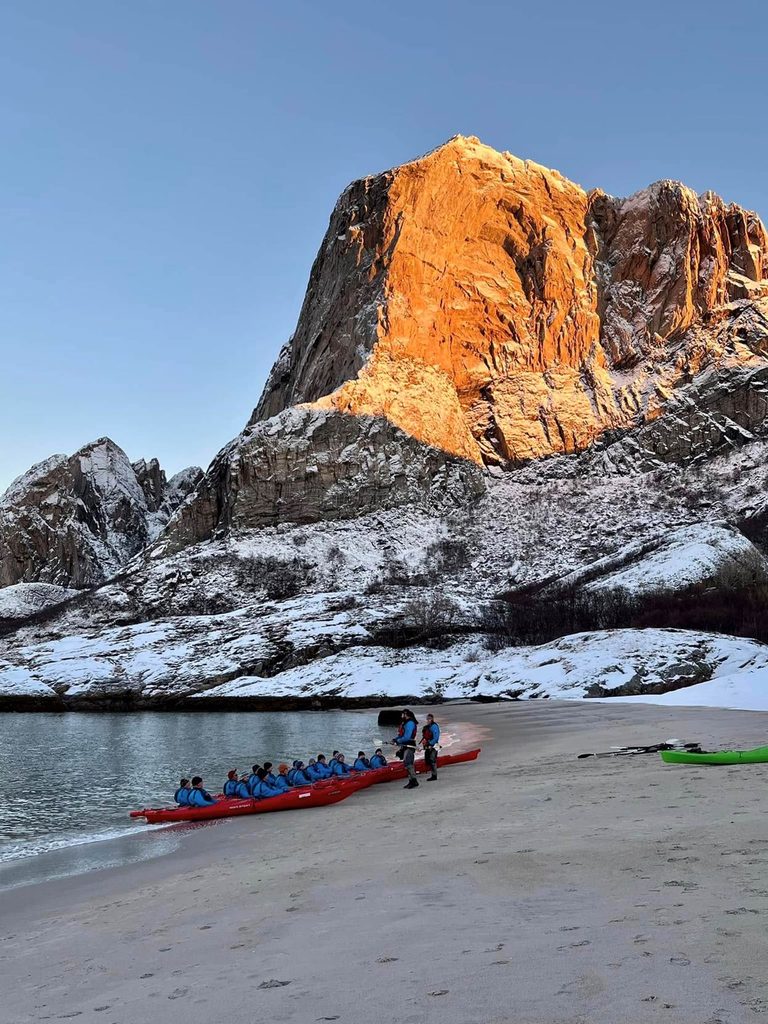
Rødøya doesn’t have a lot to offer. As I said, it’s basically a rock with a little vegetation. One group went kayaking and another went hiking up to the top of the highest peak.
For those of us doing neither kayaking nor hiking, we had Magnus in a Stone Age hut giving us a short talk about construction of Norwegian Stone Age houses and how they lived, and Peter off in a different direction teaching us about gold panning. (Apparently, there was a gold rush in Lykling in 1885).
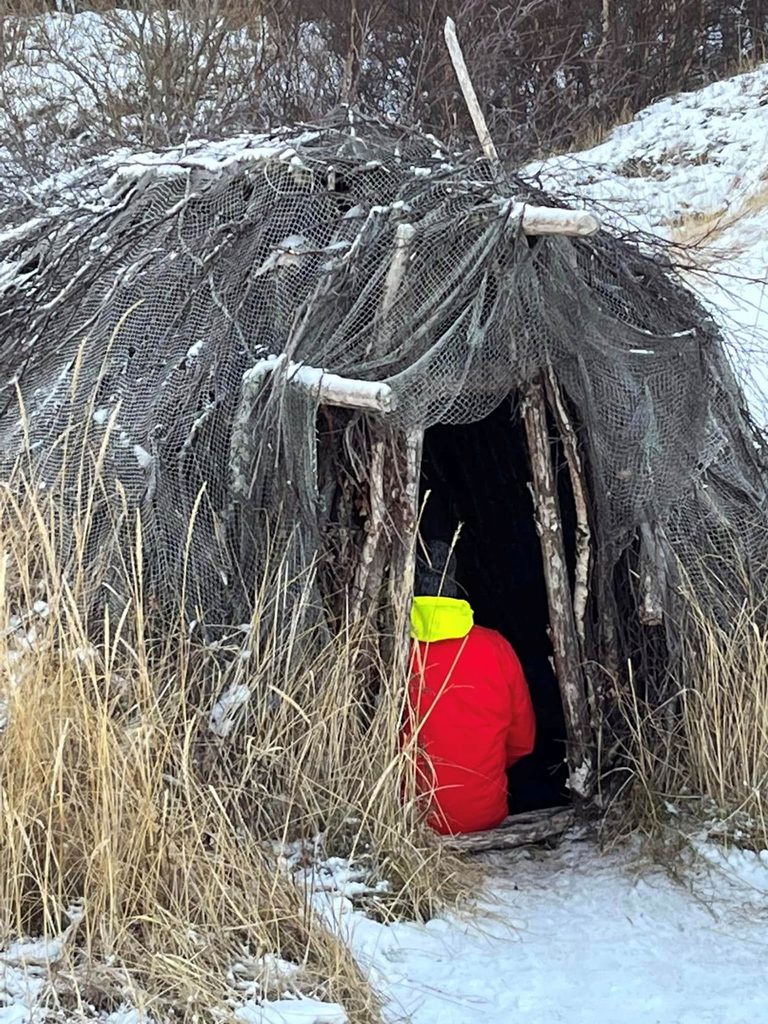
A replica of a Stone Age hut, composed mostly of birch trees and netting.
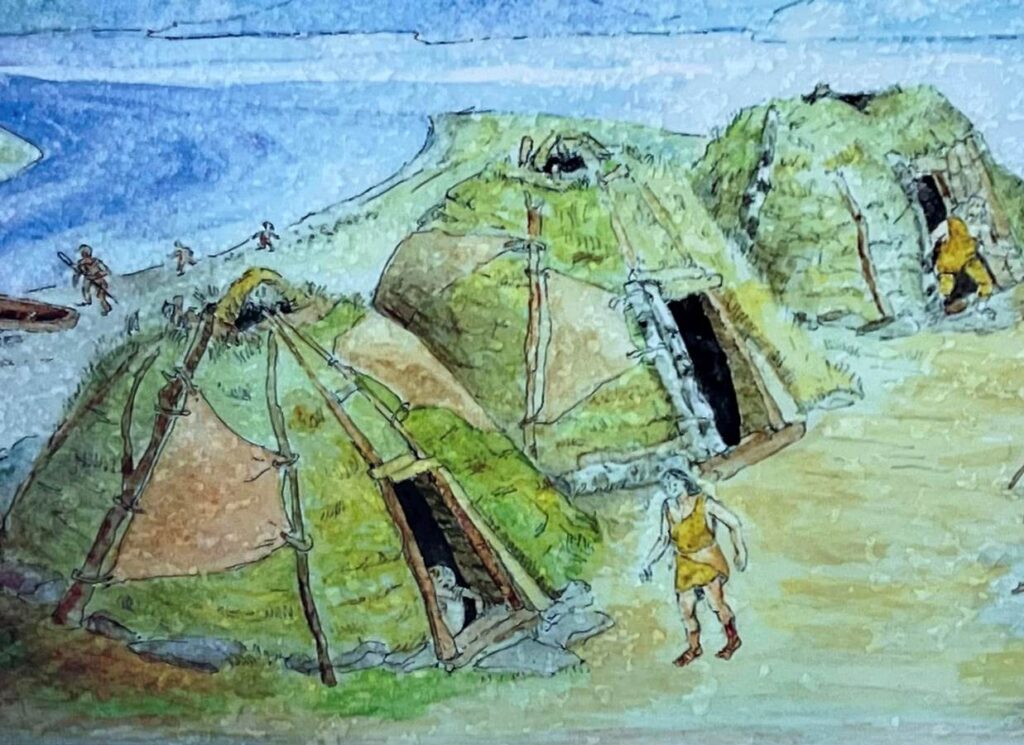
Artist’s conception of a Stone Age community. Artwork by Kari Storen Binns.
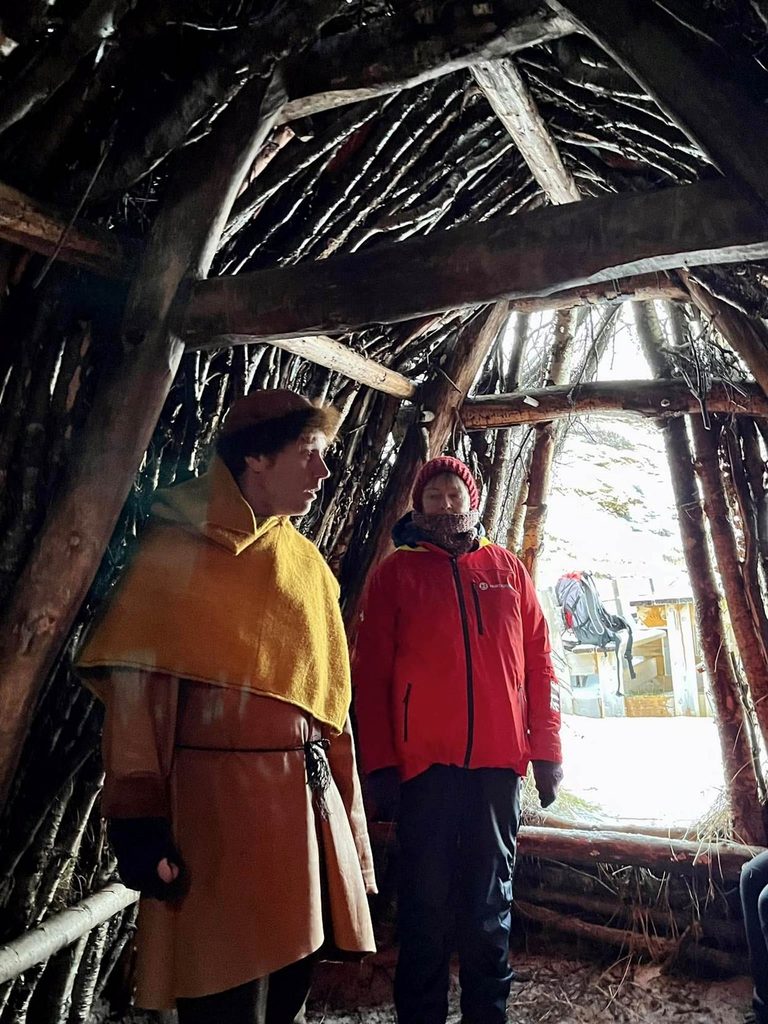
Inside the Stone Age hut, with Magnus wearing period-appropriate clothing. Each hut had six birch pillars. The floor is about a foot below ground level, which kept it a bit warmer and more protected from the elements. This replica doesn’t have a smoke hole in the roof, but a proper Stone Age person would definitely have had one.
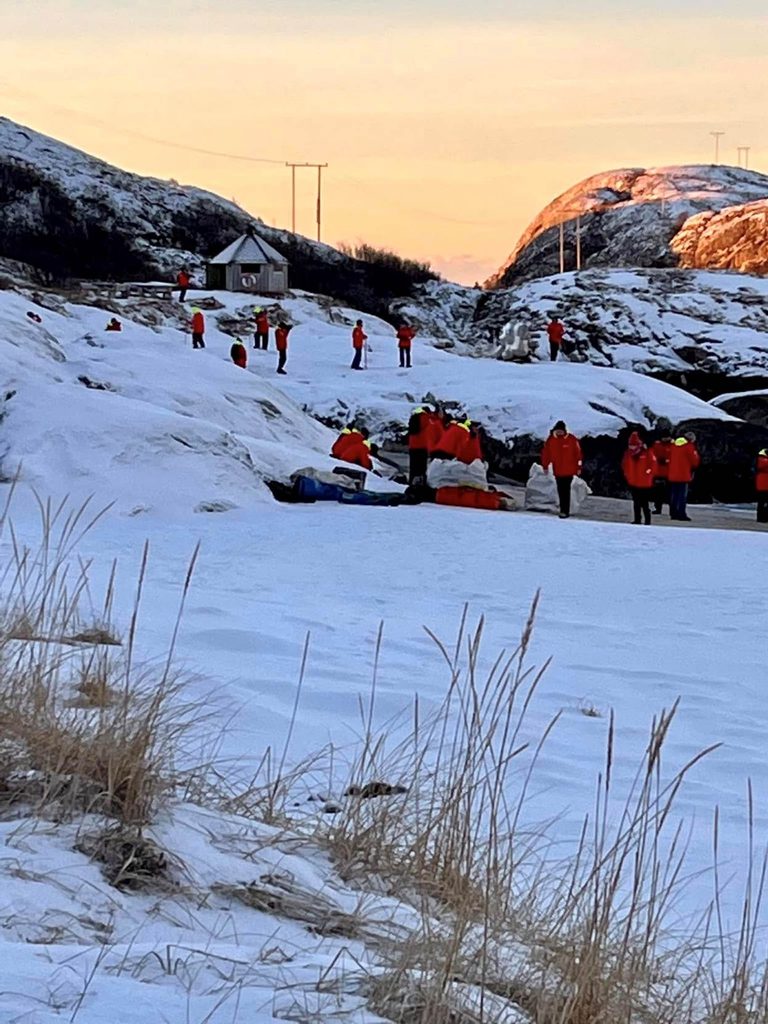
This group is walking towards Peter’s demonstration about gold panning.
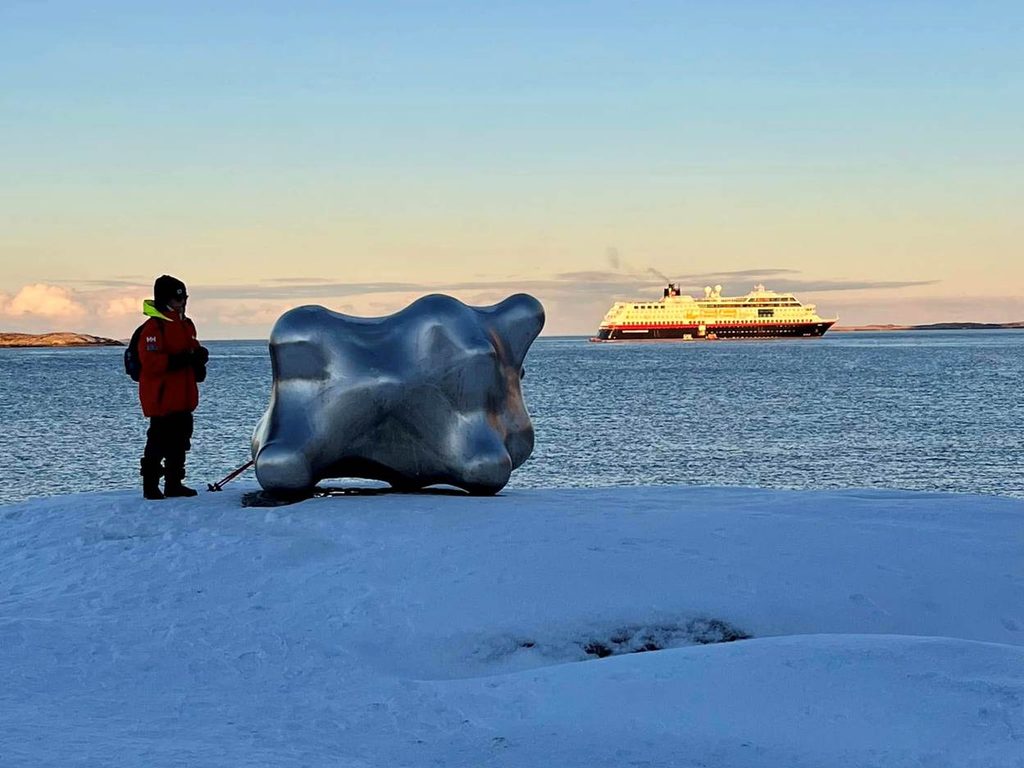
An odd-looking abstract sculpture plunked on this mostly-unoccupied island, with MS Maud in the background. I later discovered that it’s called “The Inner Follows the Outer” by Norwegian artist Per Inge Bjorlo. It’s part of a program called Artscape Nordland, which placed 36 artworks across northern Norway. Bjorlo likes to explore our “inner” or mental spaces, so the sculpture is intended to reflect the surrounding sea and invite visitors to reflect on “the connection between internal feelings and the stark coastal landscape.”
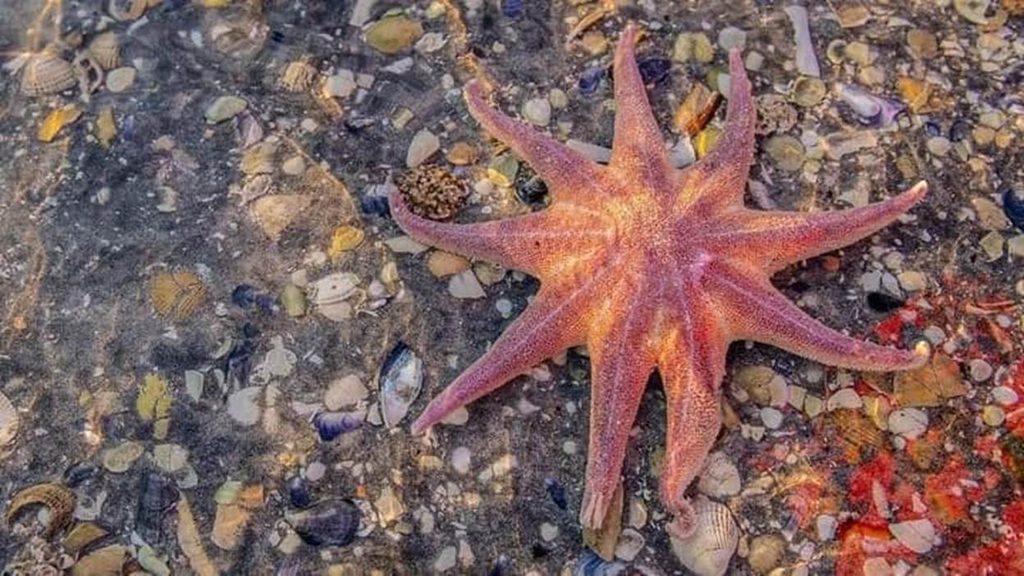
Starfish on the beach. Note that it has a nine arms, far more than California’s typical five-armed starfish. I later identified it as a Purple Sunstar (Solaster endeca), known as Glattosolstjerne in Norwegian.
Getting back onto the Zodiac was no easy task.
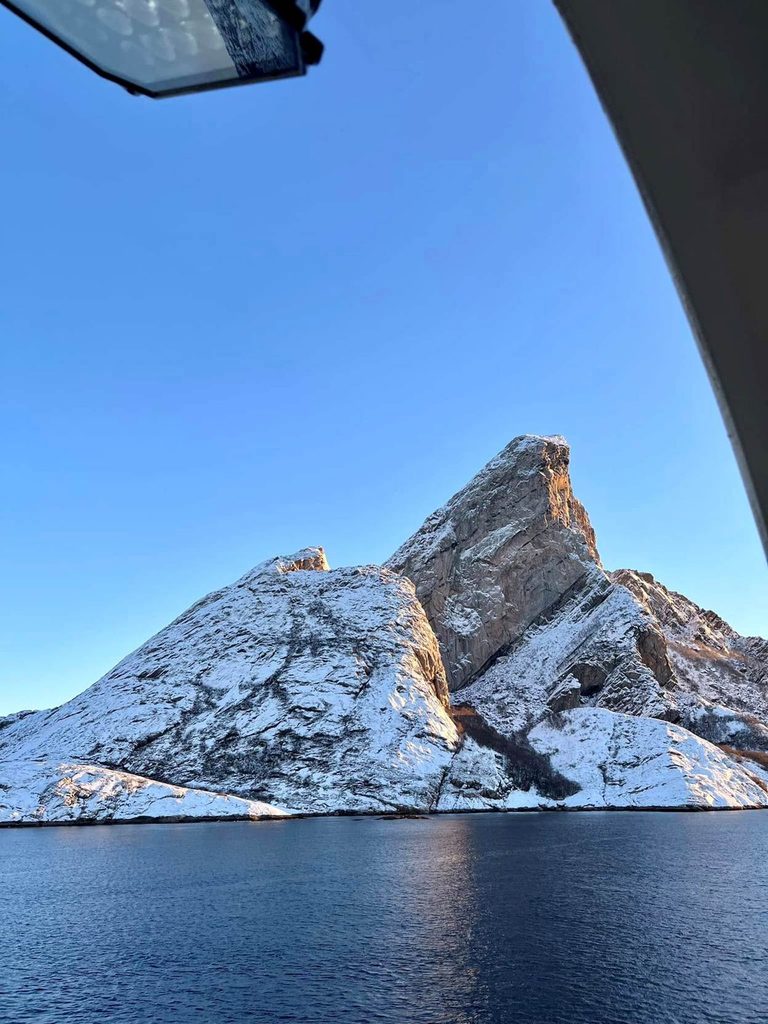
View of Rodoya Island from the ship. The hikers went up to that tallest peak!
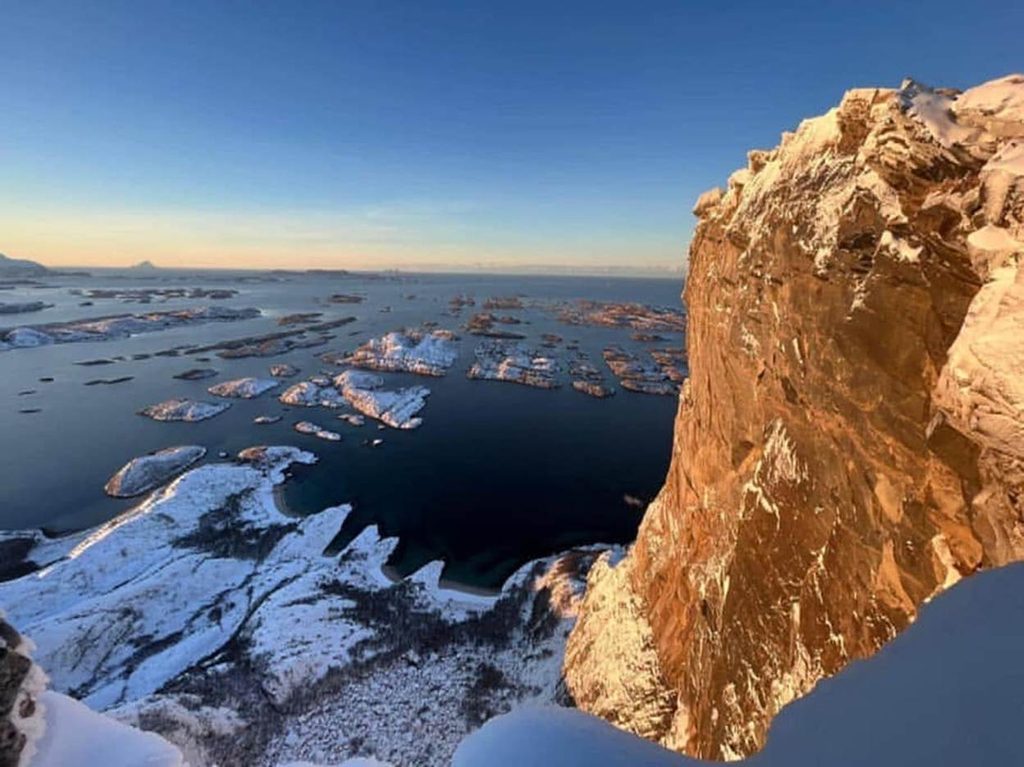
And here’s the view the hikers saw! (Not my photo since I didn’t take the hike). Photo credit: CP Photografie.
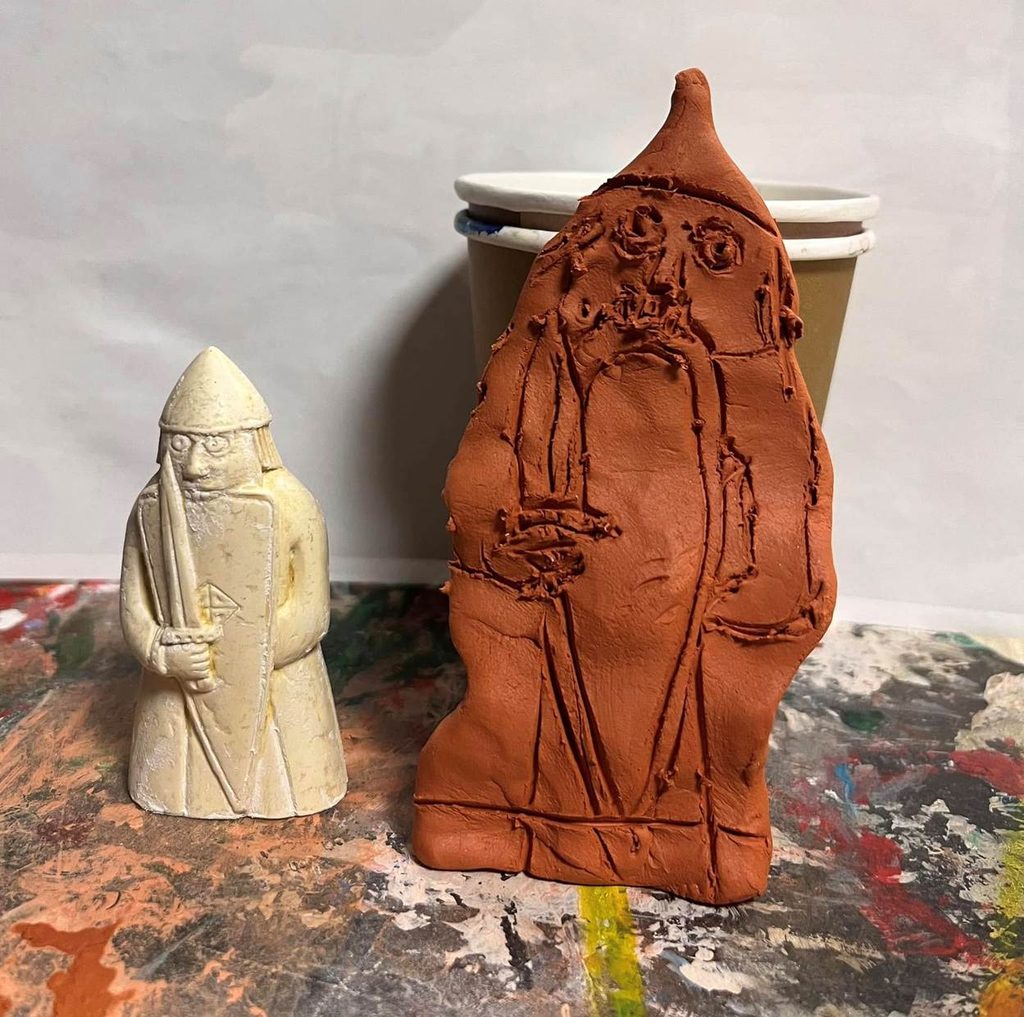
The one on the left is a resin replica of the rook from the Lewis chess set. The red one on the right was my attempt to copy it. What do you think: St. Nicholas or troll?
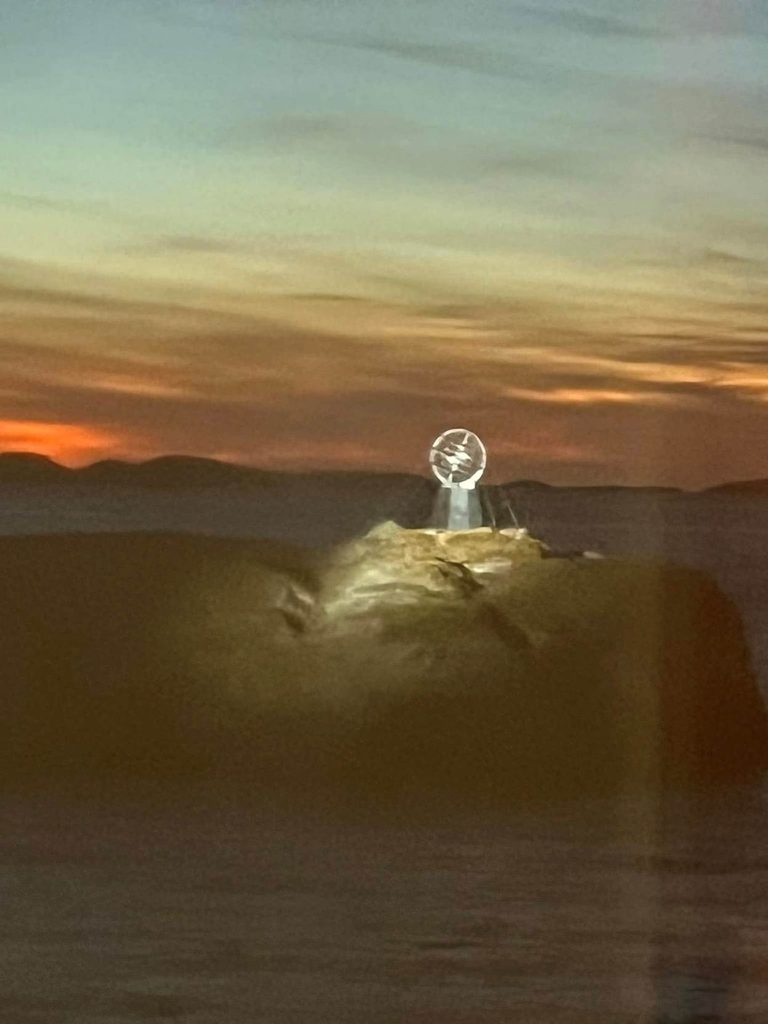
While we were making clay chessmen, we passed the globe marking the location of the Arctic Circle. We’re heading back to longer days and (relatively) warmer weather!
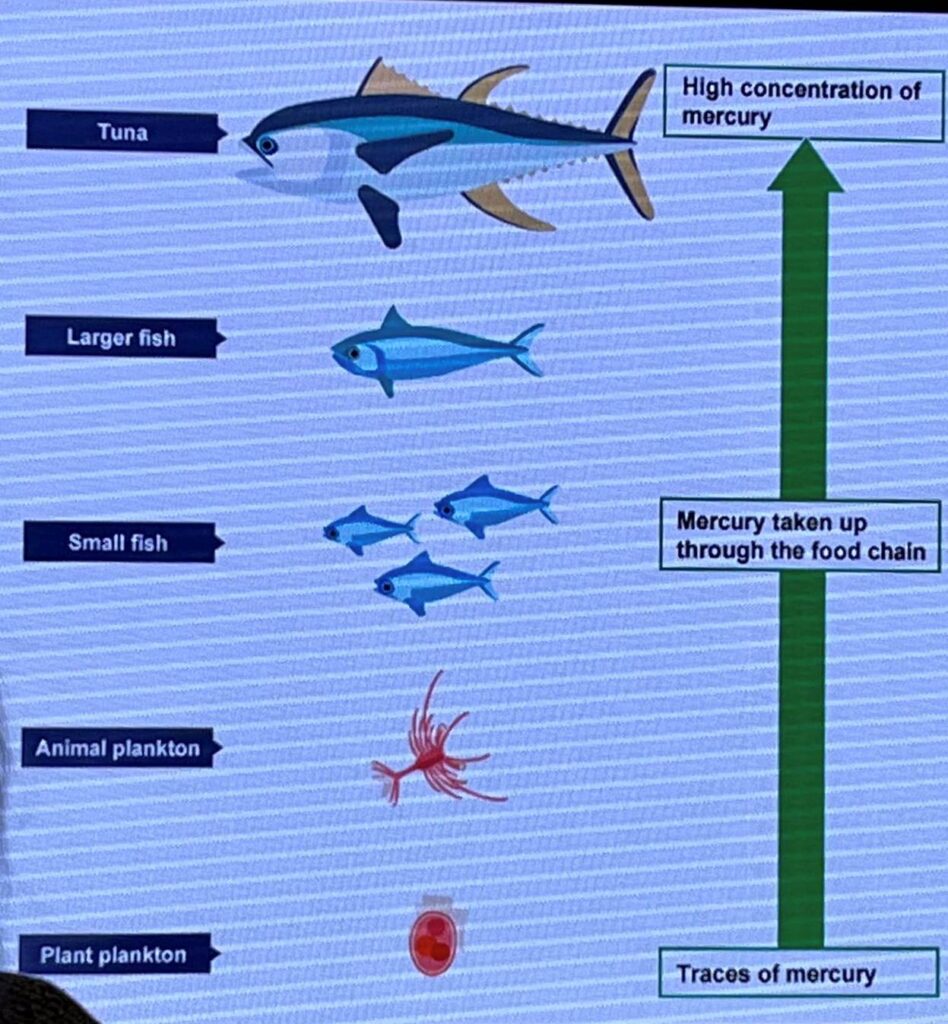
After our amusing art project, I went to a lecture about bioaccumulation and how it affects humans and orcas (since we’re at the top of the food chain and ingest the highest accumulations of the bad stuff). Quite sobering when you think of all the microplastics in the water that has made its way into fish, birds — and us.
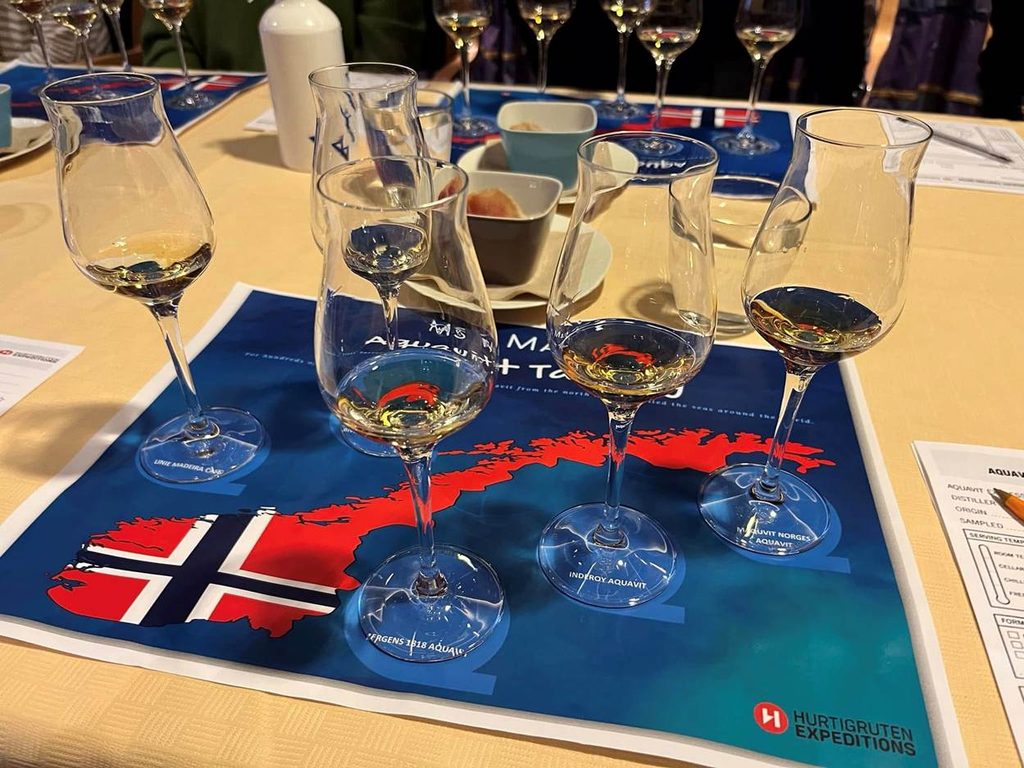
Lightening the mood, I then went to an aquavit tasting after dinner. We got to try five different kinds of aquavit, which I’ve never tasted before. In Norway, aquavit is a potato-based liquor like vodka but is customarily flavored with caraway and star anise (plus other ingredients depending on the brand). The group unanimously liked the Maquavit brand best (even a die-hard Linie fan), and the Linie brand second.
During our briefing about the upcoming day, we were warned that tonight would probably be our last opportunity for Northern Lights viewings because of stormy weather coming in.
We finished the evening with a discussion of Norwegian cabin culture. These are hyttes (huts) up in the mountains where Norwegians like to get away from it all. During our lecture, Magnus told us that the “ideal” cabin (or hytte) is supposed to look like a poor farmhouse (even if your main home is well-to-do). It will be constructed of wood, have a sod roof over birch that grows grass, and will lack both electricity and running water (like the photo on the left). Magnus mentioned that he spent a good part of his childhood carrying buckets of water uphill from the stream below. The ideal hytte is up in the mountains somewhere, and can be both a winter retreat for skiing or a summer vacation home. And what do you do when that grass roof grows too tall? You bring in some goats, of course! (I forgot to inquire whether they have their own goats, a rent-a-goat service, or some form of HOA that provides goats. Inquiring minds want to know).
The waterfront equivalent are rorbuer, which were originally built to house fishing crews from a fishing boat. The rorbu would have slept a crew of 15-20 men in one big room. They’re typically painted red. Nowadays, most of them have been significantly upgraded and turned into cozy holiday cottages.
Actually, the same can be said of hytte. Although the lofty ideal may be a simple rustic cabin, even Magnus’ family broke down and built a second cabin — this time with electricity and running water.
Hytte and rorbuer are both part of Norway’s obsession with healthy outdoor living.
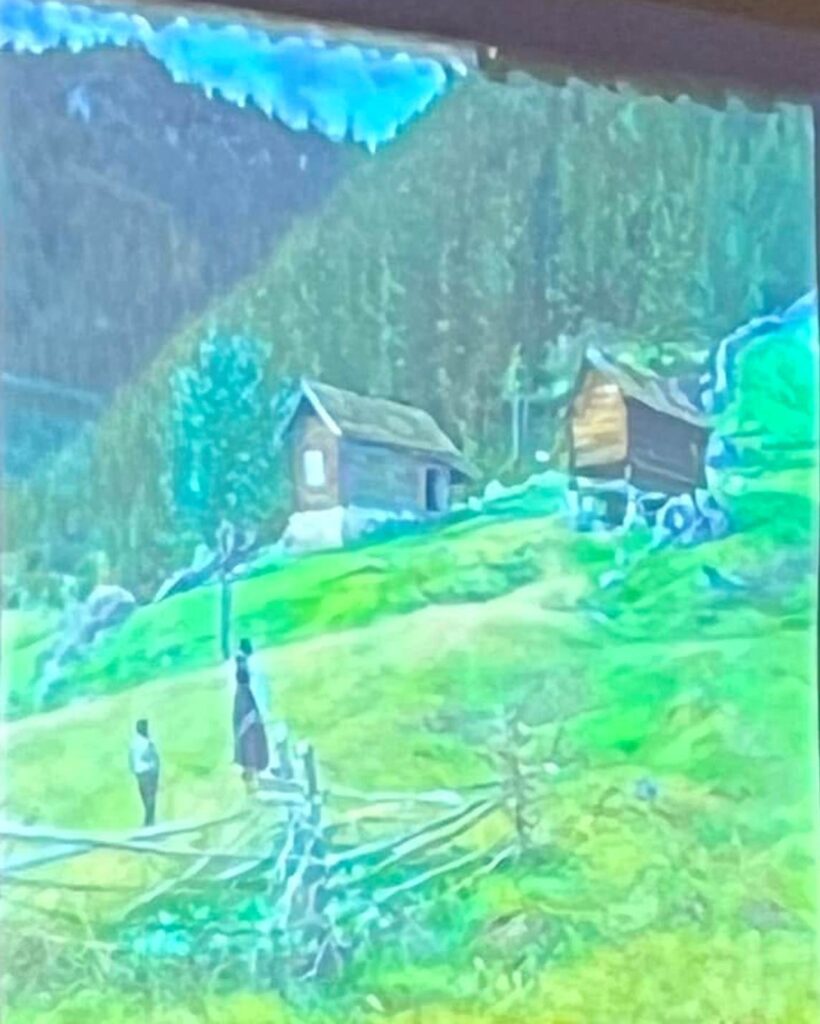
From Magnus’ presentation on Norwegian cabin culture. One of these is his family’s hytte.
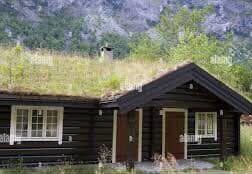
Internet photo of a rustic mountain hytte.
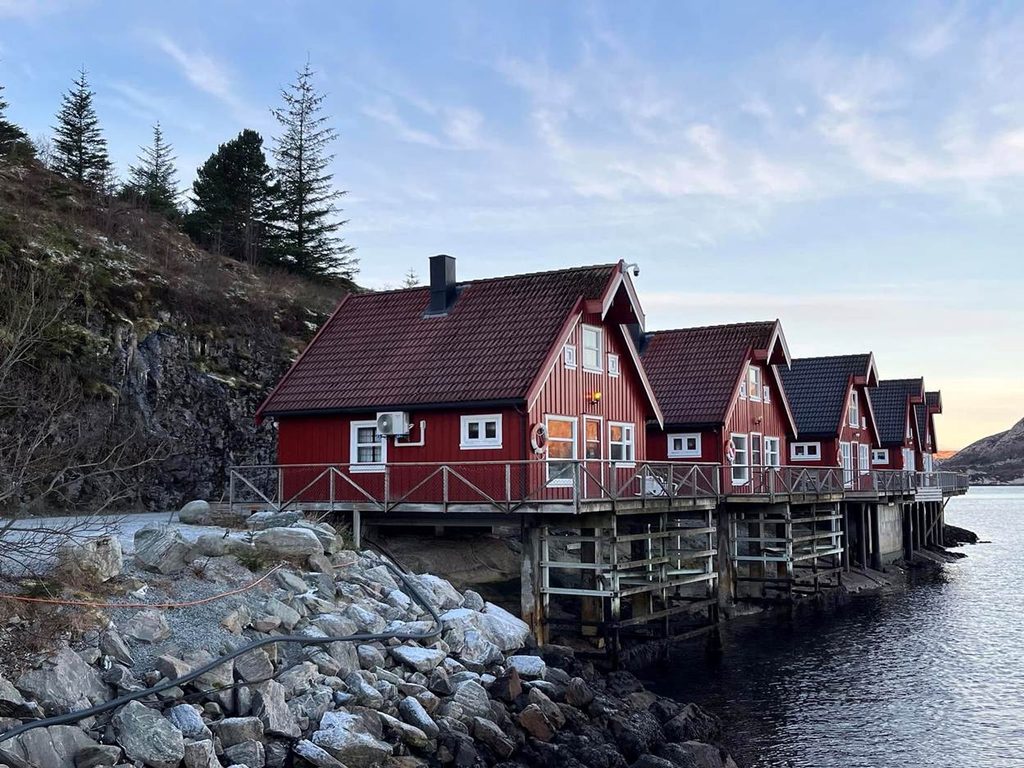
My photo of rorbuer in Bessaker, Norway.