
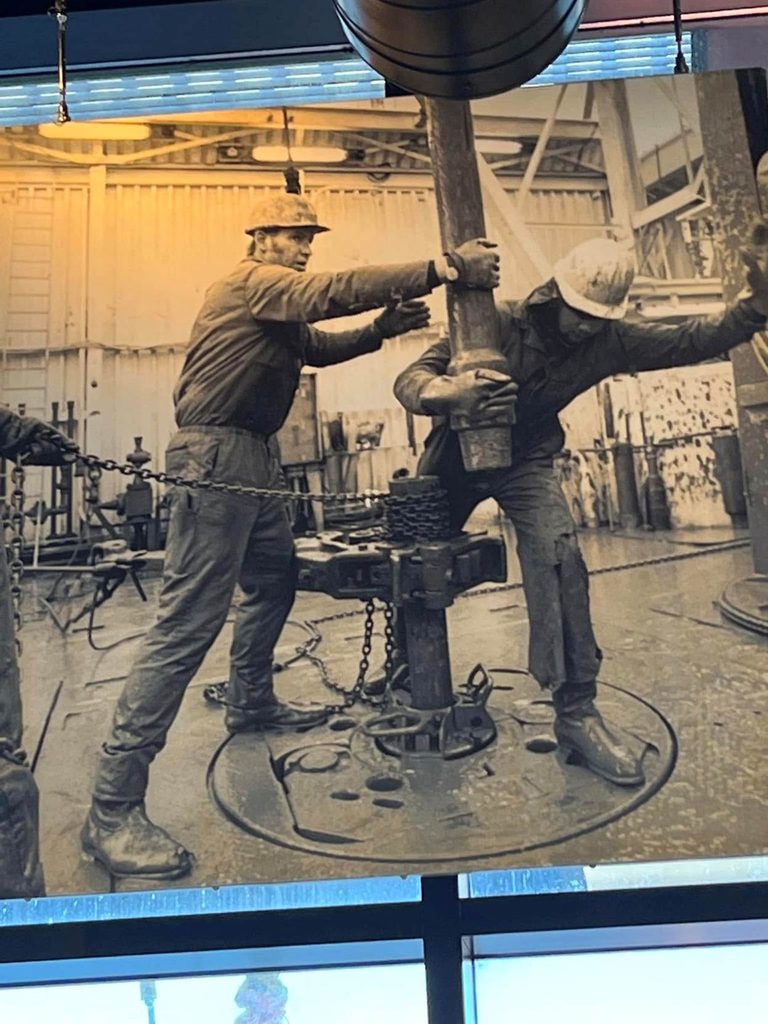
Today was our last port of call in the oil-rich city of Stavanger. The big petroleum companies had been eyeing the North Sea for years, making a number of unsuccessful drills. In 1969, however, Phillips Petroleum made one last drill before abandoning the field altogether and found an enormous oil field, Ekofisk. This transformed Norway. We learned a lot about it by visiting the Petroleum Museum in Stavanger. One thing that impressed me was that Norway, from the very beginning, took a long view of its oil fields. They set policies in place so that every Norwegian, not just a few, would benefit from the oil income. And they were one of the first countries to impose a carbon tax. Ultimately, one of the placards read, nearly 90% of oil income goes to the Norwegian government (which kind of puts a lie to the American belief that high taxes will discourage business investments). It became apparent to me, as I moved around the museum, that Norway has a strong guilt complex. The country has grown prosperous because of its oil income but knows all too well that the very business that’s making it rich is also destroying the environment. They’re trying hard to reconcile the two.
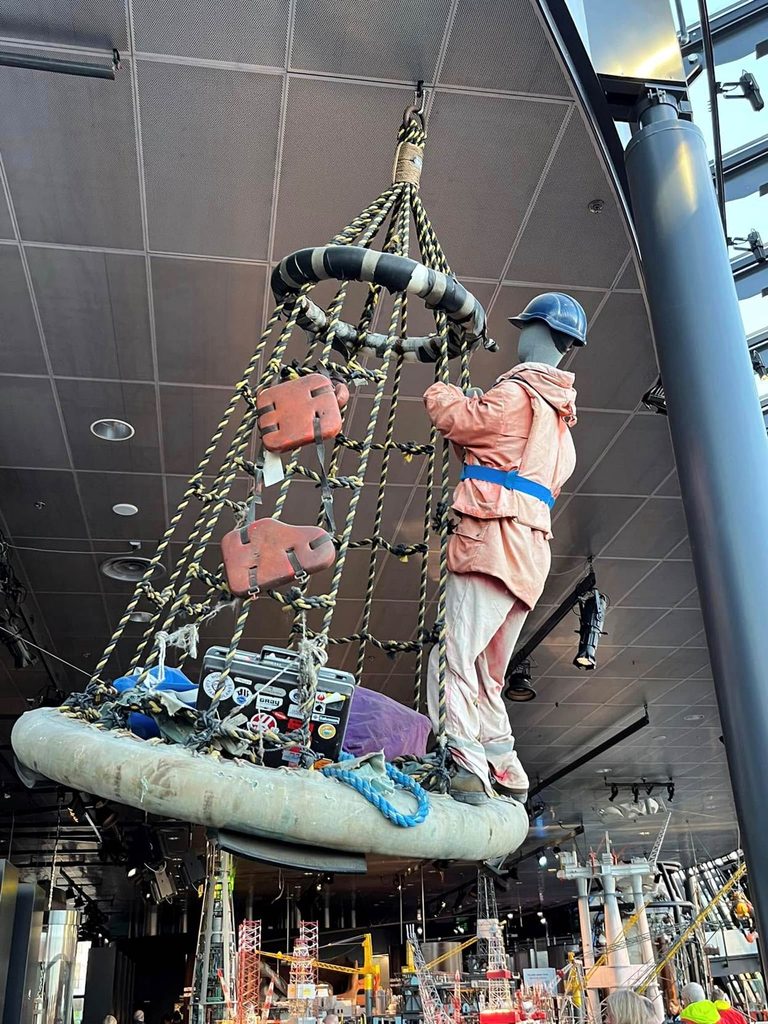
Left (above): A personnel basket used to transfer people between an offshore oil platform and a supply ship. People have to stand on the outside of the net and hang on tightly during the lift.
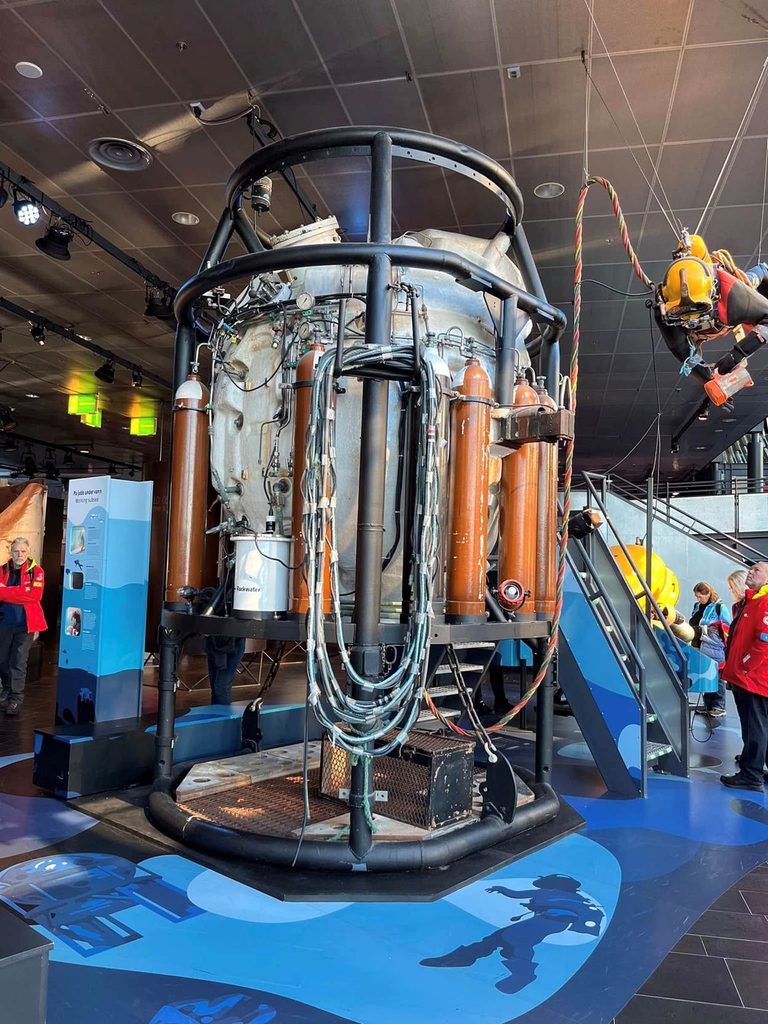
Right (above): This is a diving bell that was used in the oil fields from 1985 to 1996. This provides the divers with their only connection with the surface. Two people work together in the bell, one going out to do the day’s job and the other acting as helper and standby in case the active diver runs into problems.
Stavanger has an old town filled with white-painted buildings.
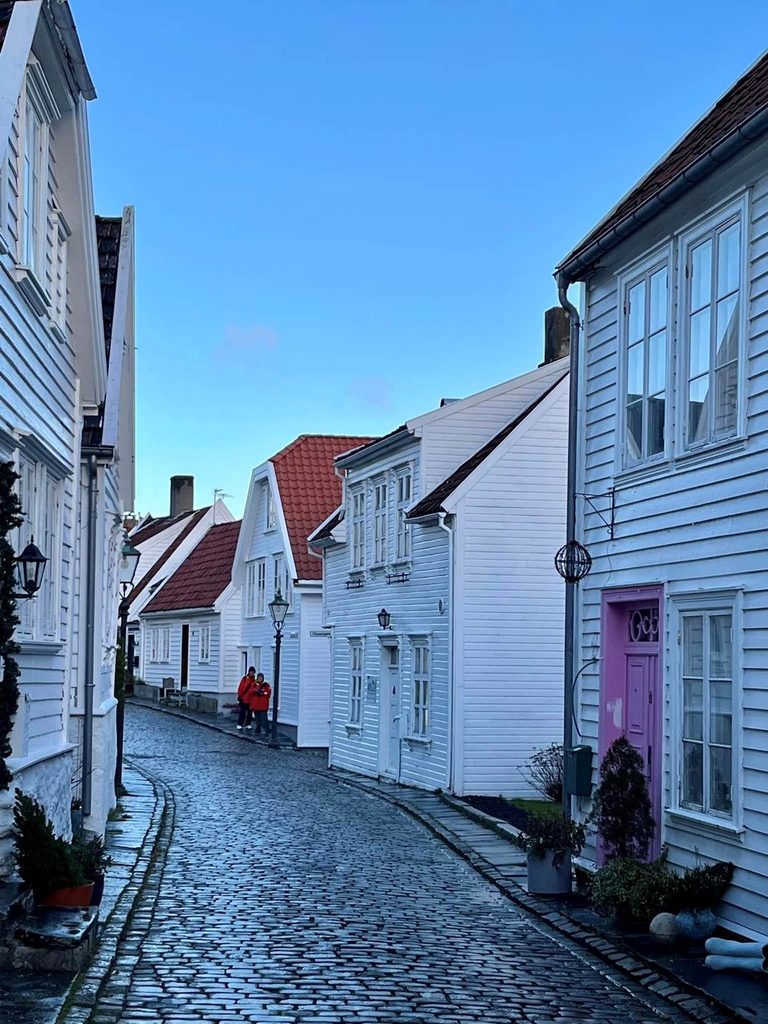
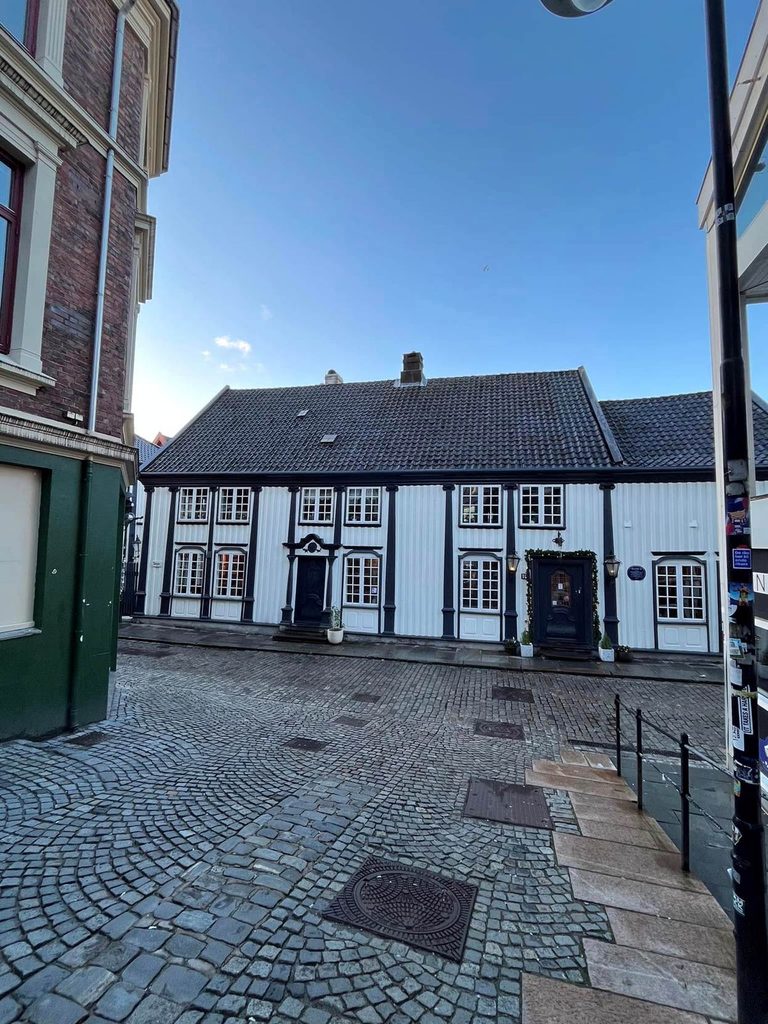
Left (above): Gamle Stavanger, the historic city center, with white-painted buildings.
Right (above): This is the oldest preserved building in Stavanger, built around 1700 by a merchant.
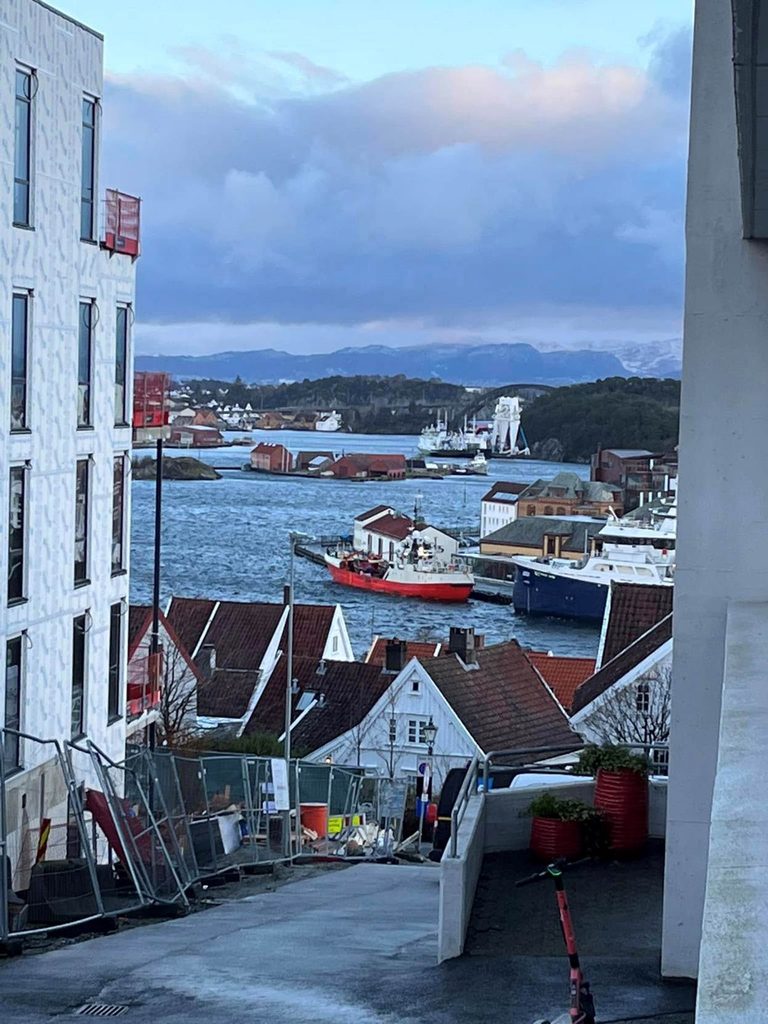
Farther afield, the city is bedecked with Christmas lights and gaily painted shops and restaurants.
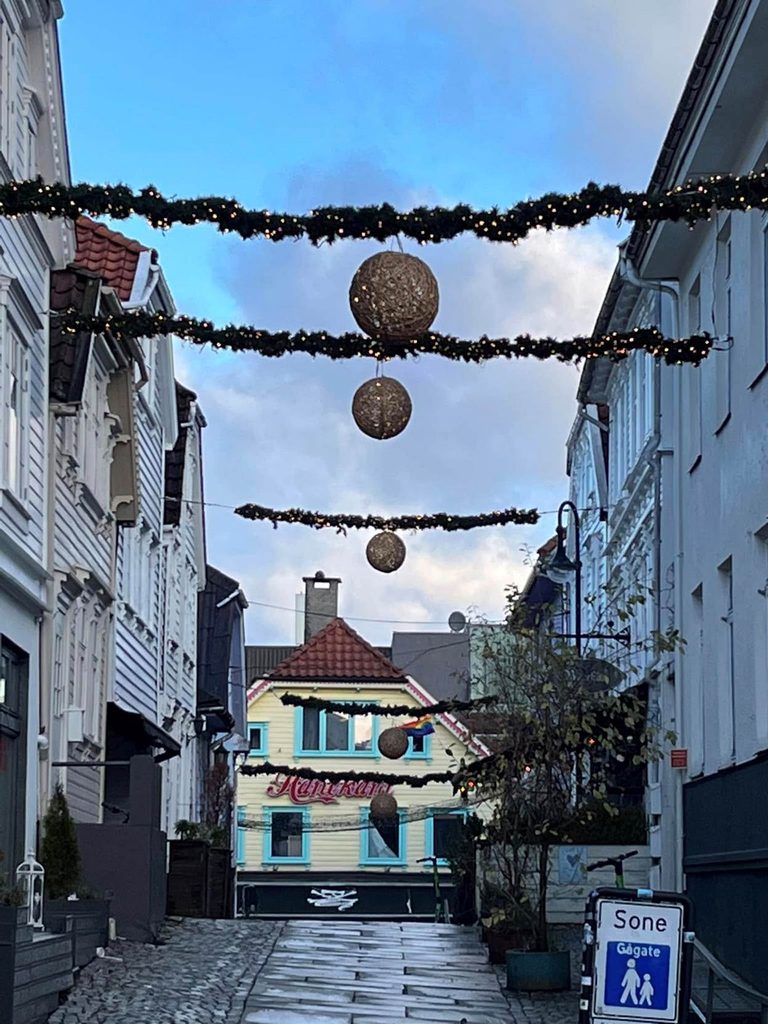
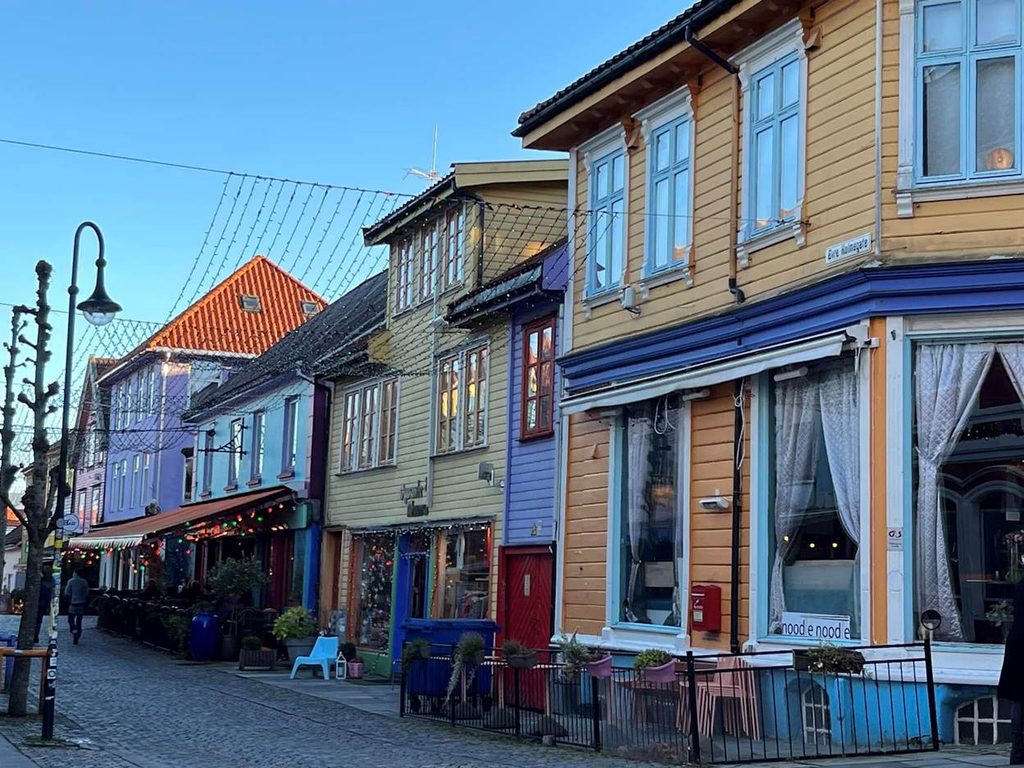
Left (above): Christmas decor in Stavanger.
Right (above): Fargegaten, or Ovre Homegate, the street of colors.
And some miscellaneous scenes from around the city:
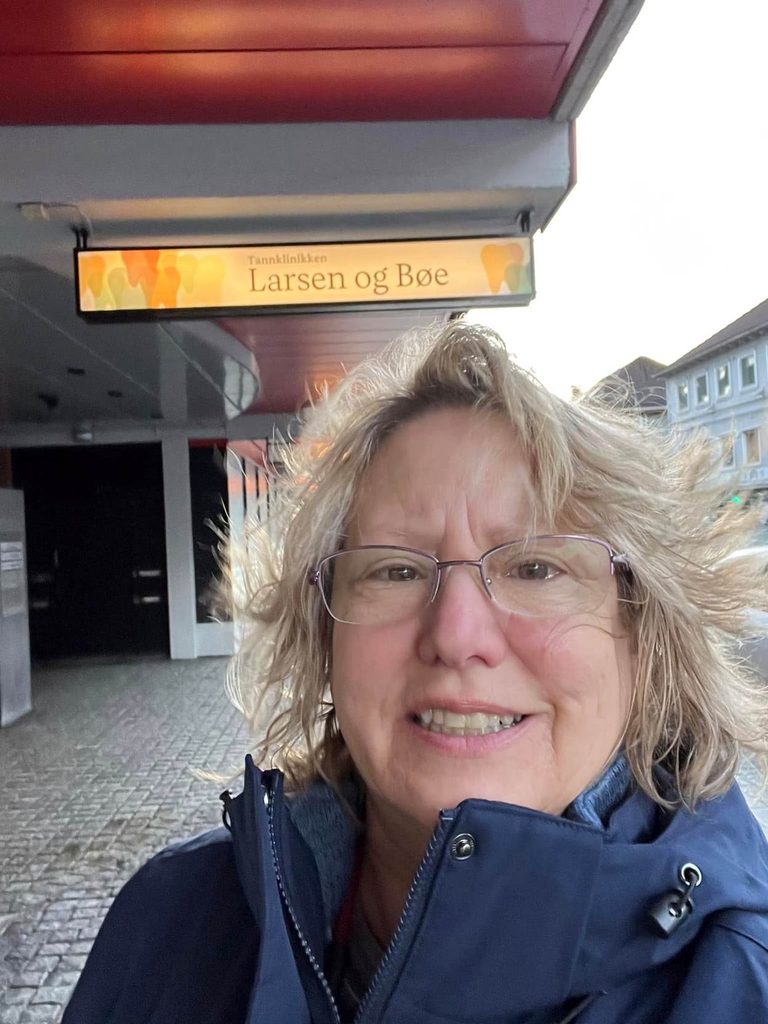
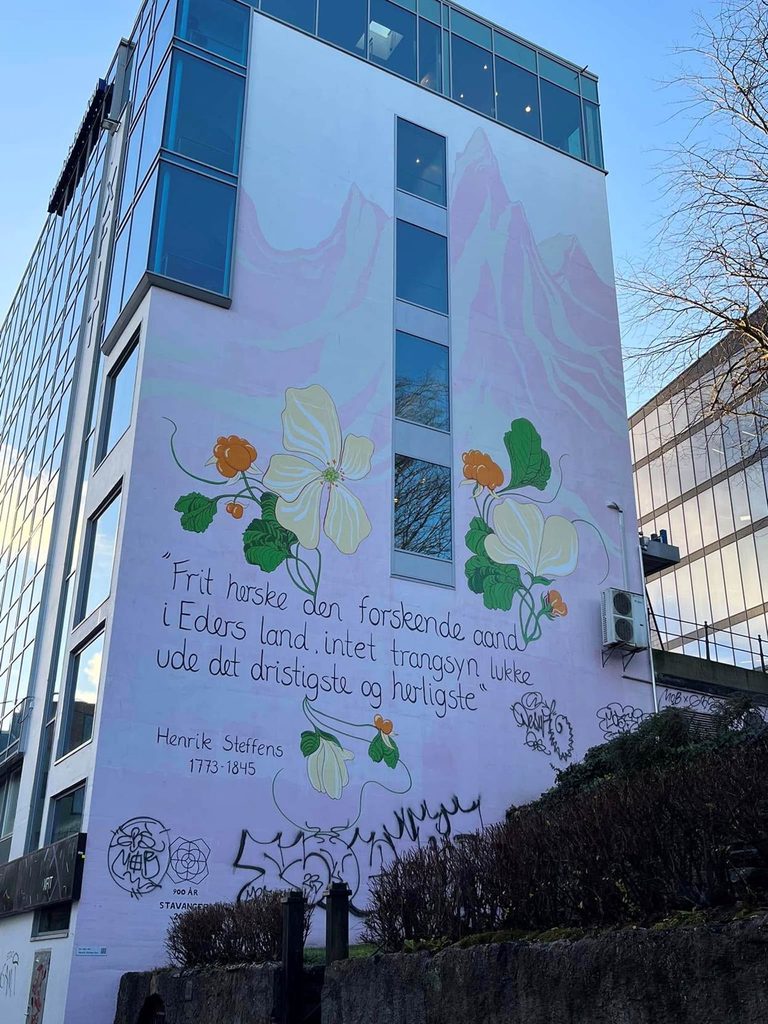
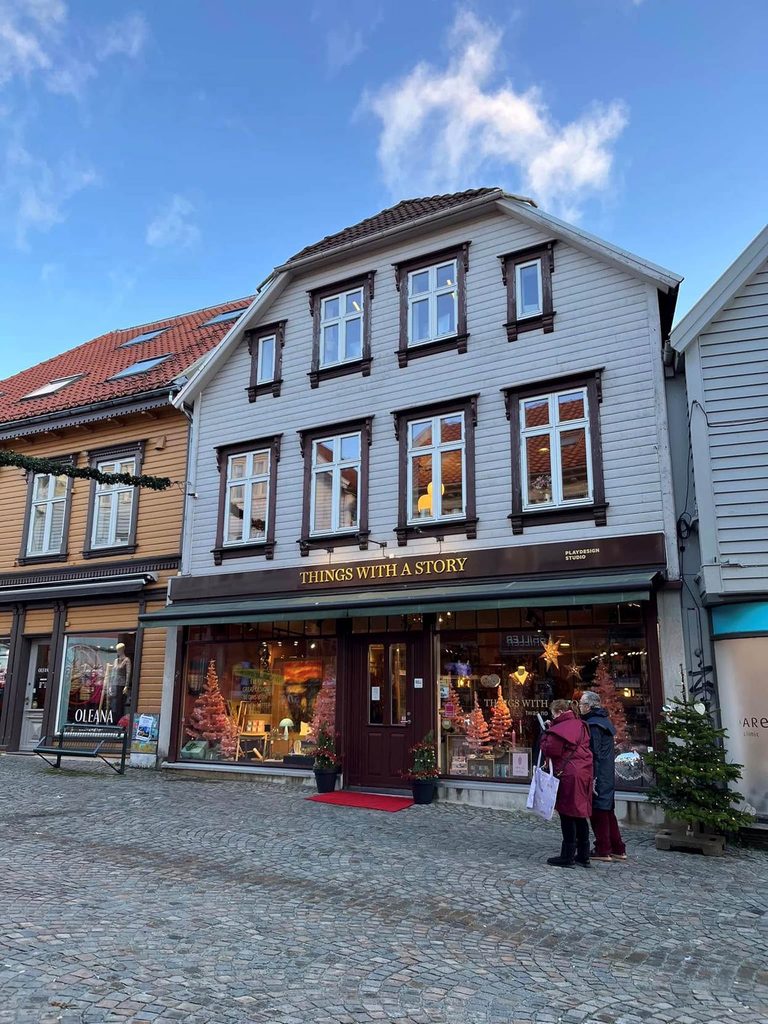
Top left: A dentist’s office named Larsen!
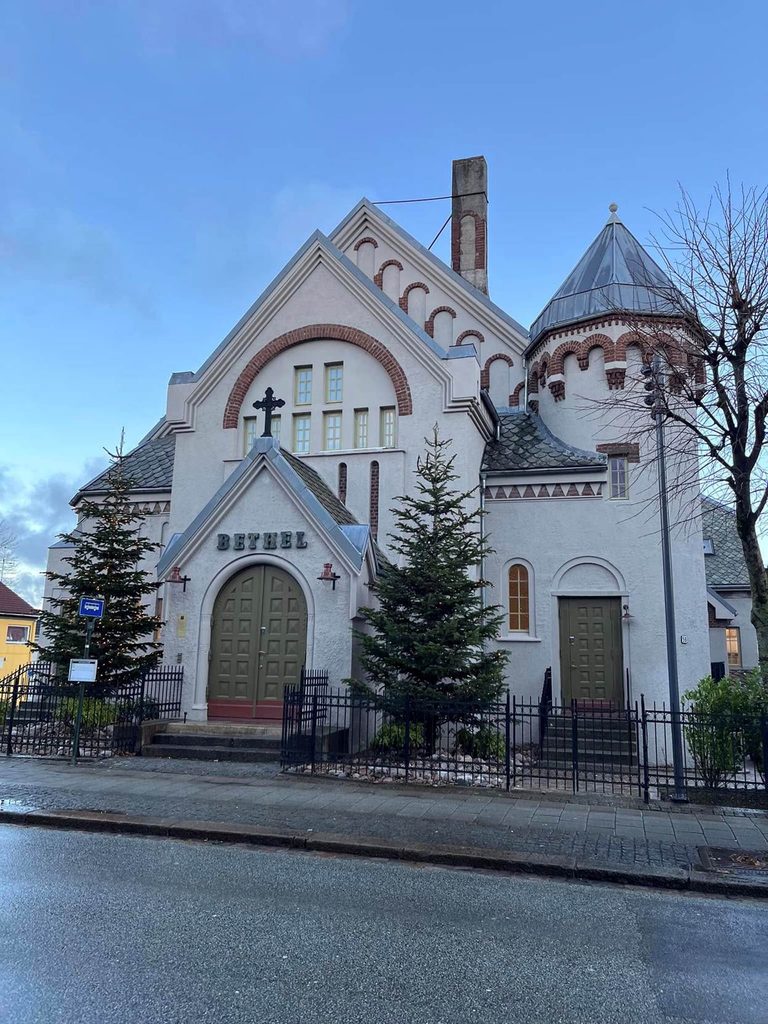
Top middle: The Brethren congregation erected this church in 1909. It now functions as office space for a commercial real estate firm.
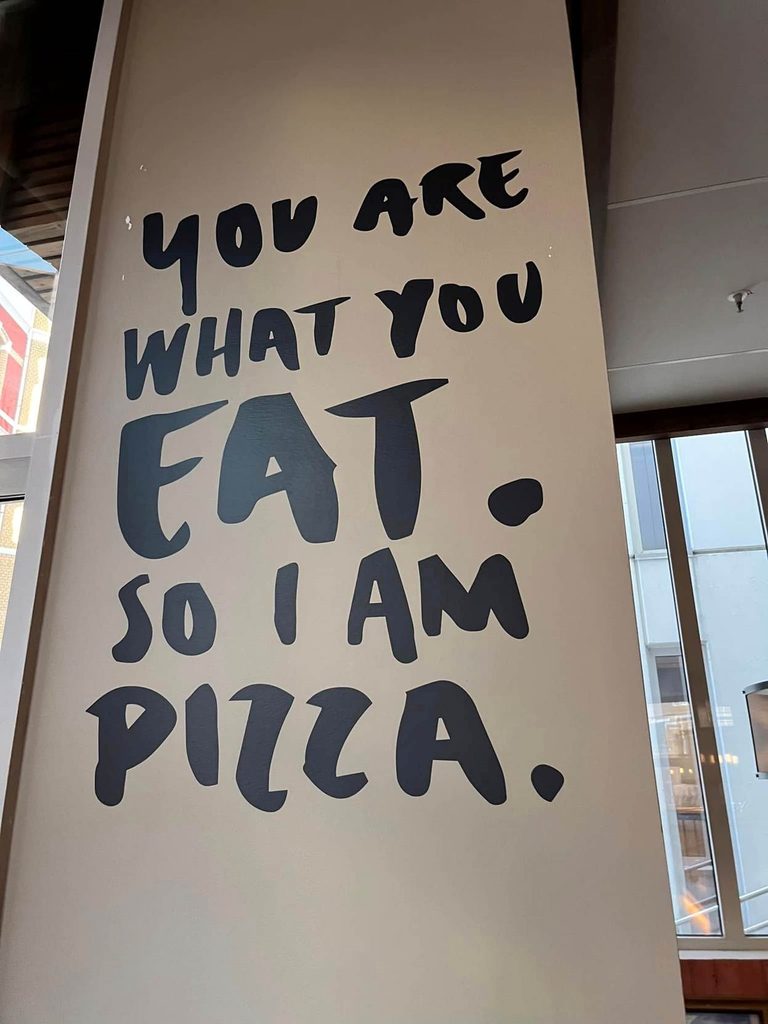
Top right: I stopped in a pizza spot for lunch and enjoyed the sign.
Bottom left: The mural says: “let the researching spirit rule freely in your country, let no narrow-mindedness shut out the boldest and most glorious.”
Bottom right: I just liked the name of this shop, “Things With a Story”. It’s an interior design firm.
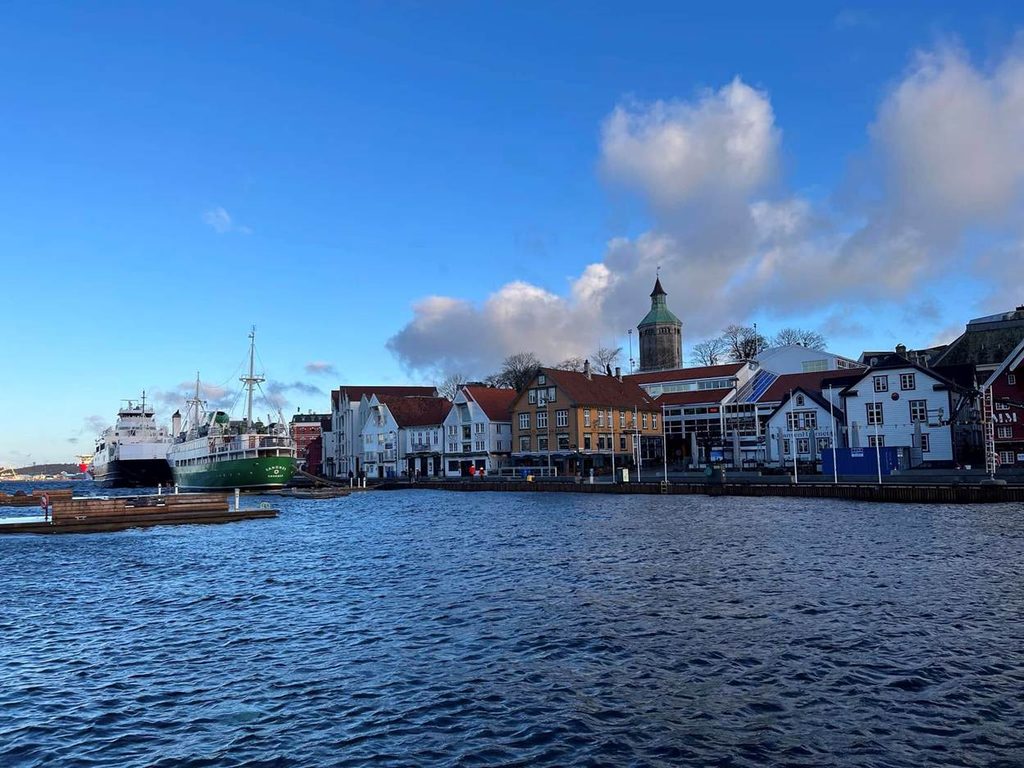
And finally, a view of the harbor.
There wasn’t much in the way of on-board events once we got back on the ship. We returned our animal patches (used to identify our Zodiac groups) and city spikes, another signal that our voyage is ending.
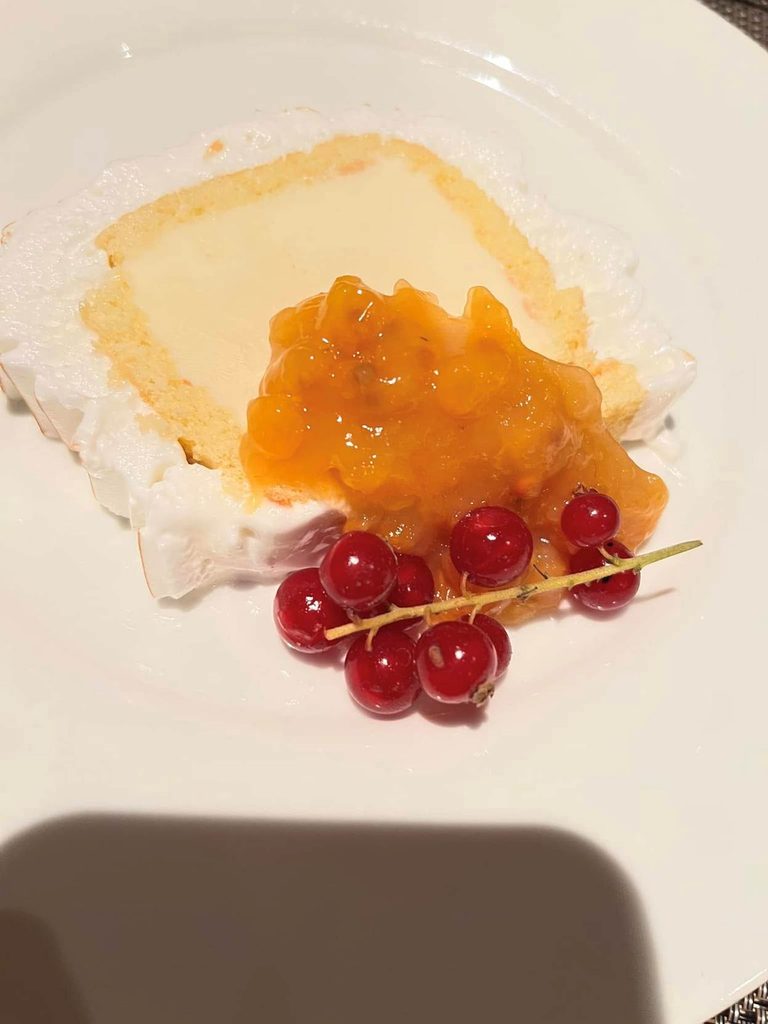
But we did get a nice treat:
I really think our cruise should’ve stopped here so we could all take selfies:

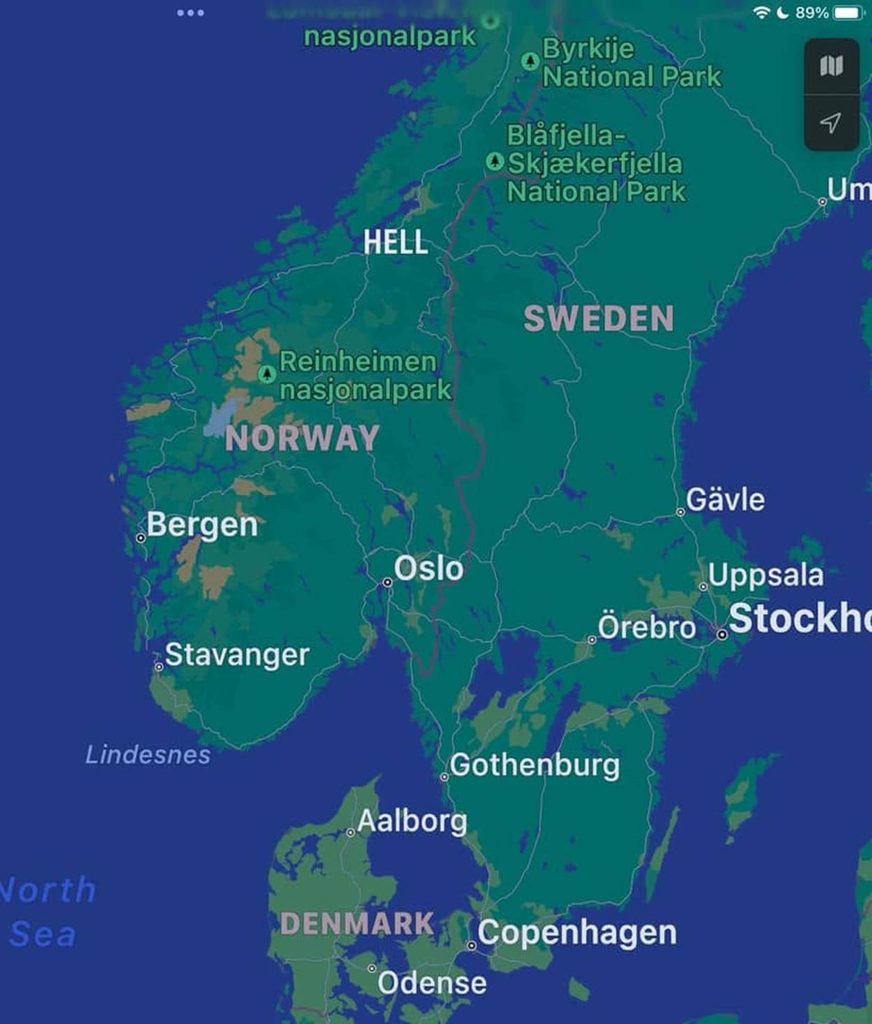
There’s a real-life village in Norway called Hell. It has 1524 inhabitants. Sometimes, it gets so cold in Hell there that it freezes over. What d’ya say, Hurtigruten? Put this on your next itinerary?
… And just when we thought we were settling down for the night, there was another episode of late-breaking news:

We were planning to arrive in Tilbury (the port just east of London) on Sunday at 2pm. However, another ship already had that time slot at the port. At first, the port authority was going to allow both ships to dock, then decided that wasn’t safe enough, so our ship can’t dock until an hour after the first ship departs. That means we’re now planning an arrival time in Tilbury of 9pm. We’re spending two more days on board than originally planned.
By this time on Sunday night, trains aren’t running and many of the people on board don’t want to start their drives back home at that late hour, so Hurtigruten will be putting us up in hotels near the port.
I gotta say, Hurtigruten is doing its best to take care of us