

Today we woke up to the news that we passed the Arctic Circle in the pre-dawn hours. Njord, the god of the sea, bellowed at us from the stern of the ship. The winner of our “guess what time we’ll pass the Arctic Circle” contest received a gift, and then several of my cruise-mates participated in a “crossing the Arctic Circle” ceremony. We stopped in the small city of Svolvær where I visited the Lofoten War Memorial Museum and the Magic Ice Lofoten ice sculptures exhibit. And we experienced our earliest sunset to date.
Since we crossed the Arctic Circle during the night, we were greeted this morning by Njord, god of the sea.
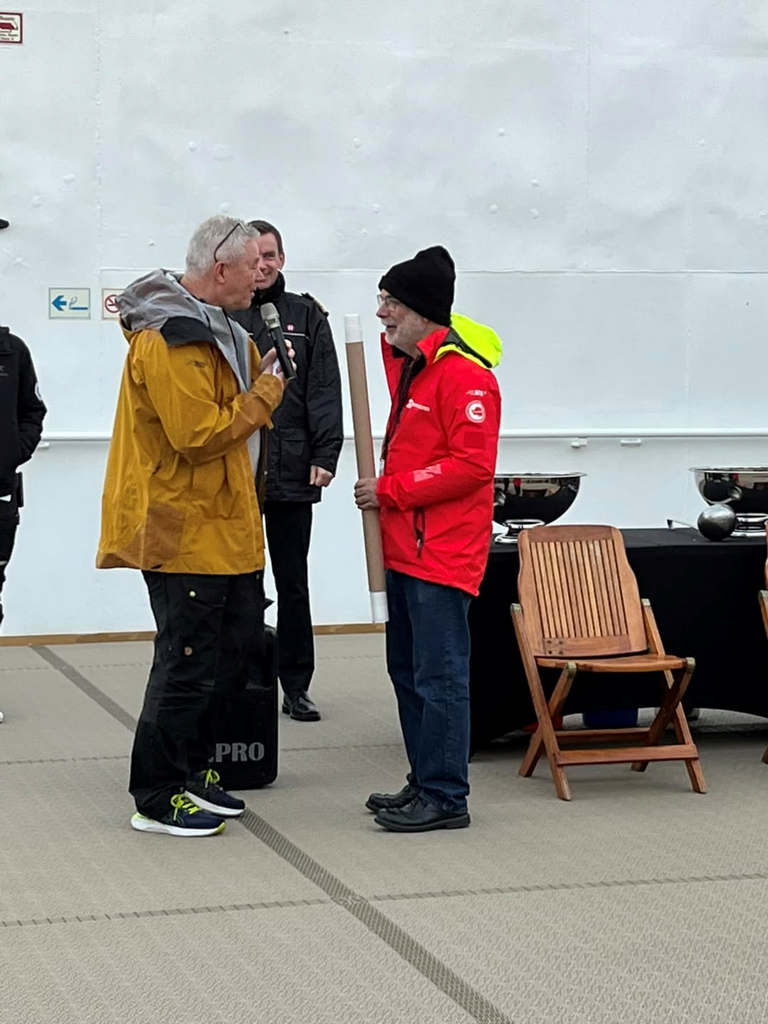
We crossed the Arctic Circle at 3:56am. (My guess was way off). The winner received a map of the Arctic.
And to celebrate crossing the Arctic Circle, passengers received an “arctic baptism” of ice and cold water. Ship staff were sneaky, though: they didn’t just pour it over a person’s head, they pulled back your parka and let it slide down your bare back. The first guy’s reaction (shown here) was fairly subdued; the women screamed.
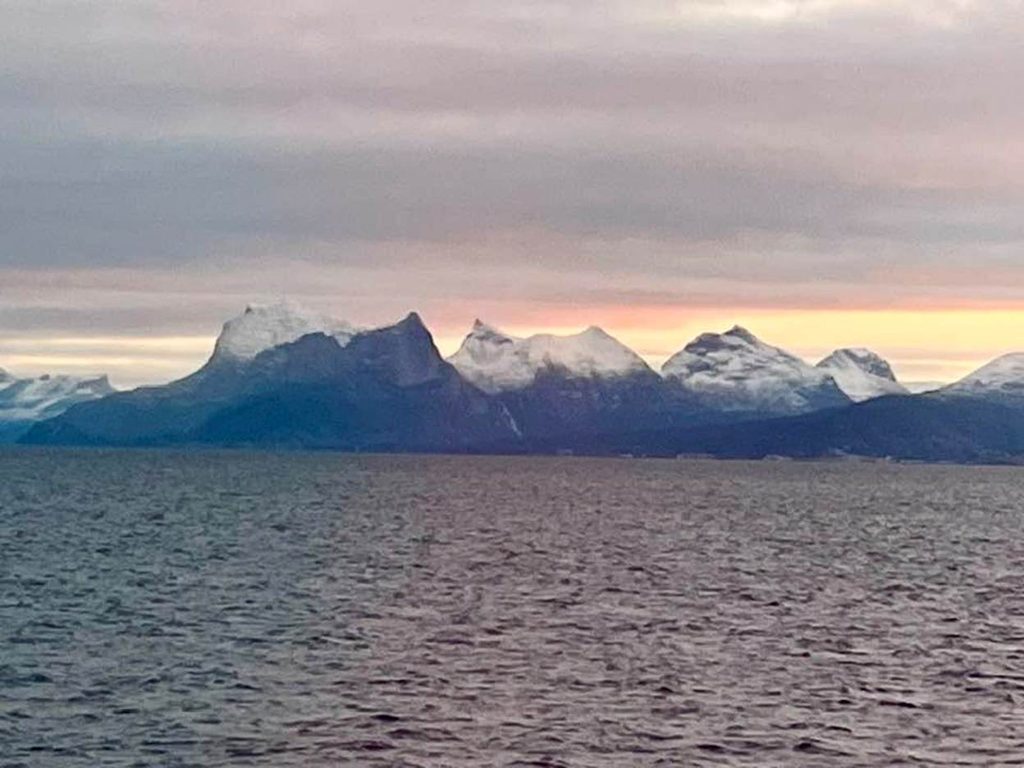
Now that we’ve passed the Arctic Circle, we’re finally seeing some snow.
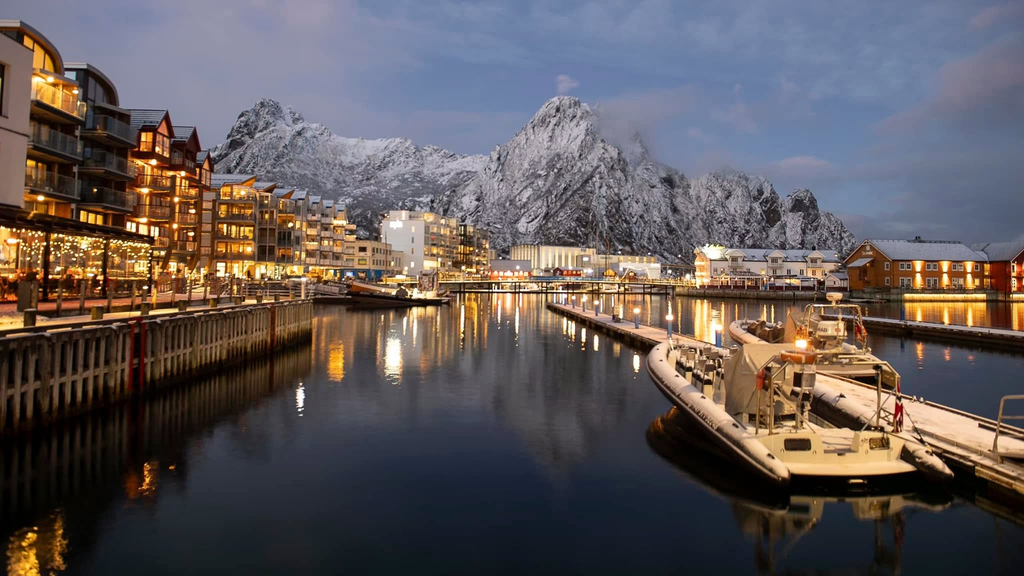
We’re now heading into the true Arctic region and stopped in a village called Svolvaer. Photo credit: CP Photographie.
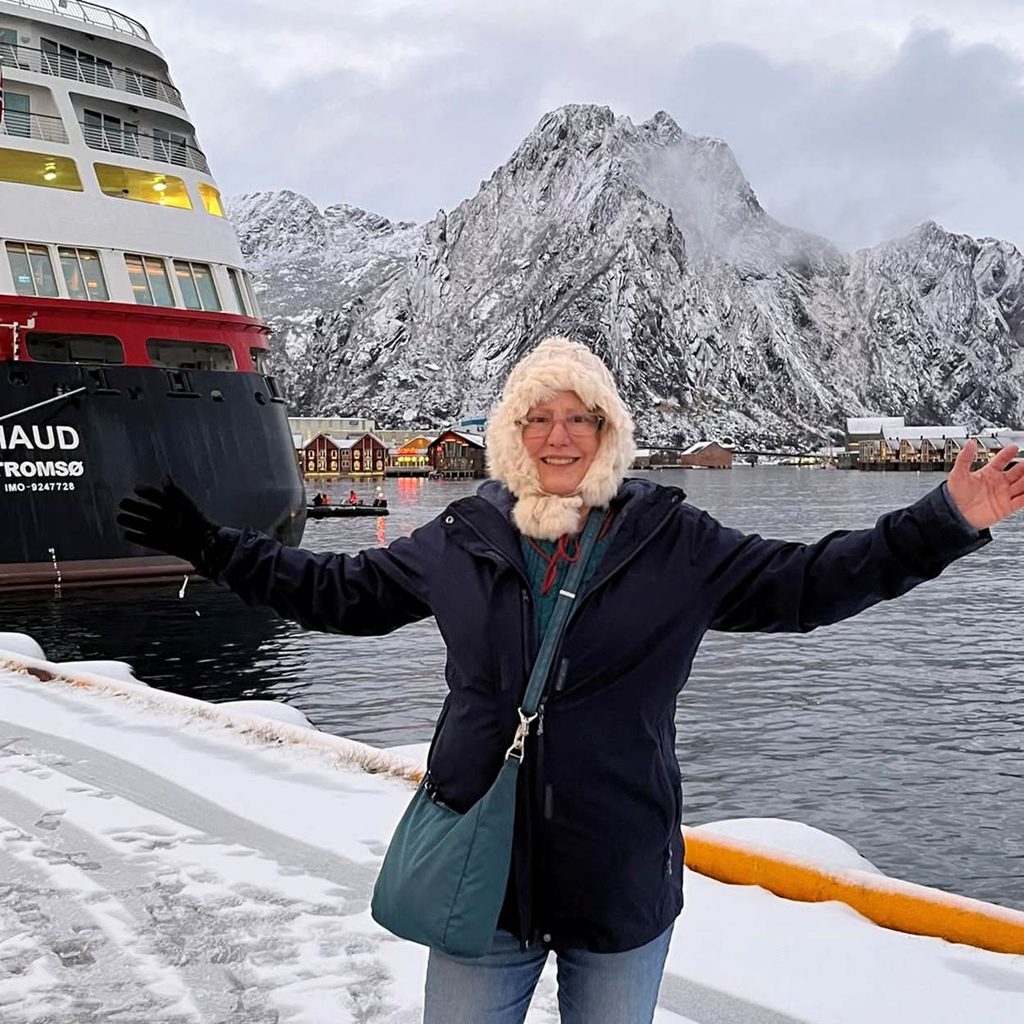
Stephanie, upon disembarking in Svolvaer.
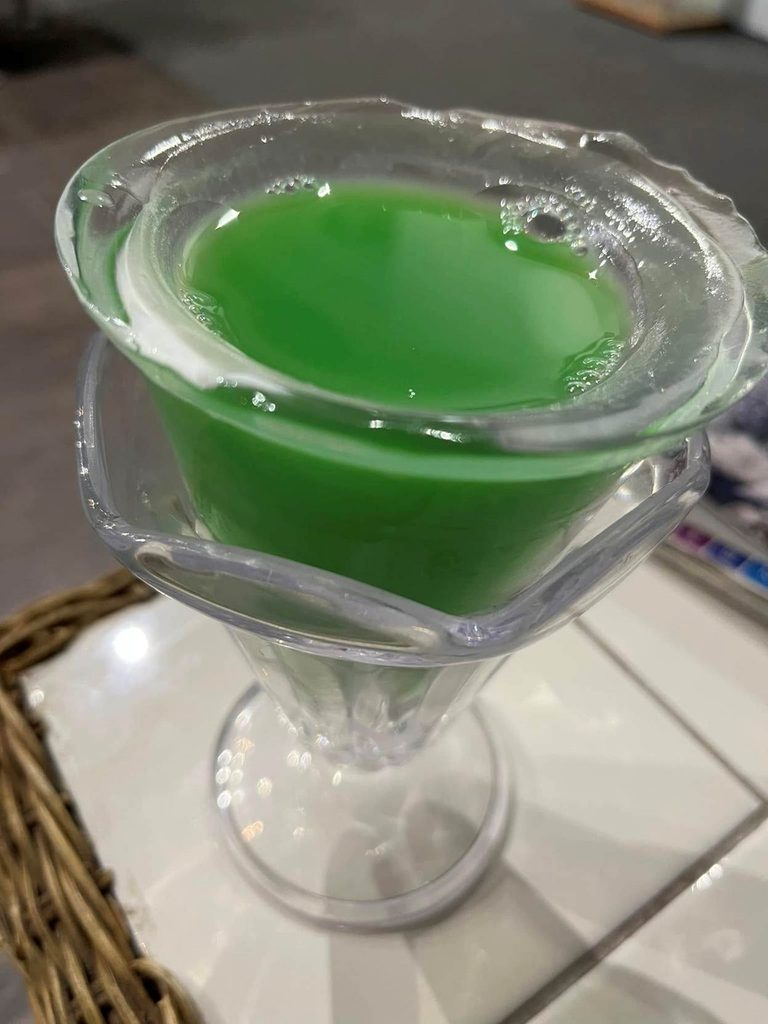
My first stop in Svolvaer was Magic Ice Lofoten, a display of ice sculptures. At the end, you can belly up to the ice bar for a cocktail or mocktail. My drink, fittingly, was called Northern Lights.
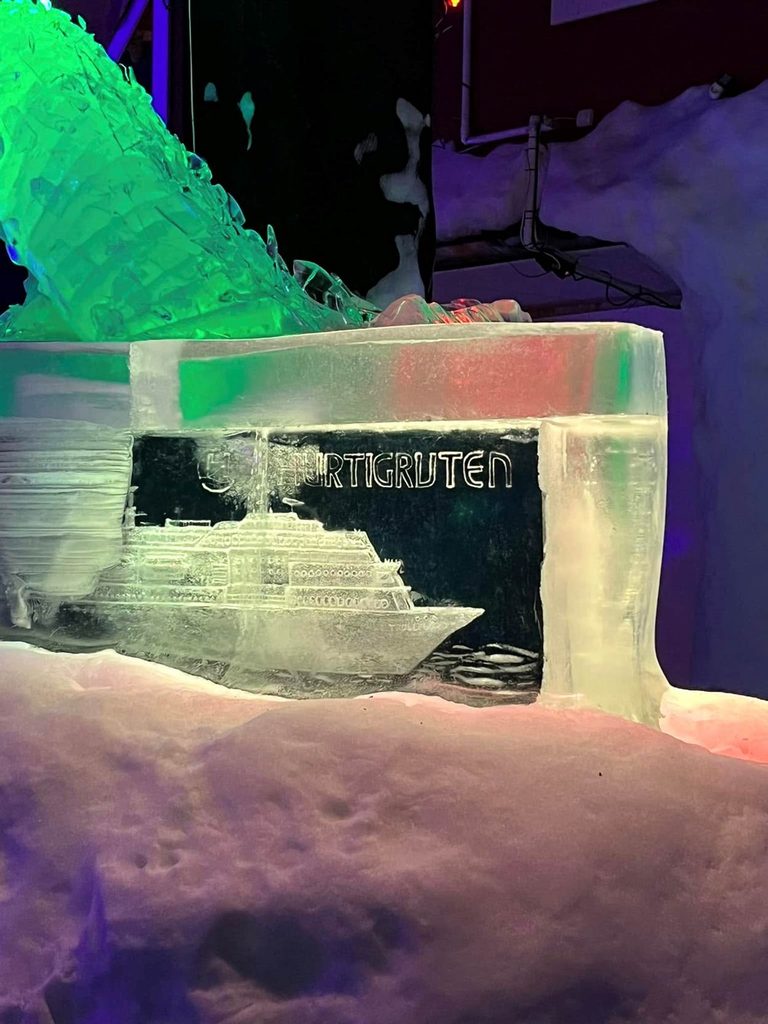
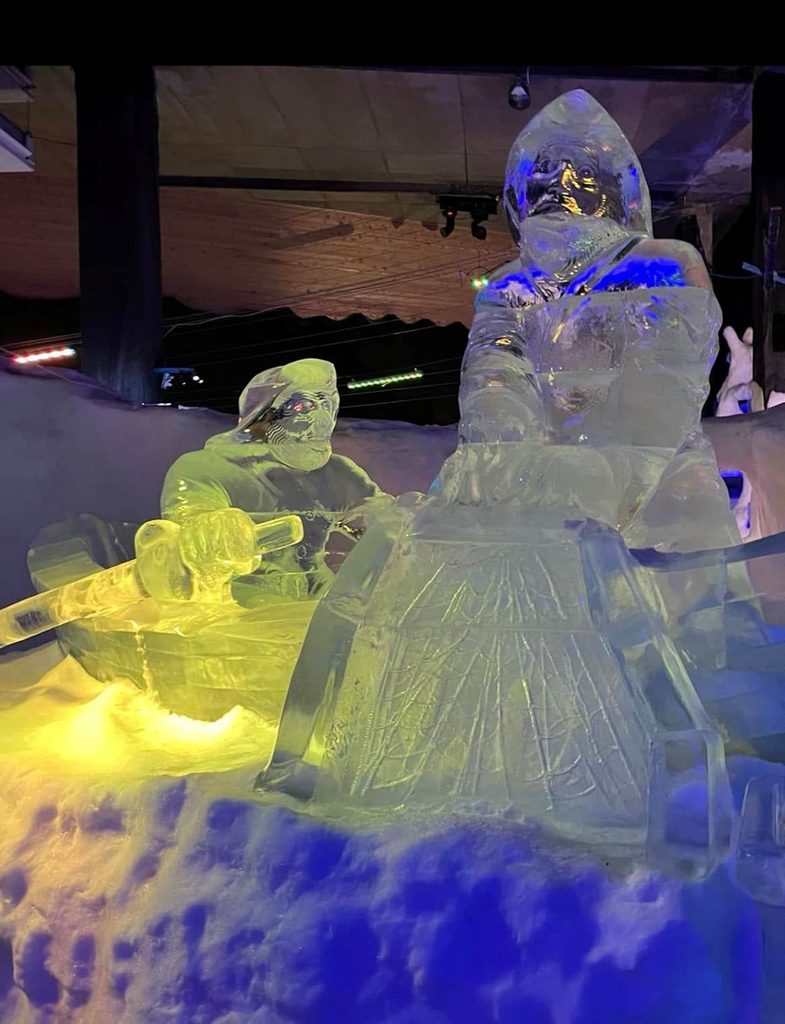
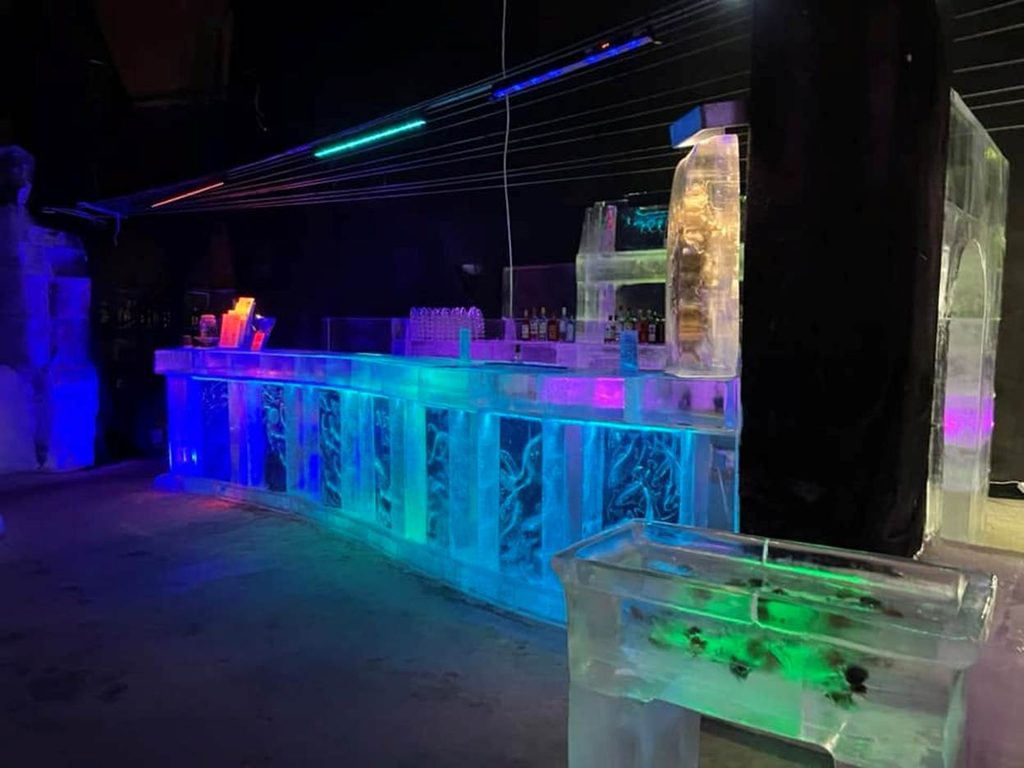
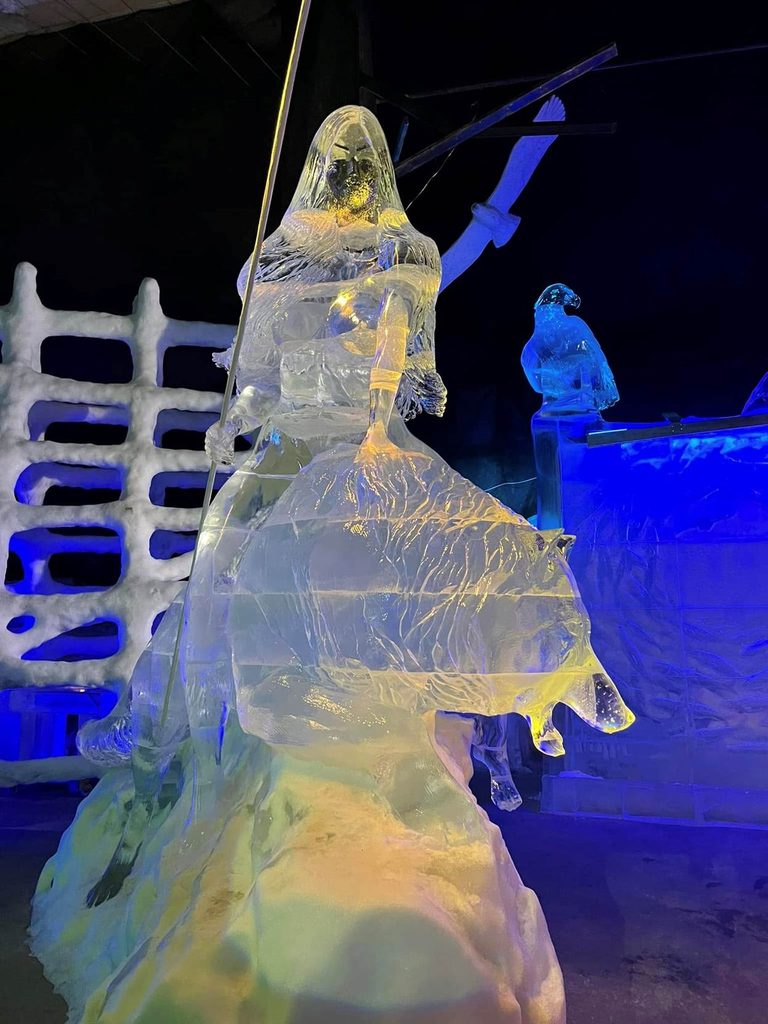
Then I moved on to the Lofoten War Memorial Museum, which has a large collection of World War II artifacts.
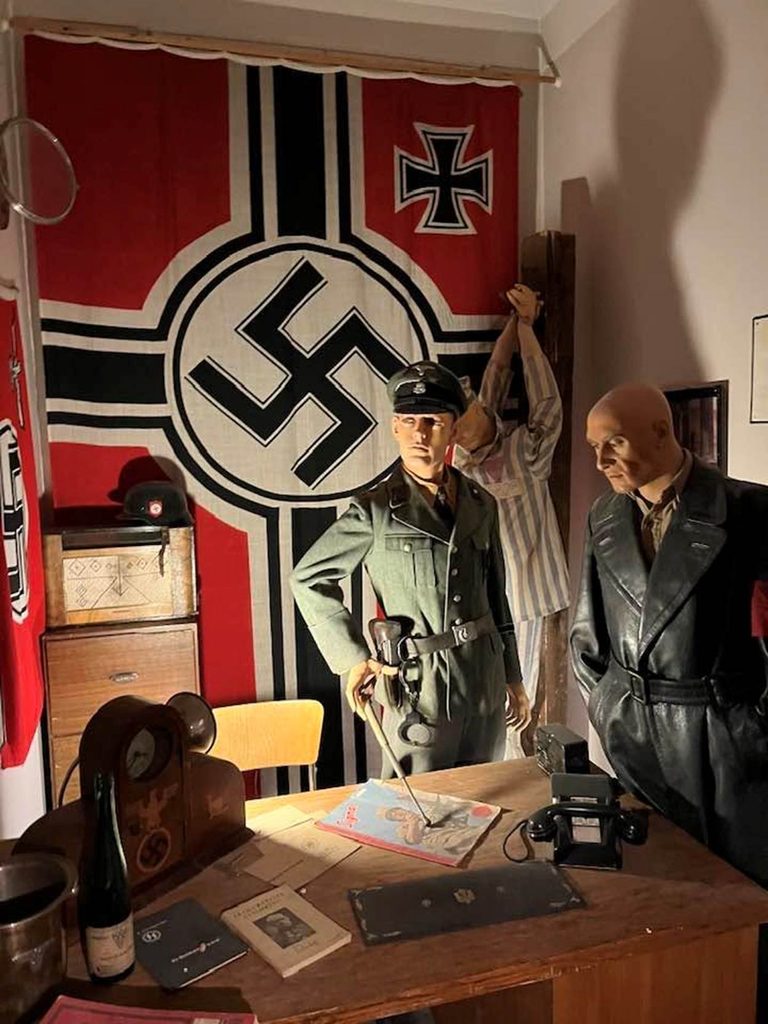
The Gestapo’s headquarters for the Lofoten region was in Svolvaer. This is a recreation of Gestapo headquarters office at the War Memorial Museum.
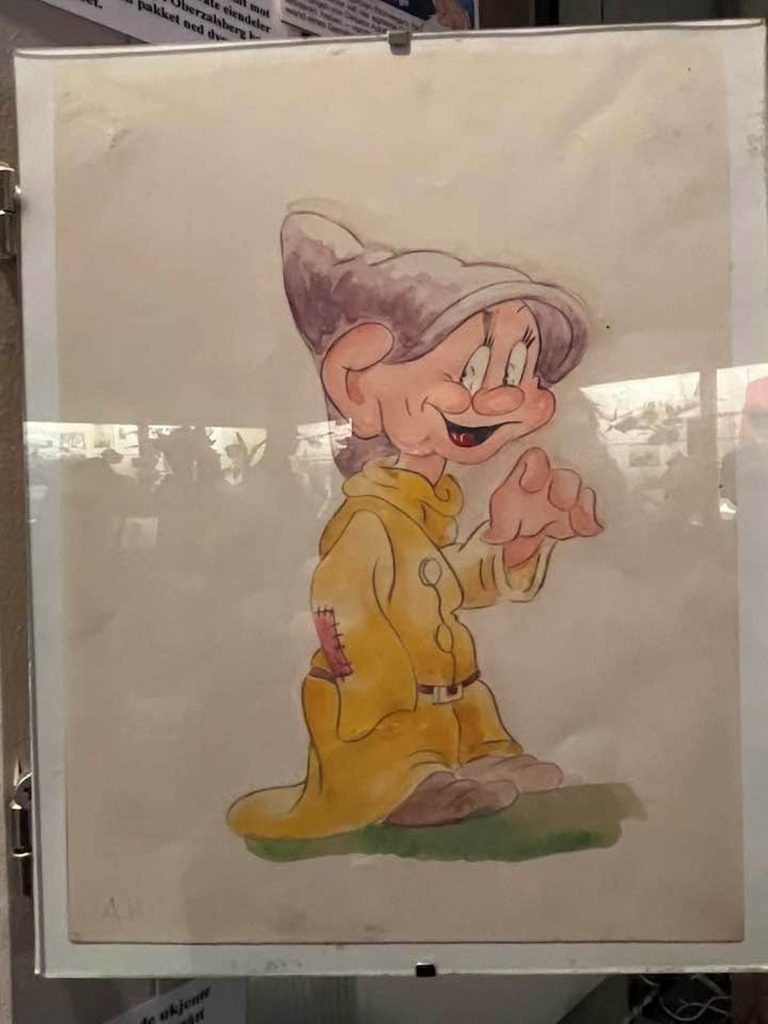
If you look very carefully at the lower left corner of this drawing, you’ll see the initials H.A. We’re all familiar with the Nazis’ looting of Jewish art during WWII. Some years earlier, while Hitler was preparing for his Third Reich, he was also copying characters from Disney’s Snow White and the Seven Dwarfs. I knew he appreciated art; I didn’t know he produced it as well. The War Memorial Museum has four of these dwarf drawings made by Hitler.
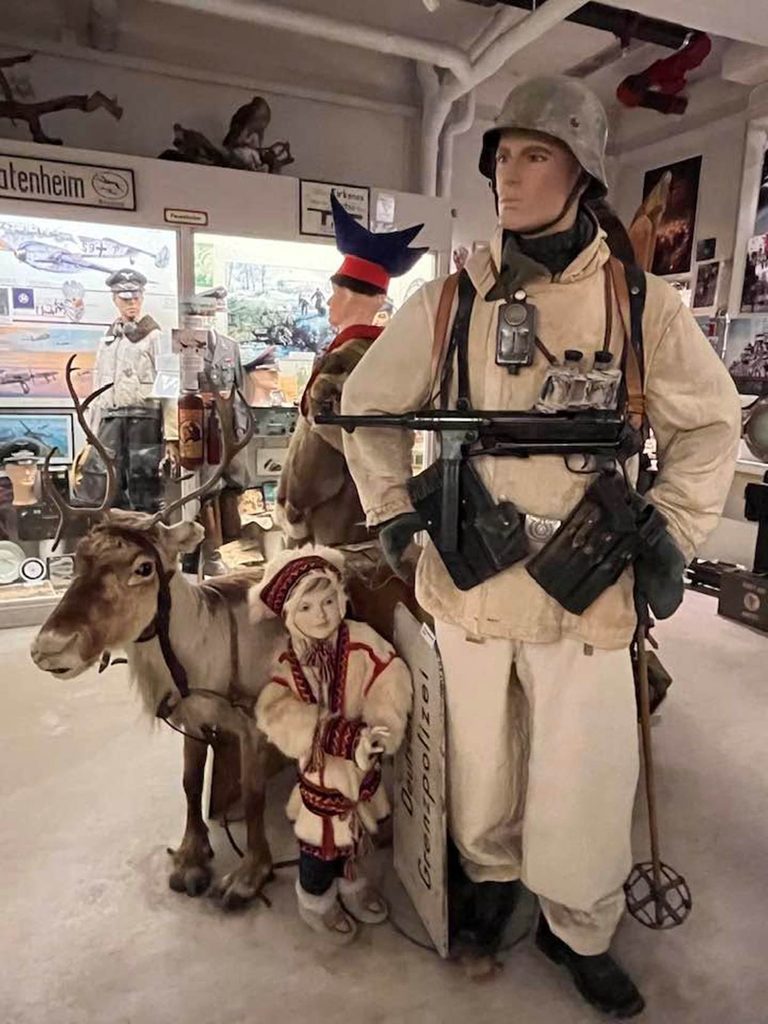
The signage at the War Memorial Museum was only sporadically in English, but if I understood this one correctly, Norwegian children would sometimes befriend Nazis so they could obtain food, which they would then give to their parents to keep them from starving. Sort of a kinder-resistance movement.
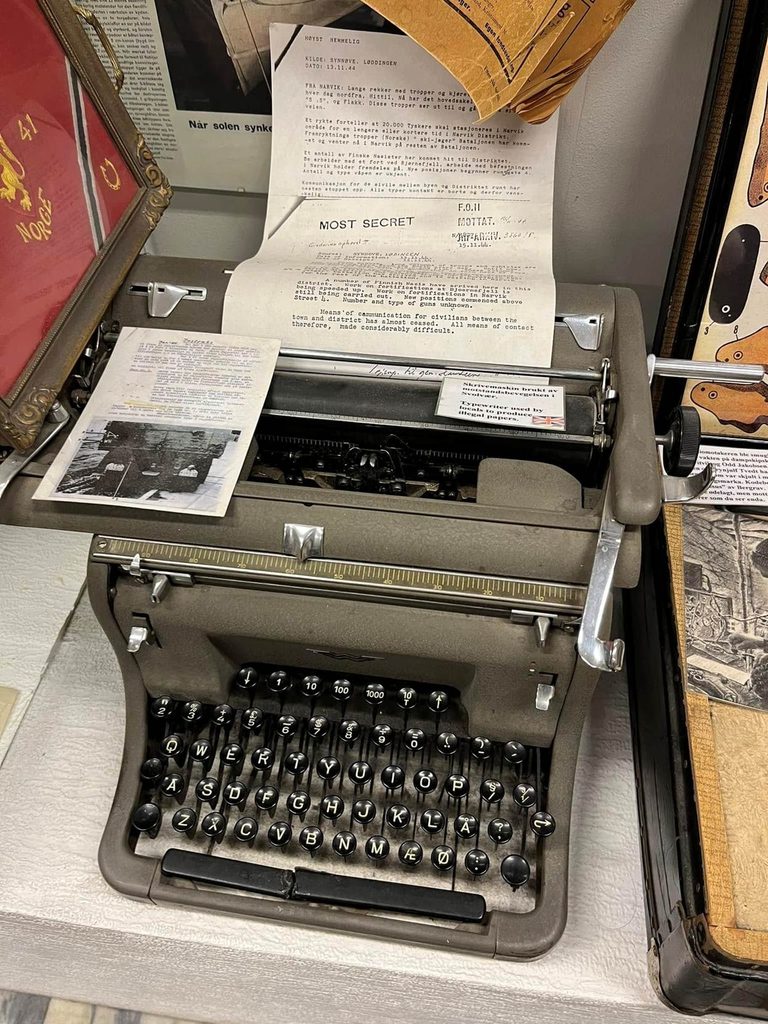
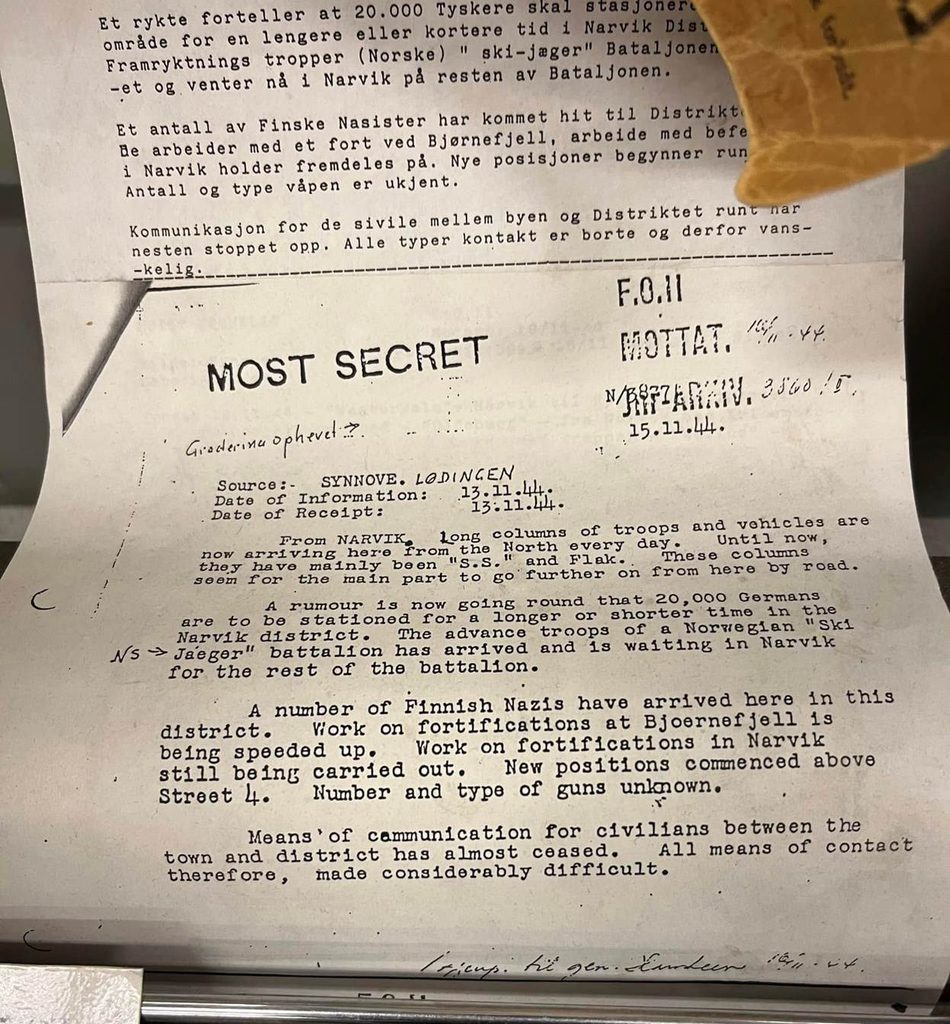
Typewriter used to produce illegal intelligence reports, like the one shown.
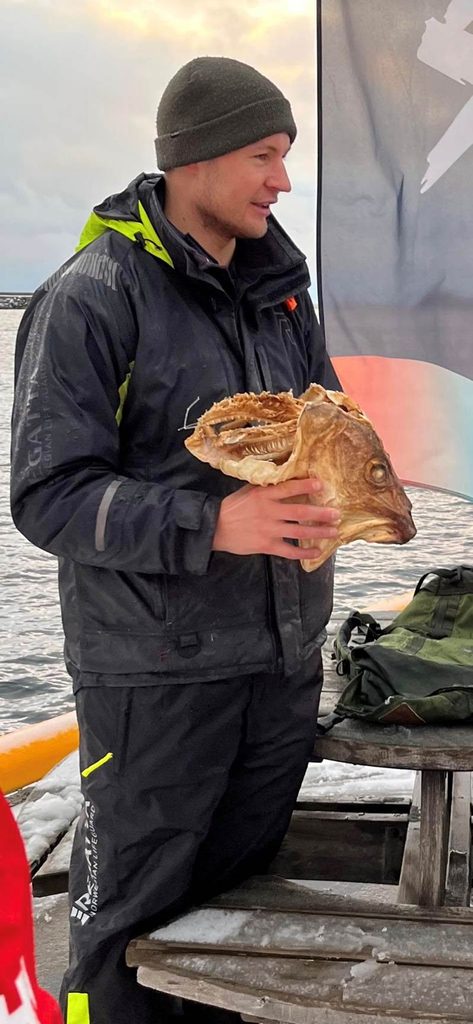
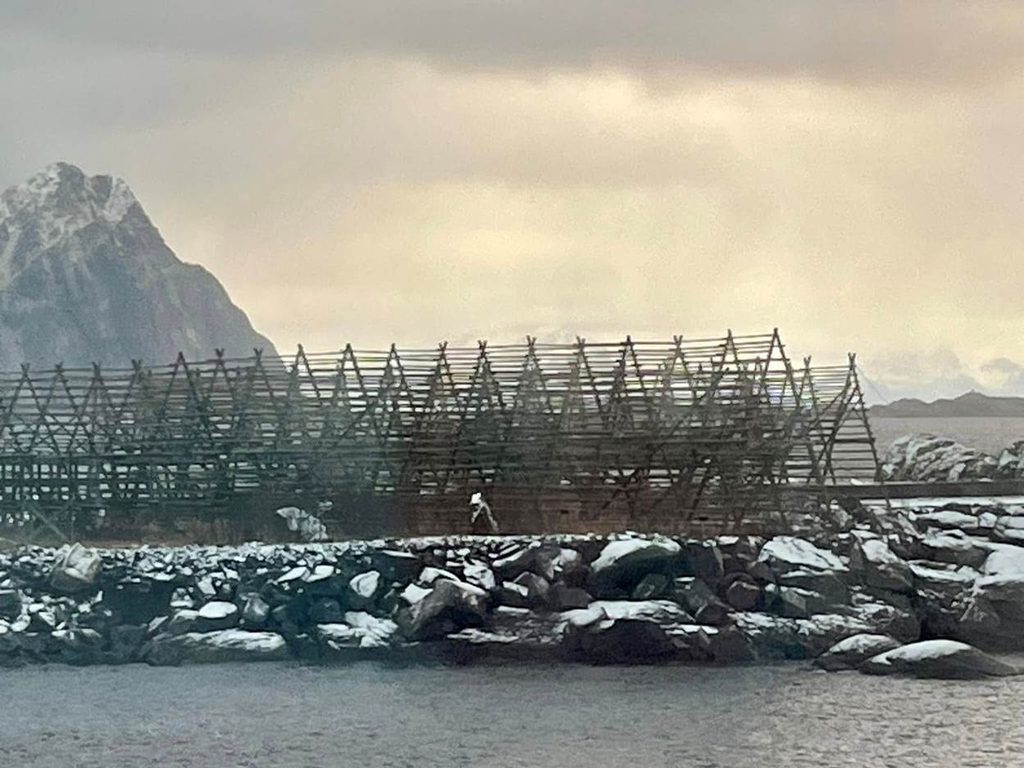
Svolvaer’s economy runs on the Atlantic cod, most of which is exported. After being caught by fishermen, the cod are placed on these drying racks (covered by netting to protect them from sea gulls). In the upper picture, a presenter holds a dried cod head. I didn’t realize how big the cod are.
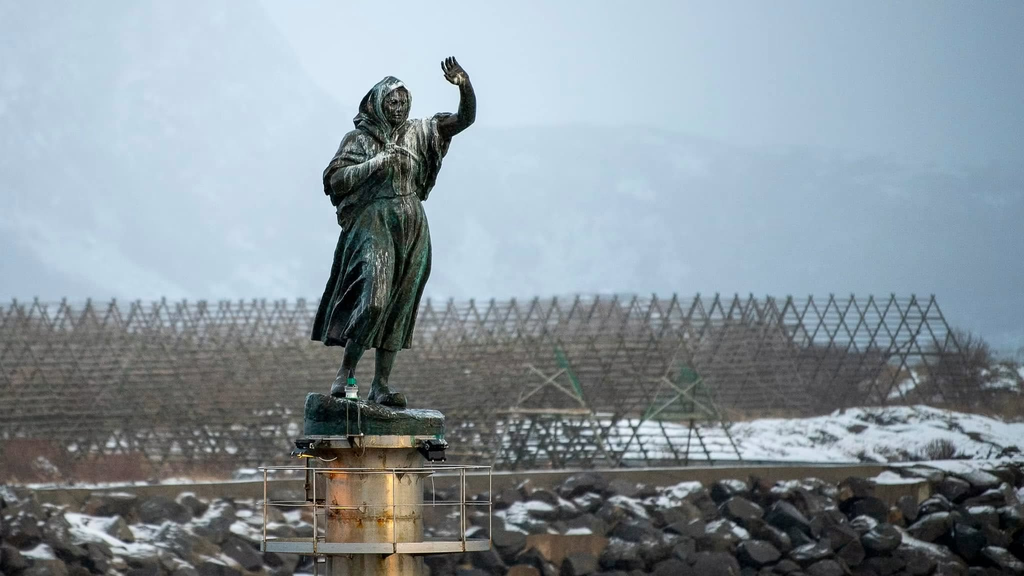
Another view of the cod drying racks. The statue is of Fiskarkona (the Fisherman’s Wife). It’s meant to pay tribute to the wives who waited at home while looking out to sea for their returning fishermen husbands. Photo credit: CP Photographie.
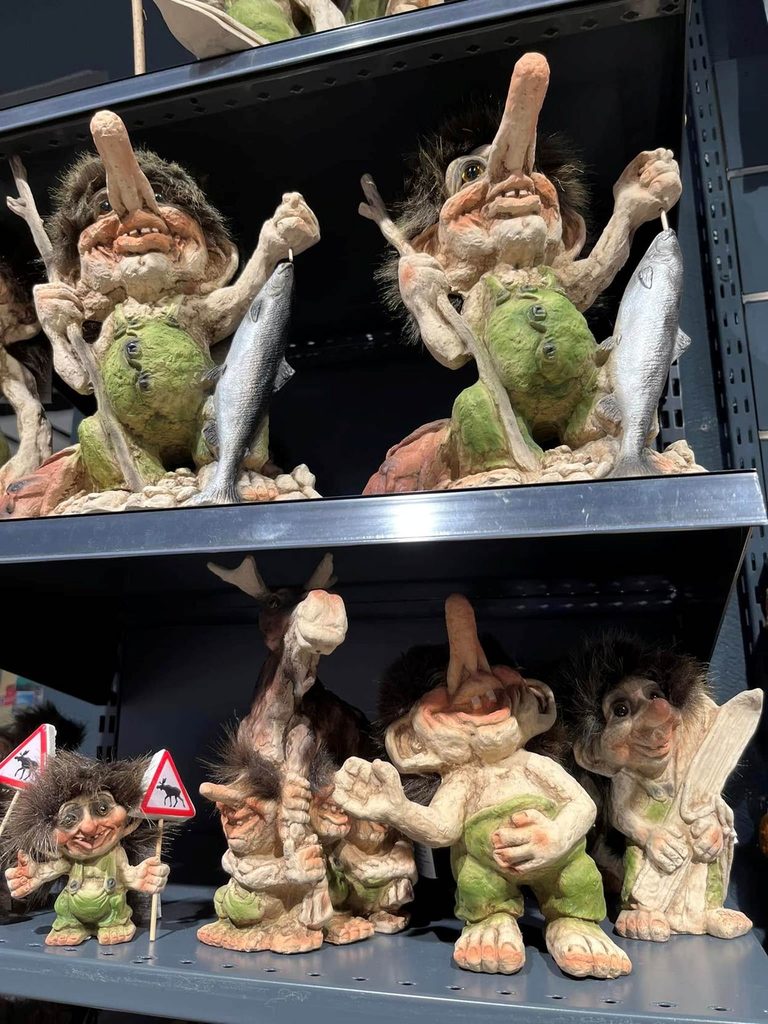
Trolls are everywhere in Svolvaer.
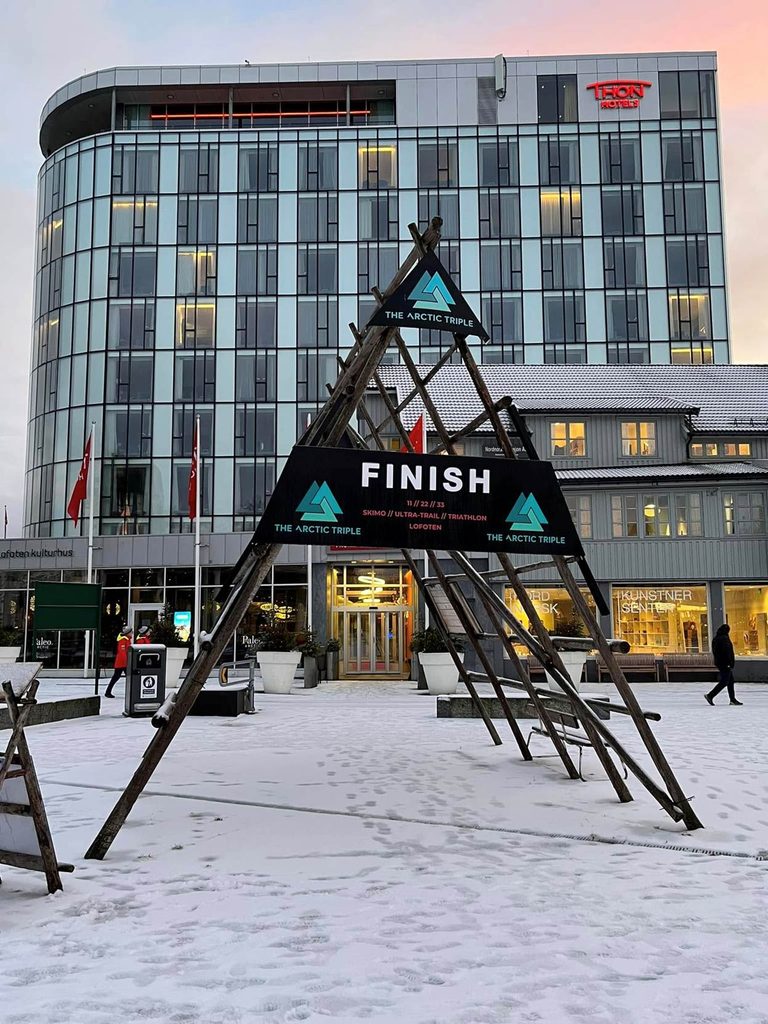
Downtown Svolvaer is the finish line for the Arctic Triathlon.
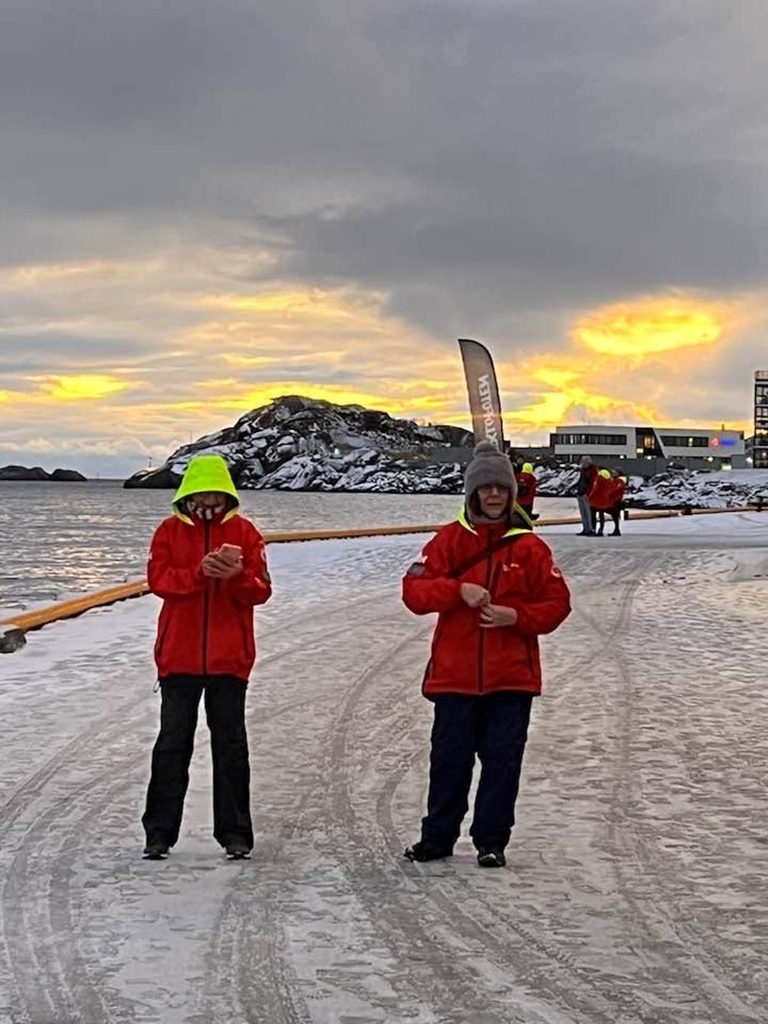
This was sunset … at 2:45pm.
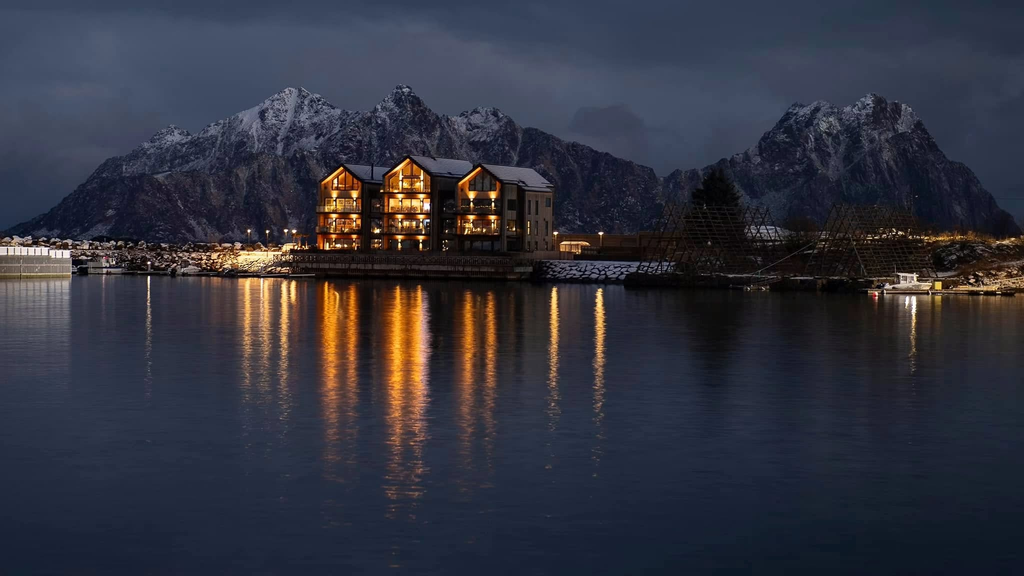
Good-bye and good night, Svolvaer! Photo credit: CP Photographie