

We had some welcome excitement this morning. Shortly after breakfast, there was a PA announcement that there were whales off the starboard side of the ship. I shrugged on my cold-weather clothes and headed for the outside doors, only to be greeted by another announcement: there were also orcas on the port side. I rushed to port and saw the characteristic dorsal fins of the orcas, maybe a dozen in all over the course of the morning. We had several announcements: orcas again off port! Humpbacks directly ahead!
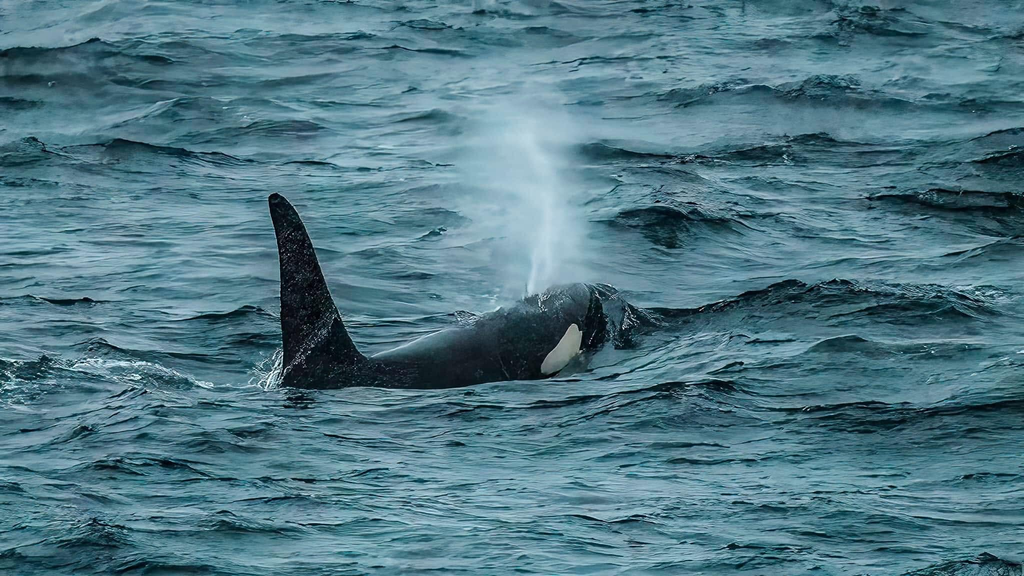
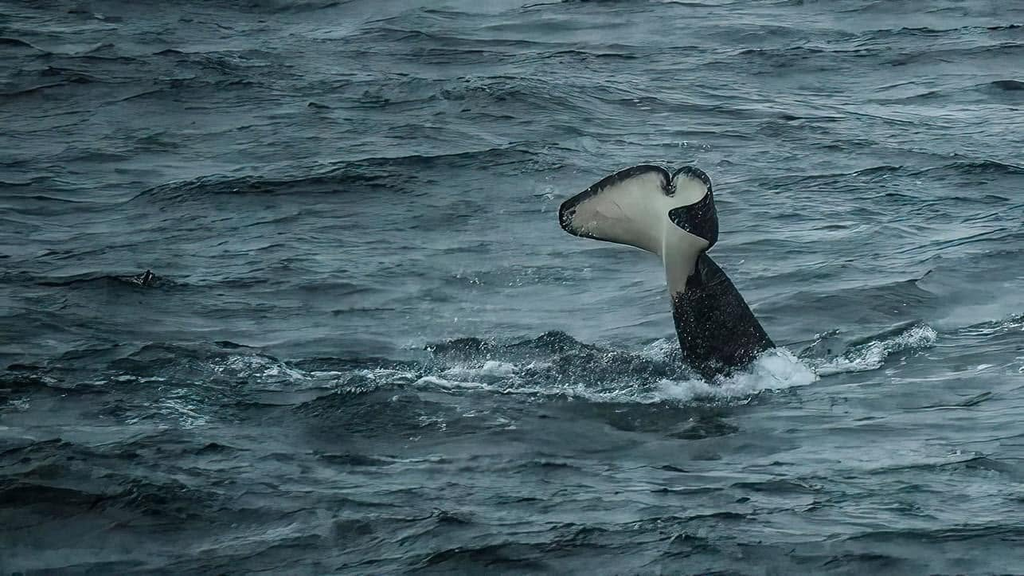
Orcas! Photo credits: CP Photografie.
Today we visited our northernmost destination: the small city of Alta. This time, I chose an optional excursion (that means I get to pay extra for it), but it was definitely worth it. They bused about 20 of us to the tiny Sami village of Máze, where we met a Sami couple and their three children who still live the nomadic life.
Our visit with the Sami family began with an hour-long drive from where MS Maud was docked. We were warned to buckle up, not only because it’s a legal requirement, but because a moose or reindeer might wander into the middle of the road and require an abrupt stop. Our tour guide provided commentary along the way about Alta and polar life in general. In fact, one of her points was that if wildlife do block the road, they’re not allowed to harm them or even honk their horns to scare them off the road. The vehicle simply has to sit until the wildlife decide to clear the road in their own sweet time.
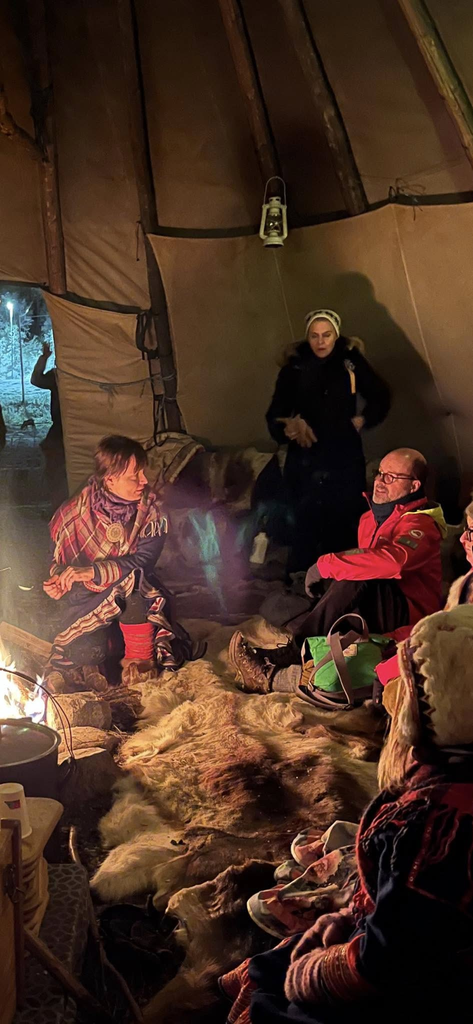
We were welcomed into a tent made of sealskin and carpeted with reindeer hides. This is similar to the traditional Sami tent except that it is much bigger, since ours was designed for large gatherings. A family tent would be much smaller, small enough that you can’t stand upright in it. Our location in Máze is close to their winter pastures for their reindeer.
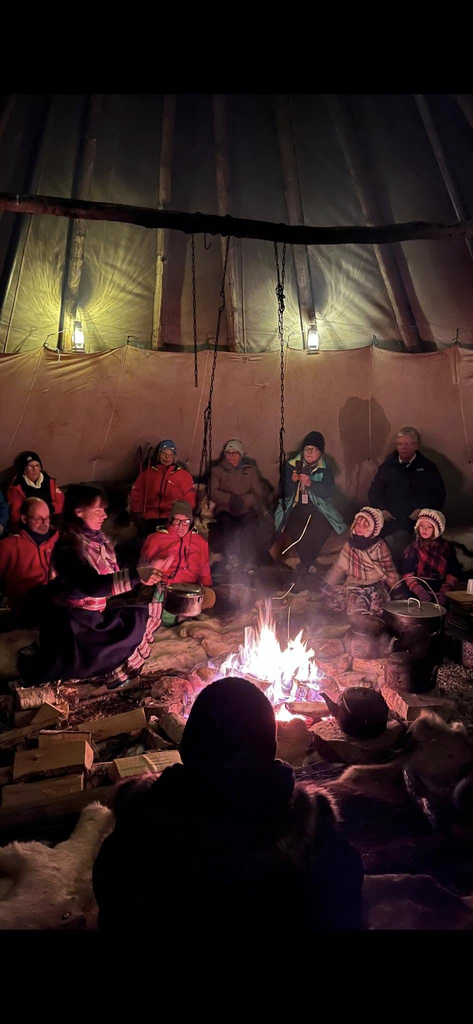
The clothing that our Sami host family wore is the traditional clothing that Sami people wear, which today is typically worn mostly for church and ceremonial occasions (and greeting tourists). In the photos below, the mom said her outfit was more typical of the 1850s, her children were wearing more modern Sami garb.
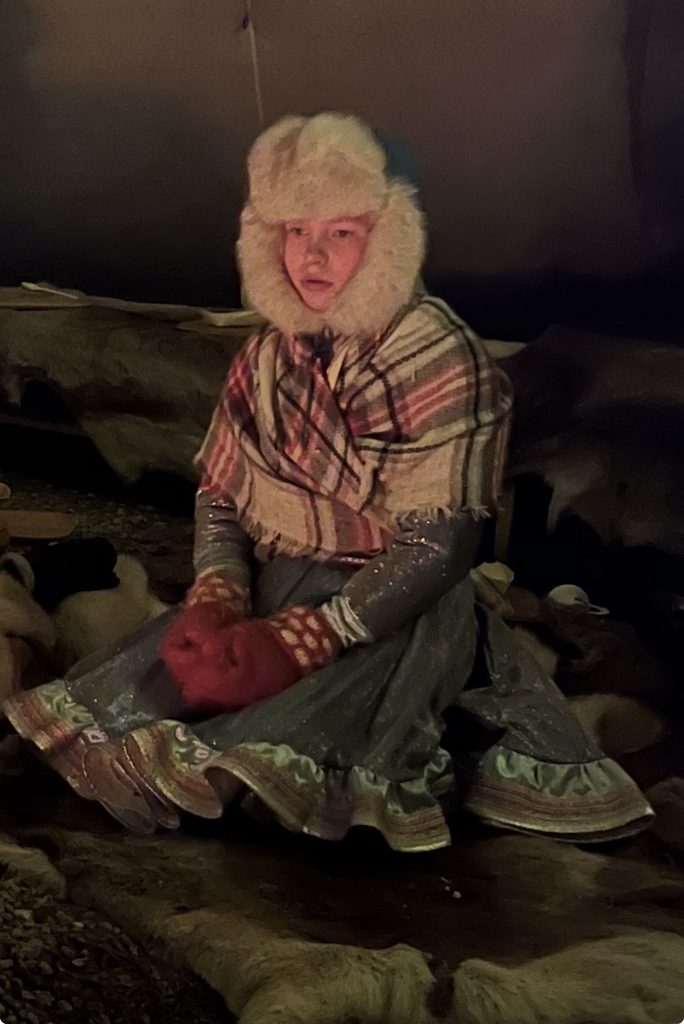
The Sami people originally wandered across the four northern polar countries: Norway, Sweden, Finland, and Russia. Prior to 1919, the polar regions had vaguely-defined borders. Once the borders were firmed up, the various nations such as Norway and Sweden began enforcing them, which made life difficult for traditional Sami. Those in Sweden at the time the lines were drawn, for example, could now no longer reach their winter pastures in Norway. At the same time, Norway decided that it wanted to “Norwegianize” its indigenous population and (in similar fashion to other countries) decided to stamp out indigenous culture. Their native language and traditional “yoiking” singing and shamanism were all forbidden. Children were taken from their parents and educated elsewhere in the Norwegian way in the hopes that the indigenous culture would just die out. This shameful chapter in history began to reverse itself in the late 20th century. Now, the Sami people’s culture is protected and they even have their own Parliament.
They served us traditional reindeer stew (reindeer meat, potatoes, and vegetables) and a dessert of whipped cream, what tasted like pound cake, and cloudberries. Cloudberries are scarce and highly sought after.
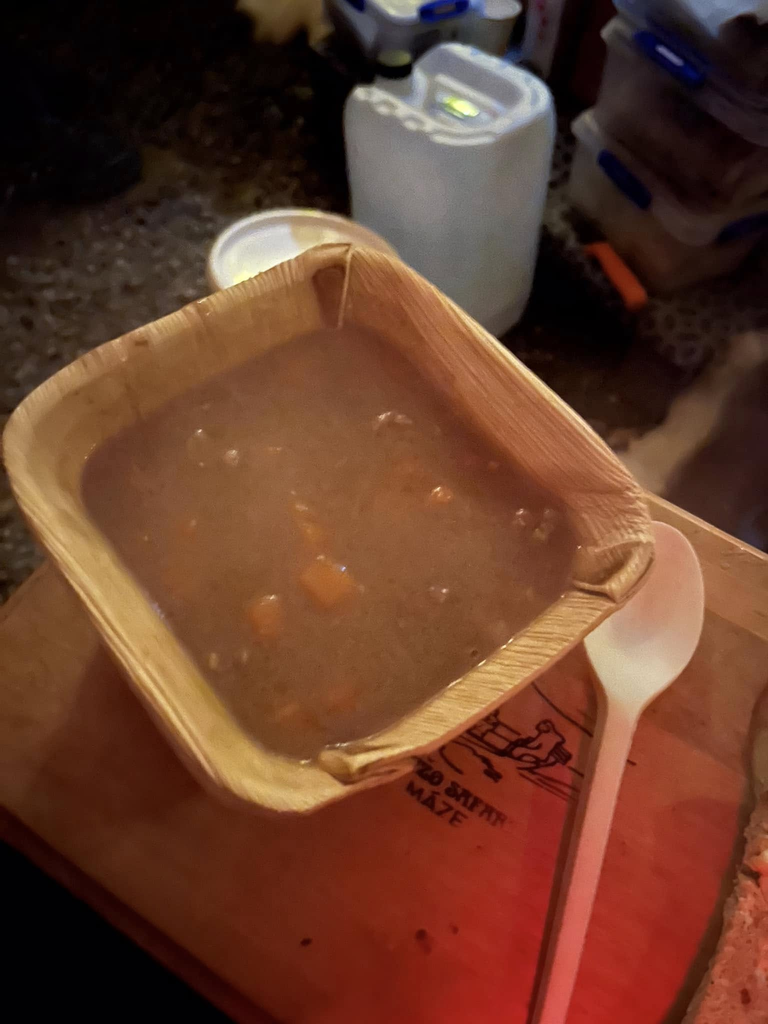
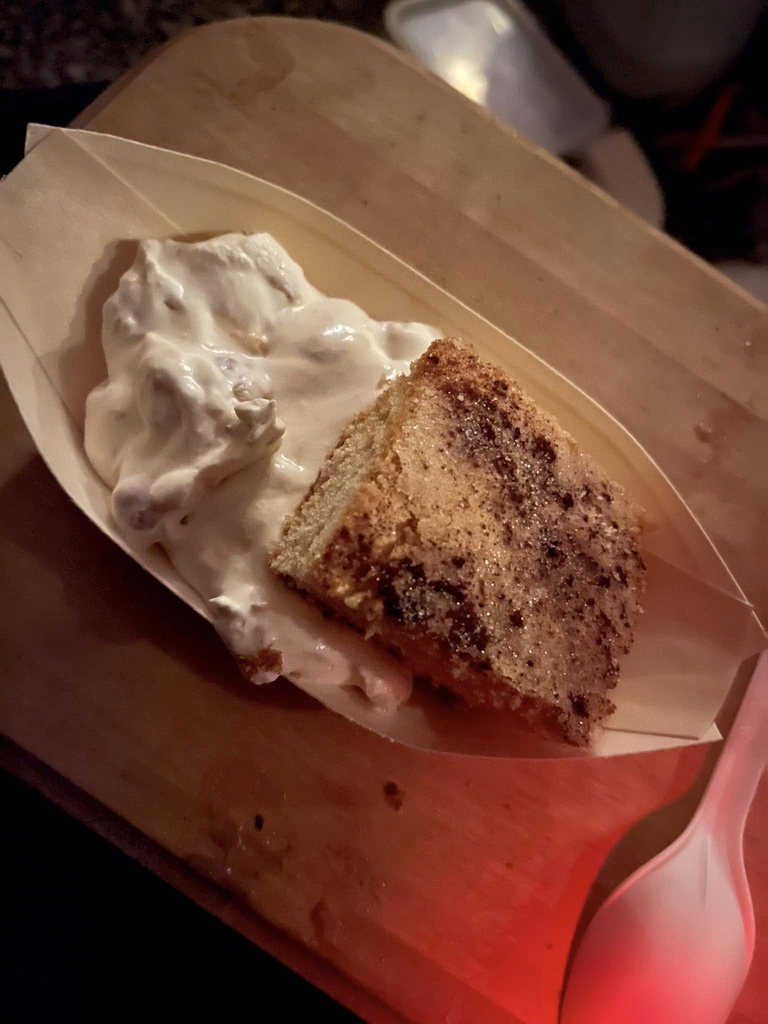
The husband in the family we met does most of the reindeer husbandry tasks and the wife is a teacher. They still follow their herds across the seasons (the Sami recognize 8 seasons rather than the four we know). The family-sized tent goes with them. The children go to standard Norwegian schools. Their home language is Sami, but they also speak Norwegian and then begin learning English in elementary school.
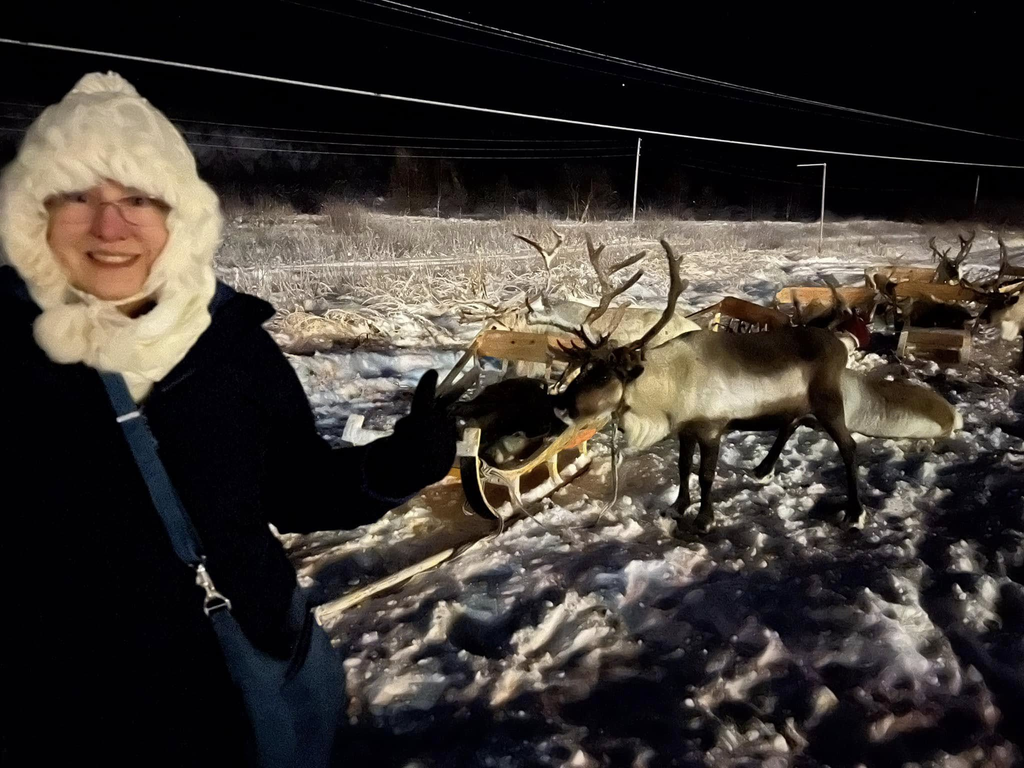
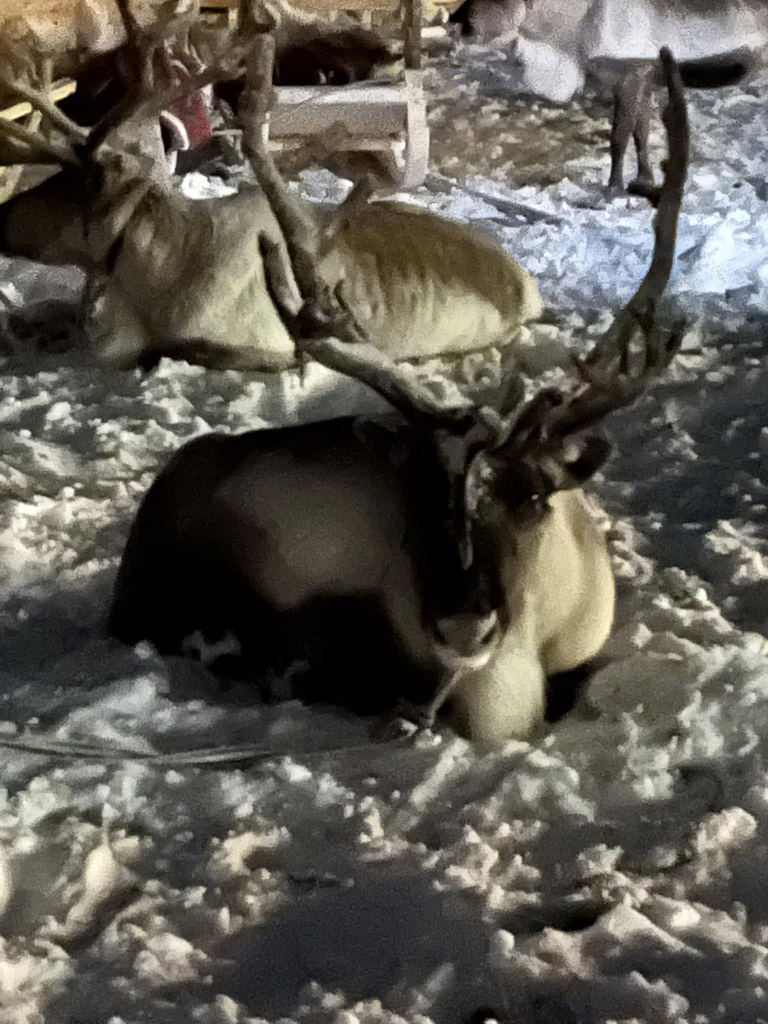
In addition to introducing us to his reindeer, the husband explained about their traditional yoiking chants being forbidden by the government. He then gave an example of yoiking. There are personal yoiks, yoiks to call the reindeer, and yoiks for multiple other occasions.
During our visit, the bus tour guide came into the tent to announce that the northern lights were out, so I was able to catch a quick picture.
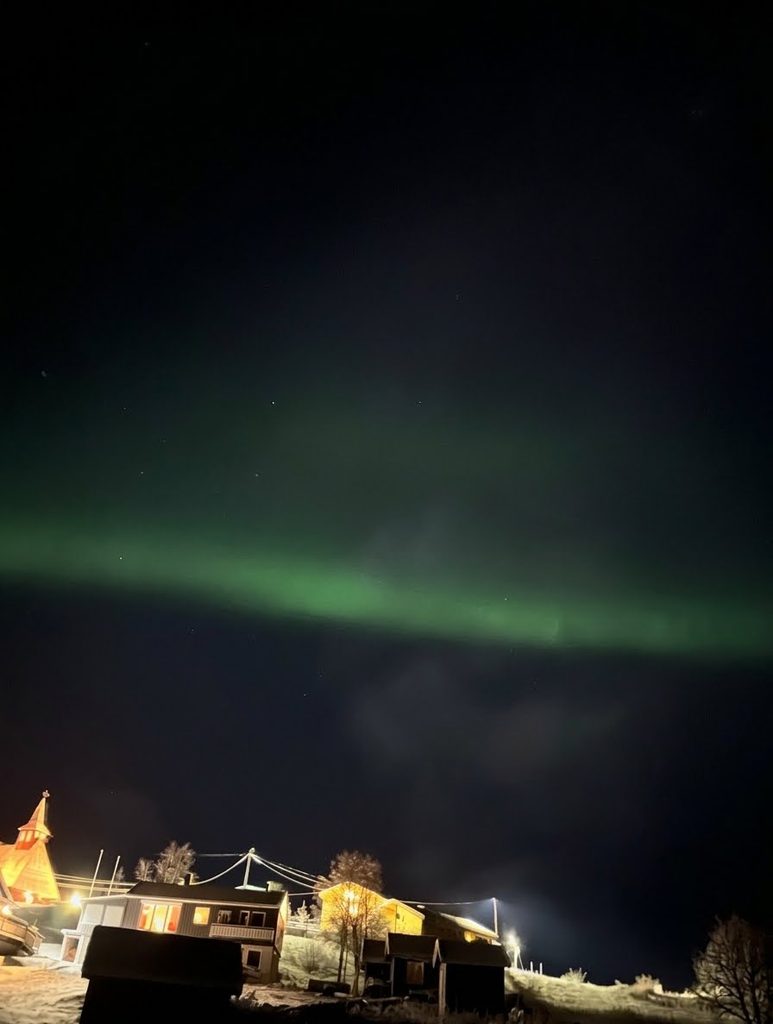
Because we spent about four hours visiting the Sami, we didn’t have enough time to tour Alta (although it doesn’t sound like there’s much to see there). The highlight of the city is its Northern Lights Cathedral.
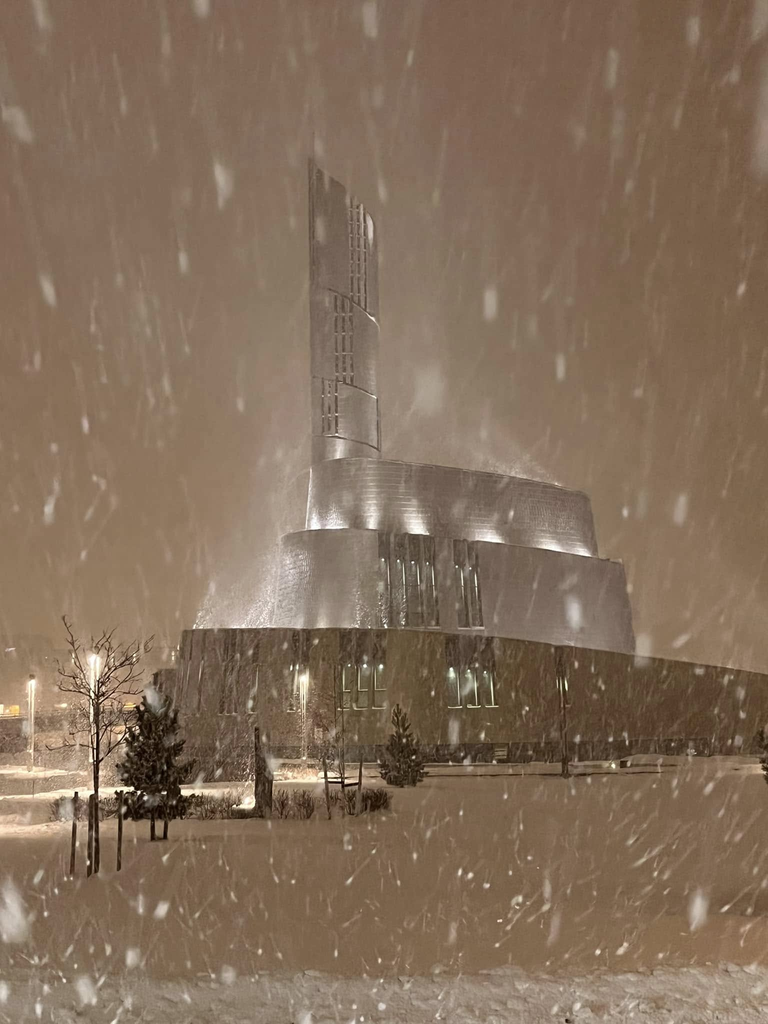
I was only able to snap a snowy picture of its exterior on the way back from the Sami Village.
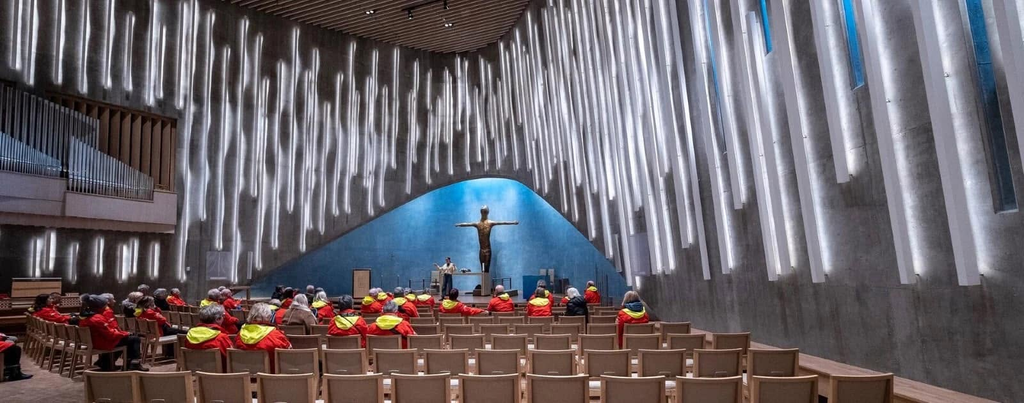
Because we were too late in the evening to visit the interior, this photo is from the ship’s photographer. Photo credit: CP Photografie.
I didn’t realize it at the time, but Alta is north of all of Sweden and most of Finland. And we’re only about 150 miles from the Russian border.
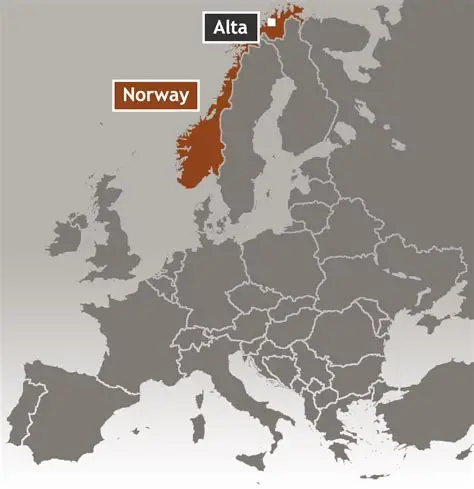
This was the northernmost city of our voyage. We’ll be heading back south tomorrow.