

Tromsø has piqued my interest ever since I was in high school and read James Michener’s “The Drifters,” which followed six college-age youth through Europe and the counter-culture of the 1960s. One of the main characters was a girl named Britta, from Tromsø, who had drifted south to Torremolinos in Spain because she was tired of the sunless winters in her hometown. For some reason, the “land of the midnight sun” always stuck there in the back of my mind. So, of course, I get to finally see the city during one of those absurdly short days of winter. Nevertheless, I was still looking forward to it.
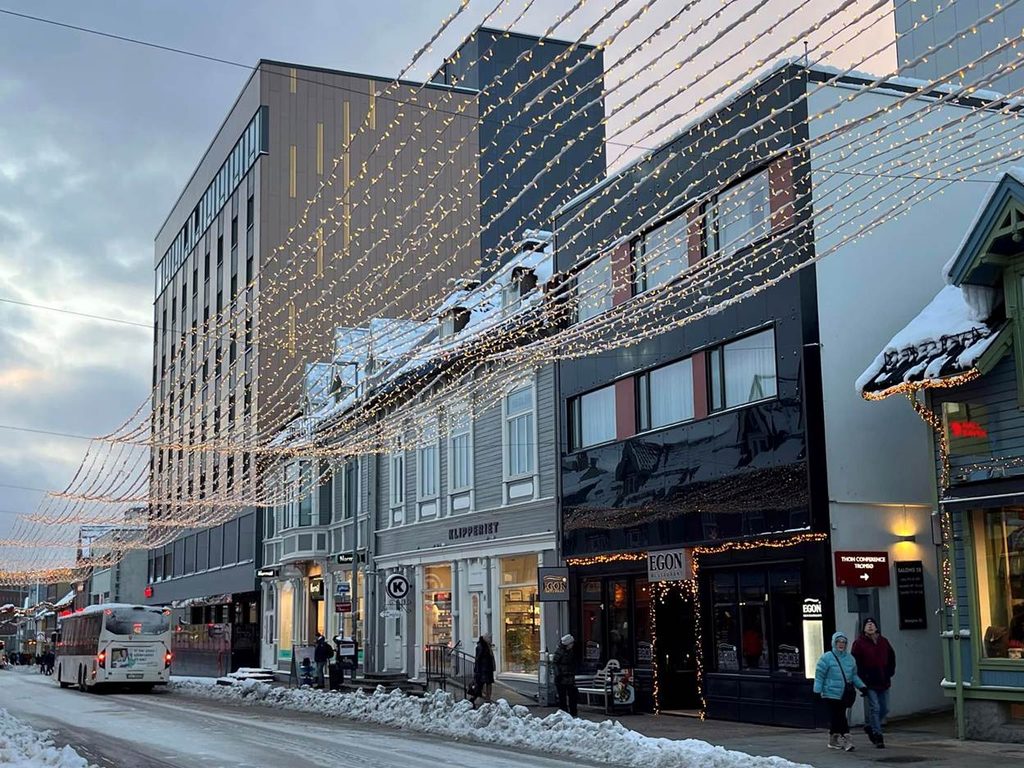
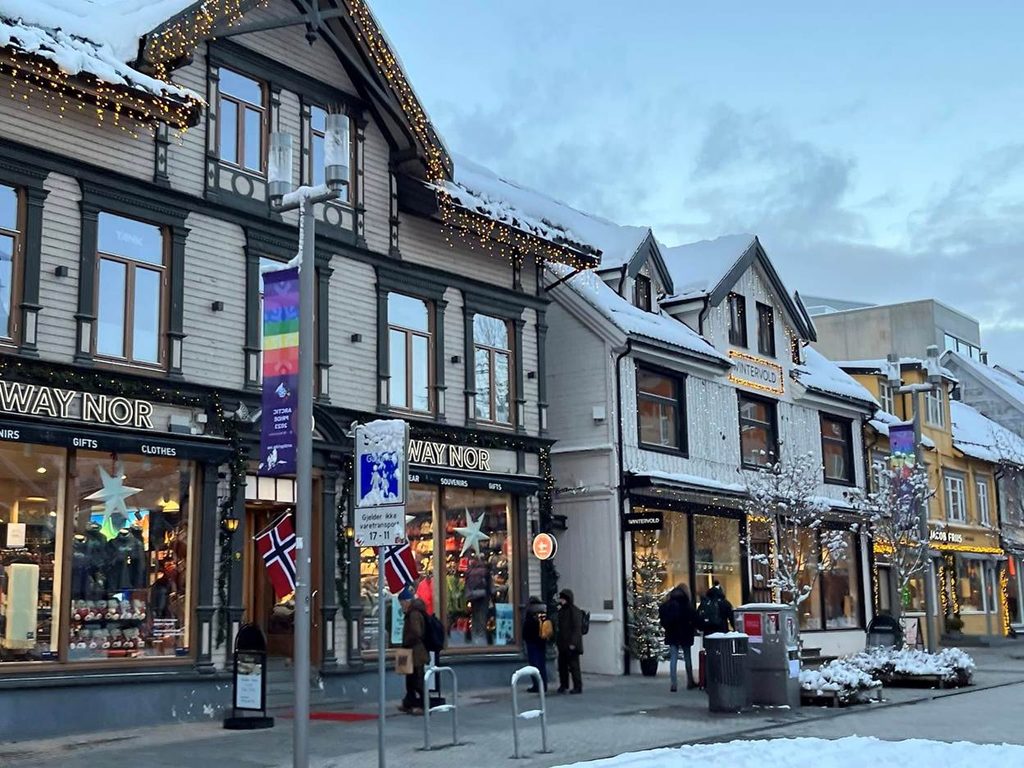
Tromsø is considered one of the best cities in the world to see the Northern Lights.
I got to see Tromsø in scattered pieces of time because I had signed up for an optional excursion which took place in the middle of the day. I spent a couple of hours looking through the shops and then popped in to a Nordic Art Museum. Since I finally succumbed and did a little Christmas shopping, I then went back to the ship to drop off my packages before setting off on the next chapter in my day.
About 20 of us went to Trom Dog to meet the huskies. The family who owns Trom Dog are competitive sled dog racers. They raise and train huskies for dog sled racing. They also offer dog sledding experiences to tourists during the winter months.
The big daddy of dog sled races for Europe is the FINNMARKSLØPET, racing across 1,200km (745 miles) of the northernmost county of Norway (see map below).
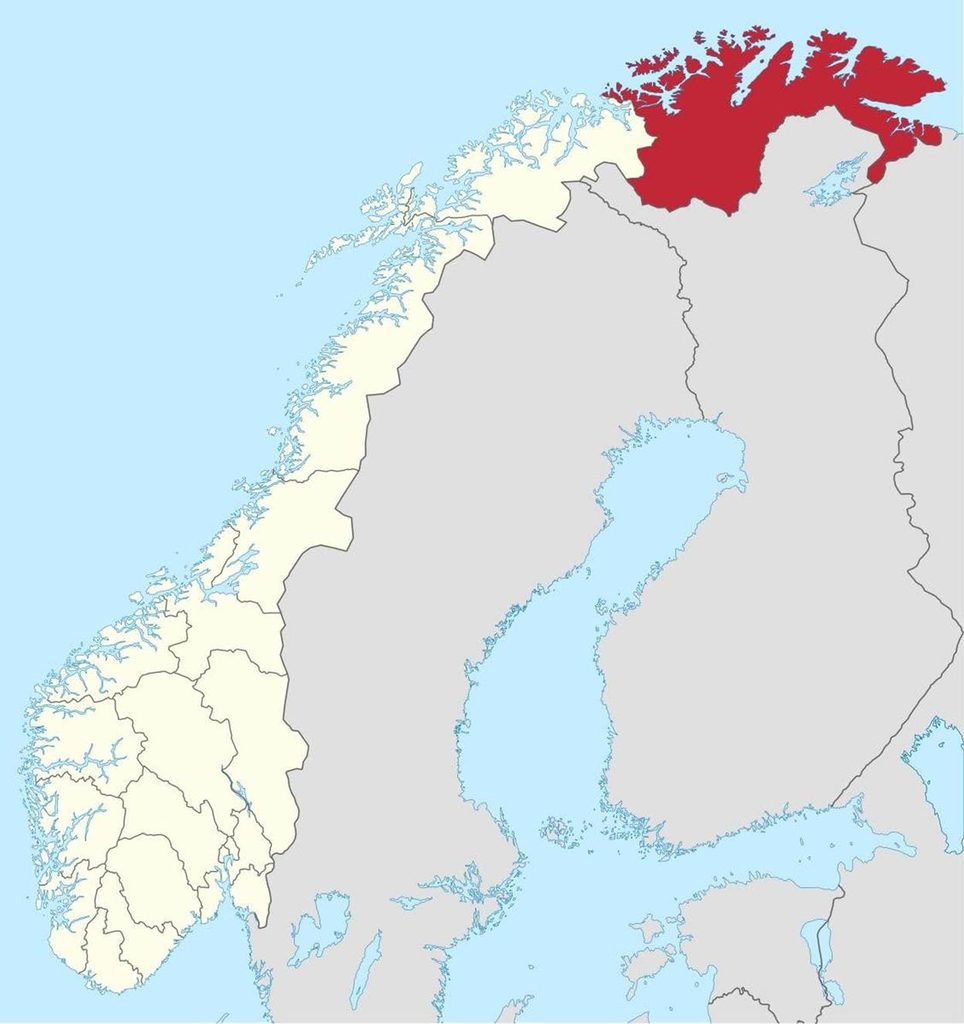
Our visit to Tro Dog started with a film which gave us a look at the behind-the-scenes pieces involved with competitive dog sled racing on a monster marathon like the Finnmarksløpet. At the beginning of the film, they mentioned that the owner of Tro Dog had set a record for completing 19 Finnmarksløpet races and was working on her 20th. “Completing”, I noted, not winning. But there’s a reason for that verbiage.
Each contestant in the Finnmarksløpet starts out with a 14-dog team. But accidents and the sheer physical toll of the race can cause multiple dogs to drop out. The minimum size team to finish the race is six dogs. The owner’s son, age 27, dropped out first. He lost his first dog just shortly after the start of the race when Fix’s leg fell into a hole and essentially wrenched his scapula. The dogs are checked by veterinarians at each checkpoint. If the vet says a dog is hardy enough and injury-free, they can continue. However, it’s more often that the owner will pull a dog, either because of injuries to their paws or because they become too tired to pull effectively any more. In the course of the film, both the mother’s and the son’s teams dropped out. Mom’s team made it 1,000km and was on the home stretch when the weather became so bad and the snow so deep that she didn’t want to risk her dogs on those last 200km.
Back home outside of Tromso, Tro Dogs had some 60-80 dogs there last night, both puppies and adults. The puppies have cages and open play yards where they can socialize with each other and the humans. For racing dogs, the owners are looking for smart dogs who can persevere, listen and learn, but are resourceful. Those who aren’t race dog material will end up pulling us tourists around. Once they’re adults, the dogs are paired up, two to a doghouse. They sleep outdoors and are perfectly comfortable doing so. It’s so hard to imagine!
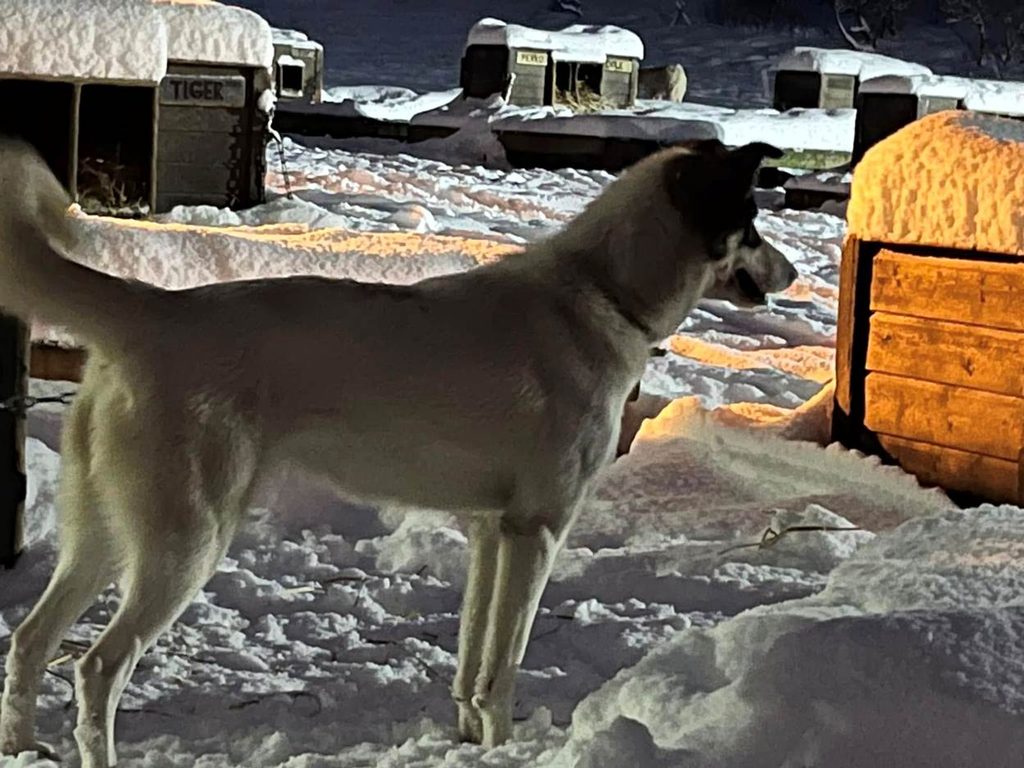
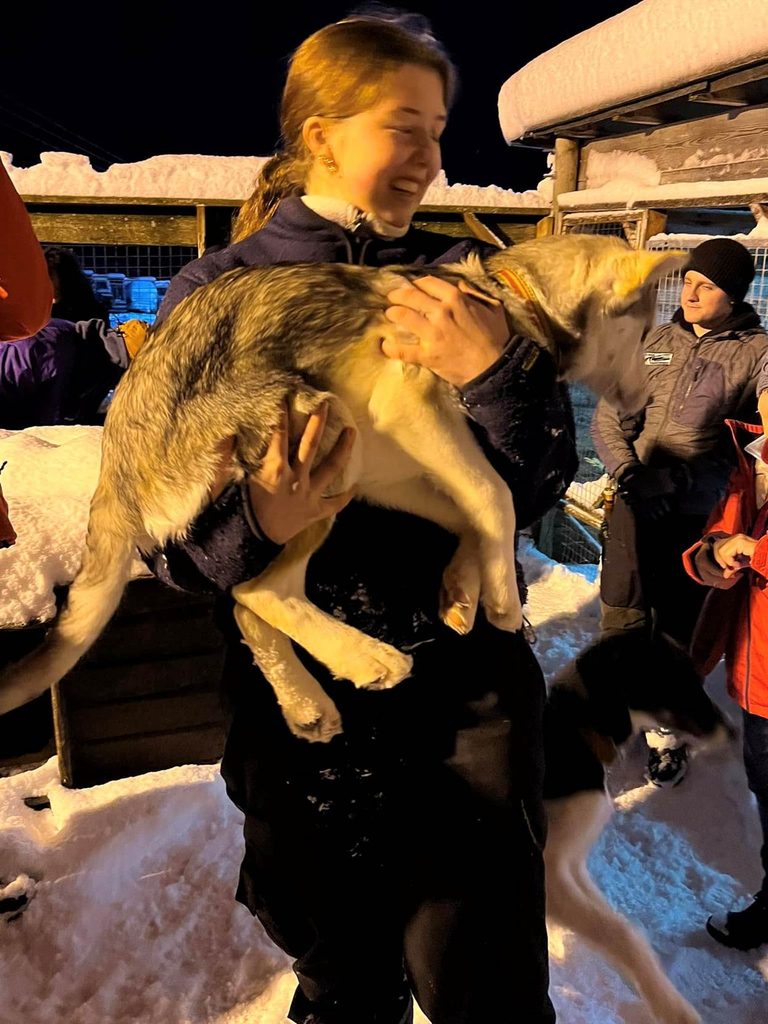
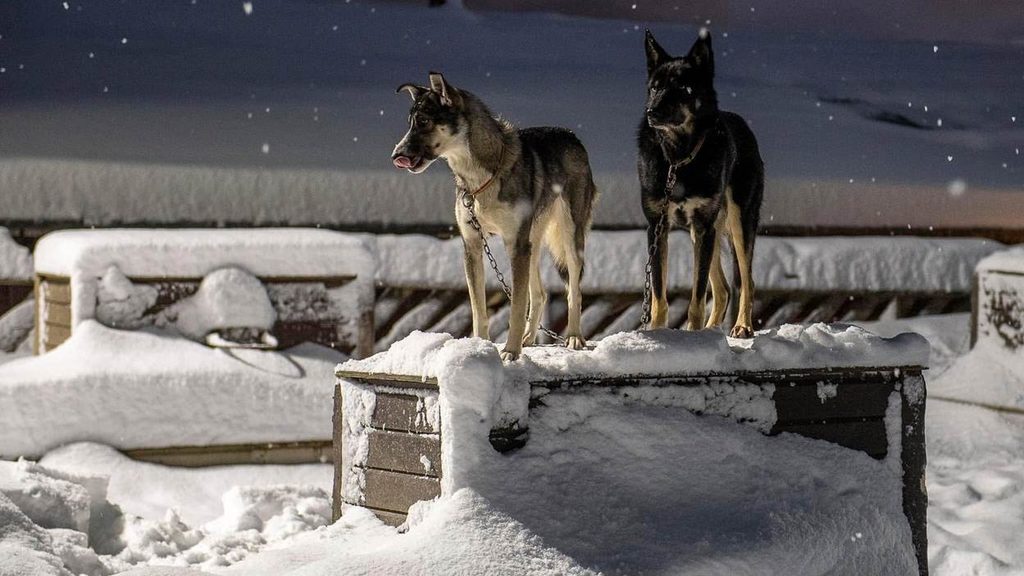
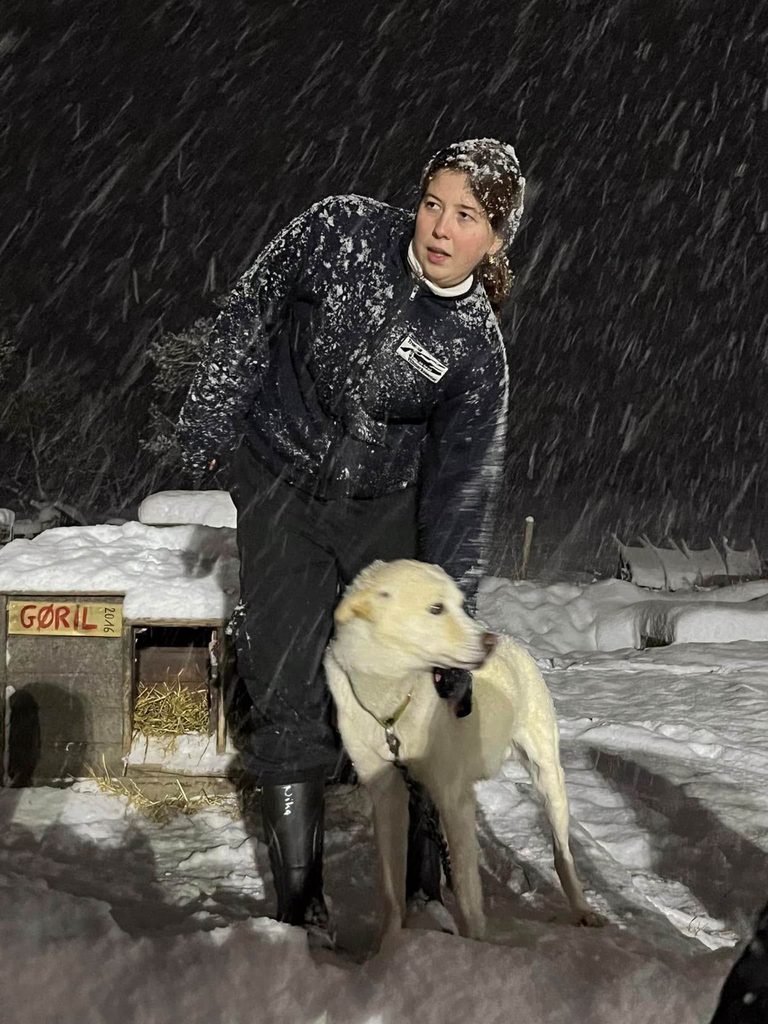
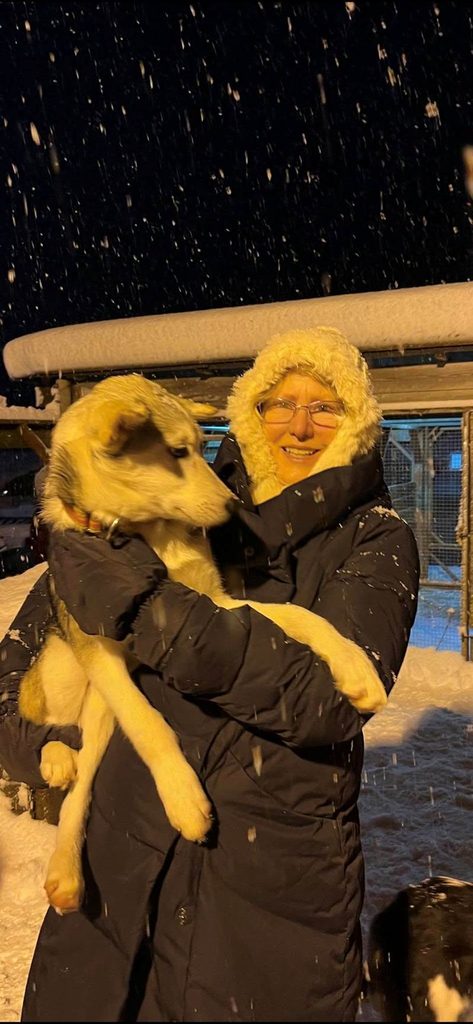
We got to play with the puppies and then greet the adult dogs. We watched a dog sledding demonstration (see video below) and then retreated to a fire and hot chocolate in a circular wooden building.
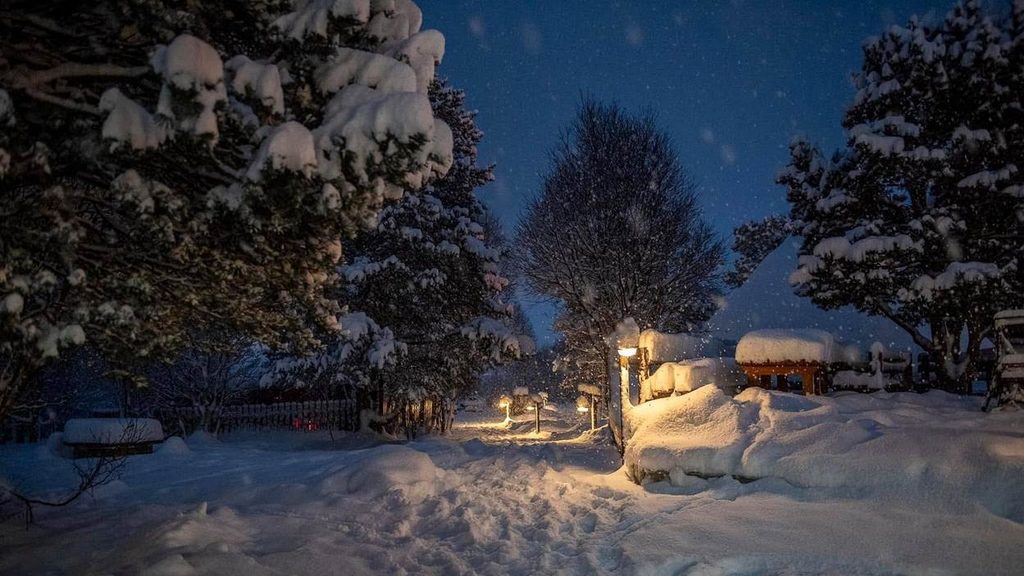
After returning from Trom Dog, I made my way to the Arctic Cathedral. I mostly wanted to see its magnificent stained glass, lit from the inside and viewable from the outside.
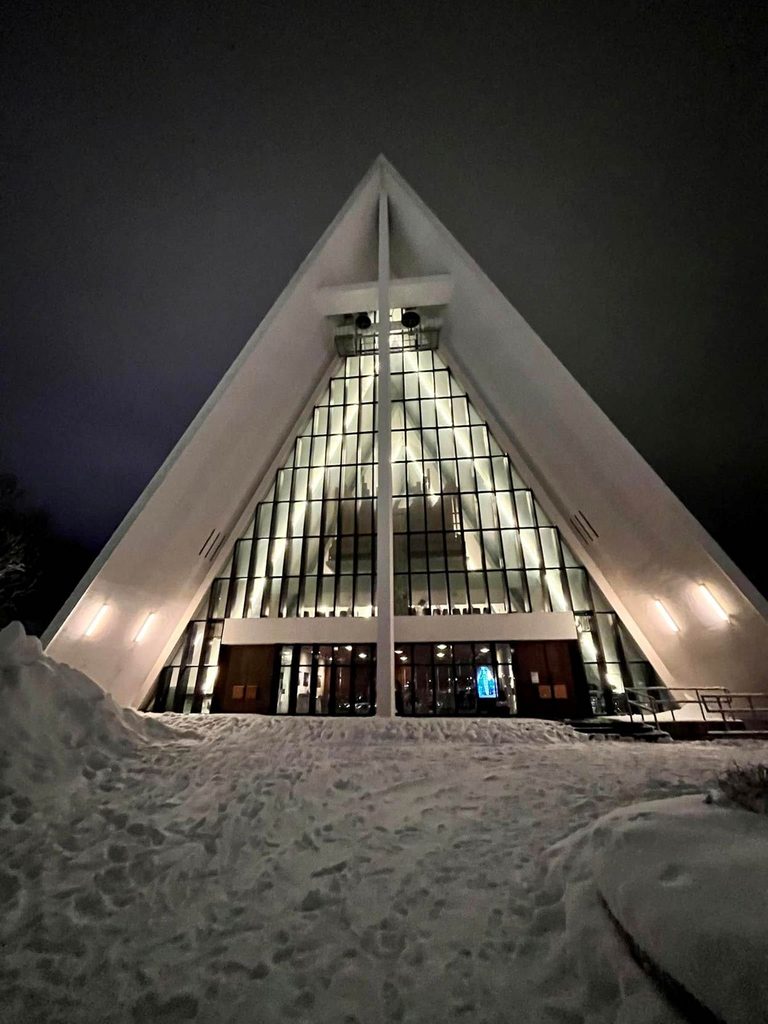
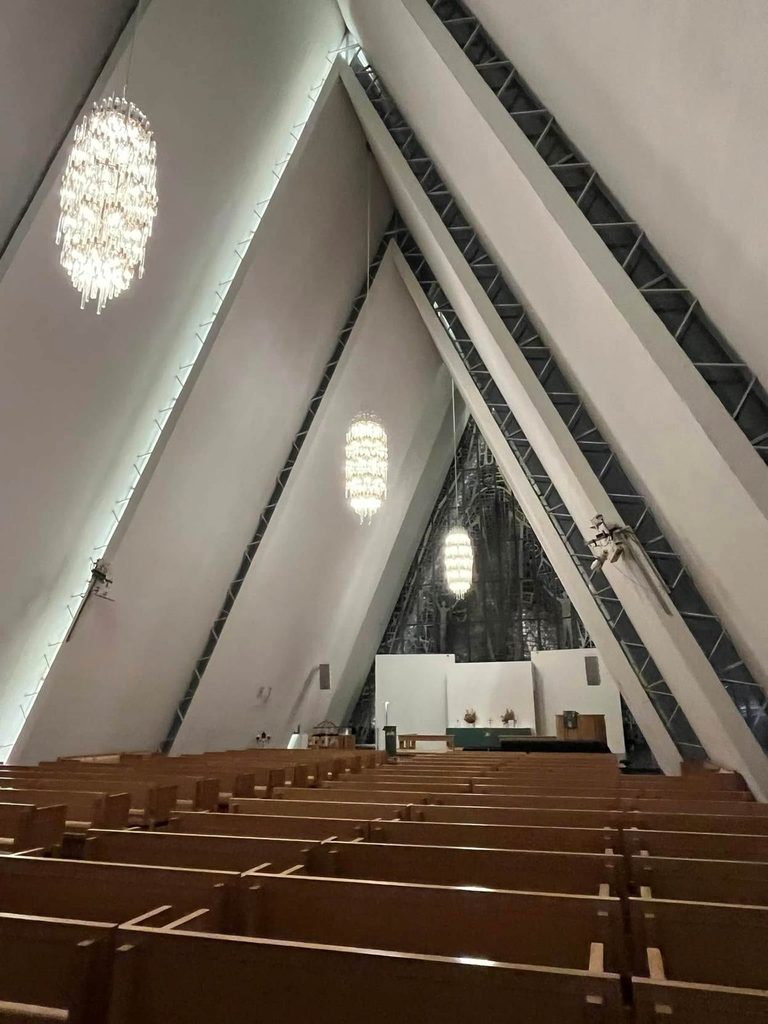
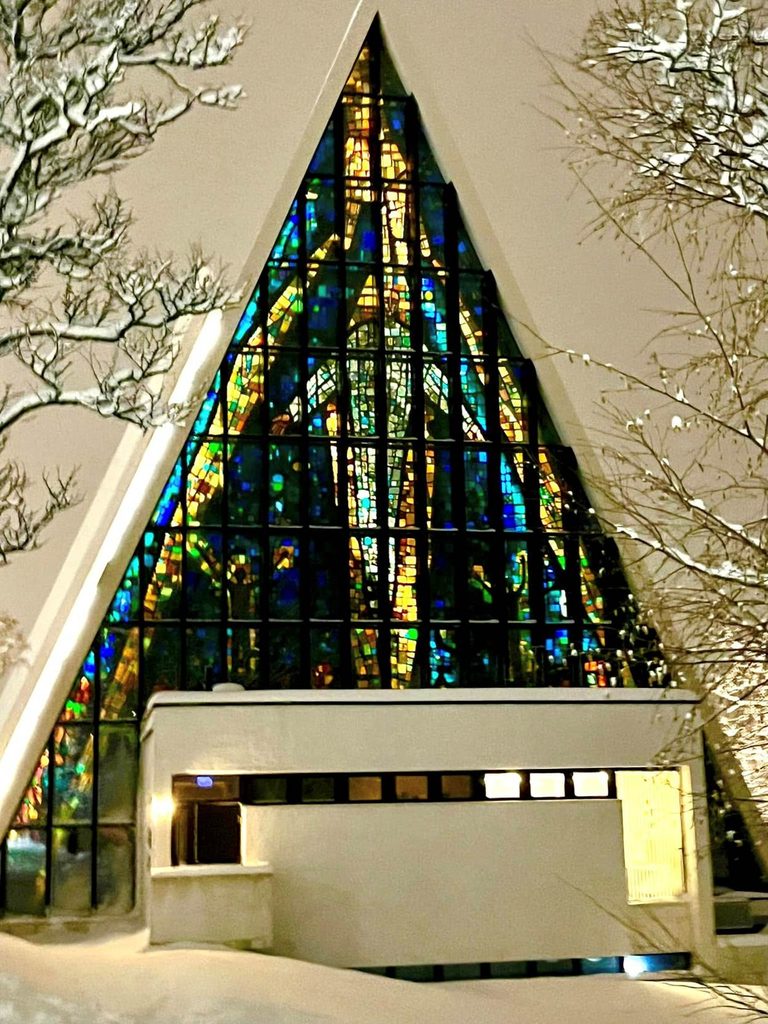
The Arctic Cathedral, on a hill overlooking Tromsø.
Then it was time to return to the ship, where I attended an after-dinner lecture on orcas.
November 18, 2023