

Plimoth Plantation was founded in 1947 as a living history museum that re-creates the world of the 17th century English settlers. The re-enactors live and work as they would have in 1619-1620, even adopting the specific accents of the region in England that their settler came from. The re-enactors do not recognize the modern day. If you say you’re visiting from Boston, they acknowledge the Boston located in England — because the one here in the Colonies didn’t exist yet. Plimoth Plantation also has a Wampanoag Homesite, where the Indians re-create the 17th century lifestyle but acknowledge the existence of the 21st century to better explain English-Indian relations of the 17th century. Nearby is the site of the Mayflower II, a replica of the original.
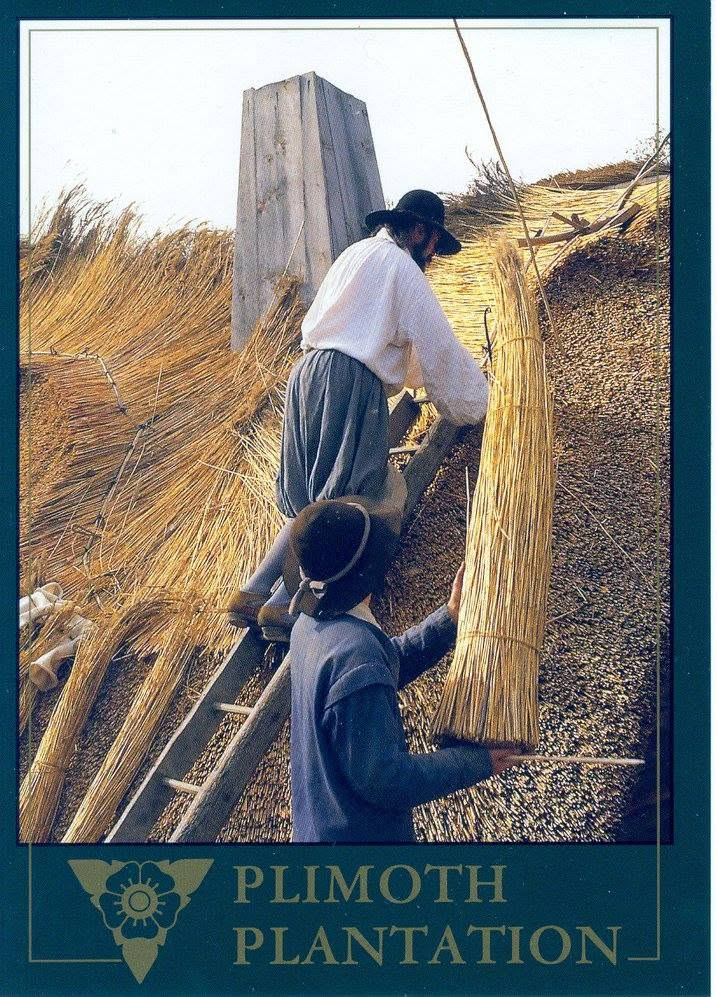
The photos with banners come from postcards I bought during my first visit to Plimoth Plantation. As I said, the re-enactors go about the daily tasks of living that the original settlers would have done. Here, you see men refreshing a thatched roof. Thatched roofs keep their buildings surprisingly warm (both times I’ve visited Plimoth Plantation were during cold-weather months).
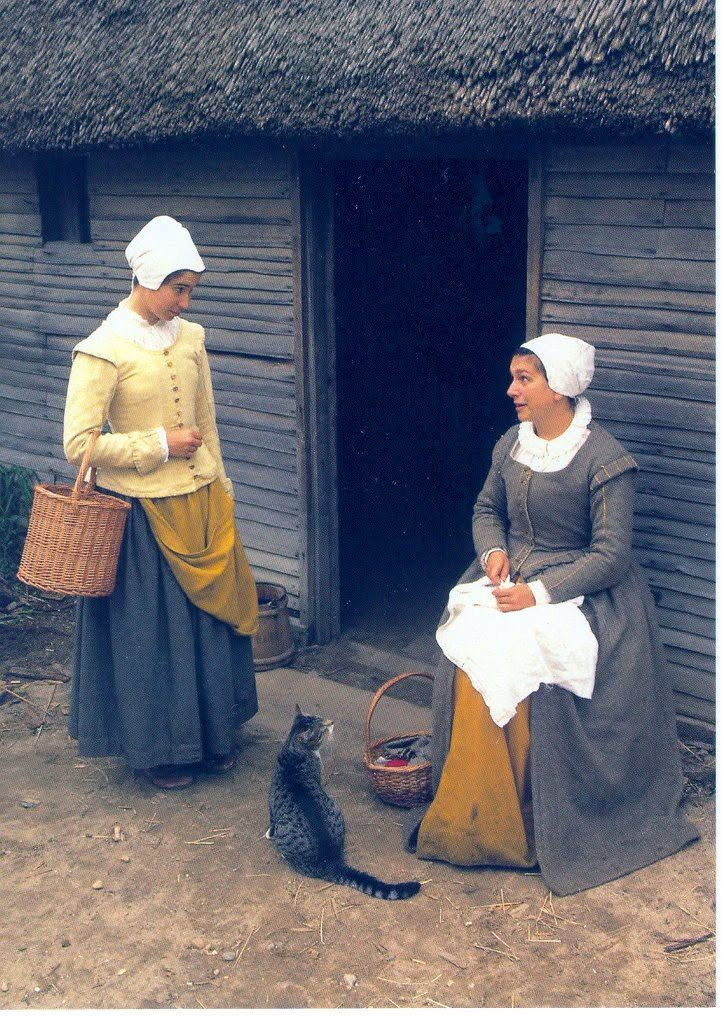
Two women chat while the cat looks for treats.
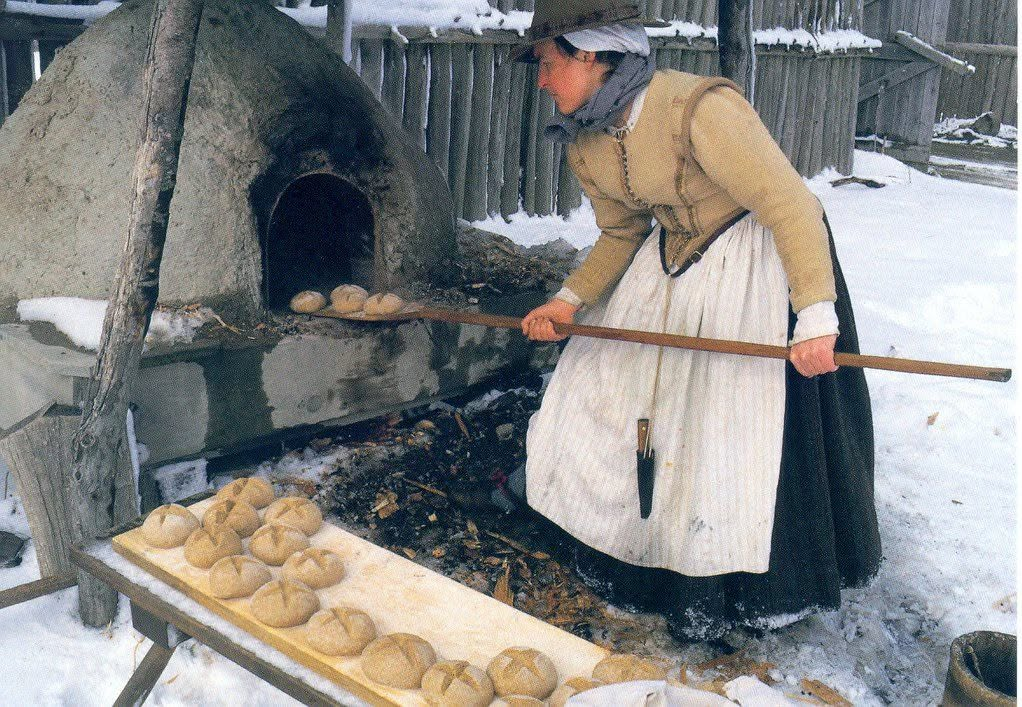
Baking has to go on even during the winter.
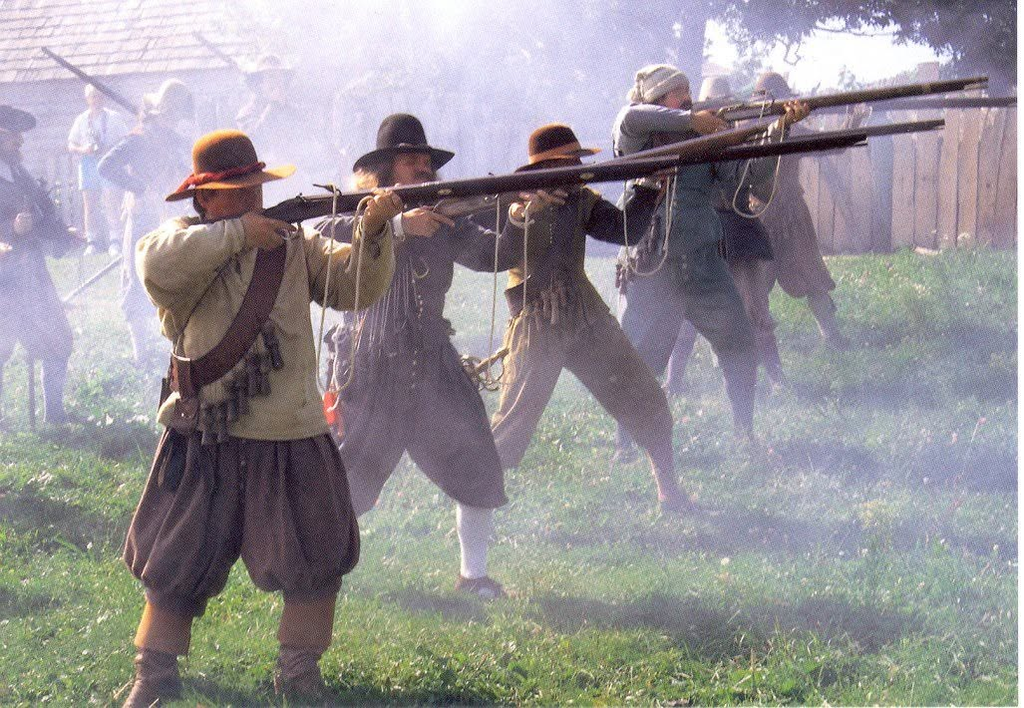
Men performing rifle practice.
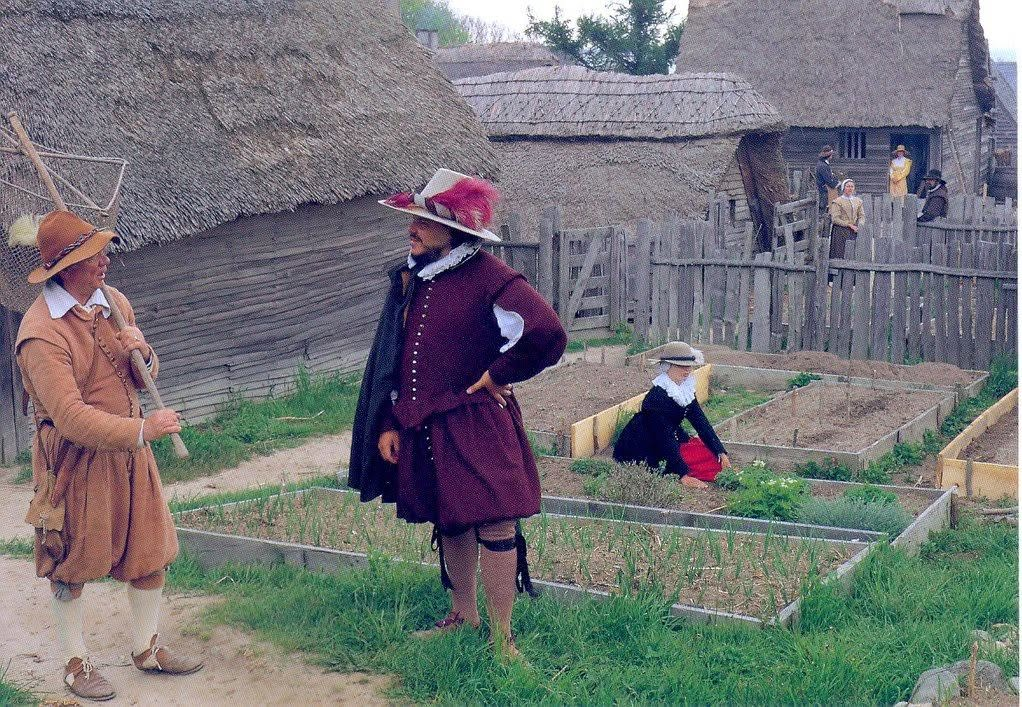
The men chat (about important topics, of course) while one of the women works in the garden.
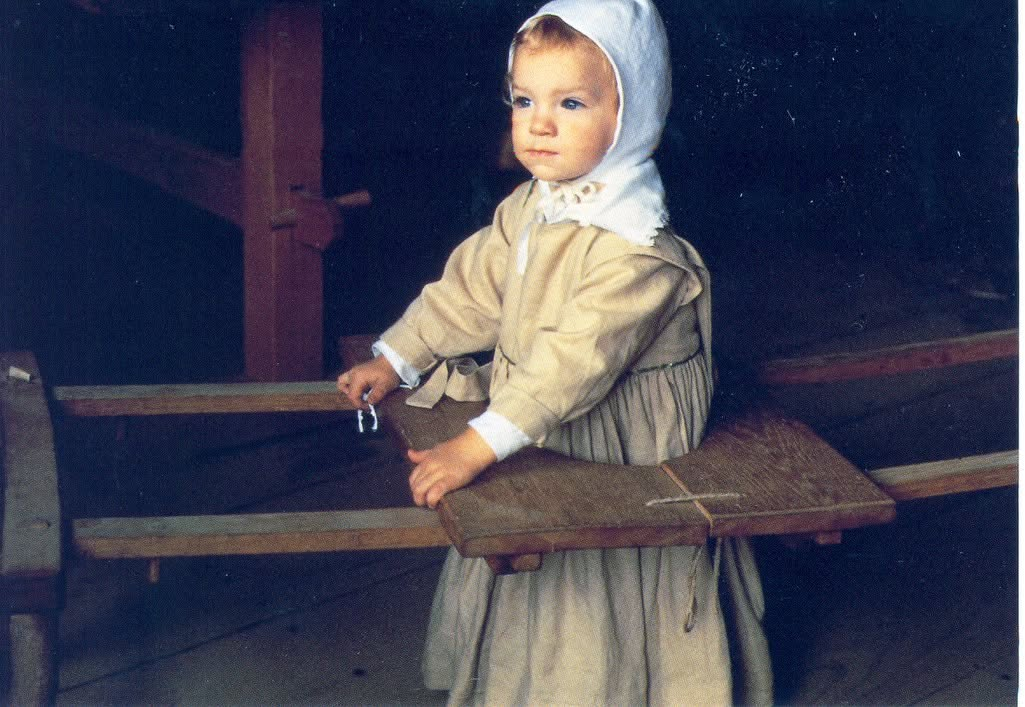
Before there were baby walkers, colonists fashioned this device to allow the little ones to walk back and forth without falling — although this “baby” looks more like a toddler who may be in the device to keep from making mischief while Mom did household chores!
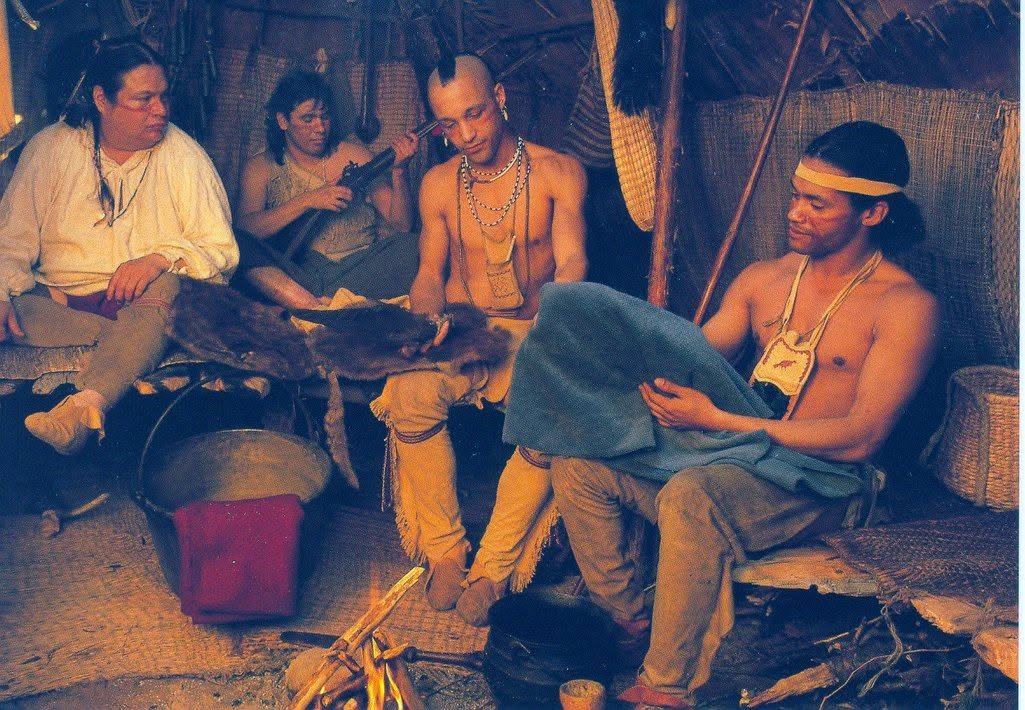
Wampanoag Indians in a typical domed wooden home. They talk about the English settlers — and most of it isn’t complimentary.
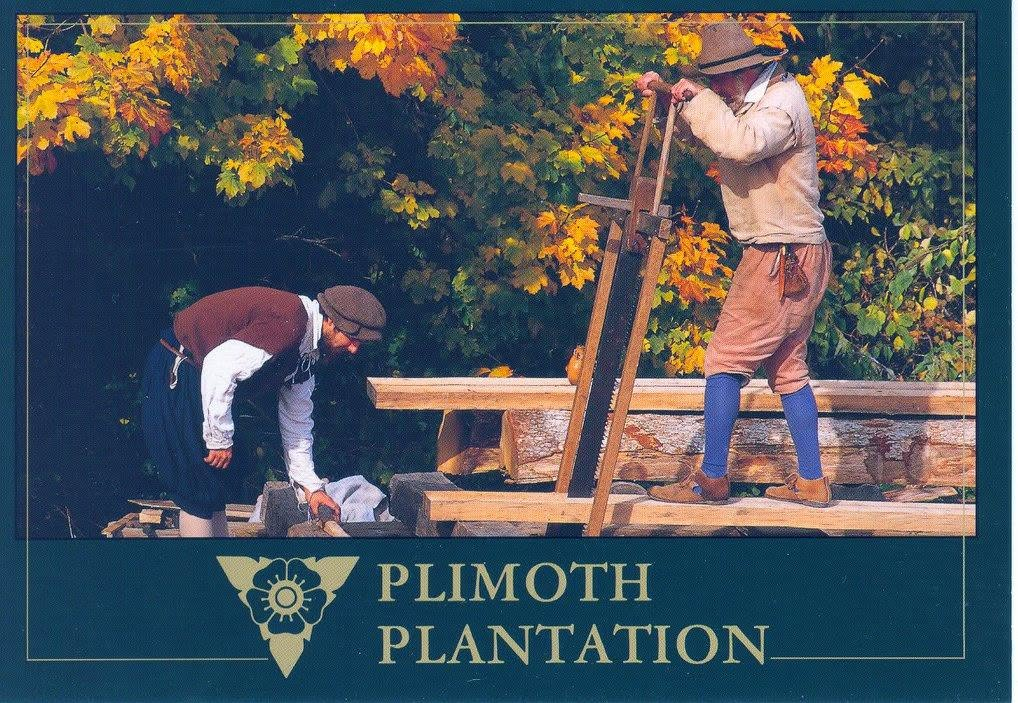
Another postcard photo, this one of men doing carpentry.
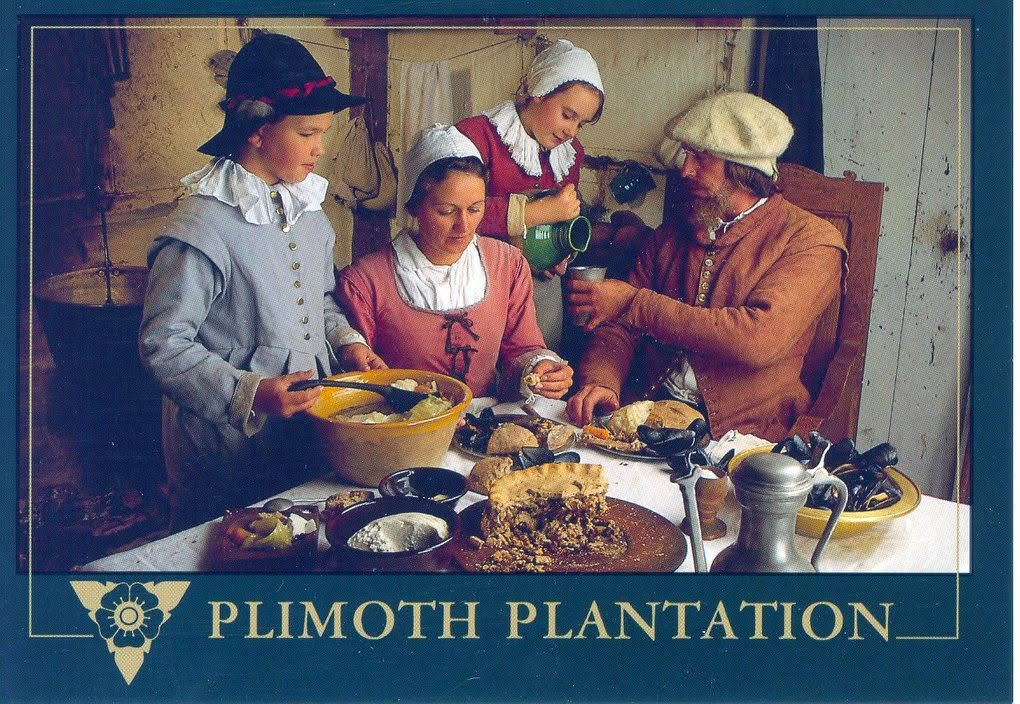
A family enjoying a well-cooked meal.
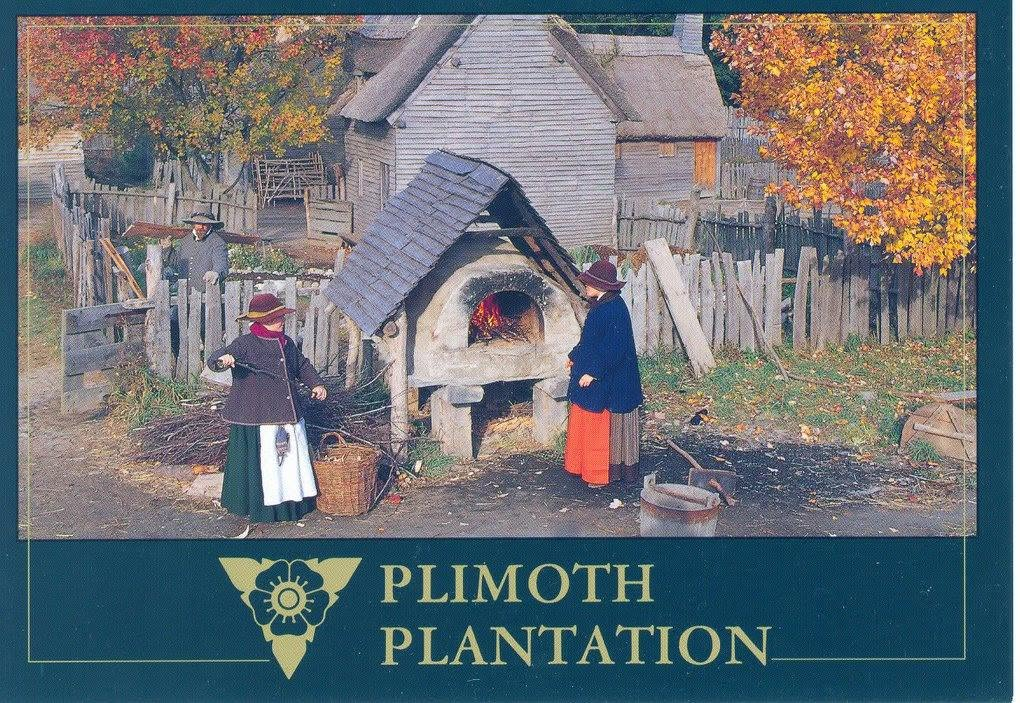
Women feed fuel into the outdoor oven used for communal baking. With all those wooden buildings, fire was a constant danger.
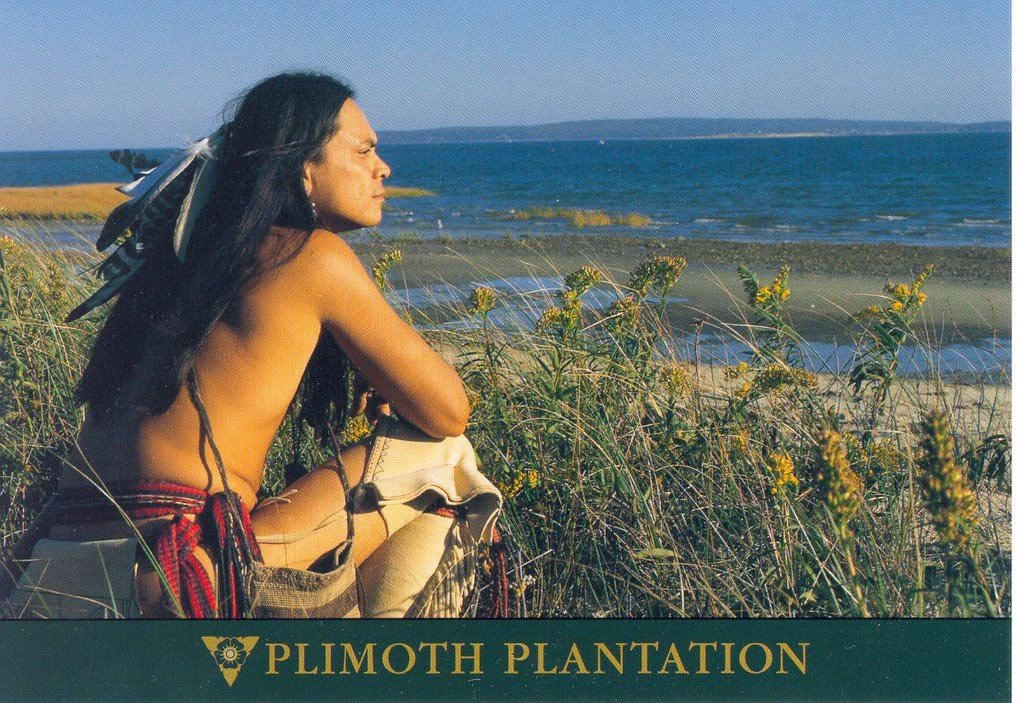
A Wampanoag Indian gazes out over the Atlantic Ocean.
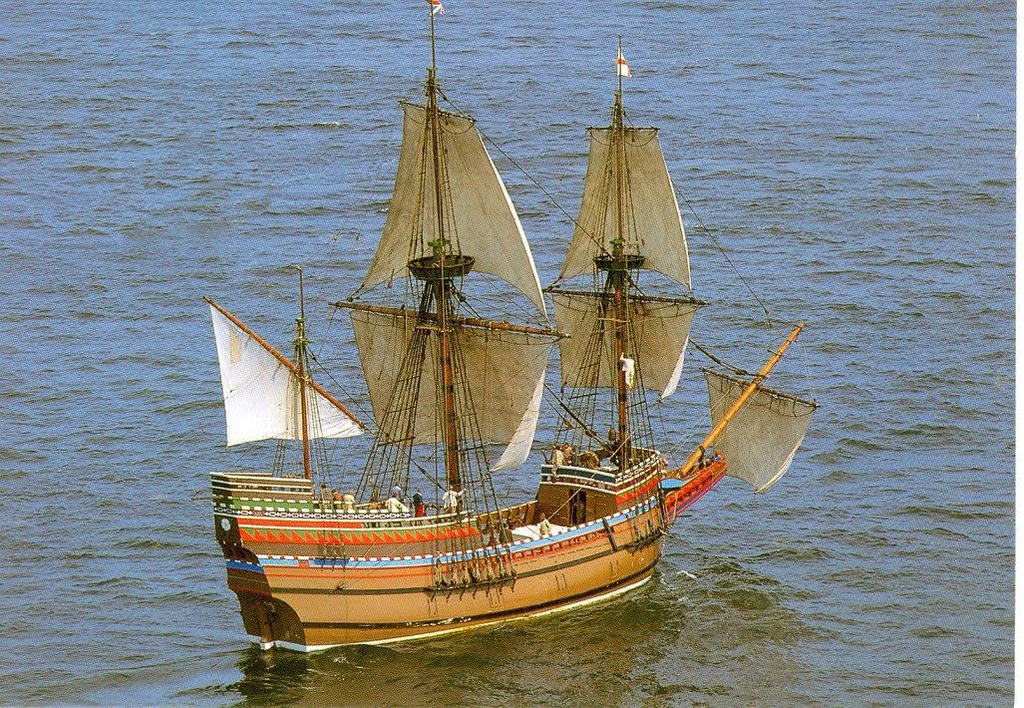
The Mayflower II was tremendously small to carry 102 passengers and crew. A family of four and their luggage fit in a space the size of a double bed — and endured these close quarters for the ten weeks it took to cross the Atlantic. The Mayflower II is close by Plimoth Plantation.
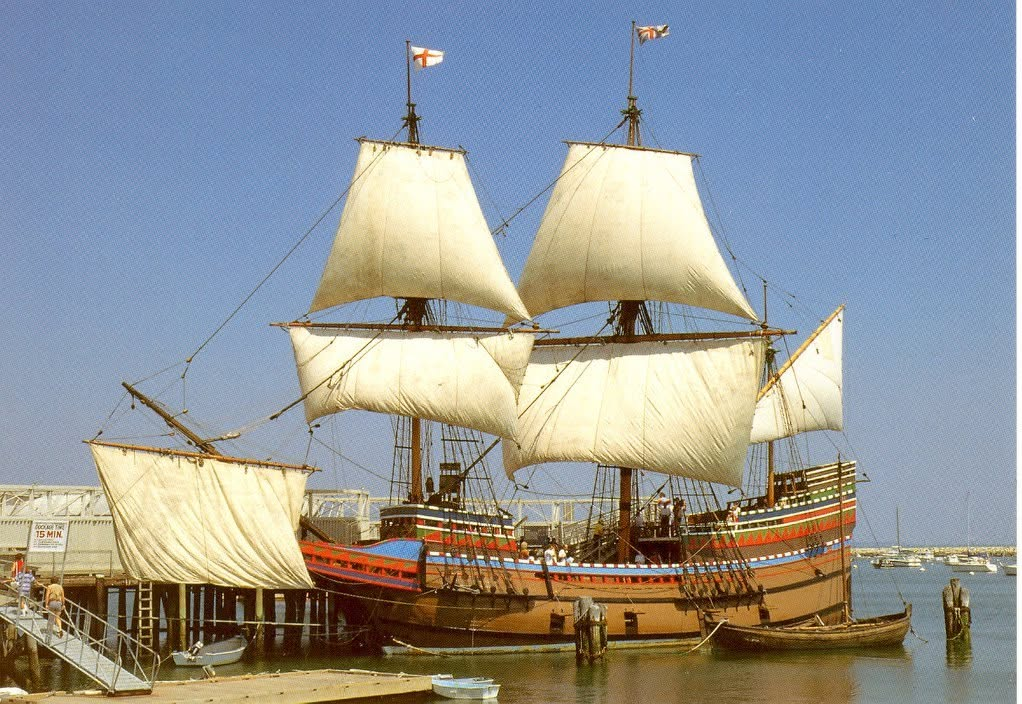
The Mayflower II is a full-sized replica of the original that was brought to Plymouth in 1957. She was added to the National Register of Historic Places in 2020.
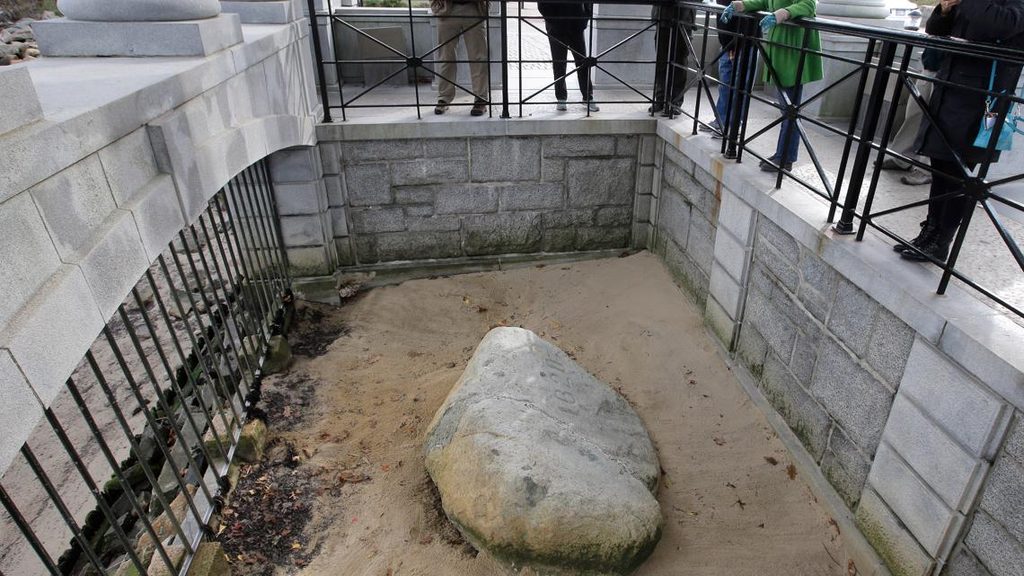
Plymouth Rock is adjacent to the Mayflower II and is way over-hyped. The rock is enclosed within a Roman-style portico (the connection between a Roman portico and a purported ship landing spot escapes me). It’s good that there’s no admission fee because if it did have one, it would be the biggest ripoff in tourism. Plymouth Rock is basically a 7-foot (2.1 meters) boulder that has “1620” carved into it. The Pilgrims never referred to the rock in any of their writings. Nobody claimed that the Pilgrims landed on it until 1741 — 121 years after the fact. Admittedly, what you see now is only about a third of the rock’s original size. It broke while being moved at one point in time, and souvenir-seekers used to chip away at the stone. It’s likely that the Pilgrims never used it as a landing spot and the whole story is just a myth, but since it’s right next door to the Mayflower II, you might as well take a peek at it. It’ll take you all of five seconds.
Plimoth Plantation (now called the Plimoth-Patuxent Museum) is open daily from 9:00am to 6:00pm. Plimoth Plantation changed its name to better reflect the Wampanoag name for the area, Patuxent. Admission is $35.00 for adults and $31.50 for seniors. A two-day pass is $44.00 for adults and $39.60 for seniors, but the two-day pass also includes the Mayflower II. Visiting just the Mayflower II is $19.00 for adults and $17.10 for seniors, so the two-day pass is obviously a better deal — even though you can easily visit both in one day.
The present-day city of Plymouth is located 40 nmiles (64km) south of Boston. Cape Cod lies south and east of Plymouth, making it a nice extension to a Massachusetts visit.