Qater’s most valuable export for almost two millenia was its beautiful Gulf pearls.First mentioned in writing by Pliny in 77 AD, they were renowned for their beauty and were worn and traded by royals and nobles across the world.
Pearl diving was difficult work.They would put a clip on their nose to prevent water from entering, wore finger protectors to guard against sharp rocks, and sometimes white cotton dive suits as protection against jellyfish.Pearl divers would dive up to 60 times a day, staying underwater for 3-4 minutes each time and bringing up about 20 oysters per dive.Although they might collect thousands of oysters, only a small percentage contained pearls.
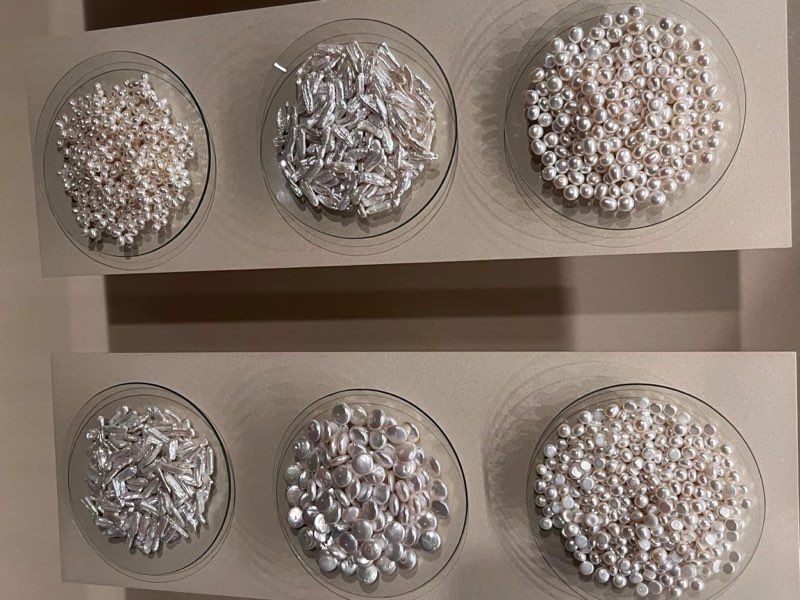
Pearl merchants classified pearls according to their size, shape, color, and luster.Perfect pearls could sell for extraordinary prices, and matching pairs or. a set were even more valuable.Pearl merchants sometimes kept a special pearl for many years, waiting for an identical match.Successful merchants became very wealthy.
By the late 1800s, Gulf pearls were traded across the world.But the bottom dropped out of the market in the early 1900s.Why?Because the Japanese discovered how to culture pearls, perfecting the technique by 1909.Now it was no longer necessary to haul up hundreds of oysters before finding one pearl.By 1935, Japan had 350 oyster farms producing 10 million pearls per year.
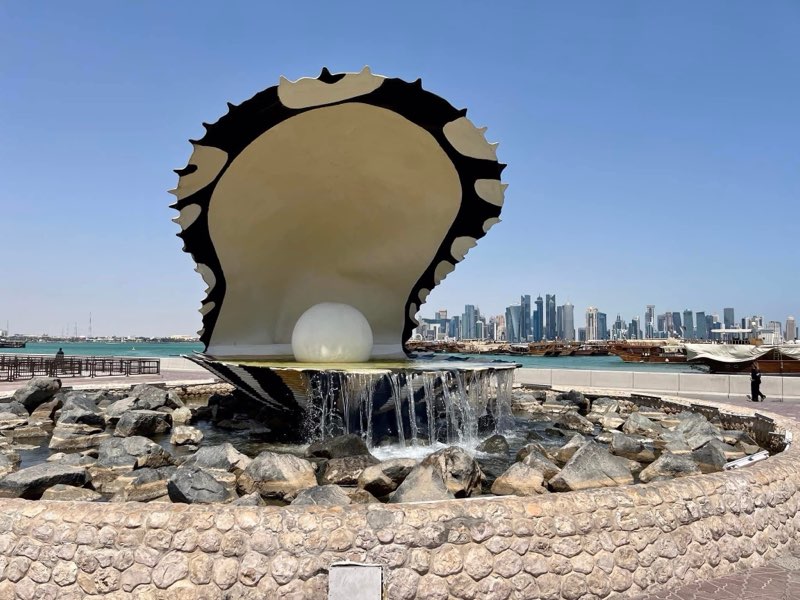
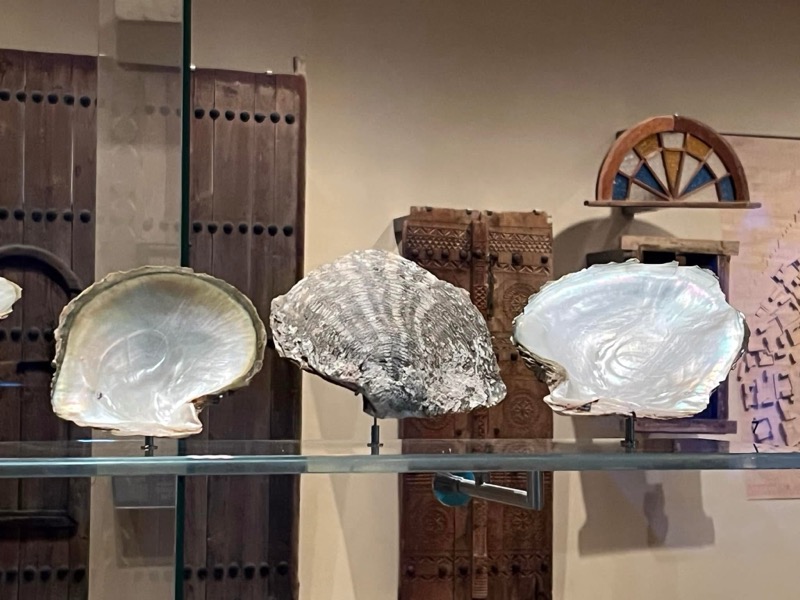
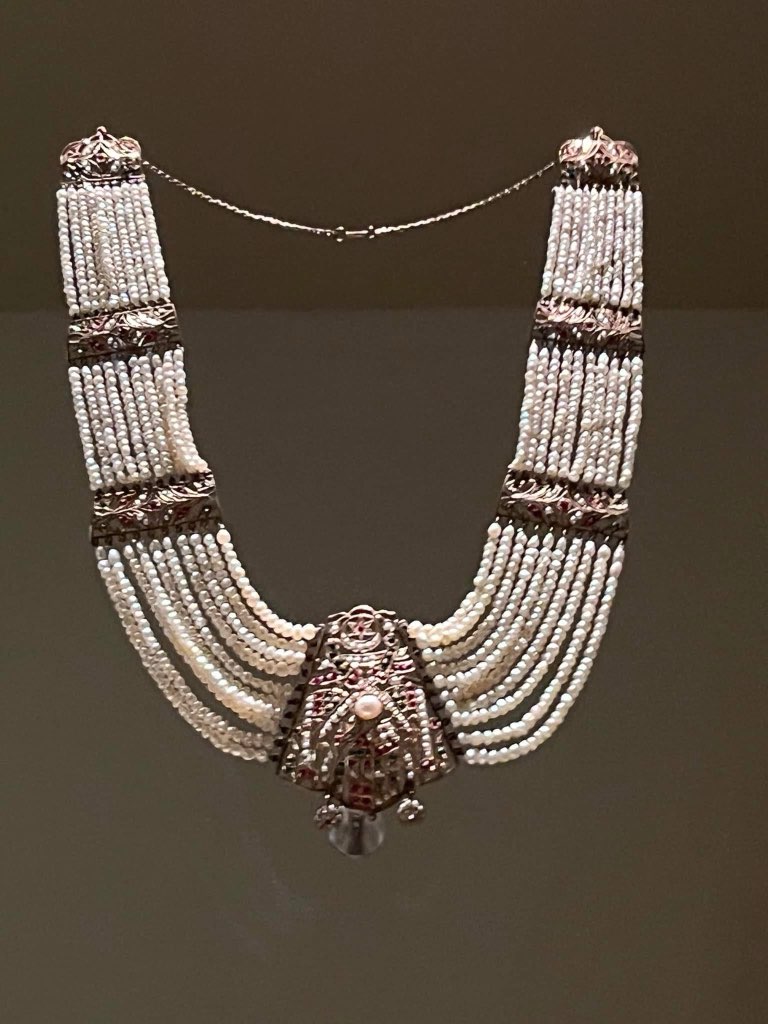
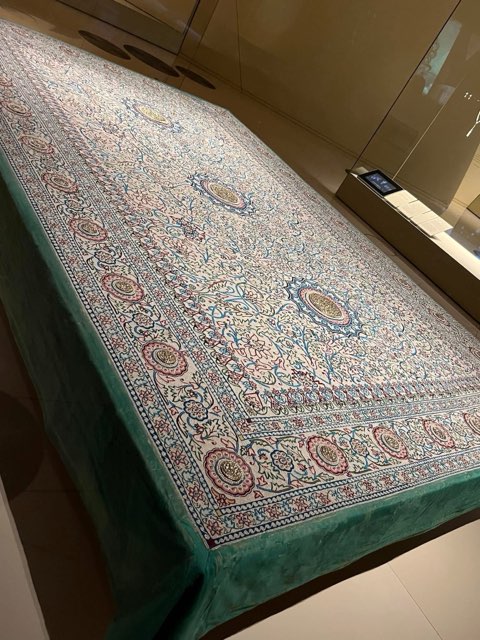
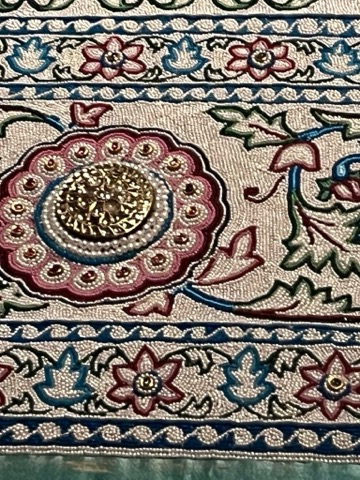
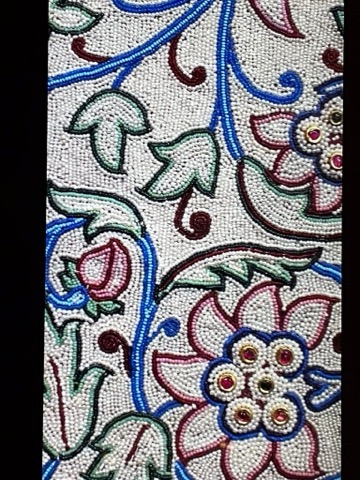
The photos above show the Pearl Monument on Doha’s corniche, oysters, multiple sizes and shapes of pearls, and a lovely pearl necklace. Below is a gorgeous pearl carpet.