

I lived in San Antonio for almost six years and have been to the Alamo several times. My first reaction was disappointment. The Alamo looked like a façade on a movie set. Behind that famous façade there was only a tiny museum and gift shop. There was also a scratchy old filmstrip purporting to tell the story of the Alamo that looked like it hadn’t been updated since the 1940s.
Anyone who has lived in San Antonio soon learns the story of the Battle of the Alamo. The schoolchild version goes like this: Mexican General Santa Anna laid siege to the Alamo in San Antonio. The Texians fought bravely, but they were badly outnumbered. When the Mexican attack became imminent, William Travis drew a line in the sand with his sword and told the Texians that whoever was willing to die to defend the Alamo should cross that line and stand beside him. All did but one. Davey Crockett came in and fought hard. James Bowie died in his sickbed, with his back against the wall, shooting to the last. All of the combatants died, either in battle or by execution by Santa Anna’s forces. A few noncombatants survived and spread the word of the fall of the Alamo. This so incensed the Texians that the Army under Sam Houston gained loads of volunteers. A few months later, they defeated Santa Anna at the Battle of San Jacinto (just east of present-day Houston), and the Republic of Texas was born.
The bones of the story are correct, but the real story is more nuanced.
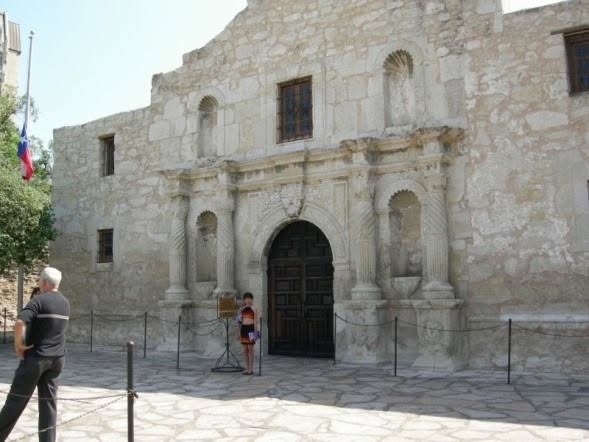
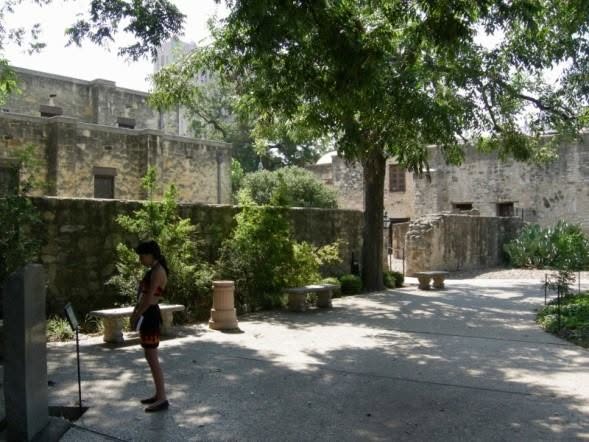
Mexican Texas was a Mexican border territory. It was populated mainly by U.S, immigrants, some legal but most illegal (which feels rather ironic given today’s politics in Texas). Mexico tried unsuccessfully to quell Anglo immigration. By 1836, Texas had a population of over 38,000, of which approximately 5,000 were slaves brought in by their Anglo owners. Slavery was illegal in Mexico, and Mexico intended to enforce its laws. In perhaps a preview of the upcoming American Civil War, one of the reasons for dispute between Mexico and the Texians was the practice of slavery. To quell the rebellion, President General Antonio Lopez de Santa Anna began to assemble a large fighting force.
The Alamo was a church and mission complex, not a fort. It was undermanned and under provisioned to resist a siege. Colonel James Bowie became convinced that San Antonio de Bexár was the last line of resistance between Mexico and the Sabine River (which runs south of present-day Dallas). He requested men, rifles, money, and cannon powder, but on February 3rd he got cavalry officer William B. Travis and only 30 men. Travis’ presence created more headaches. Bowie was intended to be in charge but the men preferred Travis. They agreed to be co-commanders of the Alamo, but conflicting orders, conflicted loyalties among the men, and no clear chain of command hampered preparation efforts for the expected Mexican invasion. On February 8th, former U.S. Representative Davey Crockett of Tennessee and a small group of volunteers arrived.
In late 1835, General Santa Anna began assembling an army that would eventually number approximately 3,000 men. By February 21st, they were within 25 miles of the Alamo. Two days later, he had 1,500 men in San Antonio de Bexár. With little more than 200 men to defend the Alamo, Travis and Bowie tried to negotiate for an honorable surrender. Santa Anna, however, insisted on an unconditional surrender, so the final battle became inevitable.
On February 24th, Bowie became bedridden with an illness, leaving Travis in sole command. Sporadic skirmishes occurred between February 24th and March 6th. Troop reinforcements swelled Santa Anna’s numbers to 3,000 by March 3rd, but the planned reinforcements for the Texians never arrived.
On March 5th, Travis again tried to negotiate a surrender that would save his men’s lives, and again Santa Anna insisted on an unconditional surrender.
Before dawn on March 6th, while the Alamo defenders slept, Santa Anna’s men surrounded the Alamo. They easily killed three sleeping sentries and began massing outside the Alamo’s walls, but then the Texians awoke. Since the Alamo was never constructed to be a fort, catwalks had been built along the inside of the walls to create firing positions. Unfortunately, that left their upper bodies exposed to Mexican forces.
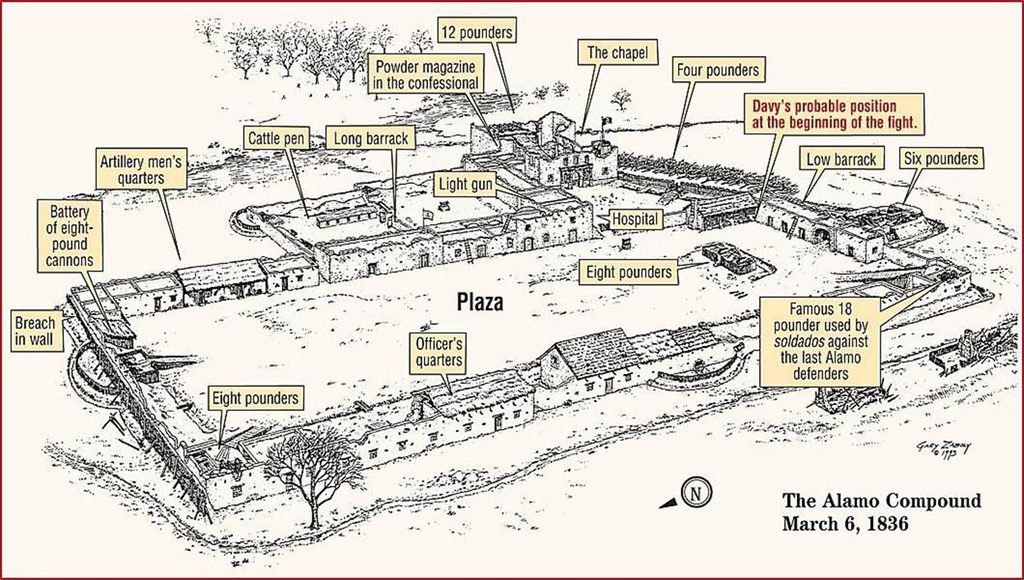
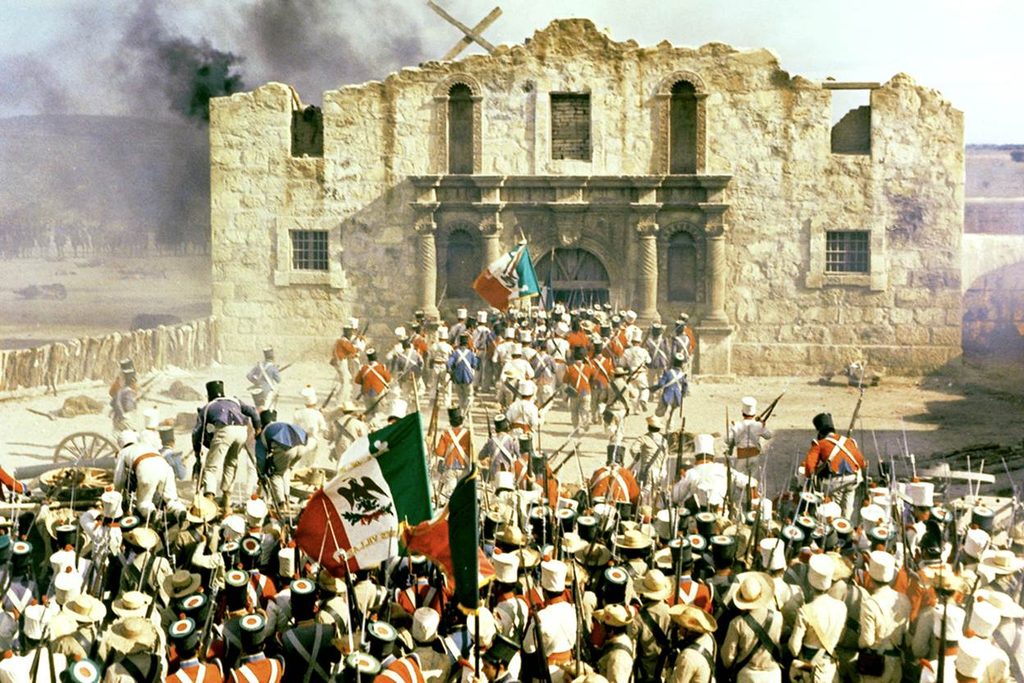
Although the Mexican army had some troubles of its own due to raw ill-trained recruits, they eventually breached the north wall of the Alamo and began pouring in. The Texians began retreating. Davey Crockett and his men were the last to remain in the open plaza. Unable to reload, they were forced to use their rifles as clubs in a vain attempt to beat back the Mexican soldiers. By the next dawn, it was all over. Santa Anna’s forces were victorious.
Both during and after the battle, Texians who attempted to surrender were executed under Santa Anna’s orders. Santa Anna did spare some noncombatants, such as Travis’ slave Joe, Juana Alsbury, and Sarah Dickinson. Santa Anna sent Ms. Dickinson to the town of Gonzales (about 75 miles east of San Antonio) to inform Texians of the loss of the Alamo and to convince them that Santa Anna’s army would crush any defense that the Texians attempted.
Also on March 6th, as the battle was raging, a group of delegates met in Washington-on-the Brazos (about 80 miles northwest of present-day Houston) and declared an independent Republic of Texas, similar to the actions of the Founding Fathers in Philadelphia nearly 60 years before. They were unaware that the Alamo was falling as they spoke.
Santa Anna’s lack of leniency and the fall of the Alamo fired up Texians and Tejanos, who scrambled to join the Texian army under General Sam Houston. At the Battle of San Jacinto on April 21st, Texians yelled “Remember the Alamo” as they fought the Mexican Army. They captured General Santa Anna on April 22nd and the Mexican army retreated. This withdrawal guaranteed the survival of the nascent Republic of Texas.
The Alamo is open to visitors daily from 9:00am to 5:30pm. Entrance to the Alamo Church is free. A self-guided audio tour is $20 and a guided tour by an Alamo historian is $48. It looks like they’ve beefed up the experience mightily since our last visit in 2009. You can check out the historic buildings like the Long Barracks, experience an augmented history of the battle, and see a number of historic exhibits and artifacts. They still have a film (hopefully an updated one), and the Alamo now has a living history encampment showing life in the 1830s.
PS: the story of Travis drawing a line in the sand with his sword is probably fiction written long after the battle to make him look more noble. However, although Bowie’s death is uncertain, it is likely more true than not that he fought from his sickbed with pistols and his famous Bowie knife. And Davey Crockett and his men really did resort to using their rifles as clubs.
Visited September 14, 2006