

In February 2020, just before COVID shut down the world, Rachelle and I were in Jerusalem. During our stay, we visited the Israel Museum, which has an incredible amount of information about significant milestones in Jewish lives, what Jews believe, and information about their important holidays. Here, I’ve gathered photos about Rosh Hashanah to introduce the holiday to those unfamiliar with Jewish beliefs.
For 2020, Rosh Hashanah, or the Jewish New Year, began at sundown on September 18th and ended at sundown on the 20th. Rosh Hashanah, which means “head of the year”, initiates ten days of repentance culminating in Yom Kippur, the holiest day of the year. Rosh Hashanah celebrates the creation of the Earth and of Adam and Eve.
Rosh Hashanah is a time to clear your soul for the upcoming year. It’s a time to reflect upon where we might have fallen short in the previous year and how to repair ourselves and the world in the coming year (for example, by apologizing to someone you’ve wronged or neglected). Rosh Hashanah is a time to repair rifts and divides facing our world. It’s also a time to envision our future and our legacy, to work towards what we wish to become.
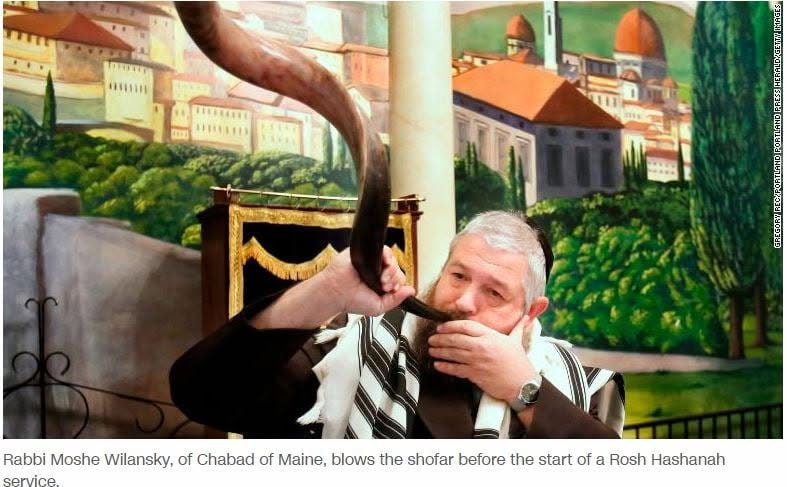
Rosh Hashanah typically begins with the blowing of the shofar, a trumpet made out of the horn of a kosher animal (usually a ram) to symbolize the ram that Abraham sacrificed in place of his son Isaac.
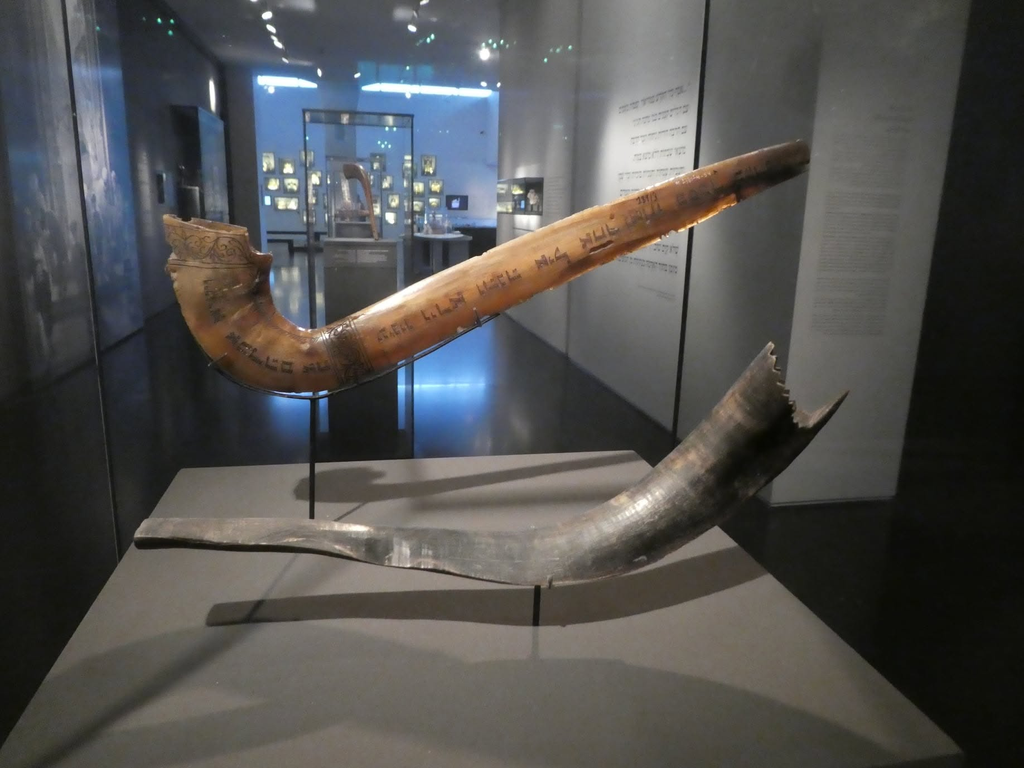
Two shofars at the Israel Museum in Jerusalem.
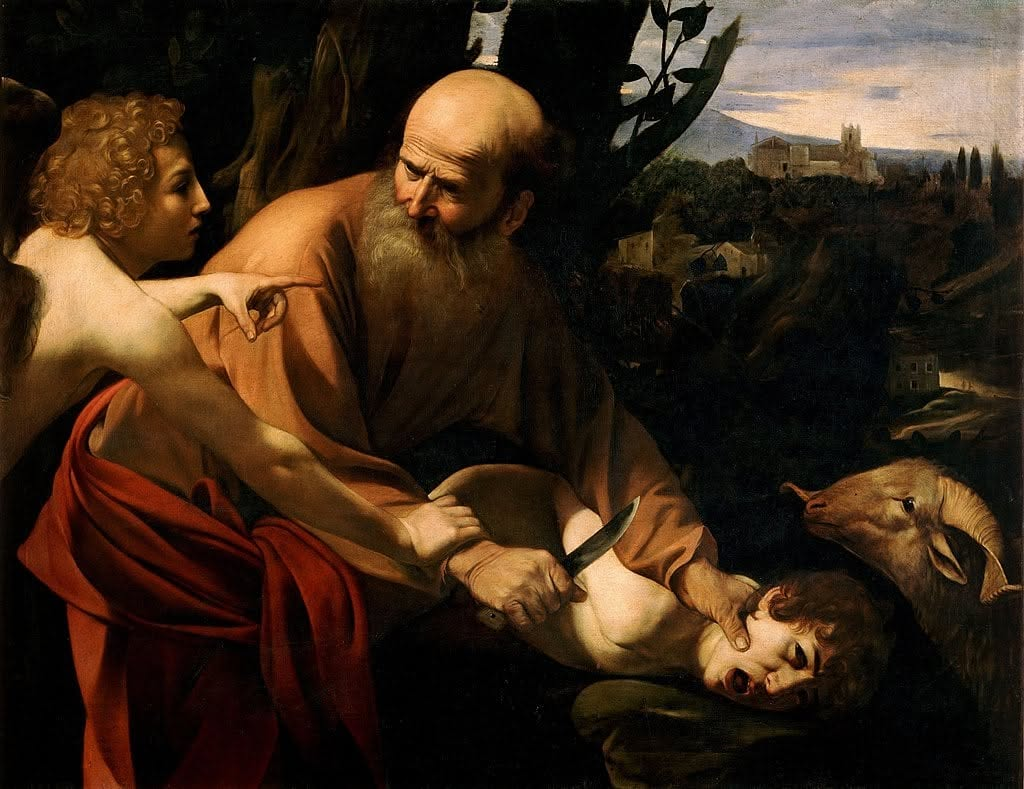
Tradition says that the Binding of Isaac occurred on Rosh Hashanah. This is the story from Genesis 22 in which God instructs Abraham to sacrifice his son Isaac to show his love for Him. God doesn’t actually make Abraham go through with the sacrifice, however. Abraham saw a ram and sacrificed it to God instead.
This painting of the Sacrifice of Isaac is by Caravaggio.
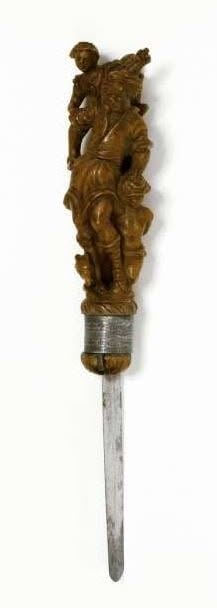
This circumcision knife depicts the Binding of Isaac. Italy, 17th century. The custom of circumcision has ancient roots, and is required of all Jewish males.
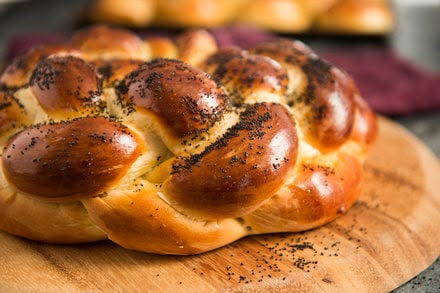
Rosh Hashanah is celebrated with shared meals and prayers among loved ones. Challah is traditionally served at the Rosh Hashanah table.
The word challah originally meant only the small portion of dough that was put in the oven when baking bread as a reminder of the destruction of the Temple in Jerusalem. It has evolved into the twisted, sweet, almost brioche-like bread that was brought to America by immigrants from Central and Eastern Europe. Although straight loaves of braided challah are eaten throughout the year, round challahs, often studded with raisins, are served for Rosh Hashana, and also for Yom Kippur and Sukkot, the holidays celebrating the New Year and the fall harvest.
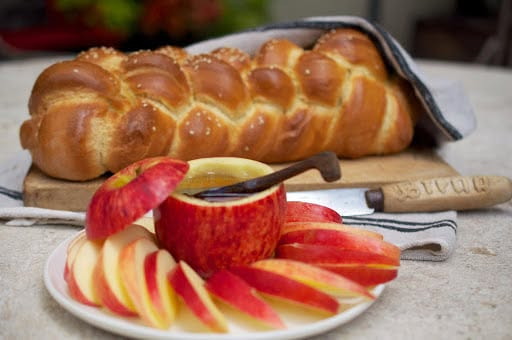
Jews greet each other on Rosh Hashanah with “Shanah tovah umetukah”, meaning “a good and sweet New Year”. Apples dipped in honey symbolize the wish for a sweet new year.
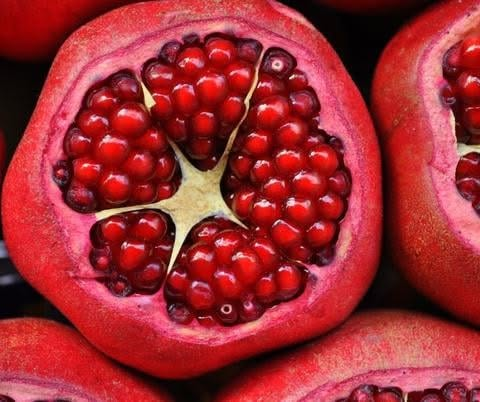
Pomegranates are also associated with Rosh Hashanah. They symbolize the wish that one’s blessings in the new year will be as numerous as the seeds of the pomegranate. Tradition holds that there are 613 seeds in a pomegranate, the same as the number of mitzvot (or commandments) in the Torah.
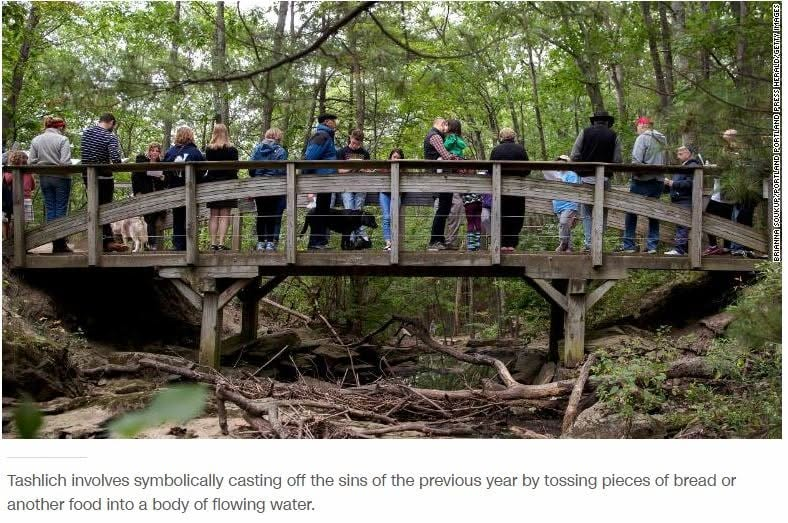
As mentioned in the introduction, Rosh Hashanah is a time to reflect on where we’ve fallen short in the previous year. The ceremony of Taslich is a symbolic way of casting off one’s sins. It’s done by throwing small pieces of bread in a body of flowing water (usually a river, but a bathtub will do in a pinch).
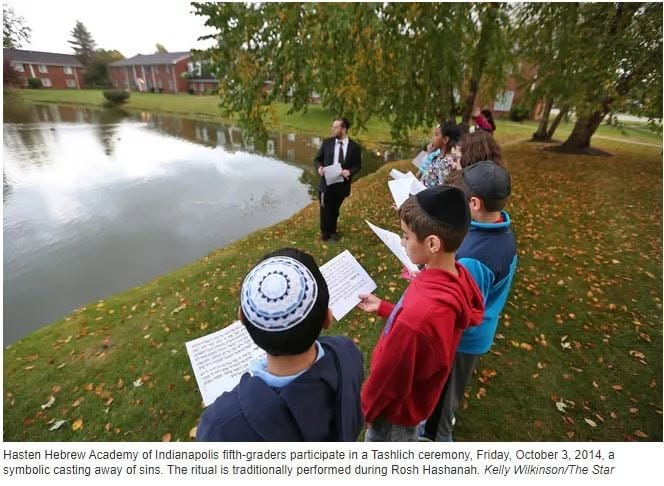
These Jewish boys in Indiana are conducting their own Taslich ceremony.
The ten days following the beginning of Rosh Hashanah are called the Days of Awe, and are considered to be a time of repentance.
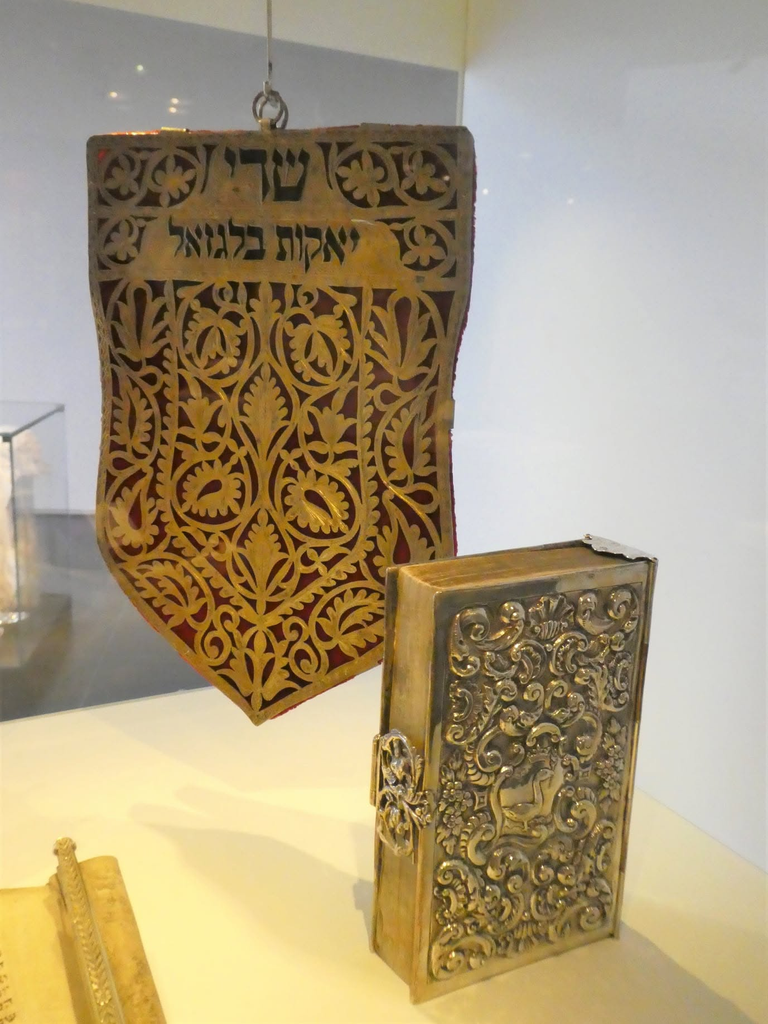
Rosh Hashanah is also the beginning of the Jewish High Holy Days, which culminate ten days later with the festival of Yom Kippur. This High holiday prayer book and cover, made of silver, is from 18th century Venice and is displayed at the Israel Museum.
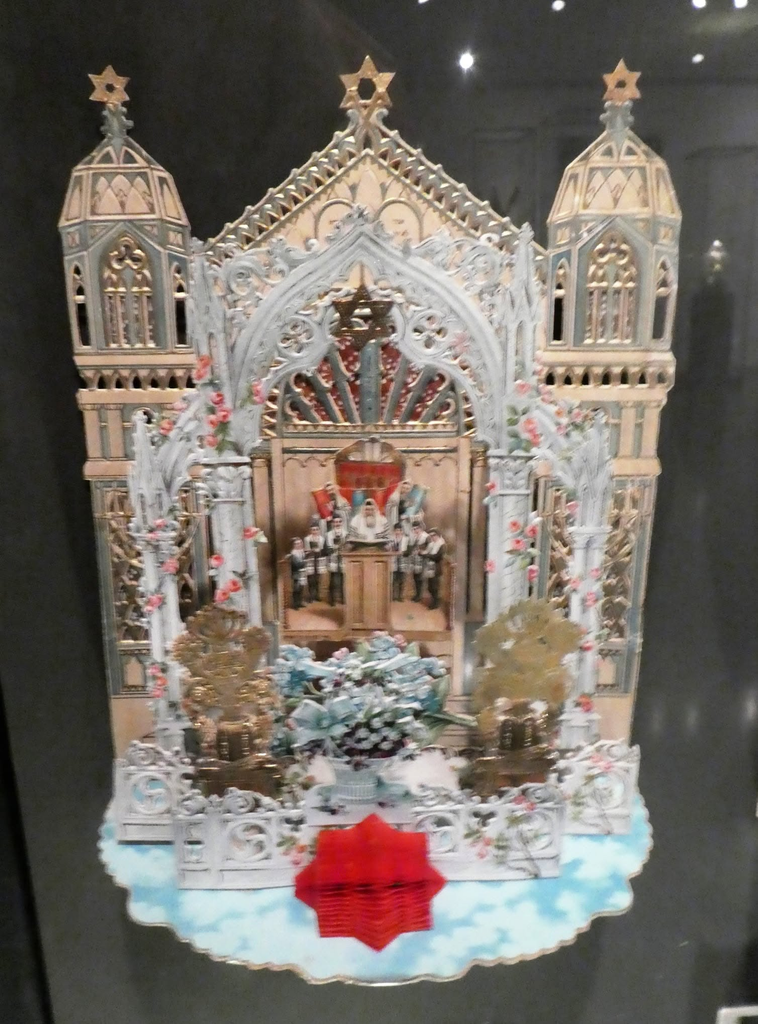
Ashkenazi rabbis in the 14th century recommended that members of their communities add a blessing to their letters during the month preceding Rosh Hashanah, saying “may you be signed and sealed for a good year.” This is likely the origin of the custom of sending New Year’s cards. In the 19th and 20th centuries, series of cards were printed with pictures of Jewish life, festival customs and rituals, and secular life in the land of Israel and the diaspora. This very ornate New Year’s card is displayed at the Israel Museum.
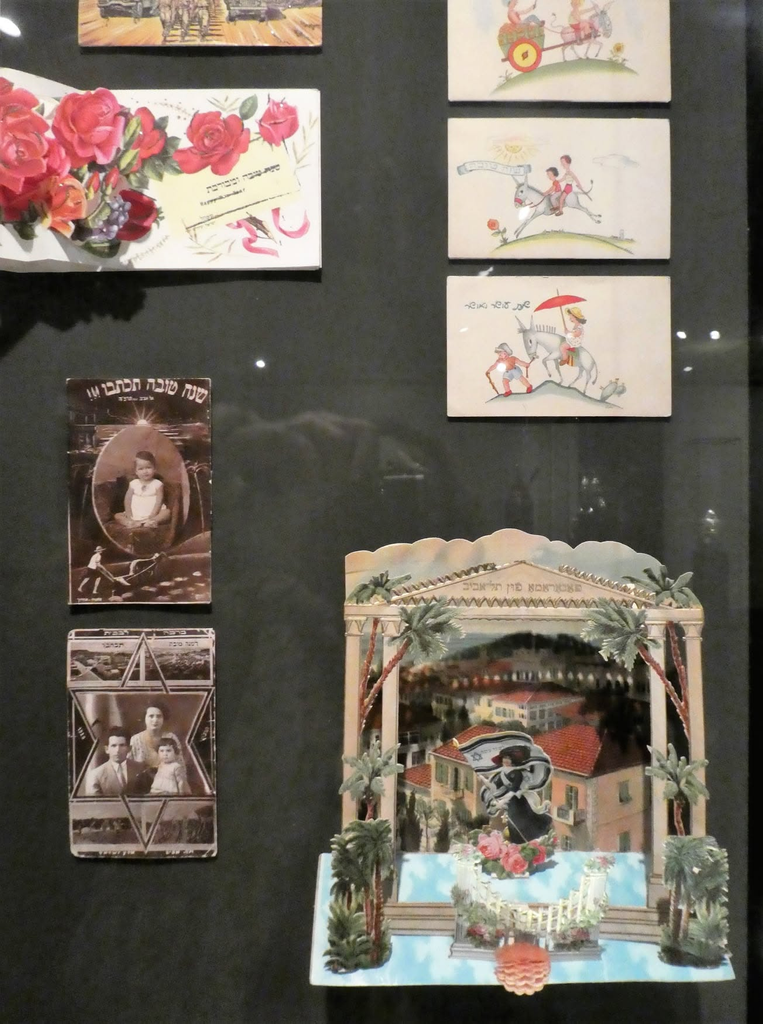
New Year’s cards from Germany, the USA and Israel date from 1900 to 2000.
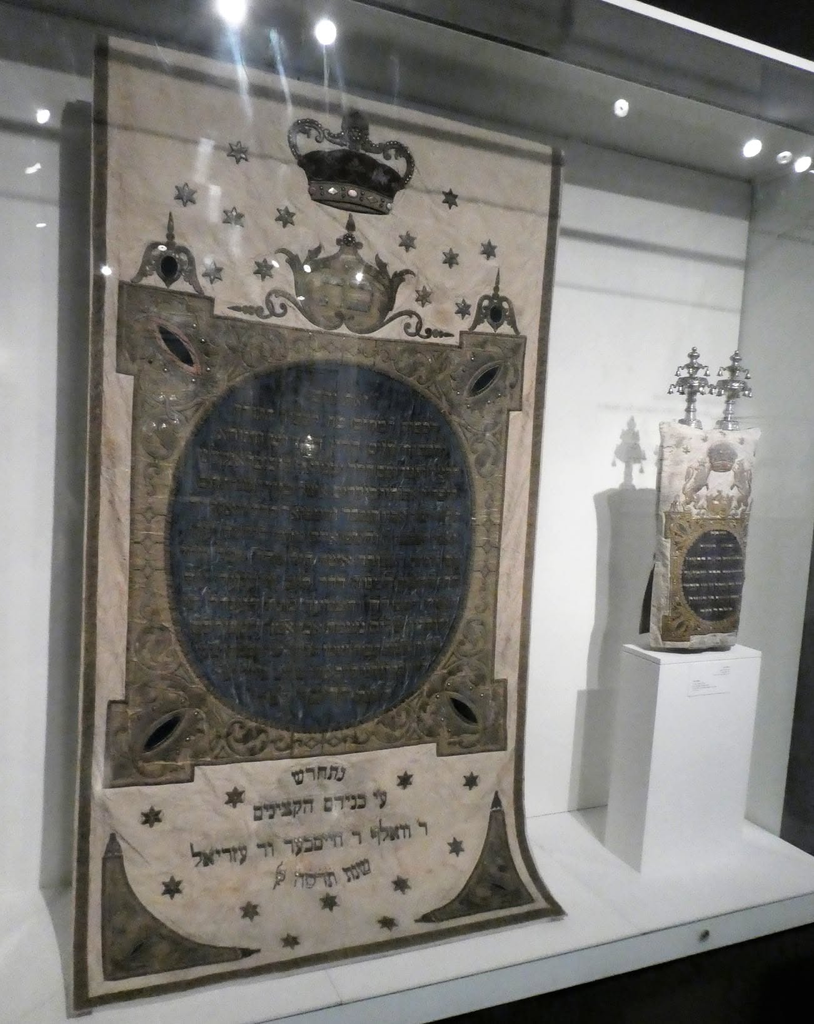
Torah ark curtain and mantle for the high holidays from the Austrian Empire c1863. The detailed inscription embroidered on the Torah ark curtain denotes the donors’ lineage. Silk damask, velvet, metal thread embroidery and sequins.

A tzadik (also spelled tzaddik or tzaddek) is a person of righteousness. It’s more a piece of legend than anything written in Torah, but many say that a person who dies on Rosh Hashanah, as U.S. Supreme Court Justice Ruth Bader Ginsberg did, becomes a tzadik.
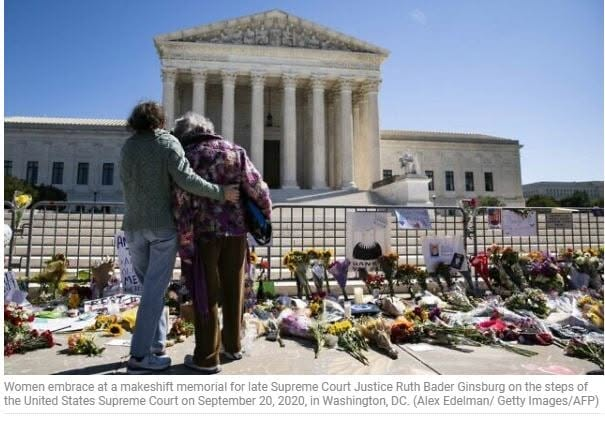
Rosh Hashanah this year was especially sad because of the death of Justice Ginsberg, who fought for equal rights for women and many other oppressed people. It was poignant because Rosh Hashanah is supposed to be a time to repair rifts and divides facing our world, but her death seems to have exacerbated them. Many Americans have placed tributes to Justice Ginsberg in front of the US Supreme Court. She is buried in Arlington National Cemetery. May her memory be a blessing.