

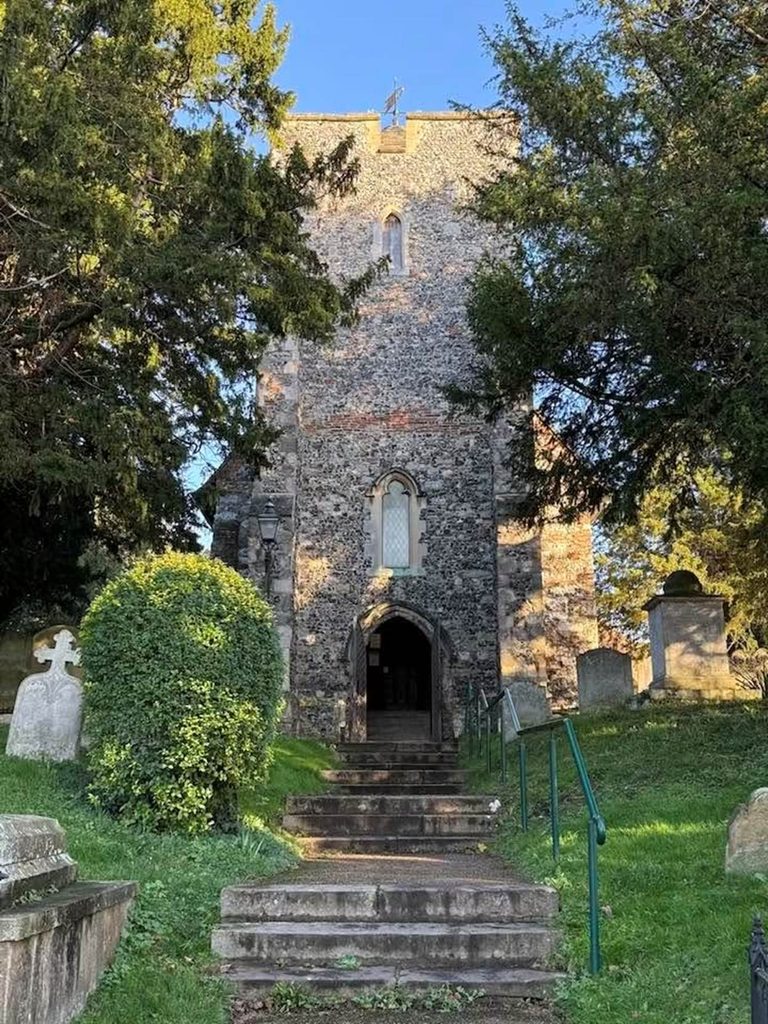
St. Martin’s Church is the oldest Christian church in the English-speaking world.
Back in 580 AD, pagan King Ethelbert of Kent married the Christian princess Bertha of Tours, France. Sometime in the late 6th century, he gave this church to his bride as a gift so she would have a place to worship.
Fifteen years later, in 595 AD, Pope Gregory sent Augustine (later St. Augustine) and several other monks to convert the people of England. Augustine et al arrived in Canterbury in 597 AD, and King Ethelbert allowed them to worship at St. Martin’s. Soon afterwards, King Ethelbert was baptized by Augustine. St. Martin’s served as Augustine’s base in England. He would later become the first Archbishop of Canterbury.
St. Martin’s, along with the nearby St. Augustine’s Abbey and the famous Canterbury Cathedral, form the Canterbury World Heritage Site.
St. Martin’s also became the next-to-last stopping point for pilgrims on the Via Francigena (or “Way of the Franks”). You’ve probably heard of the Camino de Santiago in Spain, which runs from France to the Cathedral of Santiago de Compostela in Galicia in northwestern Spain (there’s also a Camino that runs from Portugal up to Galicia, as well).
The Via Francigena is much longer than the more well-known Camino. It follows the path of Sigenic, who was Archbishop of Canterbury back iin 990 AD, when he returned from Rome after receiving his cloak of office from Pope John XV. Sigenic happened to keep a diary noting all his stops along the long journey from Rome to Canterbury. That diary is now in the British Library in London. The historic route stretches from Canterbury, then some 30 km (20 miles) east to Dover, across the English Channel to France, traverses France, Switzerland and a good part of Italy before reaching St. Peter’s Basilica in Rome — a journey of some 2,000 km (1,242 mi).

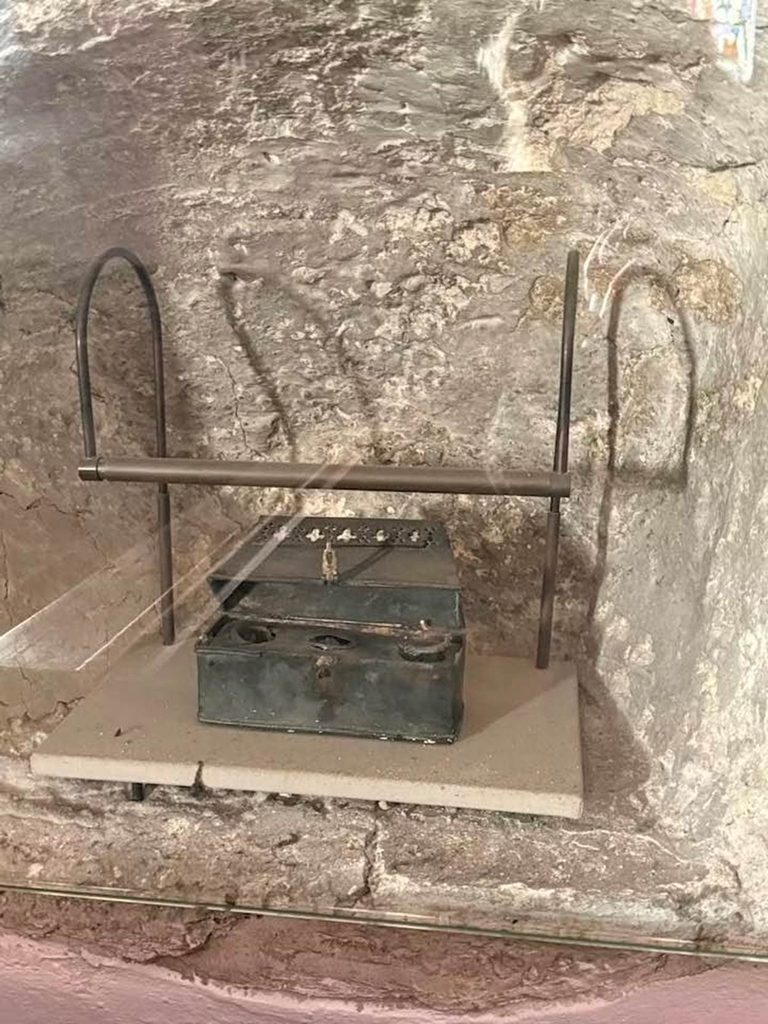
The metal box shown below is a replica of a 14th century chrismatory found in 1849 in the nave of the church. Chrismatories held the three holy oils for baptism, anointing of the sick, confirmation and ordination. But during the reign of Queen Elizabeth I in the 16th century, in a campaign against superstition, most of these chrismatories were melted down. This one was apparently hidden for safekeeping, only to re-emerge some 500 years later. The original is now displayed in Canterbury Cathedral.
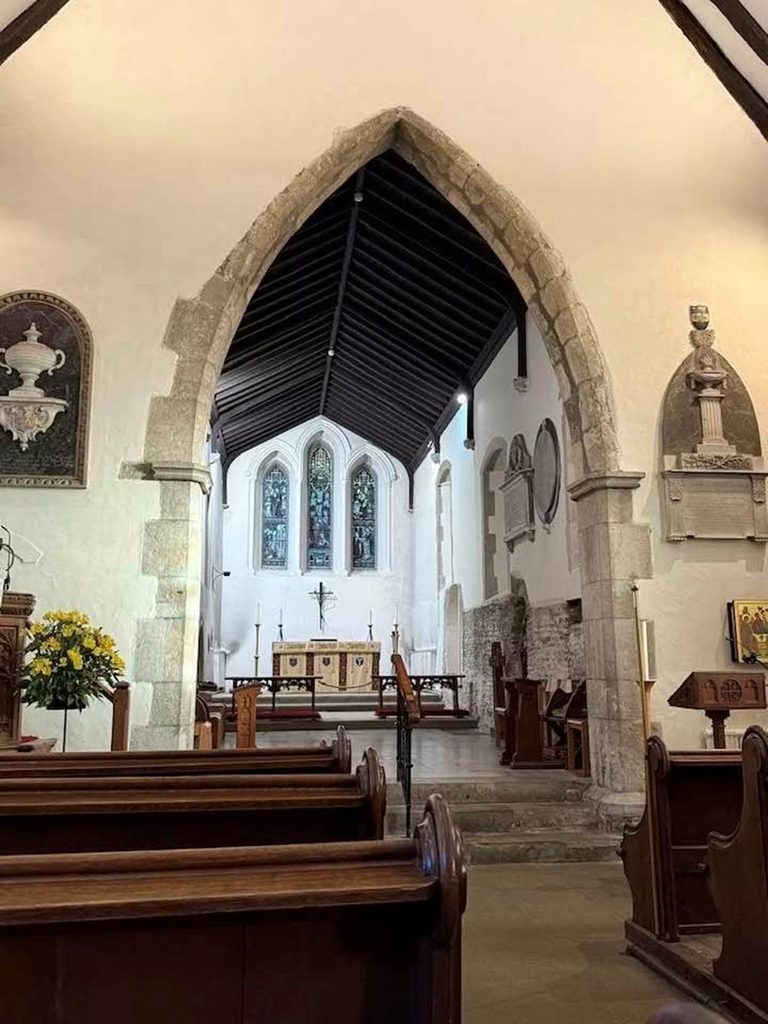
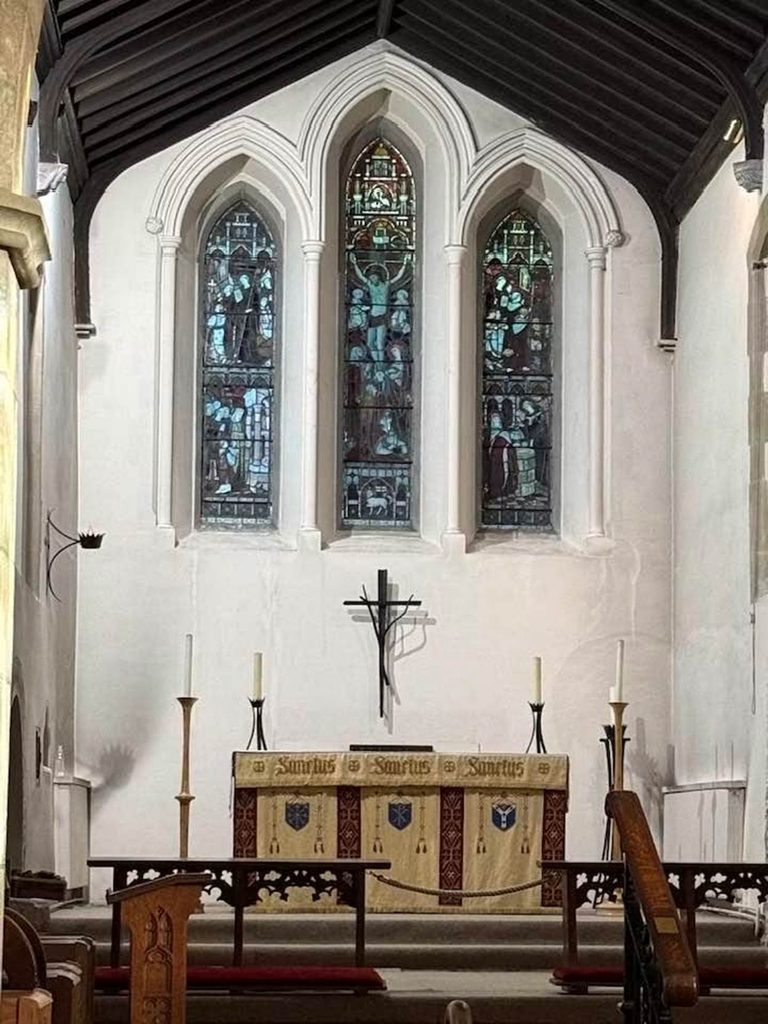
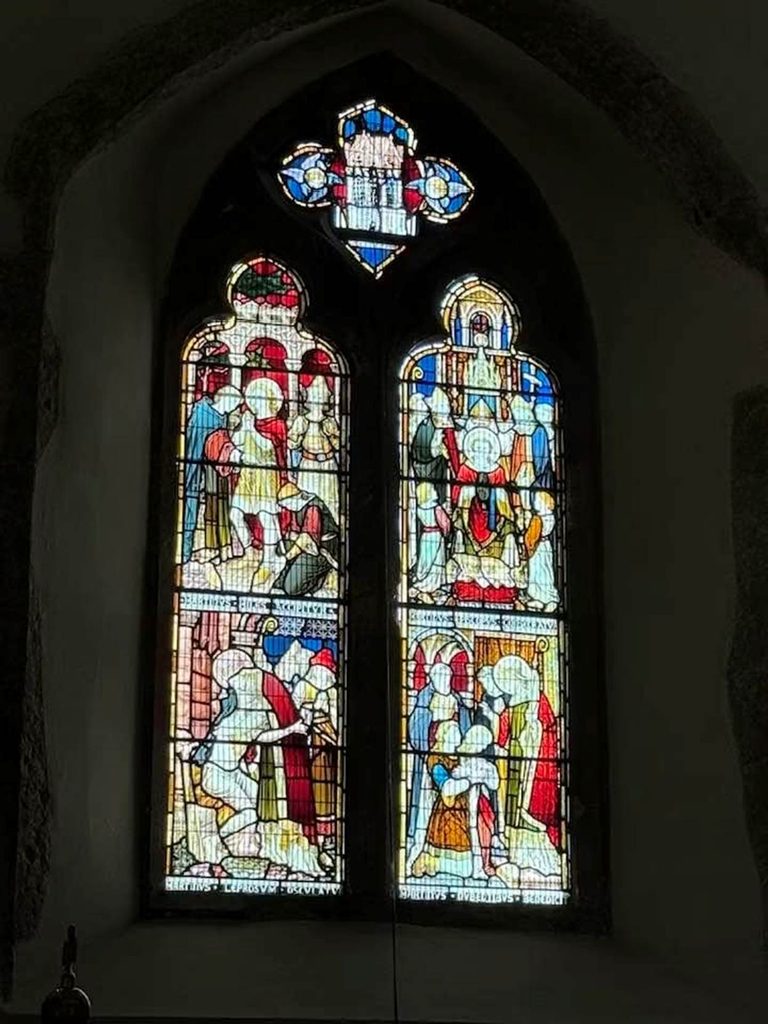
Today, St. Martin’s exists in a peaceful leafy setting outside of the main center of Canterbury. It’s not very big, but then it was originally built for one man’s bride.
St. Martin’s Church is open to visitors daily from 11:00am to 3:00pm. There is no entry fee. It is located at 1 N. Holmes Road in Canterbury.