

I admit it. I love Star Trek. Ever since The Original Series, I’ve enjoyed Star Trek for its intelligence, the strong relationships between the main characters, its social commentary, and its hopeful vision of a future without prejudice, gender bias, or poverty.
So even though it has nothing to do with earthly travel, I wanted to share some of the Star Trek exhibits I’ve seen over the years. This one was a temporary exhibit at Seattle’s EMP (Experience Music Project) Museum in honor of Star Trek’s 50th anniversary.
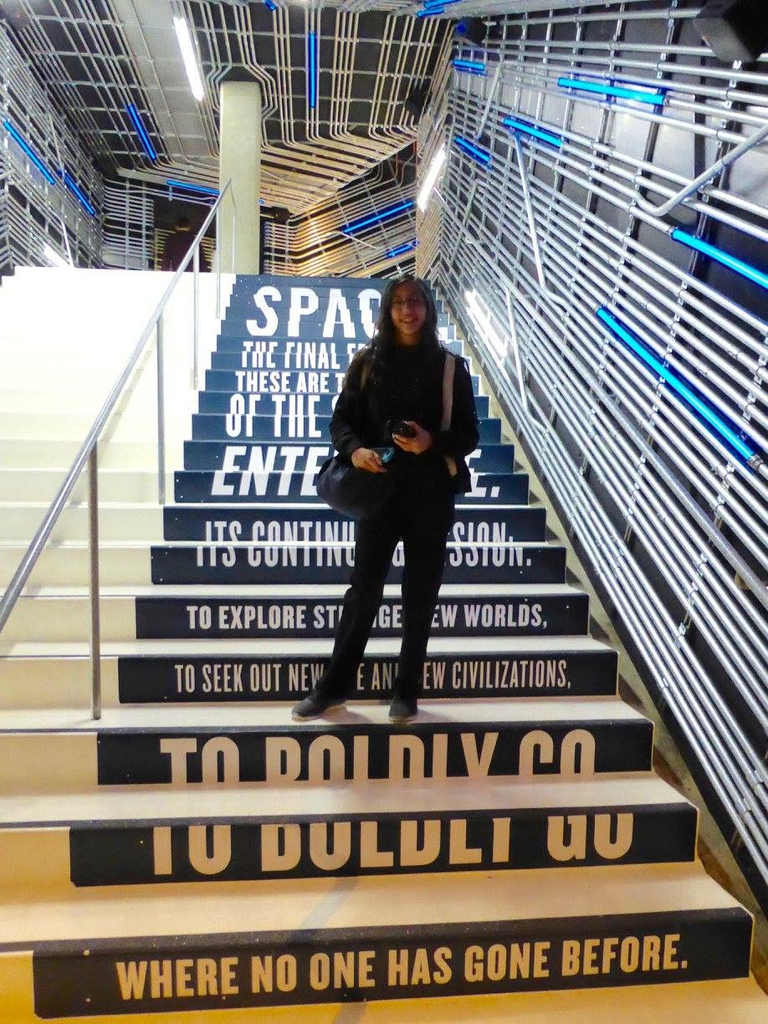
The curators of the exhibit tracked down as many of the original series’ props and uniforms as they could. This wasn’t an easy task. When Star Trek was cancelled, many of its related materials were tossed in dumpsters. No one really anticipated the phenomenon that it would become. Here, Rachelle stands at the entrance of the exhibit.
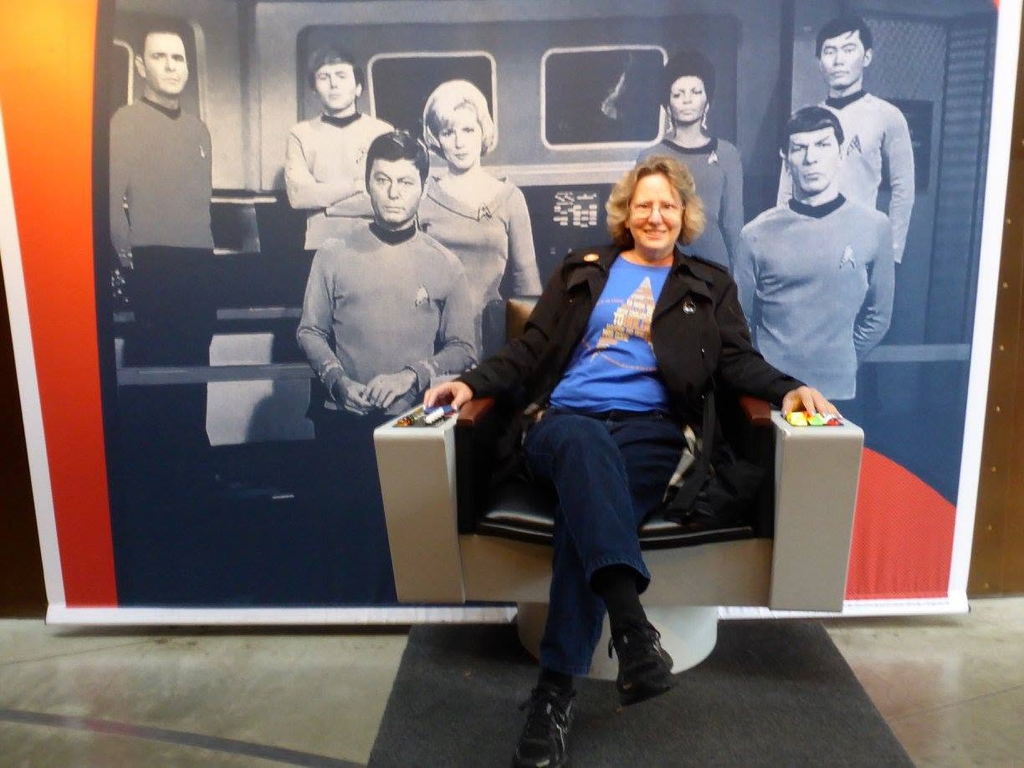
Me trying out the command chair on the bridge of the Enterprise.
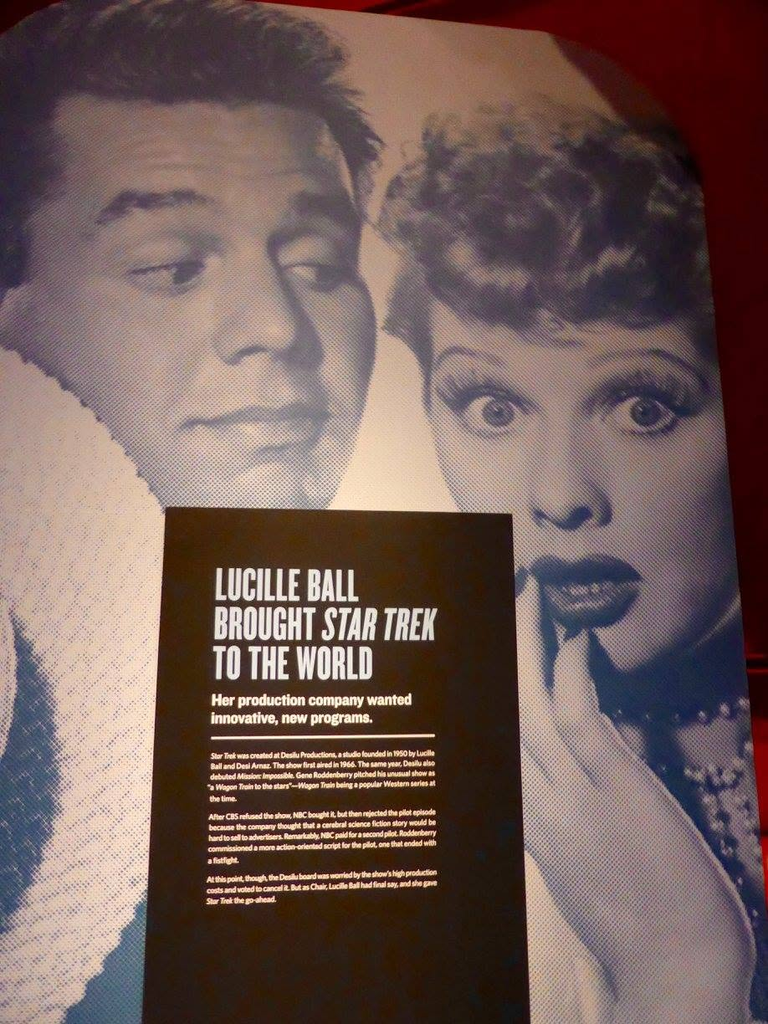
Star Trek really exists because of Lucille Ball. DesiLu studios was looking for more TV series, and Lucy was intrigued by this “wagon train to the stars” premise. The board turned down the proposed series because it looked too expensive to produce. Lucy saw something in the nascent Star Trek, and gave the project the green light.
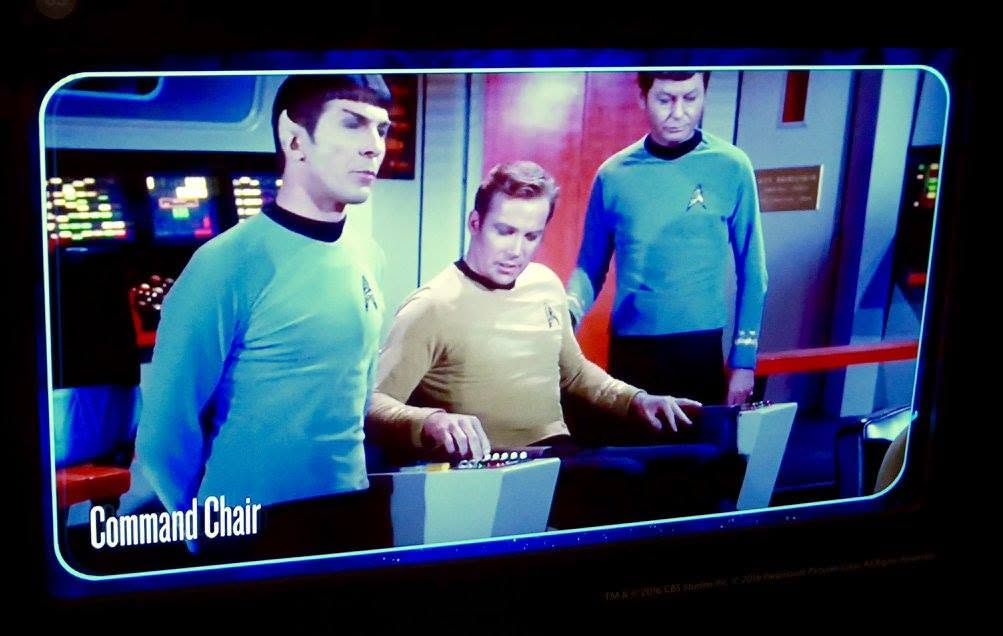
The three primary characters on the original Star Trek: Leonard Nimoy as Spock, William Shatner as CPT James T. Kirk, and DeForest Kelley as Dr. Leonard “Bones” McCoy.
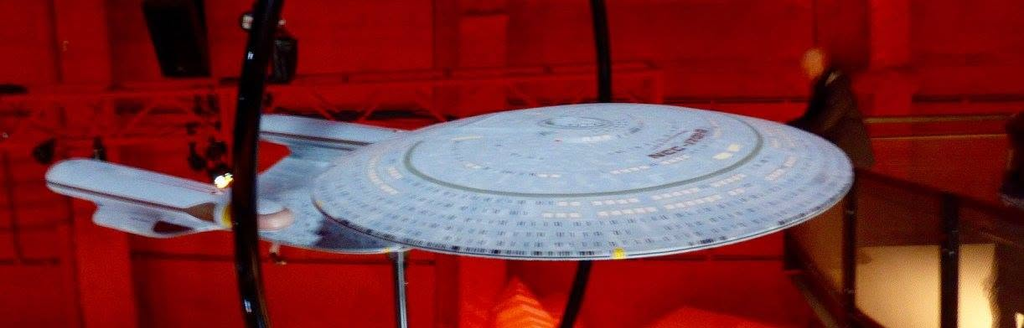
One of the filming models for Star Trek. This was about six feet long.
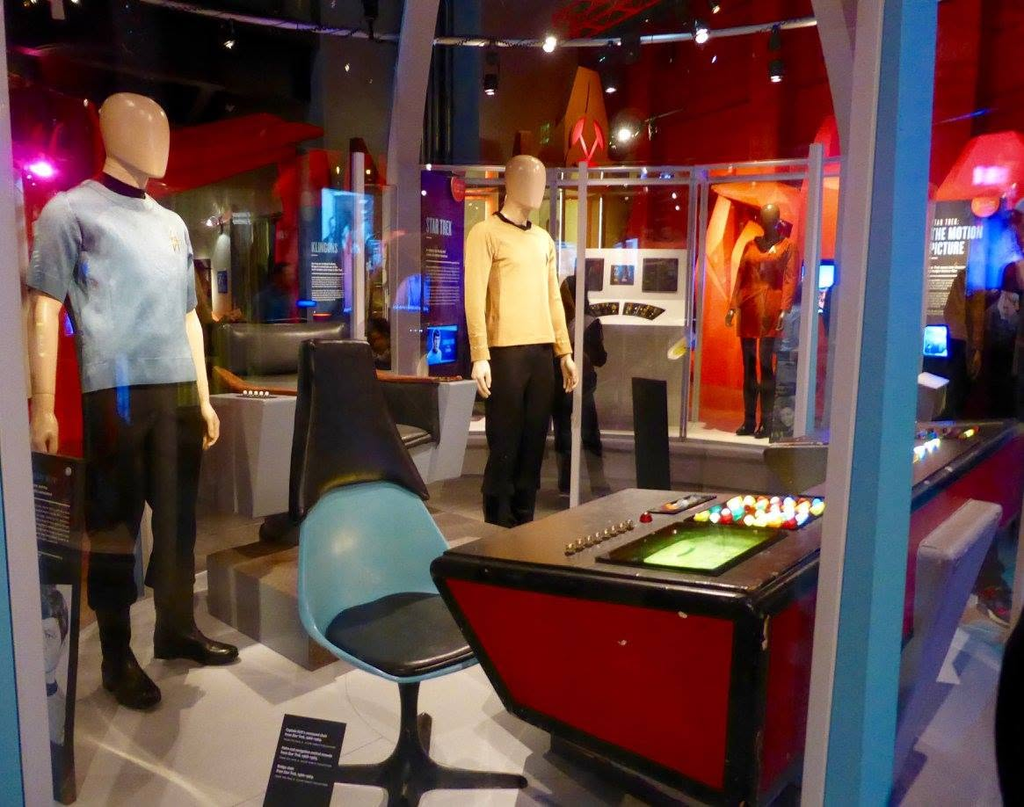
The navigation console of the original Star Trek series. This was one of the most difficult artifacts to find, and needed much restoration before it could be used in the museum exhibit. This re-creation of the bridge also includes Bones’ and Kirk’s uniforms. (Uhura’s uniform is in the background).
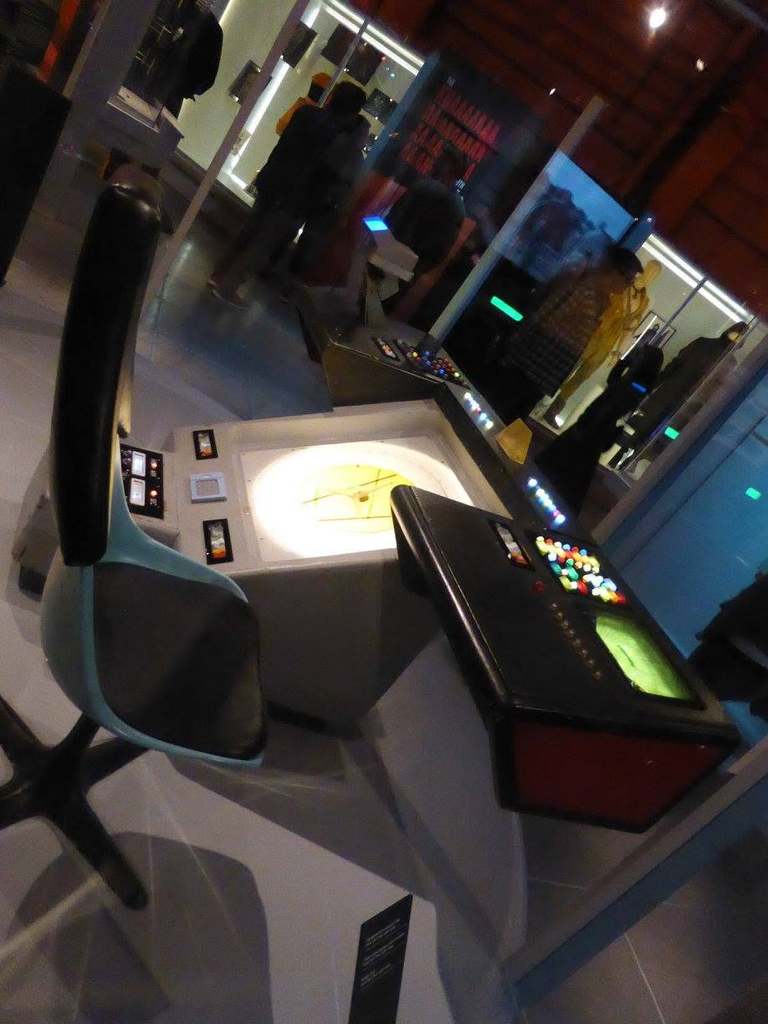
“Mr. Chekov, lay in a course for Earth, warp factor five.”
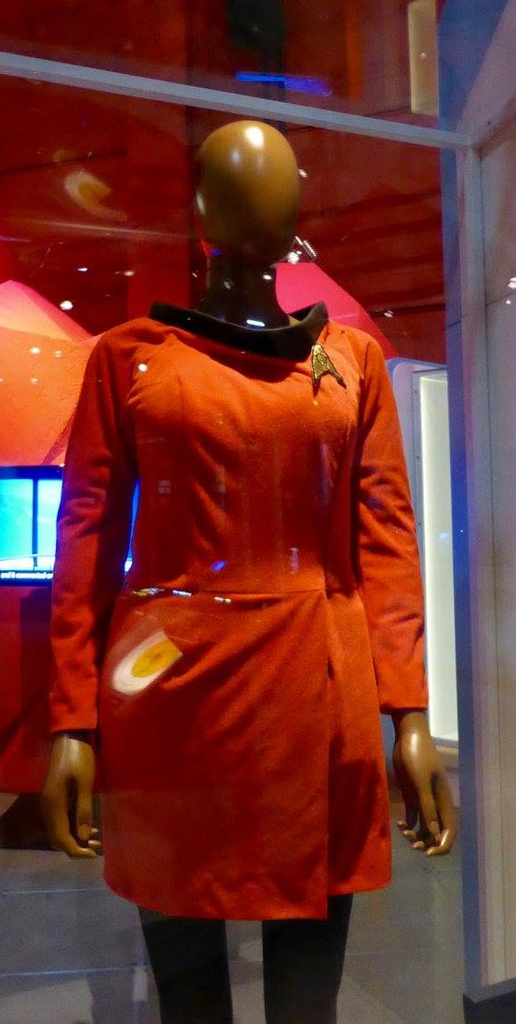
Nichelle Nichols wore this uniform to play the role of Lt. Uhura, the communications officer. Star Trek was groundbreaking in casting a black woman in a role that was neither a maid nor a prostitute. Nichelle wanted to quit Star Trek after the end of the first season. Reverend Martin Luther King, Jr, talked her out of it, telling Nichelle that her role was far more important than she realized. Lt. Uhura went on to inspire many young black people to aspire to higher roles in life, and many young women of all races to apply to NASA to become astronauts.
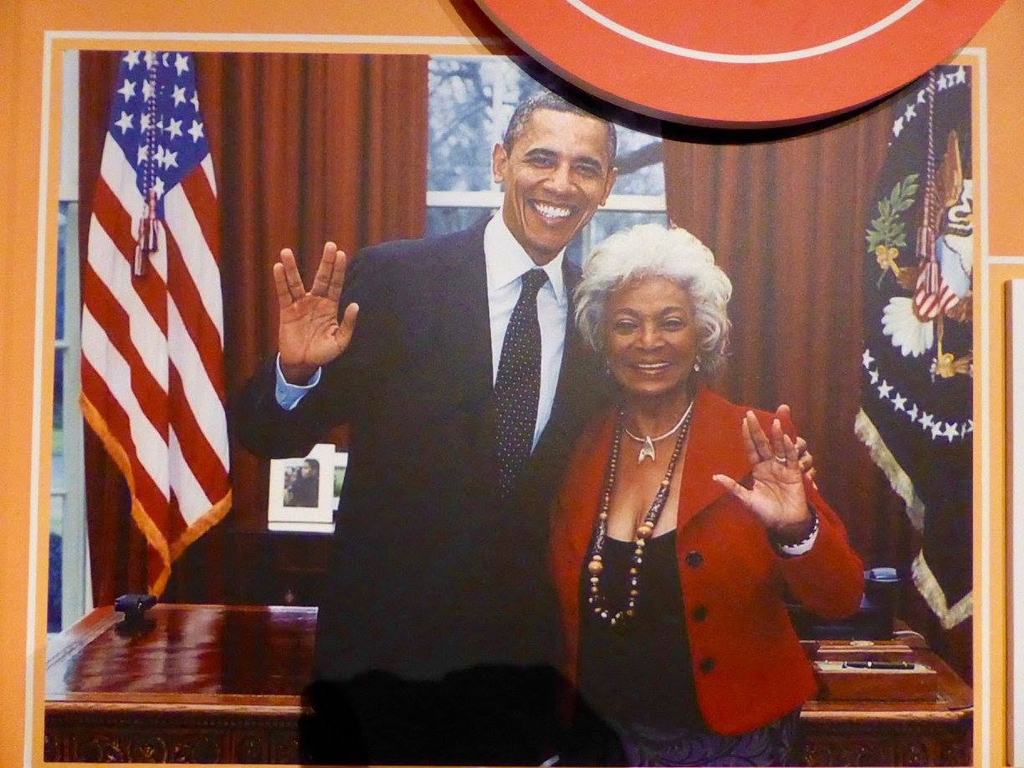
Nichelle Nichols in 2012 with Trekkie-in-Chief Barack Obama. Note that she’s wearing red and black in a nod to her Star Trek uniform.
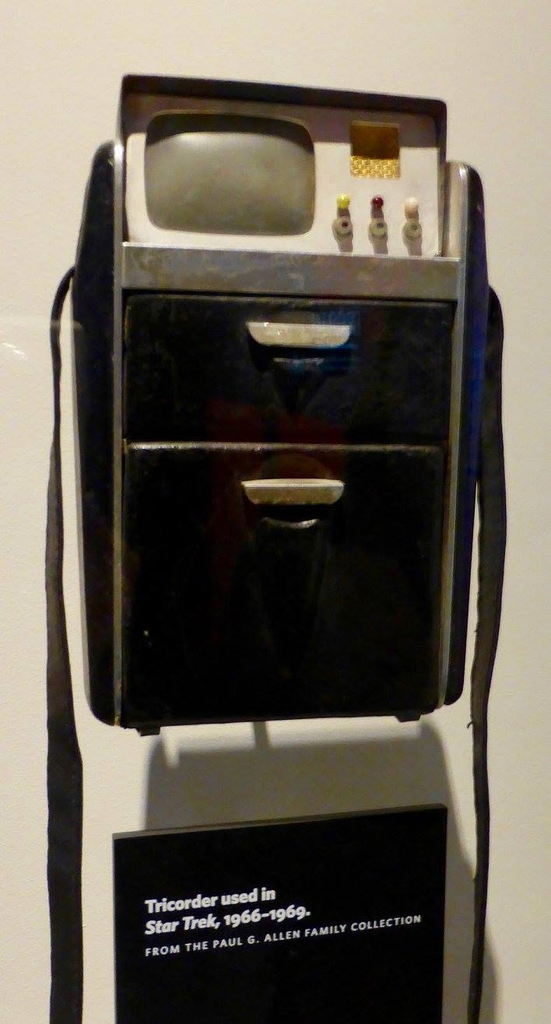
Many of the props used in the orginal series look primitive today. This was a “tricorder” used to detect life signs and a host of other things while crew members were on an away mission on an alien planet. It looks very 1960s to us now, but epitomized high-tech at the time.
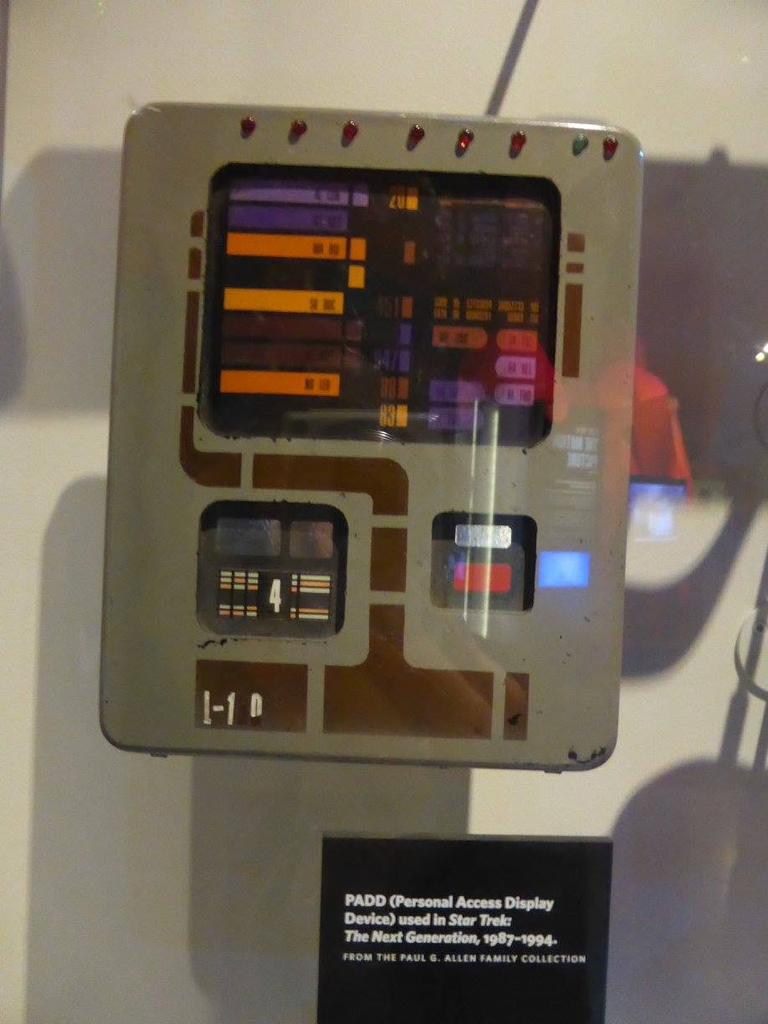
This PADD, or personal data device, became the inspiration for today’s tablet computers.
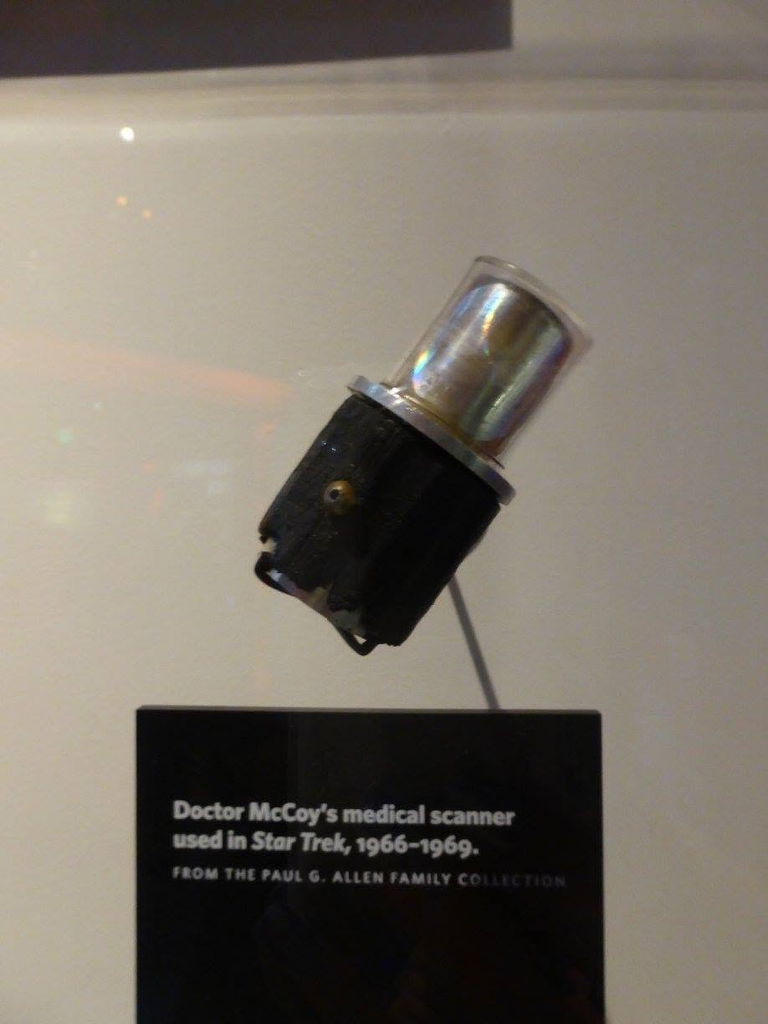
McCoy’s medical tricorder from the original series.
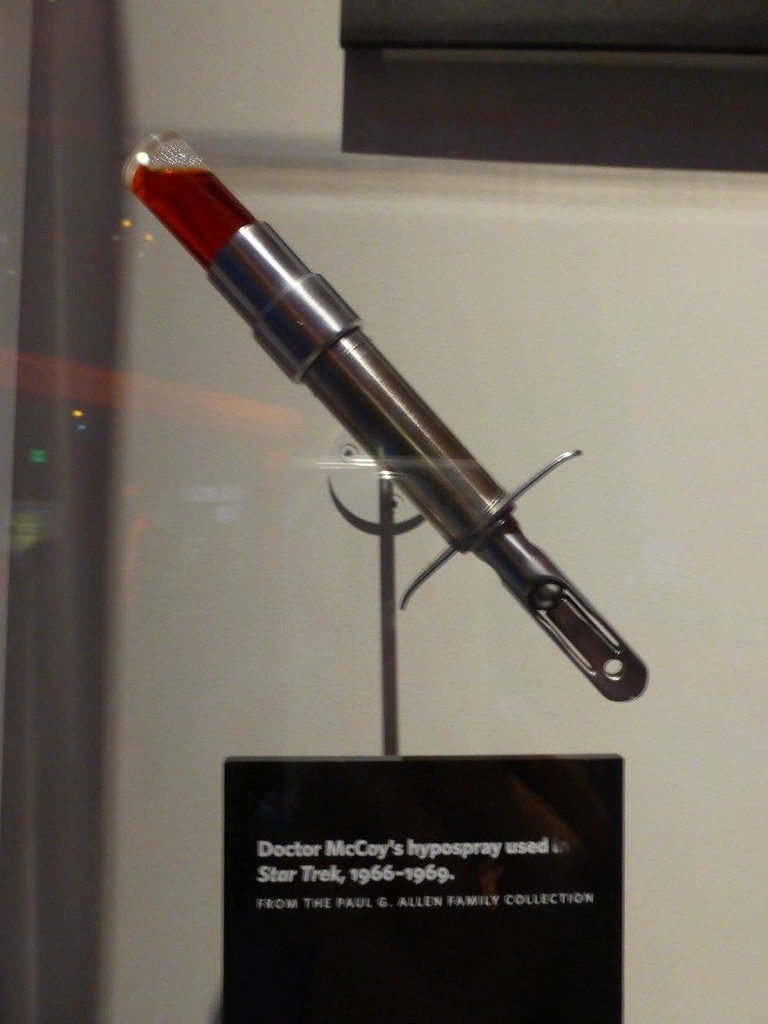
McCoy’s hypospray, usually used to calm agitated patients.
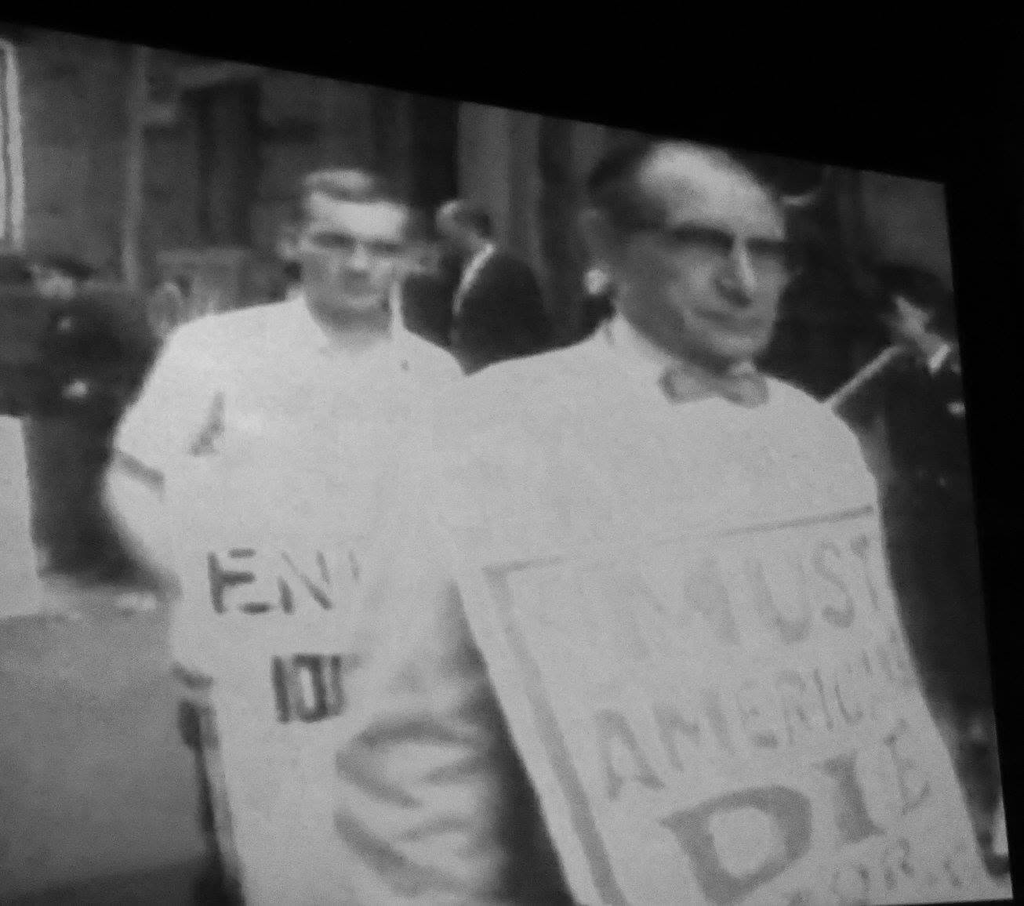
Star Trek played out against the backdrop of the 1960s, when anti-Vietnam War protests were making the news. Star Trek could be seen as a series of morality plays, as various episodes condemned racism and the hippie counter-culture, but another featured the first interracial kiss on a major TV series.
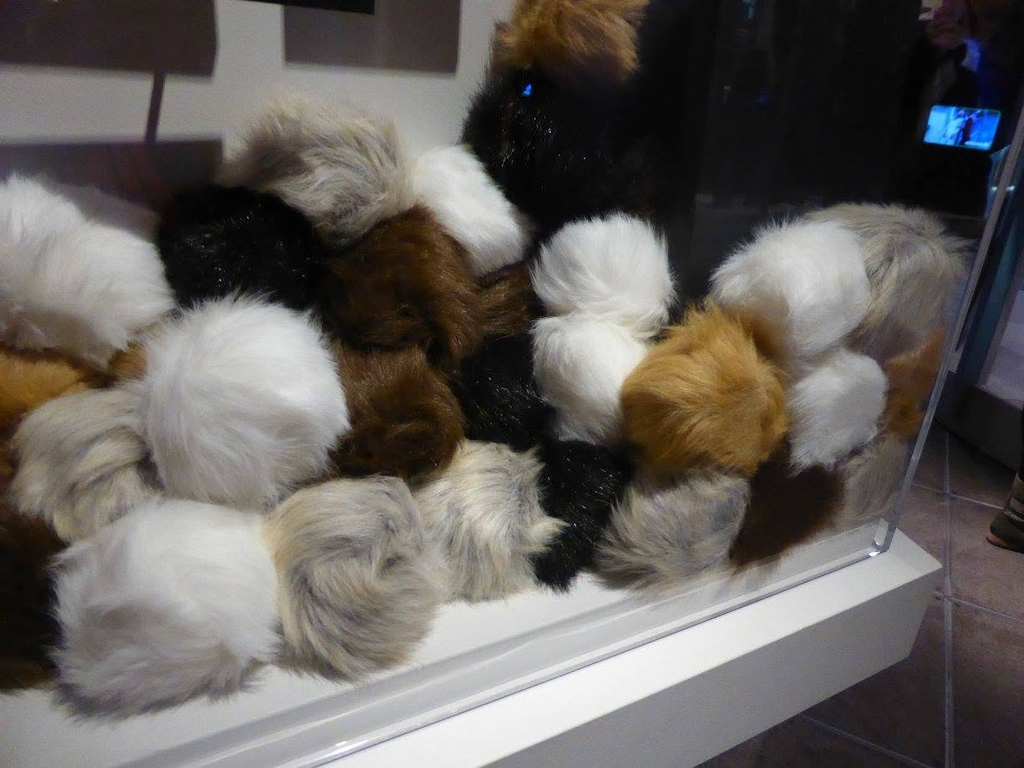
“The Trouble With Tribbles”, where a cute but rapidly-reproducing furry species threatens to overwhelm the ship, is one of the original series’ most memorable episodes.
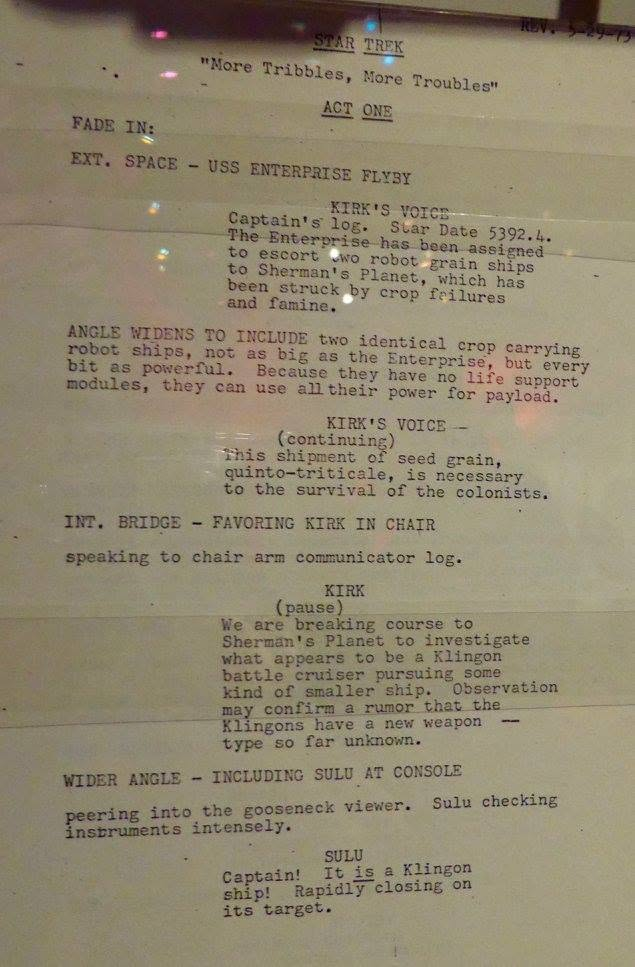
This script features the first page of the script for “More Tribbles, More Troubles,” a follow-up to the first Tribbles episode.
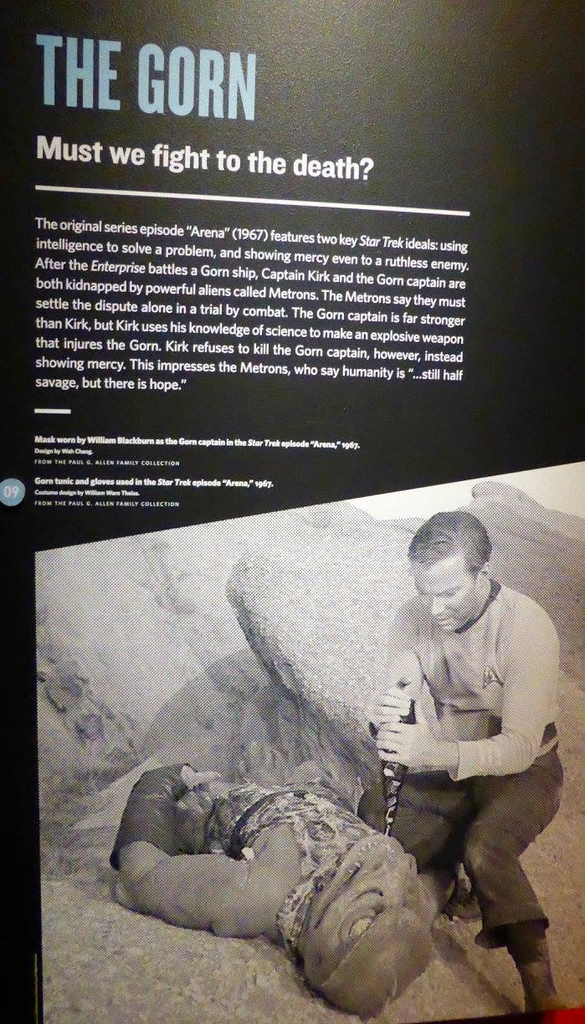
Another highly popular episode was “The Arena”, where an alien species kidnaps both James Kirk and the captain of a dinosaur-like species called the Gorn and forces them to fight each other to the death. Kirk is clearly outmatched physically but finds a way to defeat the Gorn. However, Kirk refuses to kill the Gorn and the kidnapper species declares that there may be hope for the human race, after all.
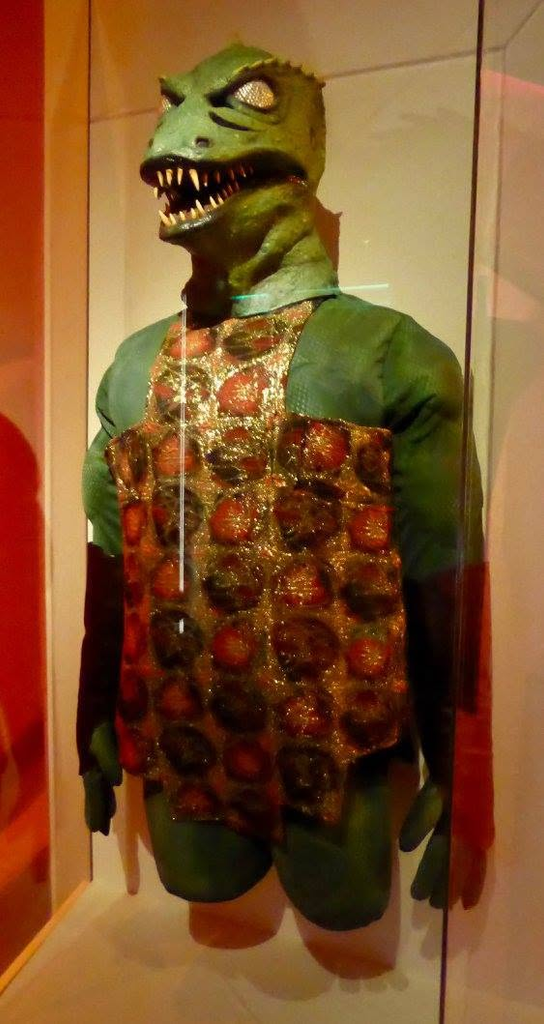
The upper half and head of the Gorn costume.
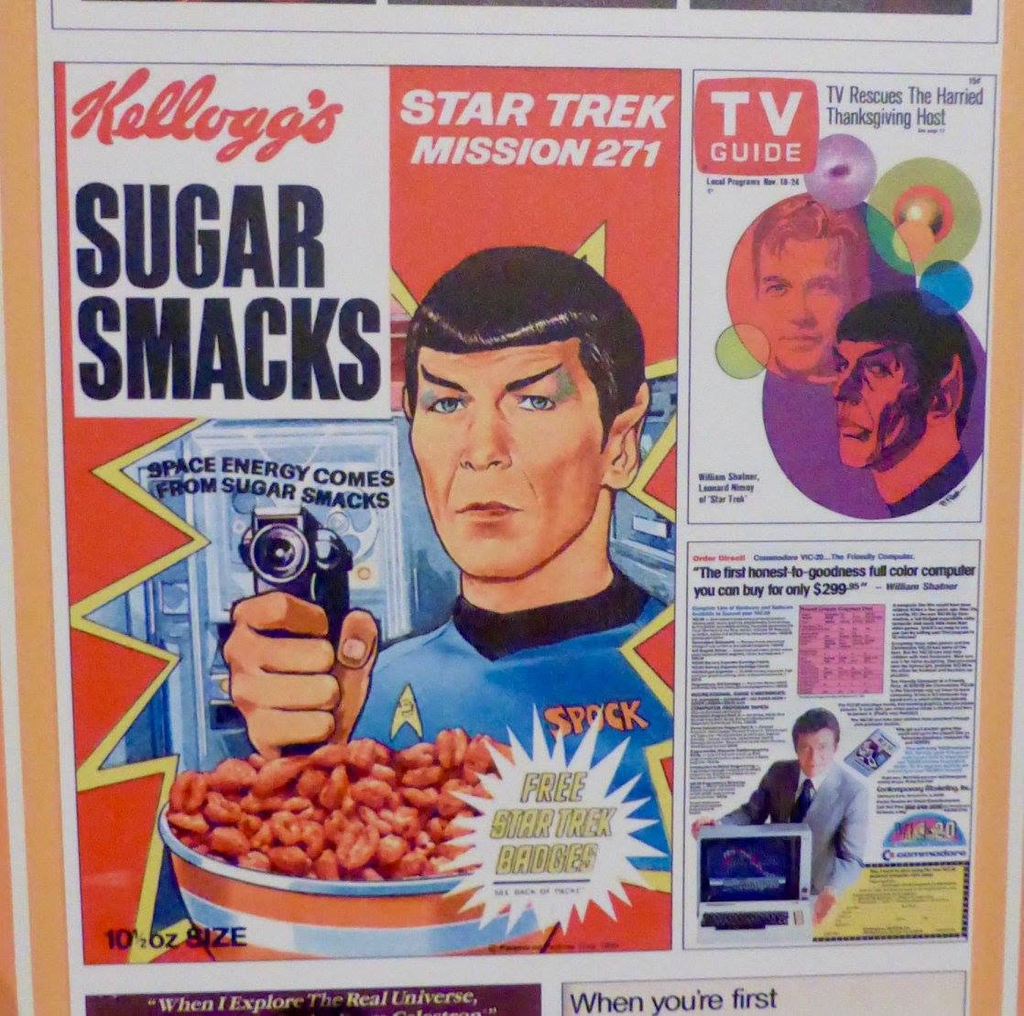
Star Trek became a marketing phenomenon, inspiring a wide variety of Star-Trek themed merchandise and tie-ins. Here, Spock is featured on a Sugar Smacks cereal box.
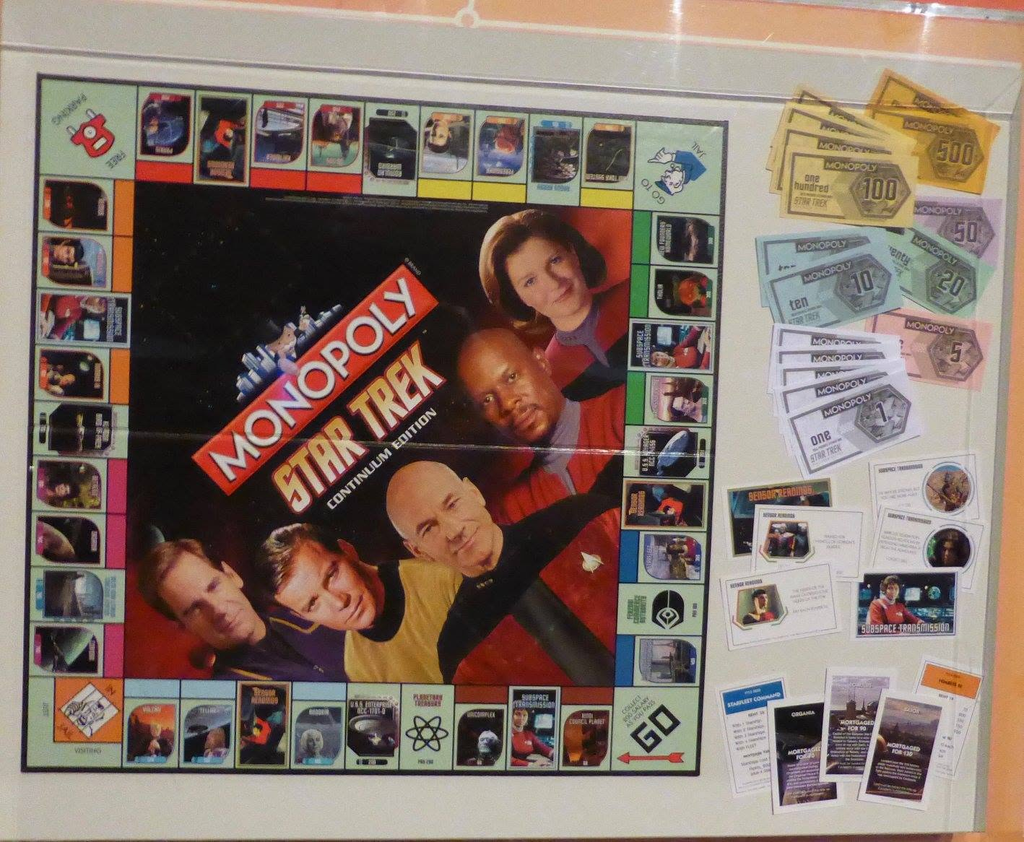
A Star Trek version of Monopoly honors the captains of all five Star Trek TV series.
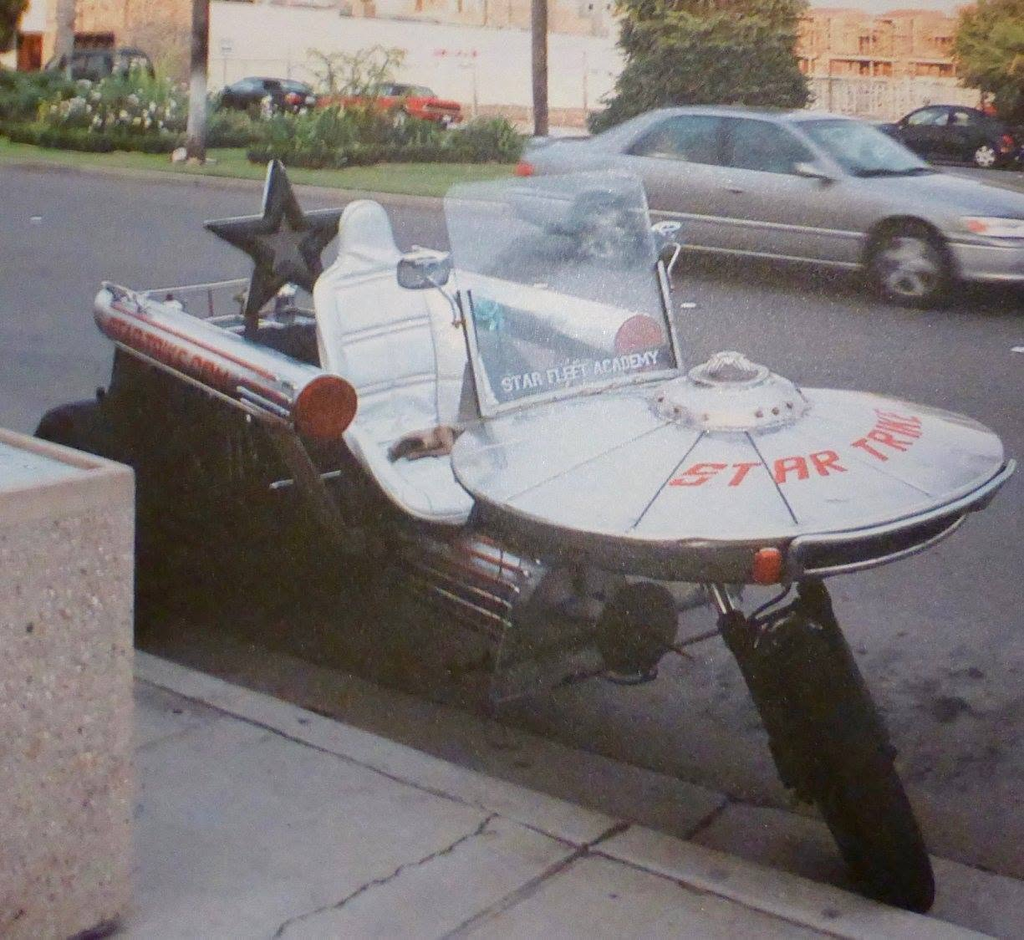
There was even a motorcycle inspired by the Enterprise.
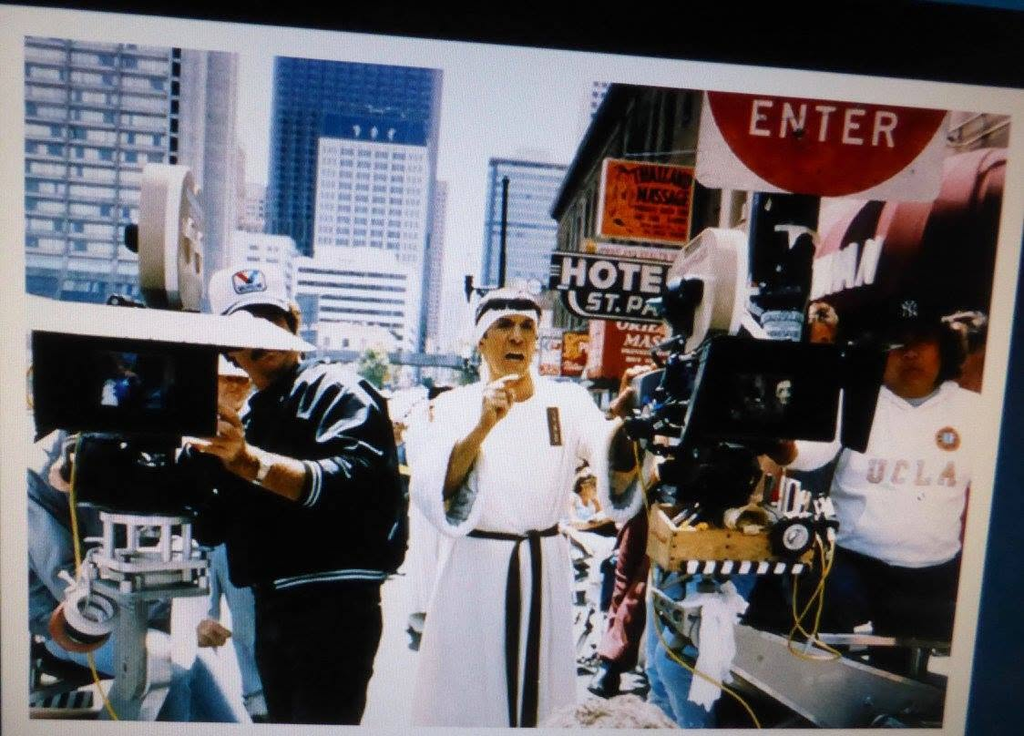
Star Trek’s popularity continued for so many years after its cancellation that it eventually convinced producers to create big-screen movies (the success of Star Wars helped in that decision). This picture of Spock was taken during the filming of Star Trek IV: the Voyage Home. In the movie, the Enterprise crew must go back in time to the 1980s and bring a humpbacked whale back to the 24th century. Although sometimes derided as a “save the whales” movie when it was first shown, its environmental theme seems eerily prescient today.
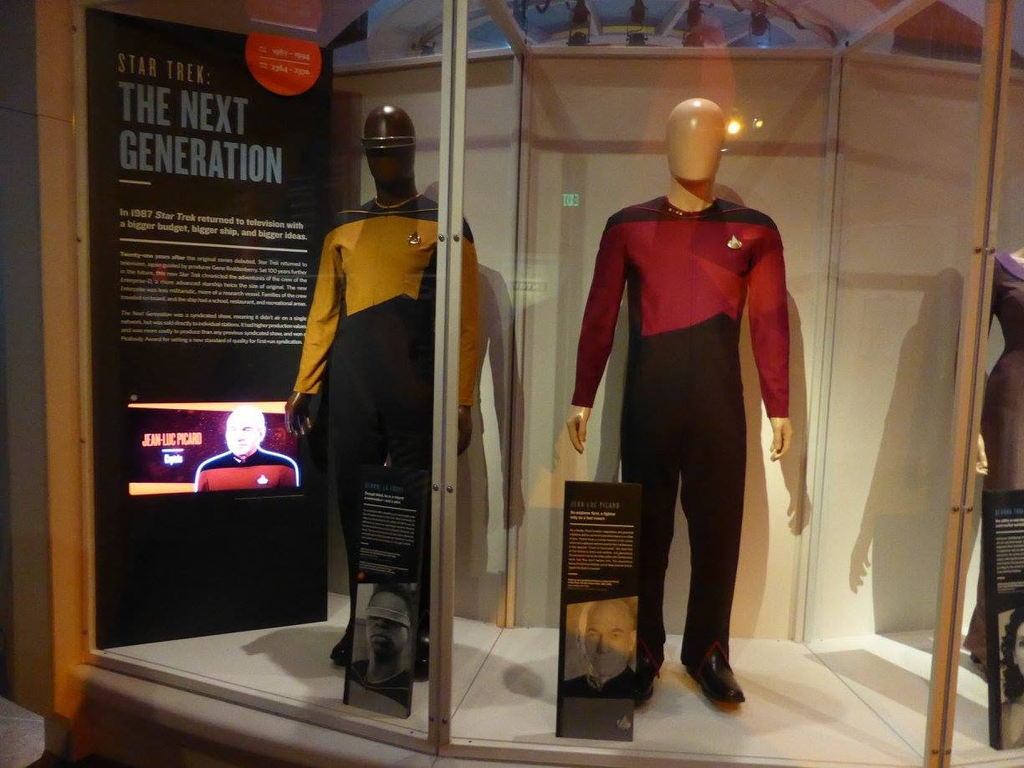
Over 20 years after its original debut, “Star Trek: the Next Generation” introduced a new Enterprise and crew to the viewing public in a second Star Trek series. I was skeptical that “TNG” would match the quality of stories and comeraderie of the characters that had endeared the original series so much to me and many other people. Happily, I was wrong. I thought TNG surpassed the original material. This display shows the costumes used by Lt. Geordi LaForge, Chief Engineer, and CPT Jean-Luc Picard.
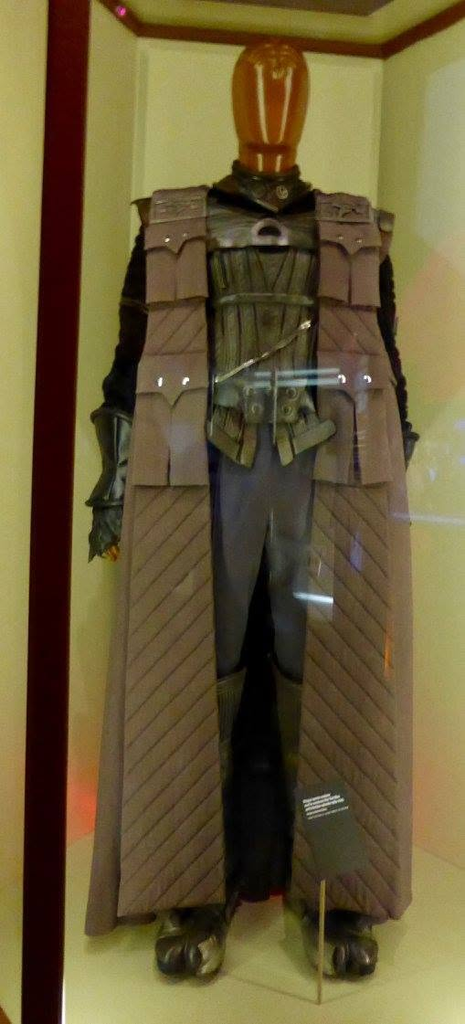
Klingons played a greater role in TNG than they did in the original series. While they were an enemy of Starfleet in the original series, they had become an ally by the time of TNG. Their culture was also fleshed out much more in the TNG scripts, envisioning a warrior nation bound by a strong code of honor. This photo shows a Klingon warrior uniform.
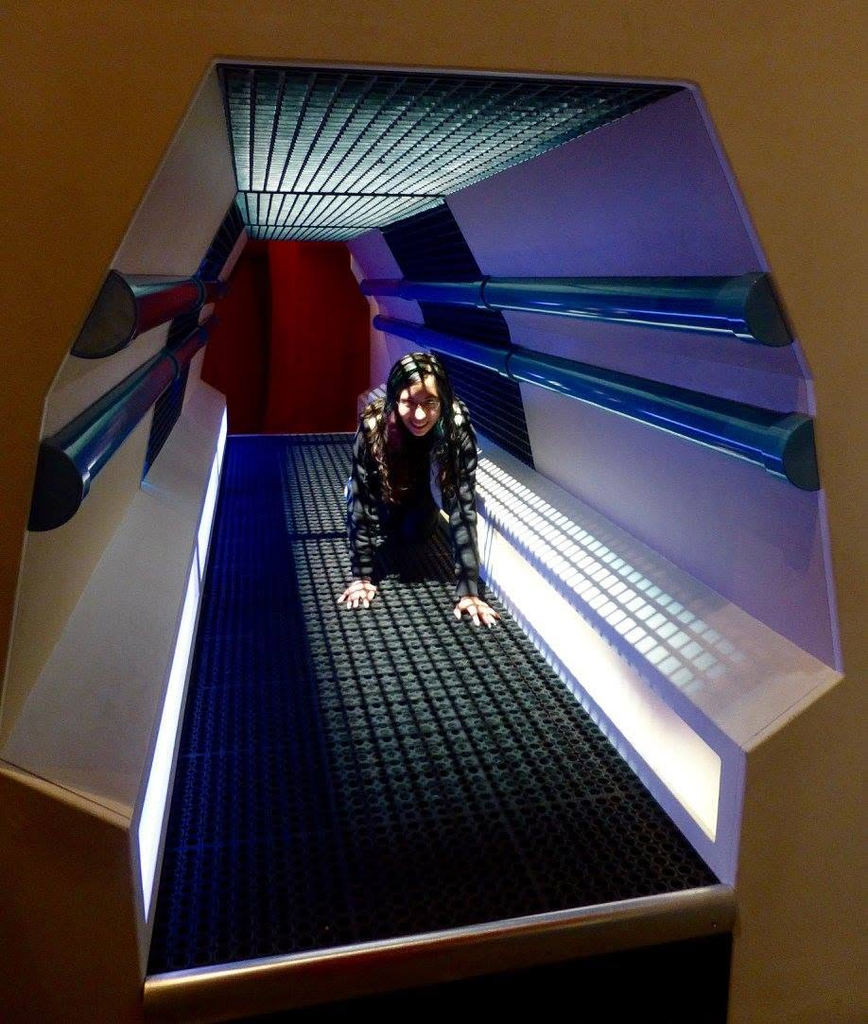
The “Jeffries tube” was used often in TNG episodes, providing a crawlway by which crew members (usually from Engineering) could access different parts of the ship for repairs. Jeffries tubes were named after a set designer. Here, Rachelle crawls through a Jeffries tube with Tribbles on one side of her and gel-packs on the other. I thought this was one of the highlights of this exhibit. Where else can you see a full-sized Jeffries tube?
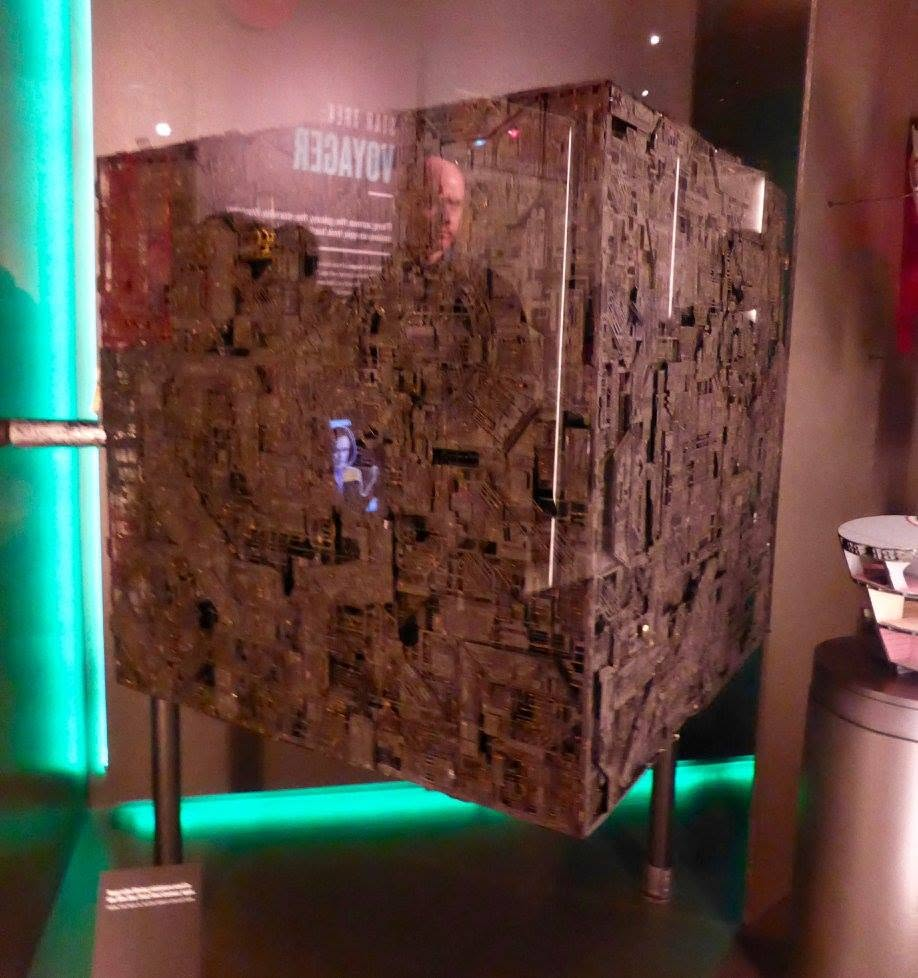
TNG introduced the Borg, the most formidable enemy of the entire Star Trek franchise. The Borg mercilessly “assimilate” every species they come across, turning them into human-machine hybrids who act as drones for the collective. They flew through the galaxy on these cube-shaped ships.
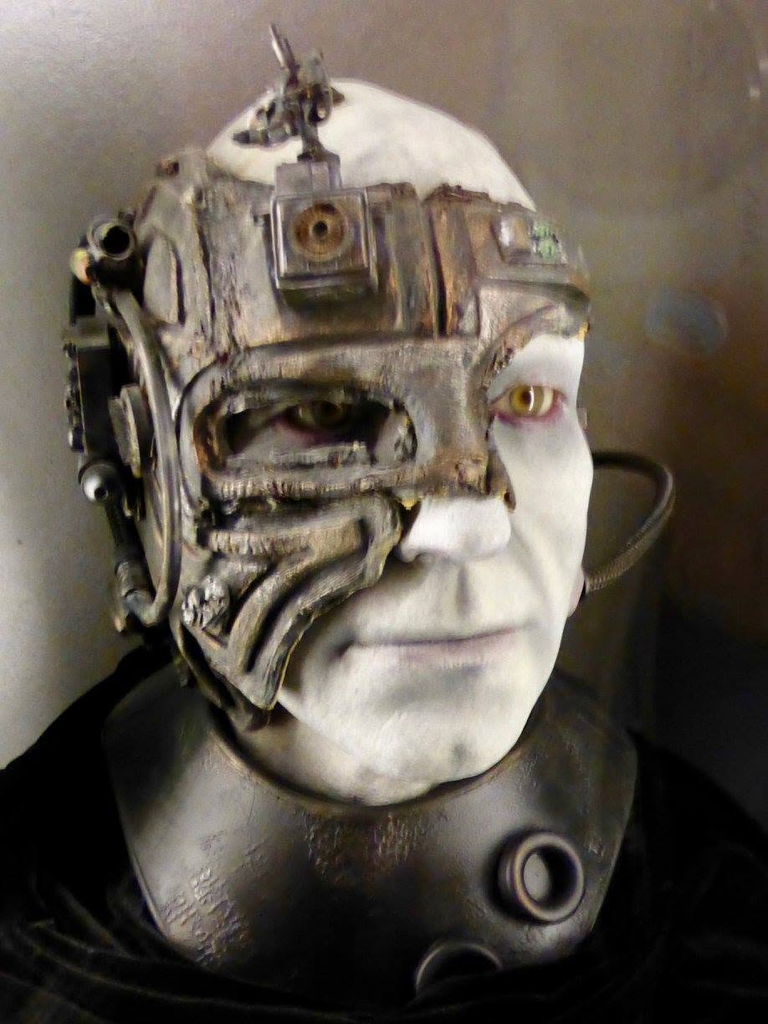
Star Trek fans were horrified when beloved CPT Jean-Luc Picard was assimilated by the Borg and turned into the drone Locutus. The Enterprise’s first officer, Will Riker, shocks everyone when he commands his helm crew to fire on the Borg ship containing Locutus. (They conveniently made that the cliffhanger for the last episode of Season 3 of 1990, leaving Star Trek fans in suspense all summer until Season 4 began). This is the original headgear used by Patrick Stewart for the Borg-related episodes.
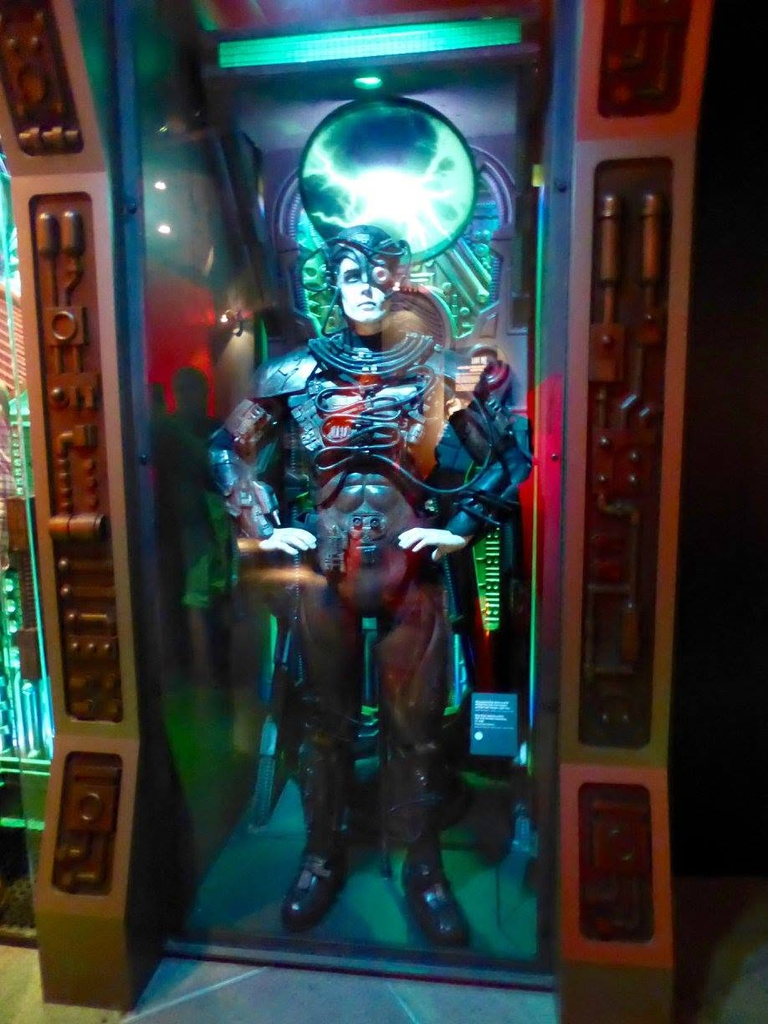
Borg drones stayed in regeneration chambers until they were needed for work purposes.
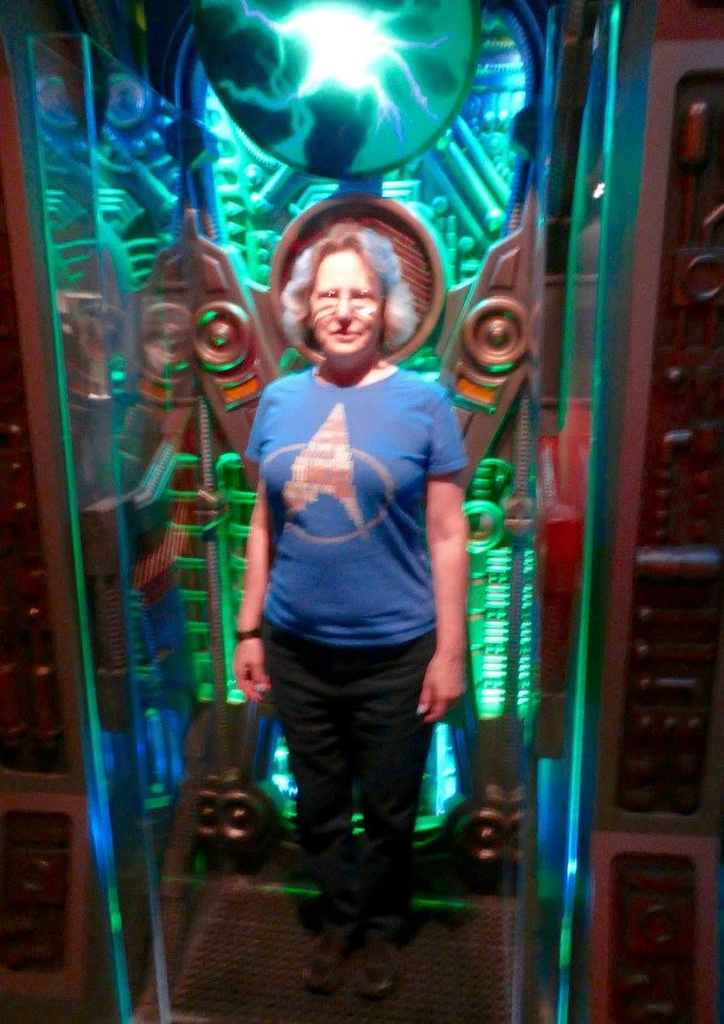
Stephanie in a Borg regeneration chamber.
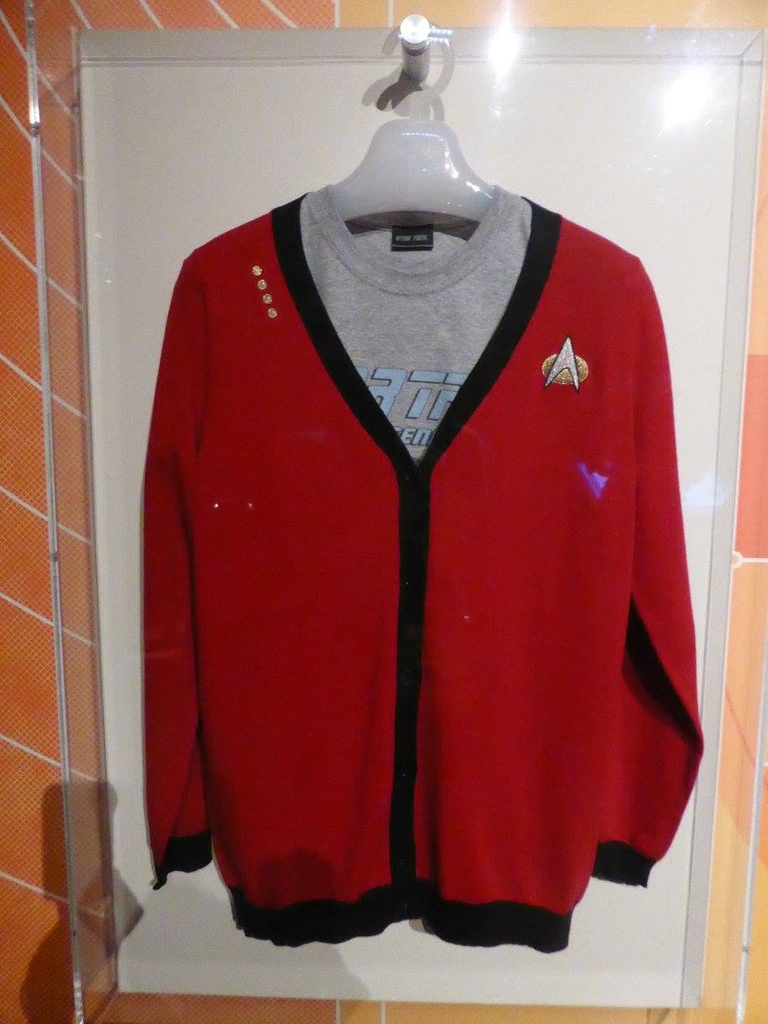
TNG also sponsored Star-Trek themed merchandise. Here, we see a “Picardigan.”
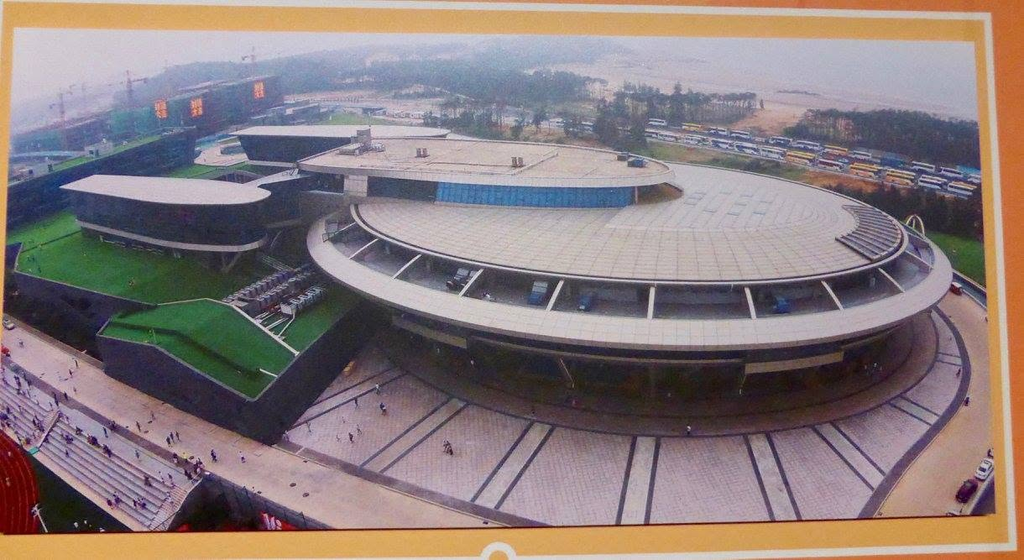
A Chinese video-gaming company built their headquarters to resemble the USS Enterprise.
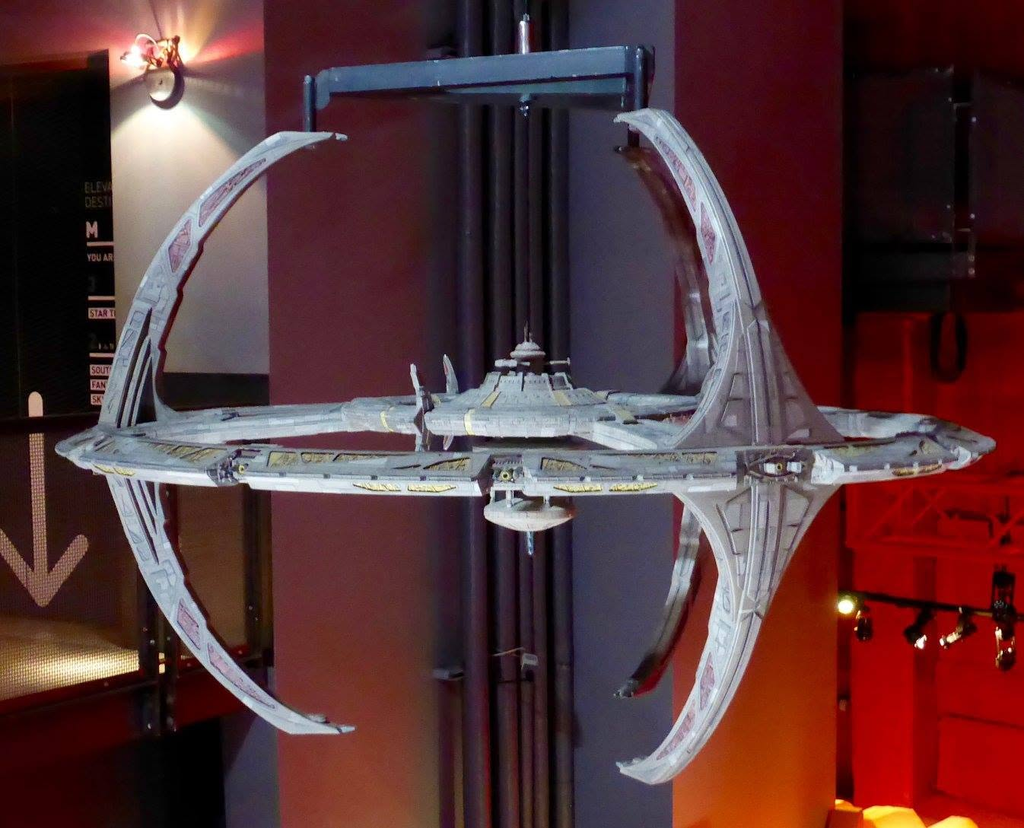
The third Star Trek series, Deep Space Nine, featured a staff aboard a space station where the ships and conflicts come to them instead of a spaceship venturing out among the stars. It was headed by the franchise’s first black captain, Benjamin Sisko. This photo shows the filming model for the exterior of the Deep Space Nine space station.
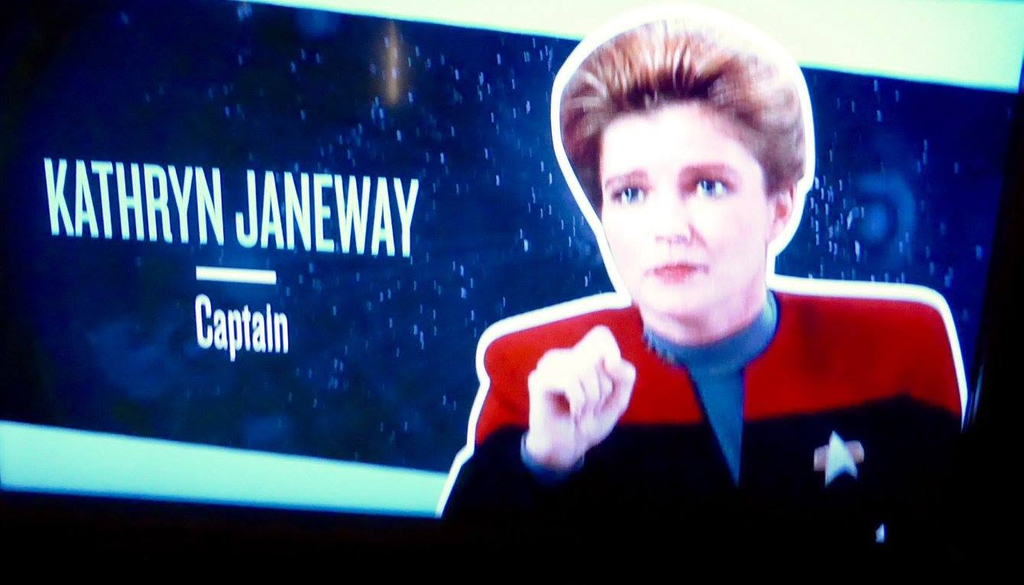
The fourth Star Trek series, Voyager, featured its first female captain, Katherine Janeway. The Voyager crew are flung across the galaxy 75,000 light-years away from Earth. They must make their way across an unfamiliar quadrant, seeking to find a shortcut for their journey home.
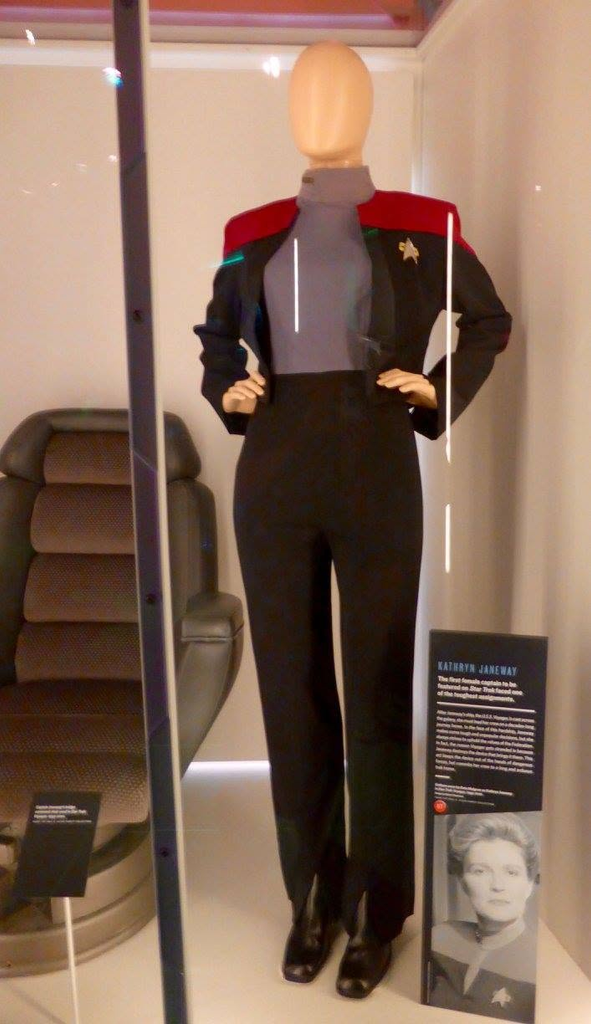
CPT Janeway’s uniform in Voyager. Because Voyager is far from Earth and Starfleet, CPT Janeway faces a number of ethical dilemmas. Should the rules of Starfleet still apply when they’re so far from home, survival is uncertain, and breaking the rules may bring them home faster?
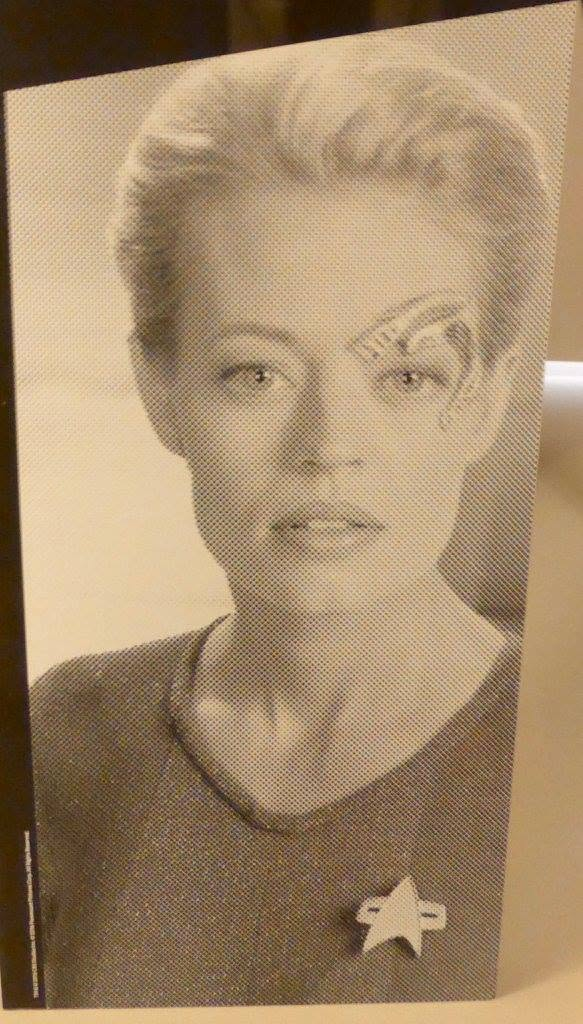
One of the most popular characters in the Voyager series was Jeri Ryan as Seven of Nine. The Voyager crew finds an isolated Borg drone and detaches her from the Collective. Seven of Nine was assimilated as a child and finds it difficult to relate to humans and the concept of individuality.
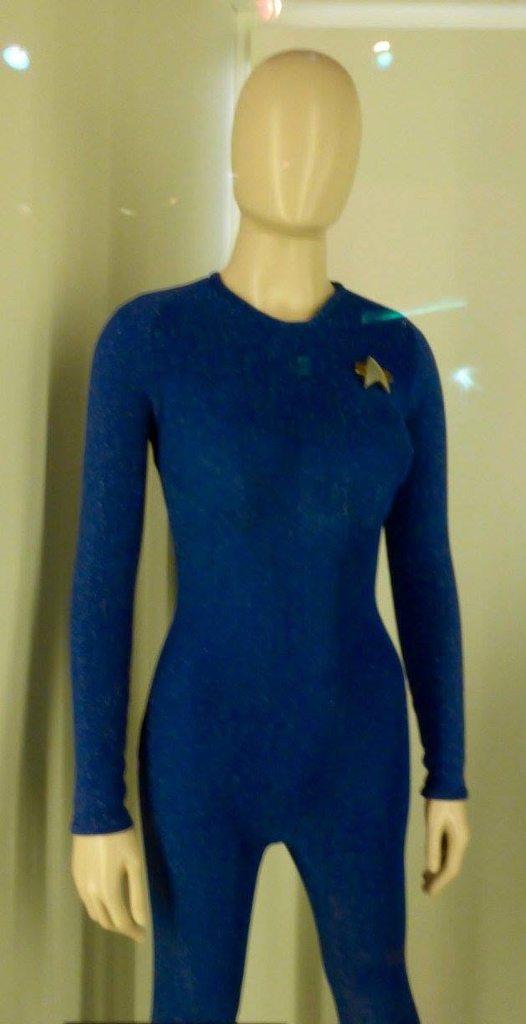
The Seven of Nine character was introduced as a sexy-looking character to appeal to male viewers. Here, we see the form-fitting catsuit worn by Seven of Nine (although a metallic silver catsuit was the more memorable costume).
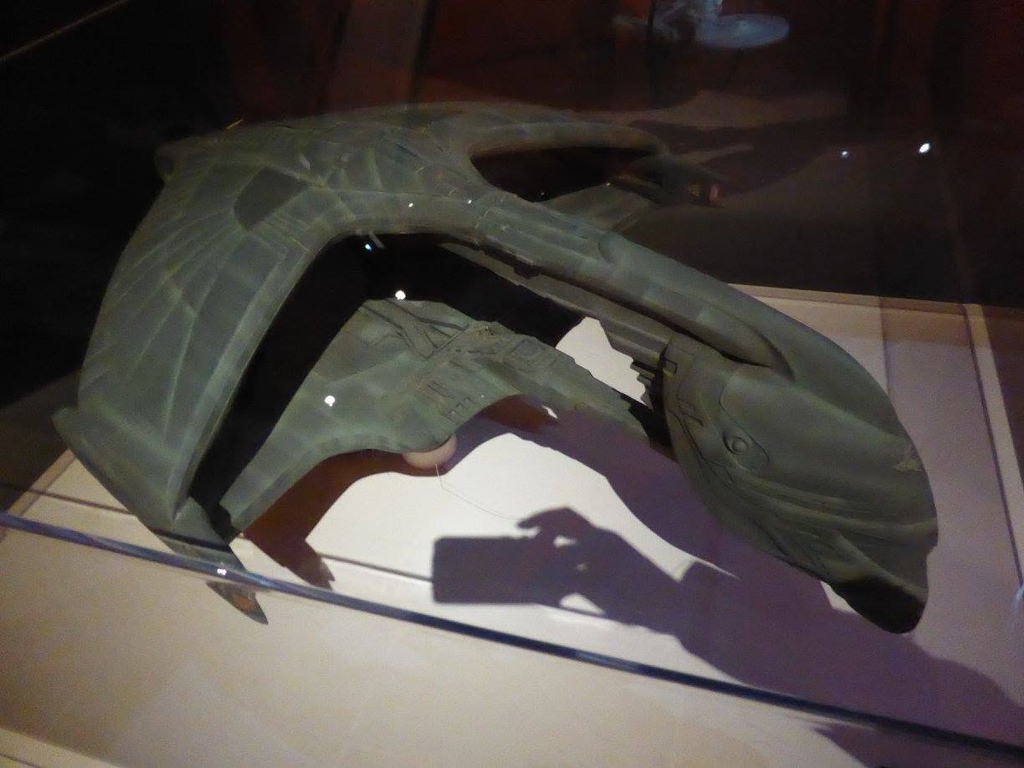
Model of a Klingon Bird of Prey warship.
This is my love letter to Star Trek. I hope you enjoyed it.
The Experience Music Project has now been renamed the Museum of Pop Culture (which, in my mind, more accurately represents the museum’s contents). It is located at 325 5th Avenue North in Seattle and is open from 10:00am to 5:00pm daily. Although the Star Trek exhibit featured here is long gone, MOPOP features exhibits and artifacts from many of America’s best-loved pop culture genres. Admission is $34.95.