

We stayed in Namur simply because we were attending the Flower Carpet in Brussels on Friday and the Dinant Bathtub Regatta on Saturday, and Namur was both inbetween the two cities and its hotel rooms were far less expensive. We spent Sunday looking around the Namur area. We didn’t know it until we arrived, but Namur is the capitol of Wallonia, the (French-speaking) region of Belgium
We’re always suckers for quirky museums, so we decided to check out the Musée De La Fraise (Strawberry Museum) in nearby Wépion. The museum guides you through seven centuries of strawberry production and which varieties are grown in Belgium. You’ll see a variety of artistic, practical, and whimsical objects featuring strawberries, and then the gift shop will tempt you with a variety of strawberry-based liqueurs and other foodstuffs. (We ended up buying a bottle of strawberry vinegar).
Finally, we’ll tell you about the annual Strawberry Festival – or as they call it, the Frais’tival. We missed it by a few weeks, but we’ll have to return for the next edition in 2027!
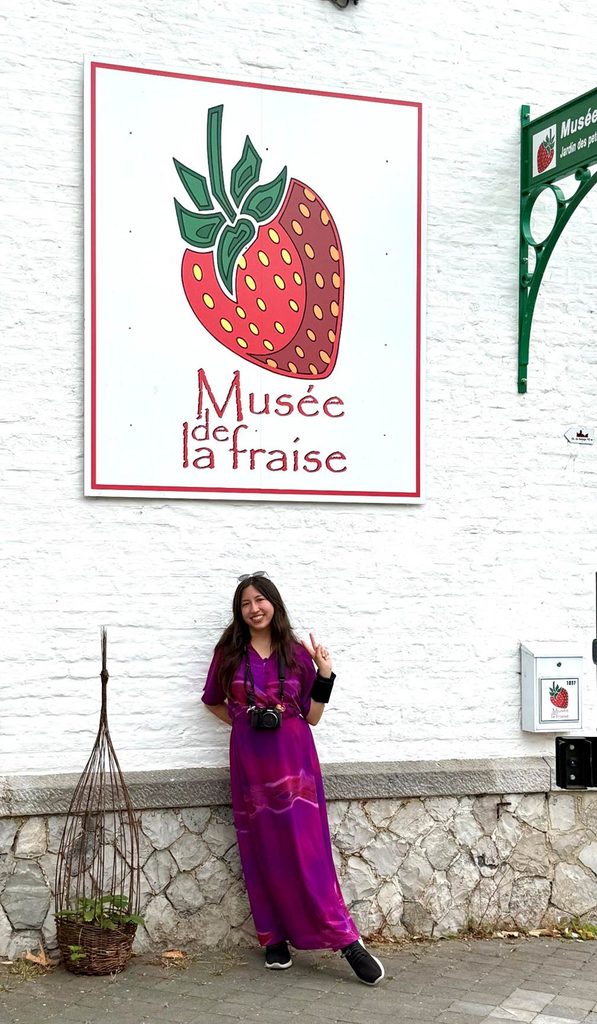
Rachelle poses in front of the Musée de la Fraise’s entrance.
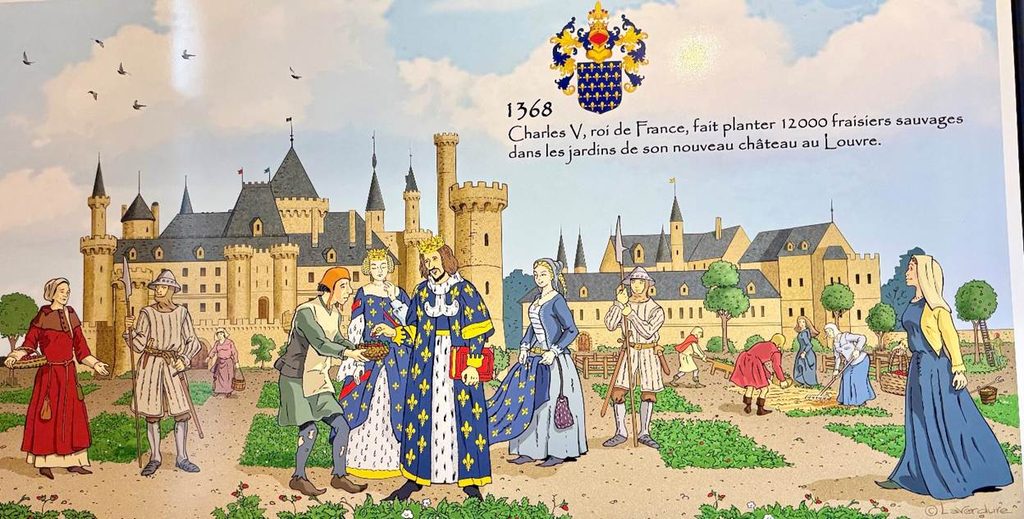
In the Middle Ages, wild strawberries were mostly used for therapeutic purposes, such as in tisanes, syrups, and ointments. In 1368, King Charles V of France had 12,000 wild strawberry plants seeded in the new gardens of the Louvre Castle. This would be the first strawberry plantation in Europe.
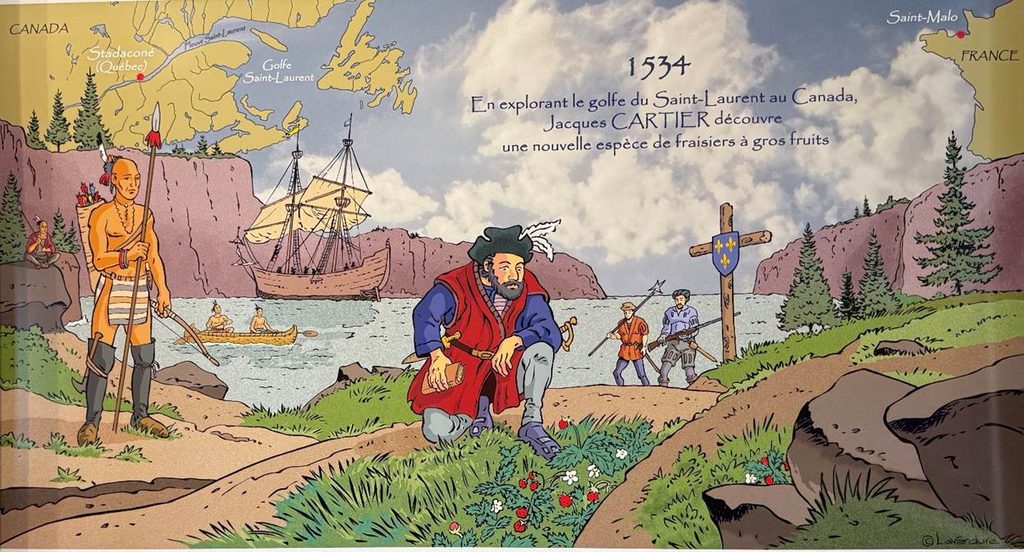
But Europe’s wild strawberries were small and not especially flavorful. French and English sailors who traveled to North American discovered large, tasty, and bright red strawberries in Virginia (Fragaria virginiana). They brought specimens back to Europe in their ships, and they began to be cultivated in England, Holland, and France.
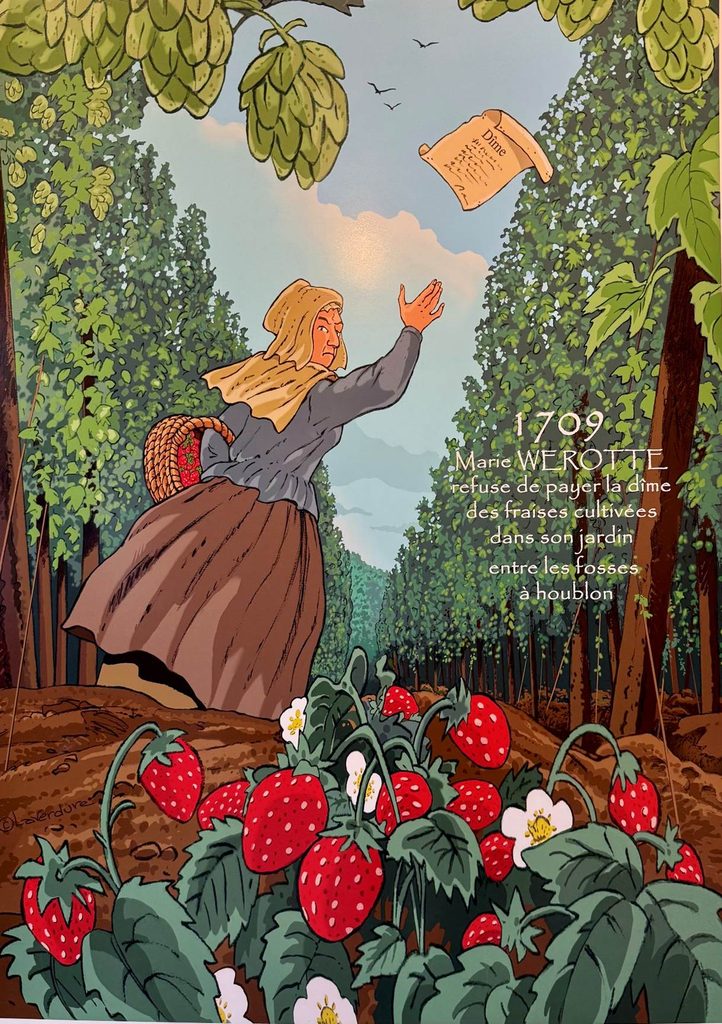
By the beginning of the 1700s, wild strawberries in the Wepion area had largely been replaced by Capron strawberries (Fragaria moschata), which came from Eastern Europe and had larger fruits. Strawberry cultivation had become an important part of the agricultural production in the valleys surrounding the Meuse River. Of course, the tax man existed in the 18th century just as it does today. In 1709, a peasant named Marie Wérotte refused to pay her required tithe for the strawberries she grew in her garden between hops pits. The museum doesn’t record the outcome of her long trial.
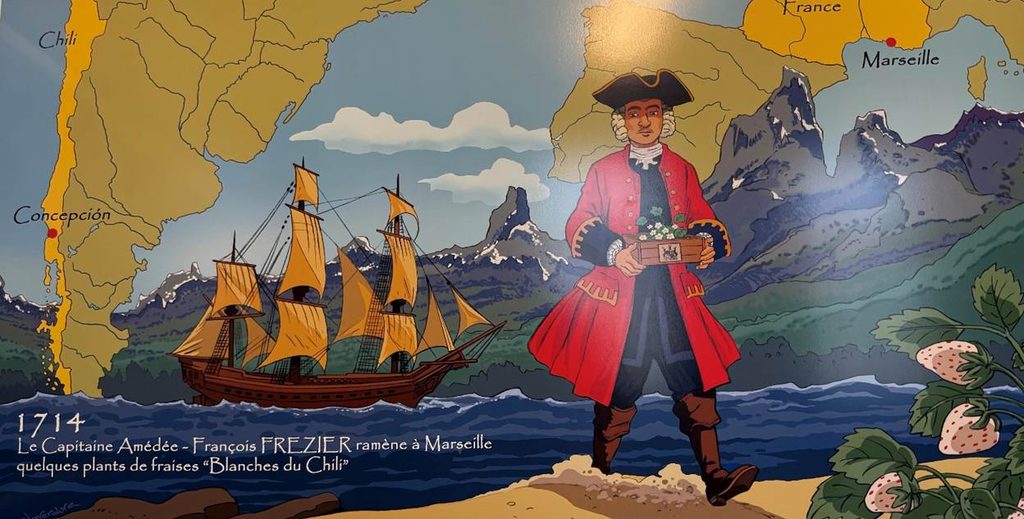
Captain Amédée-Francois-Frézier was an engineer of the War Marine of King Louis XIV of France who was passionate about botany. Along the Concepción region of the coast of Chile, he discovered huge pale-colored strawberries that he described as being “as large as a walnut or even sometimes as large as an egg.” He brought a number of these Chilean strawberries back to Europe where they began to be grown in Paris and in Brest (the far western tip of France). Sadly, these plants grew only flowers but no fruits. Captain Frézier had inadvertently imported only female plants.
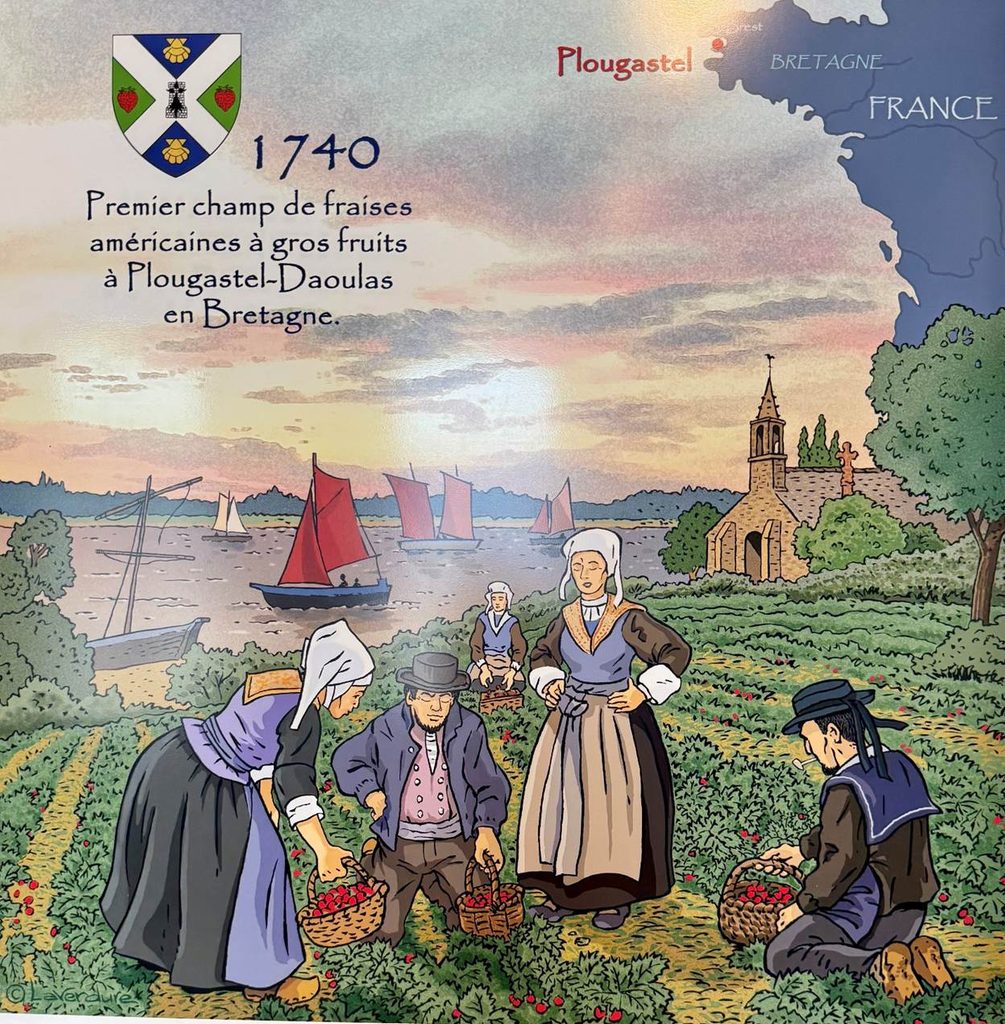
They must have found some male plants of the Chilean variety of strawberries, because by 1740 they were cultivating hybrids made from a cross between the white Chilean strawberry and the sweet Virginian strawberry. This pan-American hybrid was grown in the Plougastel-Daoulas area of Brittany. By 1854, they’d be exporting them to England and, with the advent of the railway, they were supplying the Parisian market in 1865.
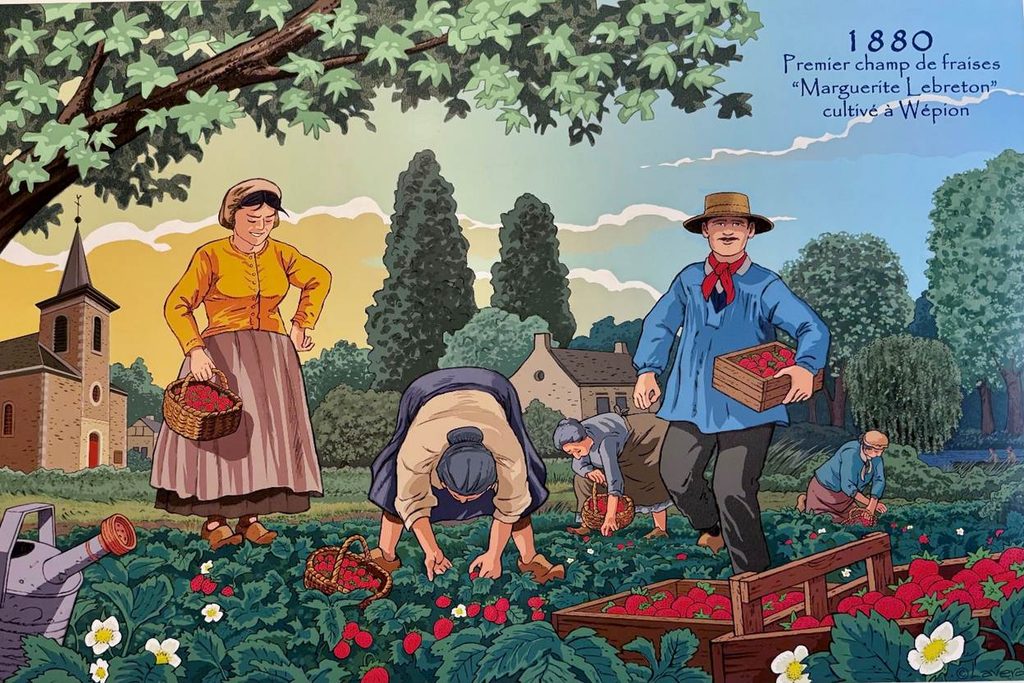
France managed to export more than just the fruits of those hybrid strawberries. In 1860, “American” strawberries began being cultivated in the Liége area of Belgium. Production began moving north along the Meuse River and then settled in Wépion in 1880, where conditions were ideal for growing strawberries. Wépion’s cultivar, called the “Marguerite Lebreton”, became well-established in all of the main markets of the country.
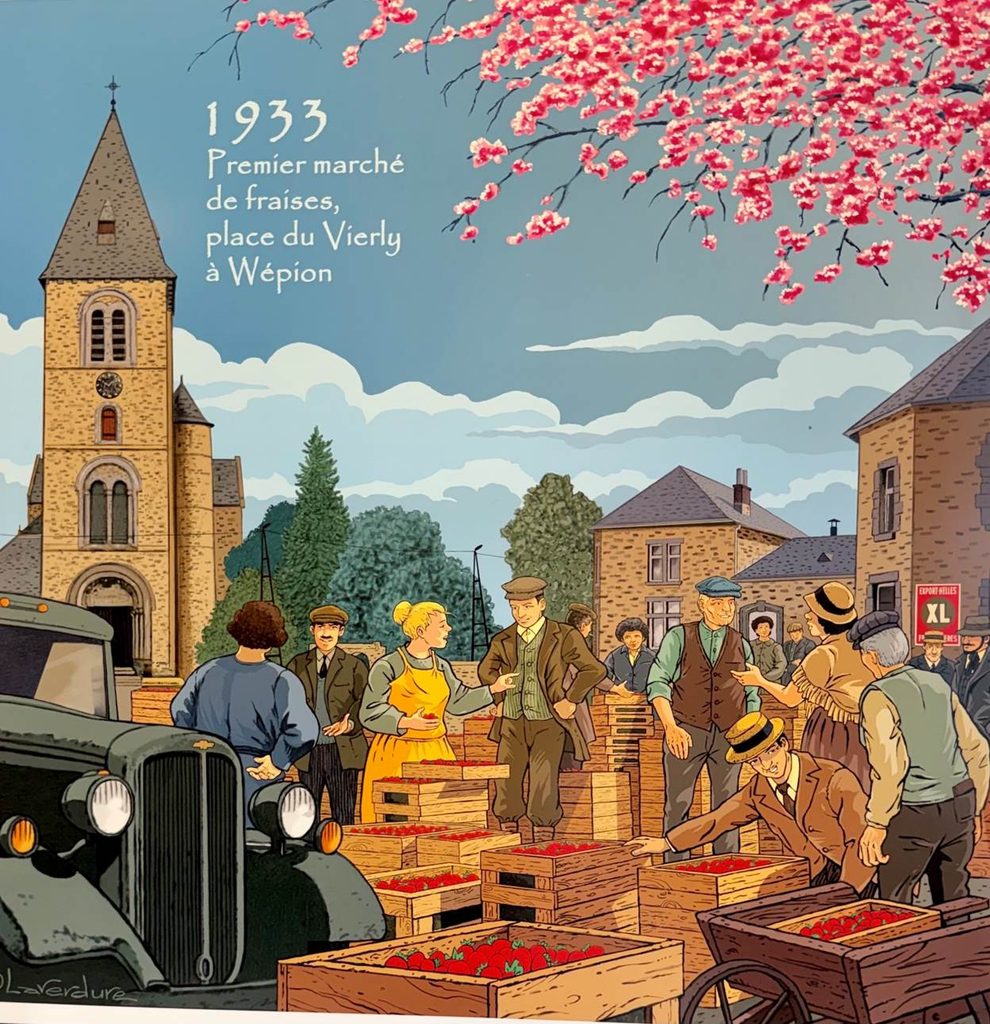
The first strawberry market was established in Vierly Square in Wépion in 1933. Producers formed a cooperative to fight market pressure. Strawberries were sold in this market every day during the season; up to 60 to 70 TONS of strawberries could be traded daily. This was the golden age for the Namur strawberry, with more than 500 hectares (1,235 acres) dedicated to strawberry cultivation.
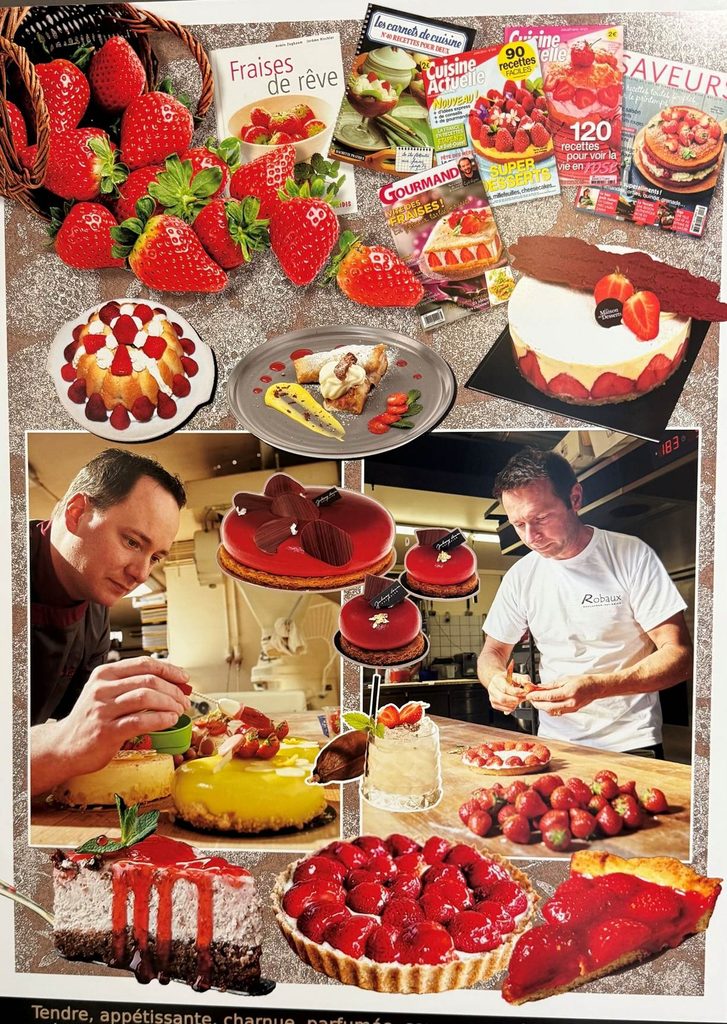
There are soooo many things that can be made from strawberries: cheesecakes, tarts, pies, custards and puddings, clafoutis, tiramisu, mousse, ice cream, and cakes, among many others. You can eat the luscious fruits by themselves or dipped in chocolate or sugar.
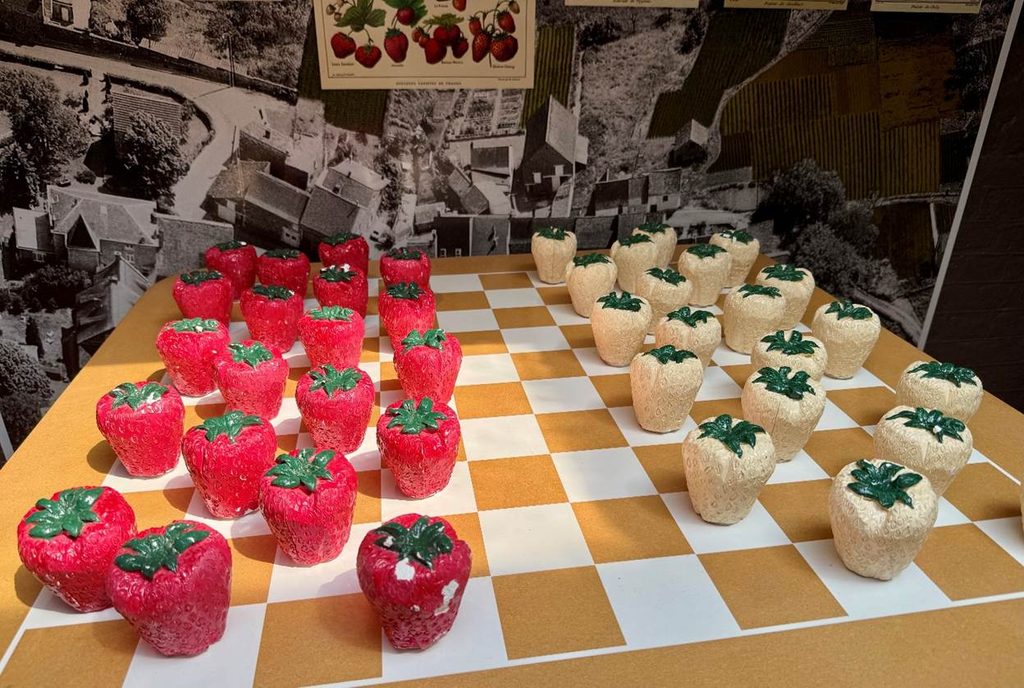
A checkers set with red and white strawberries serving as the checkers.
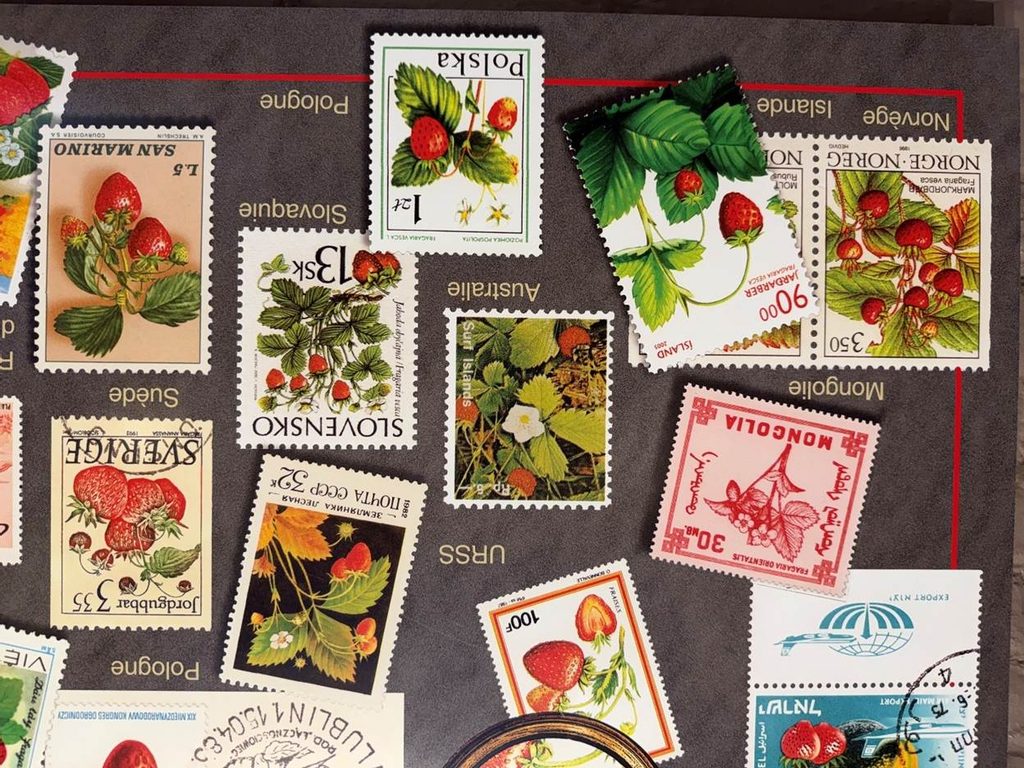
Many countries have featured the bright red strawberries on their postage stamps ….
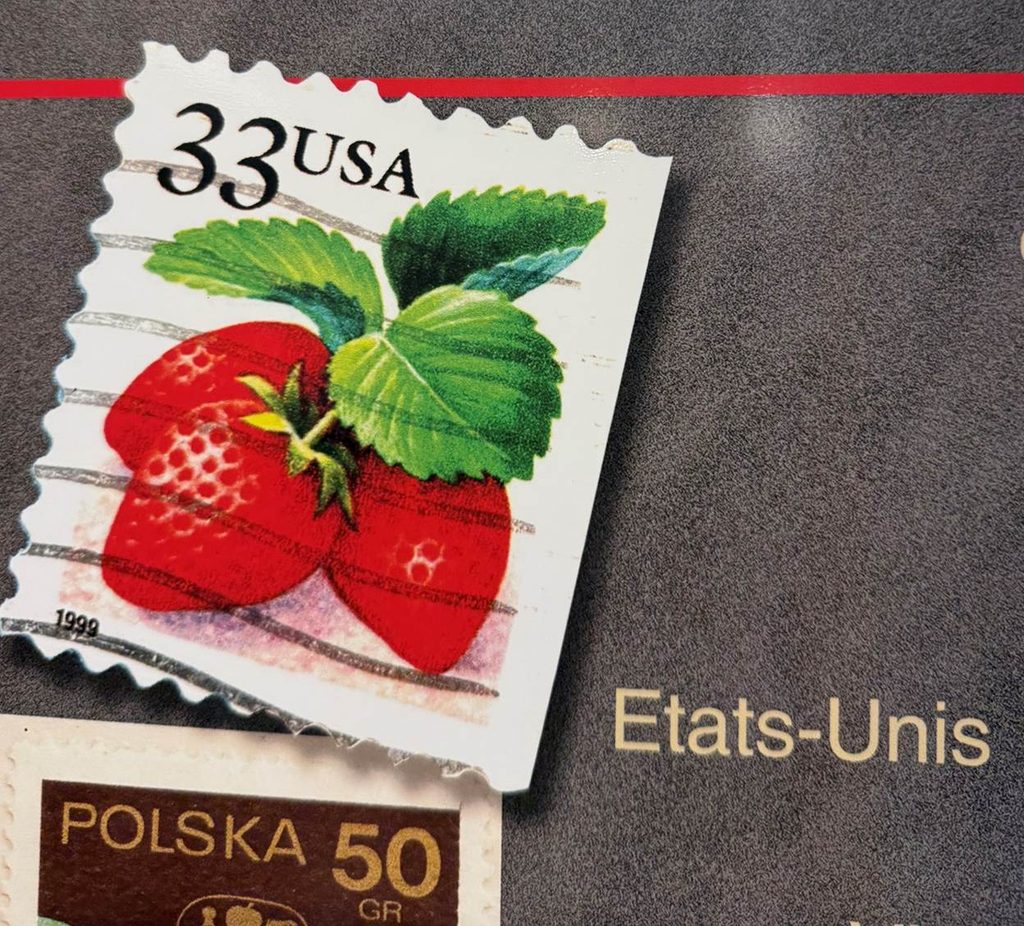
…. Including the United States.
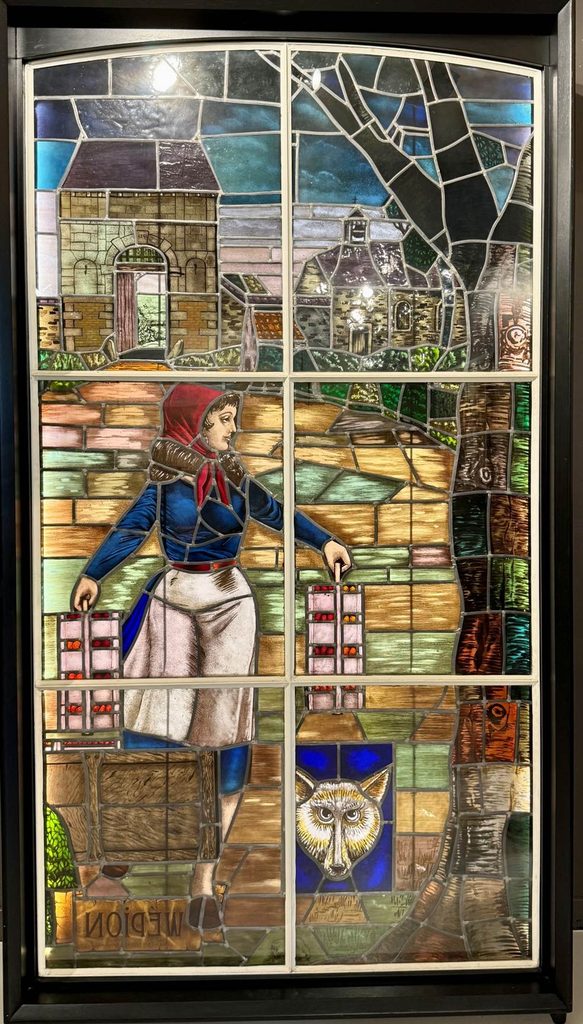
This stained glass window features a girl carrying boxes of strawberries. With her red hood, did she inspire the tale of Little Red Riding Hood?
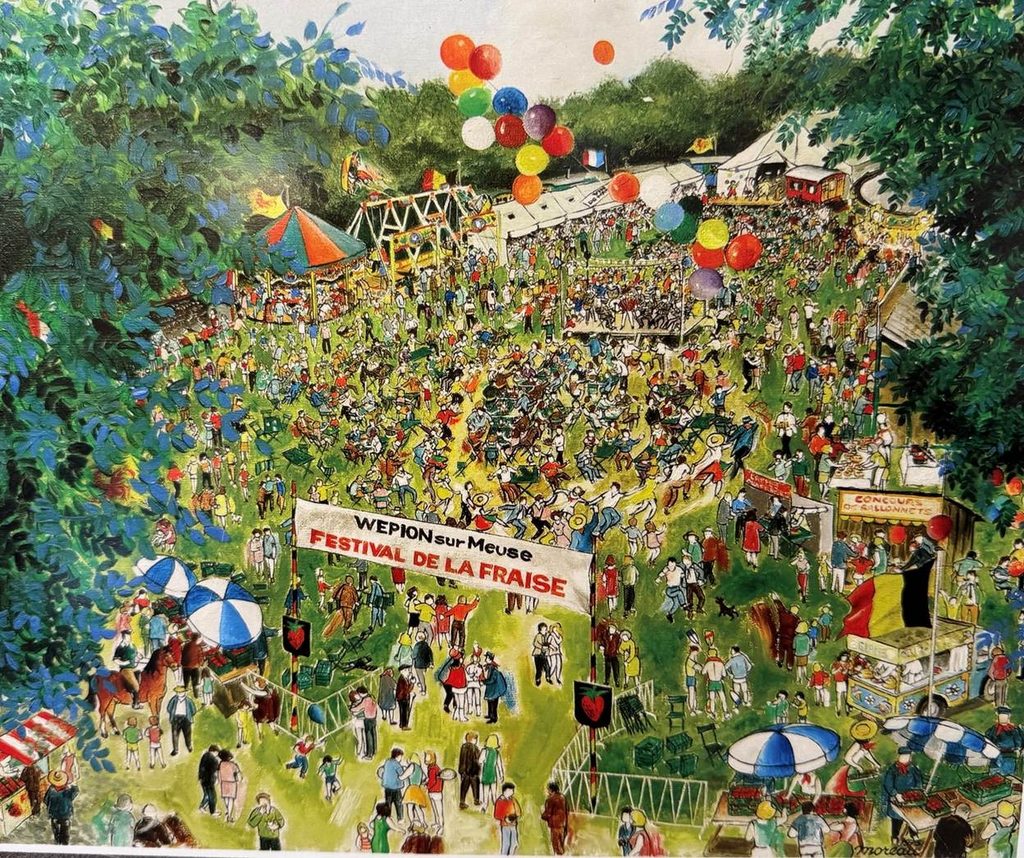
The Festival de la Fraise is held on the first Sunday of August each year in Wépion.
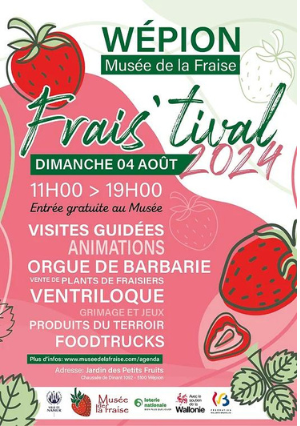
A 2024 poster from the Frais’tival. The festival offers something for the whole family: nature discovery walks, guided tours of the Strawberry Museum and the nearby berry gardens, a tour of the Meuse Villas, music, a ventriloquist, face painting, a bouncy house, wooden games, food trucks – and of course, strawberries! They will have strawberry plants for sale, as well as the fruits themselves, and all kinds of strawberry-related products.