

Following the defeat of Nazi Germany in 1945, the Allied Forces (United States, Great Britain, France, and the Soviet Union) divided the country into four sectors. Similarly, although Berlin was wholly within the territory of the Soviet Union, the city itself was divided into four sectors. Between 1948 and 1961, tens of thousands of East German refugees fled into West Berlin. On August 12, 1961, 2,400 East Germans crossed the border into West Berlin – the most for a single day. Embarrassed and fed up, Soviet Premier Nikita Khrushchev gave the East German government permission to close the border for good. That night, the East Germans began building a barbed-wire and concrete block wall. It would later be augmented by the more impenetrable concrete wall surrounded by “dead zones” and guard towers. Several well-guarded checkpoints (the most well-known being the American “Checkpoint Charlie”) were kept in place for diplomats and other official visitors to pass through.
Over the years, some 5,000 East Germans managed to cross the border into East Germany despite the wall and an additional 171 were killed during their attempts at escape.
On November 9, 1989, following a thaw in the Cold War, the East German government announced that citizens of the GDR would now be free to cross through the wall. Ecstatic East Germans poured through at midnight and promptly began picking away at the wall. Cranes and bulldozers pulled down most of the rest.
Today, only a 1.3 kilometer section of the wall still stands as a monument to the city’s history (although a few segments exist in museums elsewhere in the world). During the wall’s existence, West Germans covered their side of the wall with graffiti, but the unapproachable east side was pristine. In 1990, 118 artists from 21 different countries began painting murals on the blank east side of the wall, creating what is now known as the East Side Gallery. It is considered the largest open-air art gallery in the world.
When I was stationed in West Germany back in the late 1970s, while the Berlin Wall still existed, the US Army sponsored trips for American servicemen and women to visit East Berlin for a day. The idea was to allow American troops to see the privation in East Berlin and better understand why we were stationed in Germany and what we were protecting. The backlog for trips was so long that my number never came up before my discharge date, much to my dismay. Friends who took the trip told me that they traveled by train to East Berlin, went through Checkpoint Charlie, then wandered the streets of the city in their Class A uniforms (an Army requirement, we could not wear civilian clothes). They said there wasn’t much to do because the shops were basically devoid of goods and the East German government frowned on conversations between East Germans and Westerners. Therefore, I never saw the Wall or East Germany while it was still under Communist rule. I never really expected the Wall to fall during my lifetime and was pleasantly surprised when it fell in 1989. However, it wouldn’t be until 2013, 24 years after the wall fell, when I would finally get a chance to visit. This album focuses on the history of the Wall and the East Side Gallery.
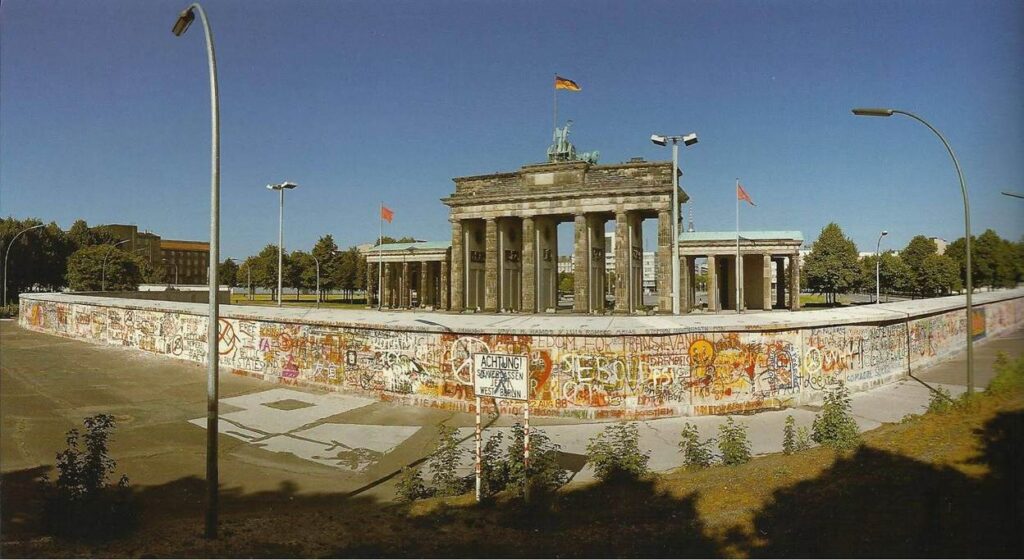
What the Brandenburg Gate looked like from West Germany while the Wall still stood
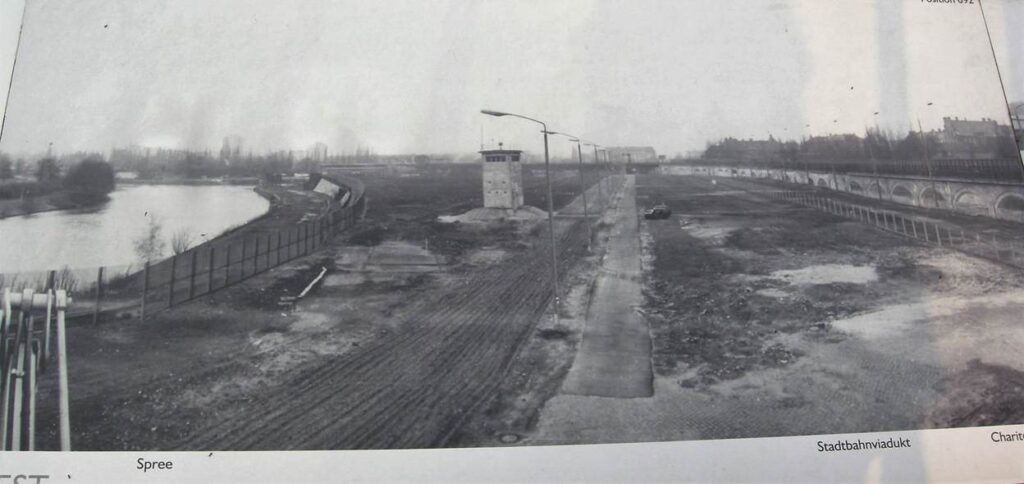
An historic photo of the “no man’s land” between the wall and the River Spree. This photo is taken in the area near the Brandenburg Gate.
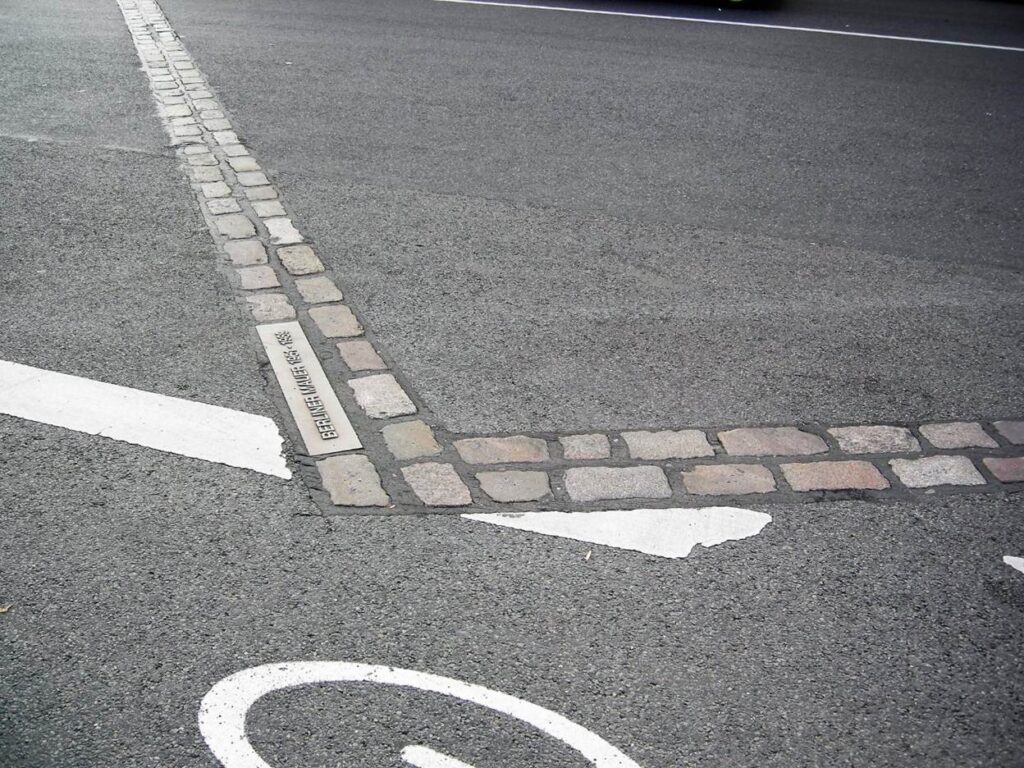
Today, the street outside of the Brandenburg Gate is inlaid with bricks to show where the Wall once stood.
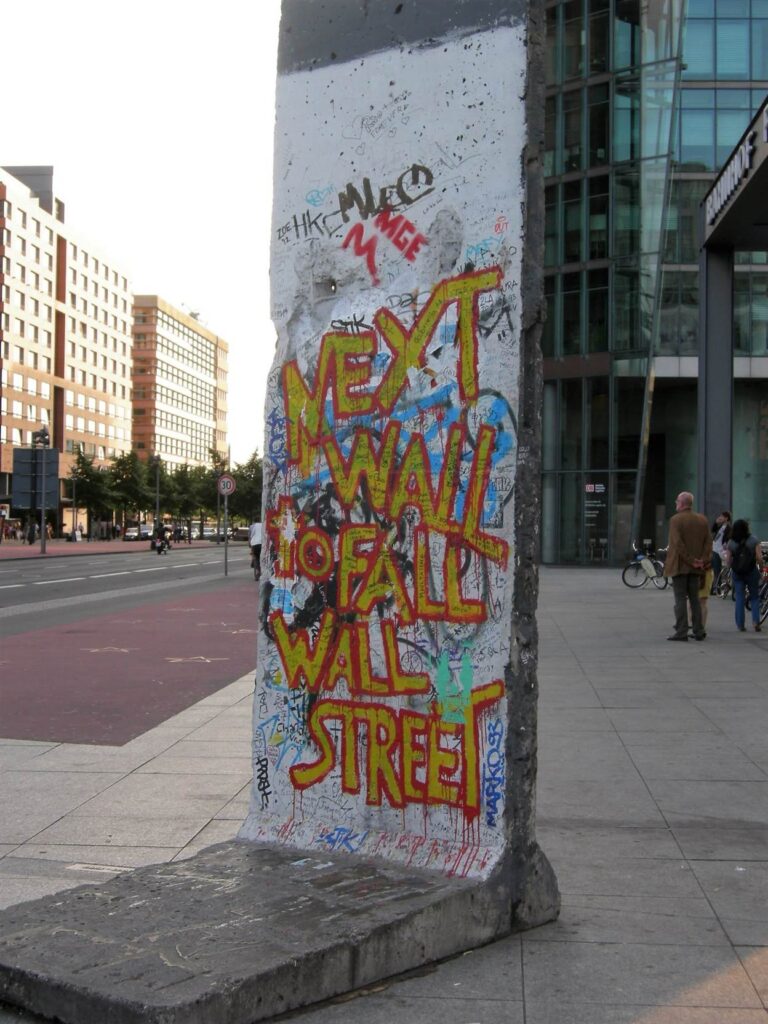
Six sections of the Berlin Wall are on display near the Brandenburg Gate.
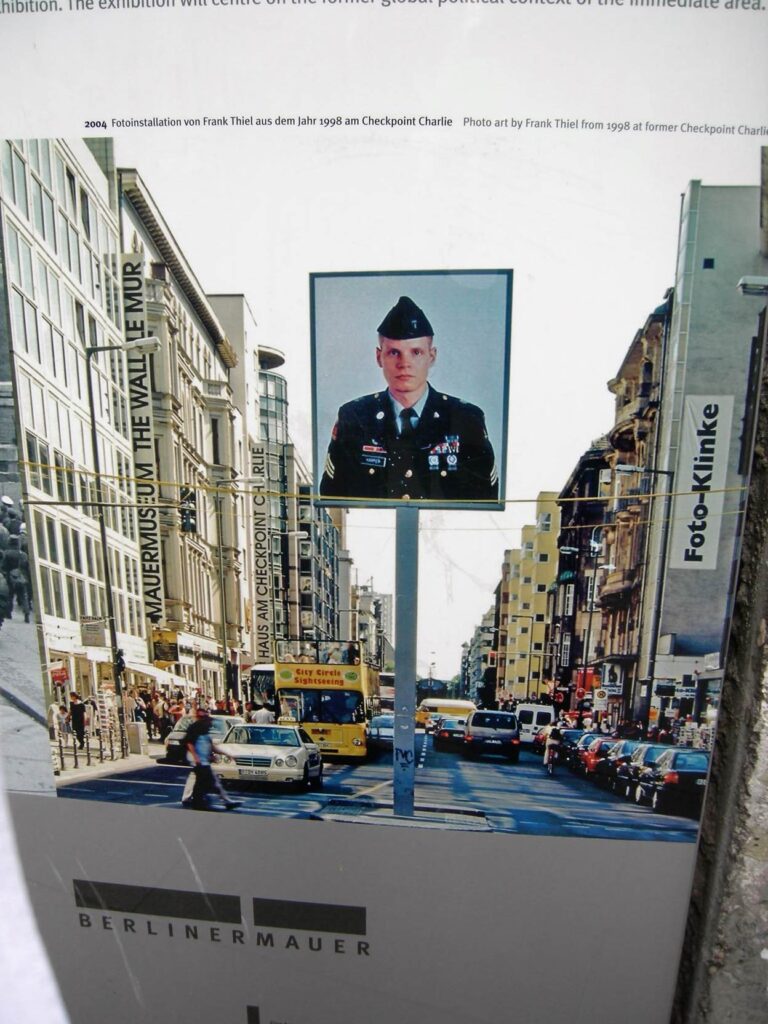
Checkpoint Charlie, which separated the American sector of West Berlin from East Berlin, no longer exists, but this sign still stands in the middle of the street to mark where it once existed.
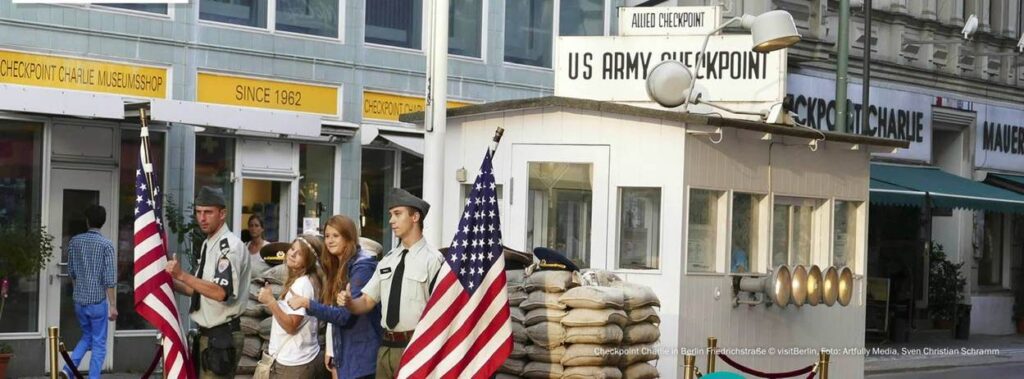
Replica Checkpoint Charlie stands in the original’s location.
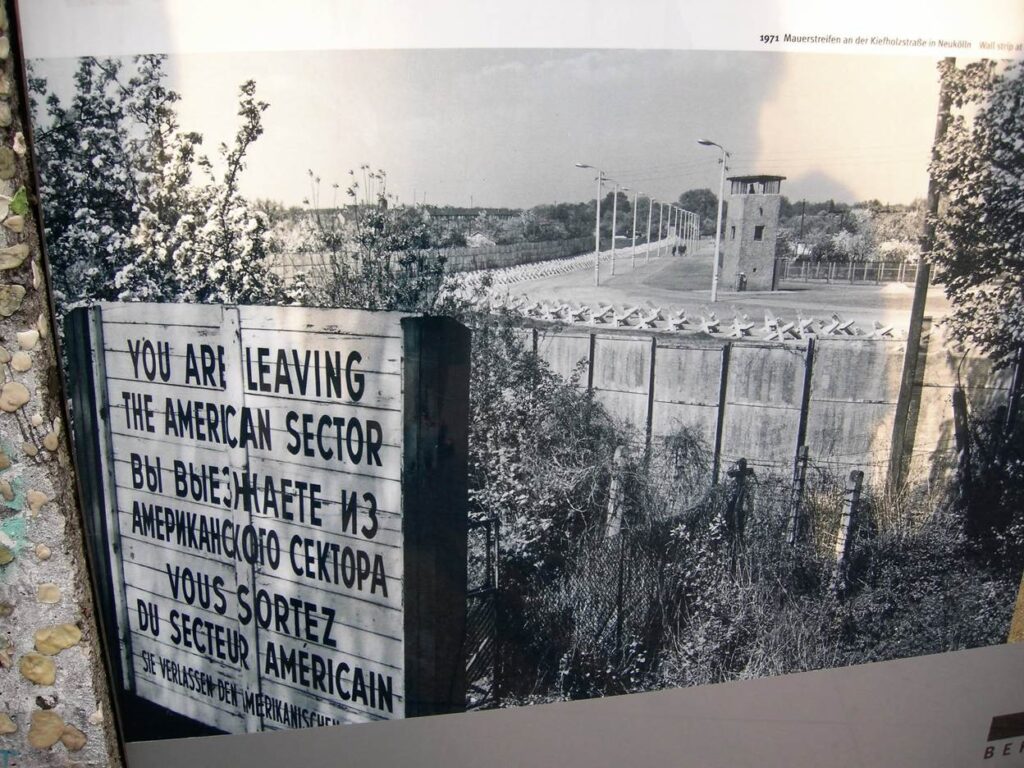
This sign warned people that they were leaving the American sector and headed towards East Berlin.
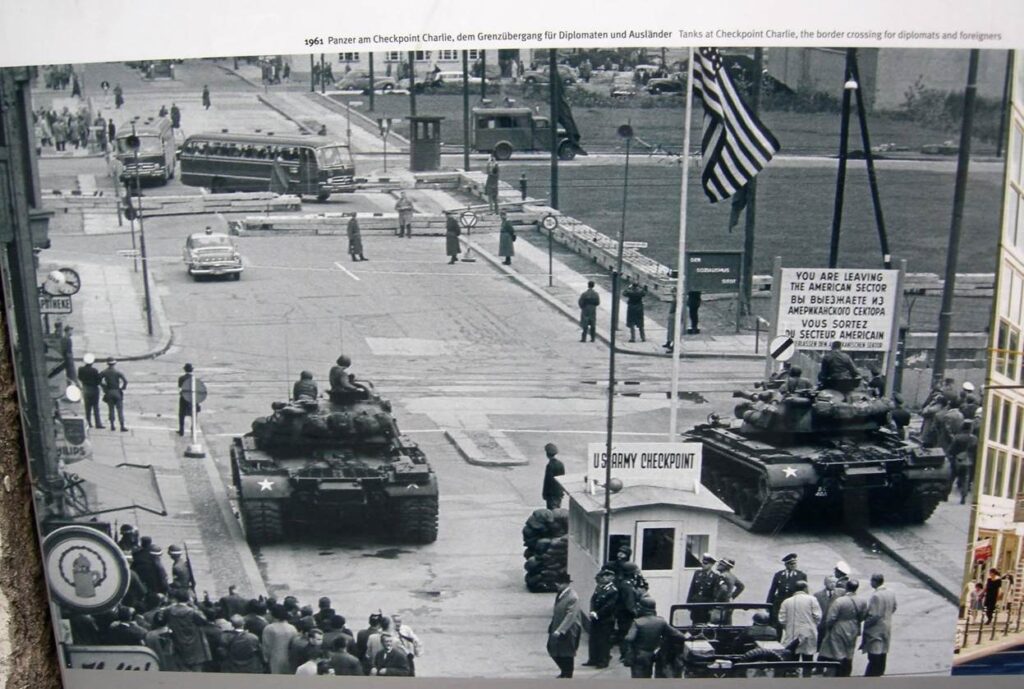
Tanks rolled down the street near Checkpoint Charlie.
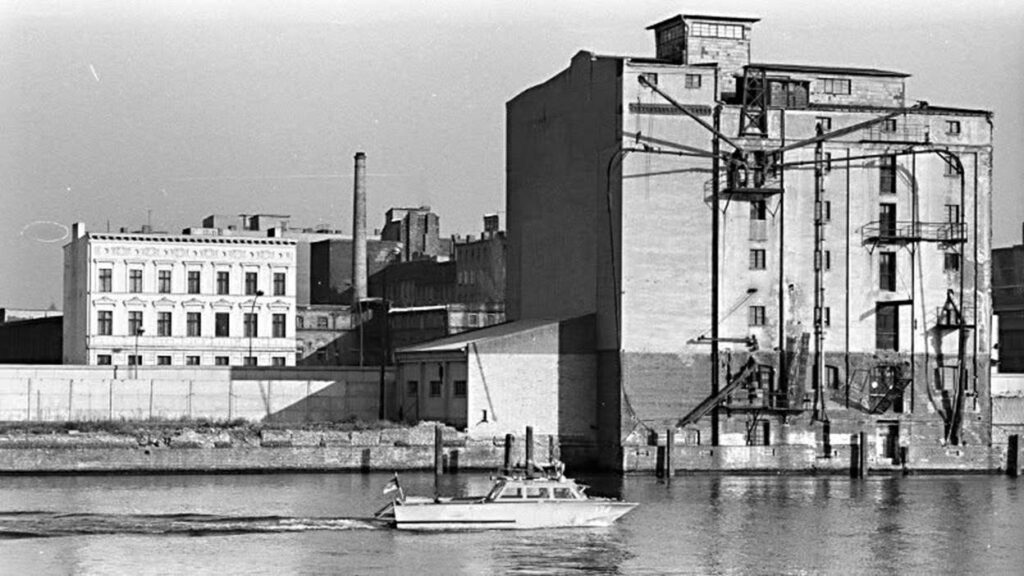
An East German patrol boat along the Spree River.
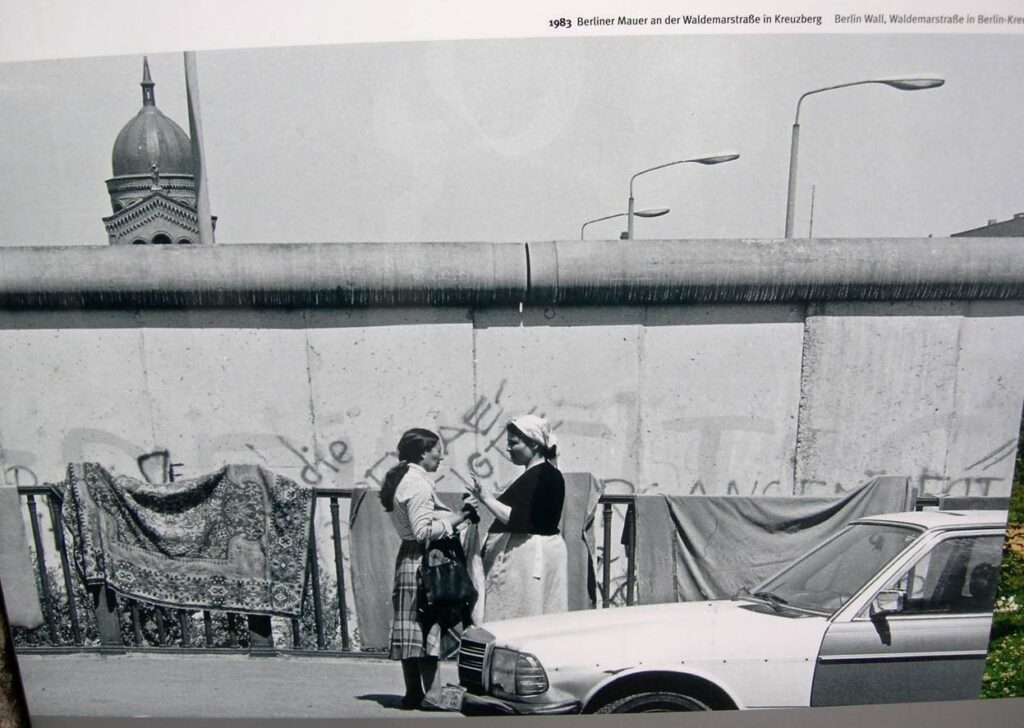
West German women converse with the wall looming in the background.
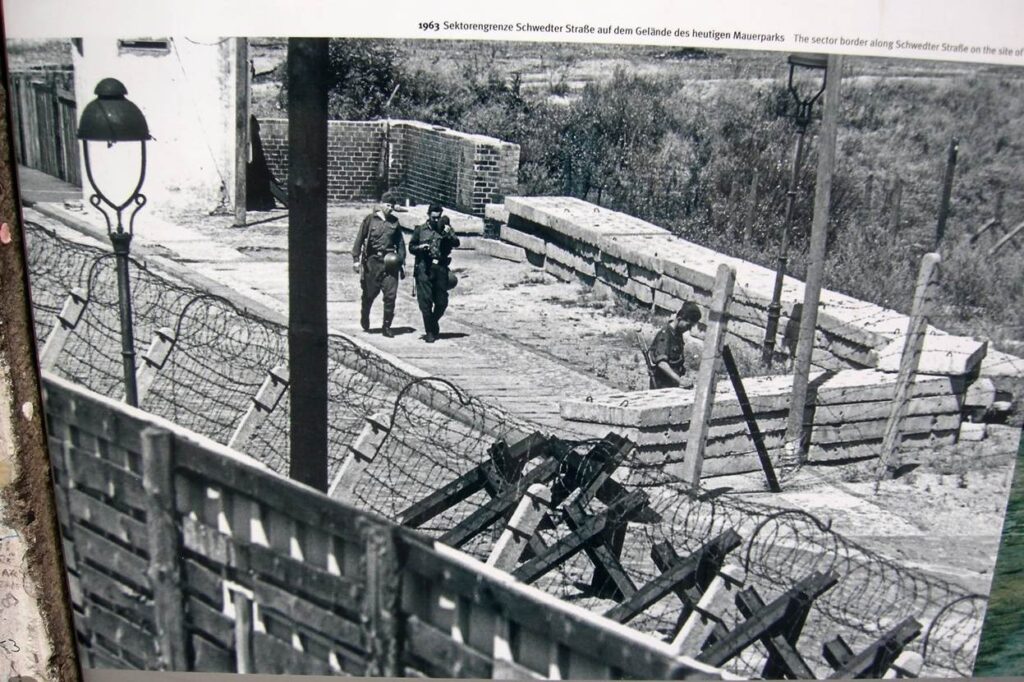
East German guard fortifications along the Wall.
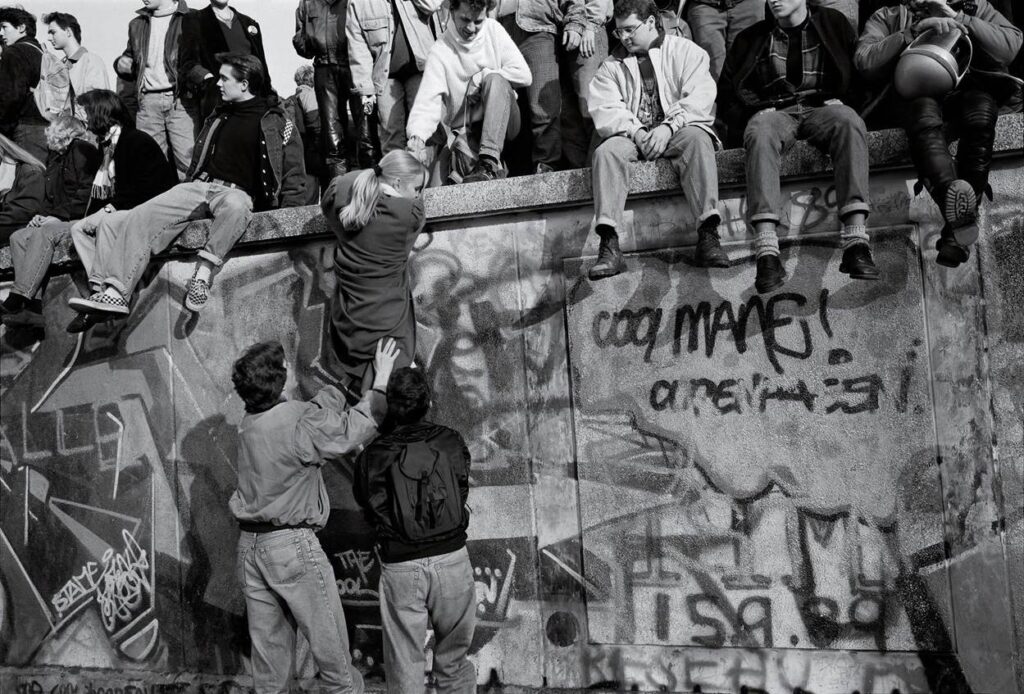
GERMANY. West Berlin. The Fall of the Berlin Wall. Crowds climb on top of the Berlin Wall the morning after the opening of the border. November 10th 1989.
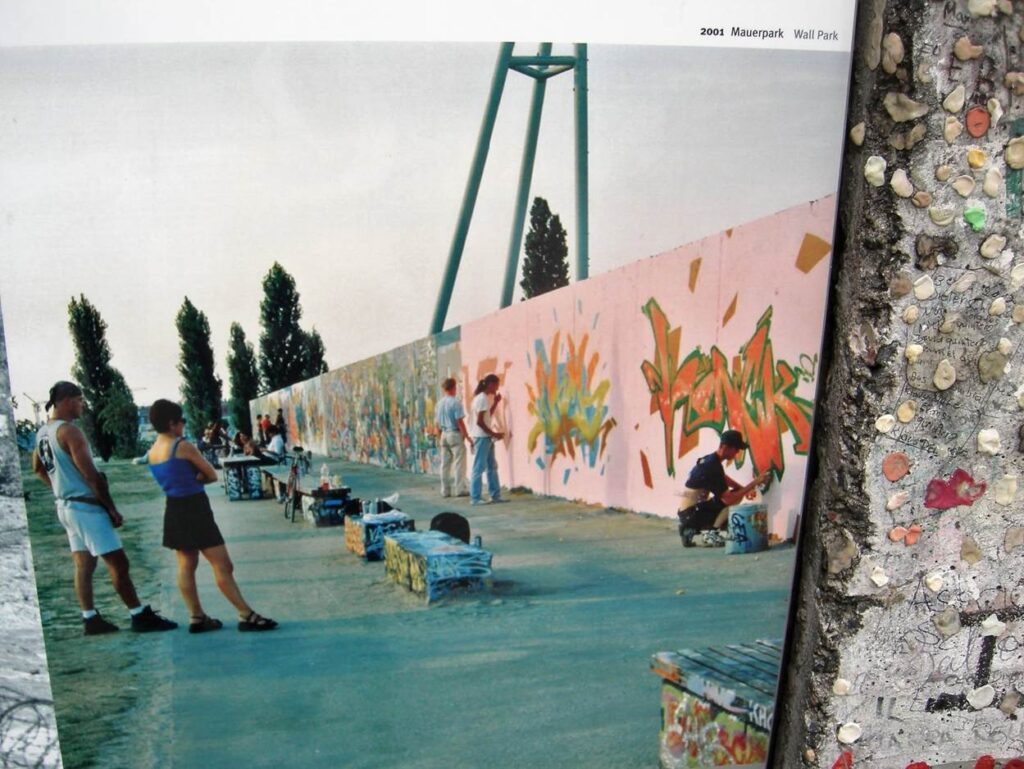
The East Side Gallery as it was being developed.
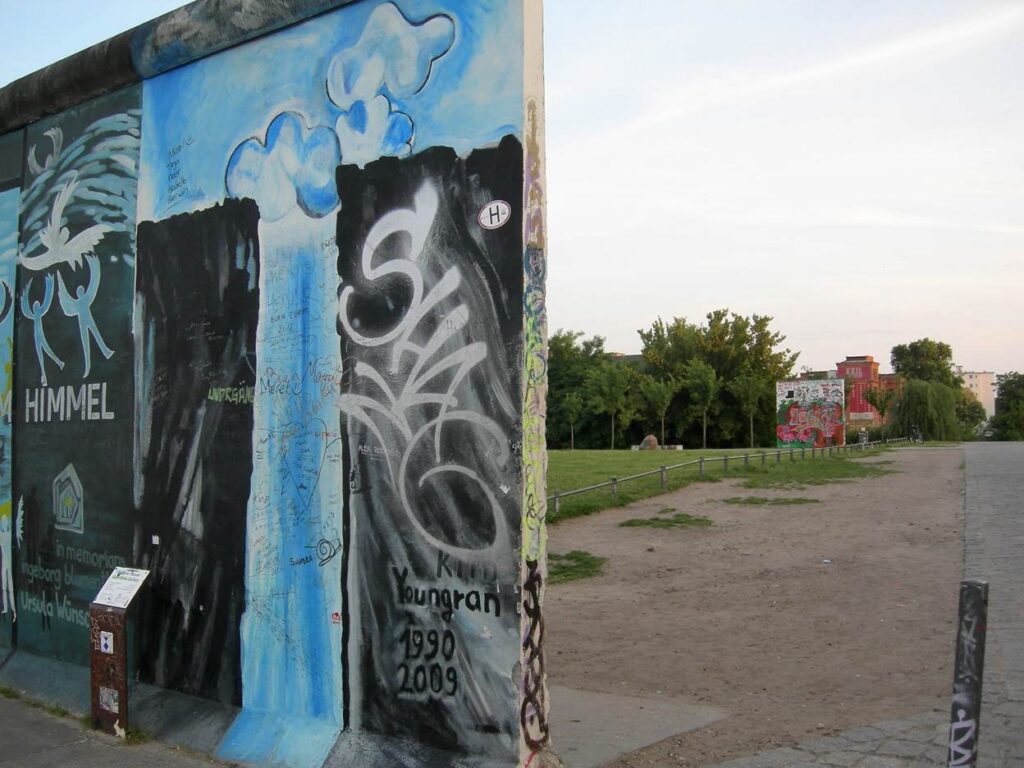
A park lines the River Spree where the “dead zone” once existed. This is one of the remaining sections of the wall now featuring the East Side Gallery. An opening in the wall allows people to visit the riverside park.
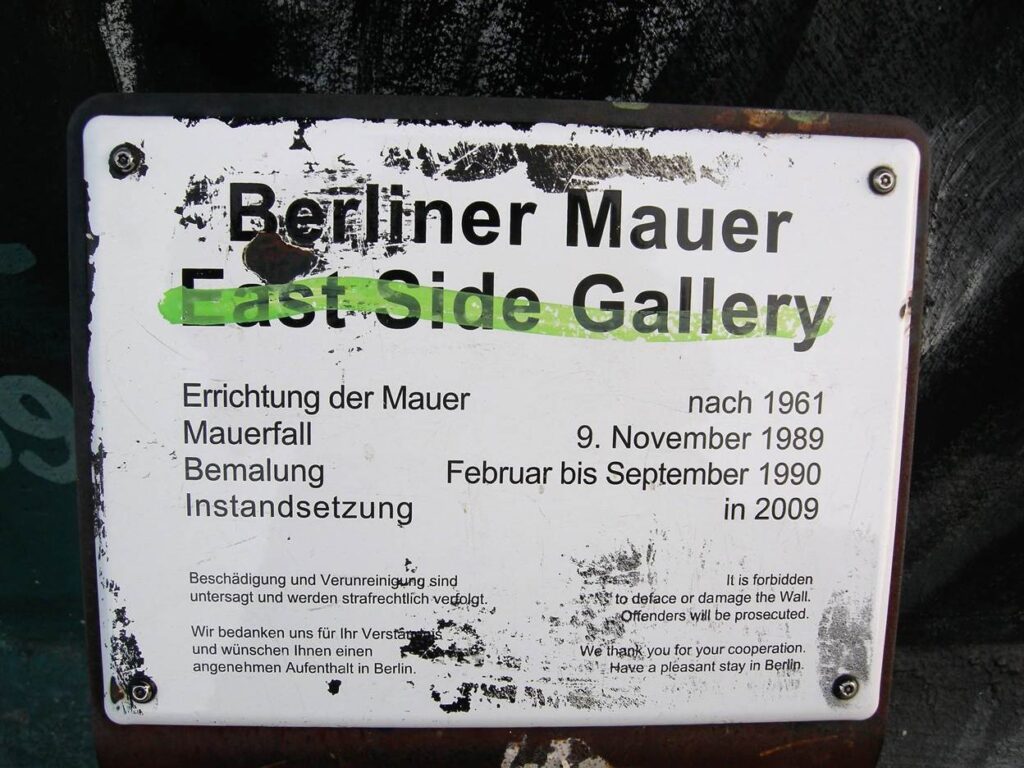
This sign shows the dates of when the Wall was erected, when it fell, when the East Side Gallery was created, and when the Gallery was restored (graffiti and weathering had caused problems with many of the paintings).
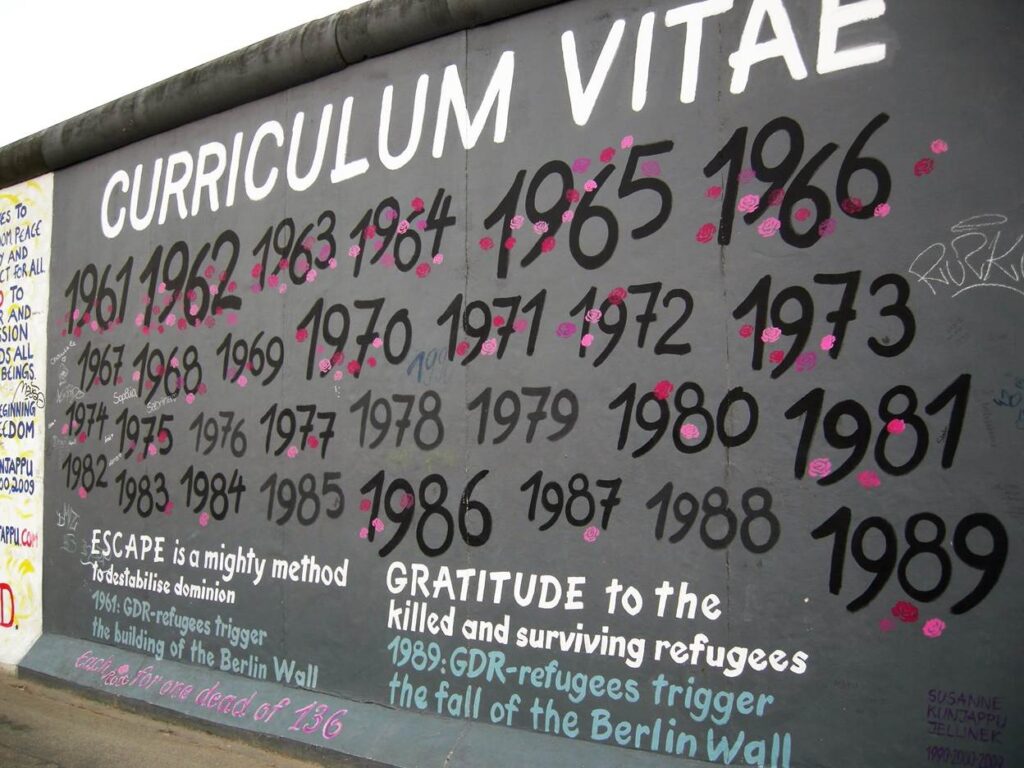
This panel shows the vital statistics of the wall.
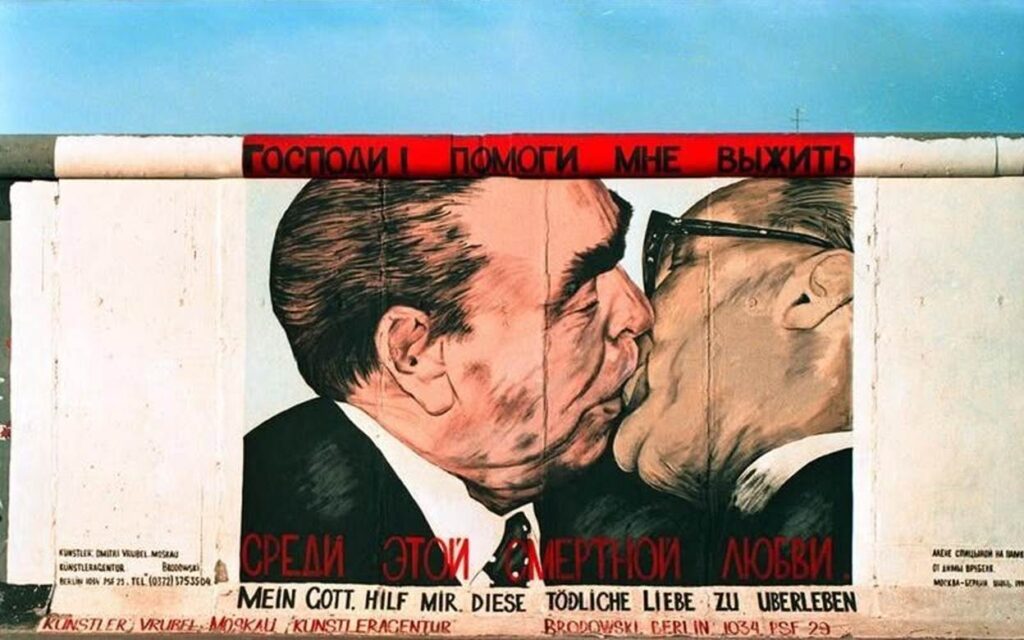
Perhaps the most famous painting of the East Side Gallery is “Fraternal Kiss”, showing Soviet Premier Leonid Brezhnev kissing East German leader Erich Honecker. The wording on the bottom of the painting translates as “May God help me survive this deadly love.”
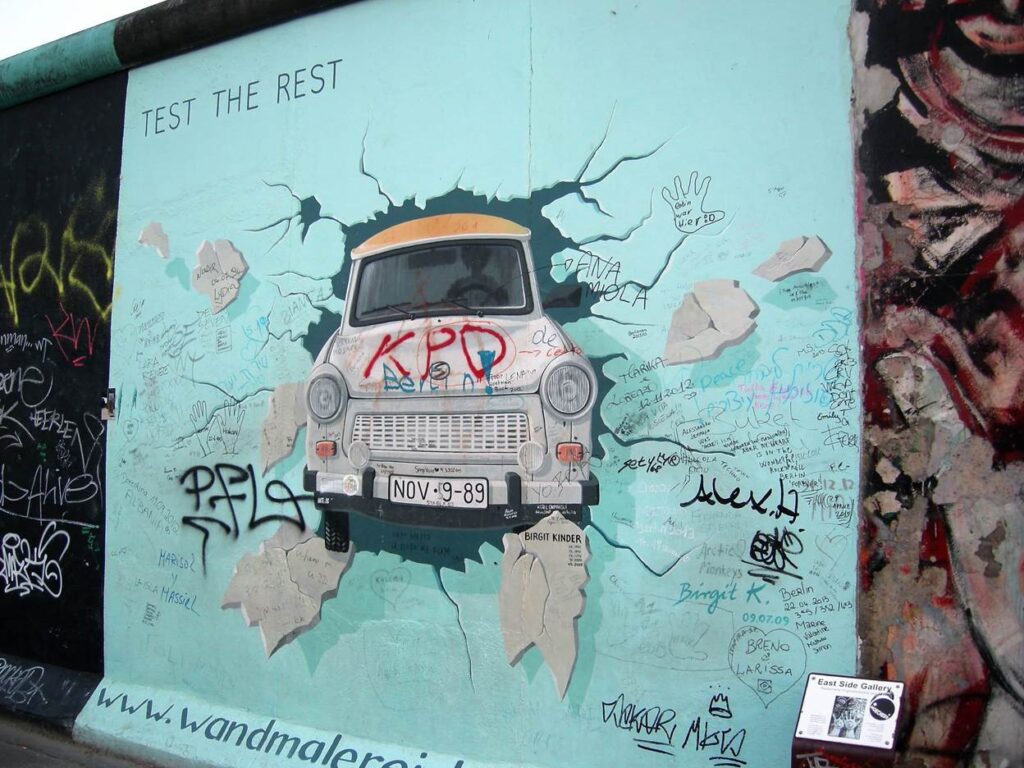
The Trabant (nicknamed the “Trabi”) was the most popular car in East Germany. One of my favorites, this mural shows the Trabi crashing through the Berlin Wall to the west side.
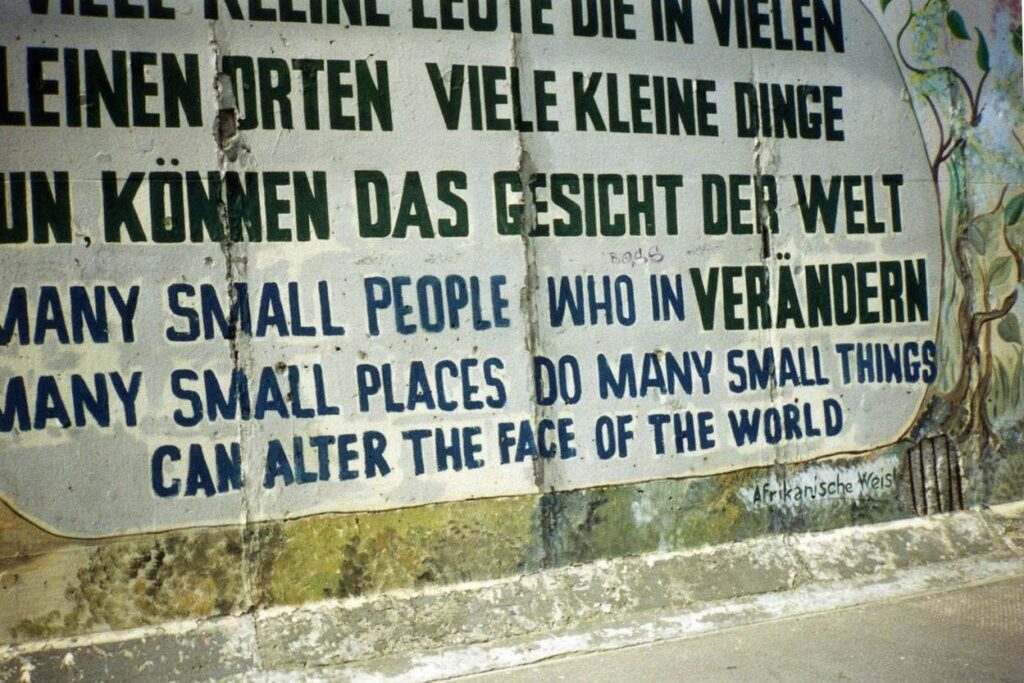
I like the sentiment of this one, which is still relevant today: “Many small people who in many small places do many small things can alter the face of the world.”
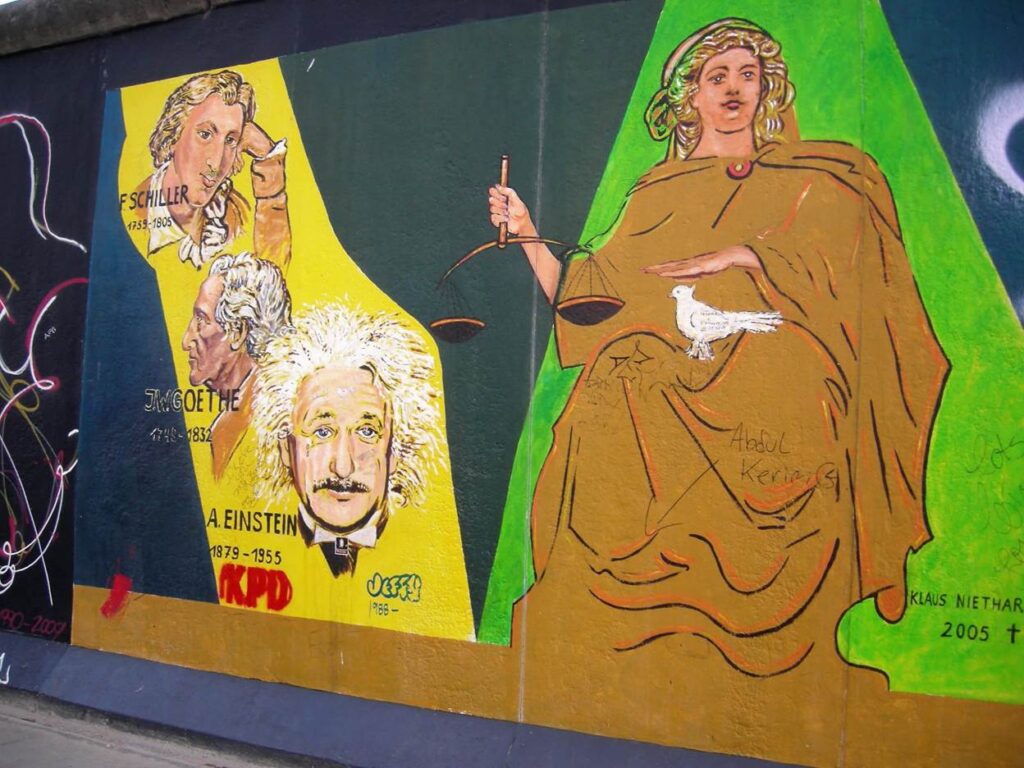
The mural is entitled “Justice”, symbolized by the angel of justice with her scales and a dove. On the left are three famous German thinkers: Friedrich Schiller, JW Goethe, and Albert Einstein.
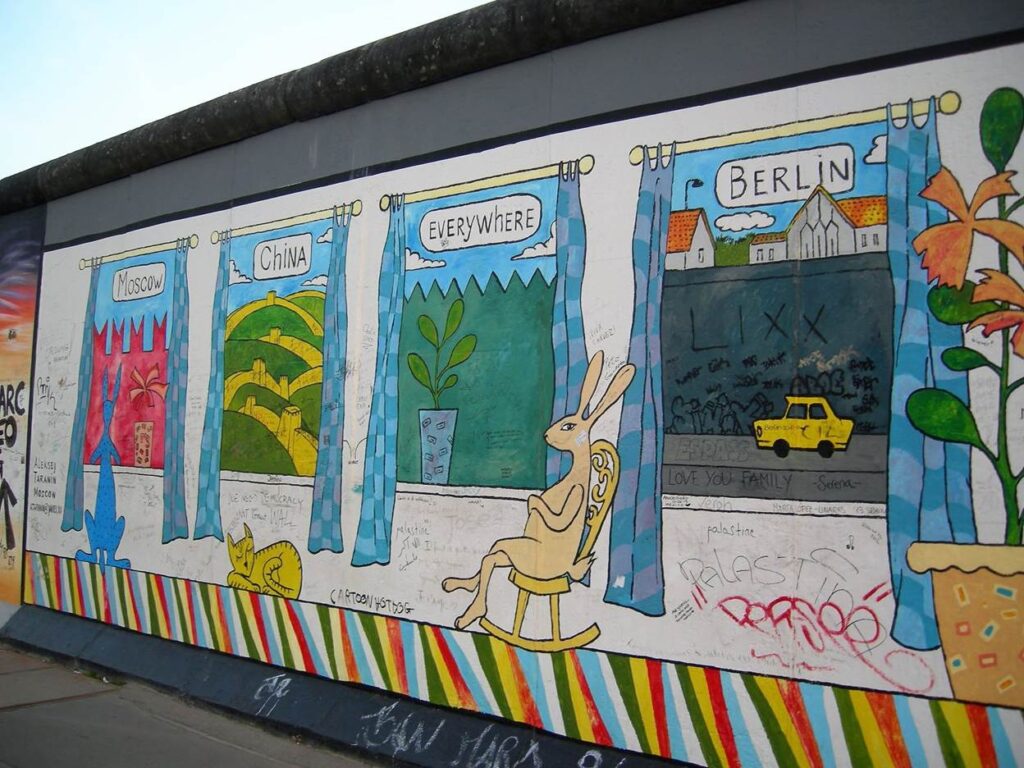
This one is entitled ” Walls Everywhere”.
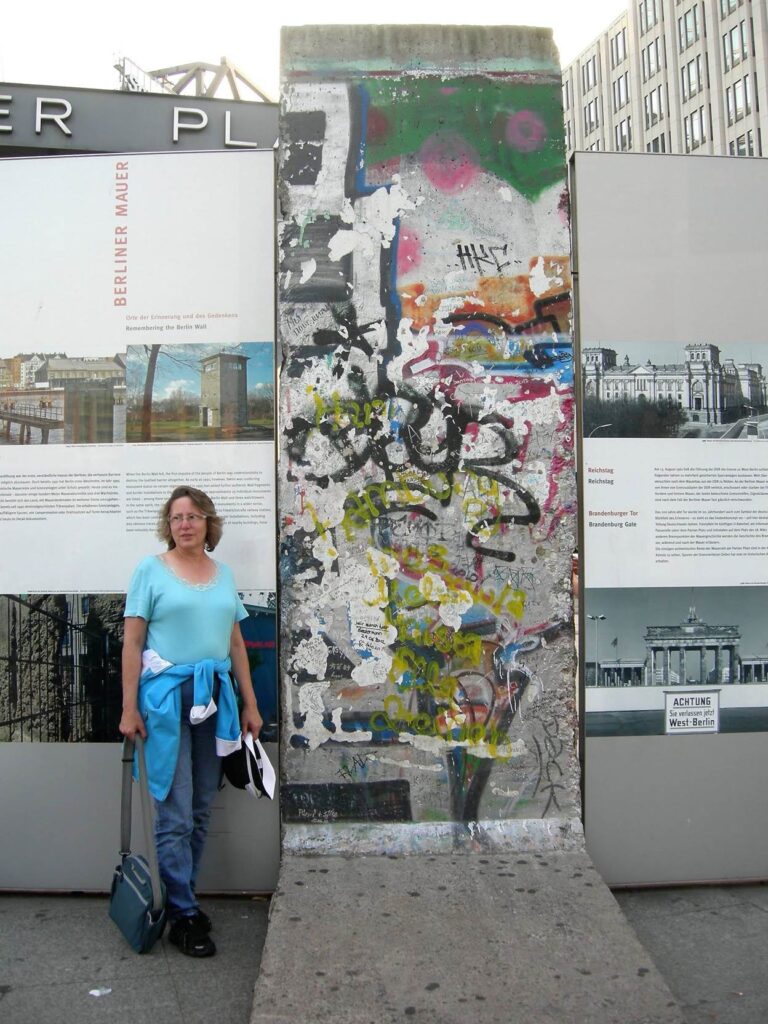
Me standing with a section of the wall that’s on display near the Brandenburg Gate.
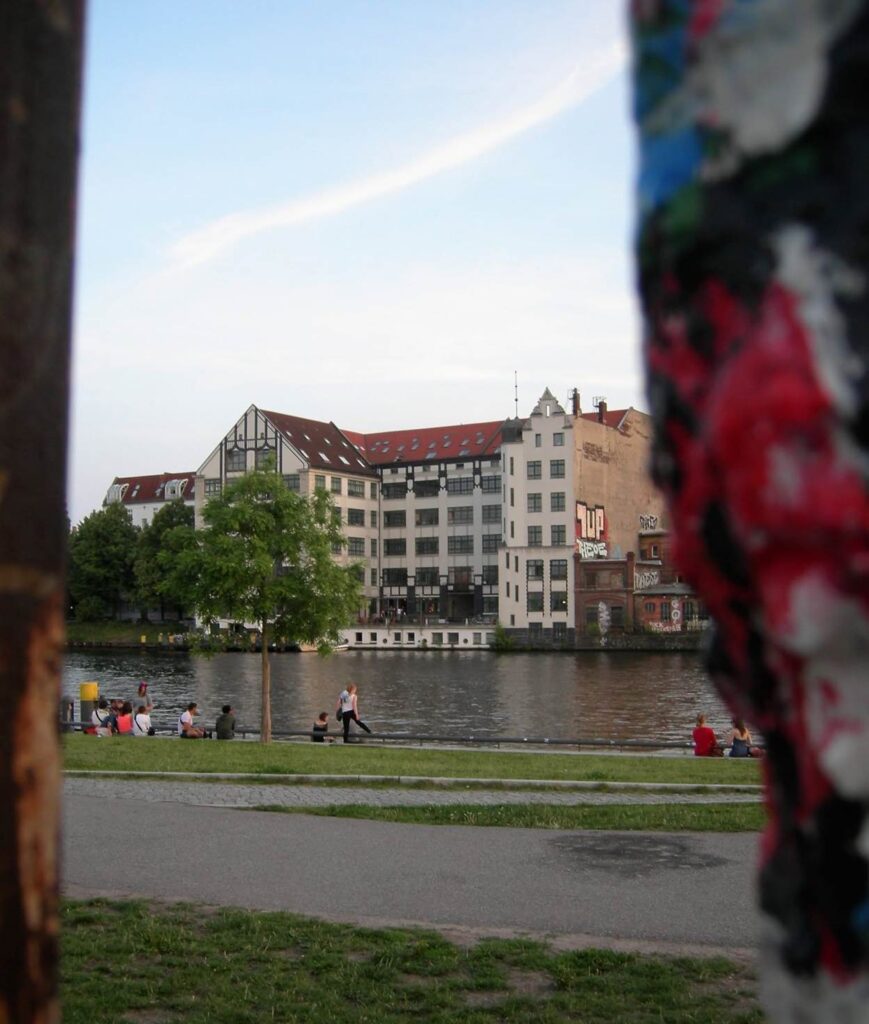
Nowadays, we can see the River Spree and a pleasant riverside park from the east side of the Wall.
July 5, 2013