

Today marks the 25th anniversary of the fall of the Berlin Wall in 1989. I remember being astonished that it actually happened; I never expected the Wall to fall during my lifetime. I was too young to remember its construction in August 1961, but I have vivid memories of its fall. I was in my office in California. I’m not even sure how we heard the news in those pre-internet dial-up modem days, but we were all galvanized by what we all recognized as an historic moment.
Rachelle and I had the opportunity to visit Berlin in July 2013. I was expecting the former Eastern Sector to be a dreary gray metroplex filled with drab Communist-era buildings. Instead, I found a vibrant, cultured, and colorful city. If anything, the former Eastern side was more sparkling than the western side! Here are some of the highlights and most iconic images of our visit.
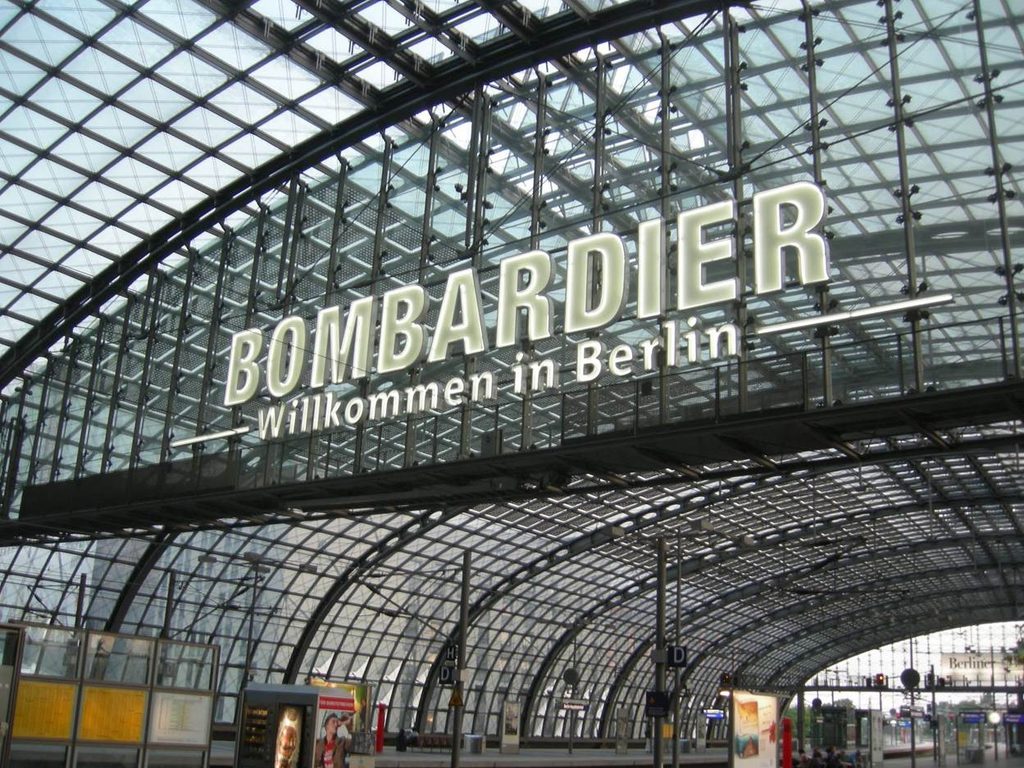
“Welcome to Berlin”. This was our first view of Berlin’s Hauptbahnhof, or main train station. Nine stories high, it was one of the busiest train stations we visited in Europe.
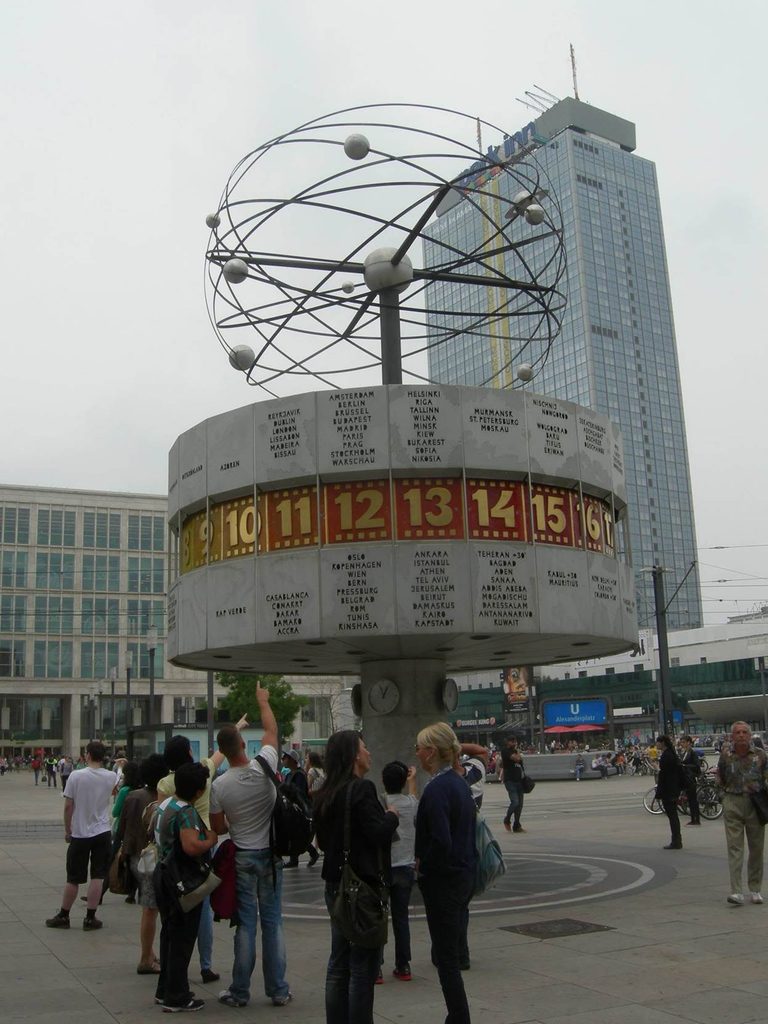
The World Time Clock is a popular structure in Alexanderplatz outside the Hauptbahnhof. It debuted in 1969 in the former East Germany. Its 24 sides represent the 24 global time zones. It shows the current time for 148 major cities across the world. Some point out how poignant it was that East German citizens couldn’t visit the international cities shown on the dial.
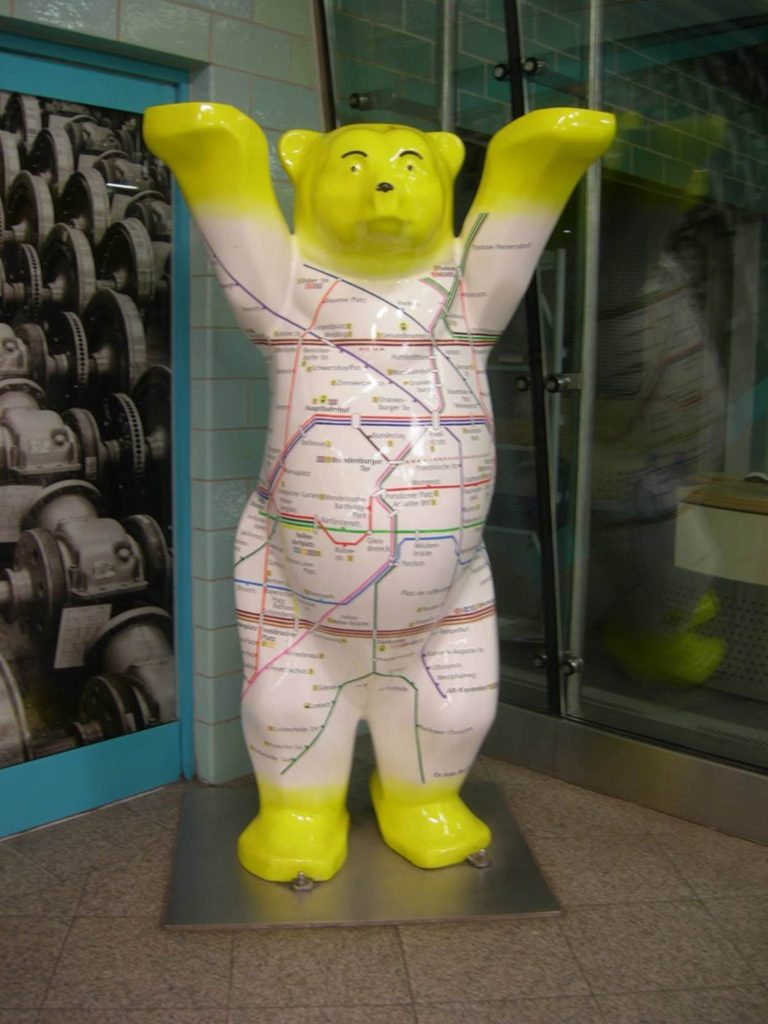
I called these “The Bears of Berlin.” We ran across these bears in locations all over the city. They’re officially known as “Buddy Bears” and have decorated the city since 2001. Their outstretched arms are intended to symbolize friendliness, optimism, peace, and cross-cultural tolerance. Each bear is painted differently. I think of this one as “Subway Bear”, but others were painted as the Statue of Liberty, with flowers, etc. They add a touch of whimsy and the thrill of discovery while exploring the city.
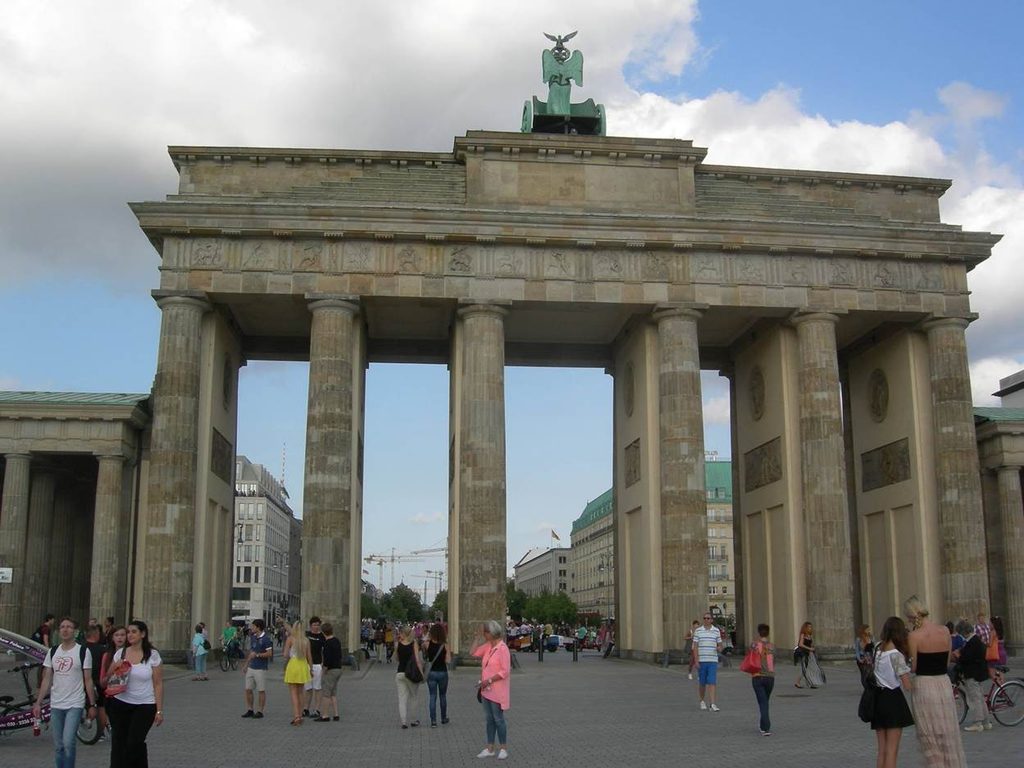
The Brandenburg Gate was built in the 18th century as a symbol of peace. It is one of the most famous symbols of Germany. When the Wall was in existence, it was blocked off and inaccessible. Today, of course, people move freely through the gate from the former West to East sides of Berlin. We’re looking at the back side of the Gate, from Pariser Platz on the east side.
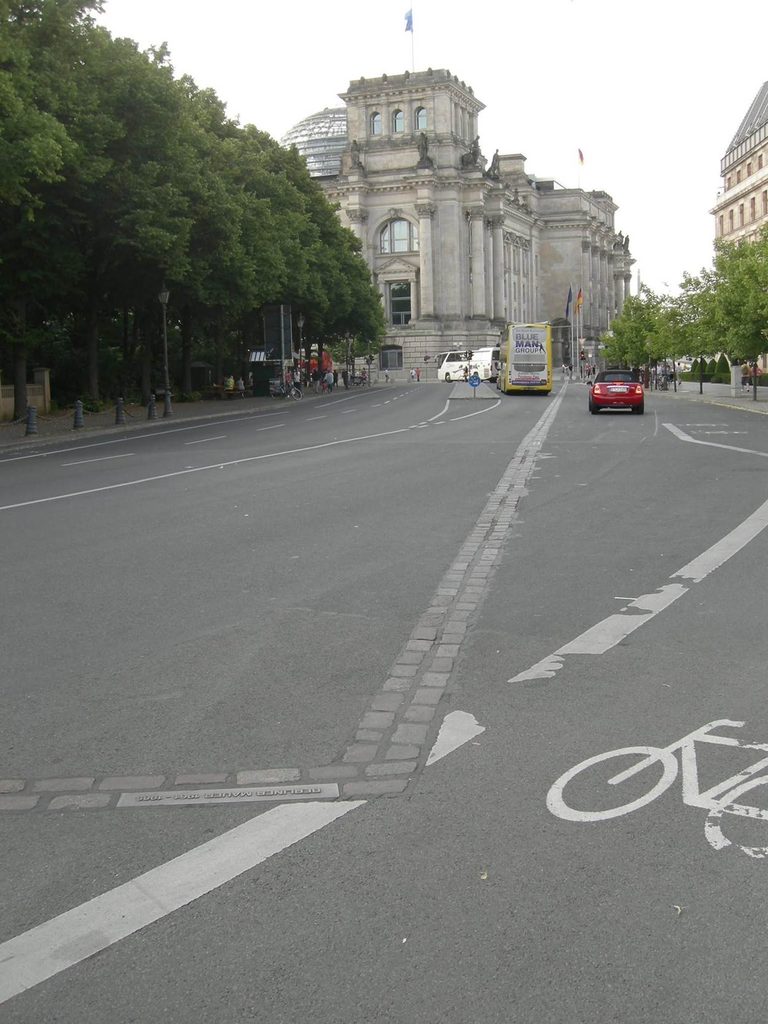
Today, only a brick line on the street marks where the Wall used to be. This photo was taken in front of the Brandenberg Gate.
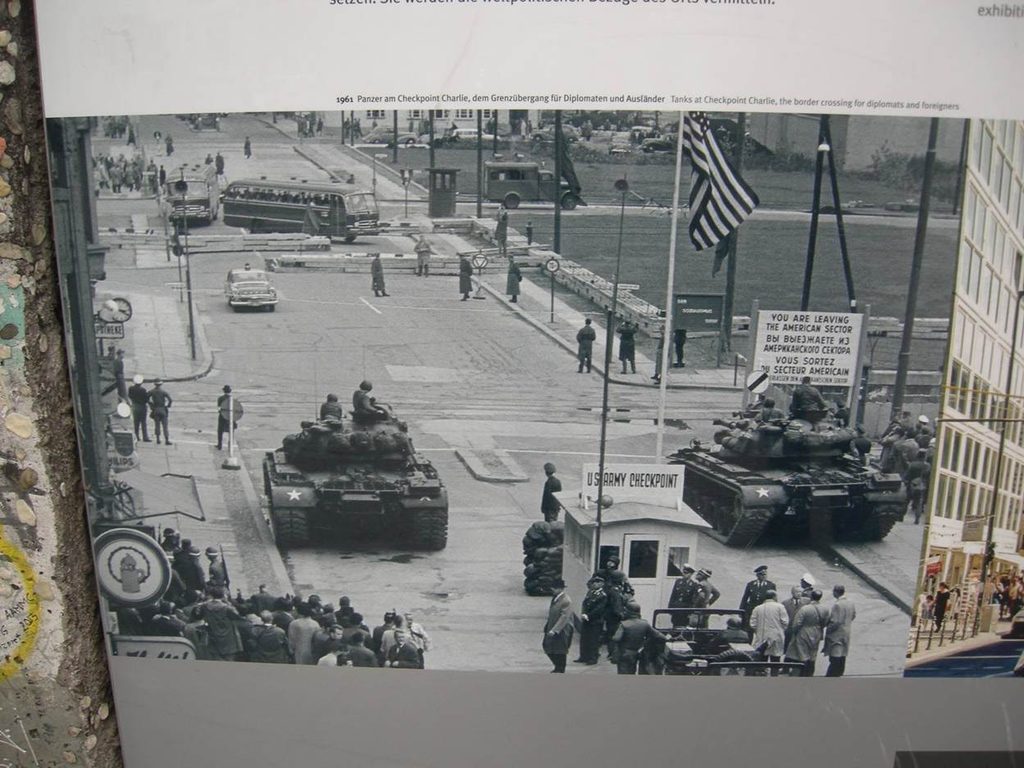
The famous Checkpoint Charlie, which used to separate the American Sector from East Berlin. A replica Checkpoint Charlie stands on the same street today.
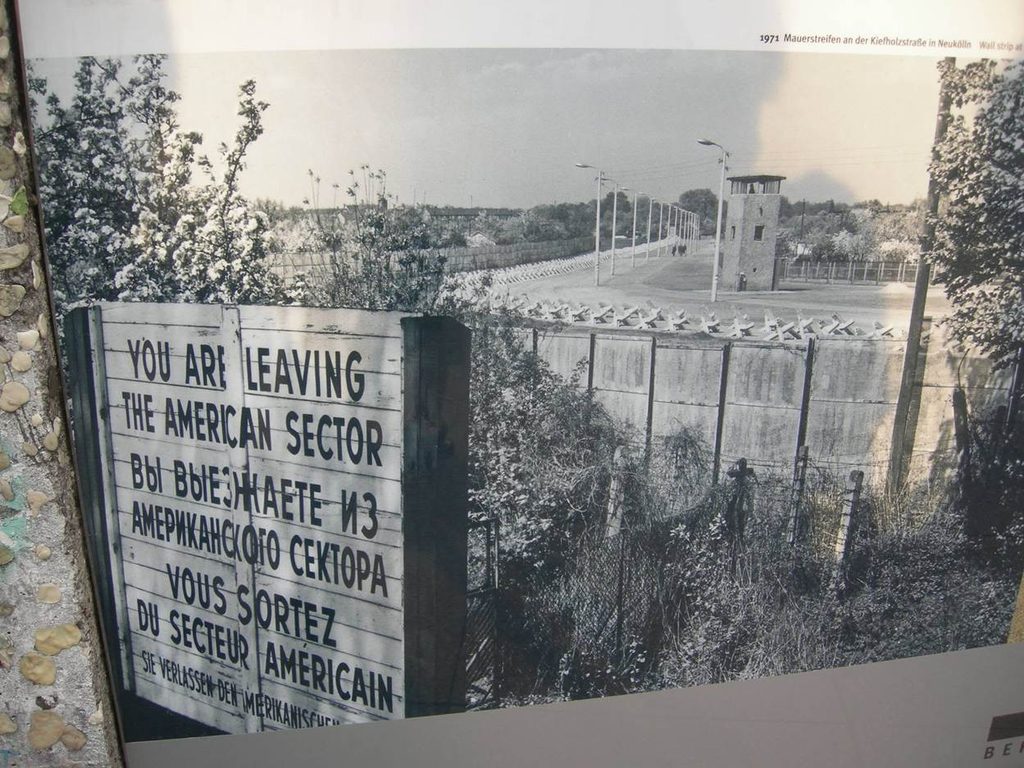
This is the forbidding way the Berlin Wall and fortifications used to look.
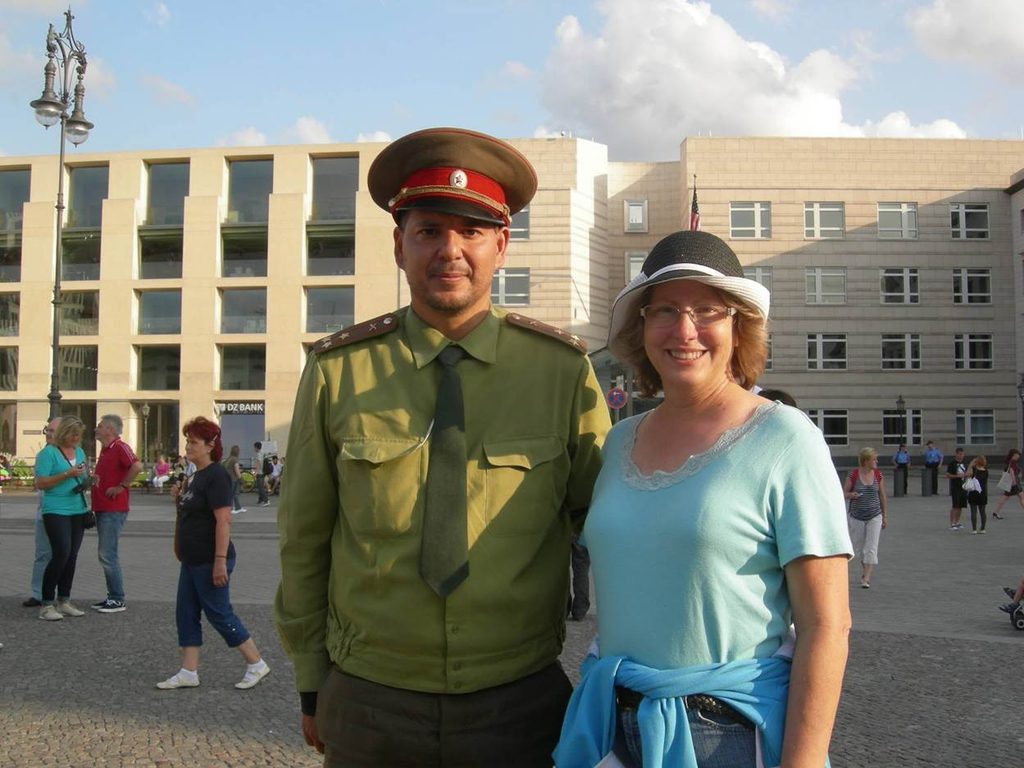
Me with a gentleman dressed as an East German soldier. We’re in Pariser Platz, just behind the Brandenberg Gate.
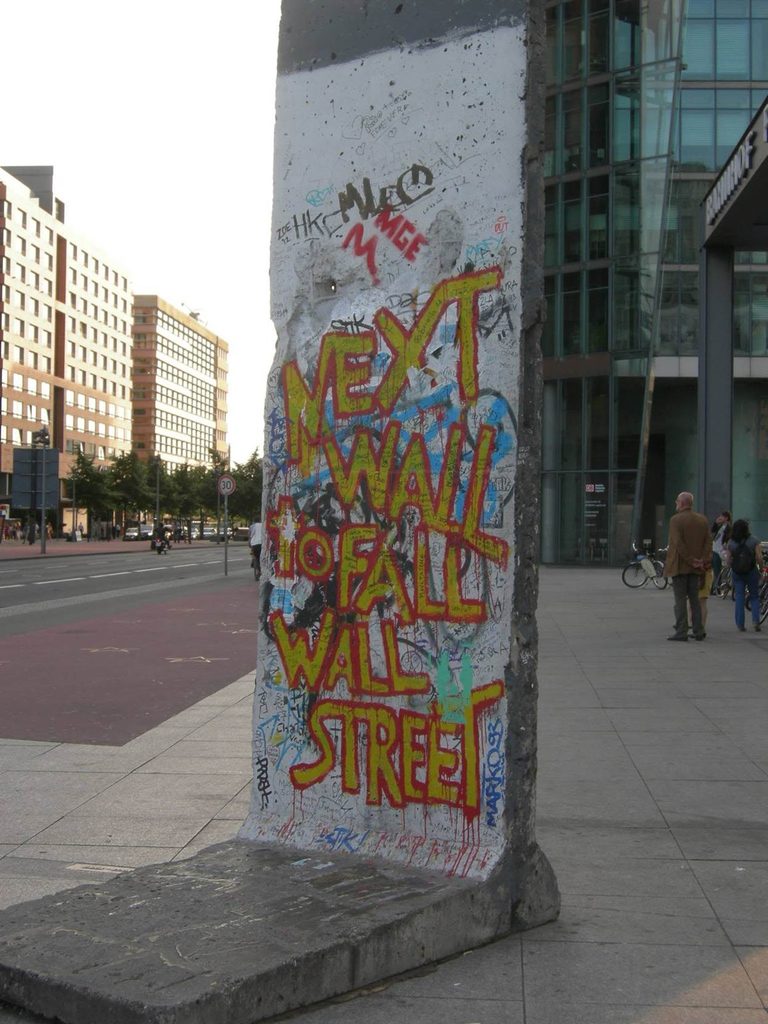
Nowadays, only a few sections of the Wall remain. This one is part of a display near the Brandenberg gate.
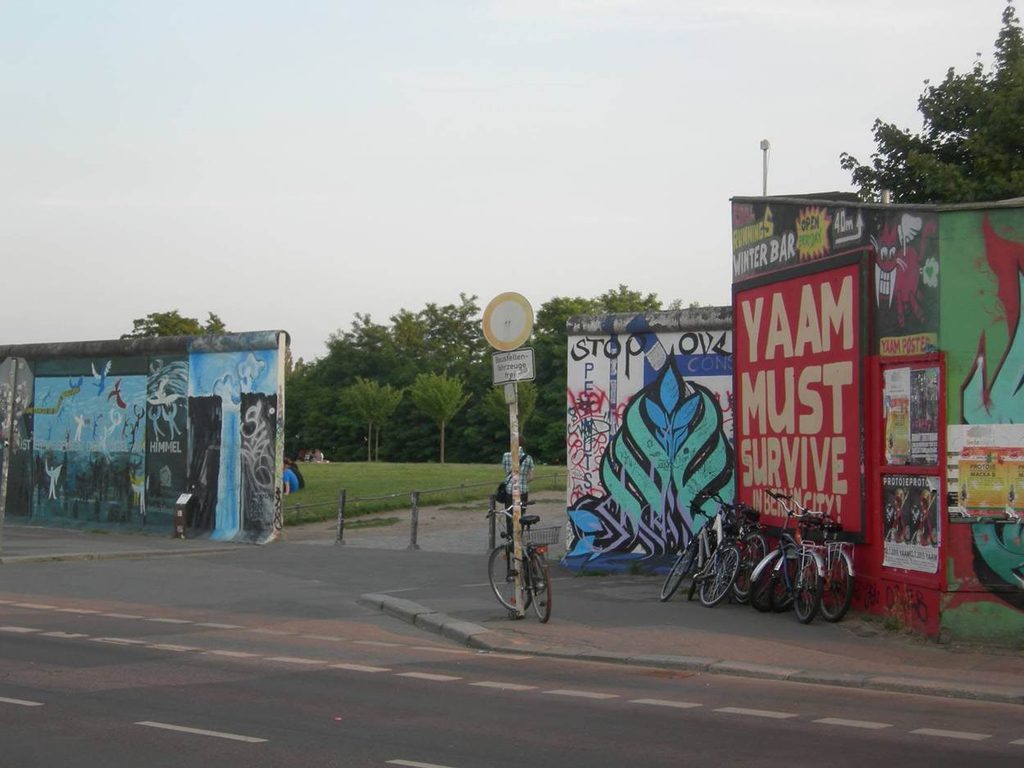
The Germans preserved a roughly one-mile stretch of the Berlin Wall as a reminder of what once was. It’s filled with paintings by local artists and is called the East Side Gallery. Here, we’re looking from the former Eastern side into a park on the Western side.
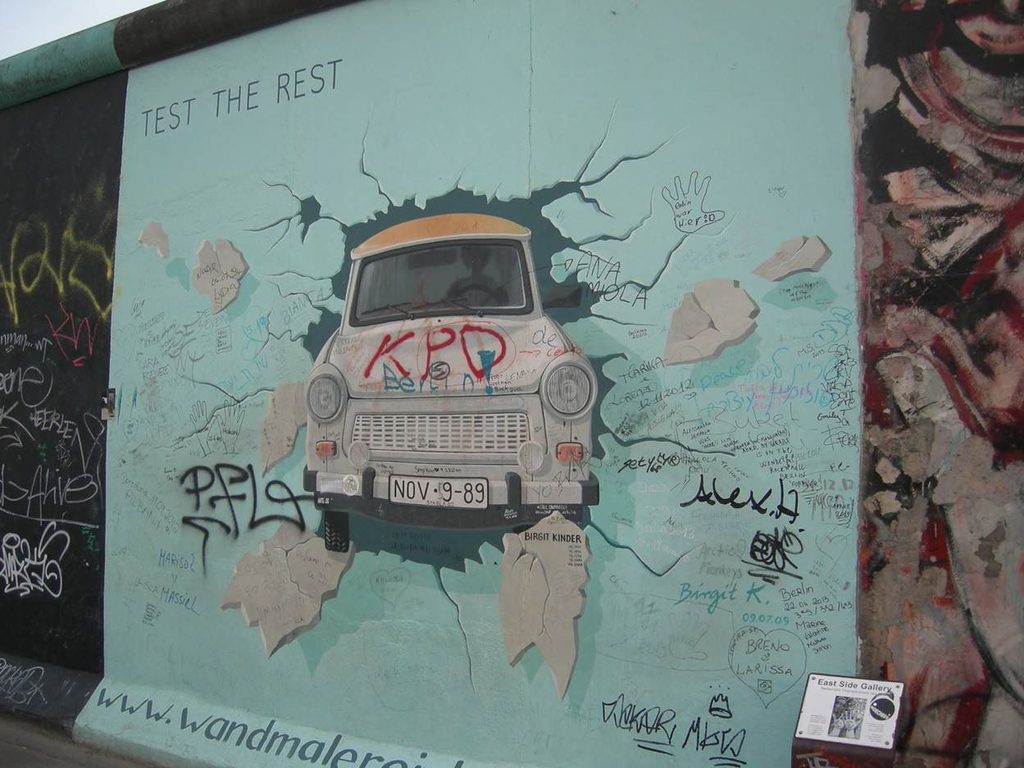
After the Wall fell, artists quickly started painting on the pristine surfaces of the Eastern side of the Wall. Now called the East Side Gallery, it displays many pictures related to freedom. One of my favorites was this painting of an iconic East German Trabant car smashing through the Wall to freedom.
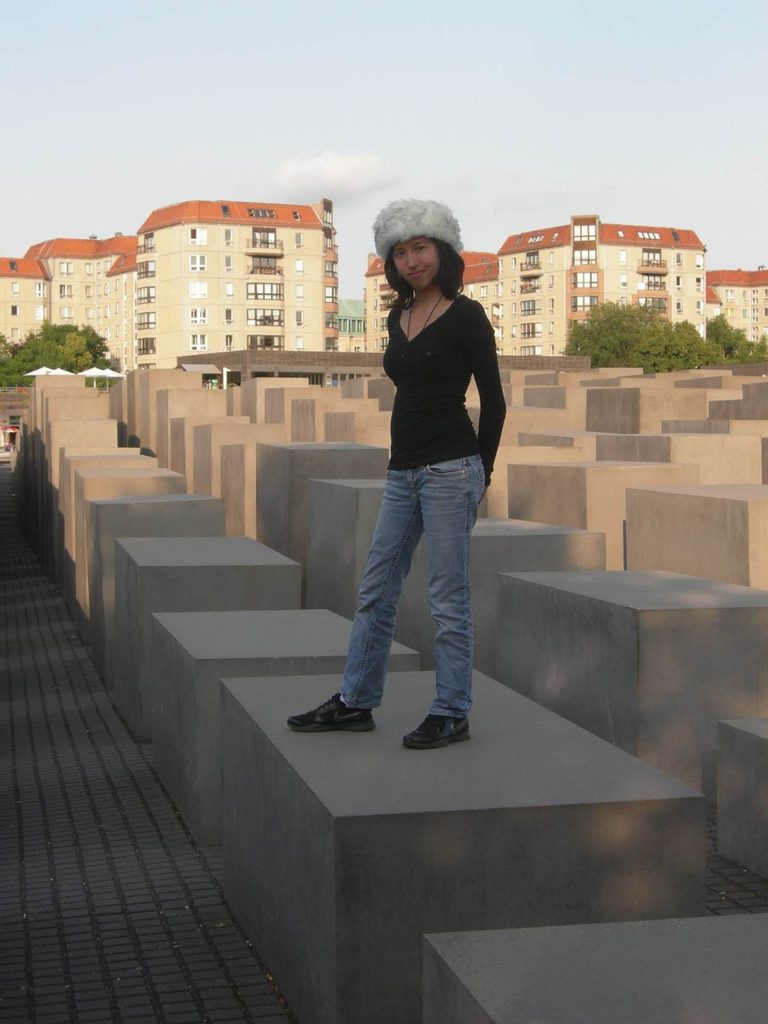
Berlin also has a Holocaust Memorial, consisting of numerous concrete blocks – reminiscent of coffins – of varying sizes. It’s a somber reminder of what the Jews experienced during World War II. Rachelle is posing on one of the blocks, wearing the cossack hat she bought earlier that day.
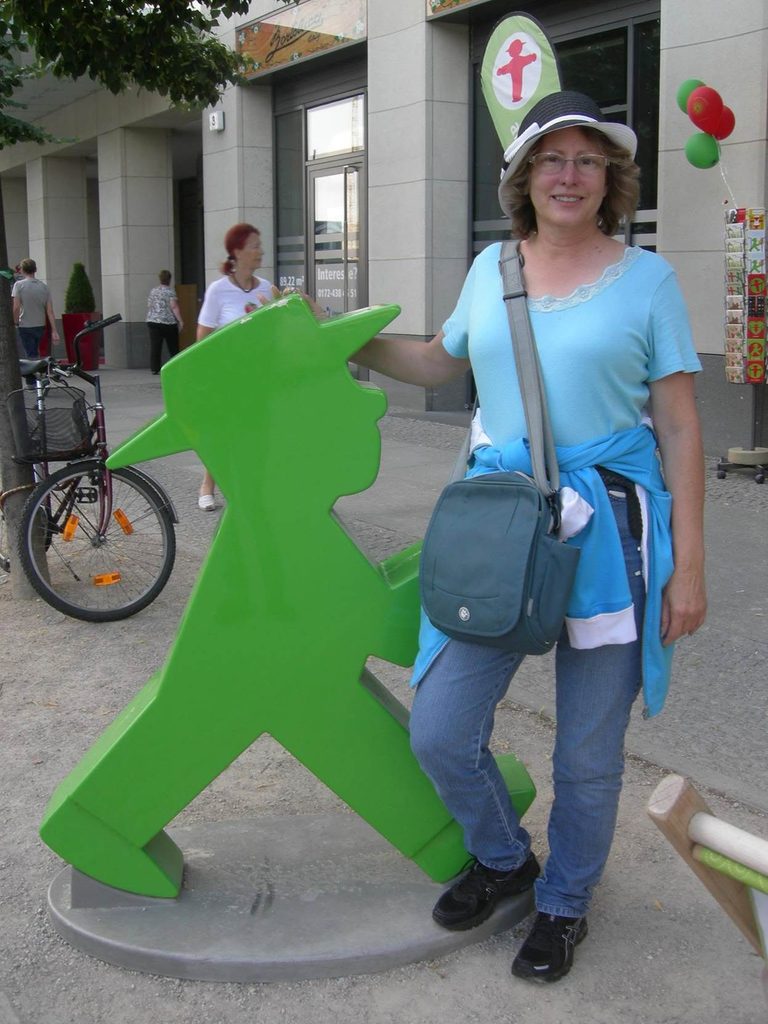
Not all of Berlin is somber World War II history, though. Berlin’s “Ampelmänn” (little traffic light man) is so beloved that he has stores selling merchandise with his image.
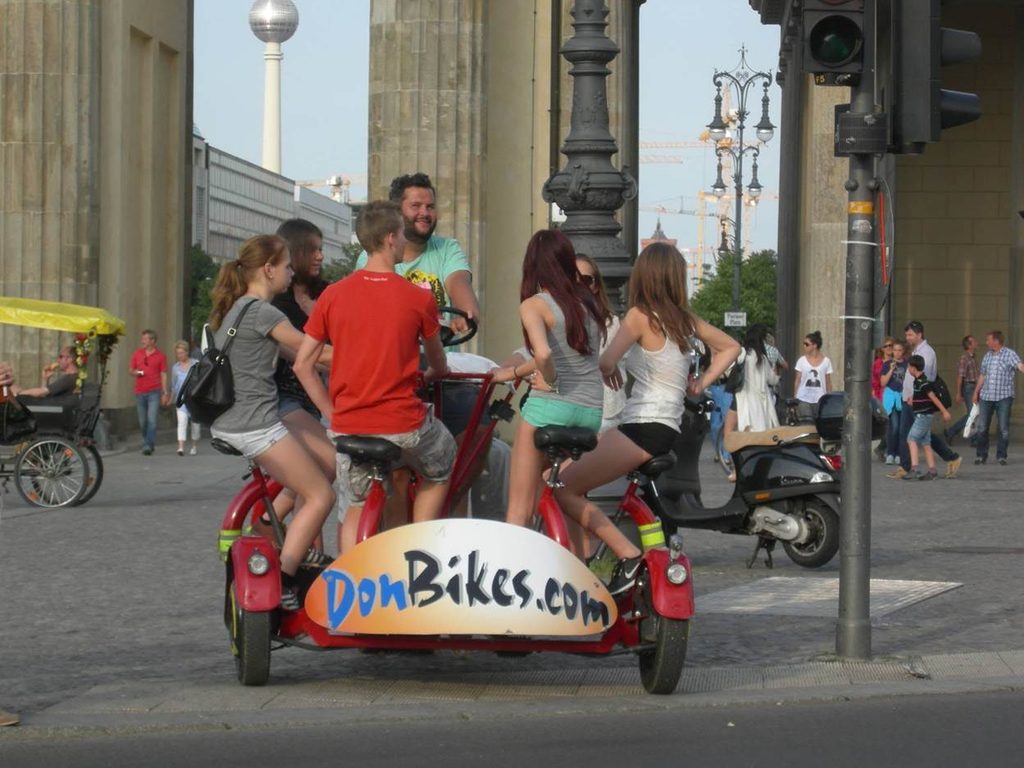
I loved these octopus bikes. Tourists pedal their way through the city on these people-powered bicycles for eight.
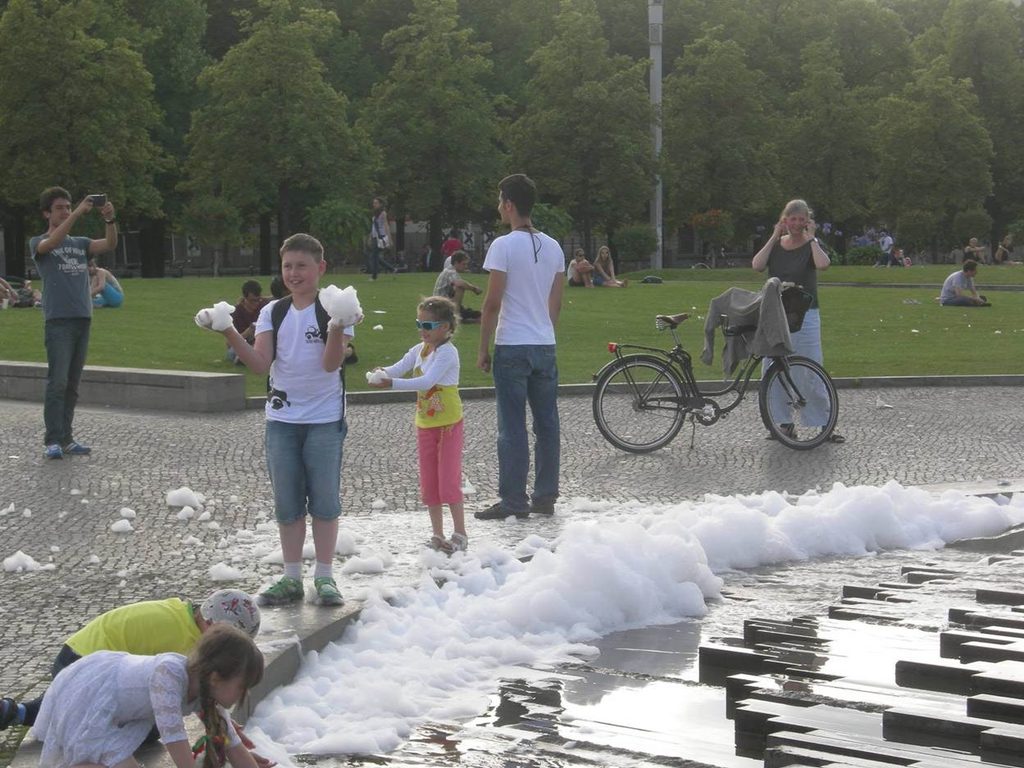
Kids having fun. Americans aren’t the only ones with interactive fountains.
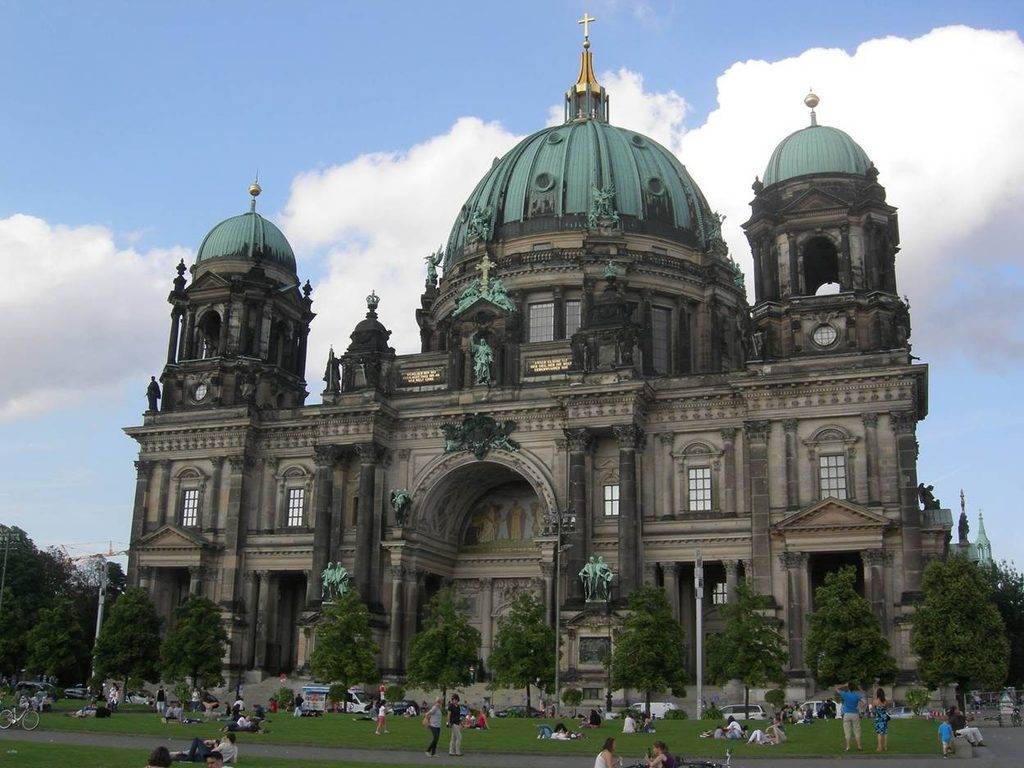
The Berlin Cathedral.
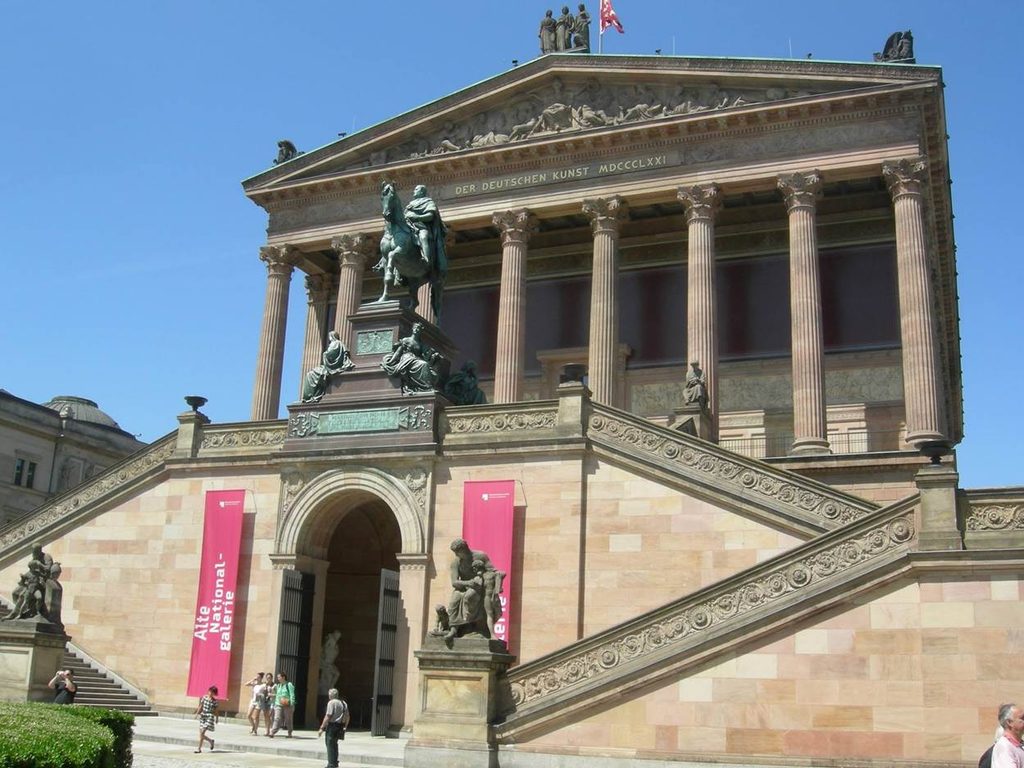
The Alte Nationalgalerie (Old National Gallery) has world-class exhibits. It’s the first of several museums which comprise Berlin’s Museum Island. The equestrian statue honors King Frederick William IV, who first envisioned creating a dedicated “sanctuary for art and science” on what we now call Museum Island. We spent nearly a day in this museum and the Pergamon, but Berlin has many more. We also took a quick peek at the Neues Museum, which houses the famous bust of Nefertiti.
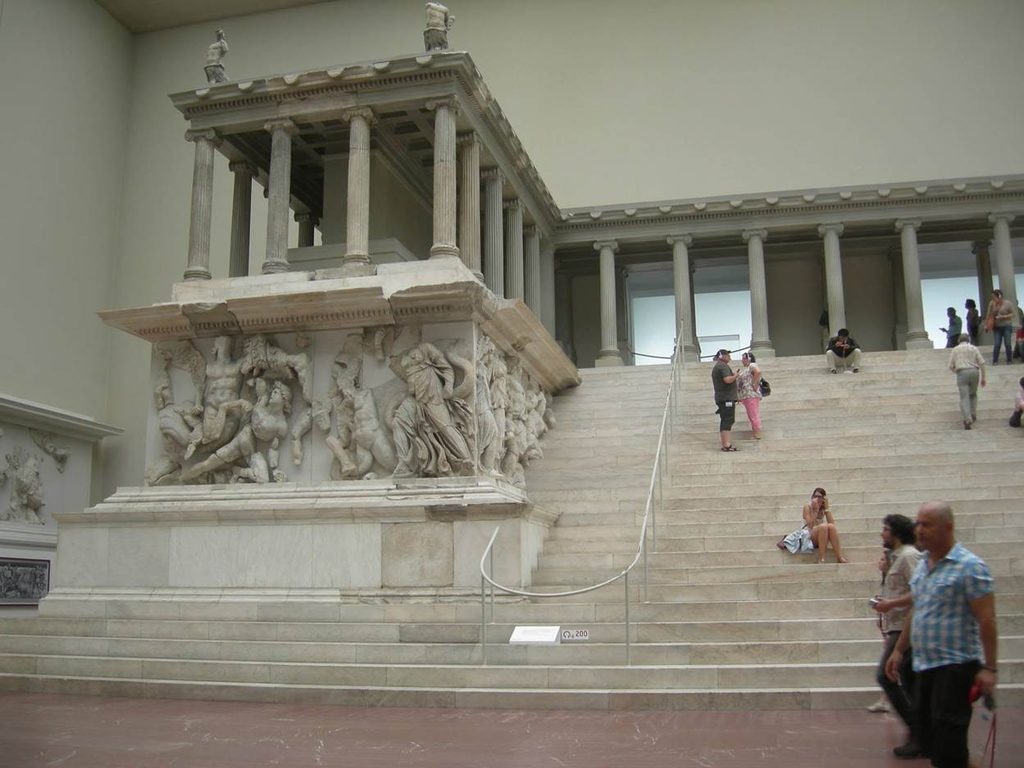
The Pergamon Altar, the showpiece from which the Pergamon Museum gets its name. The Museum houses numerous breathtaking antiquities, including this Altar, an entire Greek building from the 2nd century BC. This is just the western side of the altar. The steps alone are 20 meters wide.
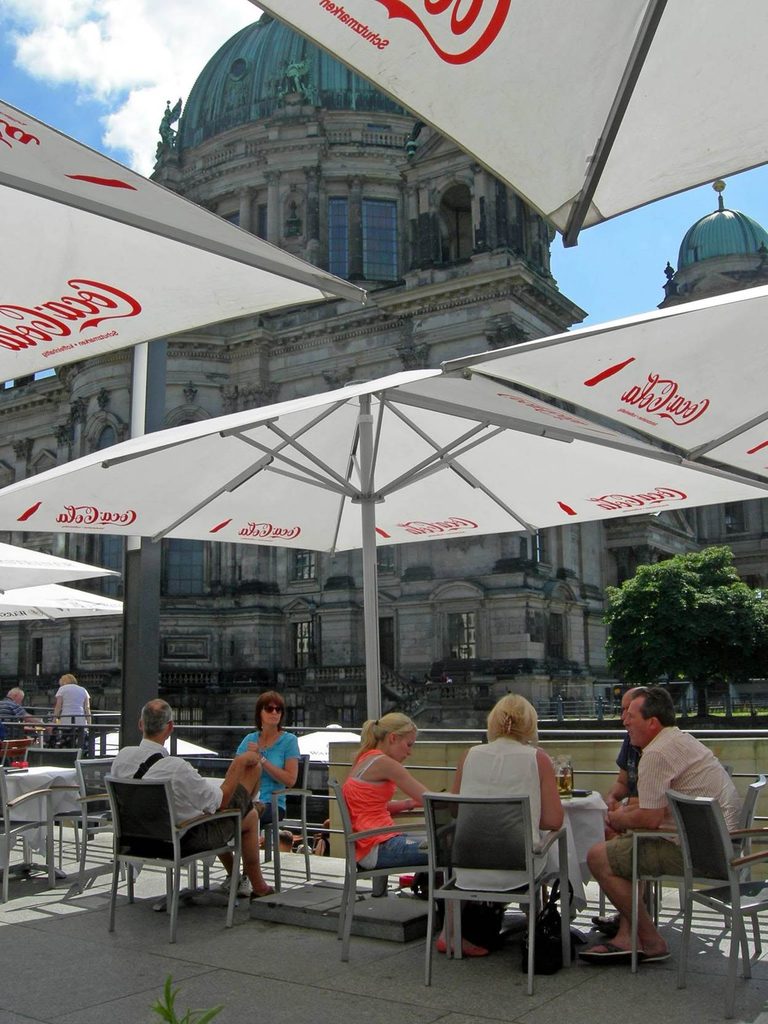
We took a lunch break from our visit to Museum Island at this sidewalk cafe across the River Spree from the museum and the Berlin Cathedral. My first realization that I might not ever want to go back to work was this moment. Basking in the sunshine, watching cheerful boaters go by me on the river, and spending my day being awestruck in this world-class city — I couldn’t help but think: “Why would I want to be working?”
November 9, 2014, based on a visit to Berlin in early July 2013.