

The Syri i Kaltër, or Blue Eye, in Albania is a lovely spring with navy, cobalt, and turquoise blues resembling that of an human iris.
It’s a karst spring, where the water shoots up from below. No one knows how deep it is. Divers had to stop after 50 meters because the force of the water was too strong to keep descending.
There’s a legend that says this area was the sole source of water for a village, and they enjoyed its clear flows. But a dragon came along and also admired it, deciding that he wanted all the water for himself. That didn’t sit too well with the villagers. They agreed to hunt the dragon and try to kill it. One archer actually did let fly an arrow that pierced the dragon’s eye. It fell, mortally wounded, and its blue eye has marked the spot forever more.
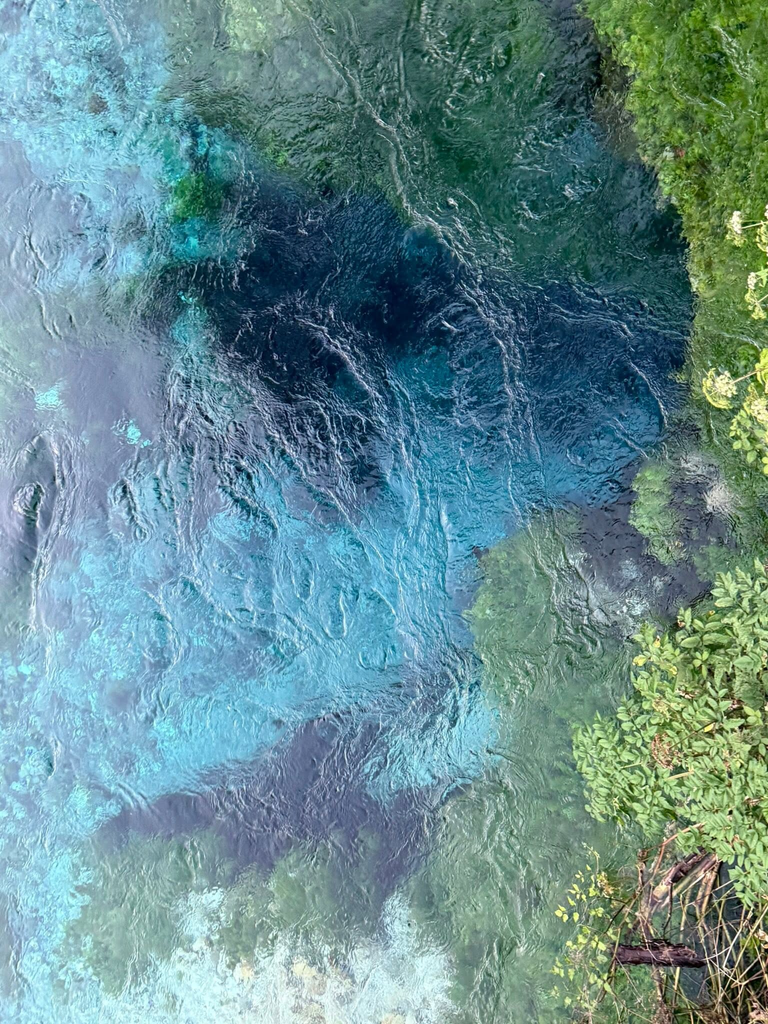
The “pupil” of the dragon’s eye is created by an almost-vertical underwater cavern. Because the water shoots out from below at a rate of 18,400 liters (>4,800 gallons) per second, scuba divers keep getting pushed upwards by the high water pressure and have never been able to get more than 50 meters below the surface.
(video of Blue Eye here)
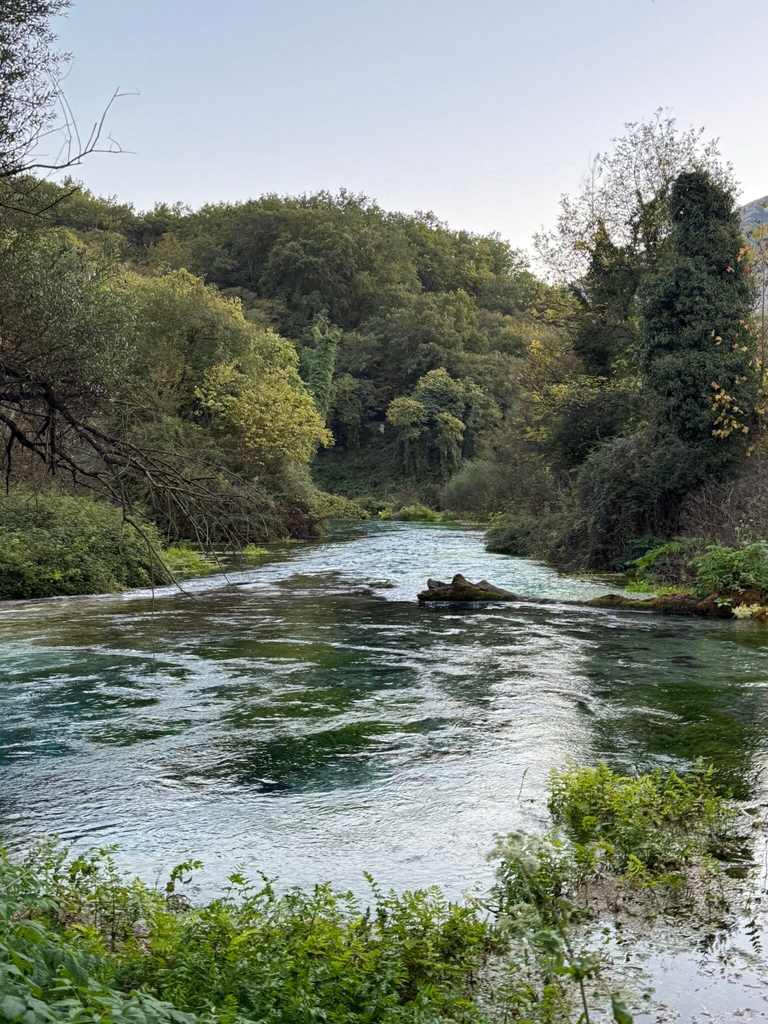
That water looks inviting for swimming, doesn’t it? Swimming and diving are forbidden by the authorities. Although some visitors ignore the signs and jump in anyway, it’s mighty chilly water. It stays at 10 degrees Celsius (50 degrees Fahrenheit) year-round.
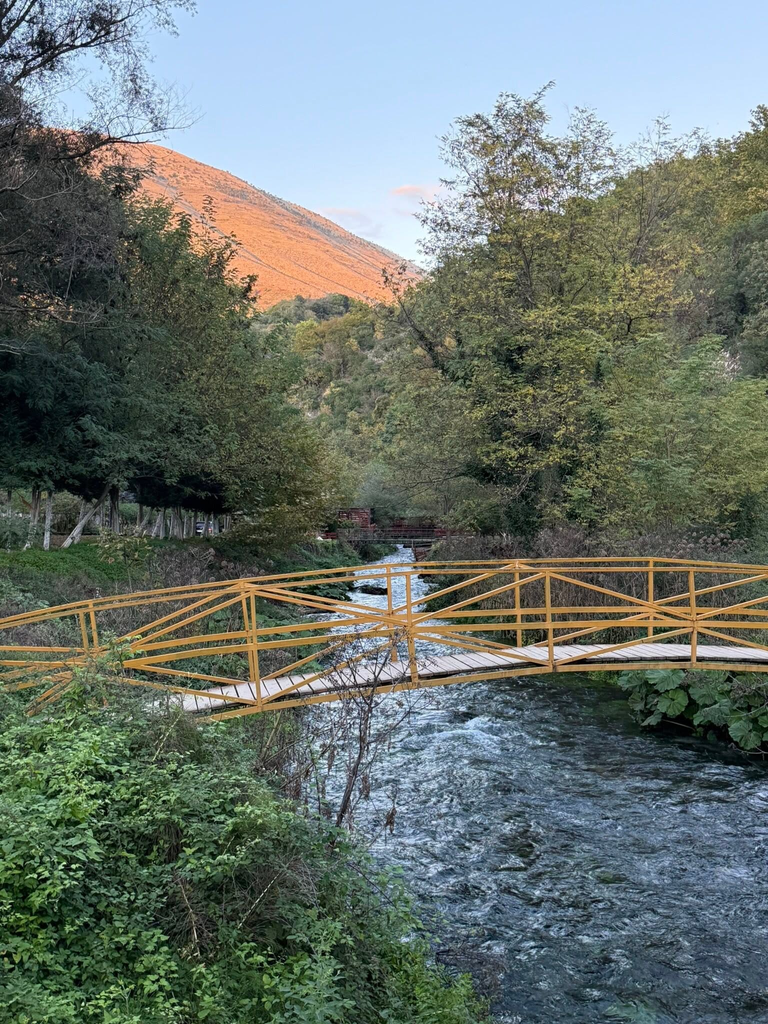
You’ll cross this little bridge to get from the road to the Blue Eye.
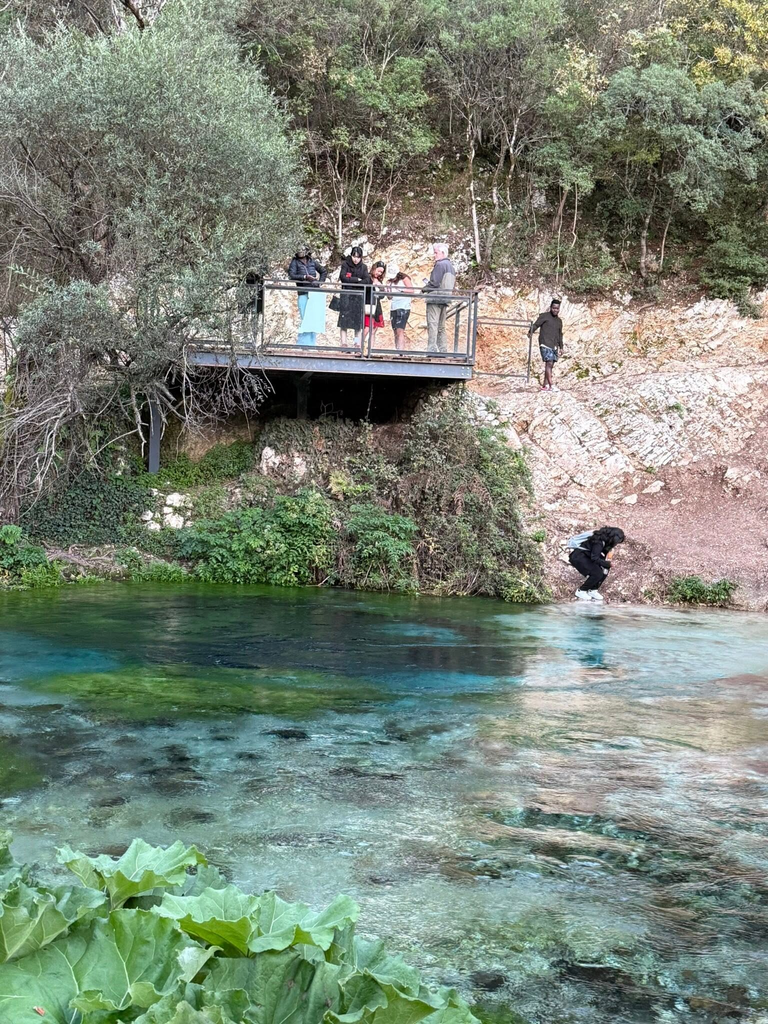
This is a viewing platform that allows you to see the Blue Eye from above.
There are actually two “blue eyes” in Albania. This one, known as Syri i Kaltër, is located near the village of Muzinë in the Finiq municipality in southern Albania. It lies between Gjirokaster, which is 36km north of the Blue Eye, and Sarande, which is 22km west of the Blue Eye. Syri i Kaltër is the initial water source of the Bistrice River.
If you’re taking public transportation, you’ll need to take the bus from Sarande to Gjirokaster (or vice-versa) and ask the bus driver to let you out at Blue Eye. This is a common request, so the bus driver won’t mind. You’ll still need to pay the entire Sarande-Gjirokaster fare of 300 Albanian lek (about 3 euros), though. Once you arrive, you’ll be in a parking lot about 2 km from the Blue Eye. You can hike the 2km to the Blue Eye or take a tram (I forget the price of the tram, but it’s minimal). Admission to the Blue Eye is 50 lek (about 50 cents in euros). If you drive, parking is an additional 100 lek (about 1 euro). The Blue Eye is open from 7:00am to 7:00pm daily.
Tours of Gjirokaster and the Blue Eye frequently leave from both Vlora and Saranda if you don’t want to take the bus.
There is also a northern Blue Eye, which I never explored because it’s rather a grueling procedure to get there. From Shkodra (also spelled Shkoder), it’s a 3.5 hour drive (preferably by bus or taxi) north to the village of Theth. I’ve heard that the first two hours are on a paved road, which isn’t too bad, but the last hour is a menace: a winding road along cliffs that’s unpaved and filled with rocks, so you are forced to drive slowly. Once you reach Theth, then you need to get to the even smaller town of Nderlysaj Village. That requires a taxi ride of a three hour hike. Finally, once you get to Nderlysaj Village, it’s a 40-minute hike to the Theth Blue Eye. I’m told you need to be in pretty good shape, as the hiking trail goes up and down in elevation. You’ll also need sturdy shoes because of the many rocks on the trail, and sunscreen because there’s little shade. Putting some human fuel in your backpack in the form of food and drink is also a good idea. The northern Blue Eye is even colder than its southern counterpart: it stays at 7 degrees Celsius (45 Fahrenheit) year-round. The Theth Blue Eye has a pretty waterfall and beautiful views, but I’ll leave this arduous trek to the younger crowd.