

Because of the time differences between Japan and Iowa, the bombing of Hiroshima occurred on the evening of Dad’s 17th birthday — something he never forgot. Visiting Hiroshima was a moving experience — and a reminder of the destructive power mankind can unleash on his fellow man.
There are only two UNESCO World Heritage sites related to World War II: one is the Auschwitz concentration camp in Poland, and the other is the A-Bomb Dome in Hiroshima, Japan. The former Industrial Promotion Hall partially withstood the atomic bomb blast and its shell has been preserved as a permanent reminder of the destructive power of nuclear weapons. Now called the A-Bomb Dome, it is the primary feature of Peace Park, which also includes various monuments to the victims of the bomb blast and the Peace Memorial Museum. When I look at the beautiful and peaceful setting of Aioi Bridge, Peace Memorial Park, and the Motoyasu-gawa River today, it’s hard to imagine the horrific sights of 1945. It’s profoundly moving.
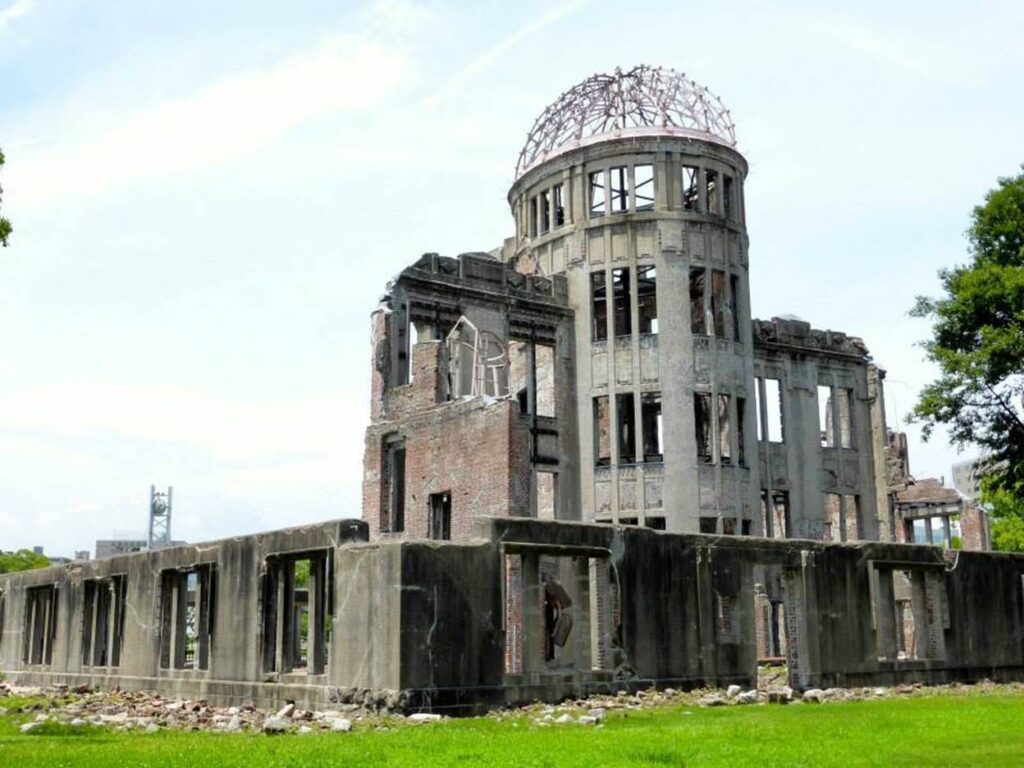
This used to be the Industrial Promotion Hall, a favorite spot to hold events prior to 1945. Only a few meters away from Ground Zero, it’s one of the few buildings which was even partially standing after the atomic blast. The citizens of Hiroshima debated whether to tear it down, since it evoked painful memories, or to preserve it so future generations would never forget the destructive power of the atomic bomb. They chose the latter. The building is located at the north end of what is now called Peace Memorial Park. It is now called the “A Bomb Dome.”
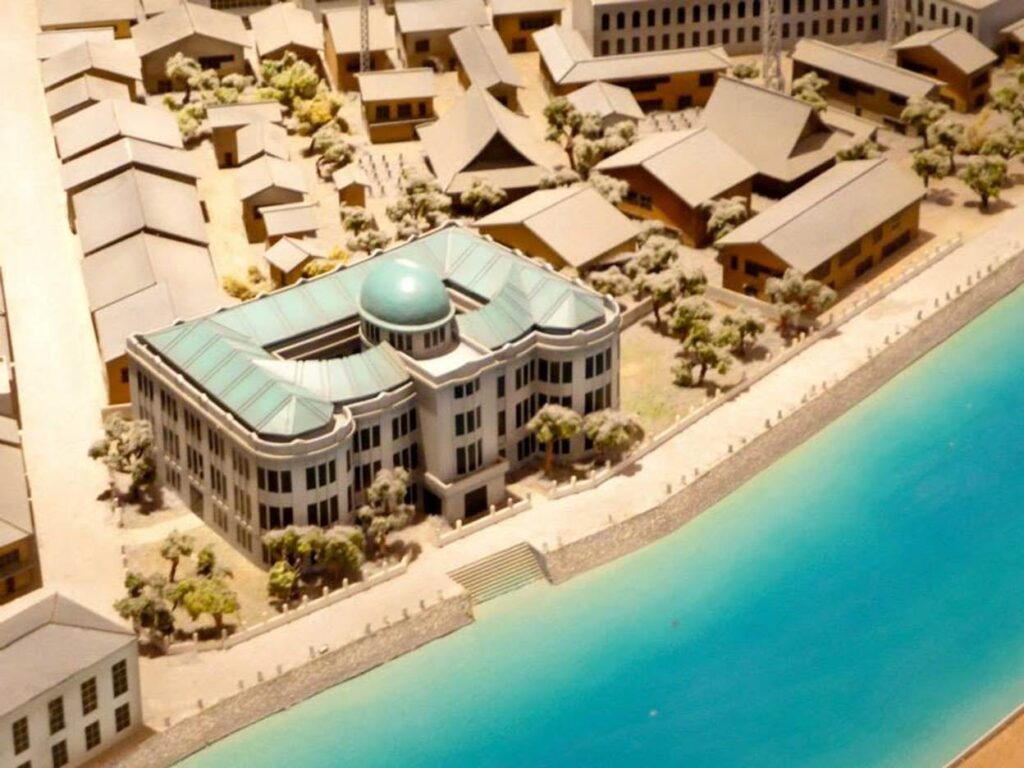
A model of the Industrial Promotion Hall as it looked before the blast, along with its surrounding neighborhood. This area was the center of Hiroshima.
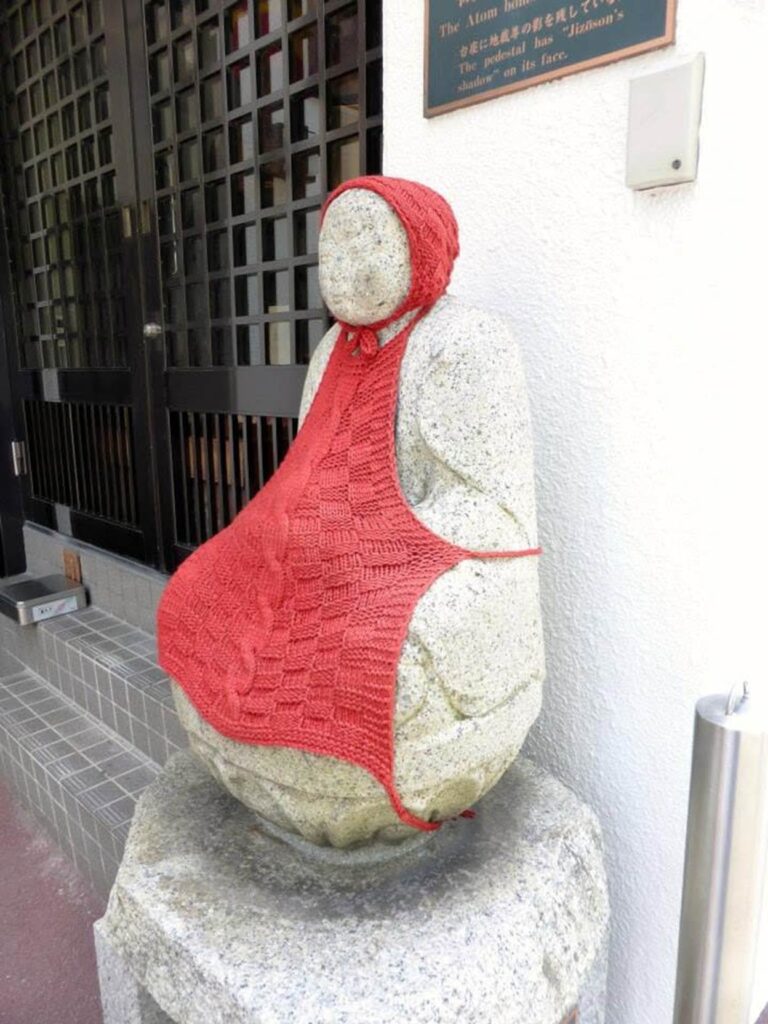
Just east of the A-Bomb Dome is a small Shinto shrine. This heat of the bomb created an “atomic shadow” on the base of the statue, where the base had been shielded by the bulk of the statue.
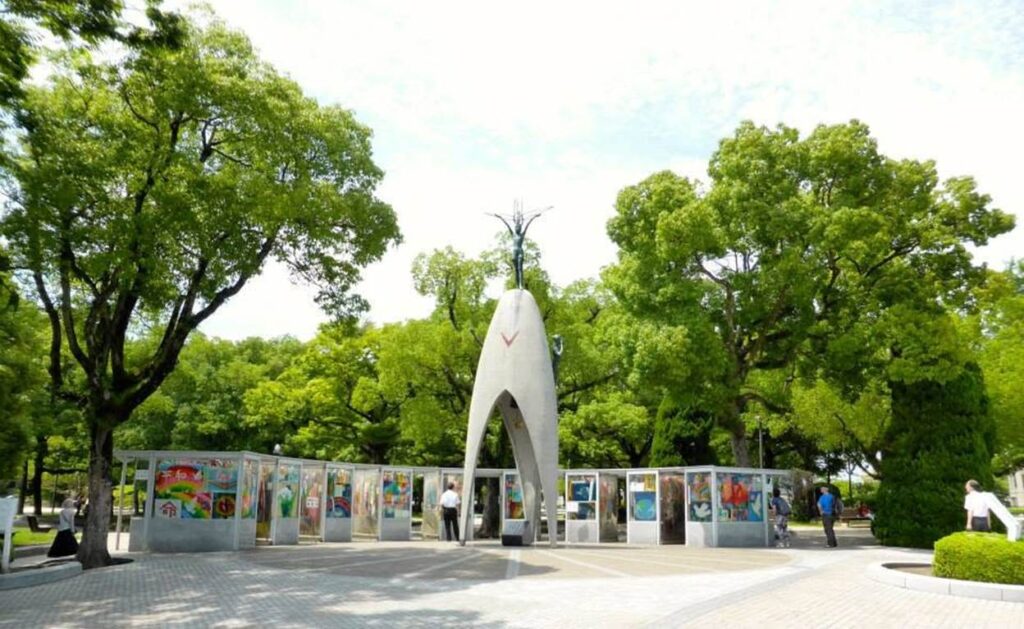
Approximately 10,000 schoolchildren were working outdoors on the morning of the blast, helping to create firebreaks. Almost all were killed, as they received the full force of the blast. This is the Children’s Peace Memorial, created to commemorate them.
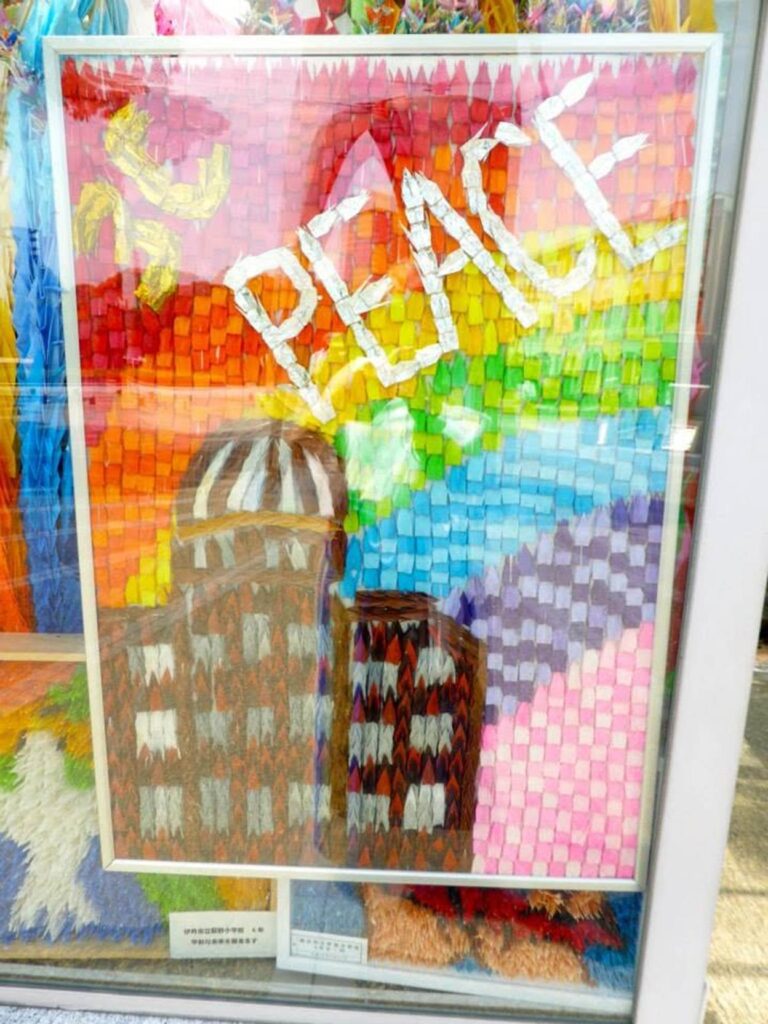
Many posters are displayed at the Children’s Peace Memorial. Although it may not be apparent from the photograph, this poster is composed of hundreds of tiny origami cranes. Cranes have been adopted as a sign of peace, a wish that such destructive power will never be unleashed again.
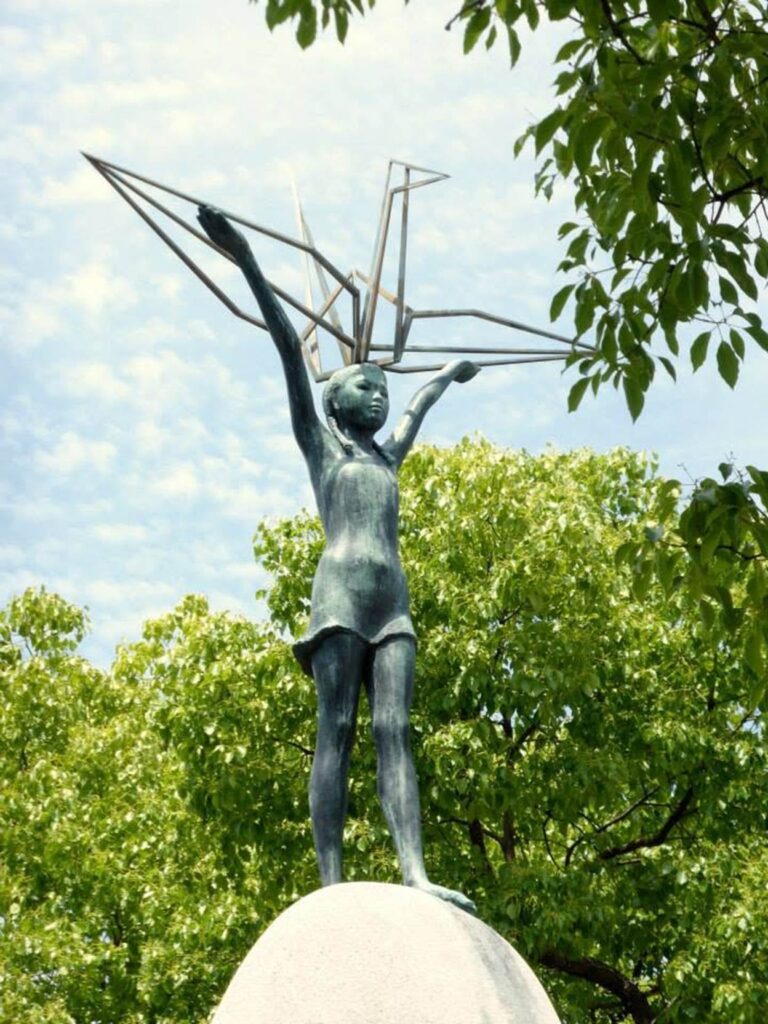
The statue on the top of the Children’s Peace Memorial, featuring a child and an origami crane.
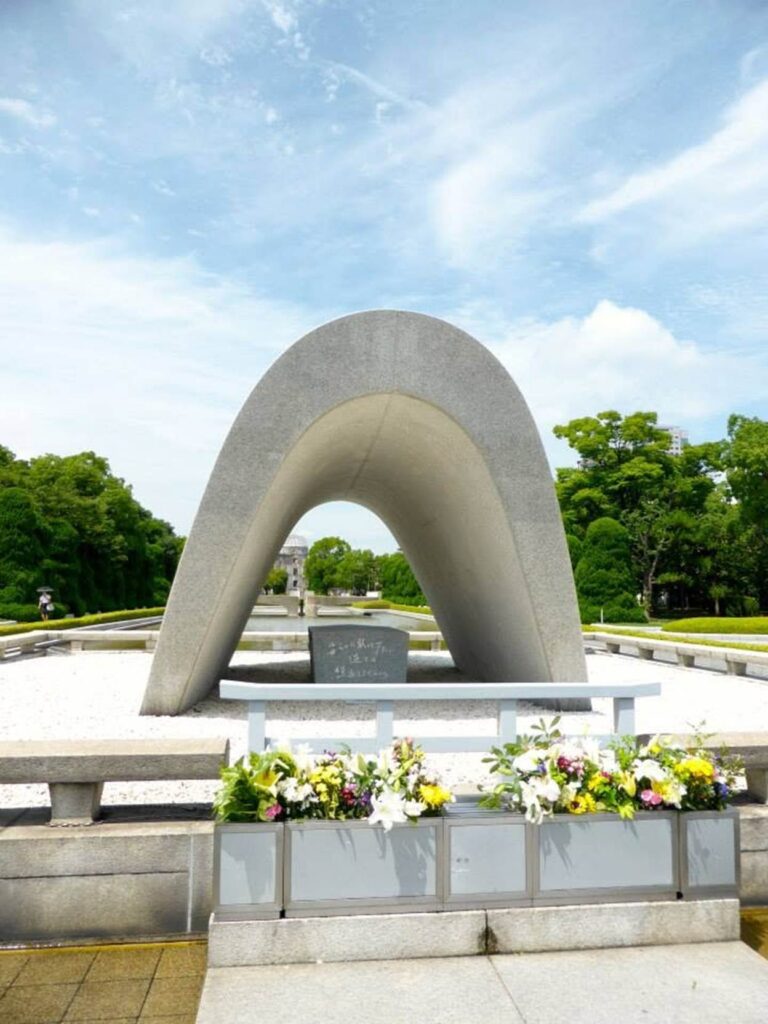
This memorial, erected in 1952, is called the Registry Cenotaph. It holds the registry of those who died in the atomic blast.
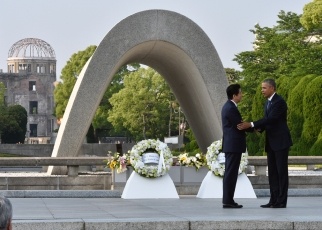
In May 2016, Barack Obama became the first sitting President to visit Hiroshima. He and Japanese Prime Minister Shinzo Abe laid wreaths at the cenotaph to honor atomic bomb victims and advocate for a world without nuclear weapons.
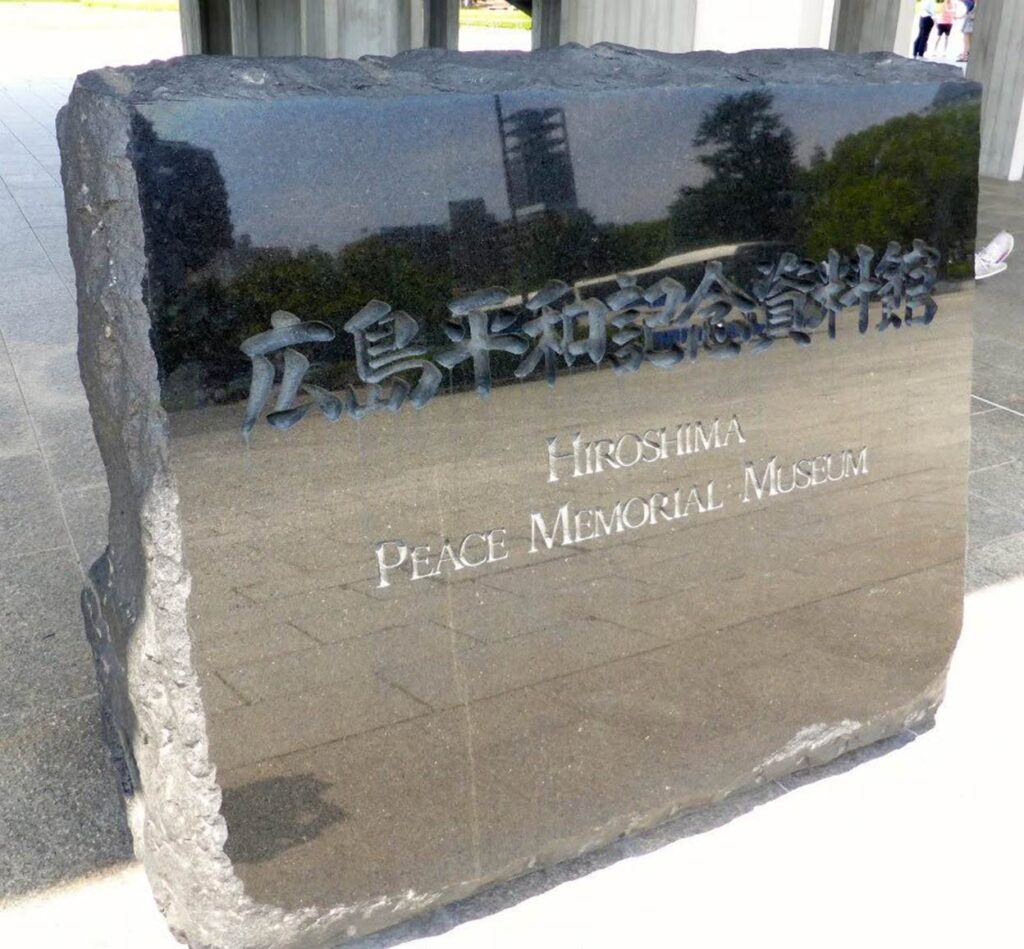
The Peace Memorial Museum describes Hiroshima before the war, the atomic bomb and its effects, and peace efforts. It is an outstanding and comprehensive museum.
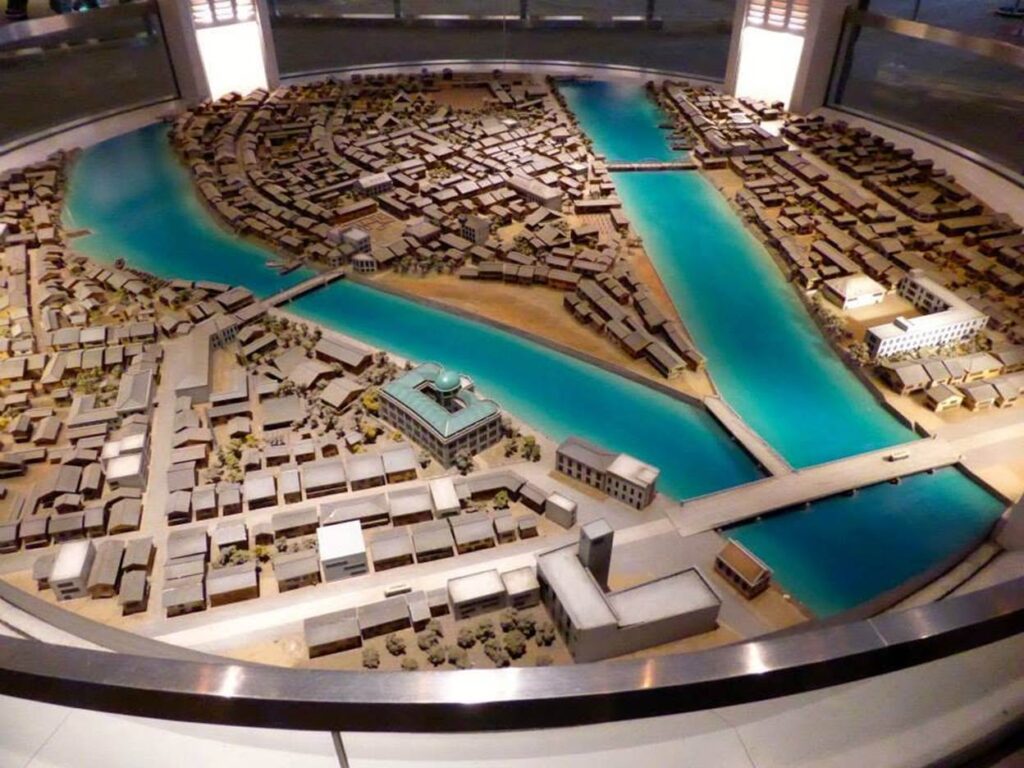
Hiroshima as it looked before the bomb. The t-shaped bridge in the foreground was the bombers’ target, but it was missed. The Industrial Promotion Hall is the large rectangular green building next to the river. The bomb was dropped slightly to the left of the Hall.
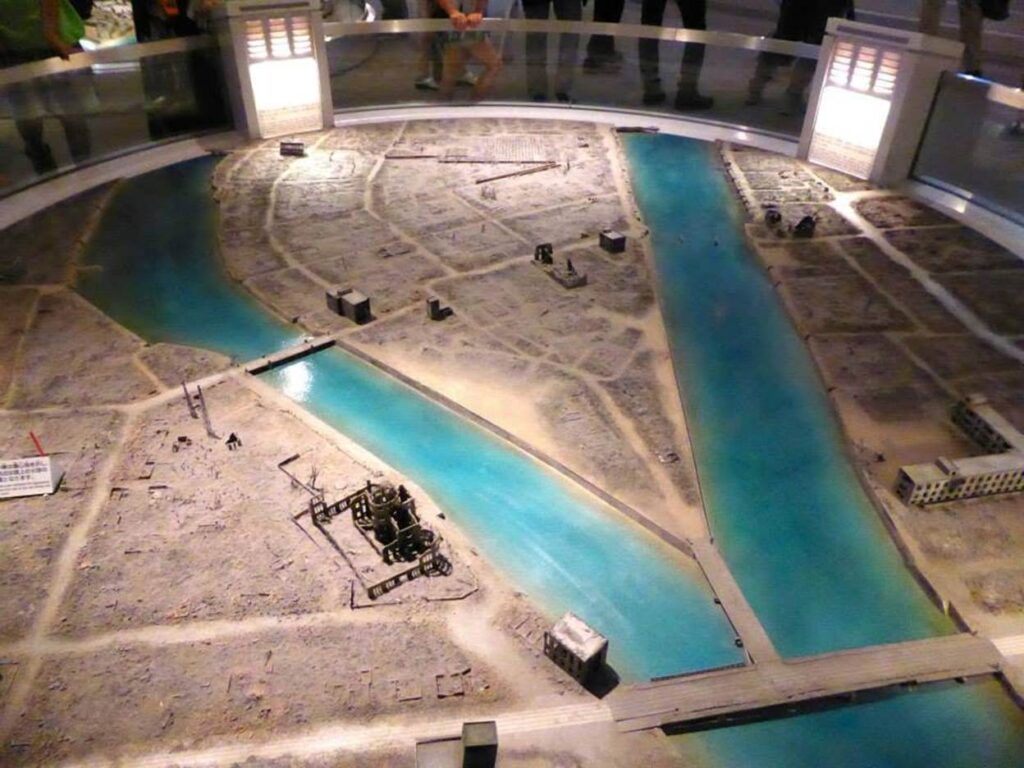
Hiroshima after the bomb.
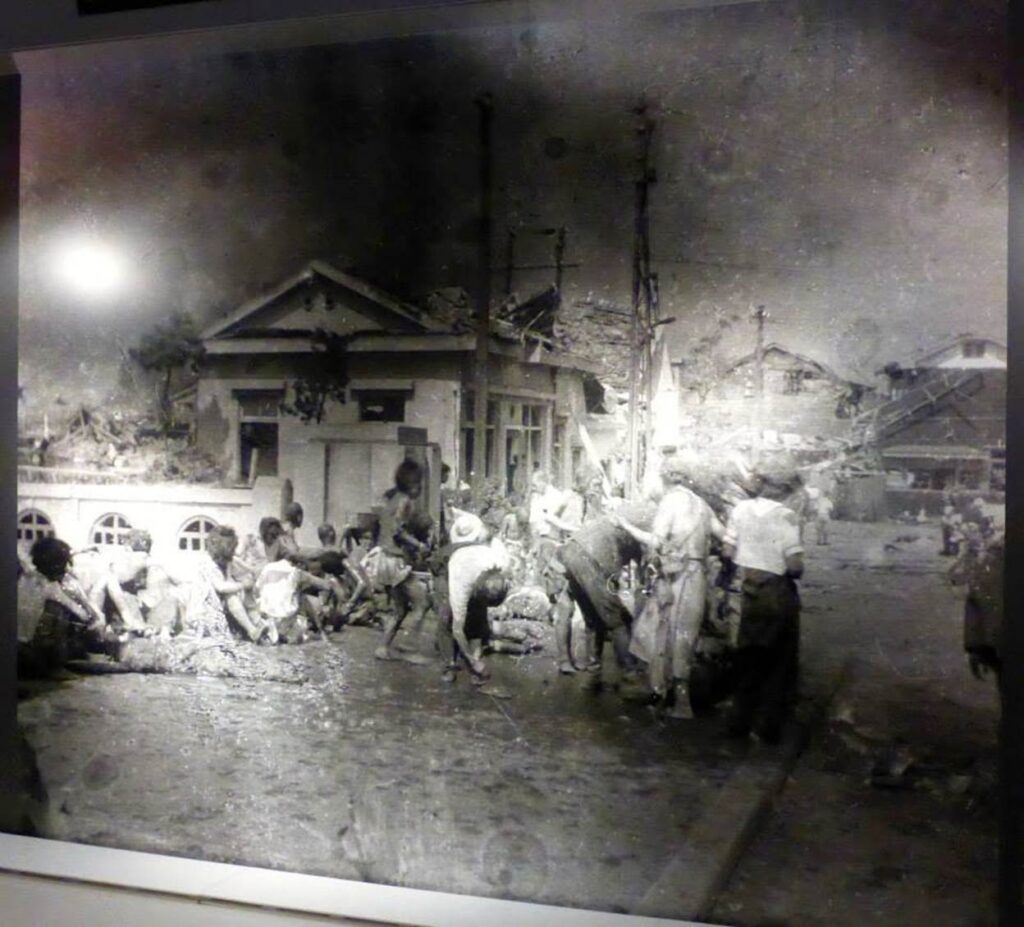
This photo was taken approximately three hours after the bomb blast, and roughly 2km away from Ground Zero. The young woman on the right is the only one who survived. She visited the Peace Memorial Museum in recent years. She said that the young woman holding the baby was wandering around in shock, telling her baby “wake up, wake up!” and not realizing her baby was dead.
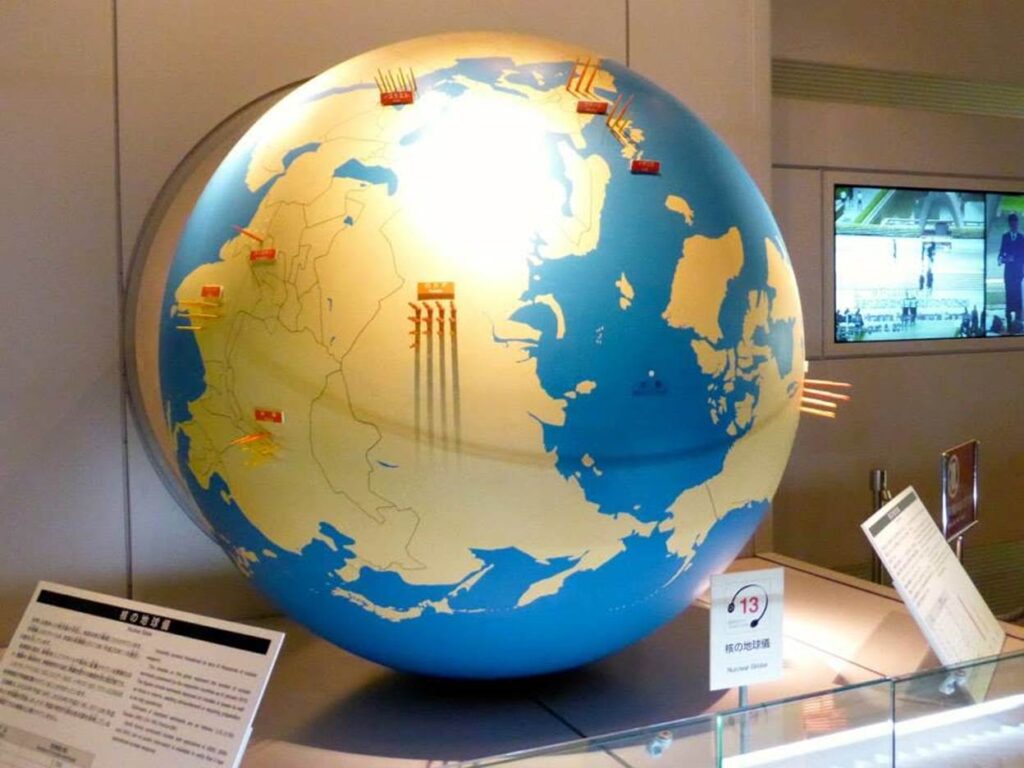
This globe shows the nuclear weapon stockpiles of various countries. The USA has the largest stockpile. The citizens of Hiroshima would like to see nuclear weapons eliminated worldwide by the year 2020. Unfortunately, that didn’t happen.
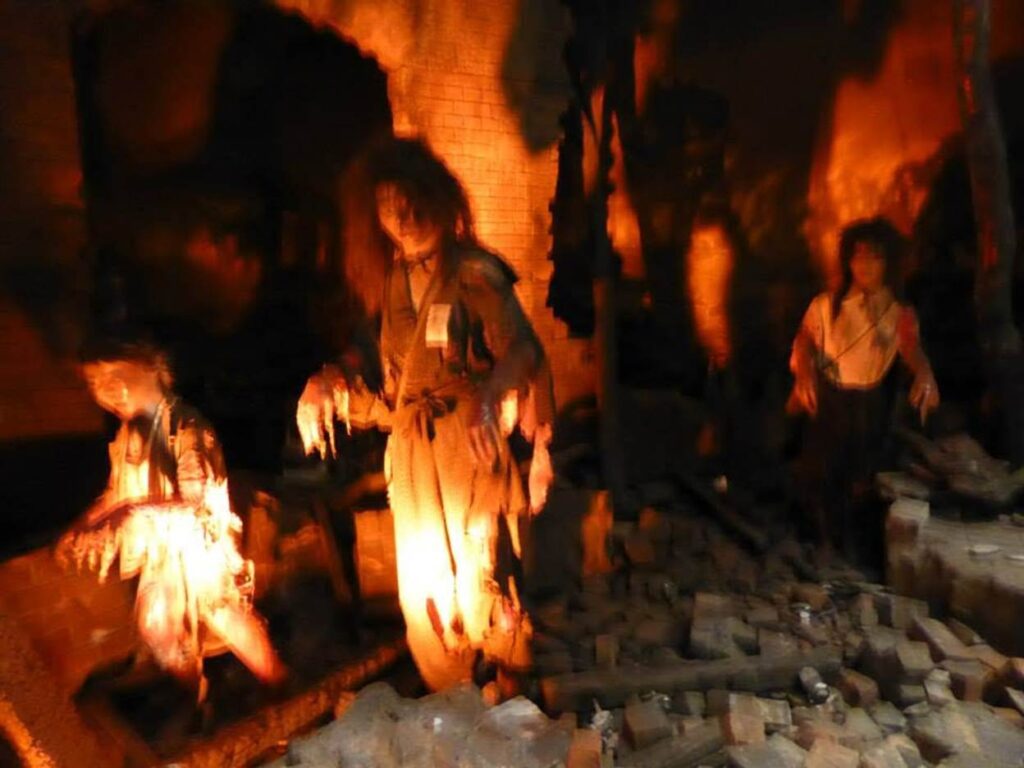
This diorama shows people walking around shortly after the blast, their skin melted and falling away from their bodies in strips. The docent told us that the faces of the people were in similar condition, but these statues were made with normal faces because it scared the schoolchildren who were coming through the museum.
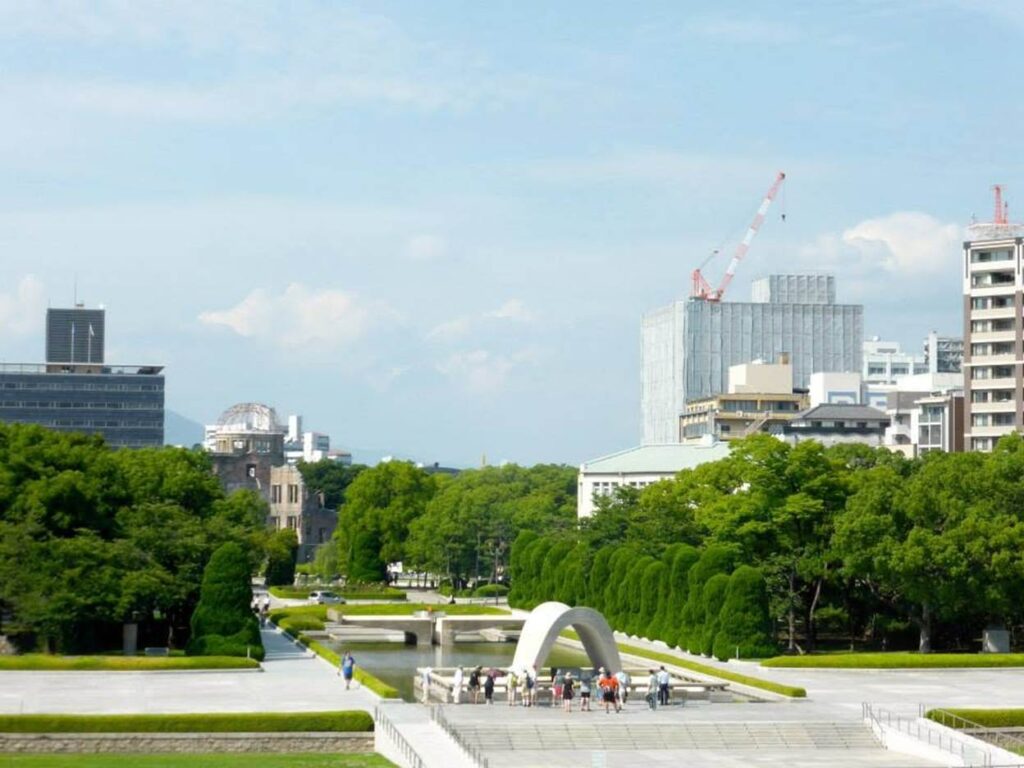
Peace Memorial Park as seen from the second floor of the Museum. The Registry Cenotaph is in the foreground and the A-Bomb Dome in the background.
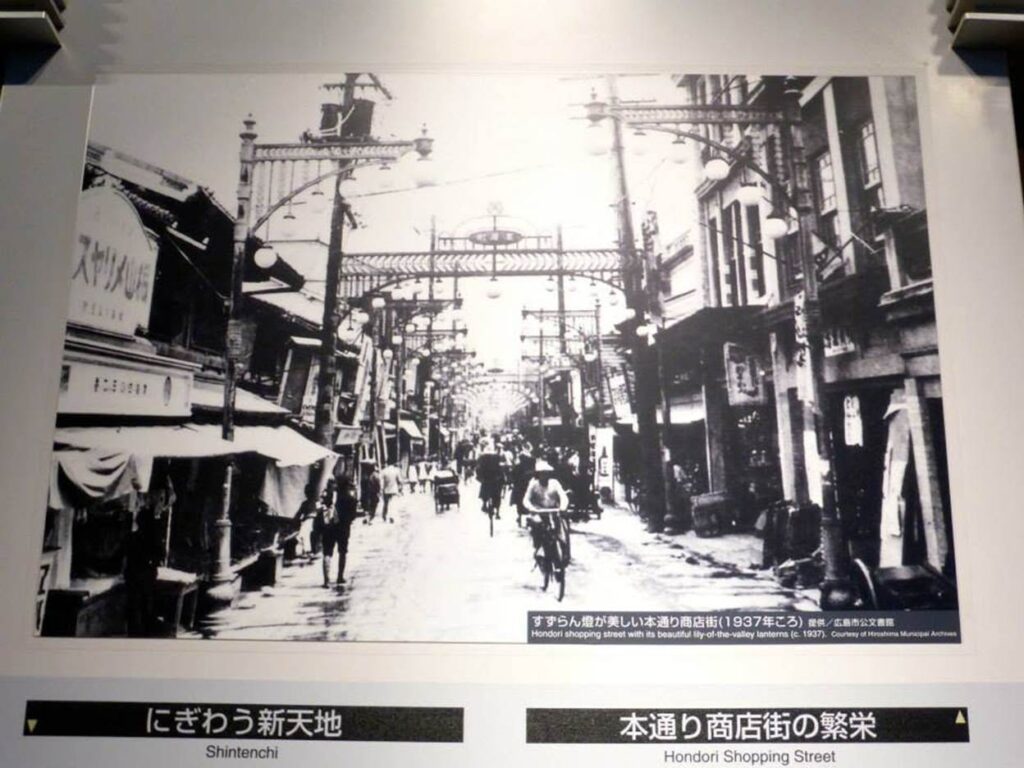
Hondori Street, a lively section of Hiroshima as it appeared in 1931.
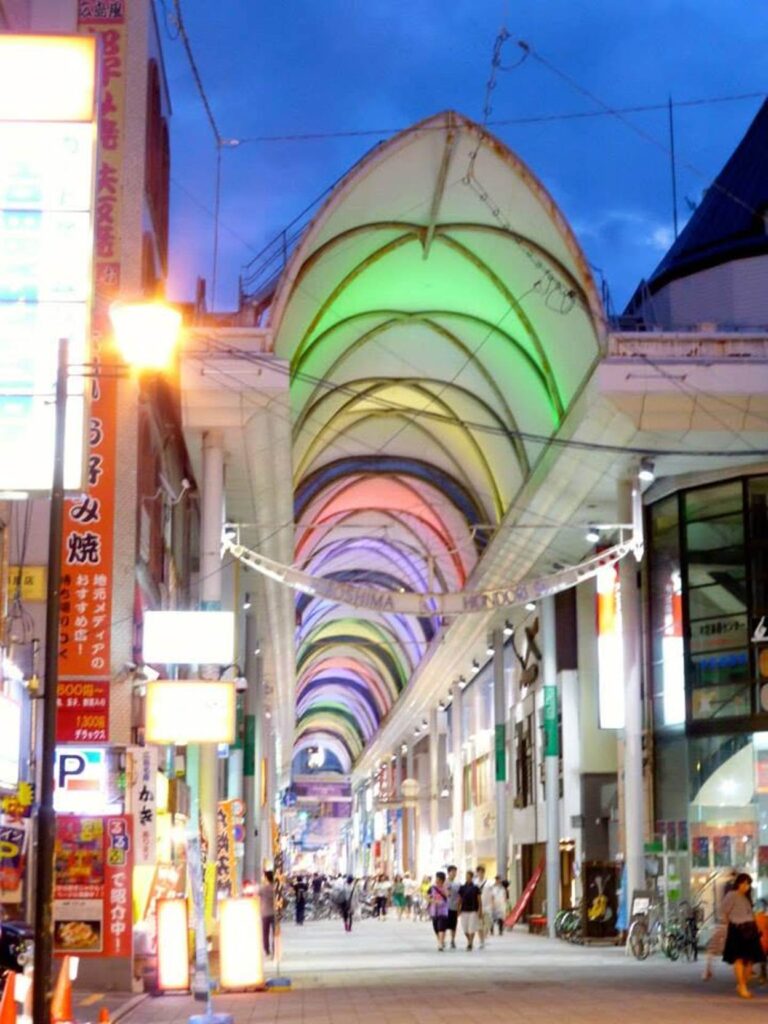
Hondori Street today. Levelled to the ground by the atomic bomb blast, it’s once again a lively area filled with shops, restaurants, and bars.
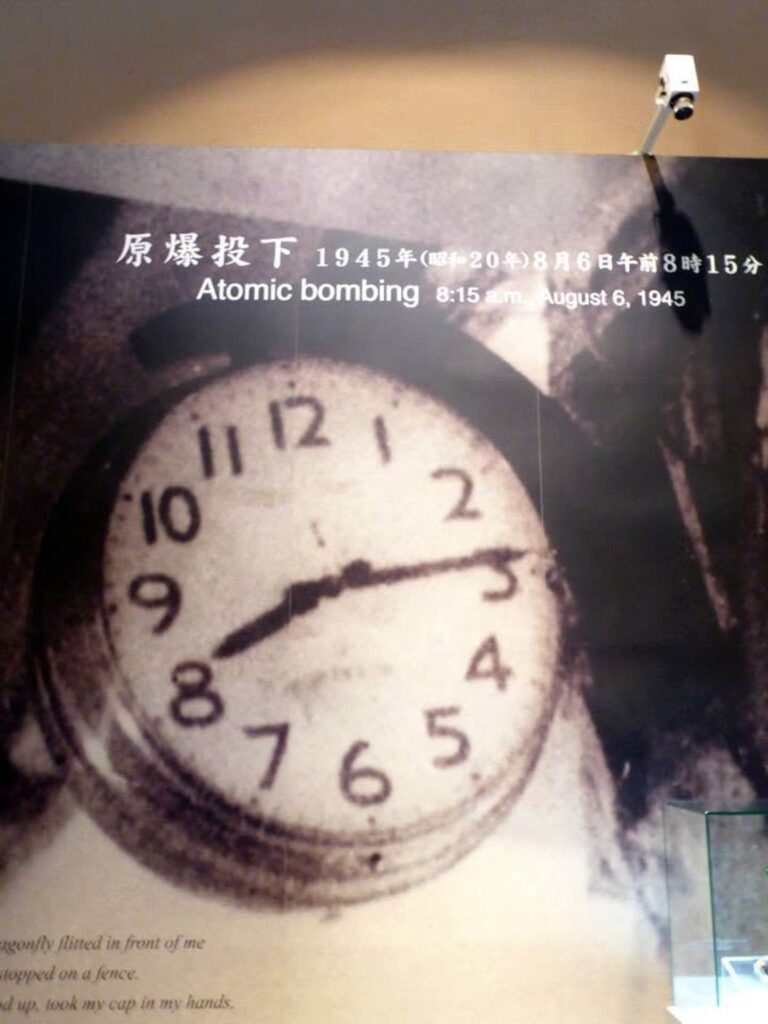
A clock and a pocket watch are on display at the museum. Both stopped at 8:15am, at the time of the blast.
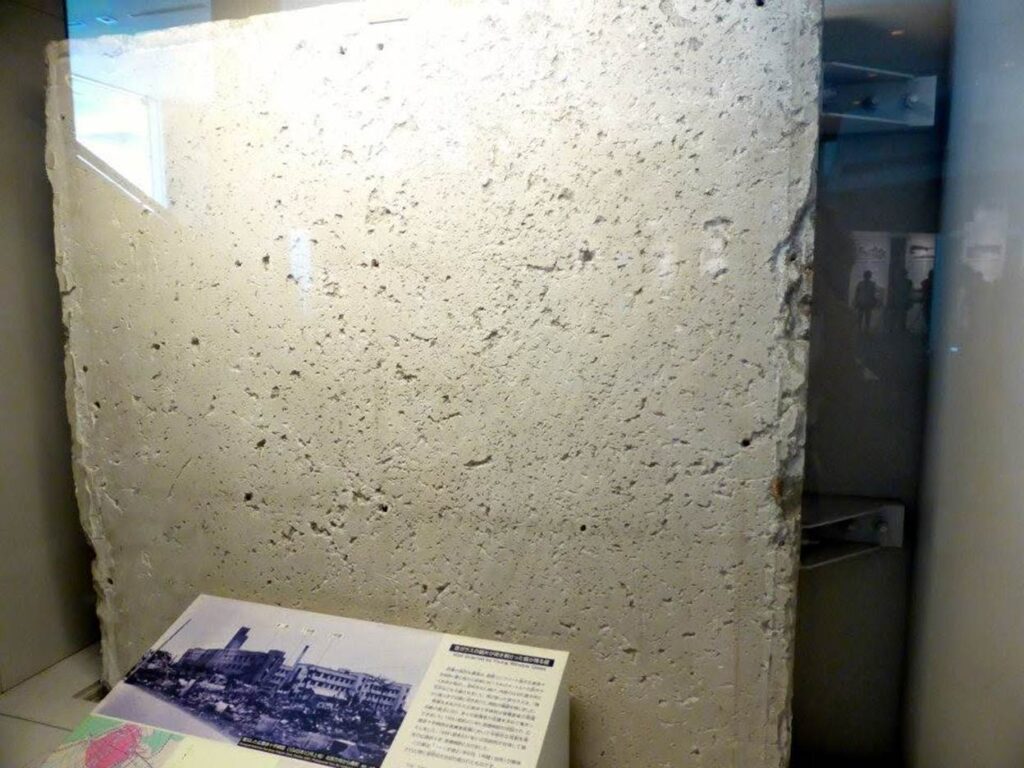
This hospital was near the center of the blast. The concrete is pockmarked because the force of the blast drove glass shards into the concrete.
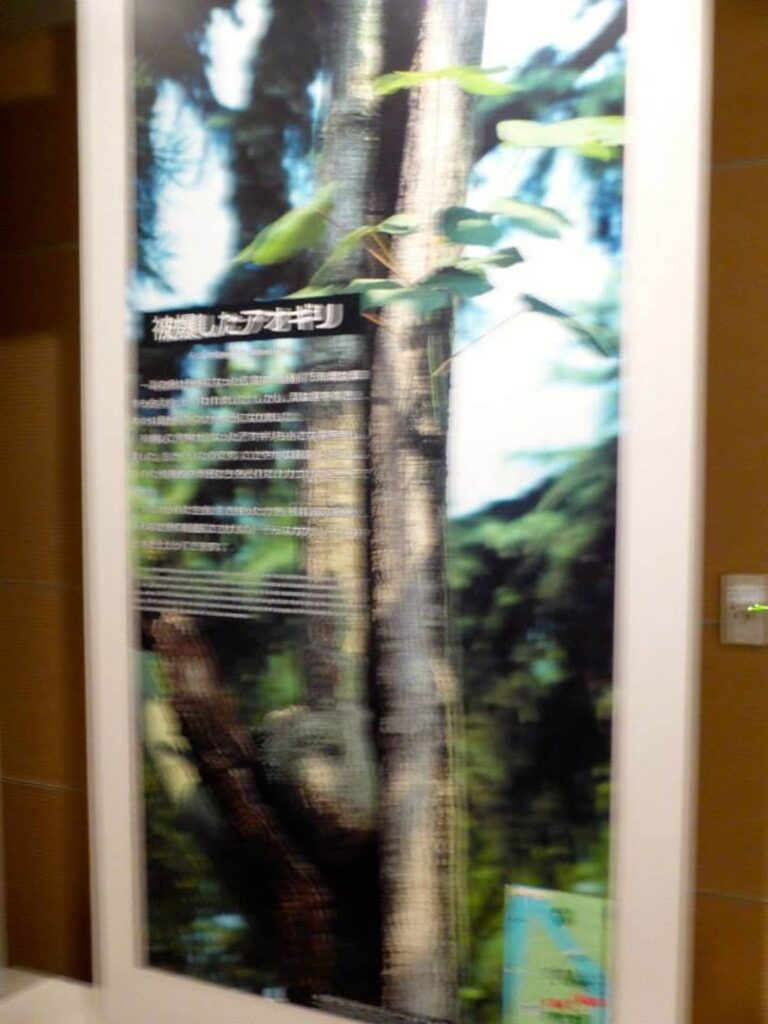
Shortly after the blast, a rumor began to spread that no plants would grow for 75 years due to the radiation. When plants began sprouting the following autumn, it gave the survivors great hope. (Sorry for the fuzzy picture).
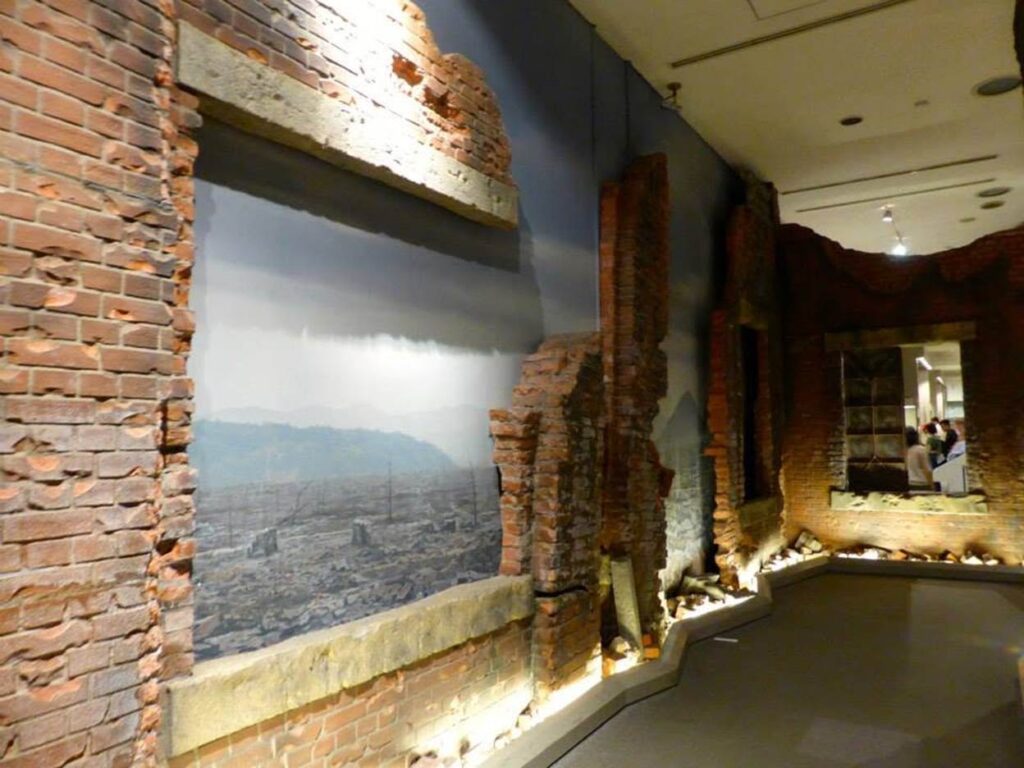
This hallway of the museum is eerie, giving visitors a sense of what it would be like to look at the bombed-out city from the inside of one of the ruined buildings.
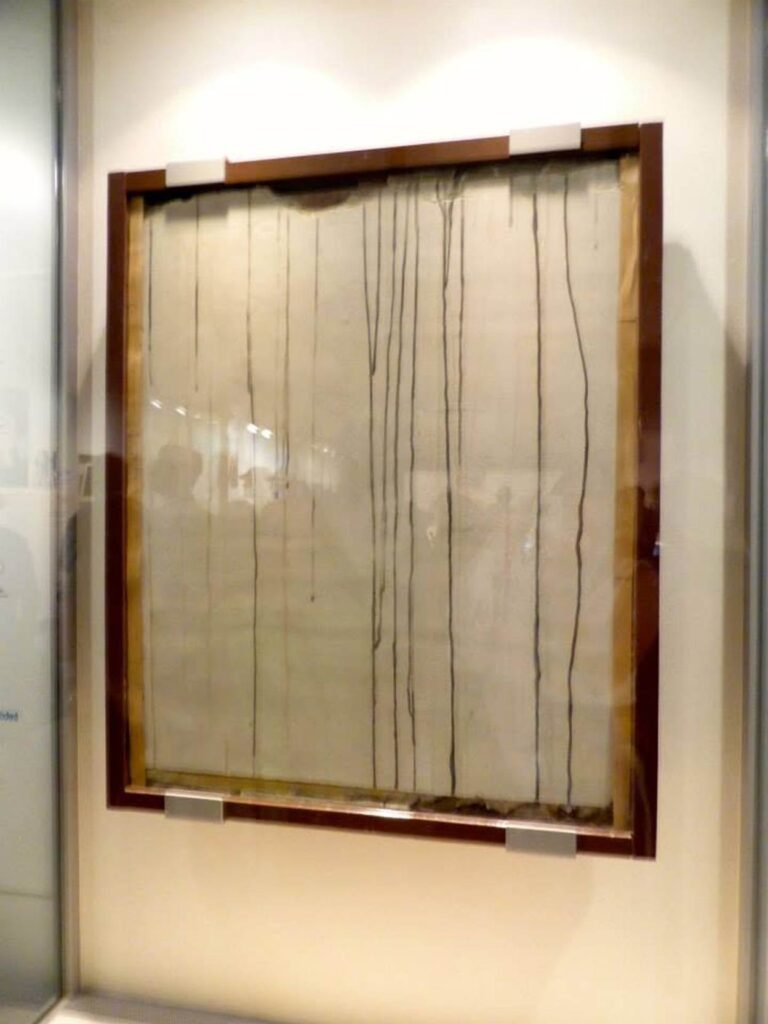
Soon after the explosion, rising hot air created a giant mushroom cloud, carrying dirt, dust, soot, and other debris high into the air. This dust and soot became radioactive, mixed with water vapor in the air, then fell back to earth as “black rain”. People who drank water from wells contaminated by black rain suffered from diarrhea for three months afterwards. This window was stained by black rain.
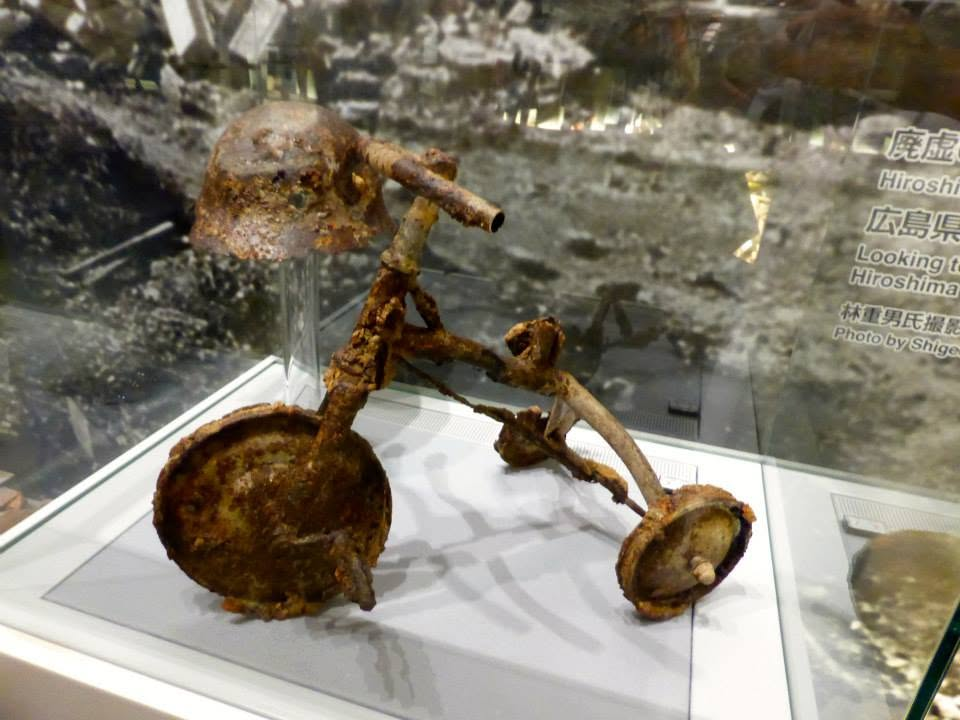
A three year old boy was outside riding his tricycle at the time of the blast. Although his parents cared for him as best they could, he died the next day. His father couldn’t bear to put his toddler in a graveyard, so he buried him, tricycle and all, in the backyard of their family home. Forty years later, he had the remains moved to the cemetery and donated his son’s bicycle and helmet to the museum.
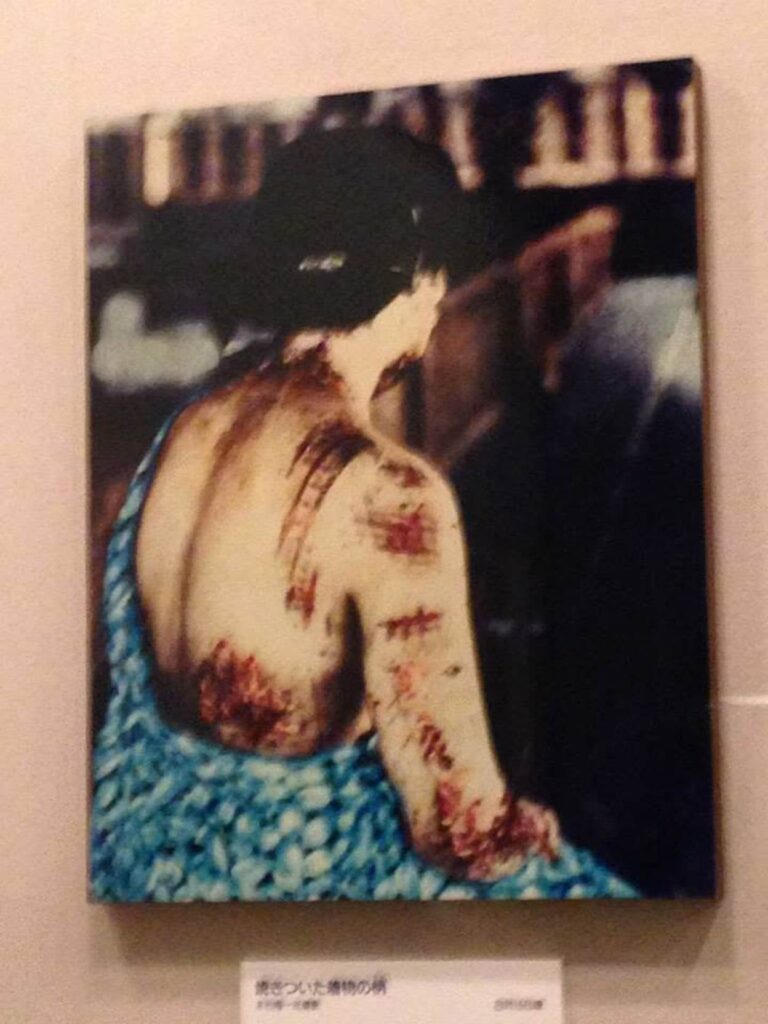
The heat from the blast burned the dark-colored portions of the woman’s kimono pattern into her skin.
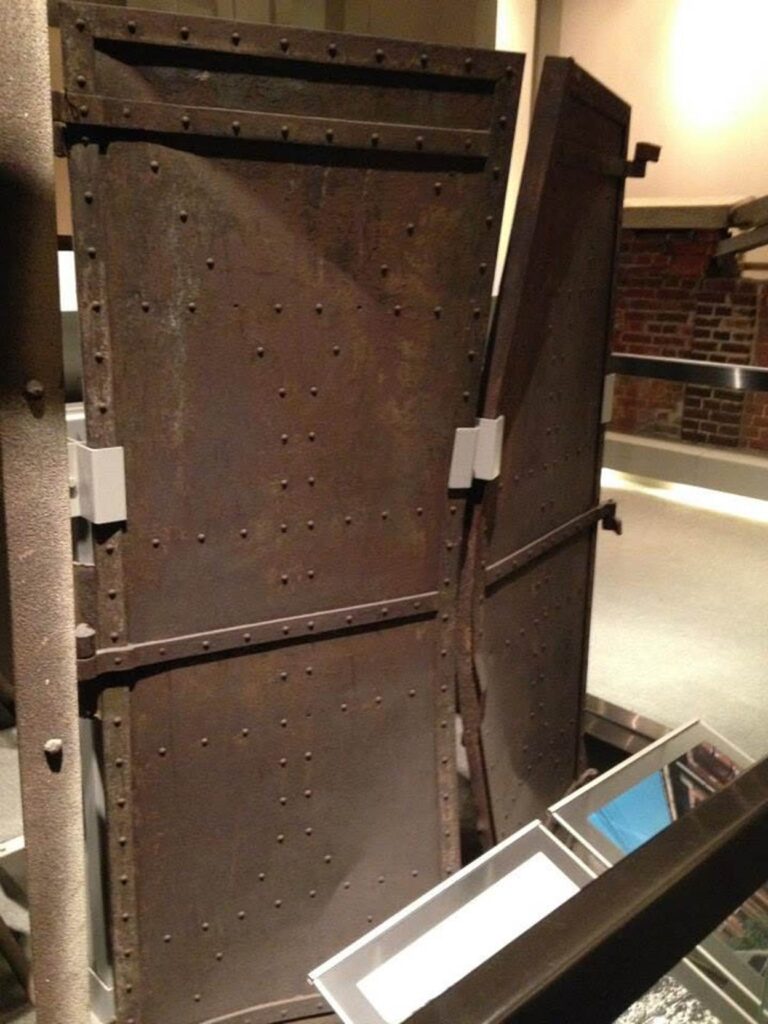
The heat from the blast warped the metal shutters on this building, even though it was 2km away from Ground Zero.
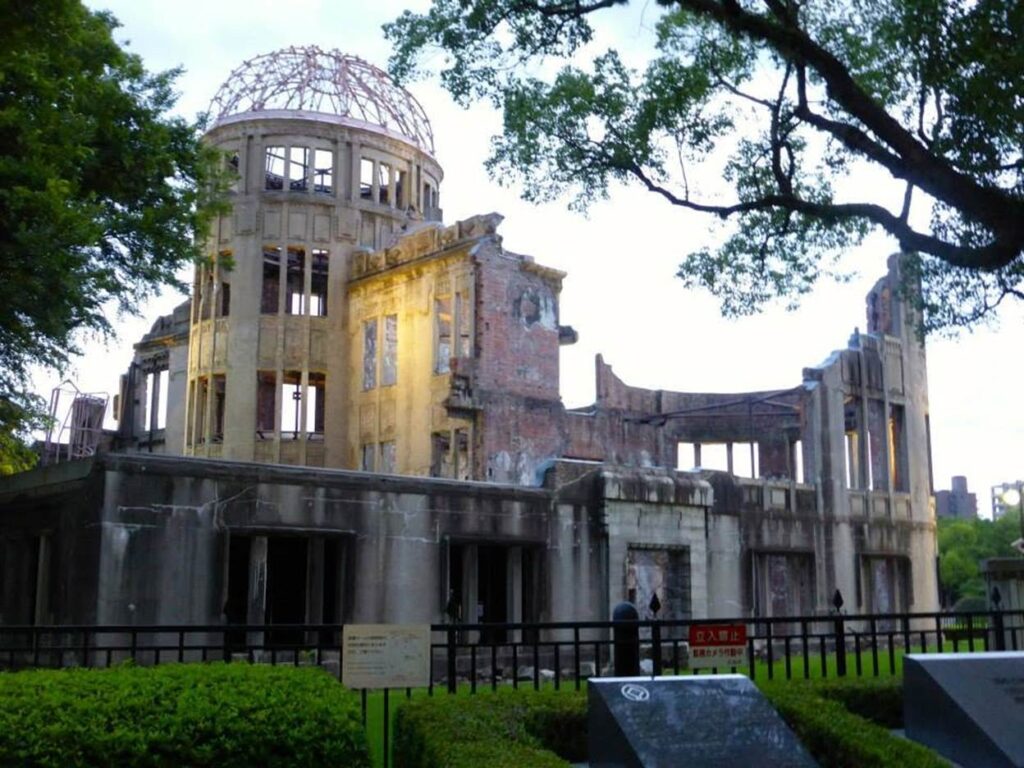
The A-Bomb Dome at dusk.
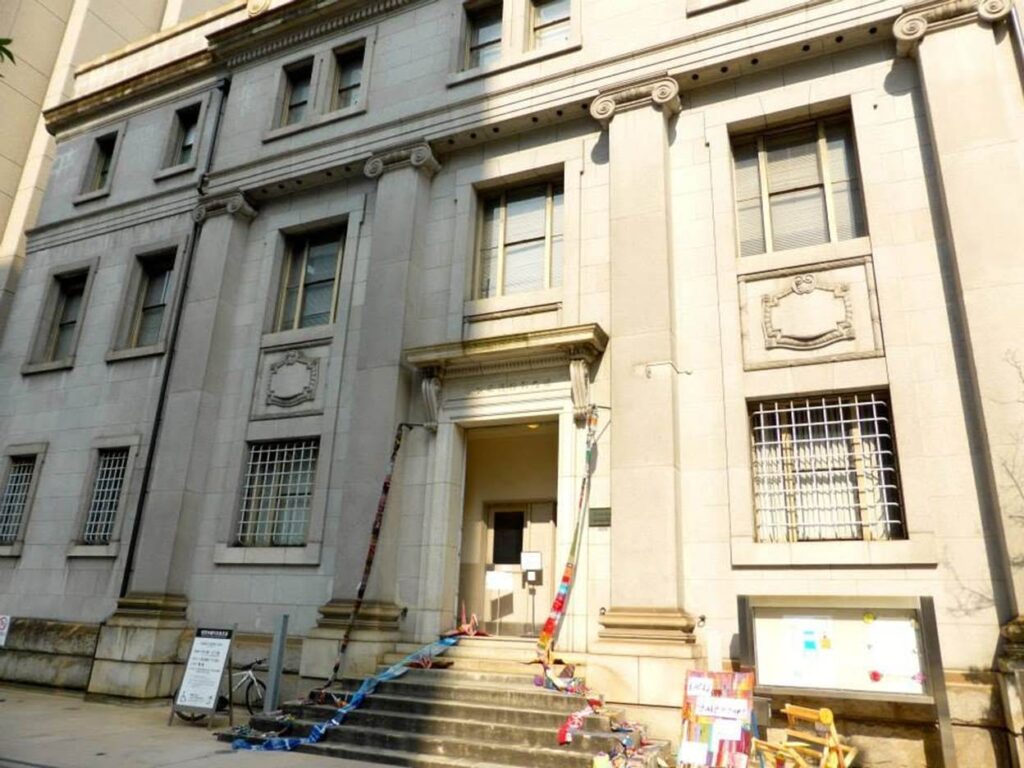
The former Bank of Japan branch in Hiroshima is the only building in central Hiroshima which still looks as it did before the atomic bomb blast. Although it was only 380 meters away from Ground Zero, its sturdy construction allowed it to survive. The metal shutters on the first and second floors were closed, and the interiors on those floors were not badly damaged. The shutters were open on the third floor, however, and that floor was severely burned. All 42 people inside the building died.
The Bank of Japan allows the City of Hiroshima free use of the building. Today, it is used for cultural events (such as this art exhibit) and historical tours. The building has been designated as an Important Cultural Asset by the City of Hiroshima.
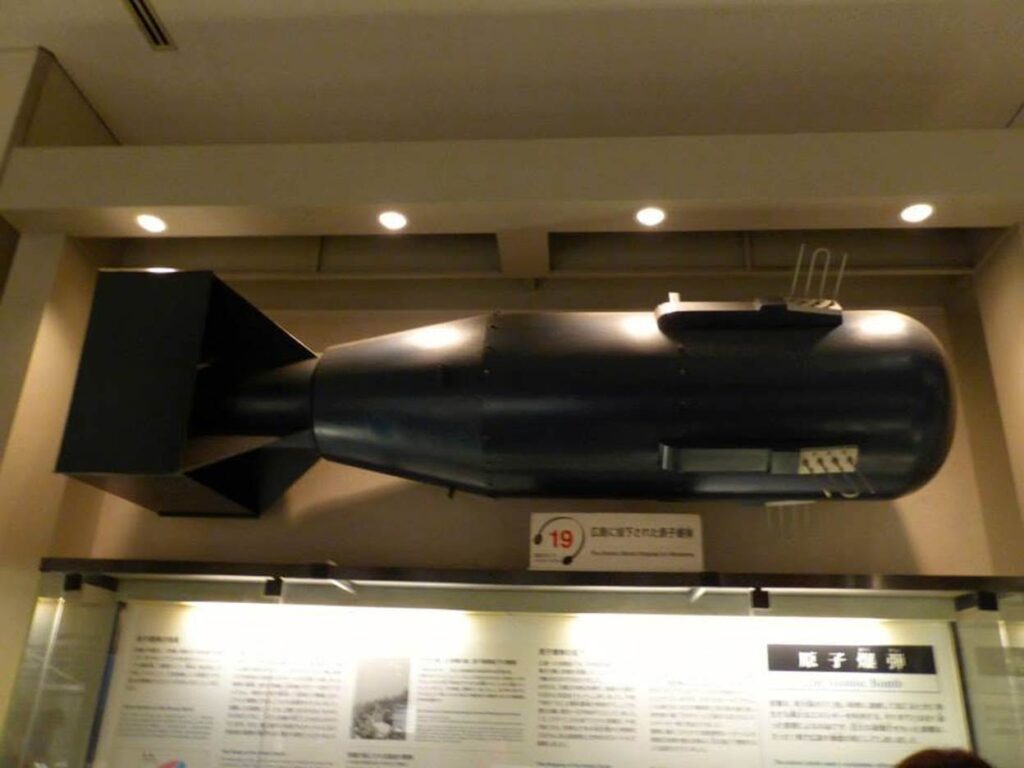
Full size reproduction of the atomic bomb dropped by the Enola Gay, “Little Boy.” It is three meters long. It doesn’t look that destructive, does it?
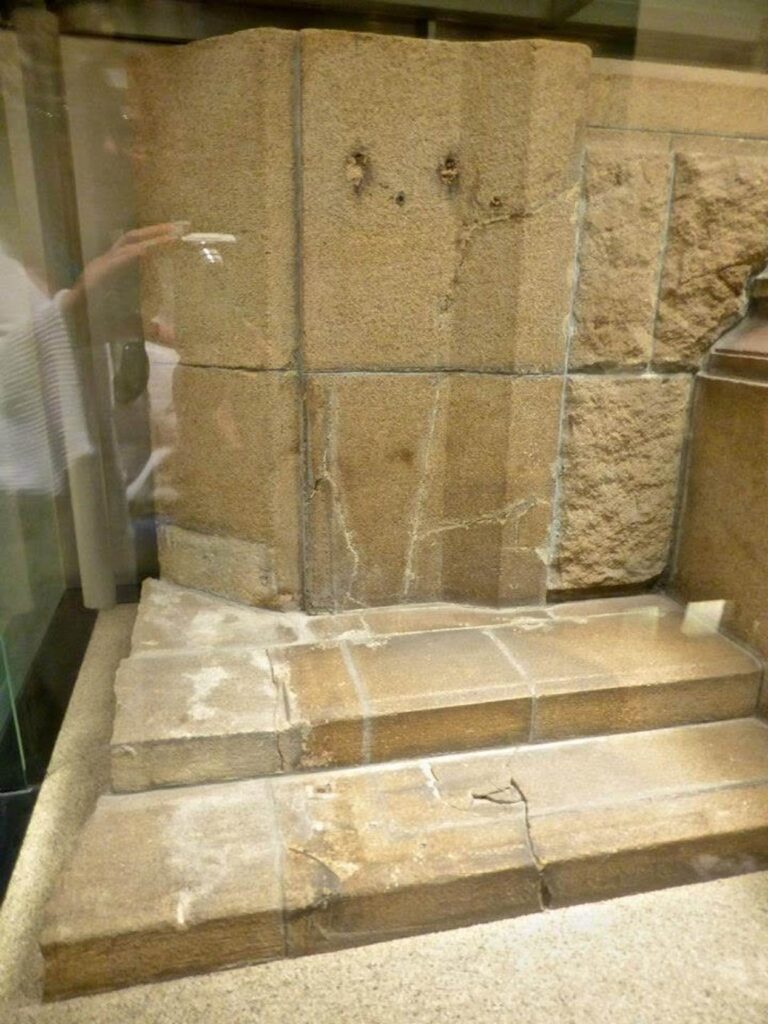
Just before the atomic blast, a person was sitting on the steps of the Sumitomo bank, waiting for the bank to open. The heat of the blast created a shadow (center) where the person was sitting and bleached the stone where the rays hit full force. The docent told us that the shadow used to be darker than it is now.
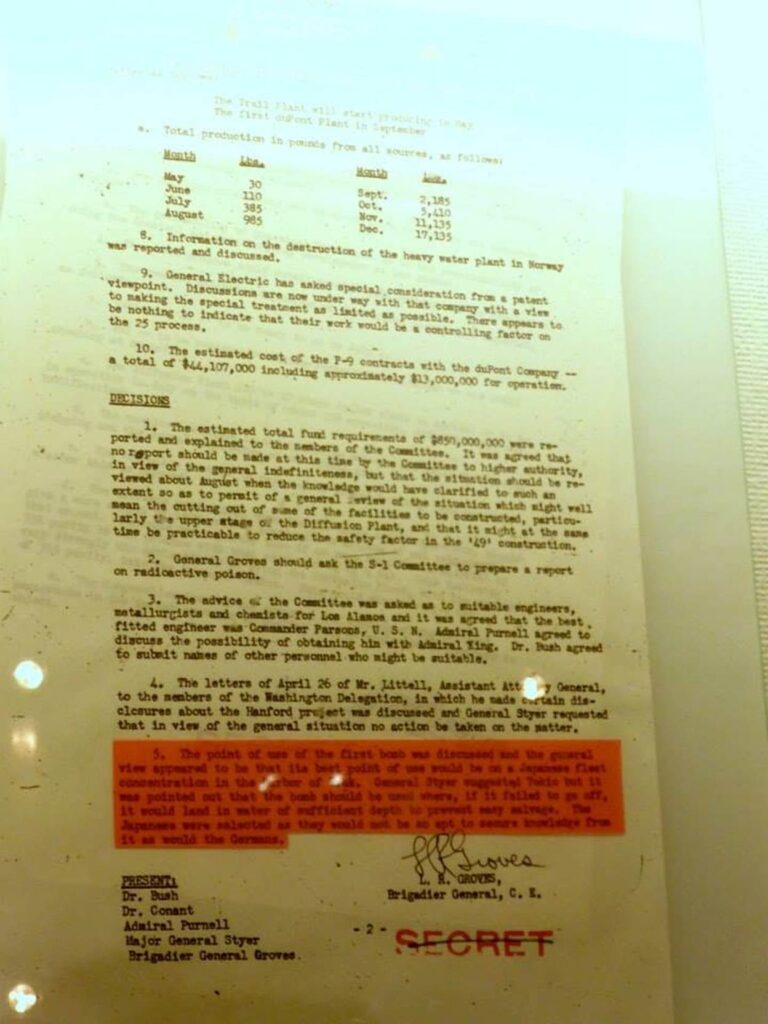
In school, we were taught that the U.S. dropped the bomb as a way of ending the war with the least number of casualties. The Japanese said it was used to justify the enormous cost of its development ($3 billion in 1940s dollars). Although work originally started on the bomb with intent to use it on the Germans before they could use it on us, this 1943 memo shows that the decision to use it on Japan was made before the Germans were defeated because the Japanese were less likely to benefit from reverse engineering if the bomb turned out to be a dud.
The A-Bomb Dome, Peace Memorial Park, the Registry Cenotaph, the Children’s Peace Memorial, Hondori Street, and the former Bank of Japan building are all outdoors and can be seen at all hours.
The Peace Memorial Museum is located within the boundaries of Peace Memorial Park at 1-2 Nakajimama-cho, Naka-ku, Hiroshima City. It has variable hours depending upon the time of year, but it is open roughly from 7:30am to 7:00pm daily most of the year. It is closed on December 30th and 31st. Adult admission is 200¥, 100¥ for seniors.
July 18, 2014