

I had an awesome private guide today, a diamond trader here in Antwerp who took me “behind the scenes” to teach me the ins and outs of the diamond business. Let me see how much I can remember to share with you.
In 1871, Cecil Rhodes was a young man who hastened to the newly-discovered diamond fields near the south African town of Kimberly. Just like California’s gold rush two decades earlier, it was a “Wild West” atmosphere. One person would abandon a claim that appeared to be worthless, only for the next person to pull out big diamonds a few feet farther in. Money was both made and spent fast. Gambling and drinking were common.
With the backing of financiers in London, he began buying out the other diamond claims. One of these was a small mining company called DeBeers. By 1888, he had bought out all of the other companies and had sole control of the Kimberly diamond field. His company was mining 90% of the world’s diamonds. They functioned as a cartel: if you wanted diamonds, you had to deal with DeBeers.
Henri, the diamond trader I met today, told me how diamond traders were assigned shipments of rough diamonds on a regular basis. Each monthly box was worth $5 million or so. The traders would have to show up in London with cash in hand and only then would they actually get to take a look at what they were getting. If they didn’t like the quality of what they were being offered, they could refuse their monthly box – but they could only do that once. If they declined twice, DeBeers cut them off altogether and allowed a new trader to take his place.
DeBeers’ hold on the diamond market has slipped a bit over the years. Miners in some of the African countries where the diamonds were produced wanted to have their own companies and their own local control. They started selling half of their diamonds to DeBeers (these must come from mines separate from what DeBeers controls) and kept half to develop their own companies. These days, diamonds typically flow from one of the African countries or Russia (which also has extensive fields, more on that later) through middlemen rough diamond traders to India. Because of their lower labor costs, India has now become the world’s center for cutting and polishing rough diamonds. The finished diamonds then move back to the diamond traders to sell to their various clients.
Now, we’ve all heard of “blood diamonds”. To counteract that, the diamond industry established the Kimberly Certificate, which traces the provenance of each diamond. A certificate is issued if it can be proven that the diamond is sourced from a non-conflict region. Oh, I forgot to mention that the industry also formed (somewhere around 1940, I think) professional diamond grading systems. In the United States, it’s known as the Gemological Institute of America. This universal grading system assesses each diamond on the 4 C’s (cut, clarity, color, and carat weight) as well as additional factors. That’s another certificate that accompanies the finished diamonds that are being sold.
Because of the conflict with Ukraine, Russia has become a pariah on the international diamond scene. You can’t get a Kimberly Certificate on Russian diamonds. And no bank wants to be seen sending wire transfers of money to Russia for diamond sales. That doesn’t mean that Russia doesn’t get to sell any diamonds, though. They just take a murkier route from Russia to places like Angola that are Russia-friendly, to China and/or Hong Kong. Then, the diamonds still get sold.
How does someone like my guide know that he’s buying untainted diamonds? He tells me that the diamond community is relatively small and much relies on reputation. He deals with companies known to him as honorable, or vouched for by another trader he knows well. His reputation and livelihood depends on being known as a man of integrity.
One of the other issues facing the diamond industry today is the rise in quantity and quality of lab-grown diamonds. Under a dealer’s loupe, the natural diamond and the lab-grown diamond looks identical. It takes a microscope to see the difference. There’s a lot of money riding on knowing which is which. Let’s say you have two diamonds of equal quality and size, but one is natural and one is lab-grown. The natural diamond may sell for $5,000, but the lab-grown one is worth only $400, perhaps a $1,000 at best. There are now machines that can distinguish between the two, but they cost about $200,000.
Another fascinating machine he showed me is one that assesses the quality of a rough diamond and advises the buyer (or cutter) on how to make the most of the rough diamond. It looks at the inclusions in the stone and calculates how to cut it to make the biggest, best quality finished diamonds out of the rough diamond. Even then, you still lose about 40% of the rough diamond in the cutting process.
I got to see some rough diamonds and then look at them under the jeweler’s loupe – something I’ve never had the opportunity to do before. I soon learned to spot the inclusions. Then we moved on to finished diamonds. I’ll never be a diamond grader, but I did get to see examples of diamonds of lower quality vs ones of higher quality. The best one I saw was 2+ carats, very white, and damned near flawless. That one was worth nearly $50,000.
When you disembark from the central train station in Antwerp and cross the street, you’re immediately a phalanx of diamond jewelry stores. This is the beginning of the city’s diamond district. Antwerp sees about 80% of the world’s rough diamonds and 50% of its finished diamonds pass through the city.

This unassuming-looking building is the Antwerp World Diamond Center. Every diamond that enters Belgium goes through customs in the basement, where customs officials ensure that the description of the shipment matches what’s contained in the package.
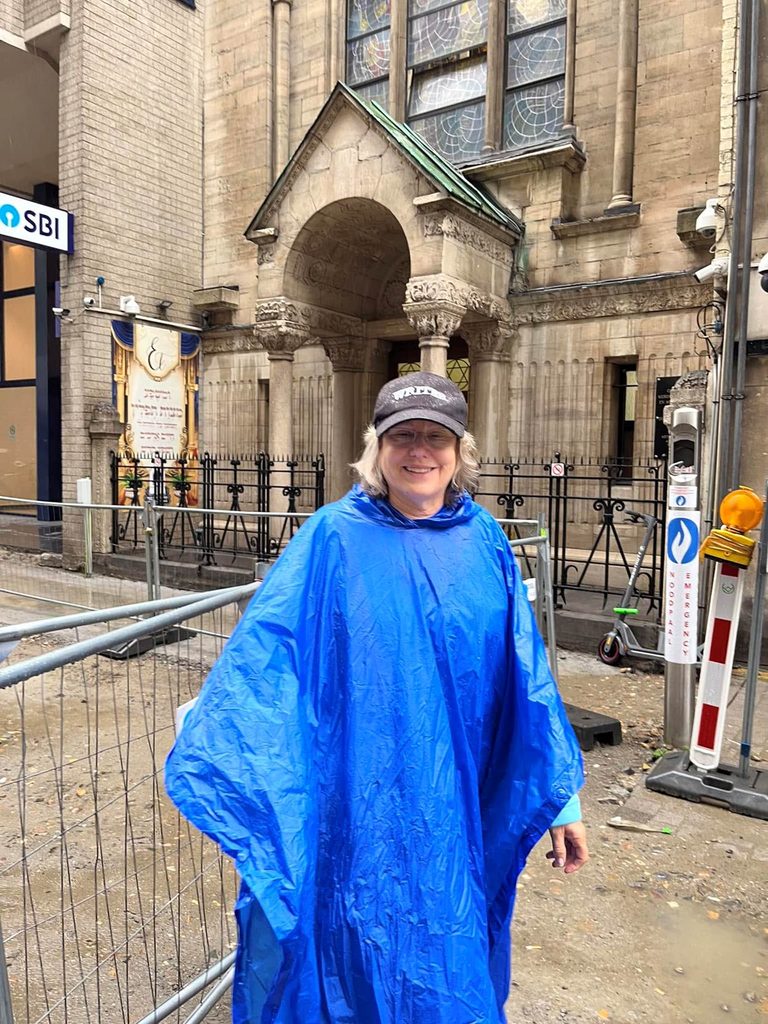
I’m in front of the Portuguese synagogue. Most of the diamond traders are Jewish. When Spain started evicting Jews, they moved to Portugal, which offered freedom of religion. Over the centuries, many of those Jewish diamond traders migrated to Amsterdam and Antwerp.
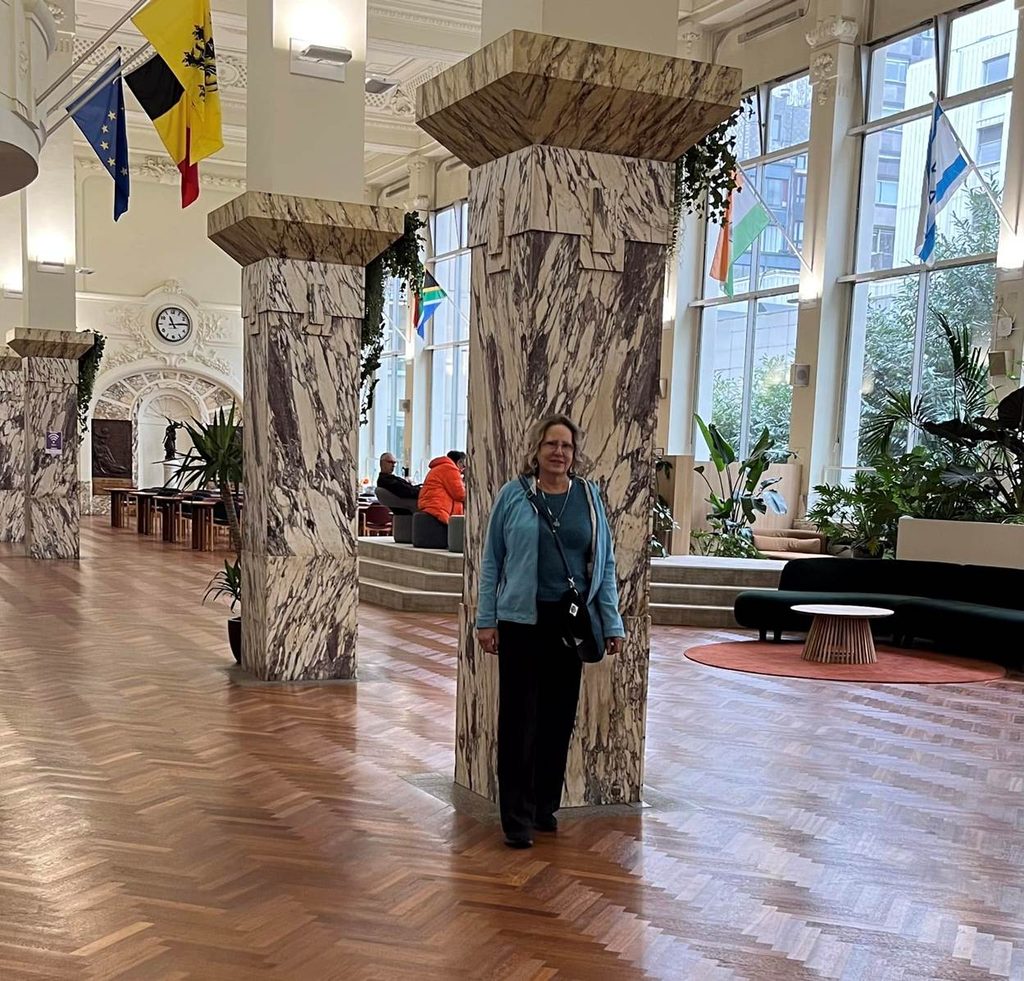
If you’ve watched the Netflix series “Rough Diamonds”, this room may look familiar because various scenes were filmed here. We’re in the diamond “bourse” or trading building. On long tables behind me, men with briefcases of money meet men (or women) with trays of diamonds, who then haggle over price and quality in a safe location. I was only able to get in here because I was the guest of an official diamond trader. Upstairs in this building is where many of Antwerp’s diamond traders have their offices.
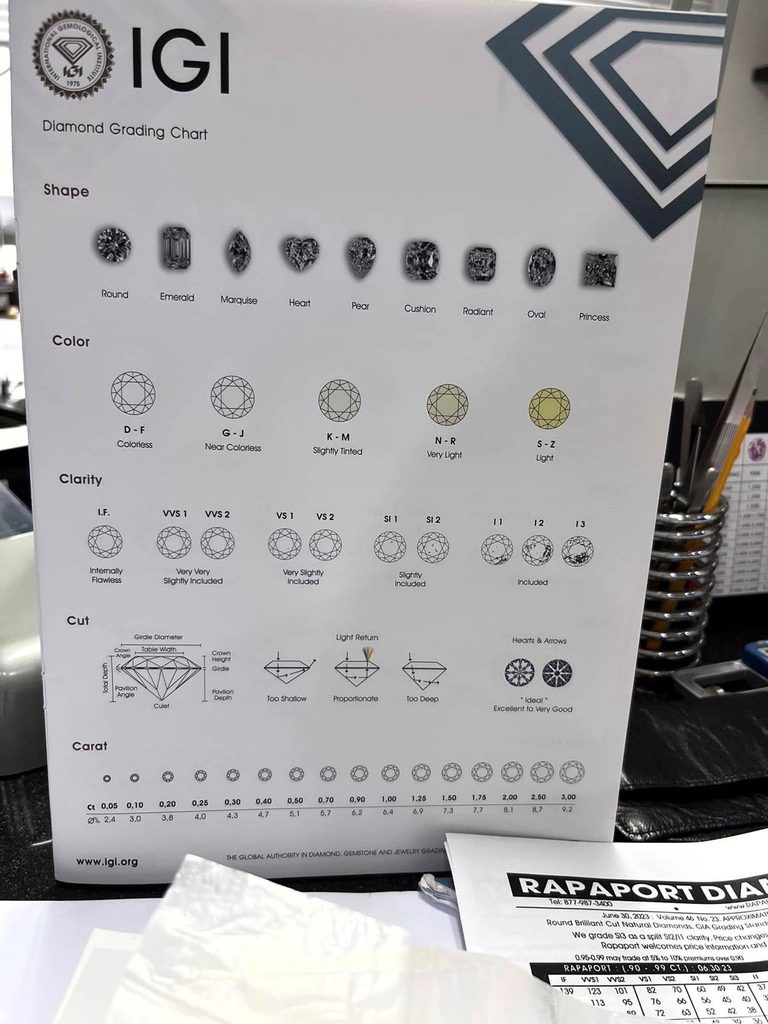
Official diamond grading scale. For example, a diamond may be graded for color from D (ultra-white) to Z (strongly colored but not colored enough to count as a rarer colored diamond).
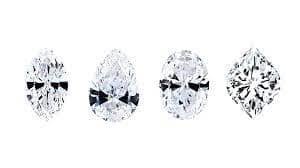
The round (or briliant) cut is the most common. It also shows off the diamond’s fire best. But there are other shapes, like oval, pear, marquis, and heart. The problem with the non-round cuts is that they’re prone to showing shadows within the diamond, creating what’s called the “bow tie effect”. The shadows are mitigated somewhat when the diamond is mounted on a ring, but it does affect its value.
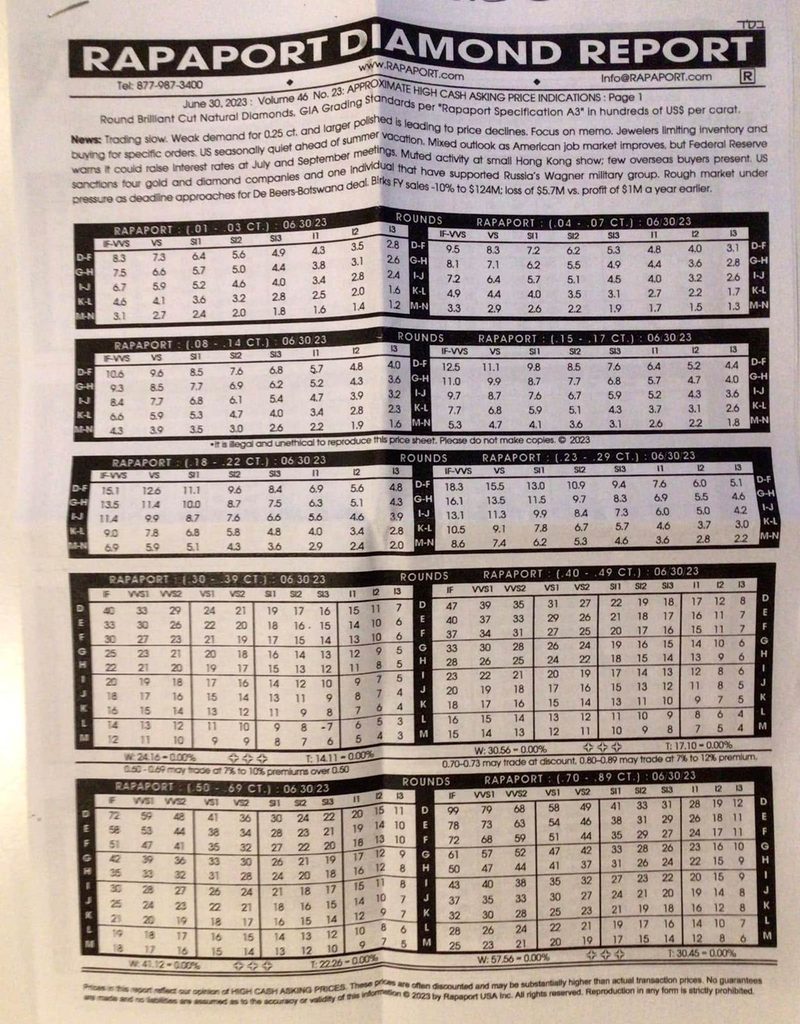
These price sheets come out weekly, and this is what diamond traders use to value what they’re buying or selling.
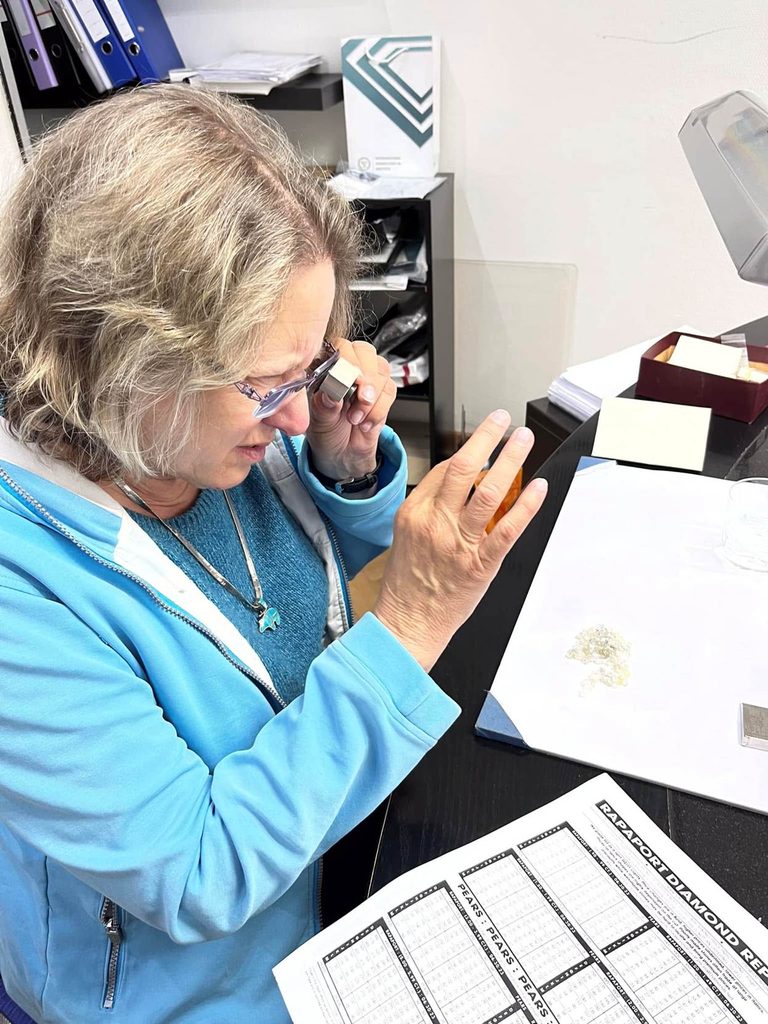
I’m looking at some rough diamonds with a jeweler’s loupe
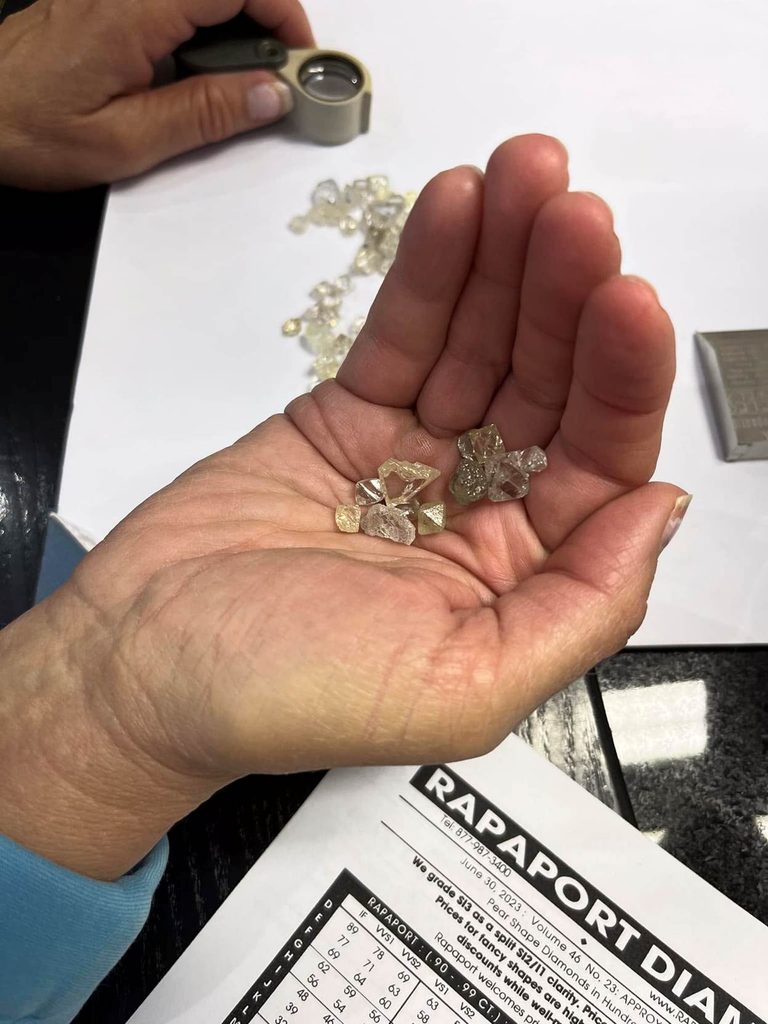
I have a handful of rough diamonds here.
(colored diamonds video)
A short video showing some artificially colored diamonds. They’re natural diamonds, not lab-created, but the coloring is artificial. Pink is the rarest and most valuable, yellow is more common.
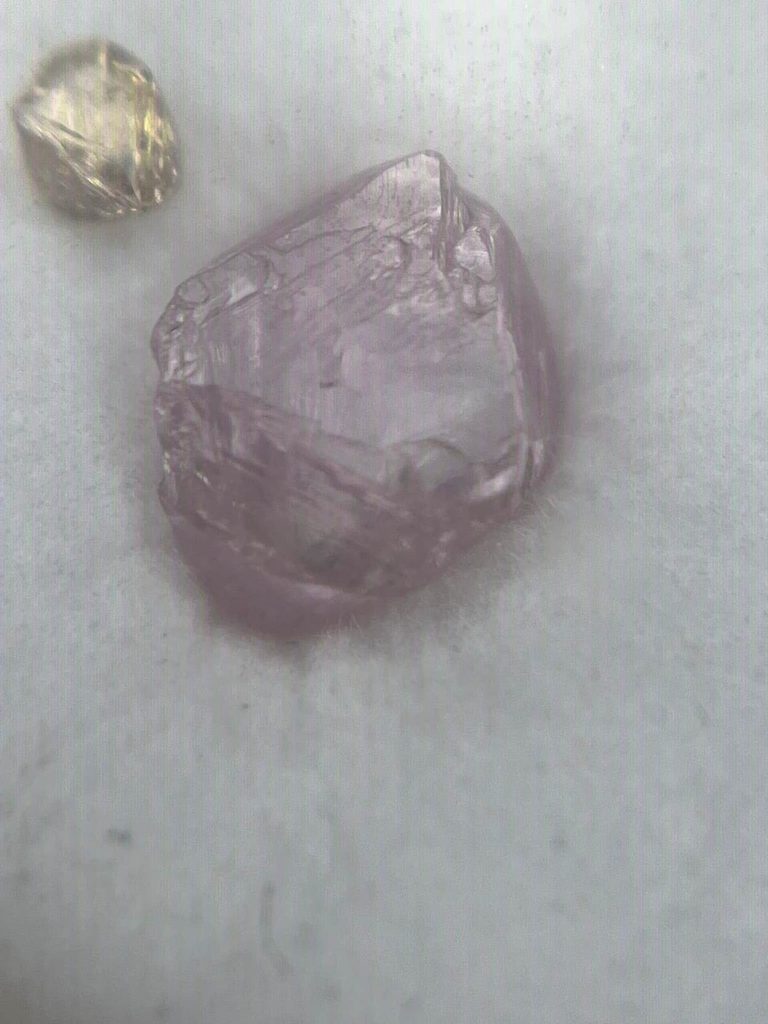
A pink and a yellow diamond as seen under the loupe.

This is one of the machines that can detect lab-grown vs natural diamonds.
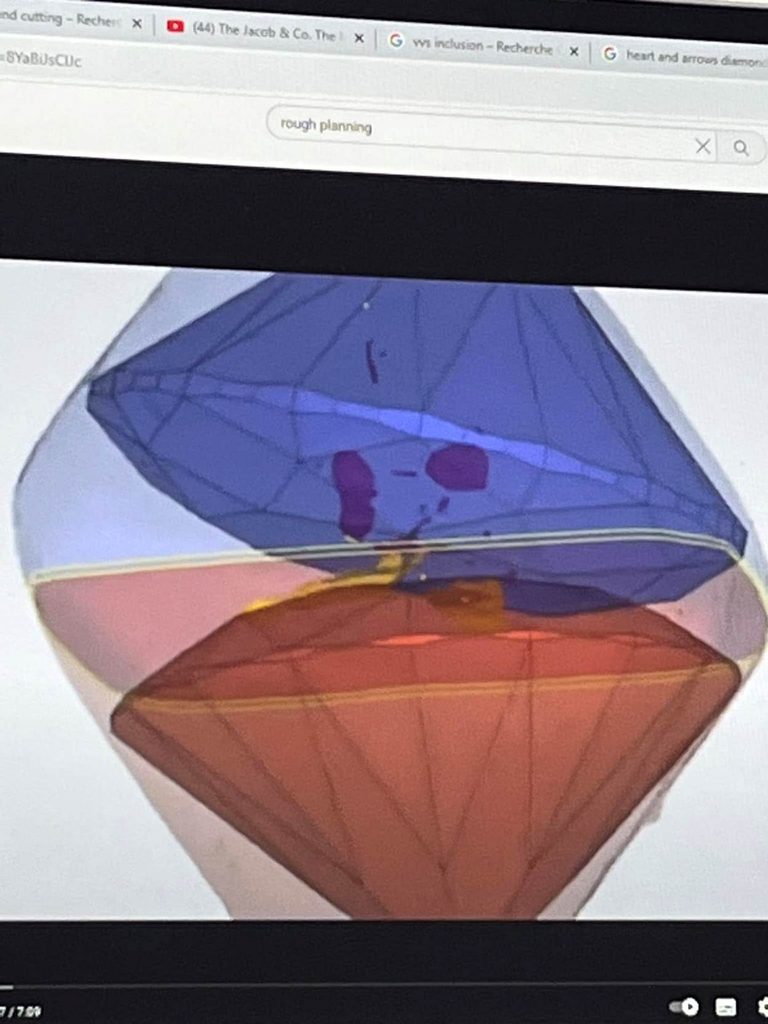
This is a diagram of what you’d see from the machine that assesses rough diamonds. It’s advising that the best use of the rough diamond is to cut along that yellow line in the middle and create two diamonds. The top one will have some fairly obvious inclusions, the bottom one will be of much higher quality.
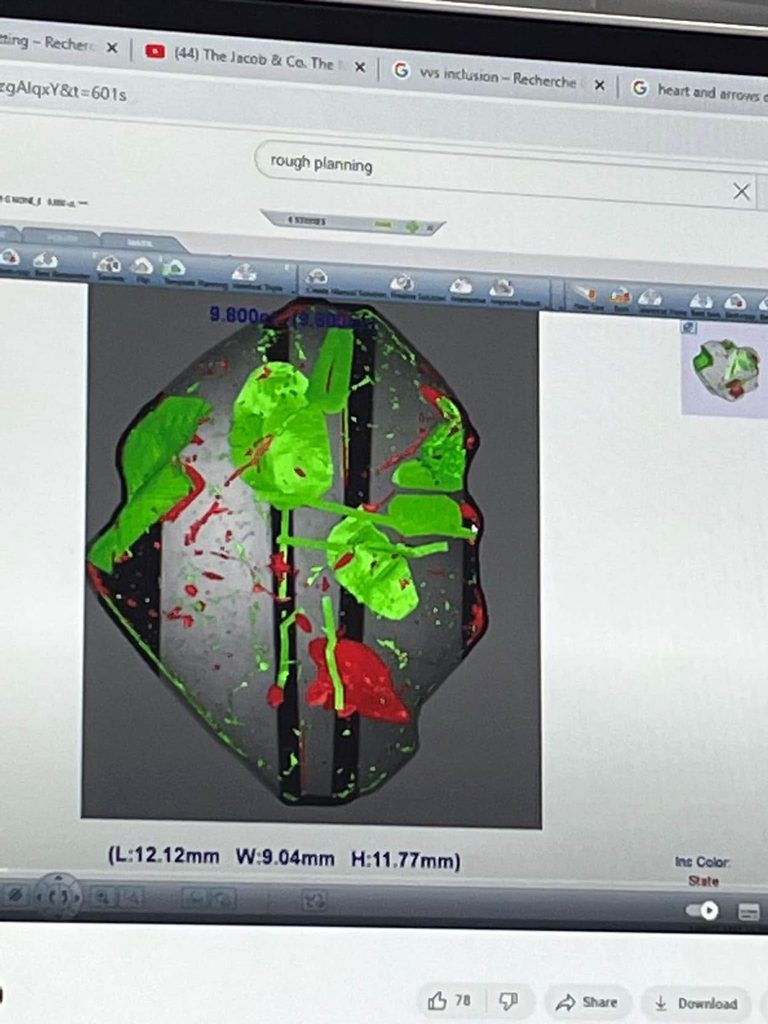
This picture shows the flaws in a rough diamond. I think the green areas were the white inclusions around the edges of the diamond where it has cracks, the red areas would look like black inclusions (flaws) under the jeweler’s loupe.