

The Star Spangled Banner Flag House was the home of Mary Pickersgill, the seamstress who sewed the flag which withstood the Battle of Baltimore and inspired Francis Scott Key to write “The Star Spangled Banner.” The iconic flag was 30′ x 42′ (9.1 x 12.8m). Each stripe was 2′ (0.6m) wide and each star was 2′ (0.6m) from tip to tip. Mrs. Pickersgill was paid $406 for her six weeks of effort — equivalent to ~$9,000 today.
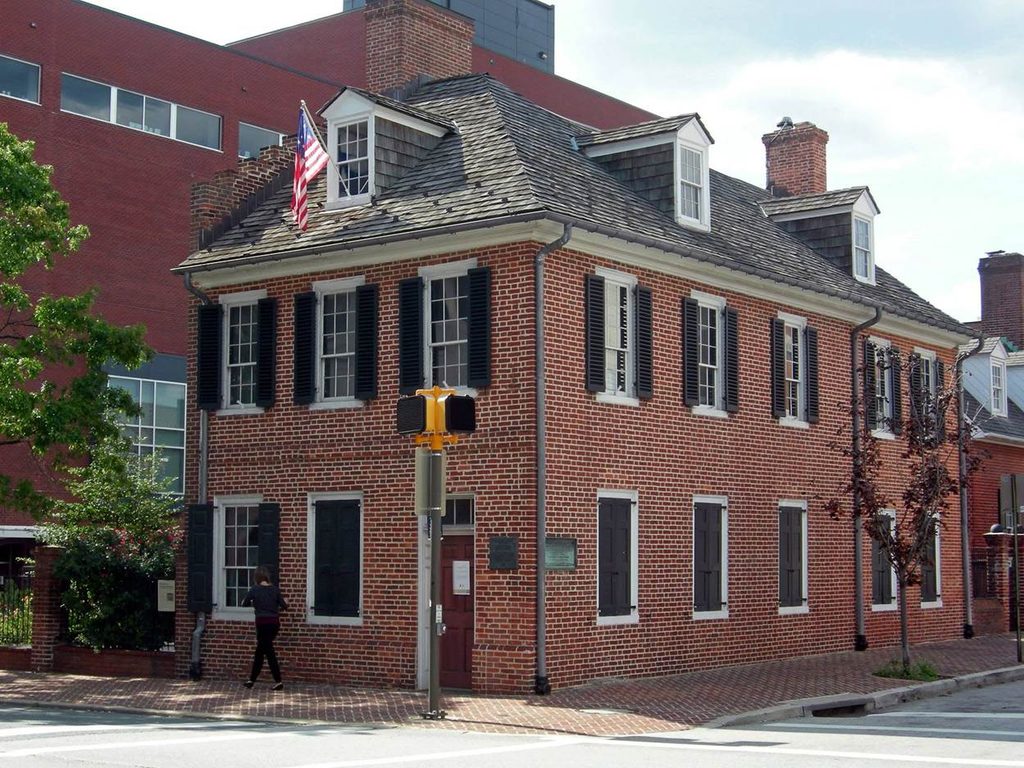
The home of Mary Pickersgill, who sewed the Star Spangled Banner. The flag was larger than her house. She may have sewed the flag here in the early stages, but it was completed in the large room of a nearby brewery.
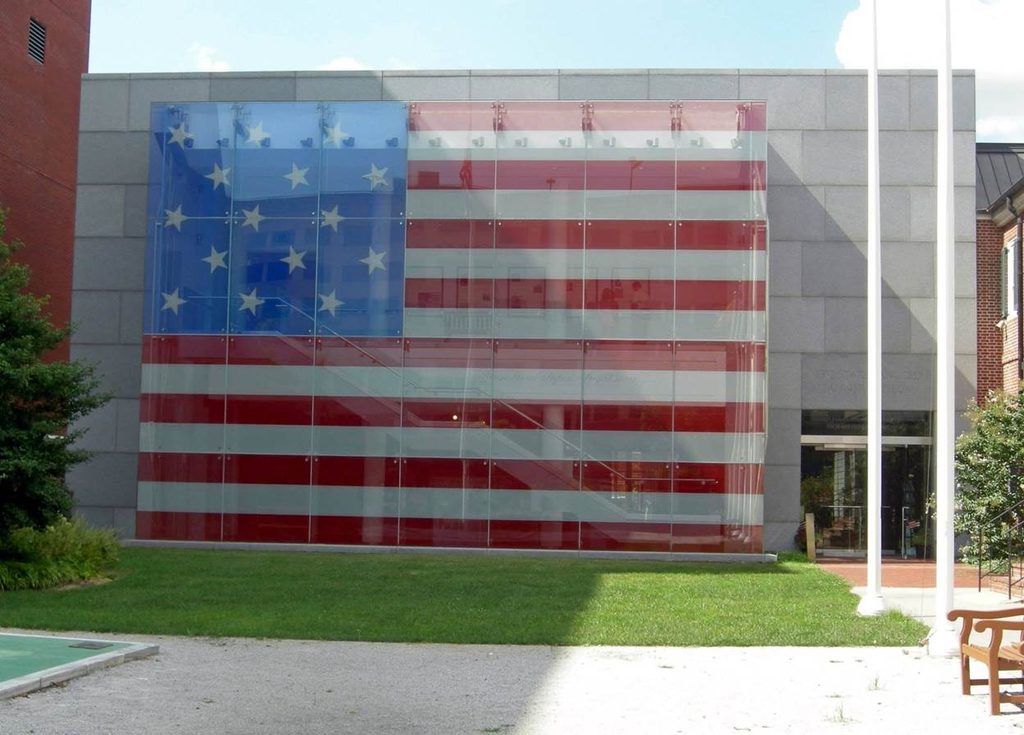
The flag shown on the side of this museum is actual size. Note that it has 15 stars.
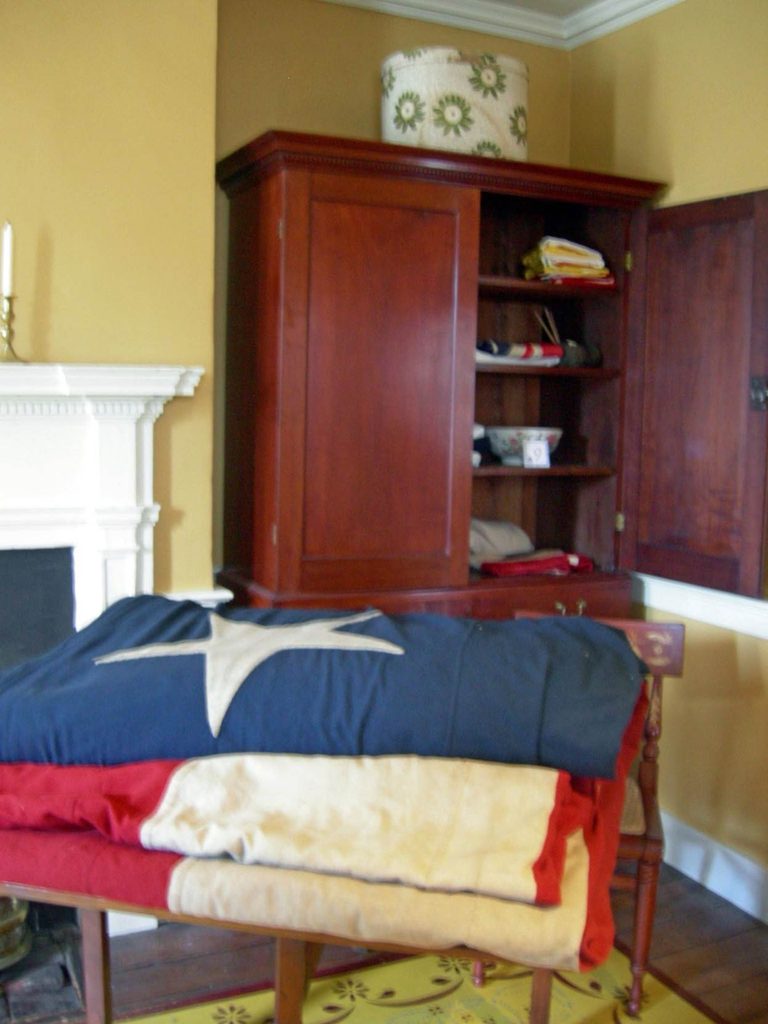
This was Mary’s sample cabinet. It would have contained fabric samples and examples of completed flags. Wool and silk were the preferred materials: light enough to fly well, strong enough to withstand strong winds.
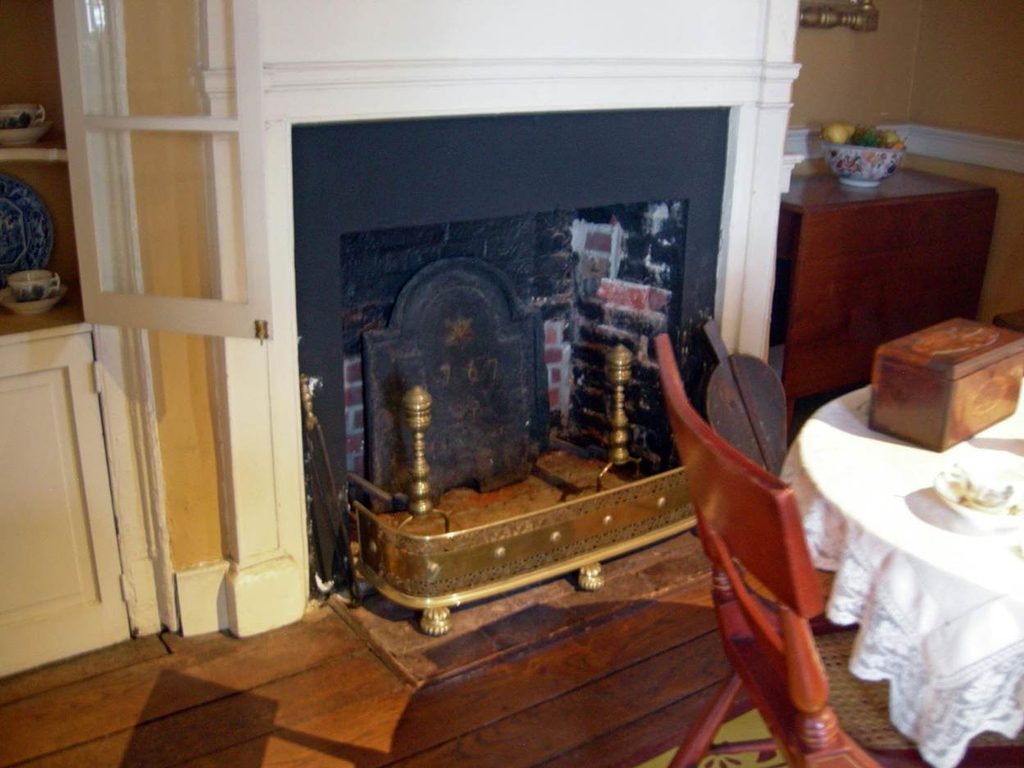
Fire irons like these absorbed the heat of the fire during the day. After the fire was put out for the night, heat would radiate from the fire irons for several hours.
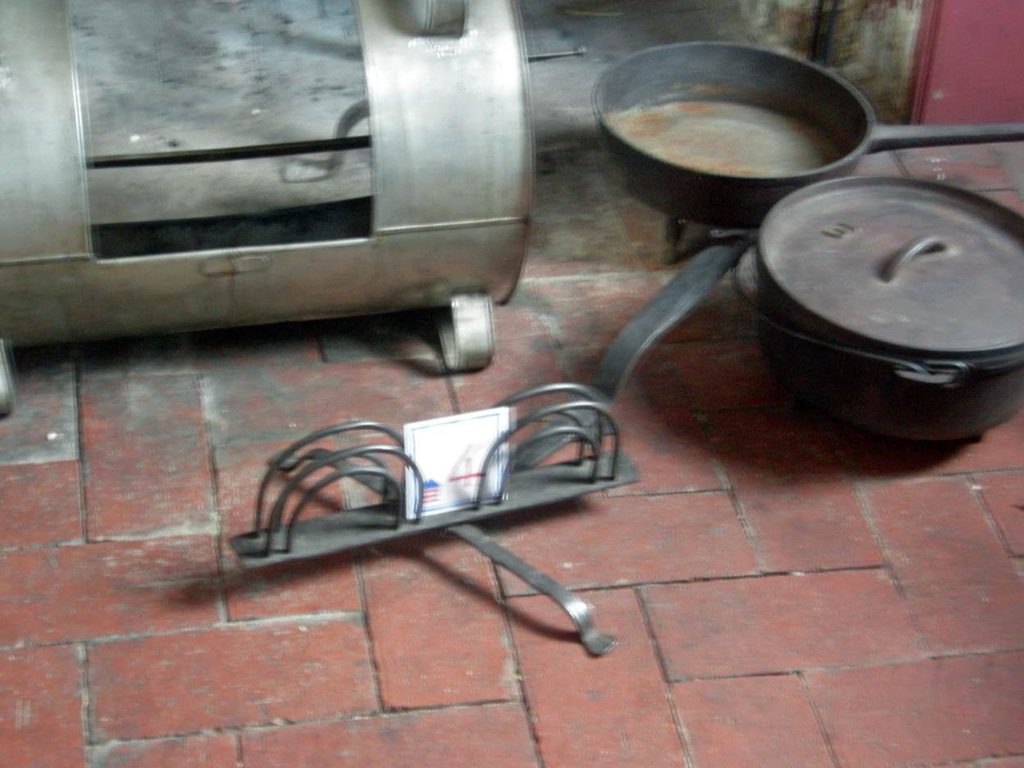
This kick-toaster was the latest technology in the early 1800s. The toaster was placed in front of the fire. When one side was browned sufficiently, you just kicked the device and the toaster would spin so the other side could get toasted, too.
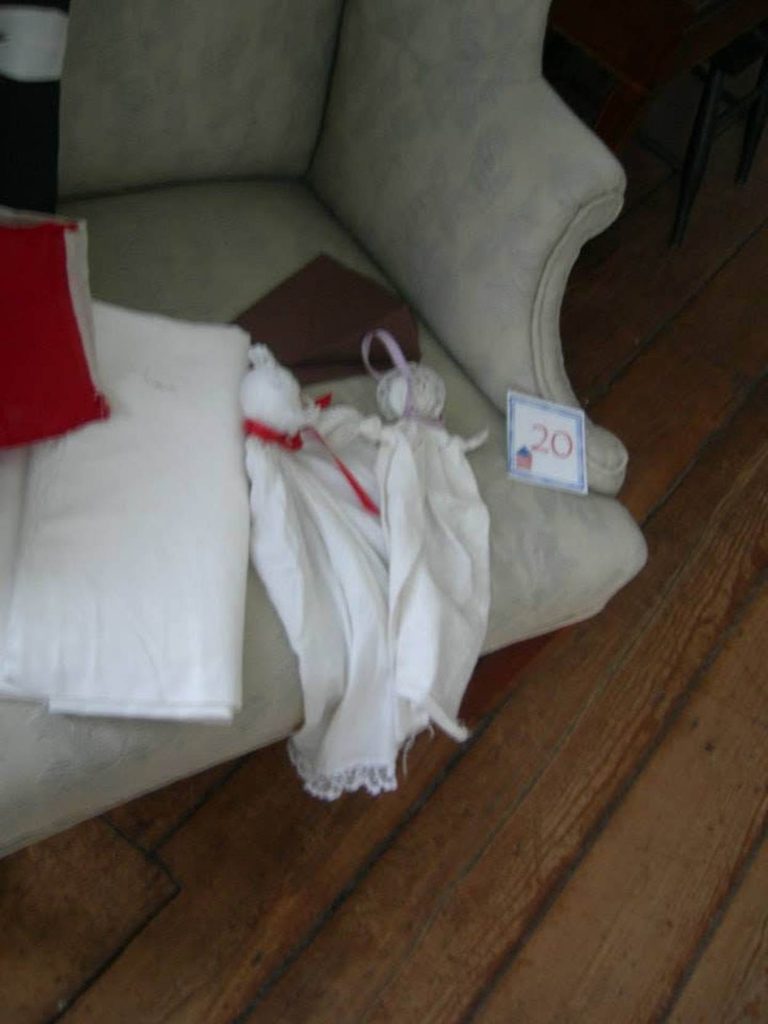
These cloth “church dolls” allowed little girls to play quietly while in church.
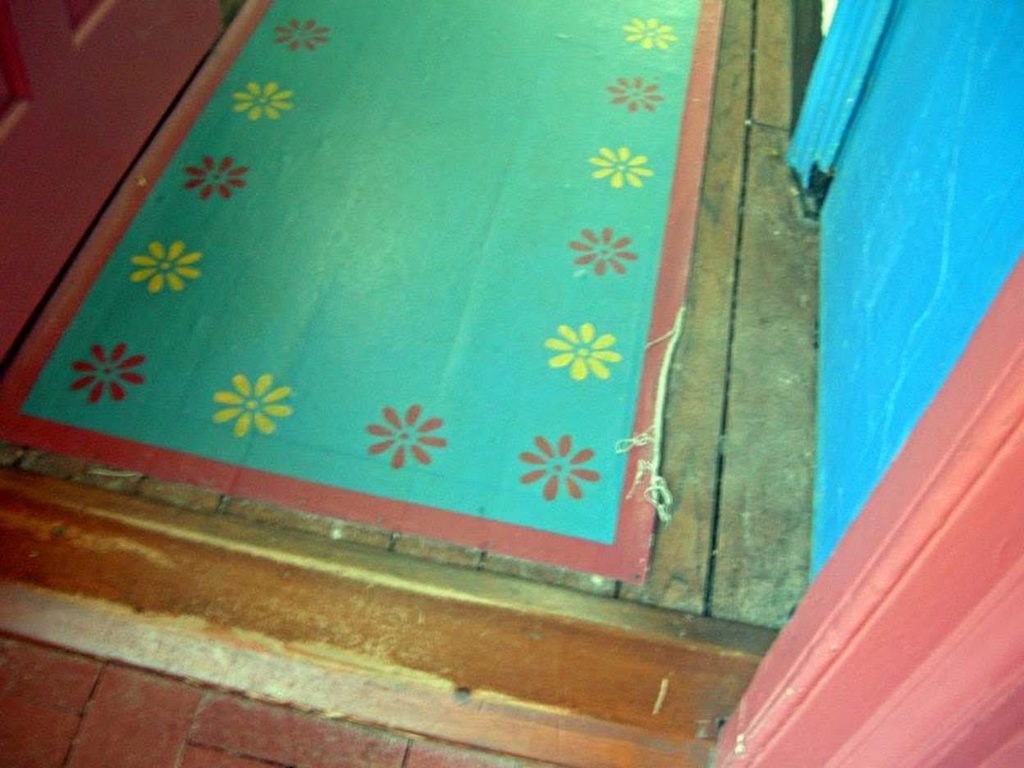
Rugs were extremely expensive in the early 1800s, so many families purchased and then painted sail canvas to make floor mats and floor runners like this one.
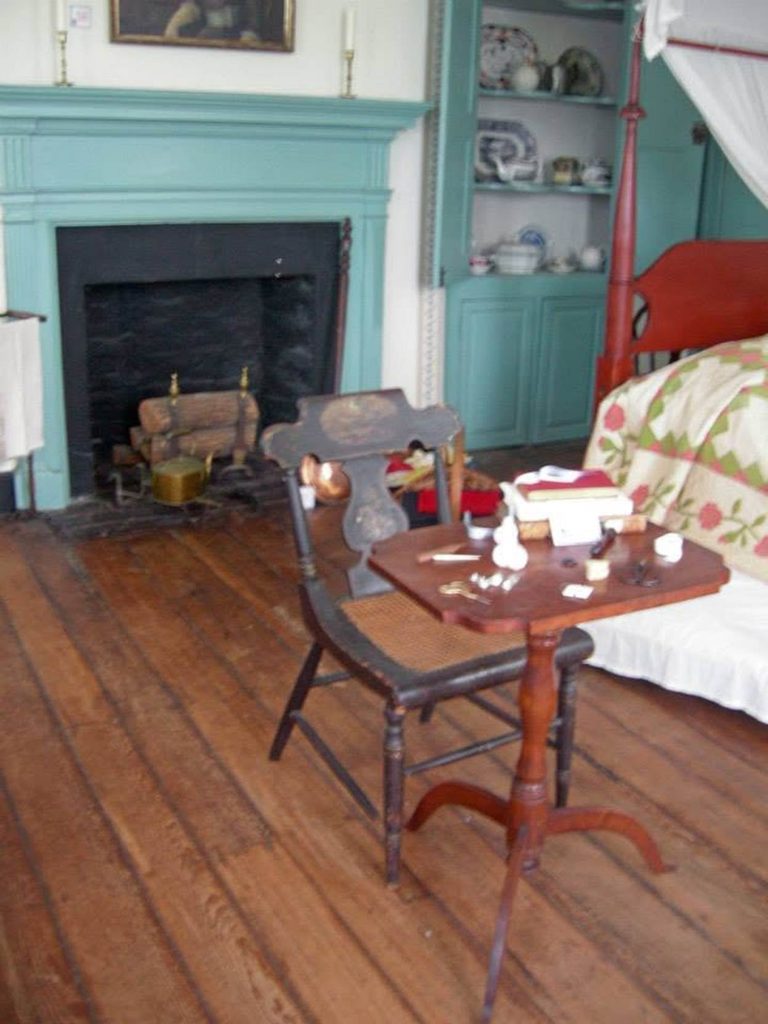
Mary Pickersgill would have used this sewing chair and table for the early stages of the flag.
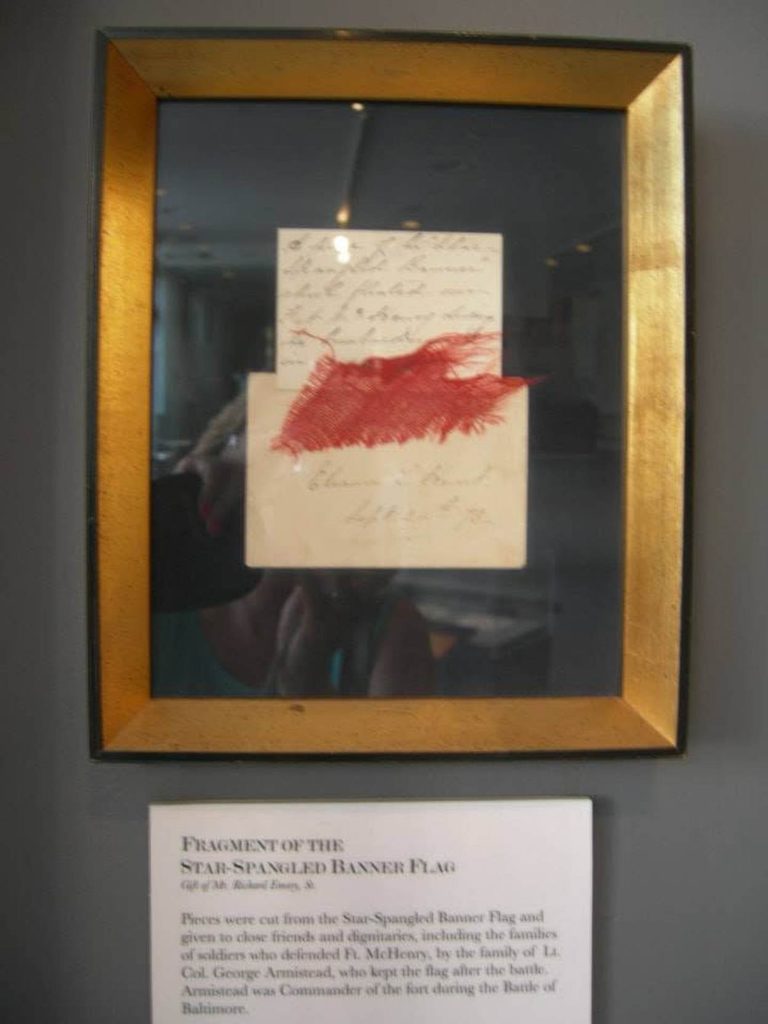
A fragment of the original Star Spangled Banner. The original resides in the Smithsonian, where the fragile material is undergoing conservation measures.
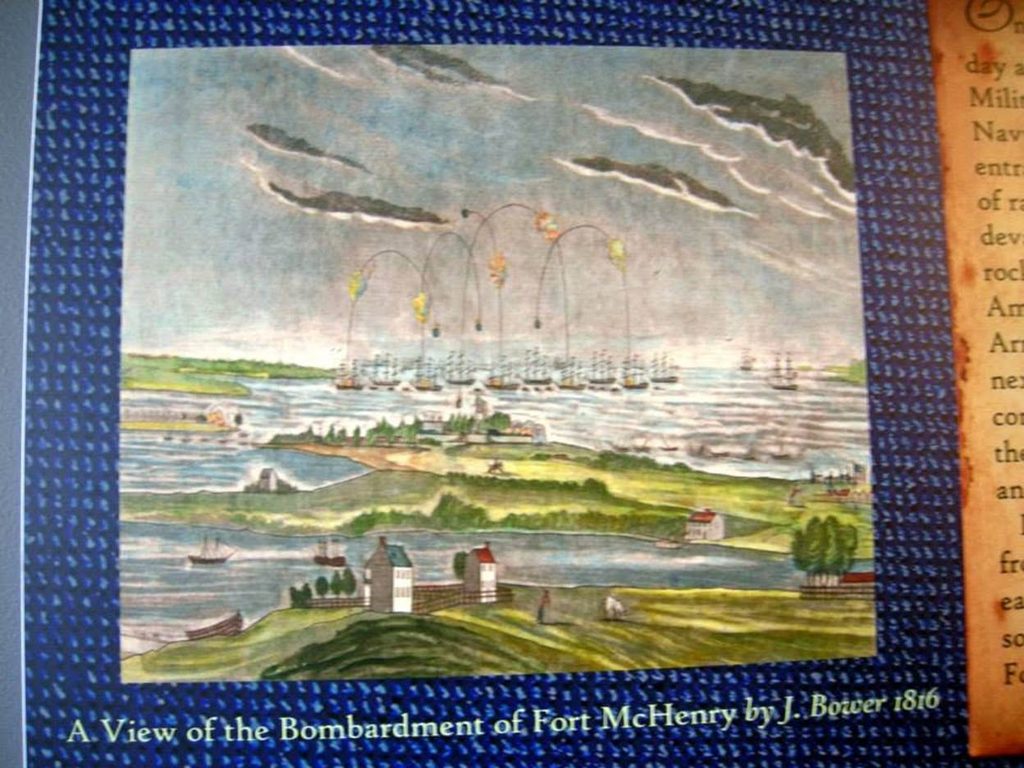
An artist’s conception of the Battle of Baltimore.
August 24, 2013