

In my mind, the seeds of The Troubles were planted in 1609. Up until then, the Irish province of Ulster was primarily Catholic, Gaelic-speaking, with a rural agriculture-based economy. It was also, crucially, the province most independent of English control. But King James I decided that he should consolidate control over the island. English rulers already had sway over much of the southern portion of Ireland. King James wanted to “plant” English aristocracy in Northern Ireland and eliminate those pesky Irish, who he saw as Papists and barbarians. If this sounds similar to English attitudes towards American Indians, I guess we shouldn’t be surprised.
But I think I need to start another two decades earlier. In 1593, an Irish rebellion rose up against English rule in Northern Ireland in what would become known as the Nine Years War. Although the Irish (and their Spanish allies) won a number of battles, the English won a decisive victory in the siege of Kinsale. The war ended a year later, and many of the defeated northern lords left Ireland, an event known as The Flight of the Earls.
King James capitalized on the departure of the Irish earls by confiscating their land and then awarding it to loyal English-speaking Protestants, primarily Presbyterian Lowlanders from Scotland and Anglican Northerners from England. Note that James I was king of Scotland before he also became king of England, so he needed to reward his followers and allies. This practice of awarding land grants to loyal Protestant settlers became known as the Ulster Plantation.
The lasting impact of the Ulster Plantation was to create a permanent Protestant ruling class and the suppression of the Irish language, culture, and people.
The walled city of Londonderry was created shortly after the Plantation began. The English lived within the walls. The Catholics were relegated to a former marshland area north and west of the walls, which came to be known as the Bogside. The Bogside was essentially a ghetto with too many people crammed into too little housing.
Flash-forward a few centuries. In 1922, the southern portion of Ireland won independence from England but Ulster, dominated by English-loyal Protestants, elected to stay with England. At that time, two-thirds of the population were Protestant and one-third were Catholic. The best jobs went to Protestants. Between gerrymandering, discriminatory voting laws, and economic power, English loyalists dominated politics and severely minimized Catholic representation.
Catholics complained that they were discriminated against in the allocation of public housing and appointments to public service jobs. Catholics saw themselves as Irish and wanted Northern Ireland to become part of the Irish republic. Most Protestants considered themselves British and feared that they would lose their culture and status if they were incorporated into Ireland.
By the 1960s, though, the demographics had changed. By 1961, Derry was two-thirds Catholic and one-third Protestant. Despite their majority, the Catholics were still ruled by the Protestant-led Ulster Unionist Party.
Also during the 1960s, Catholic activists saw civil rights actions going on in France, Prague, and the United States. The catalytic event for Northern Ireland occurred on October 5, 1968, in Derry. A peaceful march was planned to protest discrimination and gerrymandering, but the march was banned after Unionists announced a countermarch. The NICRA (Northern Ireland Civil Rights Association) decided to go ahead with their march, anyway, but were violently suppressed with police batons and water cannons.
Ten months later, another march in Derry, on August 12, 1969, erupted into three days of rioting that became known as the Battle of Bogside. The clashes spread to Belfast and other cities within Northern Ireland. The Bogside became a no-go zone for the British Army known as Free Derry.
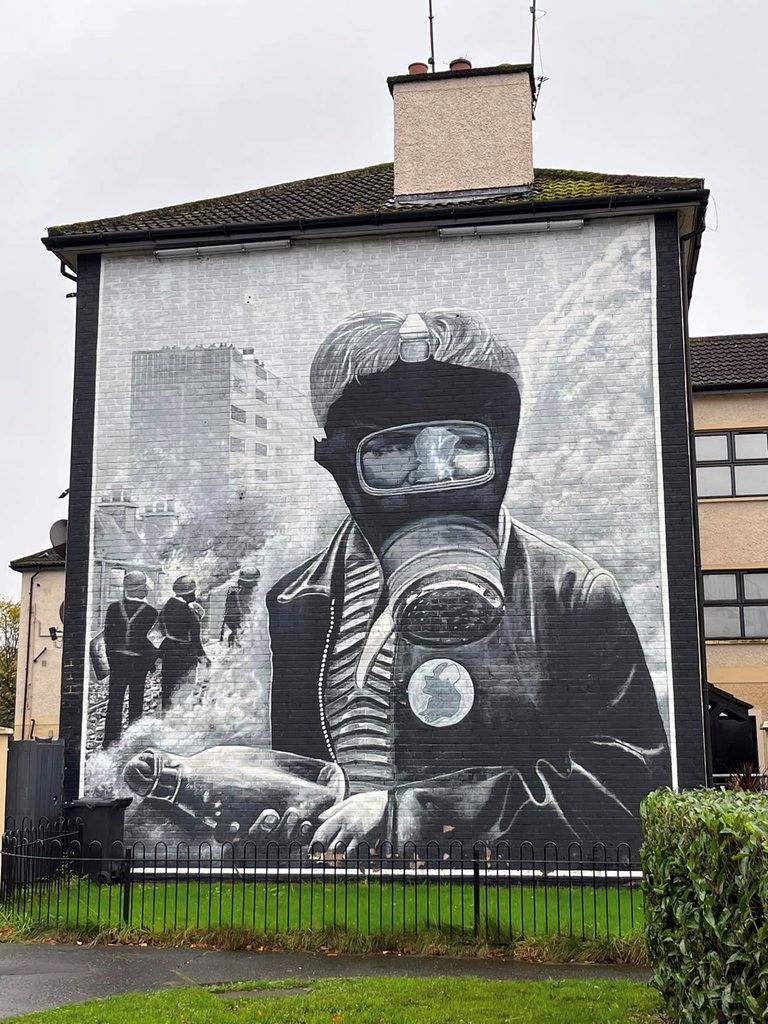
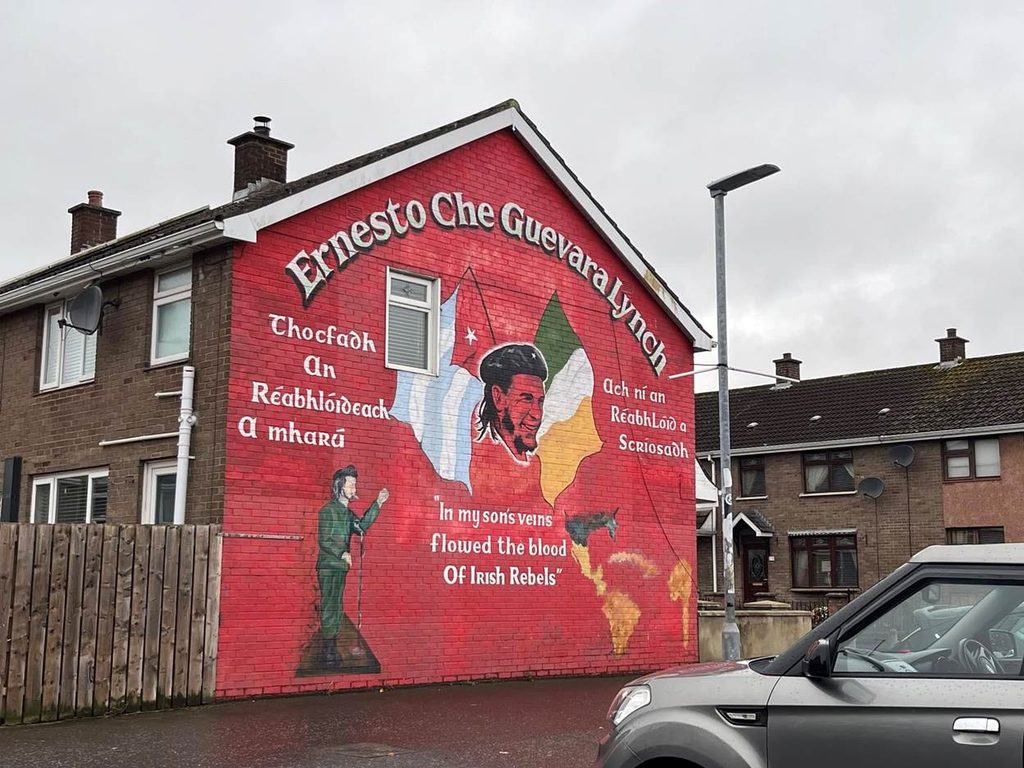
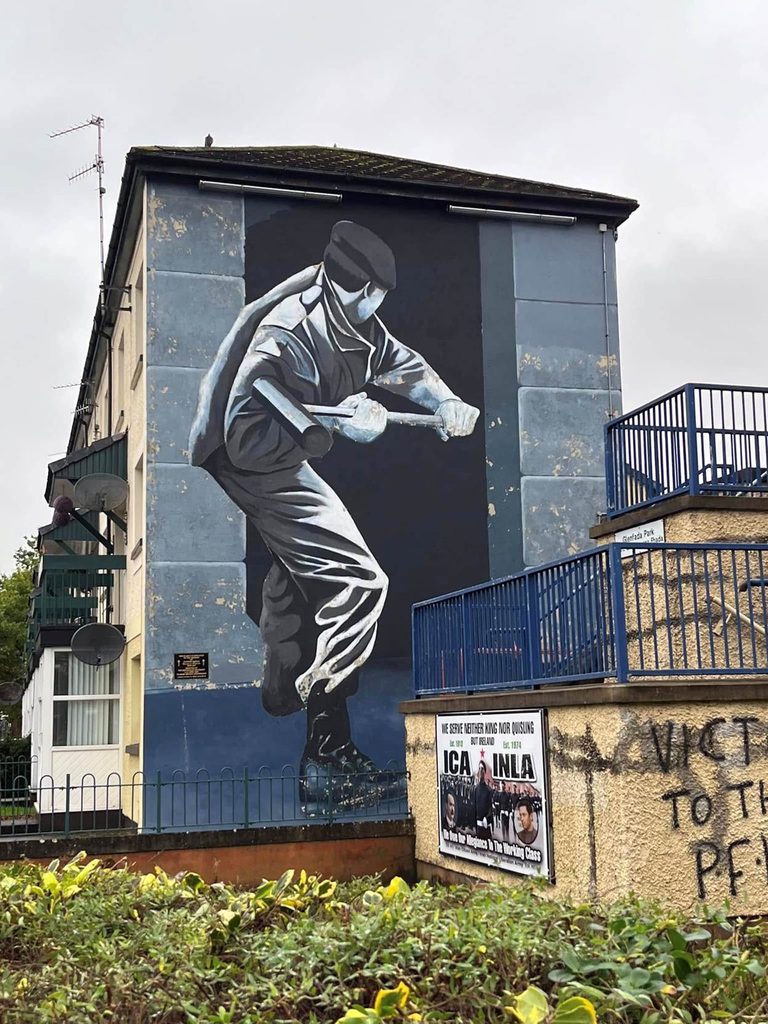
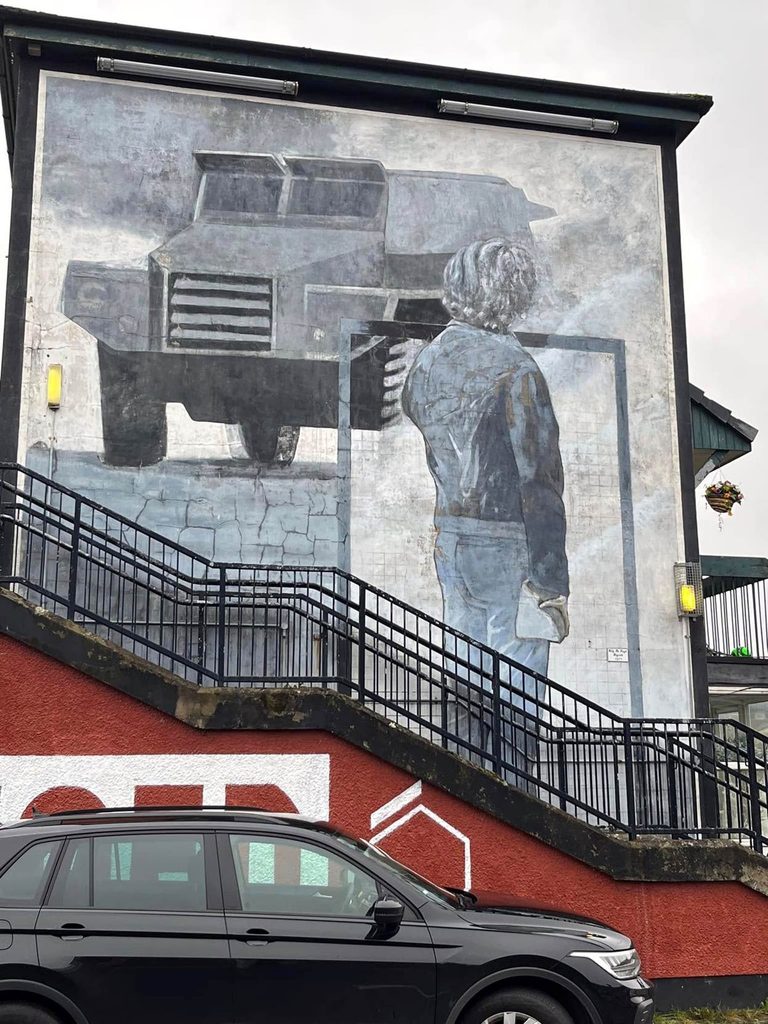
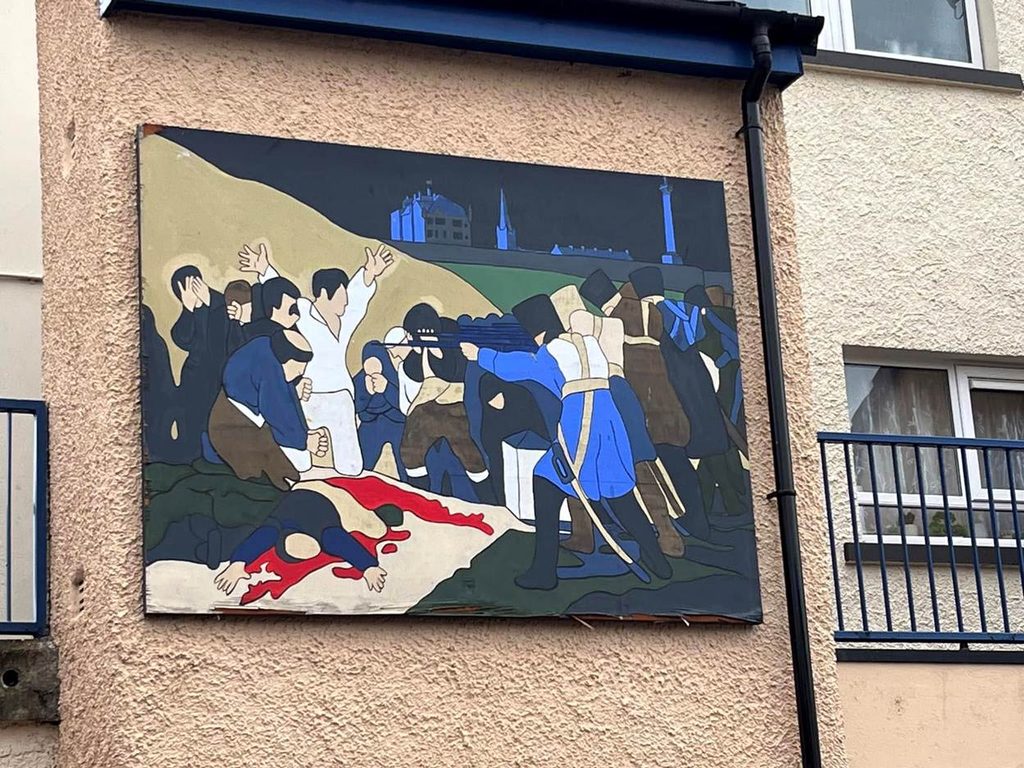
The Troubles had begun. Reports of rock-throwing, petrol bombs, the use of CS gas and rubber bullets, shrapnel, batons, and car bombings became regular announcements on the evening news. (I can remember weekly Catholic newspapers in the vestibule of my church, which regularly reported on the latest outrages in Ulster). Northern Ireland would be rocked by these battles for another 30 years, until a peace treaty was signed in 1999. Today, both Belfast and Derry bear the scars of their past, with murals commemorating alternating outrages that occurred duringn the years of The Troubles. The murals and memorials you see here come from the Bogside area of Derry, mostly along Rossville Road.
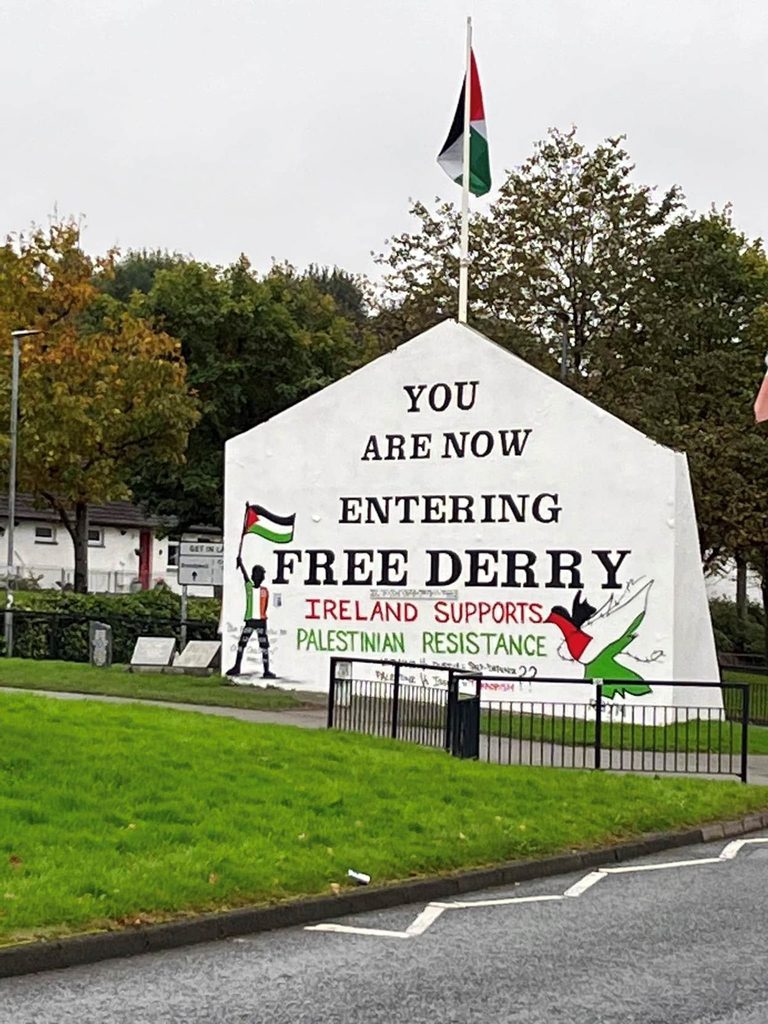
During the early days of The Troubles, the British Army considered the area beyond this sign to be a no-go zone. The sign is regularly modified to include tributes to marginalized groups (such as the Palestinians as you see here) or to celebrate civil rights (such as Gay Pride).
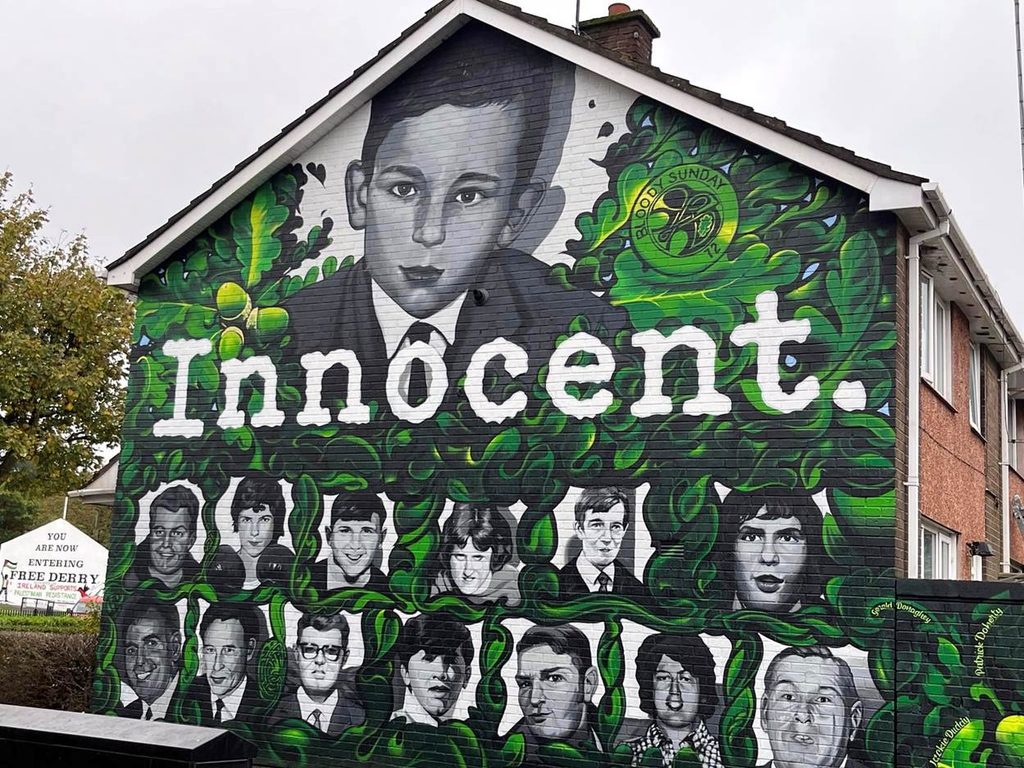
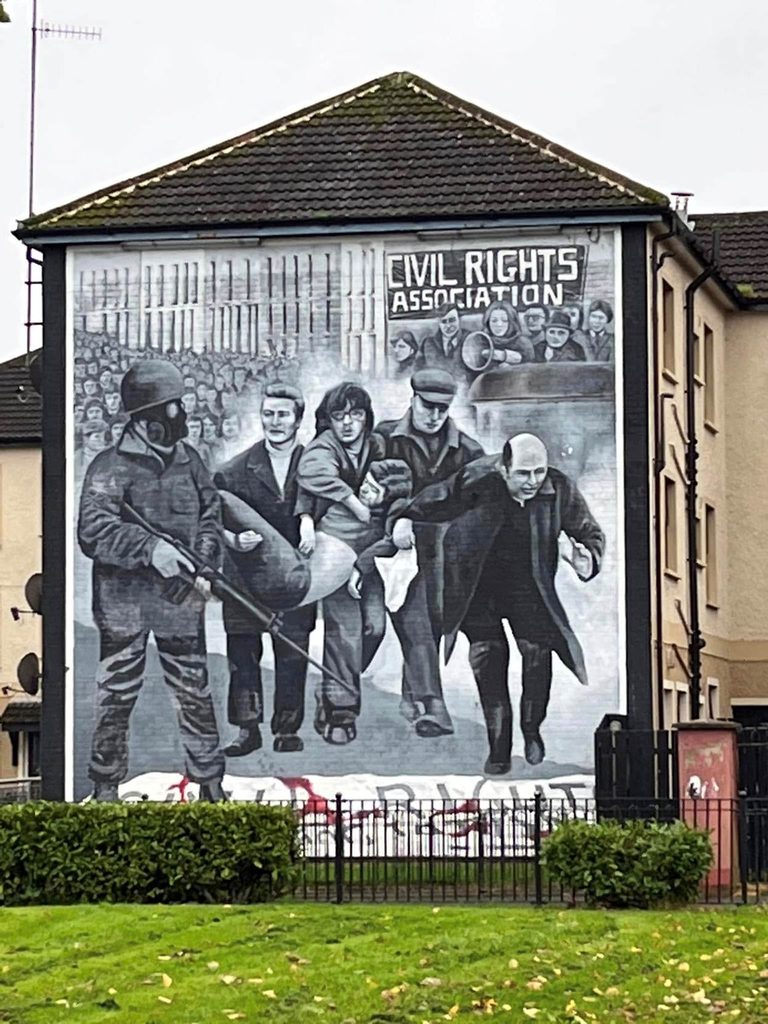
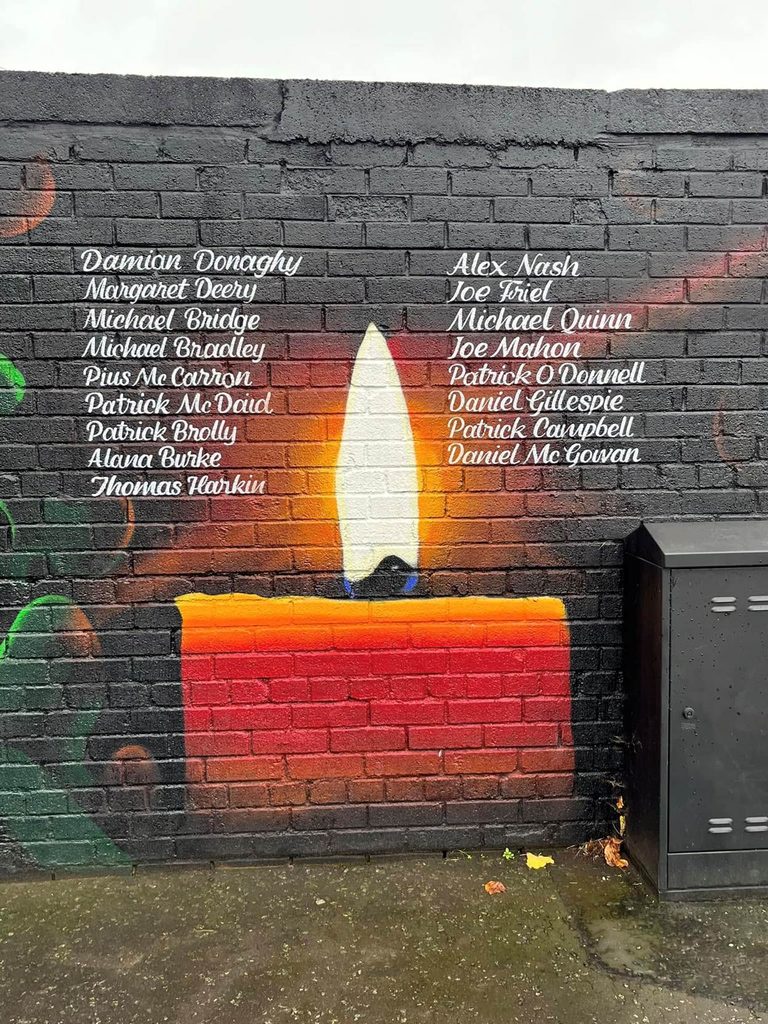
In January 1972, the Northern Ireland Civil Rights Association began another march, this one to protest against imprisonment without trial. The march was intended to be peaceful and included many women and children. British soldiers overreacted, killing 14 unarmed civilians (shown above) and injuring many more. An investigation on the massacre was carried out by the British government shortly afterwards. It claimed that the British soldiers had shot at armed gunmen and bomb throwers, although there were none. It wouldn’t be until 2010’s Saville report in 2010 — 38 years later — that the British finally concluded that the killings were unjustified. All of those shot were unarmed, no bombs were thrown, and British soldiers knowingly put out false statements to justify their shootings. The people of Derry were somewhat mollified by the report, but were angered again when only one soldier was charged with murder and then that sole case was dropped two years later. Bloody Sunday looms large in the memory of Derry residents.
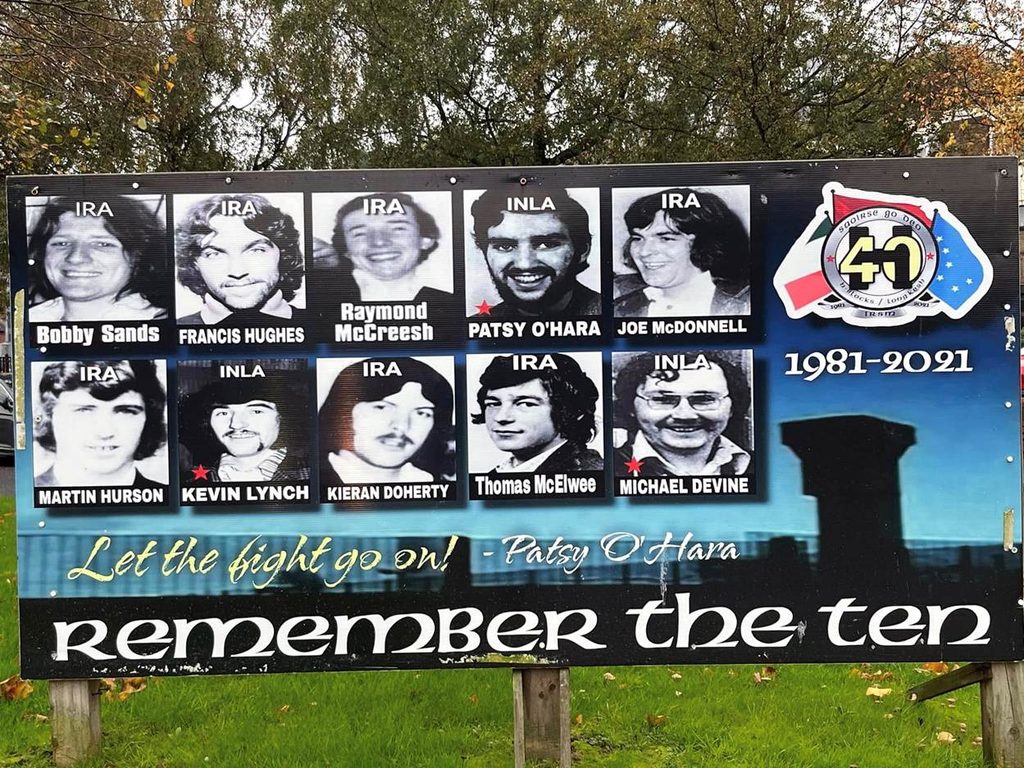
Hunger strikes began among Irish prisoners in 1980, followed by a longer one in 1981. The second hunger strike became a showdown between Prime Minister Margaret Thatcher and the prisoners. One of the hunger strikers, Bobby Sands (seen on top left here) managed to become elected as a member of Parliament during the strike. The strike finally ended after ten prisoners (shown above) had starved themselves to death, including Bobby Sands. The strike has been attributed to the driving force behind Sinn Fein becoming a mainstream political party. Hunger strikers were members of the Irish Republican Army (IRA), which wanted an independent republic for Northern Ireland, or the Irish National Liberation Army (INLA), which had similar aims
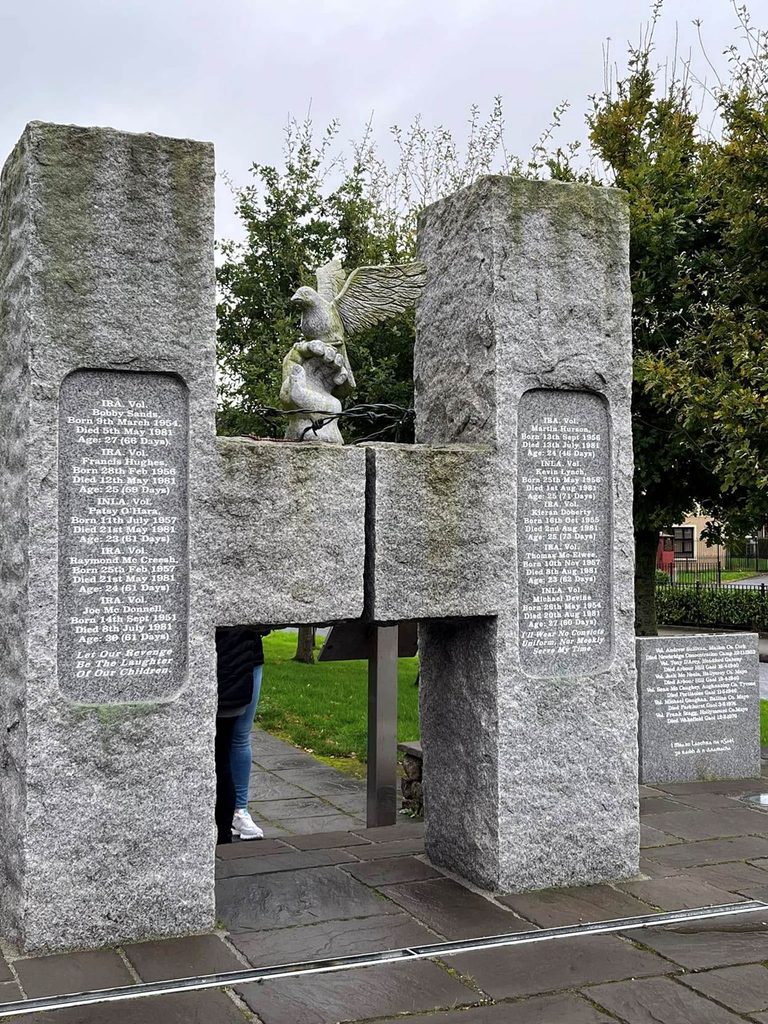
This memorial is also for the ten Hunger Strikers of 1981.
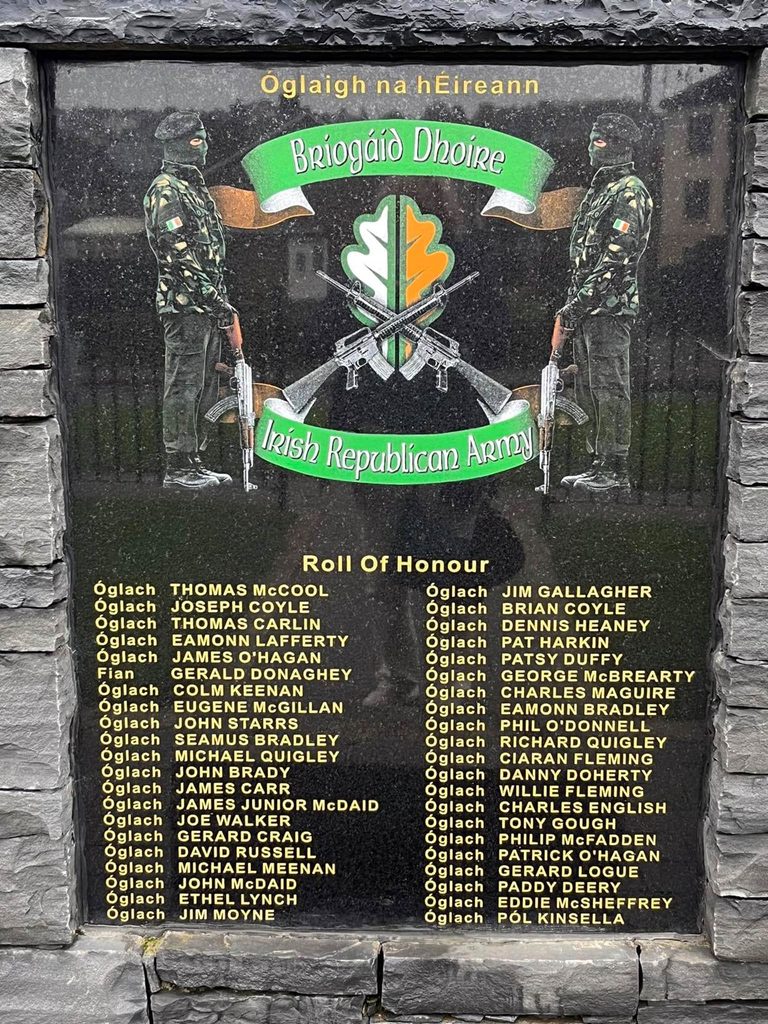
This memorial is for residents of Derry who resisted the British occupation.
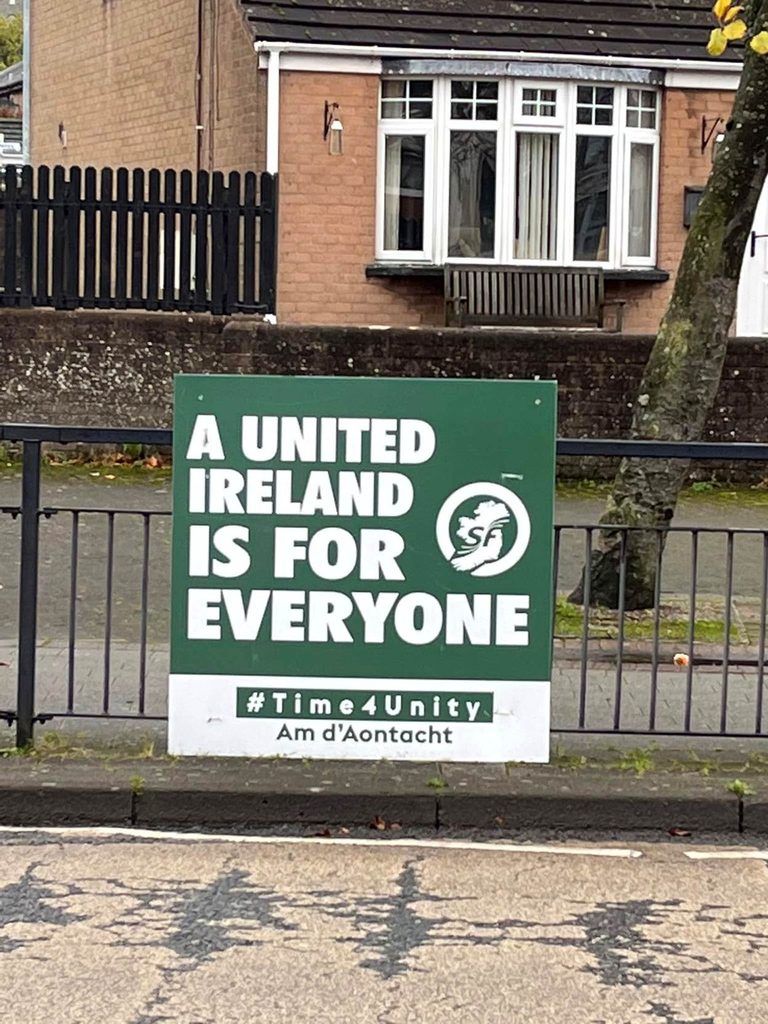
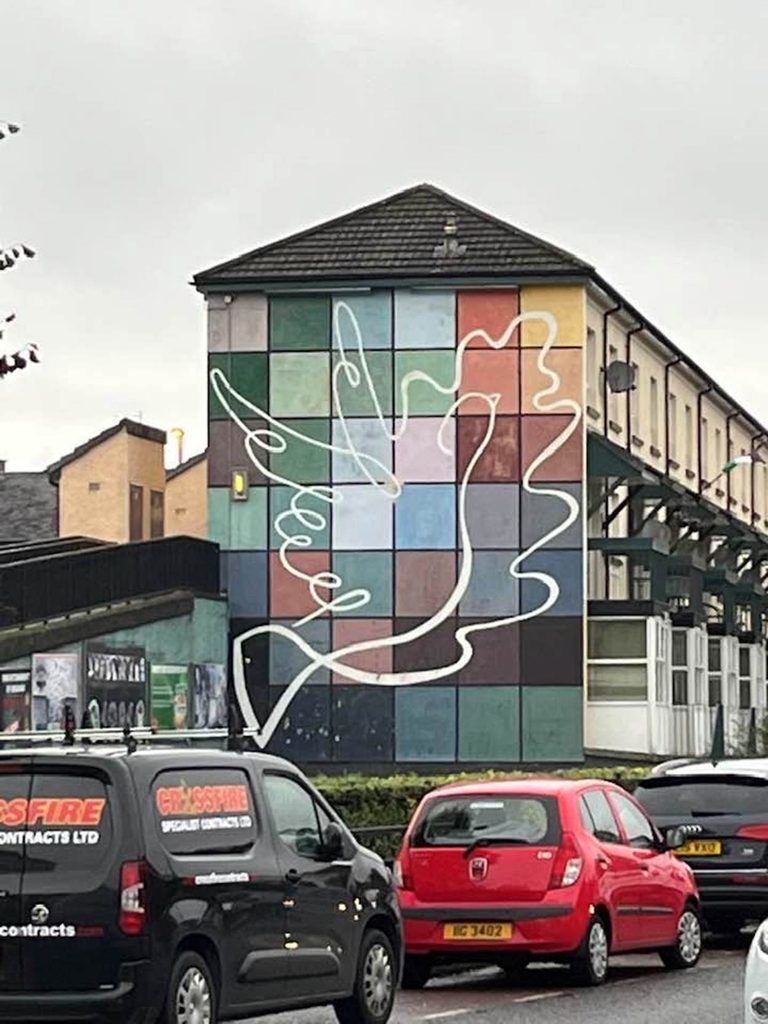
After a long day of learning about the history of The Troubles and reading about the Israeli-Hamas conflict, my brain and emotions were on overload. I’d just rather see this come to pass.
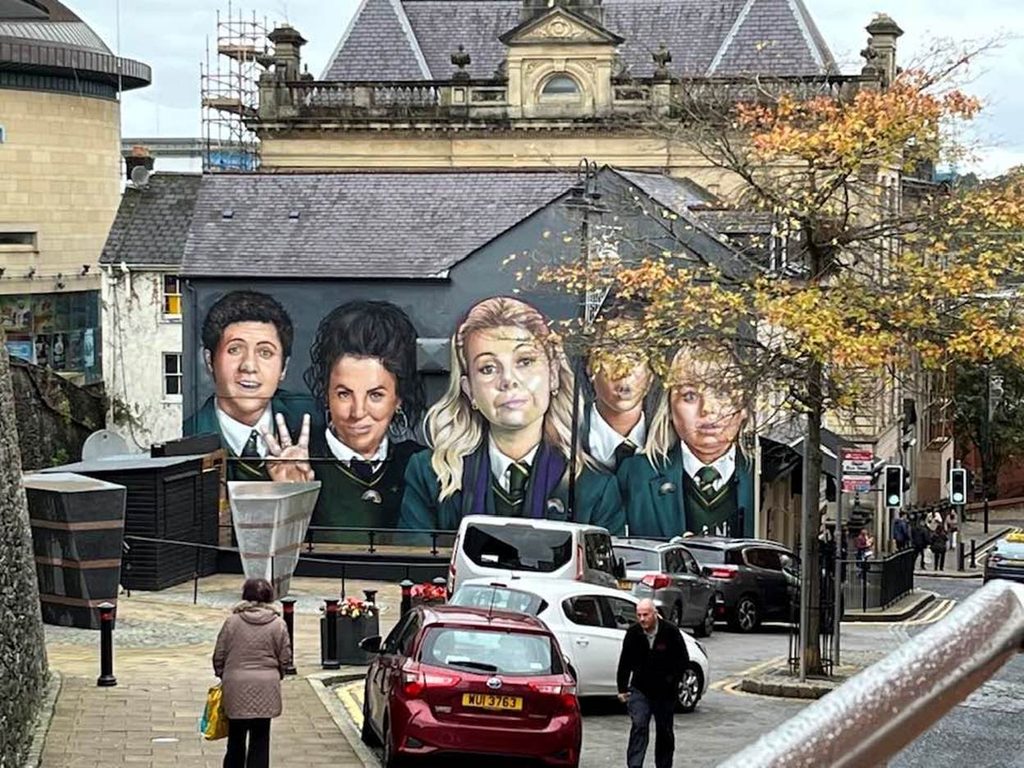
The Derry Girls, set in Derry in the 1990s during the waning days of The Troubles, was the most-watched TV series in Northern Ireland, ever. There’s a special exhibit about them in the Tower Museum, with costumes and props, and this big mural on Orchard Street.
For us Americans, it’s viewable on Netflix.
October 21-24, 2023