

We visited a fascinating exhibit at the Muzeo museum in Anaheim. “THE WORD: Ink & Blood” shows the history of the Bible and the origins of written language “from the Dead Sea Scrolls to Gutenberg.” (Actually, the timeline of the artifacts goes both earlier and later than that). The artifacts include Babylonian cuneiform tablets, fragments of the Dead Sea Scrolls, biblical manuscripts from multiple centuries, and even the silver coins such as those Judas would have received for his betrayal of Jesus.
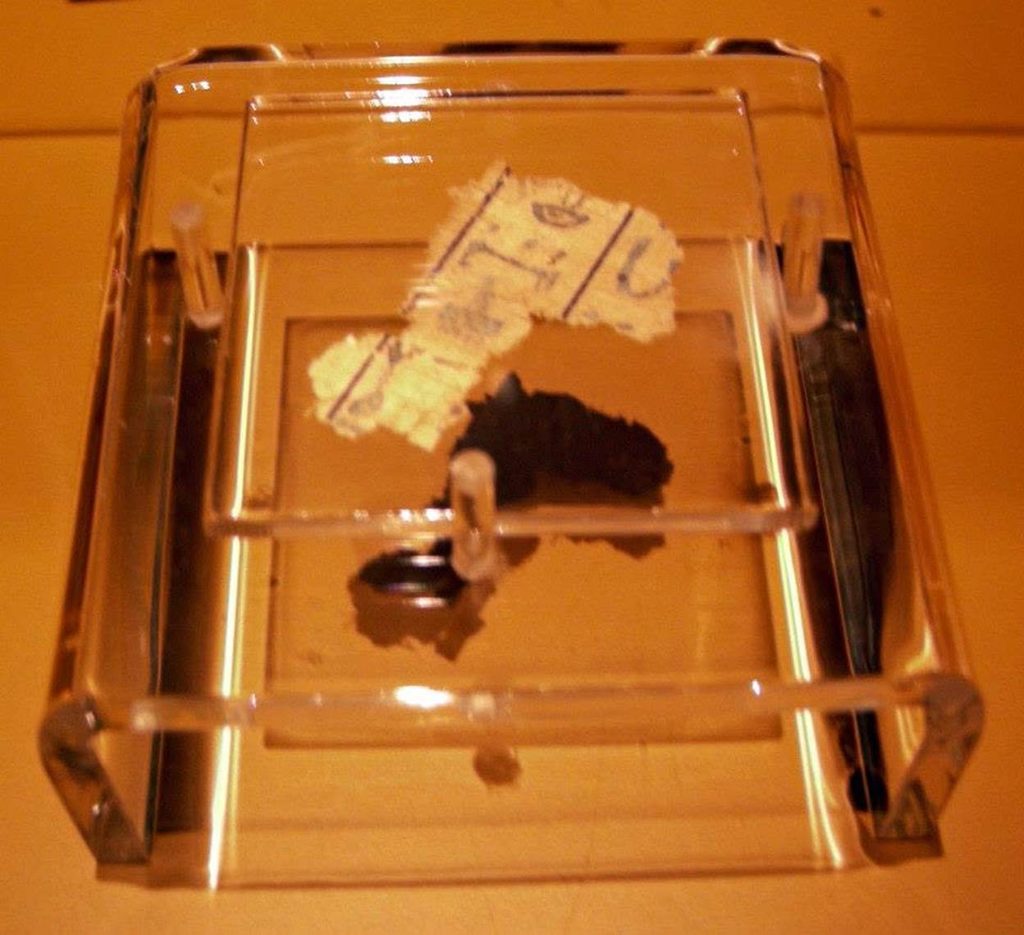
A fragment of Egyptian hieroglyphics. Egyptian hieroglyphics were used from roughly 3250 BC to 400 AD.
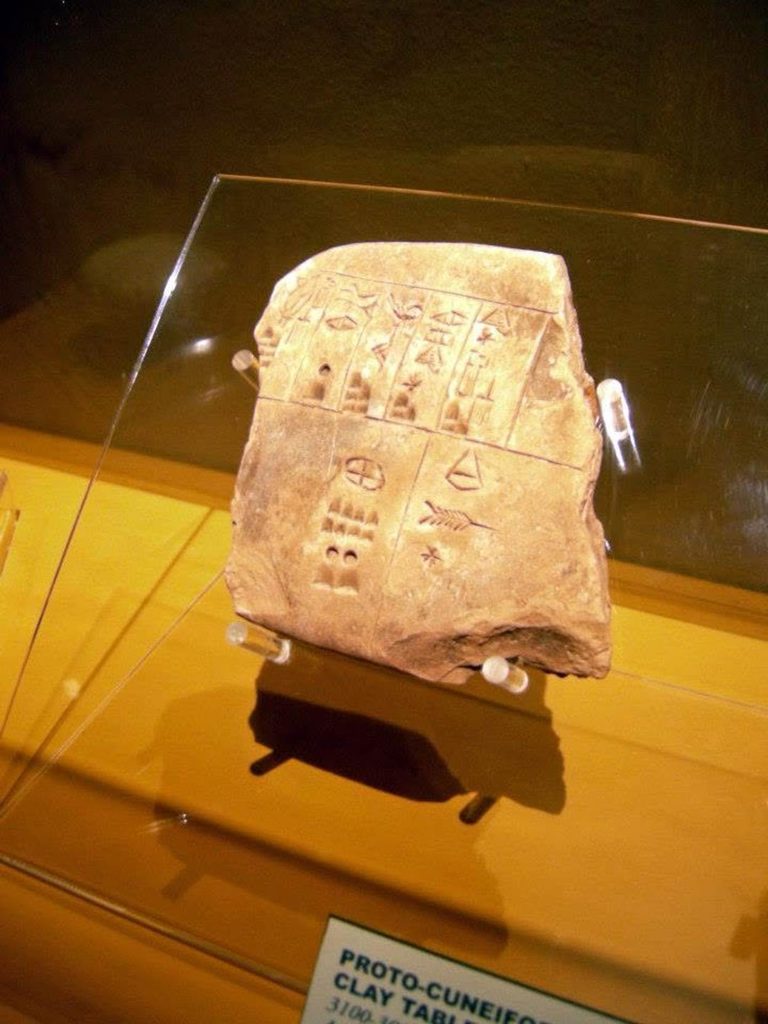
They called this a “proto-cuneiform tablet” from ancient Sumer (now Iraq). This dates to 3100-3000 BC.
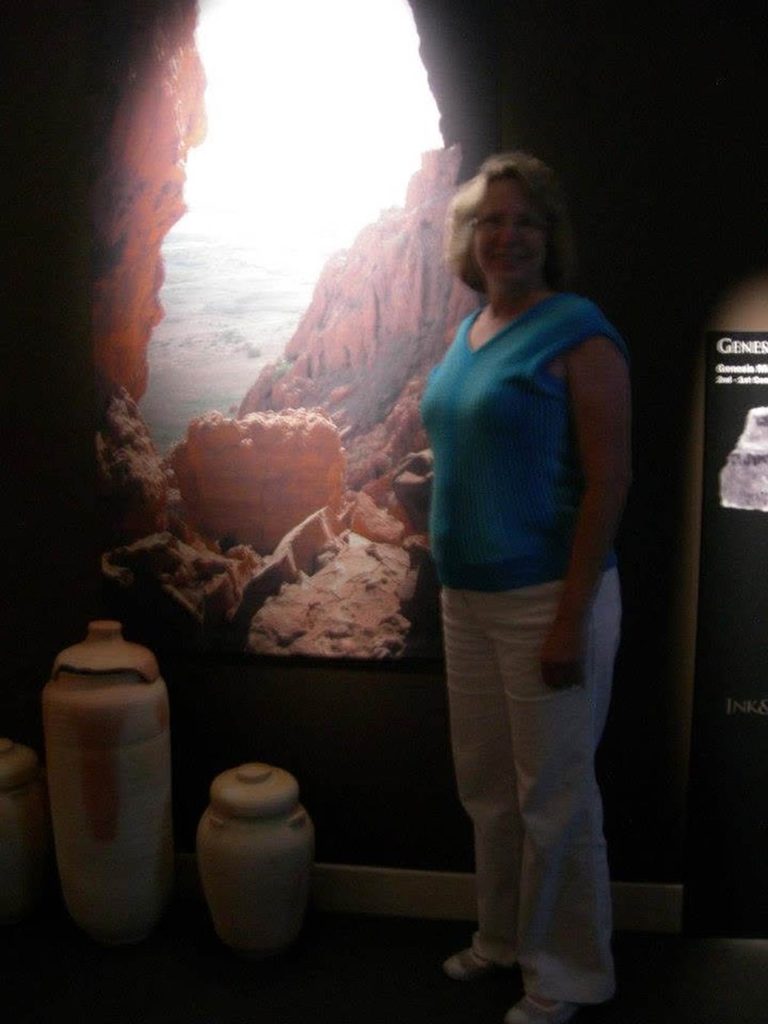
A view from one of the “Dead Sea Scrolls” caves in Qumrun, Israel. The dead sea scrolls date from the 3rd century BC to the 2nd century AD.
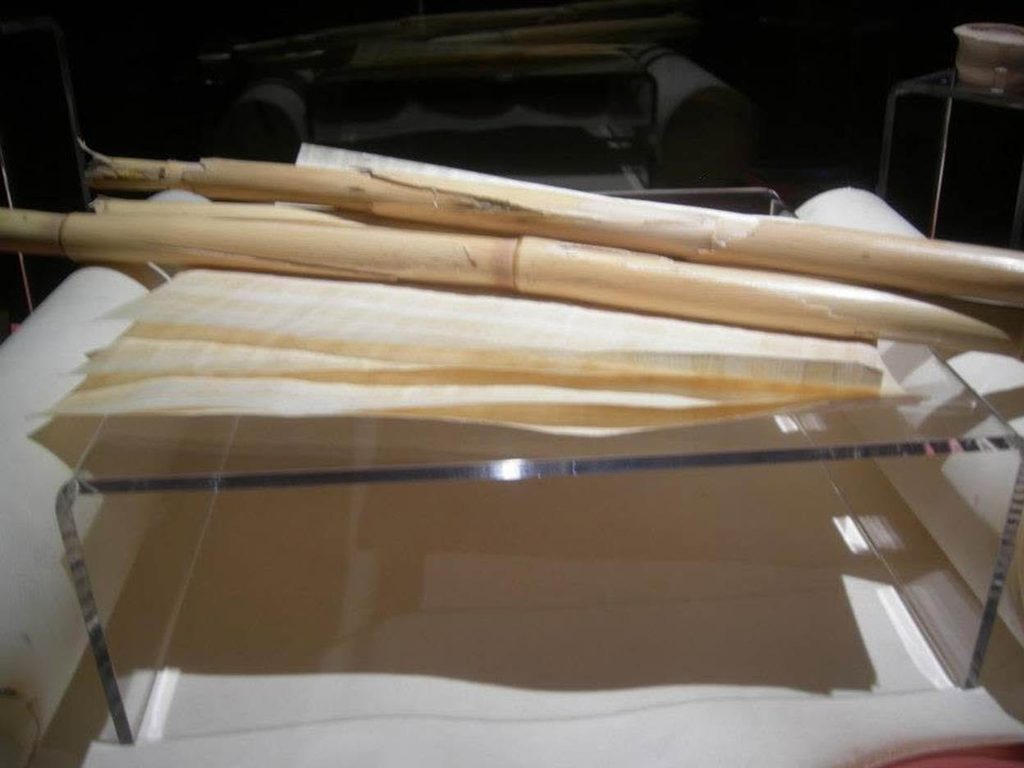
Examples of the reeds and resulting papyrus that would have been used for the writing of the Dead Sea Scrolls.
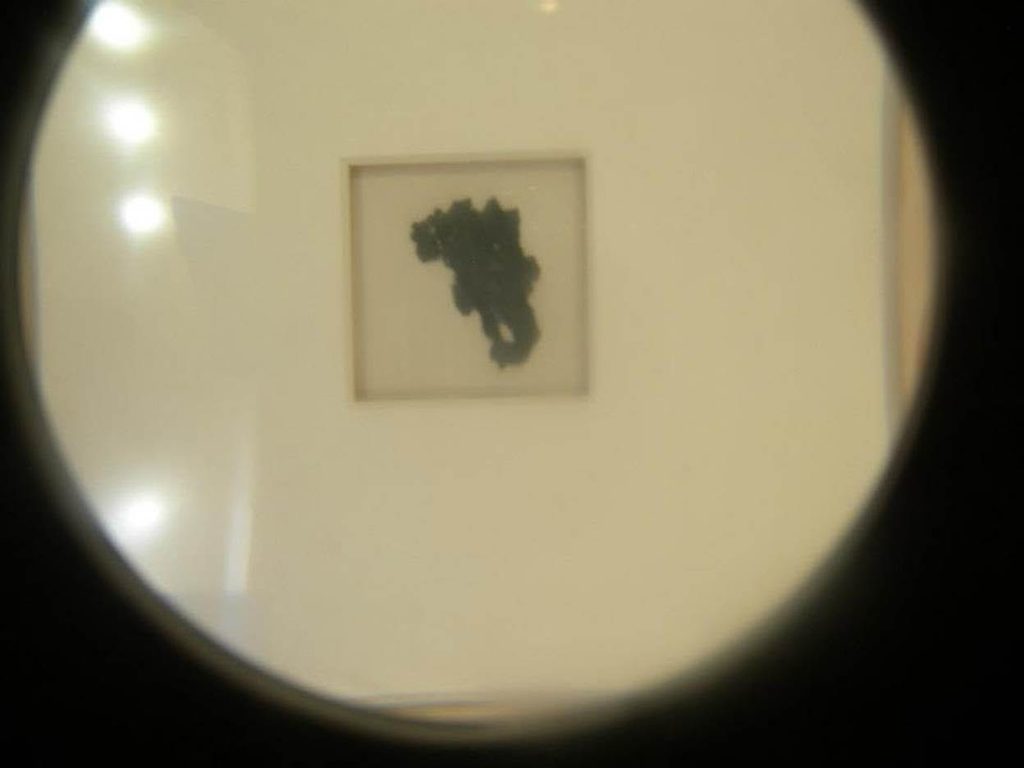
The Dead Sea Scrolls were handled badly in the early years after their discovery. Sadly, many of them have darkened so much that the writing on them can no longer be seen by the naked eye. This fragment has a section from the Book of Isaiah.
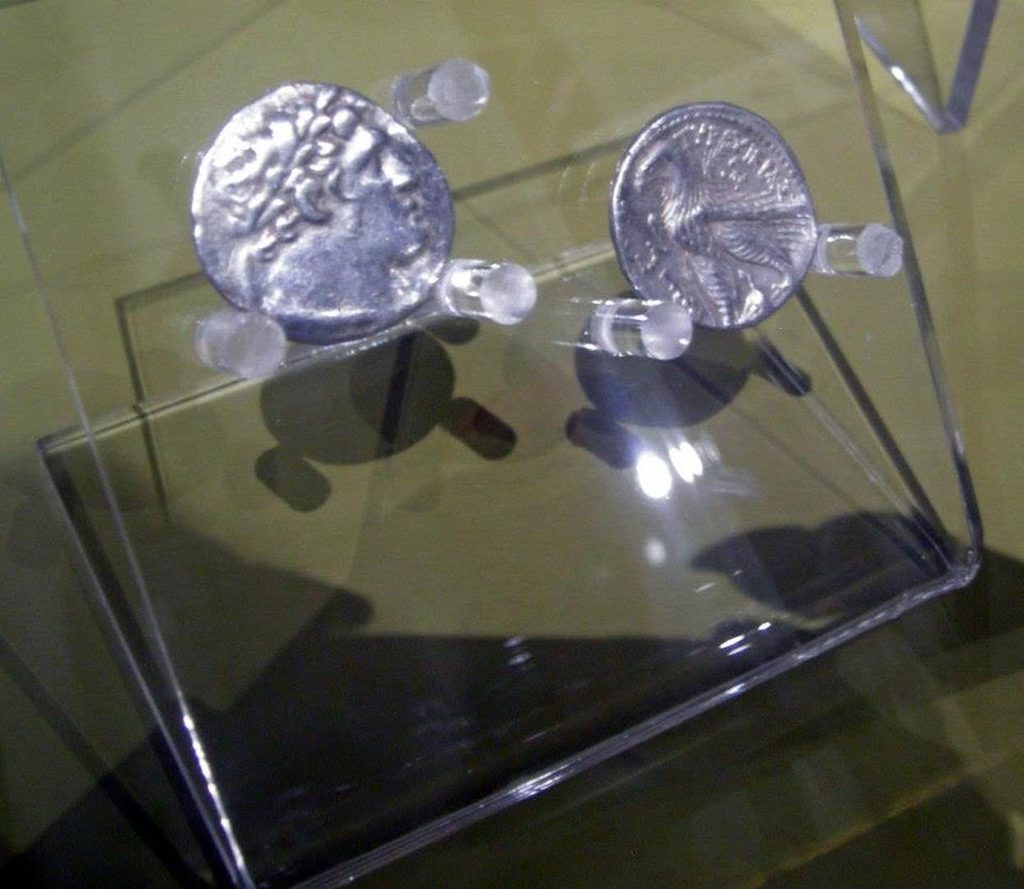
These are silver shekels struck with the image of Tyre’s supreme god, Baal-Melquart. (Tyre is now Lebanon). These coins were struck from 125BC to 45AD, and were the type of coins used by the Jewish people to pay their annual tax to the Jerusalem temple. It is believed that Judas would have been paid his “30 pieces of silver” with these types of coins.
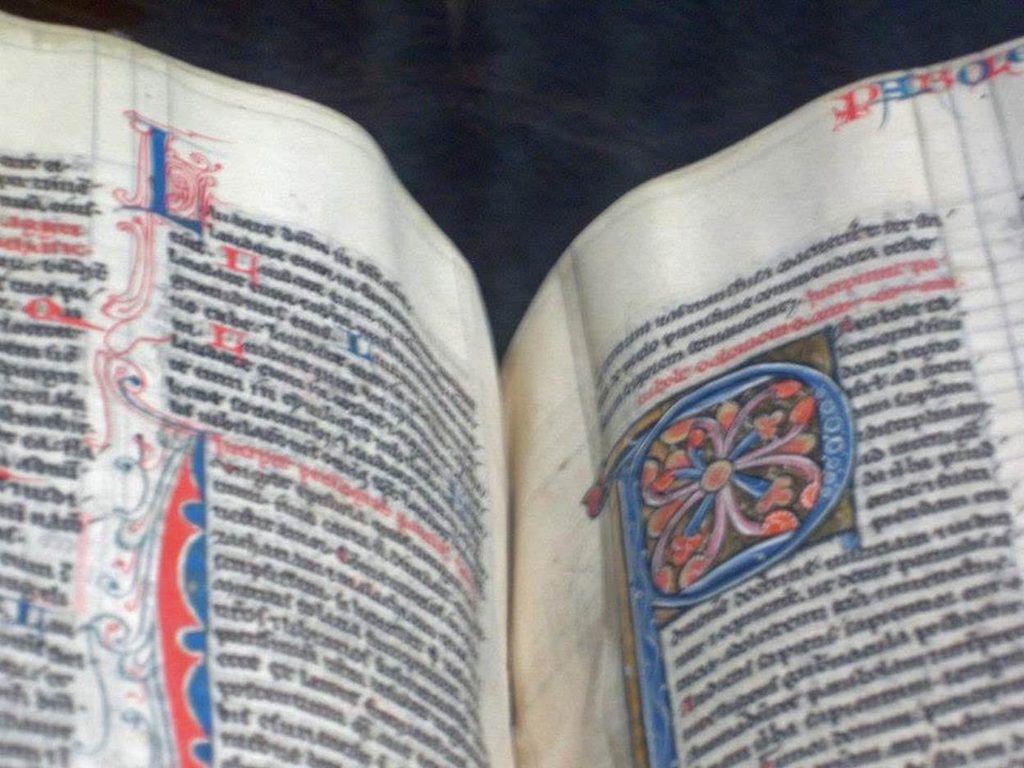
A 13th Century Parisian Bible, handwritten and illuminated on parchment. It is an early example of a modern chaptered Bible. Steven Langton, Archbishop of Canterbury and author of the Magna Carta, is credited with denoting the modern numbered chapters, c. 1220 AD.
I also learned that it would take 50-70 sheep and about two years to create a hand-written hand-illustrated Medieval bible on vellum.
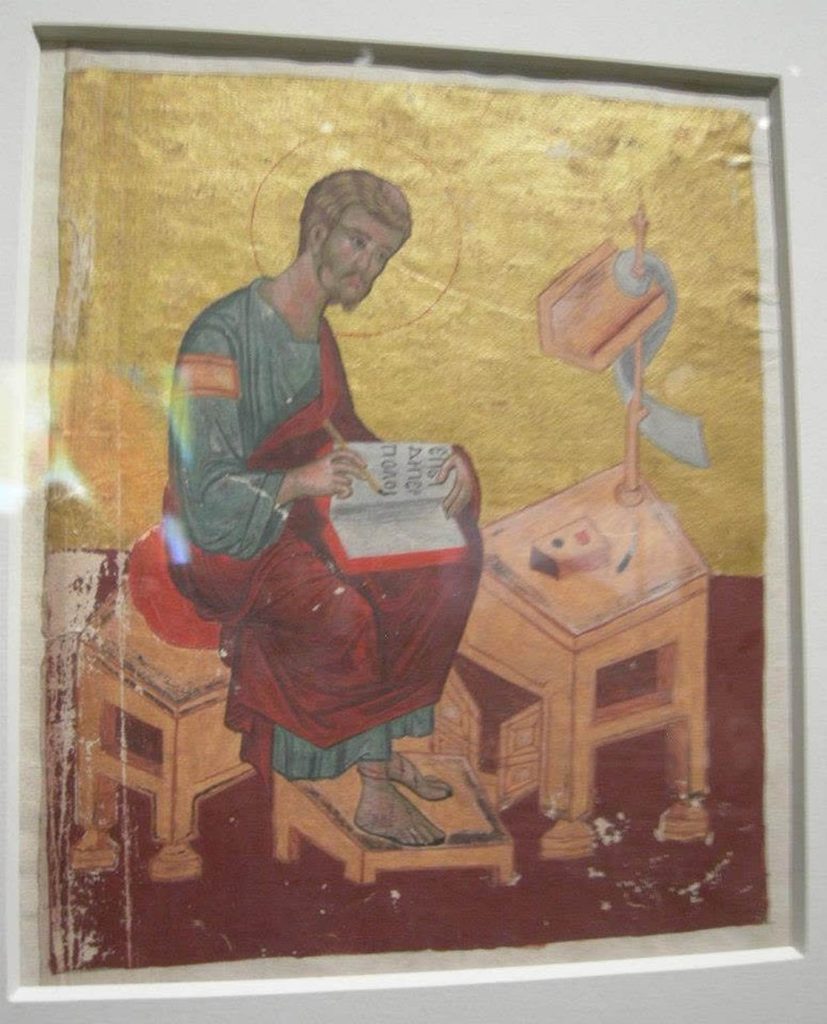
An illuminated Byzantine leaf, done by 13th century monastic artists on Mt. Athos in Greece.
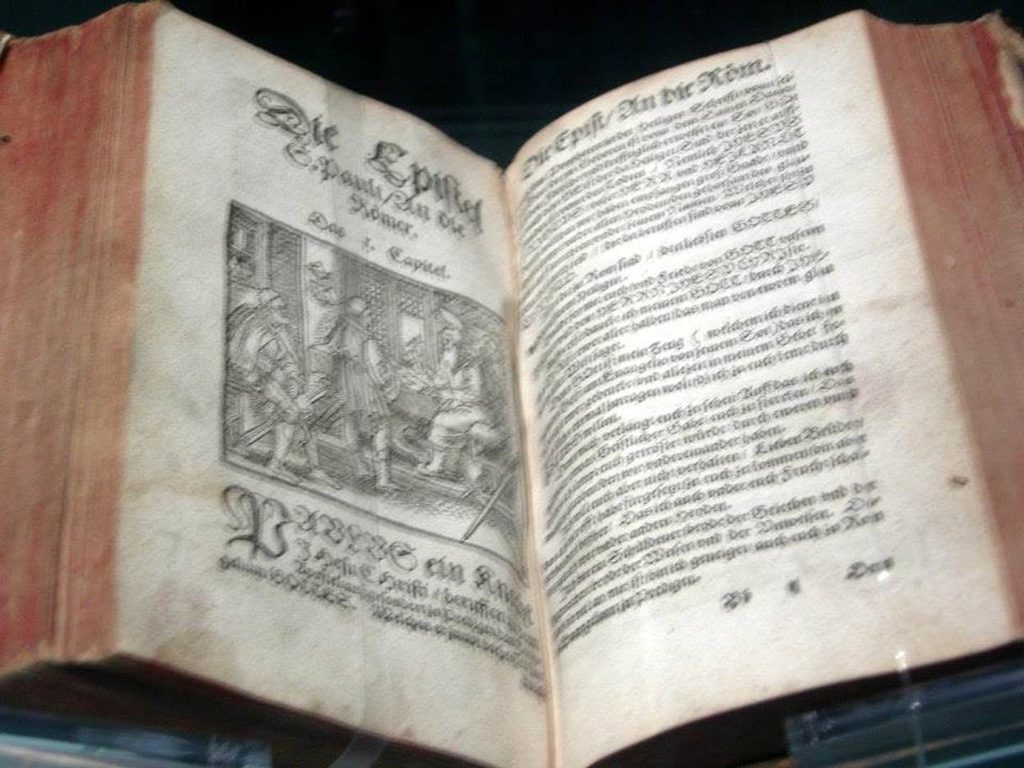
The first English-language Bible, the Wycliffe New Testament handwritten on parchment was first published in 1382. The Wycliffe Bible was translated from a 4th century Latin translation. Church authorities believed that the Bible should be explained to the commoners by priests rather than having people (who might misinterpret it) read the holy word for themselves. Therefore, Wycliffe was declared a heretic by the church (but too late for punishment, as this declaration occurred 30 years after his death) and they ordered all of his bibles to be burned. And just to make their point even more clear, they had his body exhumed, burned, and the ashes cast into a river.
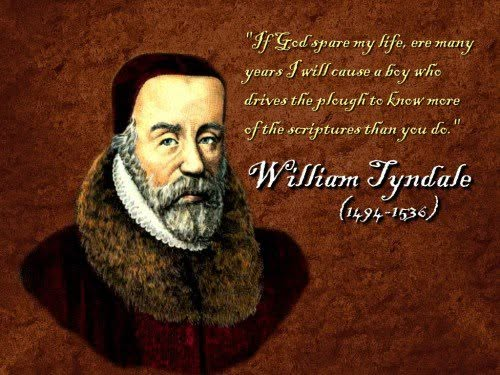
My new hero is William Tyndale, someone I had never heard of until I saw this exhibit. Mr. Tyndale single-handedly translated the first English New Testament from the original Greek. He also translated most of the Hebrew Bible (AKA Old Testament) directly into English for the first time. He is credited with creating modern English. Tyndale took the ill-regarded, unpopular and awkward Middle-English ‘vulgar’ tongue, improved upon it using Greek and Hebrew syntaxes and idioms, and formed an Early Modern English basis that Shakespeare and others would later follow and build on as Tyndale-inspired vernacular forms took over. “Tyndale’s translations and his transformation of the English language influenced English authors from Shakespeare to C.S. Lewis. Even today, his phrasing and syntax permeate our culture. If you read, speak, or even think in English, you are being influenced by William Tyndale. No single English person has ever had more influence on our language and our culture.”
At the time (early 16th century), English was considered a “vile language” and it was strictly forbidden to possess the Scripture in English. For his efforts, Tyndale was garrotted and then burned at the stake.
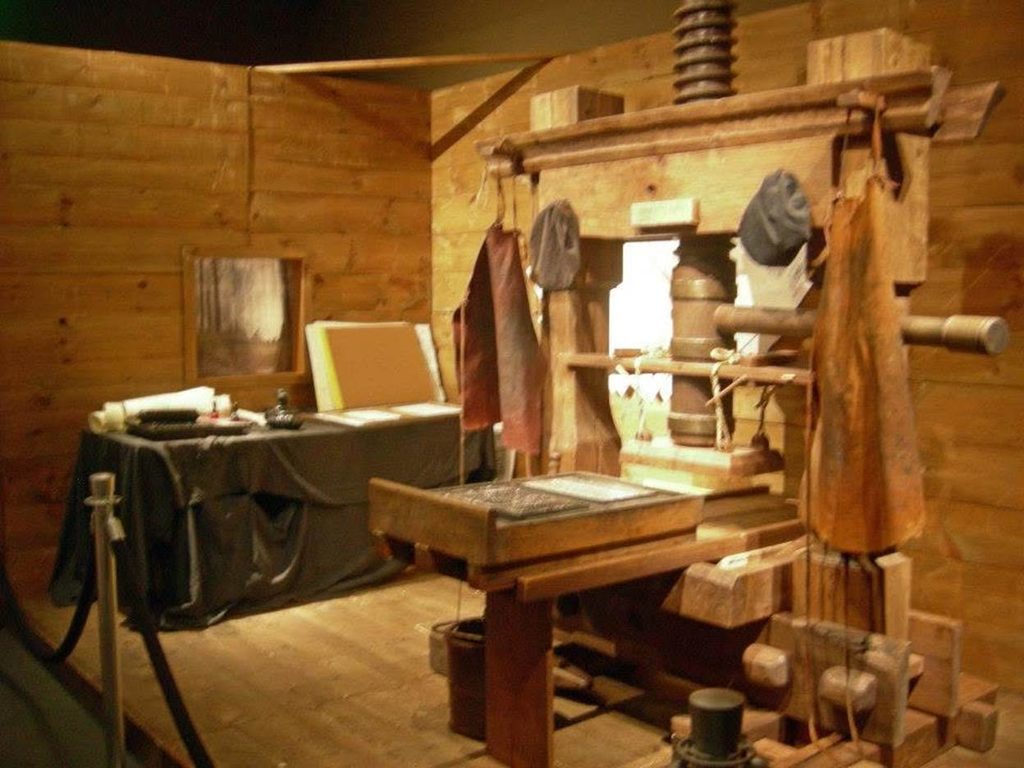
A re-creation of the Gutenberg Press as it would have appeared in the 1450s.
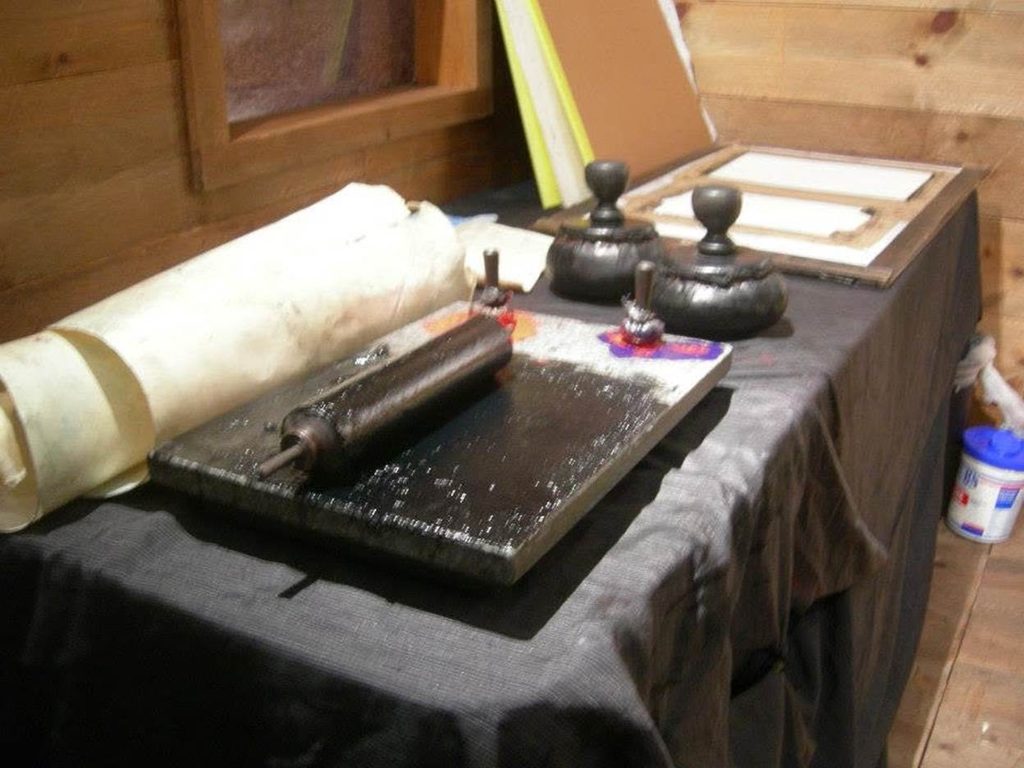
At the Gutenberg Press, the letter trays would have been rolled with ink from ink balls like these.
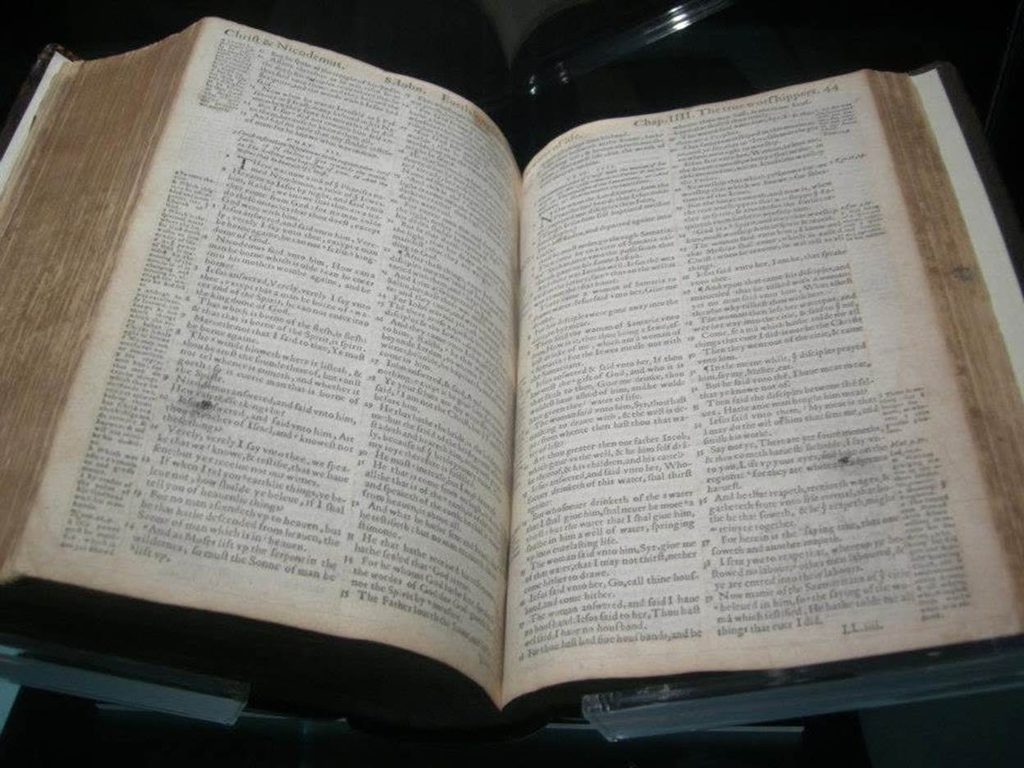
After William Tyndale’s death, English-language versions of the Bible quickly followed. This is the “Geneva Bible,” the version that was used by Shakespeare and the version that was carried by the Pilgrims to the New World. It was printed in 1599. After we toured the exhibit, I purchased a certified page from a Geneva Bible that had monastic scribbles in it. I displayed it in my home for about ten years, until I began downsizing in preparation for becoming a permanent nomad.
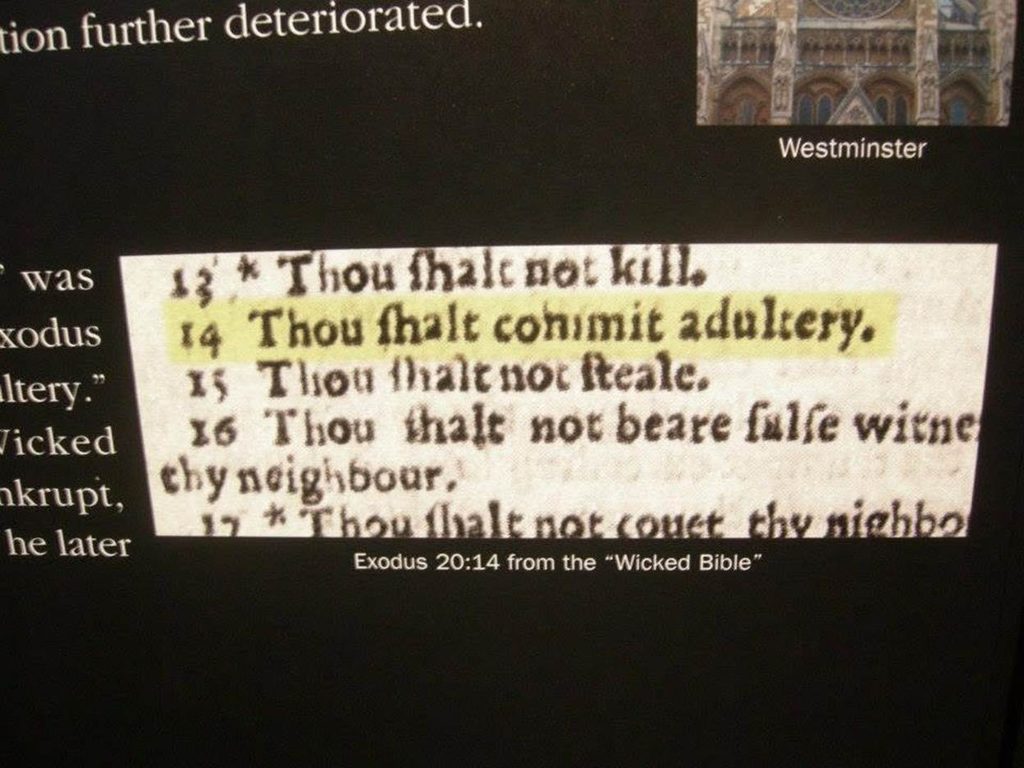
This 1631 Barker bible was called the “Wicked Bible” because someone (probably deliberately) omitted the word “not” from the 6th Commandment. The entire edition was recalled, thus bankrupting Barker, who died in debtor’s prison 14 years later.
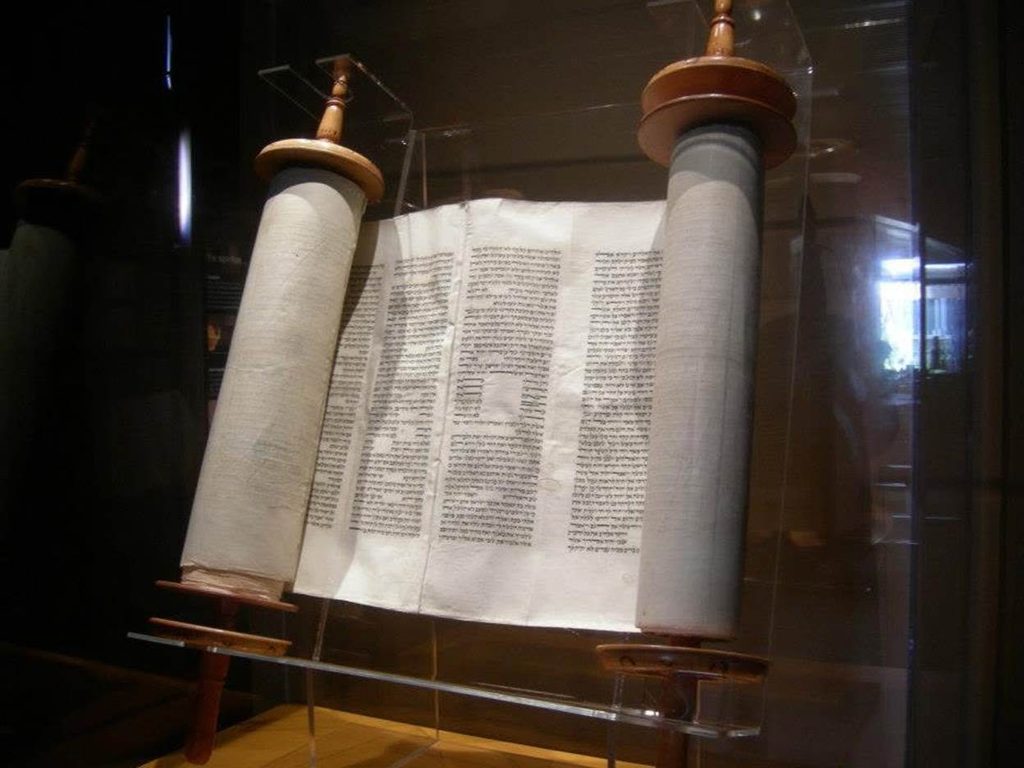
18th Century Torah Scroll on parchment, showing the Ten Commandments.
The Muzeo Museum and Cultural Center is located at 241 S. Anaheim Blvd in Anaheim. It is open Wednesday through Sunday from 11:00am to 5:00pm. Admission is $10.00 for adults and $7.00 for seniors.
UPDATE: Although the Ink and Blood exhibit is long gone (and not being shown anywhere currently), the Muzeo’s fall exhibit (through November 1, 2026) is called Capturing Life, Capturing Character: The Art of Live-Action Reference.
Originally written September 4, 2013, updated September 6, 2026