

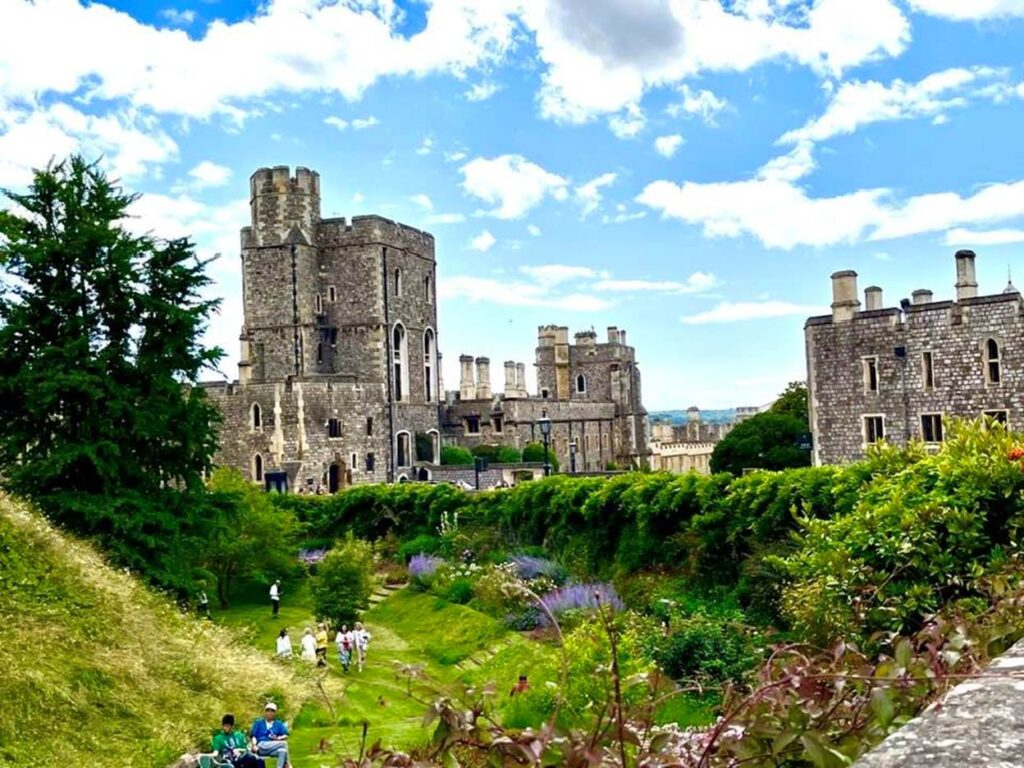
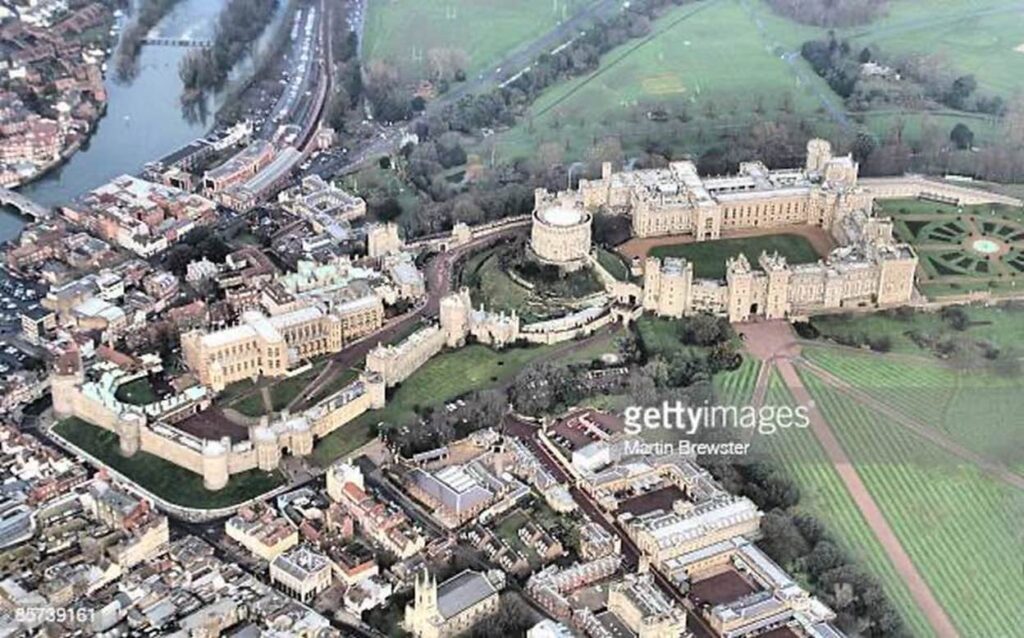
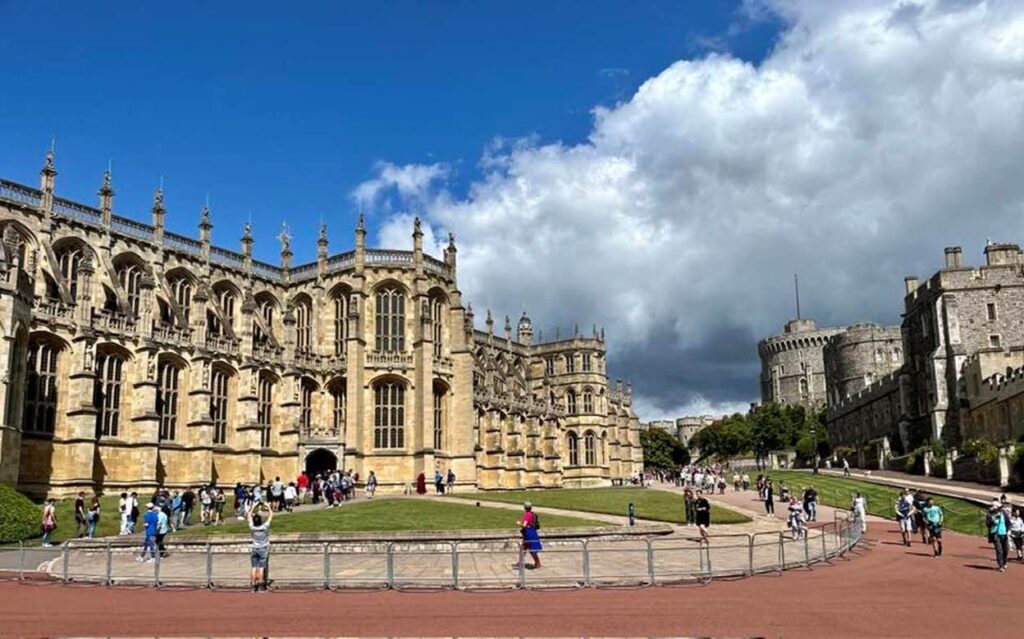
William the Conqueror began building what would become Windsor Castle in 1070. At that time, it was a wooden fort, intended to protect London from invasion from the west. It was also adjacent to a royal hunting forest, which made it advantageous for use as a royal residence. King Henry II began replacing the wood with stone in the late 12th century and built two separate sets of royal apartments: the public State apartments (what we peons get to tour) in what they call the Lower Ward and a private residential area on the Upper Ward. The original Norman keep was rebuilt as the Round Tower (which stands today) in 1170. What’s a keep? It’s the central and (hopefully) most impregnable portion of the castle. Edward III, in the late 14th century, essentially remade Windsor from a military fortification into a Gothic palace. (The Brits seem to love their Gothic structures, I’ve seen a lot of them this week). Subsequent monarchs also made improvements. Windsor was one of Queen Elizabeth II’s official residences. She and her husband, Prince Phillip, have both been laid to rest here in St. George’s Chapel.
Windsor Castle can be reached by a 45 minute drive west of central London. Its address is simply Norman Tower Castle Hill, Windsor Castle. However, no parking is available on-site. From London, the most convenient train stop is Windsor & Eton Central (this is what I did, then it was a convenient walk to the castle). Alternatively, you can take the Windsor Express bus #702 from near Victoria Station or #703 from Terminal 5 of Heathrow Airport. The castle is open to visitors almost daily (except for five holidays) from 10:00am to 4:00pm. Ticket prices for adults are 32 GBP with advance booking or 36 GBP if purchased on-site. If you fancy a return visit, your ticket can be converted to a 1-Year Pass for no additional charge!
July 29, 2023