

Woodrow Wilson has a complicated legacy. Our 28th president was considered excellent on foreign affairs but repressive on civil rights. Princeton, where Wilson was a president of the university for some time before becoming Governor of New Jersey and then the U.S. president, used to have a Woodrow Wilson School of Public and International Affairs. That school was renamed simply as the Princeton School of Public and International Affairs about 15 years ago.
But let’s back up a bit. When Woodrow Wilson completed his second term in office in 1921, he and his wife Edith purchased this home in the area now commonly known as Embassy Row or the Kalorama neighborhood. The embassies of Croatia, the Netherlands, Chad, Pakistan, and Cameroon are all nearby. Jeff Bezos of Amazon fame owns the house next door. Wilson lived here until his death in 1924. The home now serves as a museum to Wilson’s life and legacy.
Wilson began his presidency in 1913 by focusing on domestic issues. He created the Federal Reserve as part of his goal of banking reform, reduced tariffs because they caused domestic prices to rise (Trump, take note), signed the Clayton Antitrust Act (primarily to break up enrenched Western mining trusts), and created the Federal Trade Commission. He supported labor rights, including the 8-hour workday.
The Great War began in 1914, although Wilson kept the United States out of it initially. The U.S. entered the war on the side of the Allies (France, UK, Russia, Italy, etc) in 1917, when Germany resumed unrestricted submarine warfare on Atlantic shipping. The Selective Service Act was enacted that same year, establishing conscription (i.e., the draft) for the first time since the Civil War.
Hoping for lasting peace after “the war to end all wars”, Wilson drew up the 14 Points plan in 1918, which became the basis for the Treaty of Versailles. The intent was to remove the causes that might lead to another great war. Some of its provisions included freedom of navigation in international waters and free trade. The last of the 14th points called for “a general association of nations … for the purpose of affording mutual guarantees of pollitical independence and territorial integrity to great and small States alike.”. This became the League of Nations, which later evolved into the United Nations. Sadly, although Wilson pushed hard, he could not convince Congress to join the international League he had created.
Wilson was a popular president during his lifetime (and historians still rank him in the top 15 of all time), but his legacy has a big shadow. As president of Princeton, Wilson actively discouraged the admission of African-American students. As U.S. President, his Cabinet included segregationists and Wilson allowed his Cabinet members to segregate their departments if they saw fit. Thus, by the end of his first year in office, many departments had segregated workspaces, restrooms, and cafeterias. Worse, some agencies used segregation as a way of adopting an all-white workforce, claiming that they lacked the facilities for black workers. African-Americans who had been employed previous to the Wilson administration were either offered early retirement, transferred, or simply fired. In 1914, the Civil Service Commission mandated a policy requiring job applicants to submit a photo, exacerbating the problem. The military also became much more segregated during Wilson’s administration. Since federal employment and the military were some of the few career paths for Blacks to obtain equality and be members of the middle class, these discriminatory policies were devastating.
Wilson also opposed women’s suffrage, believing that women lacked the public experience to be good voters. (His wife Edith also opposed suffrage). Our docent claimed he changed his mind when he was told that if he passed Women’s suffrage during his administration, those new voters would all sign up as Democrats in gratitude. He came out publicly for suffrage in 1918, pressuring the Senate to vote for the amendment. The 19th Amendment was ratified in August 1920.
Wilson suffered a stroke in 1919 which left him paralyzed on his right side and with only partial vision in his right eye. Although his mind was clear, he was physically weak and his personality had been affected, impairing impulse control and his judgment. He was sequestered away from everyone except his doctor and his wife. They determined which documents Wilson should read and who should speak to him. Because of her influence during those last 18 months, Edith Wilson has often been called “the first female president.”. Although Wilson had initially hoped to serve a third term, his health precluded this option. He followed politics after moving to his post-presidential house, but his health never improved. He made a last national speech via radio on Armistice Day in 1923.
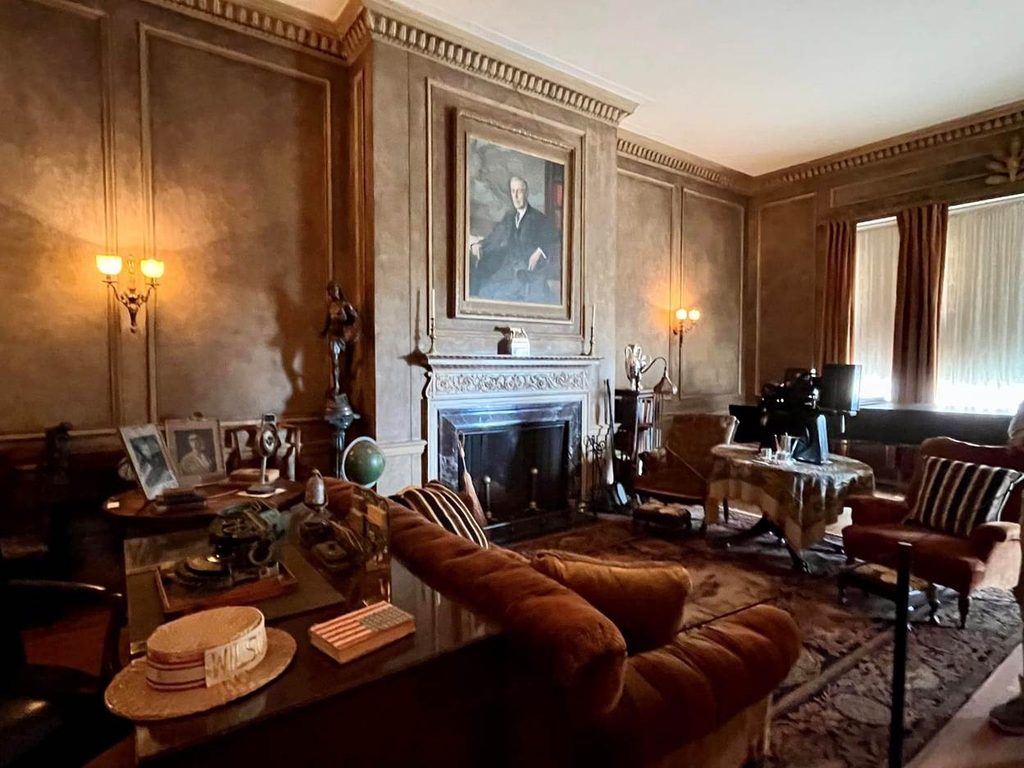
Note the typrewriter with curved keyboard and radio microphone on Wilson’s desk.
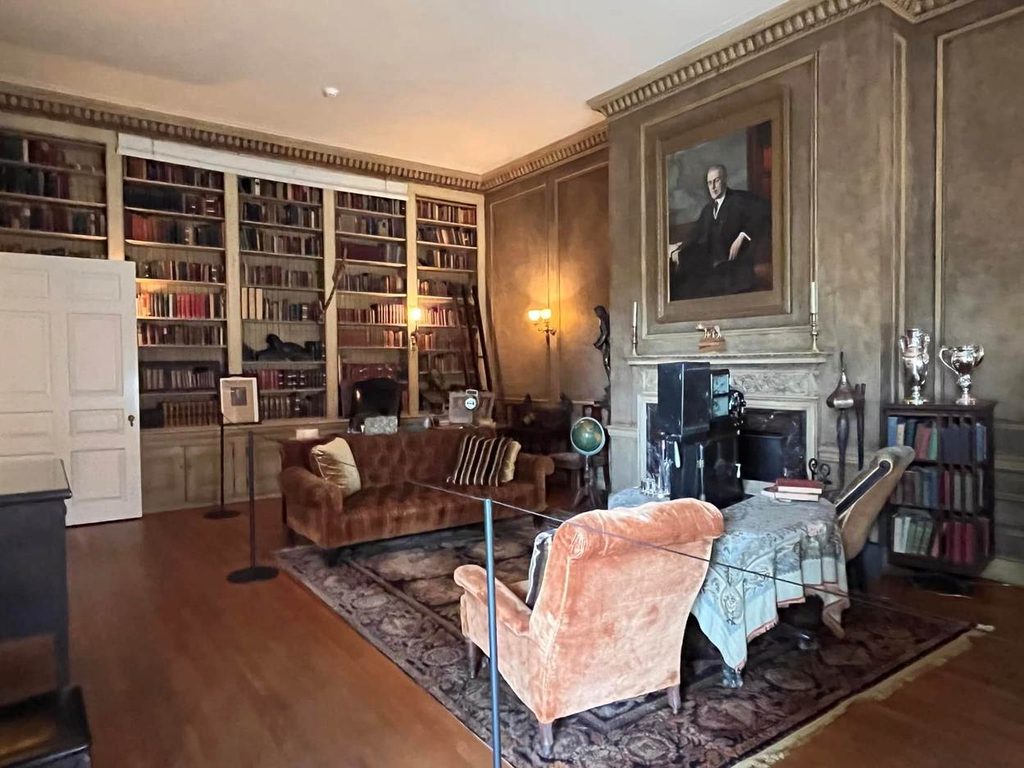
This study was one of Wilson’s favorite rooms in the house. Because of his stroke and subsequent vision loss, Wilson found it difficult to read anymore. Edith often sat on the sofa in front of the fireplace and read to him in the evenings.
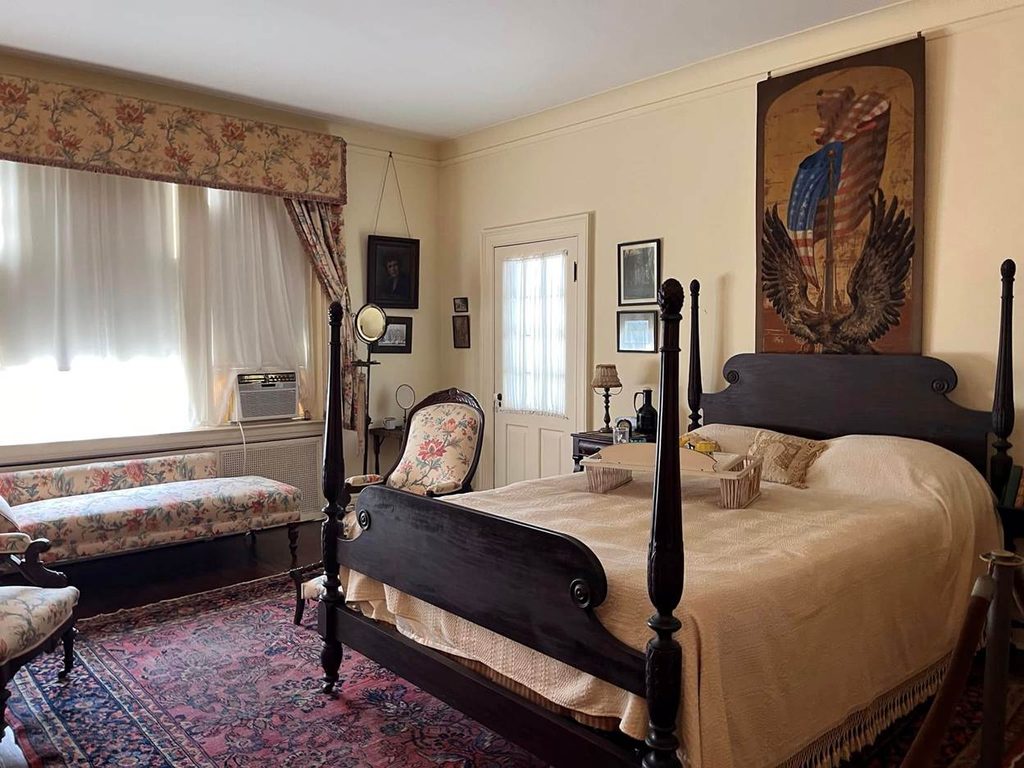
Wilson’s bedroom. Because of his declining health, he and Edith had separate bedrooms.
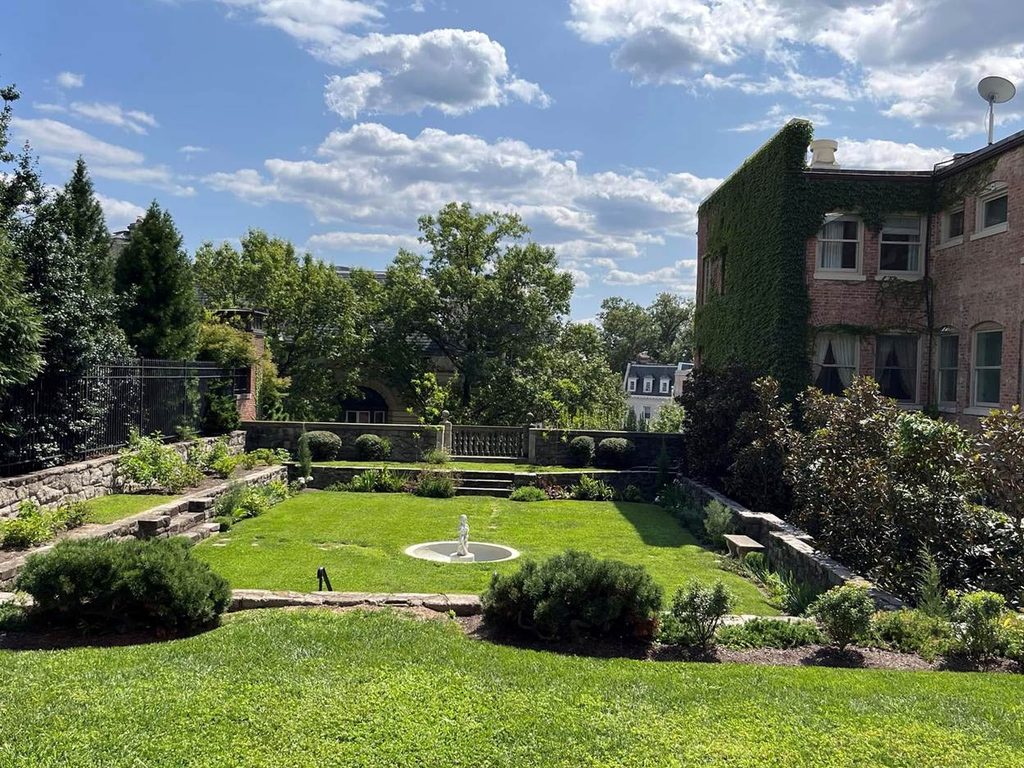
The garden looks virtually the same as it did a century ago during the Wilsons’ tenure.
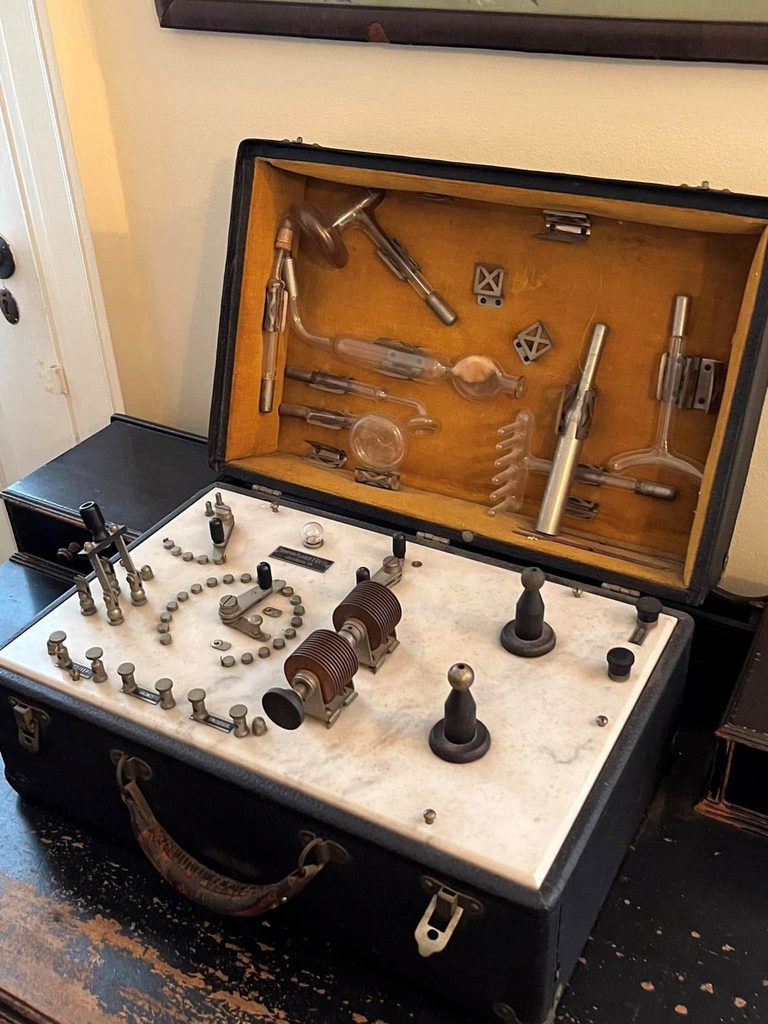
Medical instruments of the day. They did not improve Wilson’s condition at all.
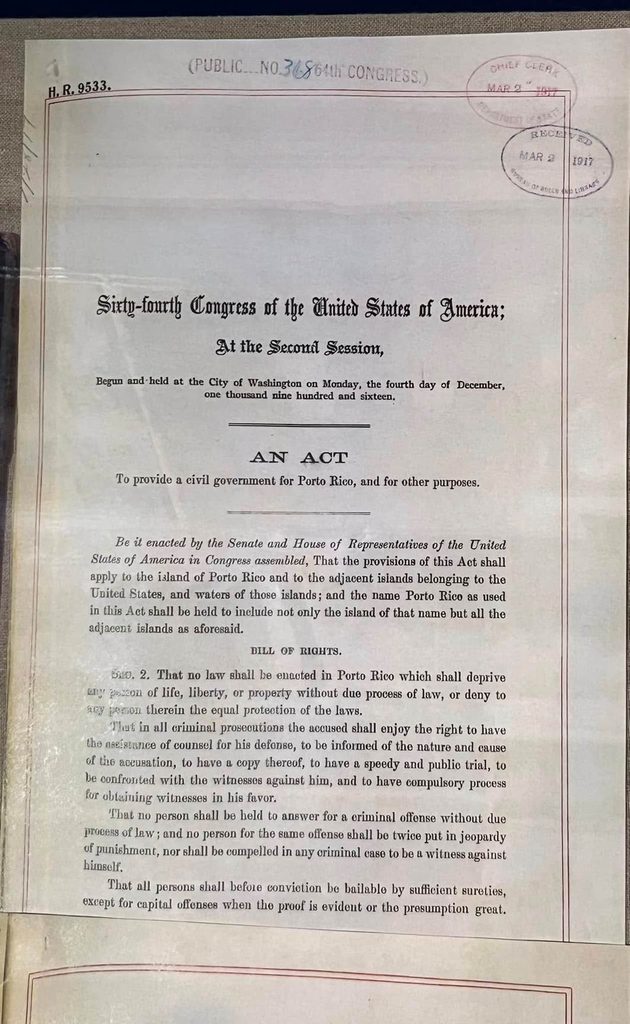
Wilson was instrumental in giving Puerto Rico some measure of self-governance and its status as a commonwealth.
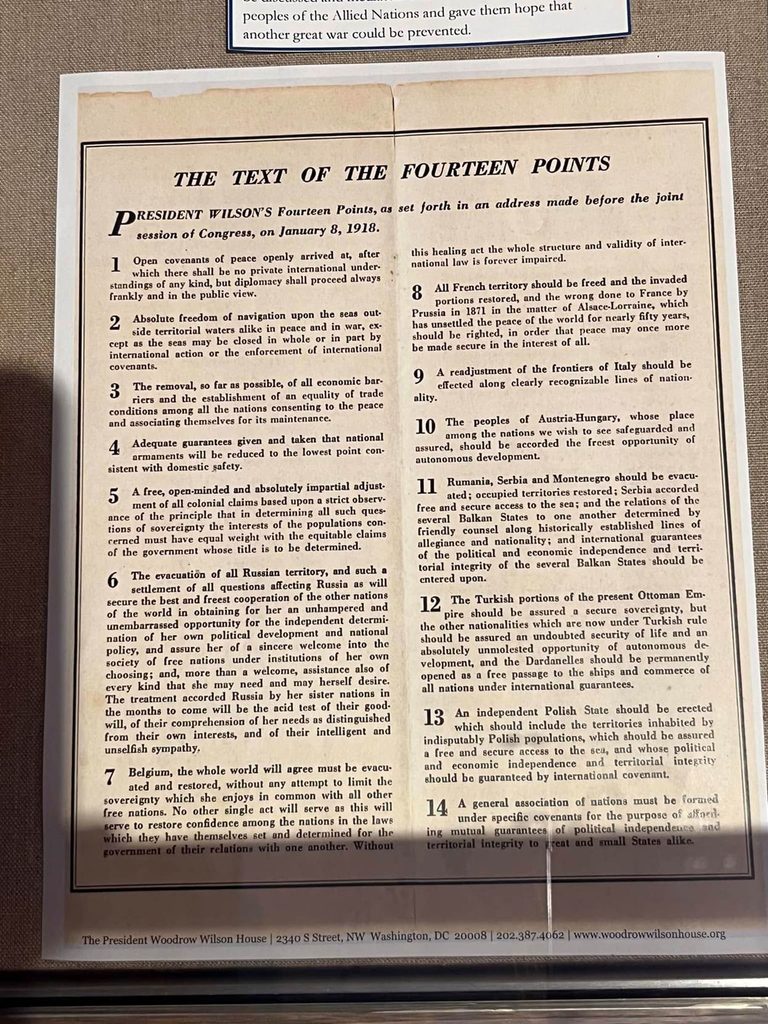
Wilson’s famous 14 points, designed to remove causes for future conflicts.
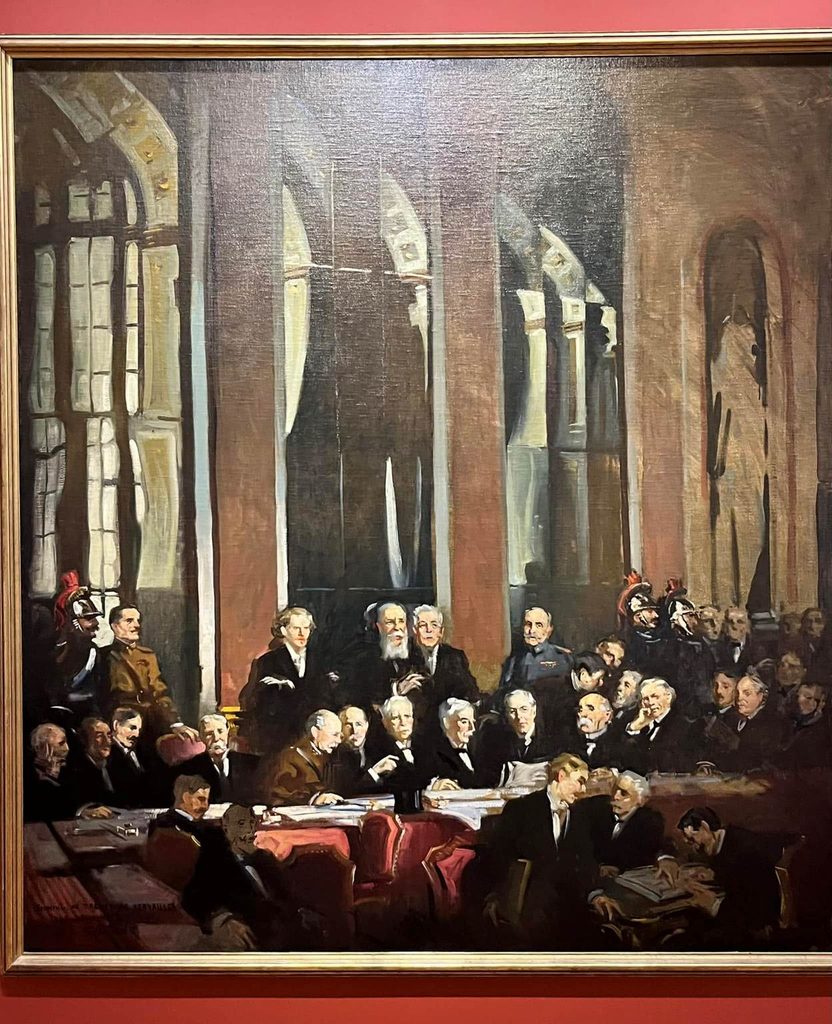
The Signing of the Treaty of Versailles, oil painting by John Johansen, 1919. Wilson was present at the Paris Peace Conference (can you find him?) but could not persuade the U.S. Senate to ratify it. The painting is currently located at the Smithsonian’s National Portrait Gallery.
The Woodrow Wilson House is located at 2340 S Street NW in Washington DC. Visits must be done by guided tour. They offer a variety of tours. Most visitors would be satisfied with the 30-minute highlights tour or the 1-hour General tour. There are also Collections Tours, a 75-minute Executive Director’s Tour, an Architecture Tour, plus Living & Working in the Wilson House, The Struggle for Liberation, Prohibition/Wine Cellar, and a Museum Management 101 Tour. The Highlights Tour is $8.00. As of this writing (August 2026), the General Tour does not appear to be available.
August 23, 2024